A healthier way to use those Thanksgiving leftovers

2008_12_4-Leftovers2v2

Happy Thanksgiving!

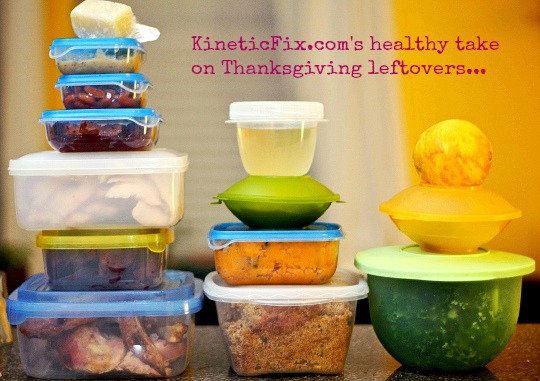
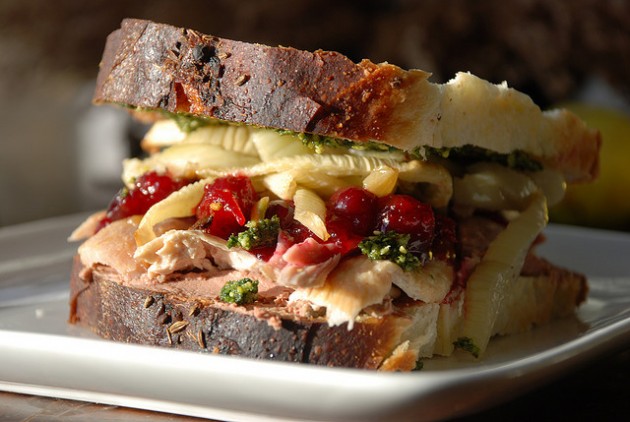
Later today when dinner’s done and you’re left with a lot of bird, don’t panic: Turkey is a lean, versatile protein that fits easily into healthy, hearty meals that are low in fat and high in flavor.

Here are a few tips for livening up your Thanksgiving-leftover repertoire — without repeating the meal or breaking the scale.

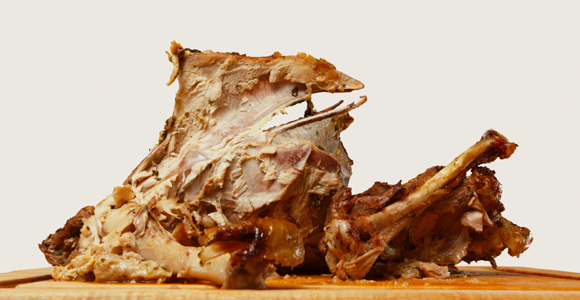
First, attack the carcass (after your guests leave, that is). Once you’ve removed all the large slices of meat, be prepared to spend some time picking off every last bit from the bones. Chop or shred it as you go, partitioning into bags or containers in the refrigerator (or freezer) for easy access later.
Source: Kthread, Flickr

Source: Kthread, Flickr

Next, take stock of other leftovers, and get creative by utilizing them in a variety of wraps, salads and “dump” dishes (one-pot meals) for the first few days following the big event. When you’ve had your fill and cleared out the majority of the trimmings, turn to some creative dishes that can breathe new life into the last of the meat.

Try a quick soup, for example, by mixing a few cups of diced turkey with chicken broth, noodles and your favorite vegetables. Sprinkle chopped turkey on salads for a healthy lunch that packs a protein punch. Use shredded turkey in quesadillas, burritos, enchiladas, fajitas and tacos to spice up a weeknight dinner. Or add turkey bits to pot pies, casseroles and pasta dishes for a fresh twist on classic comfort foods.

Need more ideas? EatTurkey.com has a list of the “Top 10 Ways to Use Leftover Turkey,” including dishes such as Thai Grilled Pizza, Creamy Creole Turkey Bake and the ever-popular Turkey, Mandarin and Poppy Seed Salad.
Source: Fitday

Source: Fitday

Last but not least, save the bones. If you’re not going to make use of them within a week or so, wrap and store the carcass in your freezer for up to six months. Next time you get a turkey hankering, plop it in a big pot of water with a mix of vegetables and herbs, and in no time at all you’ll have a simple stock for soups, stews and gravies (try this recipe from Martha Stewart).

Now, that’s a gift that keeps on giving all season.

What are your favorite ways to make the most of Thanksgiving leftovers?

Fall into better eating habits with the season’s healthy harvest

Source: BonAppetit.com

Source: BonAppetit.com

Now that the days are shorter and the nights are cooler, it’s a natural tendency to want to hole up for the next few months and console ourselves with comfort food.

There’s certainly nothing wrong with doing that once in a while (after all, who doesn’t love a good chicken pot pie?), but remember to weave in some warm and cozy menu options that won’t decimate your diet.

Below are a few wholesome picks from fall’s fresh crop of fruits and veggies, including ideas for hearty – yet healthy – autumnal recipes.

Apples

  • An excellent source of vitamins C, K and B6, plus they’re low in calories and high in fiber
  • Fall is prime picking time, so look for non-bruised, firm flesh with unbroken skin
  • Enjoy the proverbial “apple a day” with the Food Network’s 31 days of apple recipes here

Broccoli 

  • A hardy vegetable harvested in late fall when the heads are dark green and compact
  • Keep fresh florets in the fridge for about a week for healthy munching – or blanch and freeze for quick access to this nutritional superstar all winter long
  • For a delicious twist, try Ina Garten’s Parmesan-Roasted Broccoli

Cranberries 

  • Too tart to be eaten as picked, yet delicious when boiled or baked
  • Eschew sugar in favor of complementing berries with bright citrus flavors
  • Check out Cooking Light’s take on traditional recipes here

Eggplant

  • It’s not just for Parmesan anymore!
  • This shiny, purple berry (yup, it’s true) acts as a base for everything from dips to sauces, plus it’s a source of dietary fiber, potassium, manganese, copper and thiamine
  • Click here for some healthy eggplant recipes and cooking tips from Eating Well

Figs 

  • A delicious, all-natural energy source
  • One handful (dried or fresh) provides five grams of fiber or 20 percent of the daily value
  • FitSugar celebrates this ancient fruit here with recipes for late summer and early fall

Leafy greens (collards, mustard greens, kale, cabbage and spinach)

  • One of the top food groups you can put on your plate, according to dietary experts
  • Superfoods densely packed with nutrients, rich in calcium, magnesium, fiber and vitamins A, C, E and K, as well as heart-healthy folate and carotenoid antioxidants
  • Bon Appetit offers recipes here, guaranteed to make your other veggies green with envy

Pears 

  • Popular year-round, but available in an abundance of varieties in the autumn months
  • Packing plenty of fiber, plus vitamin C and potassium, pears typically need to be ripened after purchase, so avoid fruit that is bruised, blemished or extra hard
  • Click here for recipes from Epicurious, plus tips for this favorite fall fruit

Pomegranates 

  • Those tangy, burst-in-your-mouth seeds are well worth the effort to disassemble
  • Snack on them by the handful, sprinkle them on salads or drink a glass of pure juice for a massive amount of antioxidants
  • Give one of Huffington Post’s 13 best recipes for pomegranates a whirl here

Pumpkins 

  • Ah, fall embodied…
  • Perfect for baking and full of seeds for toasting, they’re a tasty source of vitamins and minerals, particularly beta-carotene, vitamin C and potassium
  • If you’re looking for alternative recipes to the usual pie, Women’s Health offers these so-good-they’re-scary fall pumpkin recipes for your post-Halloween get togethers

Squash 

  • Not only one of the most colorful fall veggies, but it’s also one of the more versatile
  • Extremely easy to cook and loaded with potassium and fiber, it can be added to soups and salads, as well as broiled, baked, stewed and sautéed
  • Taste of Home highlights a harvest of healthy squash recipes here

Sweet potatoes 

  • Rich in potassium, beta carotene, fiber, iron and calcium
  • One baked, medium-sized sweet potato contains 438 percent of your daily value of vitamin A – all at a mere 105 calories
  • Tempt your taste buds with Health’s top 25 sweet potato recipes here

What are your favorite fall veggies? 

Happy World Run Day!

If you haven’t logged your daily miles on the trails, track or treadmill, there are still a few more hours to get out and celebrate World Run Day, an annual event that celebrates (surprise!) running and charitable giving.

Source: Active.com

Source: Active.com

The event was created in 1999 by Long Island runner Bill McDermott in remembrance of his brother, who was killed in an automobile accident on Nov. 8, 1983. Since then, World Run Day takes place on the Sunday closest to November 8 each year, and has counted tens of thousands of participants to-date.

WRD-2013activeWorld Run Day’s mission is “to broaden and promote the health benefits of running while also encouraging runners to donate to their favorite charity.” It’s the only event of its kind celebrated simultaneously around the globe with group events, both large and small, in cities such as San Francisco, London, Sydney and even Afghanistan.

Each year, World Run Day event organizers and participants hope to further the sport by helping to:

  • Promote running — Partner organizations highlight the health benefits of running for all citizens young and old
  • Encourage charitable giving — The event serves as a rallying cry throughout the running community to help others
  • Mobilize the running community — To elevate the sport of running while promoting its benefits and providing locations for people to run locally
  • Offer event director tools — Free resources are available to produce local World Run Day events
  • Inspire future running leaders — A campus outreach program is intended to inspire members of a younger generation

For more information, or to participate in this year’s event, visit RunDay.com.

How are you planning on observing the ‘holiday?’

Boost energy and athletic performance with…algae?

Source: PureGoodness

Source: PureGoodness

Yep, you read that correctly. Move over kale, there’s a new (blue-green) sheriff in town: algae.

Utilized by astronauts and Olympic athletes for decades, it boasts a thousand times more nutrition than any other fruit or vegetable and has the highest concentration of protein in the world, according to NASA research. And now that eating “green” is red-hot in health and fitness circles, algae is poised to make a massive comeback.

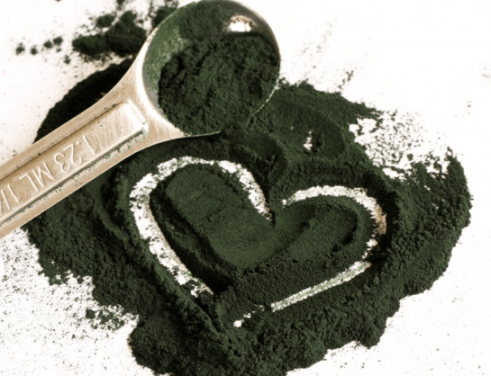
Spirulina is a variety of freshwater blue-green algae that was among the first plant life on Earth. It is so concentrated with nutrition that 40 years ago, the World Bank and United Nations declared it to be the healthiest food in the world. Not only is it an excellent source of protein – all in the form of essential amino acids for muscle, health and cellular growth – but it also has more than 40 nutrients for full-spectrum health and natural nitric oxide for immediate and enduring physical and mental energy.

Here are a few of the nutritional highlights of spirulina:

    • Provides 12 times the amount of bio-available protein as steak
    • Is composed of 60-64% protein compared to meat (27%) or soy (34%)
    • More beta carotene than any other whole food
    • 58 times more iron than raw spinach
    • 12 times more iron than beef liver
    • Richest source of antioxidants – necessary for health and anti-aging
    • Richest source of vitamin A (which helps your eyesight)
    • Richest plant source of GLA to reduce cholesterol and blood pressure

Now, I happen to be a huge fan of supplementing my diet with superfoods to fill in some of the inevitable nutritional gaps, so when the folks at ENERGYbits contacted me to try their 100 percent organic spirulina product, I had to see for myself if it lived up to all the hype.

EnergyBits1

According to ENERGYbits, you need at least 20-30 tabs per serving to feel a difference and at least 30 tabs per day to experience a change in your health, but since I had one tin of bits to test, I decided to space them out a…ahem…’bit.’

You can chew ’em or swallow ’em whole (they’re tiny, and only one calorie each), so I opted for the former during my first go-around, but they tasted just like they smelled (kinda fishy) and really stuck to my teeth, so I made a mental note to swallow the rest whole.

While I can’t exactly quantify the results (especially with the smaller servings I took), I did use them mid-marathon training and was pleased with the results. I tried a handful before a morning run for a little energy boost, and they didn’t upset my usually-sensitive stomach. And since the they also pack lots of good protein, I popped some after a few of my longer runs, too, for help with recovery.

The final verdict: If you’re trying to up your daily quota of green foods, like me, or are concerned about filling in some of those nutritional gaps I mentioned above, algae is a great option, and ENERGYbits are a convenient way in which to do so. Personally, I’m also excited to incorporate them into recipes, such as protein shakes and fruit smoothies, to help round out my diet.

Want to experience ENERGYbits for yourself? Just use the promo code “BLOG” in the coupon box to receive a 10% discount on your next order!

Thanks to the folks at ENERGYbits for providing samples for review; all opinions are my own. 

How to avoid being haunted by Halloween treats

Source: EatingFree.com

Source: EatingFree.com

Let the holiday gobbling commence.

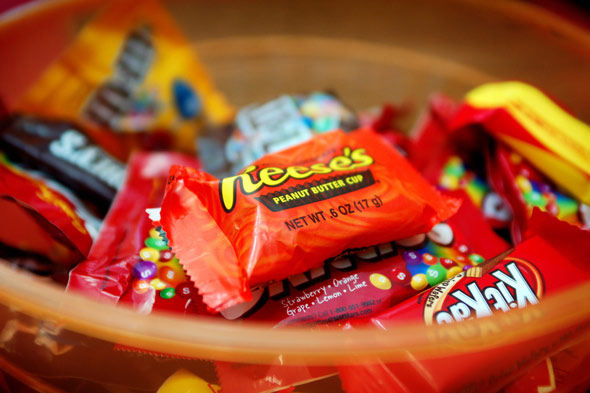
According to one article in USA Today, five percent of all candy consumption for the year will occur this week, starting with All Hallow’s Eve.

Even scarier? Most parents eat one out of every two candy bars their children bring home, says Harry Baltzer, vice president of the NPD Group, which does research on eating trends.

Chocolates rank first in popularity, especially among adults, followed by chewy candies and hard candy.

So how can you enjoy the season’s treats without playing tricks on your waistline? Below are a few tips for starting some healthy habits this Halloween:

    • Buy healthy treats such as raisins, popcorn balls, pretzels and toys (just be prepared for possible retaliation in the form of toilet paper)
    • If you’re giving out candy, don’t buy your favorite brand…it’ll keep you from skimming off the top while you wait
    • Feed trick-or-treaters a solid meal before they hits the streets to avoid snacking – that goes for parents, too
    • Partition the evening’s loot into three piles immediately: Enjoy now, freeze for later and give away
    • Finally…do enjoy your favorite candy on Halloween, and savor every bite so you don’t feel deprived of the fun

Happy Halloween, everyone!

Fave Fix: Snikiddy’s smart snack swaps


Snikiddy

Football season is in full swing, Halloween is nearly here, and holiday parties are just around the corner…let the mindless munching commence!

Ok, ok – so it’s not necessarily bad news for nibblers: Savvy snacking can actually help you lose weight by staving off hunger and preventing overeating. That is, as long as you keep your wits about you when staring down a gauntlet of goodies.

A few tips:

1. Plan ahead. When hunger hits and you’re unprepared, you can get into some real trouble. Have something light and healthy (fruit and cheese, or even a handful of nuts and crackers) before you set foot into the party. That way, you can relax and enjoy yourself instead of making a beeline for the buffet.

2. Practice portion control. As with many things in life, bigger is not better. So say ‘no’ to supersizing, whether it’s your plate, your serving or (like me, often) your eyes in proportion to your stomach. Start with small tastes, eat slowly and savor every bite.

3. Pick replacements. Choose flavor-packed snacks that contribute to the feeling of fullness and satisfaction. And when you’ve got a favorite food that you just can’t pass up, find a healthier replacement to satisfy that craving…otherwise you’ll keep eating other stuff in an attempt to fill the void.

Case in point: Chips. Sometimes you just need that hit of salty crunchiness. But all the grease, artificial ingredients and extra calories? Not so much.

Well, that very same dilemma inspired Mary Owings Schulman, a mother concerned about her kids eating healthy, to create a company called Snikiddy, which makes snacks that promote good health.

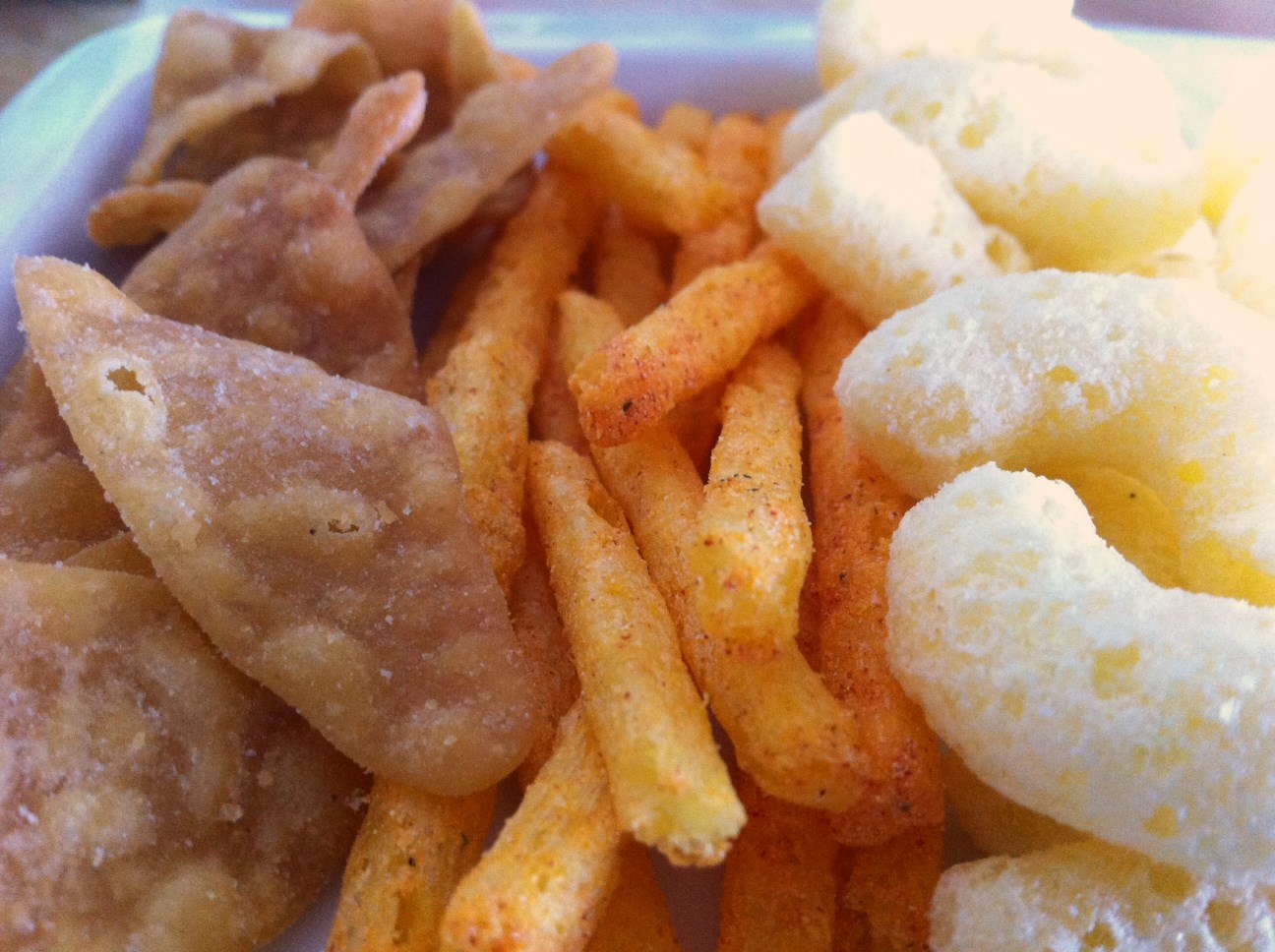
Snikiddy’s all-natural snacks are made from non-GMO ingredients, are certified wheat- and gluten-free and come in three varieties – Cheese PuffsBaked Fries and an eight-veggie crisp, Eat Your Vegetables.

These are some seriously good snacks. I even ran an unofficial taste-test among a group of friends and the consensus was that they are…delicious. If you like Pirate’s Booty, you’ll love the cheese puffs, and the fries packed a big punch of flavor in a crunchy little straw.

But the crowd favorite, by far, was the veggie crisps. Not only are they tasty and filling (one tester described them as “surprisingly substantial”), but they’re also super crunchy and flavorful, almost like pita chips. Plus there’s a full serving of veggies in every ounce.

But the best part? Finally, a great chip for scooping guac… you know, just in case you want a little extra-veggie credit next time you get a snack attack.

Thanks to the folks at Snikiddy for providing samples for review; all opinions are my own. 

Knotty by nature? Roll your way to fewer running injuries

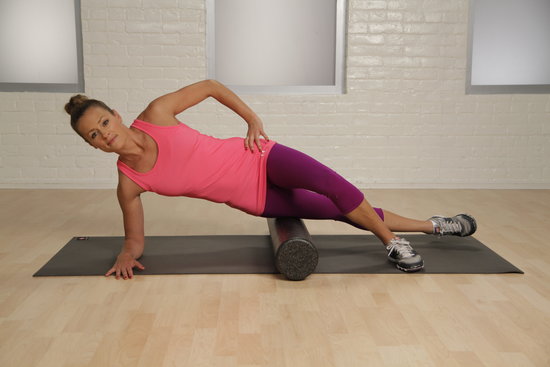
Photo credit: FitSugar

Photo credit: FitSugar

Whether you’re a casual jogger or competitive racer, you’ve likely dealt with aches and pains. Inevitable, yes. But debilitating? Not if you take an active role in preventing injury and promoting recovery with every runner’s best friend: the foam roller.

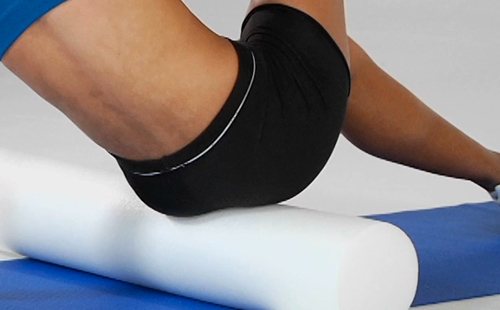
Athletes use rollers to perform self-myofascial release (SMR), which helps to relax soft tissues, promote circulation and ultimately stretch out tight muscles and connective tendons that are most prone to injury.

Photo credit: Runner's World

Photo credit: Runner’s World

Why’s this important? Well, an out-of-whack body (due to injury, poor posture, over-training, little-to-no stretching, etc.) has poor range of motion which, over time, can morph into a larger, chronic issue.

SMR allows athletes to address underlying problems before they get out of hand (i.e. beyond repair).

Think of your roller as the next best thing to a personal physical therapist kneading out knots, plus it’s a lot cheaper and can be done in the privacy of your home.

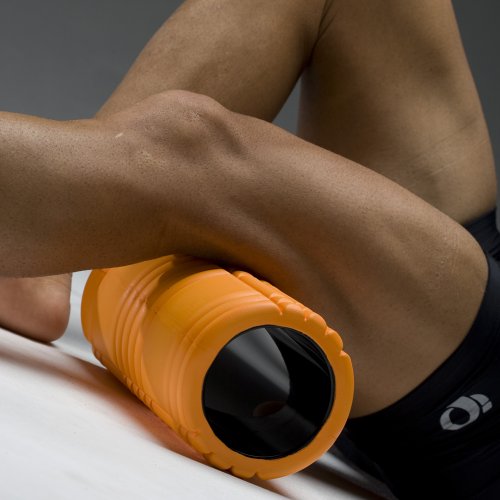
Photo credit: Trigger Point Performance

Photo credit: Trigger Point Performance

Rollers range from simple foam ($12 here on Amazon.com) to sophisticated grids for a more targeted massage ($40 here from Trigger Point Performance Therapy).

Type aside, the key to success lies in regular use – not only to help work out kinks and stretch, but also for improved core strength, balance and spinal mobility.

Focus on trouble spots – for runners, those are calves, shins, hamstrings, quadriceps, IT (iliotibial) band, piriformis and back muscles – and keep the following tips in mind (and if you’re looking for more guidance, I’ll share specific exercises in a follow-up post):

  • Prepare yourself – expect some discomfort, and when you hit a tender spot, hold for 60-90 seconds
  • Be patient – it’s taken days, months or maybe even years for your muscles to tighten up; don’t expect them to loosen immediately
  • Go slow – rocking back and forth quickly may feel good, but settle in to really hit deep tissues
  • Commit the time – you can safely perform myofascial release every day; do it as often as possible to re-train muscle memory
  • Stay flexible – add stretching to your routine to gain even more mobility in problem areas
  • Use common sense  – any pain that does not improve should be evaluated by a physical therapist or physician

DIY Beauty: Pumpkin Pie Sugar Scrub

Source: Indie Lee

Source: Indie Lee

Fall is in the air, along with one of my favorite seasonal scents: pumpkin!

Drink it in a latte, eat it as a slice of pie or slather it all over you body with this scrumptious Pumpkin Pie Sugar Scrub from Indie Lee, creator of the namesake eco-chic and all-natural skincare line.

Inspired by her fan-favorite Coconut Citrus Body Scrub, Lee whipped up this autumnal treat to get sun-stressed skin ready for the crisp months ahead.

See the image above for ingredients, and here are the directions for indulging in this guilt-free pumpkin polisher:

  1. In a large bowl, mix all dry ingredients until fully blended.
  2. Add coconut oil and pumpkin pie mix (or canned pumpkin, if you can’t find the mix), blending until smooth.
  3. If scrub is too runny, add more sugar to get it to desired consistency.
  4. Cover the scrub and let it sit for an hour before using.
  5. Discard of any unused portion.

For more natural beauty tips like this, visit IndieLee.com.

DIY Beauty: Soak away sore feet

foot soak

After a long day on your feet (or an intense run), there’s nothing that’ll keep those tired dogs from barking better than a tried-and-true remedy: Epsom salt.

Athletes swear by the stuff, which is used in all sorts of soaks to help relieve pain, reduce stiffness and get rid of odor.

It’s one of my favorite parts of the post-run ritual; just add a few drops of your favorite essential oil, and you’ll be good to go in no time at all.

Soothing Epsom Salt Foot Soak

Ingredients: 

  • Water (heated to a comfortable level)
  • 1 cup Epsom salt
  • Essential oil of your choice
  • Unscented lotion

Directions: 

  1. Fill a bowl with enough water to cover feet (test temperature with your hands first!)
  2. Dissolve Epsom salt in water, and add a few drops of essential oil (my favorites: lavender to relax or peppermint to energize)
  3. Soak feet for 10-15 minutes. Pat dry and moisturize, adding a few drops of essential oil into your lotion

Bringing Sexy Back: Core exercises for runners

Photo credit: Jupiterimages/Brand X Pictures/Getty Images

Photo credit: Jupiter Images/Brand X Pictures/Getty Images

More than half of all runners are injured in any given year, and almost 90 percent will experience some type of running-related injury in their lifetime.

With those odds, it’s pretty tough to avoid getting hurt sooner or later, but you can decrease your chances by being proactive about injury prevention. This means addressing anatomical imbalances (through things like stretching and strength training) before they become symptomatic (i.e. injuries).

Photo credit: WalkJogRun.net

Photo credit: WalkJogRun.net

I learned this firsthand after experiencing some pain in my lower back after long runs. It took a skilled massage therapist to notice that, while I do regular full-body strength training, I have some work to do in that particular area.

You see, we’re only as strong as our weakest link. And while runners focus most of our time on building heart and leg strength, we’re remiss to dismiss the core.

Not only is a strong midsection essential for more stable, efficient and powerful running (this article from Bodybuilding.com explains it well), but it’s also an effective insurance policy against future injury.

Runner’s World does an excellent job of illustrating how your core supports various movements in this piece, but I also wanted to share a few moves that I’ll be adding to my weekly workouts to help build stronger lower back muscles…not just for my long runs, but for the long run.

Lower-Back Builder #1: Superman

Works: Back extensors, which run on either side of the spine, as well as the glutes

  1. Lie face-down on the floor with your arms and legs extended and neck in a neutral position (i.e. eyes on the floor).
  2. Keeping limbs straight, simultaneously lift your arms and legs until they are several inches off the floor.
  3. Hold for two to five seconds and lower back down to complete one.
  4. Do three sets of 12 reps.

Lower-Back Builder #2: Donkey Kicks

Works: Glutes and lower back

  1. On all fours (with your wrists under your shoulders and knees under your hips), extend your right leg up and back, toward the ceiling.
  2. Continue lifting and lowering your leg to its starting position, keeping your butt and legs engaged.
  3. Do 20-30 reps on each side.

Lower-Back Builder #3: Dead Lifts

Works: Everything from lower back (erector spinae), gluteus maximus and hamstrings to quadriceps and other stabilizing muscles

  1. You’ll need a barbell for this one! Stand with feet shoulder-width apart and balls of feet under bar.
  2. Squat (thighs should be parallel to floor; legs at a 90-degree angle) and grasp the bar with your hands slightly more than shoulder width apart, outside of your legs.
  3. Look forward, tighten abs and slowly straighten your legs, which will allow you to lift the bar – straight up vertically, close to your body.
  4. Come to a standing position with upright posture and shoulders pulled back. Allow the bar to hang in front of your hips; do not try to lift it any higher.
  5. Keeping your back straight, return the bar to the starting position in a controlled manner. Push your butt out and back, as if you are going to sit down in a chair, and keep your head up.
  6. Do two sets of 12.

Bonus Move! The Clam

Works: Gluteus medius (the culprit in chronic, recurring conditions such as Runner’s Knee, Iliotibial Band Friction Syndrome, Achilles issues and low back pain, to name a few!)

  1. Lying on your side, bend your knees so that your legs form a 90-degree angle in front of you, hips in line with shoulders.
  2. Keeping the top leg bent, slowly lift your knee to the ceiling while keeping your feet together and bottom leg stable.
  3. Do two sets of 20 reps on each side.

Disclaimer: Although I am a former ACE-certified personal trainer, you should consult a physician before starting any exercise program or diet plan. If you choose to do any of the workouts featured on this website, you do so at your own risk.