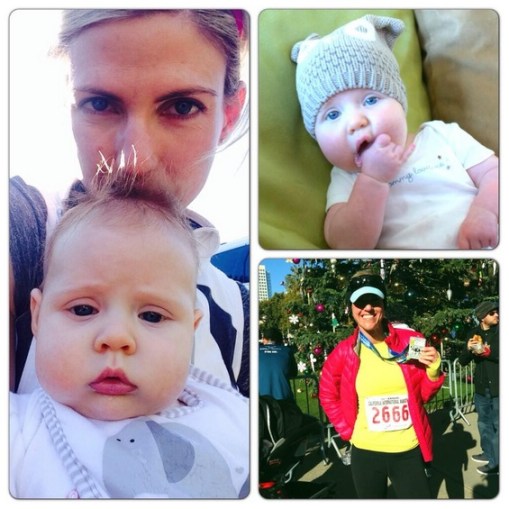
Happy Earth Day! 5 ways to “green” your exercise routine

earth day

Most people equate Earth Day with reduction, whether it’s waste, electricity or water, but you can also celebrate the holiday by doing something positive – both for the planet and your health.

One idea? Escape the confines of your gym with an outdoor workout. Not only do jungle gyms and park benches double as fun ways for sneaking in strength training, but a recent study from the journal of Environmental Science and Technology also found that there are actual benefits to your mental and physical well-being by exercising outside.

Now that’s the gift that keeps on giving long after the holiday.

Below are four more ways to show your appreciation for Mother Nature while breaking a sweat today:

  • Use equipment that doesn’t require electricity. Try a manual treadmill, such as the TrimWalk, which requires no power (unless you count sheer willpower, of course). Simply set the pace and go, and when you’re finished, it folds and stores conveniently under a bed. If you’re up for a bigger challenge, try a bike generator, which allows athletes to translate their exertion into energy, in the form of a 12-Volt battery.
  • Practice eco-running. The mission? Simply lace up your running shoes, grab a garbage bag and jog around town, filling it with trash. Sure, in the grand scheme of things it’s a small step, but it’s more about raising awareness for personal responsibility and creating momentum for a more positive impact on the planet. Visit EcologyRunner for more information on this movement, a brainchild of Samuel Huber, who created it to merge his two passions.
  • Participate in a local Earth Day event. Get involved, and help rally your community to make a difference! Visit EarthDay.org to view a list of events happening around the world, including celebrations, beach clean-ups, conservation talks, conferences, festivals and more.
  • Get some eco-friendly fitness gear. Enhance your workout with equipment that works well and does some good. For example:
      • Amplify your ability to give back with LSTN Troubadors headphones. Not only are they made of reclaimed beech wood, ebony wood or cherry wood casing, but for every purchase, the company will also help restore hearing to a person in need through the Starkey Hearing Foundation.
      • Close the gap between your active lifestyle and others’ needs with the MiiR Growler water bottle. For each bottle purchased, one person in need is supplied with water for a year.
      • Finally, hydrate responsibly with Treeson spring water. For every bottle sold, a tree is planted — and each bottle comes with a mailing label so it can be returned via USPS to be put through a special process that turns it into clean energy used to make more bottles.

How are you honoring Earth Day this year? 

Barry’s or Bust: Taking to LA to test the ‘Best Workout in the World’


photo 4 (4)

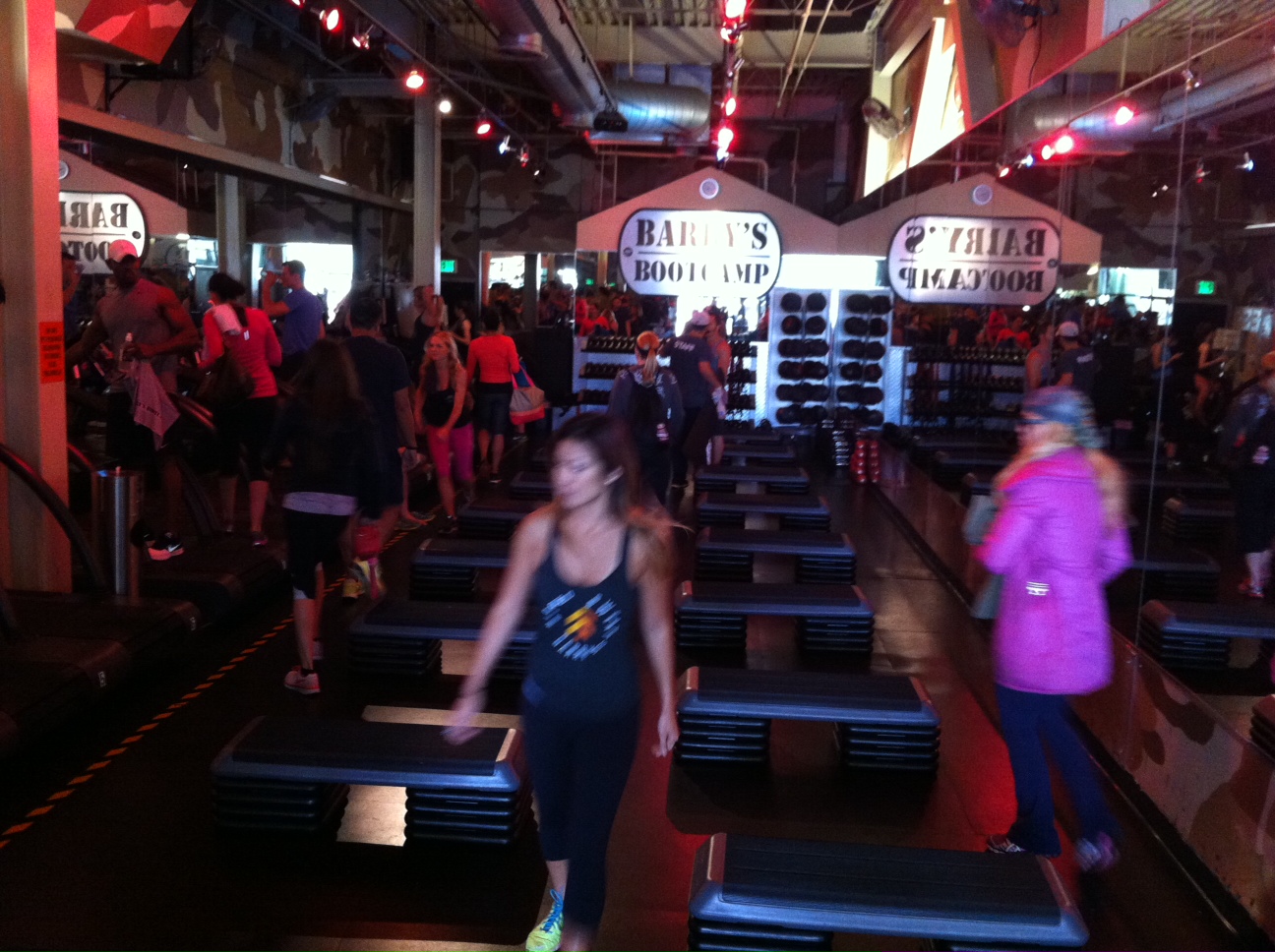
It’s a good thing typing only requires moving my fingers — because pretty much every other muscle in my body is sore today after yesterday’s field trip down to LA for my first taste of the serious sweatfest that is Barry’s Bootcamp.

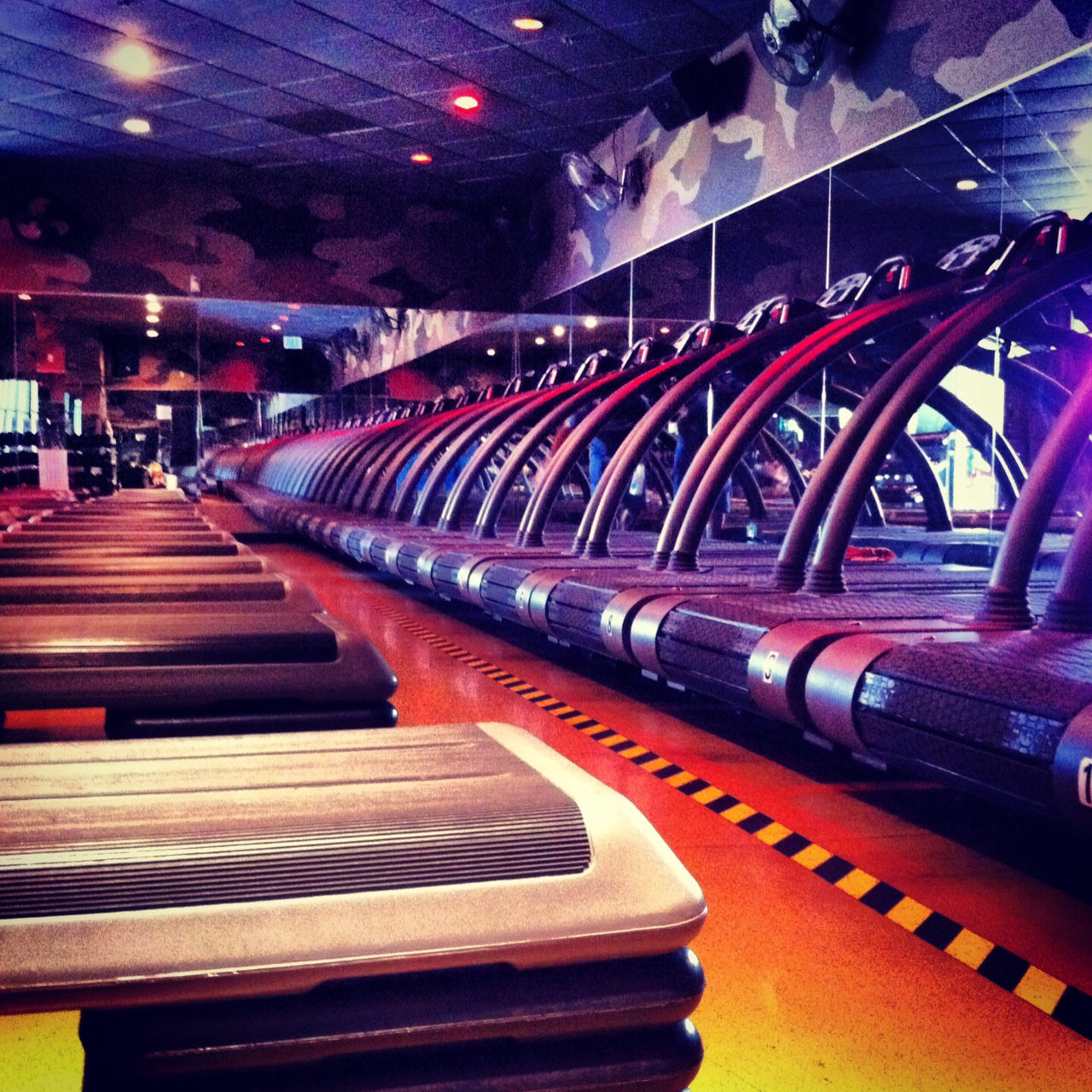
The Los Angeles-based company, whose popular program combines treadmill sprints and strength-training intervals for hour-long workouts, is coming soon to San Francisco thanks to Adam Shane (owner of the SF franchise). He invited a group of us to see firsthand how the brand earned its reputation as the “Best Workout in the World” among celebs, athletes and enthusiasts alike.

photo 1 (13)

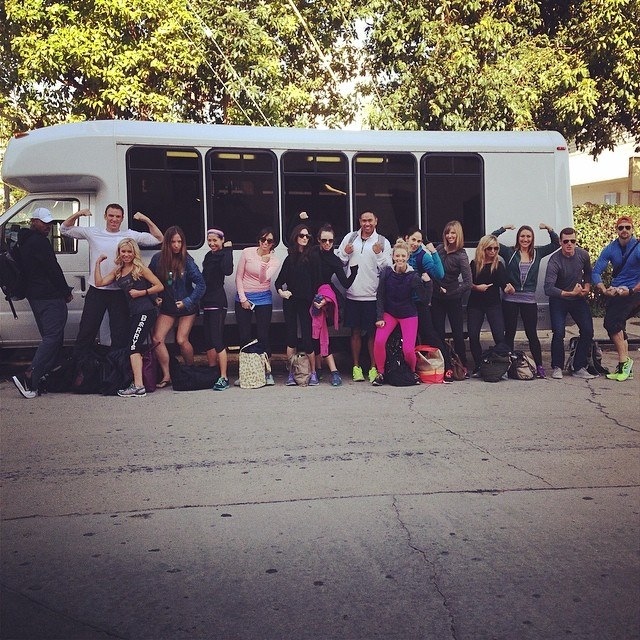
Among our travel crew were a few of the new Barry’s SF instructors, who just so happen to boast beauty, brawn and brains (we’re talkin’ Ivy league-educated, PhD-toting fit pros here), which is very much by design. Shane hand-picked the team himself, selecting some of the city’s top trainers with a goal of whipping the Bay Area into shape like never before.

On the day’s agenda? A double-whammy workout with not one, but two (!) Barry’s classes — some morning madness at the Sherman Oaks location with master instructor Martin George, and some afternoon abuse with ‘entertrainer’ extraordinaire Seth Gee.

photo 1 (14)

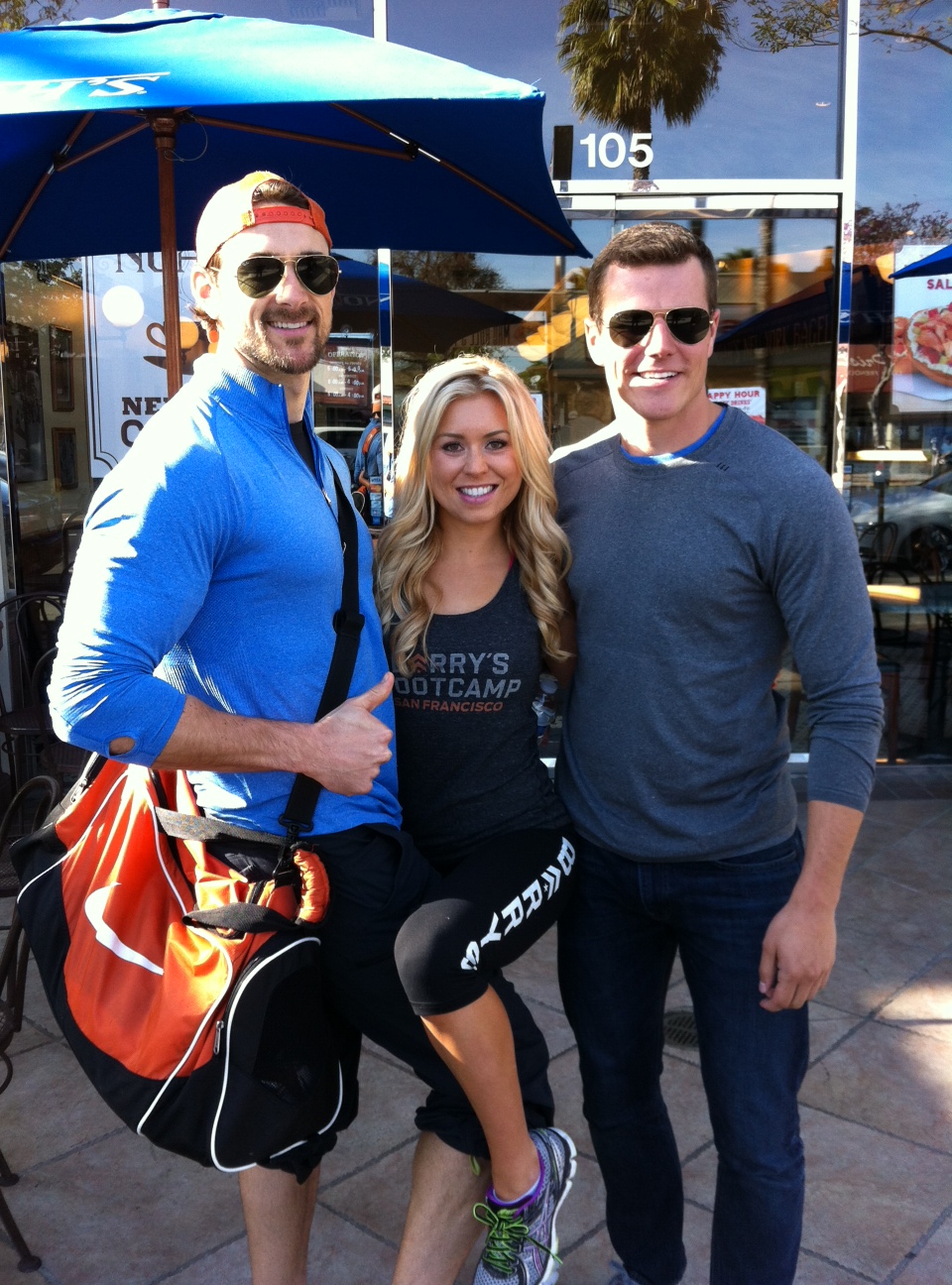
By the way, get to know these faces — Barry’s SF instructors Tommy, Erica and Tommy — because you’re going to develop a love/hate relationship with them when they kick your ass in class come this spring.

photo 1 (15)

Back to the workout: Each class is split between high-intensity treadmill cardio and weight lifting moves on the floor. But the real kicker is that the instructors switch it up every time, so you never know what to expect — and neither does your body, which is what makes these moves more effective that some other super-repetitive routines.

Thursday was ‘core’ day, so George told us to grab a few dumbbells and take to the makeshift step stations for a series of crunches, lifts, twists and other forms of abdominal torture. All I know is that I was seriously struggling — and that every bit of my midsection got worked to submission.

And just when I thought I may have to wave my white towel in defeat, we swapped placed with the treadmill group.

photo 2 (13)

I relaxed a bit as I cranked up the speed — after all, I’m a runner, and the treadmill is my ‘security blanket’ — but after a series of sprints, hills and backwards drills (on a 12 percent incline, no less), it sunk in that there would be no room for slacking off, zoning out or taking a breather during class.

George seamlessly struck a balance between monitoring both groups, shouting out intervals to the runners and counting down sets on the floor, plus orchestrating music and lighting changes while simultaneously giving feedback on form.

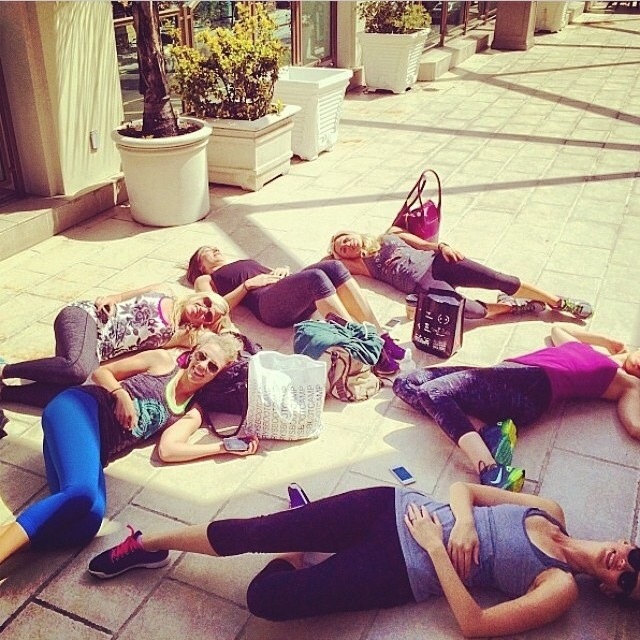
We swapped places twice more for a total of three different treadmill segments and three floor sessions each, and before we knew it the class was coming to an end. We did a quick cooldown stretch and promptly collapsed outside in the sun for a few moments to recover and figure out how we were going to make it through another hour of this kind of intensity later in the afternoon.

photo 2 (14)

After a quick snack (it’s important to refuel within 30 minutes after class to help your body recover and repair) and change of clothes, we headed down the street for lunch and to meet with company CEO John Mumford and President/Founder Rachel Mumford to learn a bit about how Barry’s came about.

The story’s a great one — Mumford recognized the potential in developing Barry’s Bootcamp’s program and lifestyle into a recognizable brand after religiously taking bootcamp classes from Director of Curriculum/Founder Barry Jay years ago. She convinced her husband to invest initially, and then eventually take on business operations and strategic planning — and the rest, as they say is history.

photo 2 (15)After a little time to digest (apparently if you puke mid-class, you get a t-shirt; no thanks), we headed over to West Hollywood to the original Barry’s Bootcamp location for our afternoon class with Gee. I was concerned the session might be a bit repetitive due to the same cardio/core focus as our morning workout, but Gee immediately had us grab a weighted ball and set the treadmills to dynamic mode (you’ve got to propel the belt yourself)…there’s no such thing as the same two workouts here.

Although we followed a similar class structure — three sets on the treadmill and three sets on the floor — the exercises, intervals and overall feel of the session were completely different. In between ‘sprints’ where we ran with all our might on a non-powered treadmill, we did kettleball-type swings, dead lifts and a bunch of Russian twists — but no single exercise on the floor or segment on the treadmill was repeated from the morning’s workout.

photo 5 (4)

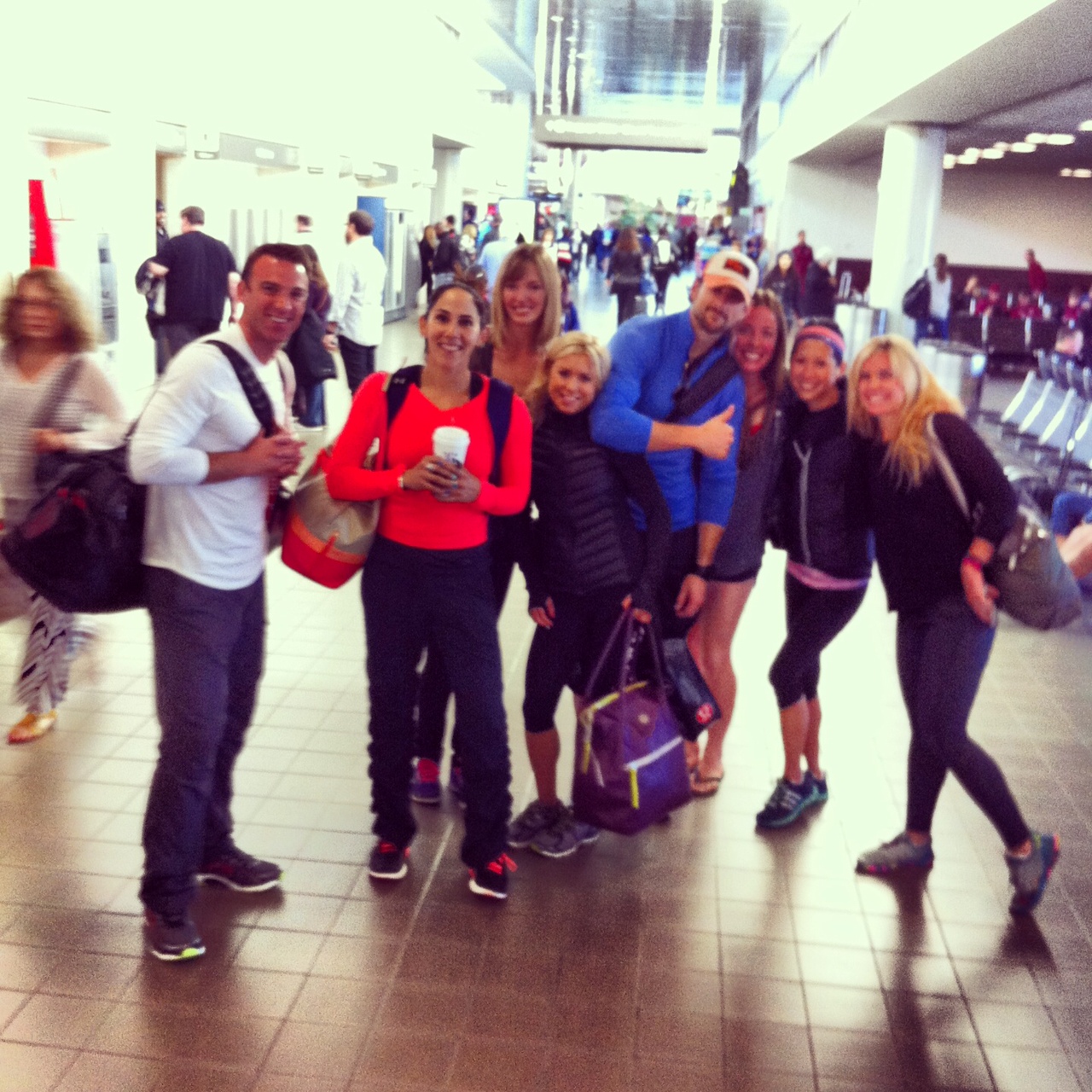
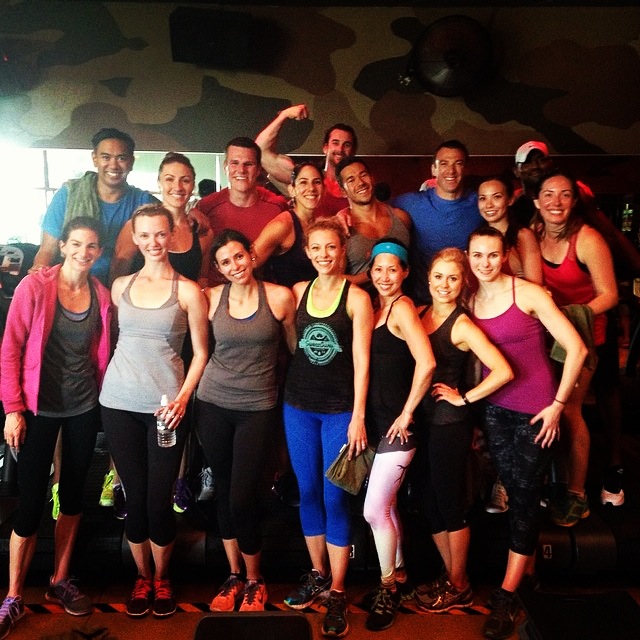
Don’t let those grins fool you — we were happy, but certainly hurting, after a double dose of Barry’s. In fact, after a ride back to the airport and a quick dinner together, most of us looked like this on the plan ride home: Exhausted!

photo 3 (14)

My takeaways from the day?

It’s a serious workout. Don’t expect to waltz your way through class; although the moves are modifiable, you’ve got to bring your A-game. At more than one point, as I was struggling for just. one. more. rep, I looked around and saw that everyone else around me was hurting just as badly (yes, even the biggest, buffest guys!).

It really works. Not only does the body part focus change each day, but the individual instructors have their own respective styles and moves. You might swap back and forth from floor to treadmill all workout or you might have a 30-on/30-off day, so your body and mind are constantly working to adapt.

It’s ideal cross-training for athletes. As I was telling Shane on the plane ride home, I’ve been slacking on my strength training, core work and interval training in my quest for pure mileage on the bike, in the pool and on the road during training season. So this is an awesome way to mix things up and train away any weaknesses in between — not to mention a great way to maintain fitness during the off season.

It’s damn fun. Between the instructors, lighting and music, the mood in the room is amazing. Very no-nonsense — you’re gonna get a hardcore workout — but you’re not gonna get yelled at or intimidated. You can focus on beating your personal best, or motivate yourself by trying to keep up with the person next to you…but either way, the time will fly by and you’ll be wanting to come back for more.

For more information on Barry’s Bootcamp, check out their website here. And stay tuned, Bay Area friends, for the opening of the new SF location this spring! 

Spring clean your workout routine

cdn-write.demandstudios.com-upload--image-B3-27-37897326-0893-434B-B067-A6C7947327B3-37897326-0893-434B-B067-A6C7947327B3

Even if you’ve maintained a regular workout program throughout the winter, there’s a good chance you’ll hit a plateau at some point, so spring is an ideal time to switch up your workout routine.

Why? Much like your mind, your body becomes bored with predictability, so a change of exercise scenery may be all that’s needed to keep it from becoming acclimated — and unresponsive — to your efforts.

Here are a few ways I like to spruce up my workout regimen for spring:

– Shake up your schedule. Early bird? Take advantage of the extra hours of daylight to get active in the evening. If you’re a night owl, challenge yourself to get up an hour earlier to get your workout done before work.

– Try a change in venue. If the cold weather has had you cooped up all winter, take it outside. Or if you’ve been out battling the elements for the past few months, mix things up with a weekly group class for cross-training.

– Play with sequence. If you break workouts into specific combinations of body parts on different days (say, legs/back, arms/shoulders, chest/abs), pair them oppositely to force your body to adjust.

– Get some new gear. Nothing makes a workout more fun than trying out the latest and greatest exercise equipment. Case in point: I just got a new set of wheels, and I’m loving the new challenge of honing my skills on the bike.

– Develop a need for speed. Repeat after me: “Intervals are my friend!” Scrap your usual pace and add in walk breaks and sprints to trick your body into working harder.

– Tune-up your fuel. Re-evaluate your current dietary habits, and make a few incremental, measurable and attainable changes in what you consume, whether it’s adding in more fruits and veggies – or cutting down on junk food. And don’t forget to hydrate!

– Set the mood with music. Shop around on iTunes for new exercise mixes, sample a new music genre or allow personalized music sites, such as Pandora or Spotify, to suggest songs for you.

– Use the buddy system. Sometimes all it takes is a little company (i.e. my Monday SweatGuru runch dates) to kick it up a notch; picking up a partner can be a huge motivator in terms of support, friendly competition and accountability.

Try easing into a few changes at a time; do too much too soon, and you’ll risk getting injured. Always consult your doctor before beginning a new workout program, and use common sense – be sure to stop exercising if anything hurts.

How do you adjust your workout routine to stay fresh in a new season?

Work out where you work – and do both better

How-to-Workout-at-Work

The key to better productivity in the office may just lie in getting out of it.

Studies have shown that exercise not only boosts work performance in individuals by improving brain function, upping productivity and reducing stress, but it also has a profound effect on the workforce, as a whole. (I can definitely vouch for this, via our SweatGuru crew’s weekly “runch!”)

“Absenteeism is reduced, morale is increased and long-term health care costs are substantially impacted,” says Jim Colvin, M.P.H., fitness and health educator and trainer at Bay Club Silicon Valley.

So next time you’re temped to fight the mid-day slump with a second cup of coffee or a trip to the vending machine, think again. For managers and employees alike, Colvin offers four tips for merging physical activity with your 9-5 routine:

1. Take meetings at the gym. A new study at the University of Illinois at Urbana-Champaign found that participants showed significantly increased signs of focus and ability to retain and use new information immediately after a 20-minute yoga session. If you’re in a position to schedule off-sites, consider a health club venue: “The key is to build in a break to do a team workout with one of the classes being offered. The rejuvenation you will find between body and brain will result in a more stimulating discussion when the team returns to business,” says Colvin.

2. Walk and talk. “Walking for 15 minutes will burn approximately 100 calories each time,” says Colvin. Need one-on-one time with a coworker? “Instead of going for coffee, circle your floor or the block while you chat and reap the benefits of the endorphin release in the brain.”

3. Reschedule your workout. Typically work out at the end of the day? It’s a great stress reliever. But for a mental energy boost during the work day, consider hitting the gym on your way to the office or on your lunch break. Or, take 10-minute breaks throughout the day to climb a few flights in the stairwell or bang out a set of push-ups behind your desk.

4. Create a “mobile” office. “Many companies have incorporated walking treadmill stations in the office, and studies have shown that the additional steps taken resulted in reduced waist-to-hip ratios,” says Colvin. If you’re lucky enough to work from home, you can create your own treadmill desk by making a platform for your laptop across the handlebars and setting the treadmill between .7 and 1 mile per hour to be able to type comfortably while you walk. Or, for those who normally retreat to the local cafe, consider setting up shop at a work-friendly gym instead.

How do you squeeze physical activity into your workday?

Pick-a-stick workout

Source: Ashley Benson Fitness

Source: Ashley Benson Fitness

We all have those weeks where it’s tough to find either the time or the motivation to work out. Whether you’re slammed at work, between training schedules, overwhelmed at home, trying to get back in the groove or just on the road and out of your usual routine, removing the obstacle of having to choose your workout makes it more likely that you’ll actually get to the working out part.

But all you need for this is a few items — and virtually no equipment — so it’s easy to do in the comfort of your home or hotel room. And if you don’t want to pack the sticks while traveling, you can print out the list below and choose numbers instead of colors to create the day’s combination.

When you just need a quickie sweat session, simply pull one stick of each color and perform the moves. Or if you want a longer challenge, repeat the set of four exercises a few times, depending on how much time you have. And if you really want to mix things up, get crazy and pull several sticks of each color for a more varied total-body workout.

What you need: 

  • 40 Popsicle sticks
  • 5 permanent markers, each a different color (black, red, green, blue, yellow, for example)
  • 2 Mason jars or cups

How to do it: 

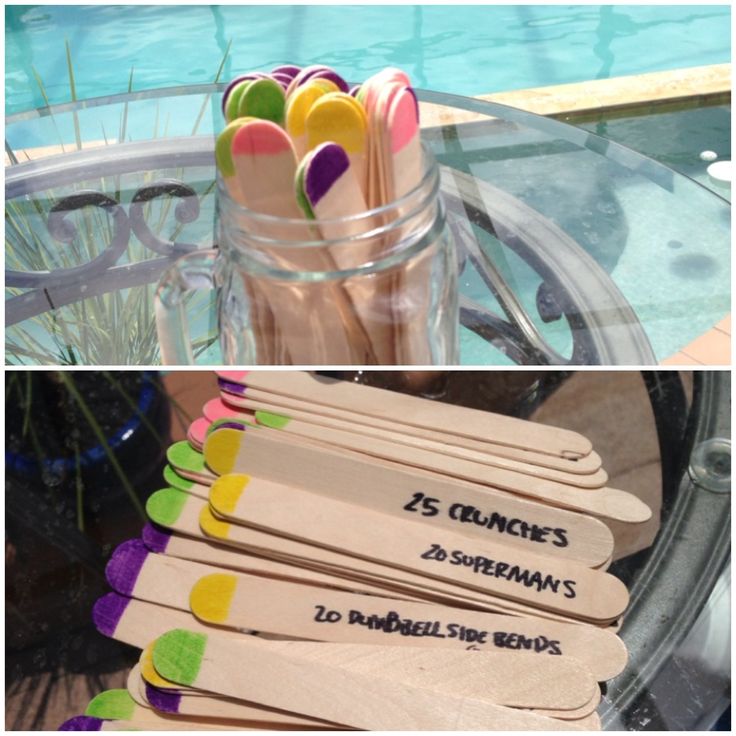
  1. Divide the Popsicle sticks into four groups of 10, and color the ends of each group of sticks with a different colored marker (so when you’re done, you’ll have 10 sticks tagged with red, 10 sticks with green, 10 sticks with blue and 10 sticks with yellow)
  2. Assign one color to each of the exercise groups (i.e. red = upper body, green = lower body, blue = core, and yellow = cardio)
  3. Take the black marker and write a corresponding exercise on each stick — refer to the list below for some ideas, but if you have other favorites, feel free to swap them in
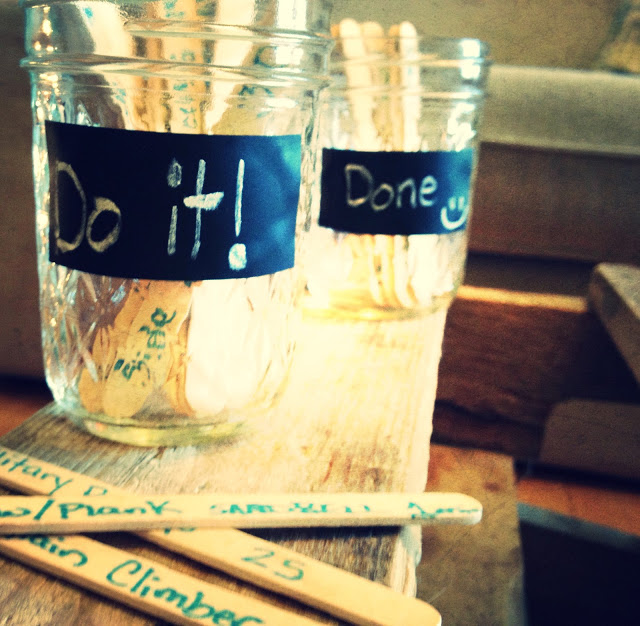
  4. Put all the sticks (colored ends up) in one jar labeled “Do it!” And when you’re ready for a workout, just grab one stick of each color.
  5. Once the workout is complete, place the used sticks in the second jar labeled “Done!”
Source: Pinterest

Source: Pinterest

Exercise ideas: 

  • Upper Body
    1. 25 Standard Push-Ups
    2. 25 Diamond Push-Ups (tips of thumbs and index fingers touch)
    3. 20 Push-Ups with Side Arm Balance (alternate sides)
    4. 20 Plank Up-Downs (alternating arms)
    5. 15 Lateral Raises (using dumbbells, water bottles or cans)
    6. 20 Incline/Decline Push-Ups (elevate feet for 10, elevate hands for 10)
    7. 15 Bent-Over Rows (using dumbbells, water bottles or cans)
    8. 15 Hammer Curls (using dumbbells, water bottles or cans)
    9. 25 Tricep Dips
  • Lower Body
    1. 30 Walking Lunges (alternating legs)
    2. 40 Squats
    3. 60-second Wall Sit
    4. 30 Reverse Lunges (alternating legs)
    5. 30 Calf Raises (10 each with toes facing in, straight, out)
    6. 30 Side Lunges (15 each side)
    7. 40 Plie/Sumo Squats
    8. 50 One-Legged Dead Lifts (25 each side)
    9. 50 Donkey Kicks (25 each side)
    10. 30 Curtsy Lunges (15 each side)
  • Core
    1. 60-second High Plank (arms straight under shoulders)
    2. 20 Mountain Climbers
    3. 60-second Superman
    4. 30-second Side Plank (each side)
    5. 50 Crunches
    6. 50 Bicycles (25 each side)
    7. 60-second Low Plank (on elbows)
    8. 45-second Flutter Kick
    9. 15 Sliding Pikes (with towel under feet on uncarpeted floor)
    10. 30 Bird Dogs (on knees, lift opposite arm and opposite leg)
  • Cardio
    1. 25 Burpees
    2. 60 Jumping Jacks
    3. 40 Stair Hop-Ups (jump up with both feet onto one step)
    4. 50 High Knees (jog in place, bringing knees as high as possible)
    5. 50 Butt Kicks (touch heel to glute)
    6. 90-second Stairs (time yourself running up and down a flight)
    7. 15 Tuck Jumps (bringing both legs to chest)
    8. 20 Squat Jumps (squat, then jump as high as you can)
    9. 25 Lunge Jumps (lunge, then jump into the air and switch legs)
    10. 30-second Single Leg Hops (each side; jump back and forth over an object, such as a towel)

Of course, the disclaimer: Always check with your physician to get the go-ahead before you start any new exercise program!

Winter running 101: Five essential tips

Source: Roberto Caucino/Shutterstock

Source: Roberto Caucino/Shutterstock

Navigating winter’s gauntlet of snow, ice and negative wind chills can be daunting for even the most devoted runners (I’ve had my own share of “raingry” days here in the Bay Area recently, that’s for sure).

But shorter days, frigid temps and fluctuating elements are no reason to put your workout plans on hold until spring. Follow these five tips for mastering cold-weather running, and you’ll set yourself up for a much more enjoyable season.

1. Layer up: Start with a synthetic base layer (read: not cotton) to wick sweat away from skin and, depending on the conditions, add an insulating mid-layer and a waterproof outer layer. This not only helps trap air to keep you warmer, but it also gives you options for fending off a variety of elements.

2. Don’t overdress: To avoid overheating and excessive sweating, dress as if it’s 20 degrees warmer than the current temperature. You should feel chilled when you walk out the door, but a few minutes into the run, your body temperature will rise naturally and make up the difference.

3. Protect feet: Pair high-traction, waterproof shoes with wool socks, which are great for wicking away wetness while maintaining warmth. If you want even more stability, try Yak Trax, an ice traction device with spikes and steel coils that’s anatomically designed for use with running shoes.

4. Slow down: Running on snow requires more stabilizing muscles for balance, so keep the effort easy and reduce overall mileage, as needed. If it’s super icy, use good judgment by steering clear of busy streets, taking a rest day or hitting the treadmill; there’s no use tempting fate only to end up with an unnecessary injury.

5. Factor wind: Protect any remaining exposed skin with a thin layer of Vaseline (or try this easy, DIY hand salve) to prevent windburn or frostbite. And to avoid that mid-run, bone-chilling blast in the face after you’ve broken a sweat, begin your run into the wind, so you can finish with it at your back.

What do you do differently during the winter running season? 

The three stats I track for every workout

photo-7

Although I claim to be mathematically-challenged (much to the chagrin of my dad, who is an engineer), I totally geek out when it comes to workout stats. Whether it’s miles ran, swam or biked, there’s just something so fulfilling about poring over the numbers after a particularly tough workout — not only to celebrate great days and learn from not-so-great ones, but also to set benchmarks for gauging current performance and goal setting.

But the ways in which we can now quantify ourselves is almost getting out of hand: From calories burned, miles traveled, heart rate, steps taken, sleep patterns, weight, etc. — it’s easy to get caught up in quantity to the detriment of quality (i.e. the bigger picture). For example, sometimes I’m so intent on hitting mileage goals with my runs that I’m tempted to swap a stretch session in favor of more time to log miles. Big mistake!

Everybody (and every body) is different, so you’ve got to find what works for you, your lifestyle and your goals, but I tend to think it’s best to keep it simple when it comes to tracking stats. Granted, there are certain times and training cycles where this may change, but as a rule I live by quantifying the following three things for each workout.

1. Shoe Mileage

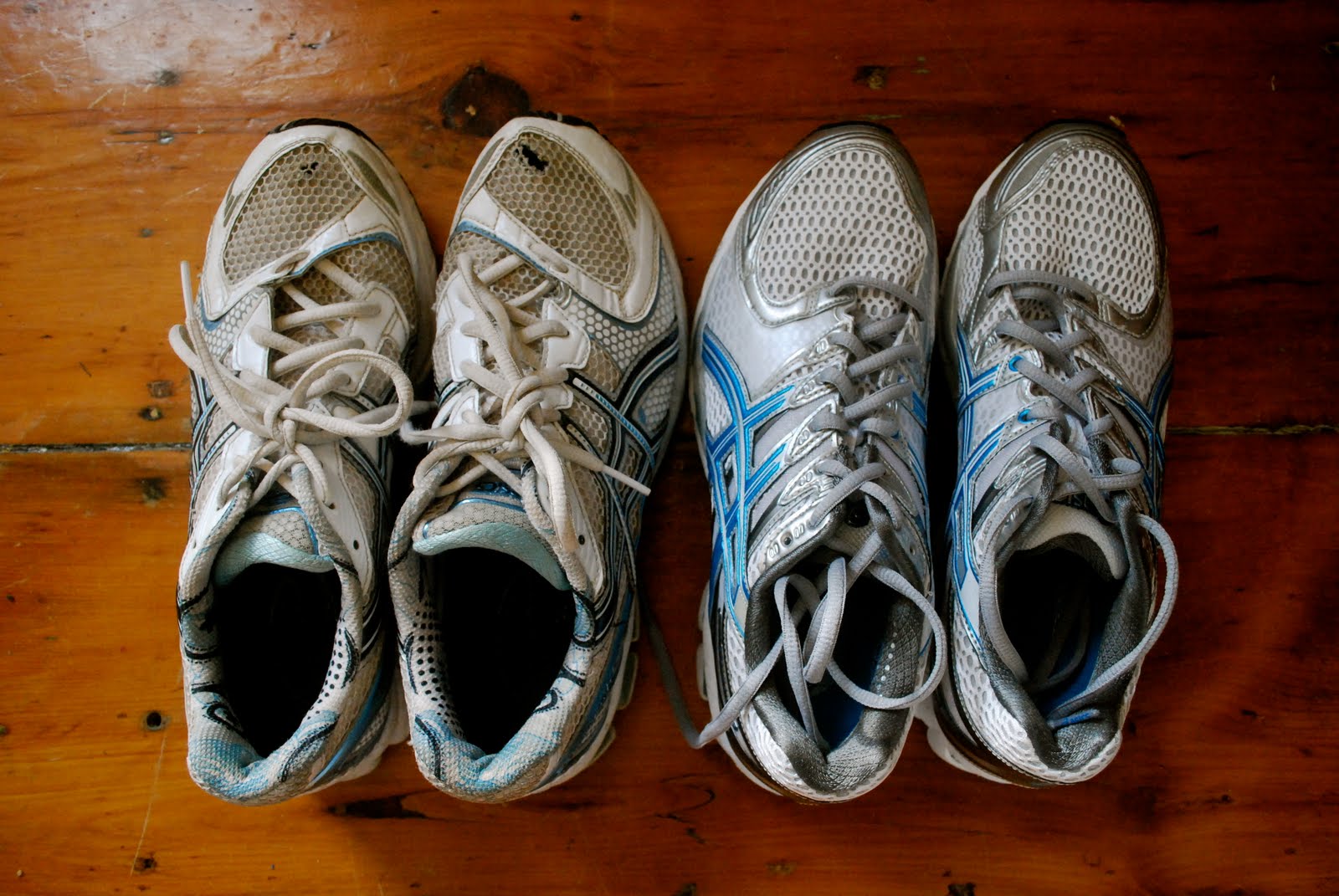
Why: I used to run my shoes into the ground (literally) trying to save a few bucks by stretching out their life as long as possible. But when minor aches and pains crept up and morphed into injuries, I learned my lesson: A pair of good shoes that will support and cushion you properly is priceless.

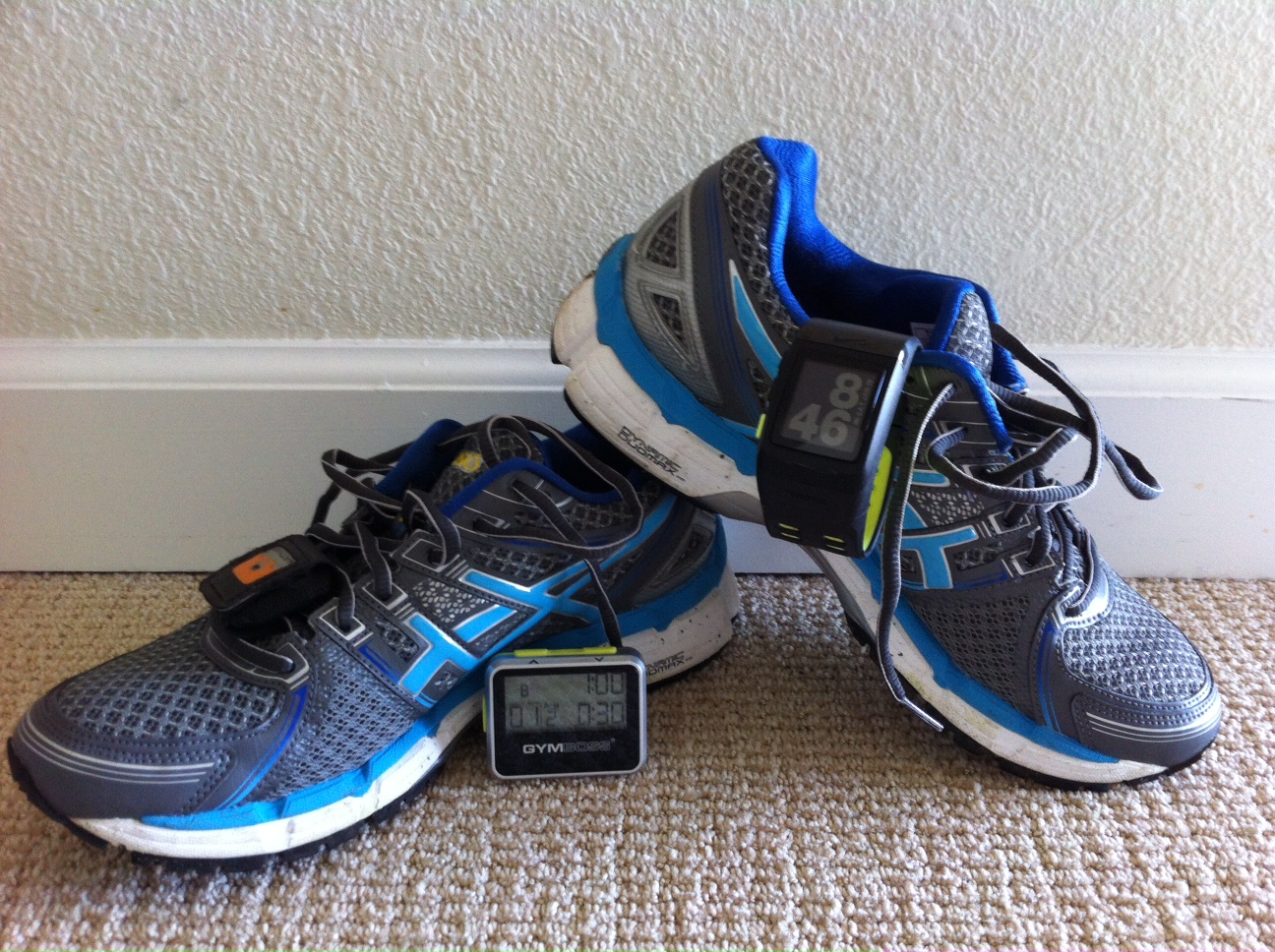
How: Rather than running in one pair until it feels “flat,” I buy two pairs of shoes and rotate them on a weekly basis to give the cushioning time to bounce back. I’m also getting better about tracking actual mileage — one of my goals for 2014 is to figure out exactly how many miles it takes for me to wear my shoes out (the average is about 300-500, depending on the runner) — so I’m keeping a tally on each to know when to rotate future pairs.

Source: OneMomInMaine.com

Source: OneMomInMaine.com

2. Exercise Duration

Why: We’re all time-crunched and multitasking to the max, so it’s easy to get in that mid-workout daze and just power through reps as quickly as possible. But by giving myself a set about of time for each exercise and working out for that entire interval, it forces me to focus on form, which inevitably gives me more bang for my buck in the long run.

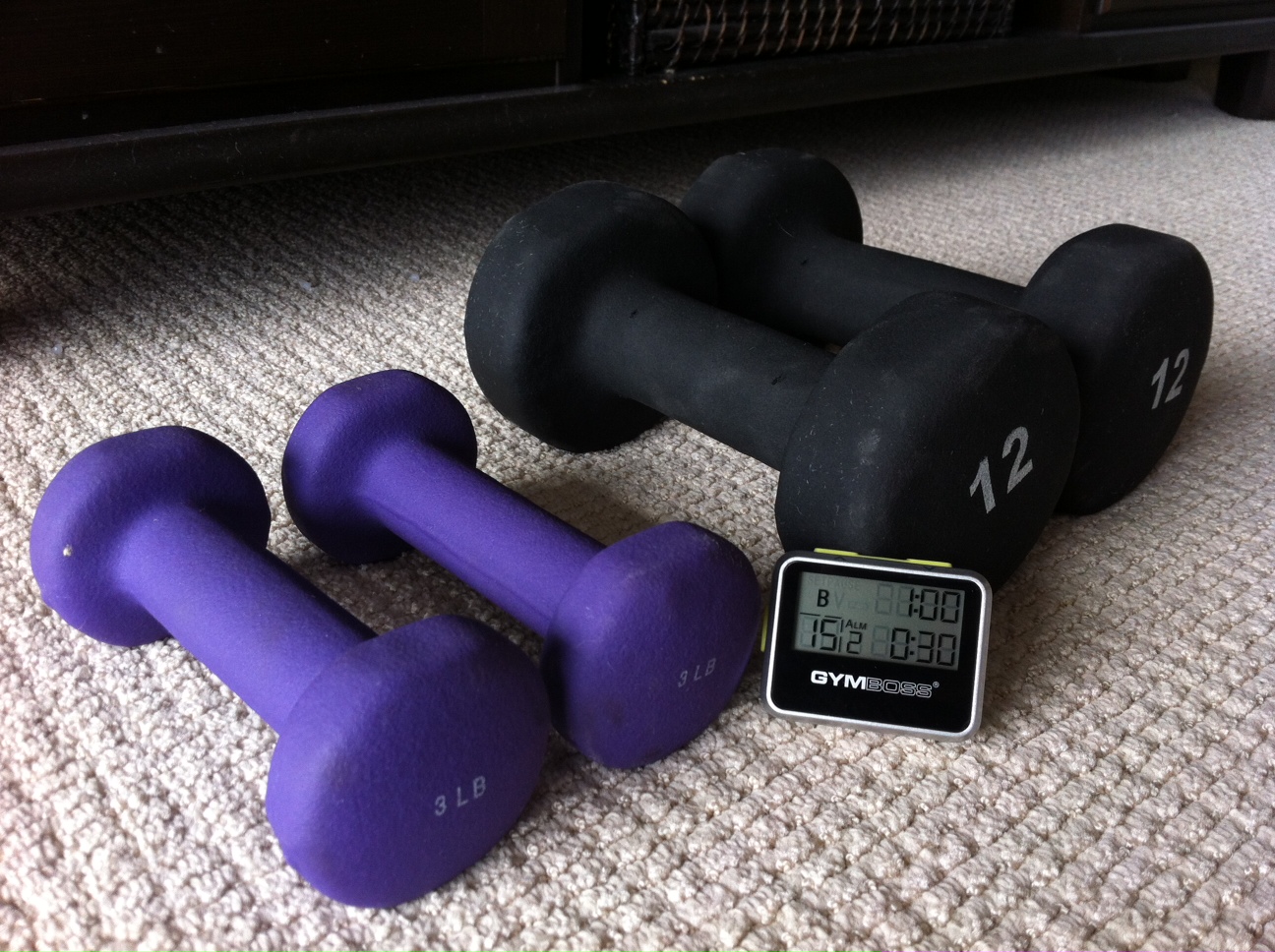
How: Whether it’s with a stopwatch or another kind of timer (my favorite is GYMBOSS because it’s a repeating interval timer, countdown timer and stopwatch all in one), set your segments and actually stick to ’em. You’d be surprised how long 30 seconds feels when you’re working hard — but keep yourself honest, and you’ll see results that much faster.

photo (13)

3. Workout Details

Why: Logging workouts not only provides a sense of accomplishment, but it also allows me to analyze performance, discover trends (i.e. running after a leg day leaves me feeling slow and heavy, so I switch up the schedule for better results), recognize potential issues and injuries, as well as motivate myself to make goals for future sweat sessions.

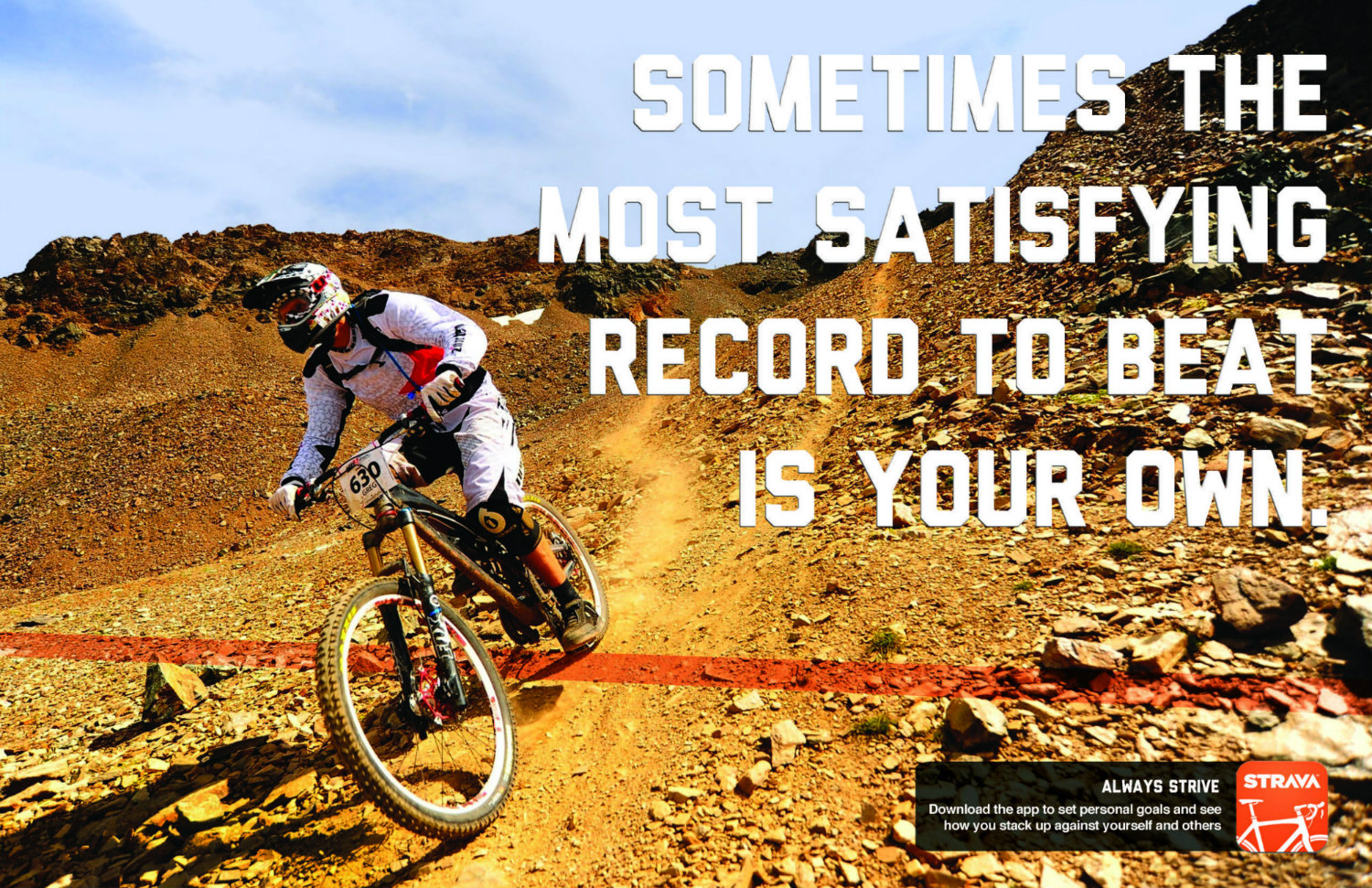
How: I still keep an old-school workout log, which I fill out every day (even on my off days; in fact, it reminds me to schedule them in!) with workout type, details, duration, etc. But you can get as specific as you’d like when recording individual workouts. For example, you might want to use a GPS watch to keep track of pace, distance and other elements of runs (I currently use the Nike+ GPS SportWatch, but have heard enough good things about Garmin to want to check it out), or there are apps and programs that will also help you keep track of workouts in other ways (I use MapMyRun to create routes, and I’m also testing Strava to challenge myself on rides and runs).

However you decide to quantify your workouts — or not — it’s all about finding tools that work with your workout style and allow you to stay motivated, train more effectively and have fun in the process!

STRAVA-biker-resize

What stats do you track when working out? 

A night with Nike Training Club

photo (2)

When it comes to Kool-Aid, I’ll drink whatever flavor Nike’s got on tap. So when my gal Sam, ambassador extraordinaire, put out the invite for a week-long extravaganza of Nike Training Club events, I knew we were in for a good time.

Vivi, my workout partner-in-crime, and I headed down to meet up with the ladies at The Box SF on Tuesday night to check out the yoga session. An instructor from Yoga to the People was on hand to lead us through a Vinyasa Flow class, which was a much-needed (read: mellow) workout after Saturday’s adventure in the bay and Sunday’s long run.

photo (1)

We arrived to  a serene space filled with pink and purple yoga mats. After a checking in and checking our bags, we grabbed a spot up front with some of our fellow November Project peeps (yup, the group that crushes hills together must also work out the quad and hammie kinks together).

And it was a good thing we got there early because the space filled up quickly. Apparently word got ’round about what a blast everyone had at the previous evening’s kickboxing workout; here in SF, we’re like moths to a flame when it comes to serious sweat sessions.

photo (5)

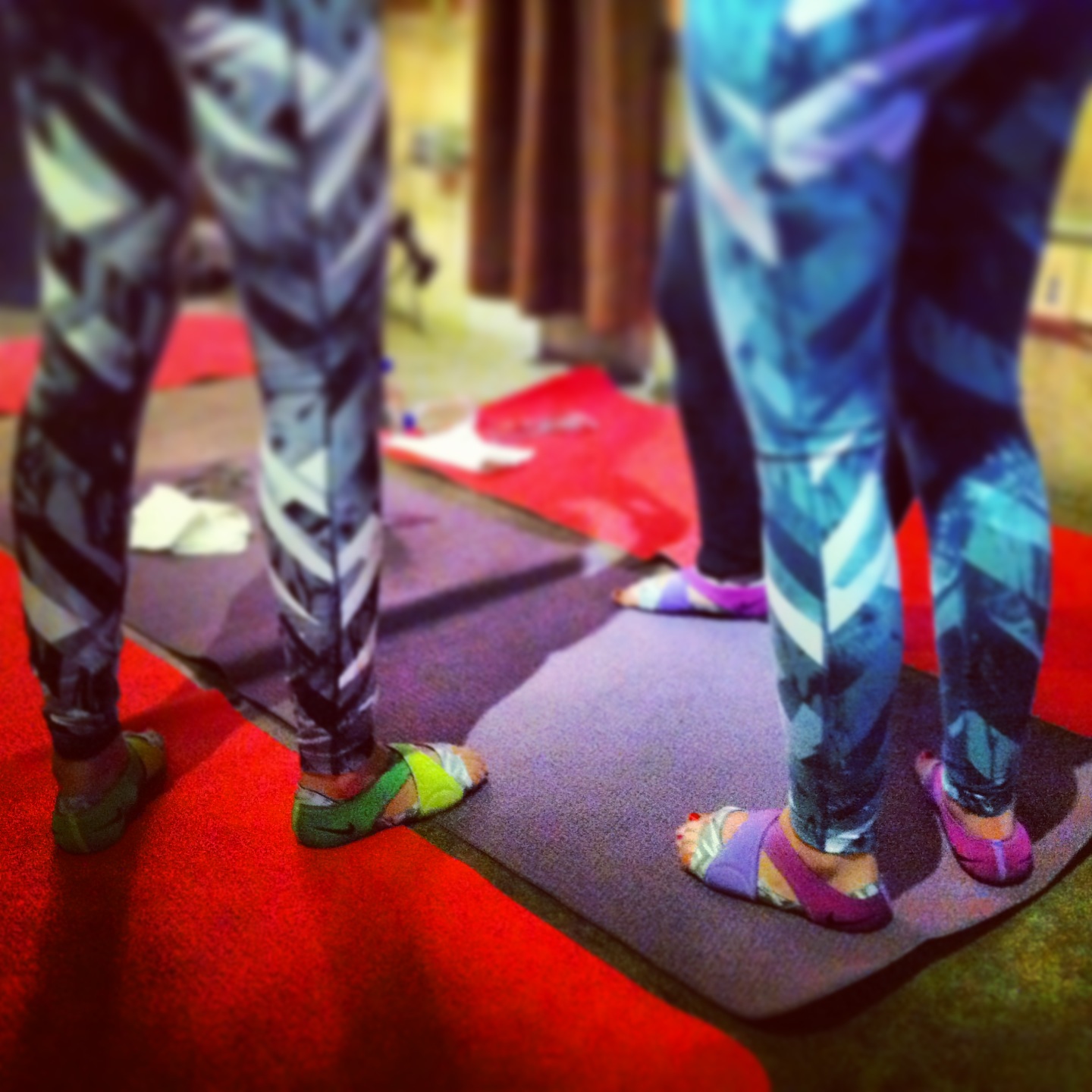
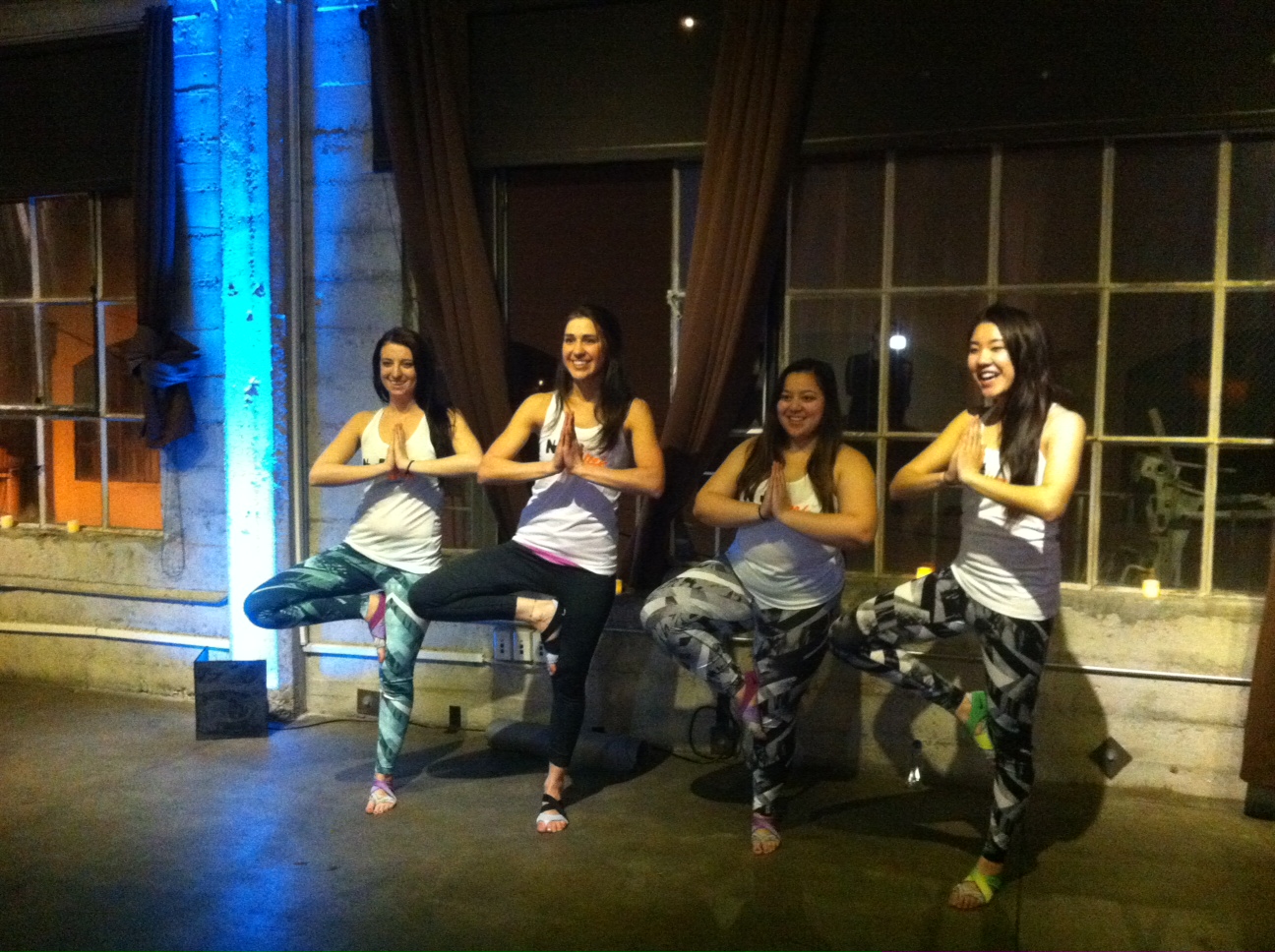
While we got down to business with our vinyasas, the Nike crew snapped shots and filmed the session with GoPro cameras from various angles. A few of the participants also modeled Nike’s yoga gear, so we got to “ooh,” “ahh” and “om” over all the the new fun prints and brightly-colored products in action.

My hands tend to slip more than my feet, so I’m not sure about the shoes/wraps, but I am a sucker for an awesome printed tight. Maybe, just maybe, they’ll get me motivated to hit the mat more often…

photo (4)

After the session wrapped up, we mingled for a bit over snacks and spa water before a good chunk of the group was bussed back to Niketown. If definitely got me interested in the weekly NTC classes, and I’m hoping to hit another event or two — tonight is a barre class, Friday’s a run along the Embarcadero, and Saturday is another NTC workout at Niketown — to round out the week.

Wanna join in on the fun? Check out the NTC Facebook page to see if your area’s participating. If not, there’s always the option of living vicariously through the NTC app — I can’t speak to it yet, since I just downloaded it myself to test, but at first glance it looks like a great resource for some hardcore home workouts, courtesy of Nike’s pro athletes and master trainers.

photo (3)

Have you tried the NTC workouts? If so, what did you think?

Hope you’re having a happy, active week!

Fit Fix: Sarah Evans on bouncing back (with a PR/BQ) post-pregnancy

Source: Sarah Evans

Source: Sarah Evans

After wrapping up my own racing season at the end of November, I spent much of the final month of 2013 not only reflecting, recovering and planning, but also (and perhaps more importantly) returning some of the love I felt this year by rooting on fellow runners as they rounded out their respective seasons.

And in the Bay Area, as I’ve come to find out, that usually happens at one particular event: the California International Marathon, a popular race with a flat, fast course that serves as a focal point in many a runner’s calendar.

On that day, aside from me having some major anxiety while tracking friends and cheering them along online, there was much to celebrate: Not only did Stephanie (a new blogger friend) finish her first full marathon in an impressive 4:09, and Pavement Runner (my trusty training partner & all-around amazing dude) rock an 11-minute PR to finish in 3:37, but Page (a fellow Coeur lady) also snagged her own PR — at a blazing 7:22 pace, no less — to finish in 3:12. Congratulations again, guys!

But there was one other success story from CIM that, when spotted on Twitter, stopped me in my tracks:

SE7

Wait….what?! I had to meet this rockstar runner and hear her story.

So thanks to the power of social media, the rest is history. Her name is Sarah Evans, and she’s one of the most down-to-Earth, no-nonsense, inspiring and motivating athletes and (new) mamas you’ll ever meet (oh, and did I mention she’s an Ironman, too?).

Below is our conversation, which I promised her will be continued (when I eventually work up the guts to join her) on the trails…

Kinetic Fix: Congrats on your recent PR/BQ at CIM! You’re just four months out from having a baby; what was your game plan going into the race & to what do you attribute the awesome result?

Sarah Evans: Thank you!  It was a great day, and I’m so proud of my PR and Boston qualifying time! The last four months have been a whirlwind adjusting to life as a new mom.

My game plan for CIM was to push myself, see just how fast I could go and, ultimately, just enjoy being out there. It was important for me to have a goal time, as well, since I am very competitive with myself. Having a specific race to train for after having my baby girl was important to me so that I could still maintain my identity as a runner.

I wasn’t sure how I would feel or what kind of pace I would be able to hold until I started actually training about a month after giving birth. My husband knew how important it was to me to get back to running, so he was very supportive in helping me achieve the balance between new motherhood and having some time to myself, which for me meant tying up my shoes and going for a run. I seemed to feel stronger and stronger as the weeks passed from having my baby girl and almost relieved to run “solo” so I could see how hard I can push myself.

Achieving a PR was not really a priority at first, but as I started training again, my speed work splits and endurance told me that my best time might be within reach. That fueled my long weekend runs on the trails to build my base and helped me turn up the tempo on my short, interval-based workouts on the treadmill. While I would consider the treadmill to be my least favorite method, it was a great way to work out and still keep an eye on my baby. The fact that I was in running shape throughout my pregnancy also gave me a great foundation when it came time to train specifically for the marathon.

KF: You’re definitely no stranger to a tough workout; tell us a bit about your pre-pregnancy training, accomplishments and level of fitness. 

SE: My pre-pregnancy fitness was at an all-time high due to the volume of runs and the type of running I was doing on the trails.  In the recent years, I fell in love with trail running and believe it’s responsible for a lot of my endurance, strength and, ultimately, my success with road races.

In addition to speed work during the week, every Sunday I meet up with a small group to run the Marin wilderness. Discovering more about my abilities as a runner, as well as taking in nature’s beauty each week, refuels my spirit and gives me confidence – but it also gave me my most significant running injury to date, a broken foot before the 2012 Northface Challenge.

Six months after breaking my foot in Muir Woods, I toed the line at Northface and completed my first trail marathon, which gave me a real sense of accomplishment. But that race will always mark a more significant event in my life because I found out I was pregnant the next morning! So I was lucky enough to go right into my pregnancy in marathon shape, which meant I was trained and healthy enough (with the support and consent of my OBGYN) to continue running and training up to a marathon distance.

While I have maintained general fitness since my college track and field days as a sprinter, I have focused on training for endurance events starting in 2007. Over the past six years, I’ve done six marathons, seven half marathons and six triathlons, including Ironman Lake Placid in 2009. My marathon and half-marathon PRs are 3:26:23 and 1:35:30 respectively, and I am a three-time Boston qualifier, running it in 2013.
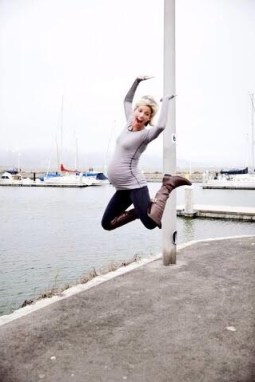
Source: Sarah Evans

Source: Sarah Evans

KF: Wow, finding out you were pregnant the day after your marathon must’ve been an exhilarating few days, to say the least! So, what was your attitude toward working out with baby-on-board?

SE: I was excited to be so fit at the beginning of my pregnancy because I knew that would put me ahead of the curve for being healthy and staying in shape. I’m very much a “no-excuses” kind of girl, so during the first few weeks, even though I felt a bit nauseous, sick and exhausted, I got myself out the door to exercise every day. It actually made me feel much better, once I got halfway through a workout, and gave me more energy afterwards. There were some workouts I had to fight through, but I knew it would do my body good in the end so I embraced the discomfort.

“Hurts so good” is definitely a mantra I embody, but I was, of course, cognizant of my baby’s health and made sure anything I did was approved by my doctor. I also recognized a fact that I believe is universal for all expectant women: Running while pregnant is typically more cumbersome, uncomfortable and induced a bit more soreness than usual. But as long as that discomfort was within the realm of what my doctor and I considered to be safe, then I was determined to continue to run.

KF: And run you did, all throughout your pregnancy, including completing the Boston Marathon. Can you tell us what was it like doing 26.2 with a “passenger?”

SE: I feel fortunate that I had no complications during my pregnancy and was given the green light by my doctor to continue to run. In fact, her main concern was that I would suddenly stop running, which I was told might be more detrimental to my health and pregnancy than anything. I continued to run a lot of trails, which helped build strength and balance and gave me more cushioning for my joints and back than the road and pavement.

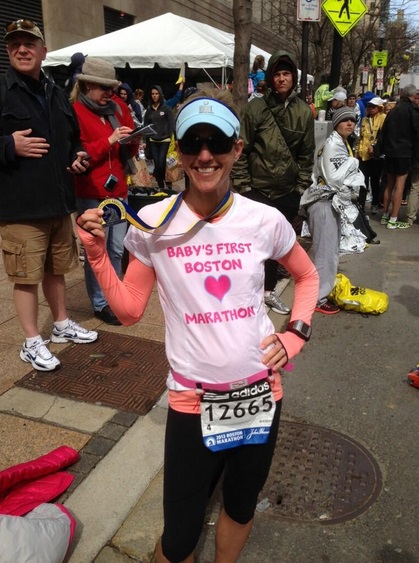
Running the Boston Marathon with a baby on board was really a coincidence, as I had qualified and booked the trip before I knew I was expecting. It had always been a dream to run this race, and relaying that desire to my OBGYN was among the first topics of my first appointment. With everyone’s support — including my husband, who initially thought that this might be too much — I set myself a goal of sub four hours (realistic and challenging enough, but allowing for some fun along the course) and finished feeling strong and healthy.

Despite finishing 30 minutes slower than my qualifying time, I felt fortunate. And the day’s tragic events helped keep everything in perspective.

Source: Sarah Evans

Source: Sarah Evans

KF: What surprised you most about running while pregnant?

SE: That I lost my speed quickly! I know it sounds ridiculous, but I thought carrying a few extra pounds wouldn’t slow me so fast, but to be fair it wasn’t just being pregnant that slowed me down. Bouncing back after I broke my foot was not as easy as I thought because I had a fair amount of apprehension starting back running on the trails on a healed foot AND being pregnant at the same time.

So I built up the miles gradually at the new slower pace and found that even warming up took twice as long as before. Easing slowly into a run was new for me, as I was used to taking off quickly, and I had to challenge myself not to turn back after two miles because I wasn’t “feeling it,” knowing that my growing situation meant that I had to be patient to find my running happy place.

There were plenty of times towards the end of my pregnancy when I felt like skipping my runs, but in the back of my mind I had to remind myself that these times running solo would soon be limited. Mostly, I was anticipating the period after birth when I couldn’t really exercise due to having a C-section (my stubborn little girl was breech and couldn’t be flipped). And any running, however slow and uncomfortable, was going to beat being on bed rest for a while after birth!

KF: Can you share some of your favorite tips for moms-to-be who want to follow your lead and keep up with their running?

SE: First and foremost, clear it with your doctor. While a few are still old-school enough to recommend just sitting on the couch and resting, thankfully most will assess your current fitness and exercise level to suggest what effort you can take on.

Next, realize that it might not always feel comfortable but no matter how bad you feel, just lace up your shoes and get out the door – if only for a mile. You may (and most likely will) find yourself running longer than you anticipated and enjoying the fresh air, which can really invigorate you and make you feel better.  The only special “equipment” I got was a bellyband that supposedly helped support my mid section along with providing some back support.

Finally, and especially for first-time moms, remember that you might not have this kind of freedom after baby is born to run and be active. Trust me, as tired as I felt while pregnant, it doesn’t compare to how exhausted being a mother can make me feel. And there is no better excuse to skip a run than to cuddle with your sweet baby – thankfully I can make time for both, but it does take its toll. Another huge benefit that you should keep in mind is that keeping fit will prepare your body for labor, help speed things along, give you the energy you will need, and ultimately make it easier to bounce back.

KF: Did you do anything else to stay in shape throughout your pregnancy?

SE: Throughout my pregnancy I tried to change as little as possible about my routine and exercise habits, though I did avoid outdoor cycling on the road, as well as skiing and winter sports (doctor’s recommendation). What I found was that I could still do my usual variation of cross-training activities, but just at a lower level of exertion.

I did a lot of strength training to keep some muscle tone, and spinning was one of the best exercises to relieve the pressure on my joints. It gave me some time off of my feet, and I think it’s one of the best ways to keep in cardio shape during pregnancy if running gets to be too much. I also did more power and vinyasa flow yoga classes, which helped me relax, feel one with my body, and stretch out my sore ligaments.

During my maternity leave (two weeks prior to birth), I also took advantage of the extra time by pampering myself, which meant spending some additional time working out! 🙂 I was lucky enough to get in one last run and yoga workout the morning the day my water broke and my baby girl arrived, so I held on to the end!
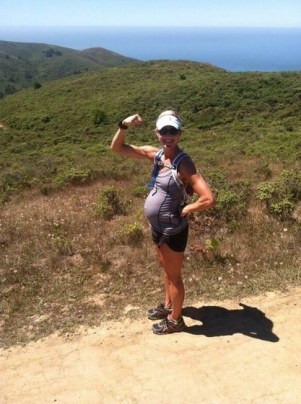
Source: Sarah Evans

Source: Sarah Evans

KF: Sounds like it! And then you were able to get back on the trainer and go running a few weeks after your C-section; how was the transition back to your usual activity levels?

SE: Having a C-section was not my plan, as I really wanted to have a drug-free, “natural” birth, but my little one was stubborn and turned breech so I was relegated to a C-section. It did slow down my recovery and my return to running, but what felt like an eternity only ended up being a limited timeframe.

My OBGYN gave me the green light to start exercising 18 days after I had my baby girl, and the first thing I did was 40 minutes on my bike trainer that very afternoon! I eased in carefully the next day by walking uphill on the treadmill for 30 minutes and the following day by doing intervals of slow jogging and walking uphill on the treadmill. I did these kind of workouts for the next 10 days, and exactly 4 weeks after having my baby girl I went for my first run outside: a lovely, solo six miles, and it felt amazing! I couldn’t have been happier (if a bit sore) to be running again – especially without the extra weight on my frame!

I think I bounced back so quickly because of my mental drive and strength – it didn’t hurt that I also went into my pregnancy in top shape. I was resolved, as much as I could, to stay in running shape and continue to run up to the day I gave birth. I really pushed hard to get back to running as soon as possible, and I was also lucky to have no complications other than my unplanned surgical procedure. The support of my family and husband, who knew how important it was for me to get a little piece of myself back after giving birth, also aided in my quick turn around and recovery.

KF: Now that you’re a few months out, how do you think having a baby has changed your running, currently?

SE: Honestly, I feel like having a baby has made me a stronger runner. I have a quickness in my step that wasn’t there before (maybe it’s getting home faster to hold her!), but I also think it comes from the extra weight load I’m not carrying and an increased mental toughness from going through pregnancy and birth.

While it’s nice to be able to head out the door for a run, I’ve learned that efficient and quality runs are now much more important since I don’t have all the time in the world to be out and away from my family. When I’m struggling on a run now, I think about how I felt right after giving birth, hobbling to get to the kitchen or feeling sore after a 20-minute walk. The fact that I’m now able to exercise again encourages me to pick up the pace and not take for granted how quickly I bounced back.

I think that if I could handle the pain of pregnancy and birth but still love and enjoy every minute of it, then I can handle the physicality of the last miles of an intense running effort. Many athletes understand the odd enjoyment with the pain of a marathon, racing, or pushing yourself on a run, but to experience the parallels between exercise and pregnancy is particularly rewarding.

KF: With baby girl in the picture, how have you adjusted/will you adjust your routine going forward?

SE: My routine has definitely changed! I can’t wake up on the weekends and head out the door whenever I’m feeling up for a run or come home from work early and go for a 5pm yoga class.

Now I wake-up earlier, especially during the weekdays before my husband leaves for work, if I want to get in a solo run outside. Otherwise, I know I will be running on the treadmill (it’s a blessing and a curse to have the option of a treadmill in my home). Most recently I got a BOB Ironman running stroller, which is a good option to get out on a slower run with my daughter, but race-specific training is best done without my adorable companion.

I do have my standing day, Sunday mornings, when I trail run with my group. My husband knows how much I enjoy getting out on the trails, so we make Sunday my “free mama” day! For me, being able to run and have some solo time makes for a better, happier and saner person and mom at home. I think it’s important to have a set day and time every week that’s just for you, no matter what you feel like doing with it!

Another big adjustment is working out from home a lot more. I’ve had a long maternity leave and worked from my home office a lot before I went out, so I get in my workouts whenever I can in my little fitness area (which is set up in our garage). That relieves any stress of getting out the door and preparing baby for a gym daycare. Working out at home has really given me the best way to stay in shape and get it in when I can!

Source: Sarah Evans

Source: Sarah Evans

KF: Speaking of — can you share your favorite exercises for toning up and getting your core strength back post-baby?

SE: Getting my core strength back was probably the toughest part of recovering from baby. I didn’t start any specific core workouts until about six weeks out from giving birth, and when I did I started with planks — both regular and side planks. I also added in leg throws, v-ups, planks with a twist under and roll-ups. Then I added in a P90X ab workout (a quick 15 minutes of intense abs; perfect to do on a yoga mat in your living room when baby is rolling around on her playmat!).

I’ve recently added in some cross-fit type work (specifically called IronStrength that I found on RunnersWorld) that incorporates so many mixes of activities that you don’t realize work on your core. All of this is done at home in my living room on a yoga mat with little equipment needed, and it’s something you can do while your baby is awake and incorporate them into the routine.

I do a lot more core work and abs now than I did before pregnancy because I feel that area was the most difficult to tone while pregnant, and it didn’t quite bounce back like everything else. I also need the extra stability in my back to carry around baby, car seat and lug everything around. So I would say planks and incorporating a short 15-minute ab workout 2-3 times a week would be a good combo to building that core strength back!

KF: Great advice! Finally, do you have any other best practices you can share with new moms who are finding it a struggle to get fit again?

SE: Schedule it into your day! Like anything else — a meeting, a doctor’s appointment or lunch with a friend — try to schedule your workout. On the other hand, you have to be very flexible, too, so be willing to fit it in when you can.

I have recently canceled my gym membership and am solely working out at home between naps, feedings, etc. I have a mix of free weights, a treadmill, bike on a trainer, yoga mats, exercise ball, Pilates ring and bench all set up along with some of my favorite workout DVDs and a few online yoga sessions that I follow.

Many times I’ve had to end a workout early to get her up from a nap or change a diaper, and I just pick up the workout later in the day. So I piece together my workouts…or if all else fails, I go for a long walk.

I also try to wake up early a few times a week before she awakes if I want to run outside solo or fit in a worry-free workout before my husband leaves for work. This is obviously much more realistic once baby is sleeping through the night, which I am thankful to say is now happening!

Another thing I suggest is to get on the floor with your baby while they play and roll around. You can do abs, a little yoga session or stretch. I get my baby girl involved with my workouts, holding her or carrying her while lunging or doing squats, or laying her on my legs while we do crunches or lifting heels to the sky. And right after she was born (and before I could be too active), we went for a lot of walks! A more recent “bonding” exercise is running with her in the BOB stroller, which has been an additional challenge to my running strength!

Make your baby and your health a priority, and schedule in time for yourself – for me, that time is almost always spent on a run or a workout, which helps me maintain my old identity as a runner, but also embrace my new role as a mom!

Thanks to Sarah for taking the time to chat! And you can find her here on Twitter, if you’d like to follow along on her adventures in training, racing — and motherhood. 

Are you guilty of one of these workout time wasters?

girlfriend-girls-chatting-gym

We’ve all had those days when, even with the best of intentions, your workout gets sidetracked once you set foot in the gym. But with time at a premium, efficiency is a critical part of the fitness formula is you want to keep making progress.

“Almost everyone could benefit from getting a more effective workout in less time and reaching their goals sooner,” says Jennifer Beaton, VP and general manager at Western Athletic Clubs and a certified personal trainer at Bay Club San Francisco.

So take a look at these four common workout time wasters, and make a mental note to avoid them if you want to maximize your next trip to the gym:

1. Excessive rest. All those minutes spent sitting on the bench staring at your watch really add up. “If you can sit down and read the paper between sets, you are likely resting too long,” warns Beaton. To see better results with the very same moves, and to optimize your time, try super-setting exercises, such as push-ups and squats, to allow rest of a muscle group while you work another muscle group. Replacing station rest with active rest such as 30 seconds of high intensity cardio can also optimize calories burned and muscle recovery.

2. Steady-state cardio. In other words, those marathon (no pun intended) treadmill sessions. “We see many members who do the same 60 minutes of cardio at the same intensity every day for 15 years. These individuals no longer see improvements and often start to see declines in overall condition. They would benefit by mixing up their routine, adding intervals and high intensity work,” says Beaton.

3. Isolation exercises. “Life is full of dynamic movement, and therefore our workouts should simulate and enhance those efforts by using multi-joint, compound movements, such as squats, lunges and pull-ups as opposed to, for example, adductor/abductor machines or bicep curls. To get the most bang for your buck, focus on performing movements that recruit as many muscles as possible; those smaller secondary muscles will get plenty of work as they support the larger muscle groups during those movements,” Beaton adds.

4. Endless crunches. Likewise, if your goal is a great-looking midsection, ab-isolating exercises may miss the mark. “I often see people doing 15-20 minutes of crunches in hopes that it’ll deliver six-pack abs,” says Beaton. “Their time would be better spent on nutrition, a solid full-body strength routine, and a balanced cardiovascular program.”

How do you make the most of your time at the gym?