Will the real carb culprit please stand up? (Part II – and Giveaway!)

donut-carbohydratesInterested in trying the TurboCharged program for yourself? Here’s your chance – we’re giving away one FREE copy of the book! Details at the bottom of the post…

In part one of my interview with health expert and TurboCharged author Tom Griesel, we spoke about the different types of carbohydrates and how the body processes them, along with the best foods to eat to help prevent excess fat storage.

Next up, I wanted to get into the nitty-gritty of his program, which stems from the Griesel’s belief that by learning to work with your body and feeding it the correct type of foods, you can automatically improve the way it functions and looks.

Here we chat more about role of exercise in his healthy lifestyle plan, along with how he can help ‘Turbocharge’ your body’s fat burning abilities to radically improve your body (and mind) in a short period of time.

Photo credit: Superskinnyme.com

Photo credit: Superskinnyme.com

In your book, ‘TurboCharged,’ you talk about helping people make the switch from using sugar to fat as fuel for the body. Can you elaborate on that?

There are two fuels that our bodies will use: sugar or fat (three if we include alcohol). We are also in either a fat-storage or fat-burning mode, depending on what types of food we choose to eat.

By eating a diet more in line with our ancestral or evolutional adaptations, and avoiding a constant stream of concentrated carbohydrates and the subsequent insulin release and fat storage they promote, our bodies become accustomed to using more fat—including our body fat for our energy needs.

Without our diet increasing the hormones that store excess sugar as fat, we are then able to use our own body fat for energy, as well as being better nourished.

Another important point is that most “sugar burners” will convert lean body mass into sugar for energy instead of sourcing their body fat due to an easier conversion process and a preference for sugar. Loss of lean body mass is the main cause of diet failure and recidivism.

Give us a quick overview of a ‘day in the life’ of the program.

First, more water is consumed, particularly first thing in the morning, to ensure adequate hydration needed for normal body processes. Metabolic waste is meant to be eliminated through the kidneys. When the kidneys can’t handle the job due to inadequate hydration, the liver is forced to do the job (definitely not optimal).

The morning is the most important time, because we usually use about a quart of water for normal respiration and metabolic function overnight while we are sleeping.

Water is also not sipped but used in larger quantity to fill the stomach. Doing so has the same effect as various bariatric surgeries. Satiety hormones are released when the stomach is full. Many studies confirm this happens with food, liquid or a combination of the two.

Next, when we are actually hungry, we choose a food that is more in line with our ancestral diets: fruits, leafy greens, non-starchy vegetables, nuts, seeds, legumes, eggs, meats and seafood (all high nutrient per calorie and mostly moisture-rich).

Meals are also very simple with just a few different ingredients and often just one item (mono-meals). This speeds digestion, eliminates common digestive problems, and most importantly, increases fat burning by greatly reducing the release of insulin—the fat storage hormone—which can be triggered by large meals or combinations of foods.

Engaging in low-to-moderate activity as much as possible is encouraged, along with one-minute periods of strength training three to five times each day, stress reduction techniques and a good night’s sleep.

Can you share one of your favorite tips for readers who want to start incorporating healthier habits into their day?  

Thirst and hunger are often confused. This is probably because our natural diet always consisted of very moisture-rich foods that supplied water and nutrition at the same time. Today, many people confuse thirst for hunger and eat when they should be drinking water. Choosing the wrong foods or beverages when this happens only compounds the dehydration problem.

And, finally, as a long-distance runner, I’ve got to ask: How does exercise come into play in your plan?

Exercise is good for us. However, too much exercise is just as bad as too little, particularly if losing excess body fat is the goal. Exercise is a very inefficient way to manage caloric intake and lose excess body fat.

In fact, when a reduced-calorie diet is being implemented, less exercise is better than more and low-intensity activity is better than more strenuous exercise. This is because the combination of reduced calories and strenuous exercise such as aerobics results in the loss of lean body mass due to the inability to source body fat quickly enough to adequately fuel the activity. This is particularly true for sugar burners whose bodies would rather convert protein to sugar rather than using their excess fat.

Light resistance exercise, for about one minute, three to five times per day is sufficient to maintain (and in some cases build) lean body mass while dieting. On a normal calorie intake, when performed regularly with intensity, it is sufficient to build and strengthen without creating excess stress.

All stress, good or bad, results in the release of catabolic (muscle-wasting) hormones and is best avoided. Loss of lean body mass from any cause, including strenuous exercise, triggers primal survival mechanisms that will cause anxiety and feelings of hunger until the lean body mass is returned. When faced with this situation, eating a typical diet will result in most of the weight regained being fat, not muscle.

GIVEAWAY:

One KineticFix reader will have the chance to win his/her very own copy of the book. (Open to U.S. and Canada residents only).

To enter:
1. [Mandatory] Leave a comment below telling me why you want to get TurboCharged on Tom’s program
2. [Optional] Tweet the following, “I want to win a copy of ‘TurboCharged’ from @KineticFix and @TurboChargeDiet wp.me/p3iGmO-cT ”

I will randomly pick a winner on Thursday, June 13. Good luck!

Wanna get lucky? Run as a couple, says survey

Happy National Running Day!

In honor of the holiday, Brooks Running Company released some fun findings from their recent Brooks Run Happy Nation Report, including tidbits related to relationships, running while traveling and runner pet-peeves, including:

Hit the street more often for a better time between the sheets? Photo credit: MesHealth.com

Hit the street more often for a better time between the sheets?
Photo credit: MensHealth.com

Bringing Sexy Back

  • The longer you run the better your sex life, the survey found, as nearly half (49 percent) of couples who run six or more miles together claim it pays dividends in the bedroom
  • Runners from the West (42 percent) are most likely to claim that running increases their time spent rolling in the hay versus the South (38 percent), Northeast (33 percent) and Midwest (32 percent)

Sweat-time Gets Social

  • More than three-quarters (76 percent) of men surveyed passed the miles by discussing their team’s latest victory (sports, 51 percent) or a cool new gadget (34 percent)
  • Ladies, on the other hand, choose to use their running time as therapy – they are most likely to talk about relationships (47 percent), both the good and the bad
  • When it comes to a favorite late-night running partner, Jimmy Fallon (27 percent) steals the spotlight, with Chelsea Handler (22 percent) and Jimmy Kimmel close behind (22 percent)

On the Road Again

  • As for their favorite running city, runners say the hills of San Francisco make their heart race (46 percent), followed by Portland (34 percent), Boston (32 percent), Boulder (30 percent) and New York City (30 percent)
  • Runners are committed! More than three-quarters of those surveyed (78 percent) maintain their run schedule while traveling, and men are more likely to keep up the routine than women (82 percent vs. 73 percent), as are those who are parents (82 percent vs. 74 percent)

No Sounds of Silence

  • Eighty-seven percent of runners like to listen to something to keep them motivated, whether a booty-shaking playlist (music, 78 percent), audiobooks (11 percent), even meditations (10 percent) or motivational speakers (9 percent)
  • Just 13 percent feel that silence is indeed golden and choose no audio companion

Pet Peeves!

  • Difficulty dressing for the weather is a bigger pet peeve for females (30 percent) than males (17.3 percent)
  • Runners are torn about the worst type of runner they encounter on their favorite trail or running spot:
      • The Spitter (30 percent claim this is their “most hated runner” category): runners who spit or hock a loogie while running;
      • The Double-Wide (29 percent): runners who run in a group and take up a lot of space;
      • The Superhero (14 percent): runners  decked out in unnecessary gear;
      • The Flasher (14 percent): runners who don’t wear enough clothes when it’s cold out

“We hear from runners every day about how hitting the road is an integral part of their daily routine, and wanted to test just how big a part running played in their relationships, travel habits and friendships,” said Heather Snavely, Brooks senior director, Brand Marketing. “The results of the report were both fun and surprising. And I have to agree with those surveyed; I personally would love to join Chelsea Handler for a martini 5K in San Francisco.”

Check out the accompanying infographic below, and to see more of the survey results, click here.

Happy running!

image001

Will the real carb culprit please stand up? (Part I)

Photo credit: Stack.com

Photo credit: Stack.com

In the battle of the bulge, carbs often hold enemy status.

But, as it turns out, to carb or not to carb isn’t the real question when it comes to weight loss; what matters more is the type of carbs you’re consuming.

Why? Well, not all carbs are created equal when it comes to how our bodies process them, say health experts Dian and Tom Griesel, authors of TurboCharged, a lifestyle plan that claims to help people “quickly lose excess body fat and keep it off.”

Are you among the 75% of adults who consume less than three servings of veggies per day?  Photo credit: Turbocharged.us.com

Are you among the 75% of adults who consume less than three servings of veggies per day?
Photo credit: Turbocharged.us.com

The problem is this: All carbs are converted to blood sugar, which is then converted to either glycogen (short-term energy) or body fat (long-term energy).

Eat a steady stream of carbs, and your glycogen tank is always topped off, so your body never dips into its fat stores.

The solution? A diet rich in what the Griesels term ‘diluted’ carbs (fruits, veggies, etc.), which are much more moisture-rich and nutritionally-dense than traditional ‘concentrated’ carbs, which tend to mess with our systems.

To learn more, I sat down with Tom Griesel about this carb conundrum. The first half of our interview is below.

Tell us, why have carbs gotten such a bad rap?

Perhaps because all carbohydrates are traditionally lumped into a single category, or alternatively considered as either simple or complex. However, the fact is that there are simple and complex carbohydrates (starches and sugars) and also concentrated and diluted carbohydrates (grains and fruits/vegetables), and each has a different effect after consumption. Also, foods are rarely eaten by themselves—and combinations of foods, including carbohydrates, have different effects on our digestive and hormonal systems when compared to eating a single food alone.

So is there such a thing as ‘good’ and ‘bad’ carbs?

We believe the biggest differentiator is in concentrated carbohydrates vs. diluted or naturally moisture-rich carbohydrates. Concentrated carbohydrates have a different hormonal effect than naturally moisture-rich and fiber-rich carbohydrates. In addition, processed foods usually contain significant amounts of carbohydrate along with a totally unnatural combination of ingredients.

Why do specific combinations (e.g. sugar/fat) take more of a toll on our bodies?

Sugar/fat combinations or starch/fat combinations are not found in nature. They are a very recent (from an evolutionary standpoint) artificial addition to our diets. We are now eating stuff that was never available prior to the last 50 years or so. This combination has been found to be the most likely to result in fat storage (think potato chips, french fries and donuts).

These combinations are common in almost all popular processed-food products consumed today, and the typical American diet is built around them. Our bodies are just not adapted to process these combinations without problems. We are unwittingly participating in a huge dietary experiment that is obviously turning out badly, based on the rapid rise in almost every chronic ailment known.

Tell us why you attribute the consumption of grain to the rise of obesity, diabetes, heart disease and other significant illnesses.

Some societies have been eating grains for a while (about 10,000 years or so, which is actually very short from an evolutionary perspective), but the time period for most humans has been much less. Grains are what we would classify as concentrated carbohydrates.

Grains also score very low on a nutritional value-per-calorie basis when compared to leafy greens, non-starchy vegetables and fruits that humans evolved eating over hundreds of thousands of years. Grains provide a concentrated form of calories but few nutrients compared to other readily available choices (that we are better adapted to process).

It is important to understand that there is really not much of a difference in the way our bodies process them regardless if they are whole or refined. They are all broken down quickly into sugar. This concentrated form of sugar, even in what would be considered relatively small amounts, will cause a spike in blood sugar levels.

And why is this spike in blood sugar problematic?

High blood sugar levels signal the body to release insulin to stabilize the situation. Most of the excess sugar is converted and stored as body fat, particularly in people who regularly consume a steady supply of carbohydrates throughout the day. Excess concentrated carbohydrate consumption is the cause of metabolic syndrome.

Are there any particular foods we should eliminate from or add to our diet for better overall health?

It is now widely believed that almost everyone has sensitivity to wheat, wheat products and other products containing gluten, which cause gastrointestinal problems even without any diagnosis of celiac disease. Between intestinal damage, causing decreased nutrient absorption and low nutrient content, a grain-based diet leaves many people fat yet malnourished.

The very best choices are moisture-rich, nutrient-dense foods: fruits, leafy greens, non-starchy vegetables, nuts, seeds, some tubers and legumes, eggs, animal proteins/fats, fish and other seafood (meat and fish are over 60 percent moisture content prior to cooking). Avoid processed foods.

Stay tuned for part two of our interview in which Tom discusses the role of exercise in his healthy lifestyle plan, along with how to ‘TurboCharge’ your body’s fat burning abilities… 

Dare to go bare: 6 tips for embracing barefoot running

Would you dare to go bare on your next run?  Photo credit: Shape.com

Would you dare to go bare on your next run?
Photo credit: Shape.com

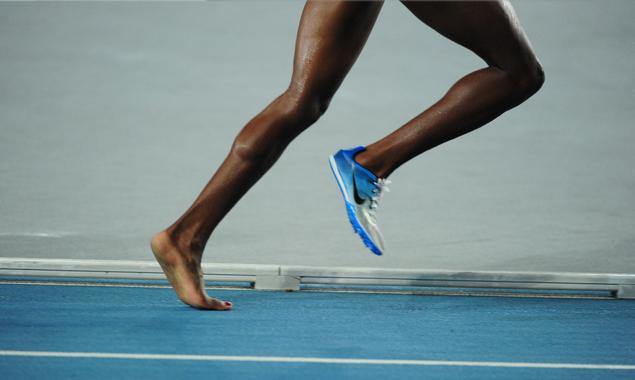
Runners all over the world have bucked the traditional cushioning and orthotics of athletic shoes in favor of taking it all off – their feet, that is.

Inspired in part by Christopher McDougall’s book “Born to Run,” which chronicles the Tarahumara Indians’ ability to run long distances injury-free without shoes, the barefoot trend is gaining in popularity yet remains widely-debated.

Chris McDougall demonstrates his barefoot technique Photo credit: ChrisMcDougall.com

Medical minds are divided and the jury’s still out in the running community, but thanks to the endorsement of a few top athletes who swear by going bare, many weekend warriors are wondering whether or not they should join in on the ‘bare boom.’

But while the allure of improved running form, fewer impact injuries and better balance makes trying barefoot running seem like a no-brainer, there are a few potential challenges to consider, such as hygiene issues, overuse injuries and protection from sharp objects and extreme climates.

As with any new athletic endeavor, the best approach is always to keep an open mind, take it slow and see what works for you. Every runner’s body mechanics are as unique as their respective fingerprints, which means there’s no telling how your body will react and which combination of benefits and/or drawbacks you’ll experience.

So if you decide to go bare, do so with these tips in mind:

  1. Consider your environment. Where and when you run barefoot is very important, so be sure to protect feet properly in extremes and take precautions that correspond to the area in which you’re running – whether it’s urban, suburban or rural.
  2. Aim for variety. Training on hard, rough surfaces toughens feet and teaches you to run lightly to minimize impact, while soft surfaces are a welcome respite during the transition. Get creative and widen your repertoire of surfaces, including beaches (hard and soft sand), sports fields, running tracks, parks (pavement and grass), trails and sidewalks.
  3. Ease in with a minimalist shoe. If you’re not ready to completely lose your shoes (like me), try minimalist footwear that gives the feeling of a bare foot with the benefit of some light support and protection. 
  4. Allow time to transition. As tough as all runners like to think they are, everyone making the shift to barefoot will need to be patient as the body adjusts to this new activity. Avoid too much too soon; opt for short bursts of barefoot during or at the end of your current routine, which will decrease the chances of short-term injury.
  5. Gradually increase time and distance. Barefoot doesn’t translate to “injury-free,” so it’s important to build a solid foundation on which you re-work your running style. Switch from barefoot intervals during workouts to entire runs with your feet in the buff, working up to as many days running ‘footloose and sneaker-free’ as you are comfortable.
  6. Above all, use common sense. Barefoot running is not for everyone, so listen to your body and stop if you’re noticing more drawbacks than benefits. Avoid barefoot running if you have had serious injuries such bone fractures, bone disorders such as arthritis or conditions such as diabetes, which may limit the ability to feel foot pain.

And one final word of caution: Don’t forget to consult your physician before starting any new exercise regimen.

Otherwise, what have you got to lose? Well, besides your shoes 🙂

You are what you eat: Food-label reading 101

man-reading-food-label

Photo credit: MensFitness.com

While we’re all aware that a diet of whole foods is preferable…it’s just not always practical.

Sometimes it’s a quick-fix dinner on a busy weeknight. Or maybe a hankering for something from the “comfort” food category (My vice? Boxed brownies!).

But whether you regard them as a dietary staple or a necessary evil, packaged good are a fact of life.

The only way to understand the relationship between the foods you eat and how they affect your overall health is by arming yourself with information: That means reading and interpreting the food labels around you.

Understanding food labels can also help you make better choices―that is, if you know how to use the information to your advantage.

Here’s an overview of the most important elements to keep in mind next time you make that weekly trip to the market.

First, what’s on the label, in a nutshell:

  • Serving size
  • Calorie information
  • Nutrient information
  • Percent daily values

Next, here’s how to utilize it (refer to corresponding areas of the chart below):

NutritionFactsPanelFDA

Photo credit: FDA.gov

  1. Check the serving size. 
    • All the information on the label is based on a standardized single serving, say one cup. So if you end up eating two servings, or two cups of food in this example, remember to multiply the numbers by two.
  2. Count your calories. 
    • This section of the label can help you manage your weight (i.e., gain, lose or maintain). Just remember: the number of servings you consume determines the number of calories you actually eat, so make sure your math is correct!
  3. Watch out for red flags.
    • Eating too much fat, saturated fat, trans fat, cholesterol or sodium may increase your risk of certain chronic diseases, such as heart disease, some cancers or high blood pressure.
    • Not sure how much is too much? Here are a few guidelines:
        • Total fat: Should be 25-35% of calories, or roughly 3 grams of fat per 100 calories
        • Saturated fat: Limit to less than 20 grams per day
        • Trans fat: Ideally 0 grams per day, but the maximum is 2 grams per day
        • Sodium: Aim for a range of 1,500 – 2,400 milligrams per day
        • Sugar: Avoid foods with sugar as one of the first three ingredients
  4. Load up on the good stuff. 
    • Most Americans don’t get enough dietary fiber, vitamin A, vitamin C, calcium and iron in their diets, which actually help reduce the risk of some diseases and conditions, such as osteoporosis, heart disease and healthy bowel function.
    • Aim or more of the following:
        • Fiber: Good sources cointain 3g or more, but try for 25-30g per day overall
        • Vitamins A & C, Calcium and Iron: Choose foods with high values of these key nutrients
  5. Look at the bigger picture.
    • Daily Values are recommended levels of intakes based on 2,000- and 2,500-calorie diets. Think of them as a frame of reference, regardless of calories, and use the information to compare similar products and brands. Just remember to make sure that the serving sizes are similar, especially the weight of each product – e.g. gram, milligram, ounces!

Approach the art of reading food labels as an act of dietary self-defense. Not only will it help you avoid unhealthy pitfalls such as excess sodium and sugar, but it will also help make you more aware of what you’re putting into your body and how it affects you on a daily basis.

To read more on understanding and using nutrition facts labels, visit the FDA’s website on the topic here.

Paddle your way to a beach body this summer

Photo credit: Marco Garcia for The New York Times

The couple that paddles together…
Photo credit: Marco Garcia for The New York Times

If you’re concerned about summer’s heat causing a slump in your fitness routine, there’s a workout that will have you getting fit while having fun under the sun: Stand-Up Paddleboarding, or “SUP” for short.

There’s a reason it’s the fastest-growing water sport in the world, poised to overtake kayaking and canoeing: It’s so much fun, it’s borderline addictive.

After debuting in Hawaii nearly a decade ago, paddleboarding spread quickly up and down both coasts here on the mainland before landing as a summertime staple in the lakes of the Midwest, as well.

And although it’s roots are in surfing, the sport is known as a more beginner-friendly way for people of all ages and abilities to ease into getting comfortable on a board in water.

It’s also an awesome workout – one that not only engages major arm, leg and core muscles, but also tests your balance and activates secondary stabilizing muscles for a full-body challenge.

Average calorie burn ranges from 500-1,000 calories per hour, which is another reason for the recent explosion in popularity of this super-efficient, low-impact, joint-friendly activity.

Paddleboarding instructor Cody White  Photo credit: MensFitness.com

An action shot of paddleboarding instructor Cody White
Photo credit: MensFitness.com

Undoubtedly, the paddleboarding craze has also been propelled by a host of celebrity devotees who have been photographed trying their hand at it in various destinations round the world (Owen Wilson, Jennifer Aniston, Matt Damon, Rihanna, Kate Hudson and Cindy Crawford, to name a few).

According to experts, it takes about an hour to learn the basics, so whether you’re testing the waters on vacation or venturing to a local body of water to give it a shot, the odds are good that you’ll be up and paddling like a pro in no time.

Interested in learning more? REI provides a terrific overview of stand-up paddleboarding basics here, including necessary gear and techniques for getting started, along with instructional videos and helpful FAQ’s for beginners poised to take their maiden paddle voyage this season.

Memorial Day munchies? Get your guac on!

Photo credit: hannah honey & jam, flickr

Photo credit: hannah honey & jam, flickr

This week kicks off the unofficial start to those lazy, hazy days of summer.

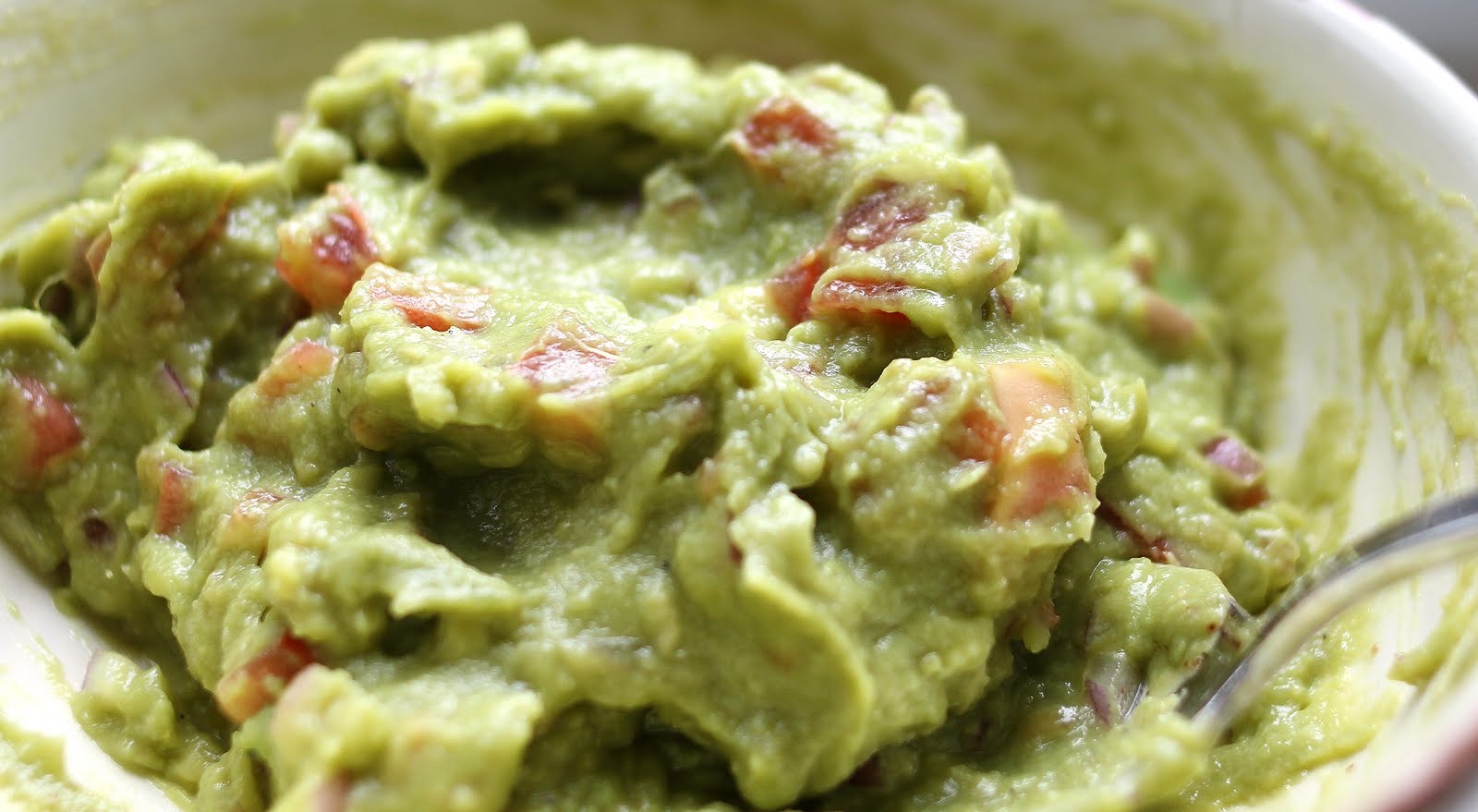
So what better way to ring in the season than with a hearty helping of this cool, creamy guacamole recipe at your Memorial Day get-together?

Not only is this an elegant appetizer that can be whipped up in a matter of minutes, but it’s also super healthy!

Just half an avocado contains seven grams of fiber, plus a healthy dose of monounsaturated fats (MUFA) that help lower your LDL (bad) cholesterol levels and maintain the HDL (good) ones.

Scoop it up with veggies, use instead of mayo on sandwiches or (my personal preference) pair with baked chips and frosty margaritas for a heart-healthy happy hour.

guacamole

Cool & Creamy Guacamole

Ingredients:

  • Haas avocados, halved, seeded, peeled and diced
  • 1 tsp lime juice
  • 1/2 tsp kosher salt
  • 1/2 medium red onion, diced
  • 1/2 jalapeno pepper, seeded and minced
  • 2 Roma tomatoes, seeded and diced
  • 2 tbsp of your favorite salsa
  • 1/4 cup cilantro, roughly chopped
  • 1 clove garlic, minced finely

Directions:

  1. In large bowl, mix avocados and lime juice. Add salt, and mash with a large fork
  2. Gently fold in onion, jalapeno, tomatoes, salsa, cilantro and garlic until well blended
  3. Let sit at room temp for at least 30 minutes to allow flavors to develop before serving

5 tips for building a budget-friendly home gym

homegym

Photo credit: BusinessWeek

The only thing worse than not using the gym membership you signed up for way back in January?

Paying steep monthly fees for the rest of 2013 while it remains unused.

So before you shell out any more unnecessary cash, cut your losses and bring your workout closer to home (meaning, in it).

No matter how small a space or budget, it’s easier than you think to build an effective gym without breaking the bank. Here are five tips to becoming a healthier homebody – and for shrinking your waistline, not your wallet.

  1. Go weightless. These aren’t your father’s push-ups and sit-ups; today’s body weight exercises are high-performance maneuvers designed for building and maintaining muscle strength and endurance, along with interval training. Don’t believe me? Check out this video and tell me that’s not one intense workout!
  2. Think DIY. Function often trumps form when it comes to gym gear, so before you buy it, try making it on the cheap. Use hot water bottles under your feet in place of a pricey Bosu balance trainer, tap into your woodworking skills to build your own plyo boxes, and make medicine balls from old basketballs, a drill or awl and some sand, for example.
  3. Buy secondhand. Certainties in life: Death, taxes and the fact that there will always be people hawking their (barely used) exercise equipment on Craigslist. But don’t stop there; visit stores such as Play It Again Sports to snag a deal on pre-owned gear, scout your local gym for used equipment sales after yearly upgrades or ask for discounts on floor models at retailers.
  4. Press play. There’s an app for that – or a video game, a gadget, a DVD and more. Whether it’s tracking your calories burned throughout the day with Fitbit, turning your smartphone into you own personal trainer with RunKeeper or popping in a video from home fitness giant Beachbody, harness technology to keep you healthy and active throughout the day, not just in the confines of a gym.
  5. Embrace co-op. Finally, if your motivation comes in the form of group fitness, consider creating a co-op gym space with relatives, friends or neighbors. Split the cost of equipment among the group (either by machine or overall, depending on how your crew wants to divvy it up), and store everything at one home where the group can congregate for workouts.

Pressed for time? Get fit in a flash with 10-Minute Trainer

TMT1

What you’ll get with the 10-Minute Trainer box set

No time to work out?

No excuse, according to 10-Minute Trainer program creator Tony Horton, who has single-handedly revolutionized the world of weight loss.

After successfully molding weekend warriors into athletes with his P90X series, Horton has turned his focus to people who simply want to get off the couch, get moving and establish a healthier routine.

“There’s a lot of this one-size-fits-all philosophy out there; you’ve got folks who have never exercised in their entire life maybe, and they’ve got 100 pounds to lose,” he said recently on the Dr. Oz Show. “You can’t ask them to do Bikram yoga and eat raw the very next day, so the idea here is, how do you stay focused, how do you create a plan, how do you stay accountable – and what is that plan, based on who you are as an individual.”

Horton’s solution was to take his popular, ultra-effective moves and condense them into bite-sized segments that can be done at home in the span of a few commercial breaks.

“I’ve turbo-charged the routines so your muscles become these fat-burning machines to get the best results in the shorted period of time,” he said. “You don’t need a gym, you don’t need fancy equipment. You just need to give me 10 minutes a day, and I will transform your life.”

10_minute_trainer

A sneak peek at Horton’s 10-Minute Trainer moves

But while the notion of getting more for less is always appealing, can you really revamp your body in just a few minutes a day?

“It really comes down to focus,” Horton assured. “You know, the 10 minutes are hard – it’s not an easy 10 minutes. We call it stacking – or muscle confusion; you’re doing several things at once, and that’s the reason why those 10 minutes work.”

But I’d argue that there’s another reason why those 10 minutes a day work: People will actually do them.

By removing the “lack of time” excuse by creating workouts in small segments that can be done at home, plus making exercises both fun and able to be adjusted for all experience levels, Horton achieves his goal of getting people up, moving and started on a routine.

Sure, it’s a little dialed down from Horton’s other programs, such as P90X2, but after trying the program myself, I still found it to be quite challenging. Horton has designed each move with a range of modifications to keep anyone, regardless fitness level, from resting on their laurels.

And on days where I wanted to up the intensity, I was able to stack a few segments together for a great full-body workout that had me sweating buckets and left me sore a few days later…which is always the mark of a great workout in my book!

TMT2

An example of a month-long schedule on the program, which alternates segments each day

Thanks to the folks at Beachbody for providing a copy for review; all opinions are my own. 

Pro wrestler Christopher Daniels on dreaming big, being dashing…and mastering the Best Moonsault Ever

Photo credit: Mr. Lee South

Photo credit: Mr. Lee South

Given the short length of the average professional athlete’s career, Christopher Daniels’ 20 years (and counting) as a pro wrestler is quite an impressive feat.

Leveraging the same stamina and agility he exhibits on the mat, the theater-major-turned-grappler has traveled the world to entertain folks with his in-ring antics over the years.

Not only has Daniels worked for every major professional wrestling organization – including World Wrestling Entertainment (WWE) and World Wrestling Council (WCW) – but he’s also one of the top stars of TNA Impact Wrestling (Thursday nights on Spike TV), as well as regular Pay-Per-View events and both national and international tours.

I sat down with the self-proclaimed “man with the rear that makes the girls cheer” recently to chat about his thoughts on staying in shape, training toward your strengths and – what else? – mastering his most famous move on the mat.

KF: So, tell us – how does one become a professional wrestler?

CD: Well, I grew up in Fayetteville, N.C., where I became a pro wrestling fan at an early age, watching people like Ric Flair, Dusty Rhodes, the Road Warriors and Sting wrestle for Mid Atlantic Championship Wrestling.

But those men seemed a lot larger than I thought I’d ever become, so I didn’t envision becoming a wrestler until a lot later in life.

After I graduated college, I moved to Chicago and did some children’s theater, telling my girlfriend at the time (who is now my wife), “You know, if this acting thing never works out, I could always try to be a pro wrestler,” never actually meaning it.

Little did I know, she found a local professional wrestling school (Windy City Pro Wrestling in Chicago) and made an appointment for me. She says that I came out of that meeting with a look in my eyes that said, “I’m going to do this!”

Because I grew up a fan, I had a frame of reference and finished my initial training in three months. In my third match, I won my first championship, the Windy City Lightweight Championship, and I just stuck with it until this slowly became my career.

You’ve got to be in great shape to take – and give – and beating in the ring. What’s your workout philosophy?

I always had the mentality to train towards my strengths – stamina and agility – rather than try to add size which might hinder my performance. I was under six feet tall, so I knew I’d never be a physically imposing wrestler like Hulk Hogan.

The wrestlers whose work I enjoyed the most, like Shawn Michaels and Sean Waltman, were the ones who were fast and agile, and that’s who I tried to emulate. That meant that, in addition to being as lean as I can be for cosmetic reasons, I also needed to train for performance, which meant making my stamina and flexibility a priority.

Walk us through a typical nutrition & workout routine as you’re preparing for a match.

I do admit that the hardest facet of my fitness routine is eating clean, especially in terms of carbs. I have two kids, so I’ve always got snacks and sweets around and it’s hard to be super-strict, but I do try to keep my protein intake as high as I can to offset whatever carbohydrates I may consume.

When I’m home, I know that my job is to hit the gym at some point during a day, so it’s very rare that I take a day off. I usually try to do a four-day split in a given week – a day each for chest, back, shoulders and arms, plus leg exercises each day in-between sets.

We’ve got to know – what goes through your head when you’re about to step into the ring?

Honestly, at this point it’s very rare that I get nervous before a match. I’m comfortable going to the ring, and I get a rush just as my music starts to play right before I go through the curtain. I’ll try and think of something different to say on the microphone every night, just to stay mentally on my toes.

Your signature move – the Best Moonsault Ever – looks pretty complicated; how’d you master it?

It was a two-part process. First off, the moonsault itself (for non-wrestling fans, basically a back-flip off the top rope landing on your opponent chest-to-chest) I initially saw watching the Great Muta, one of the most famous Japanese wrestlers ever to compete in the US.

It took me a while to get confident enough to try and back-flip without worrying about landing on my head…and even longer to learn how to do it by leading with my head instead of one of my shoulders, which keeps me going straight over instead of leaning to one side or the other.

Then, the unique way I do it, bouncing first on the second rope and leaping straight up to the top rope before executing the moonsault, I learned from a Mexican wrestler who came through Chicago to train with us. After a bit, I decided to put them together, and the rest is history.

TNA Wrestler Daniels performing a Best Moonsault Ever (BME) Photo Credit: Hoard han/Flickr

TNA Wrestler Daniels performing a Best Moonsault Ever (BME)
Photo Credit: Hoard han/Flickr

Can you tell us what your recovery process is like after a match? 

I usually take a day off after a weekend of live events, mostly because I’ll get on the earliest flight available to go home to California, which means I’ll have to wake up sometime between 1:30-3:00 am PST. Typically that day off is enough to recharge so I can get back into my routine the next day. I also do yoga to keep as much stiffness as I can at bay.

Any titles you have your eye on – or new projects on the horizon?

Well, first and foremost, I’m always in the hunt for a championship, primarily the World Tag Team Championships with my partner Kazarian. I’m always looking towards the World Heavyweight Championship, too, and if I ever get a sustained opportunity to chase whoever holds that title at any given time, most assuredly I’ll put my best foot forward.

Additionally, I hope to branch out into acting when my schedule permits, and I’ve got some ideas for stories I hope to one day publish in comic books (one of my favorite hobbies).

Meanwhile, I plan on continuing to be one of the most entertaining men on Impact Wrestling’s roster, as well as the most dashing. I may also try to work on my modesty…but probably not.

To read more and keep up with wrestling’s “Fallen Angel,” check out Christopher’s website here