Nike Women’s Marathon SF: Week 5 training recap

Well, here we are in August, and another week of training is in the books.

Does anyone else feel like summer is flying by?

photo3

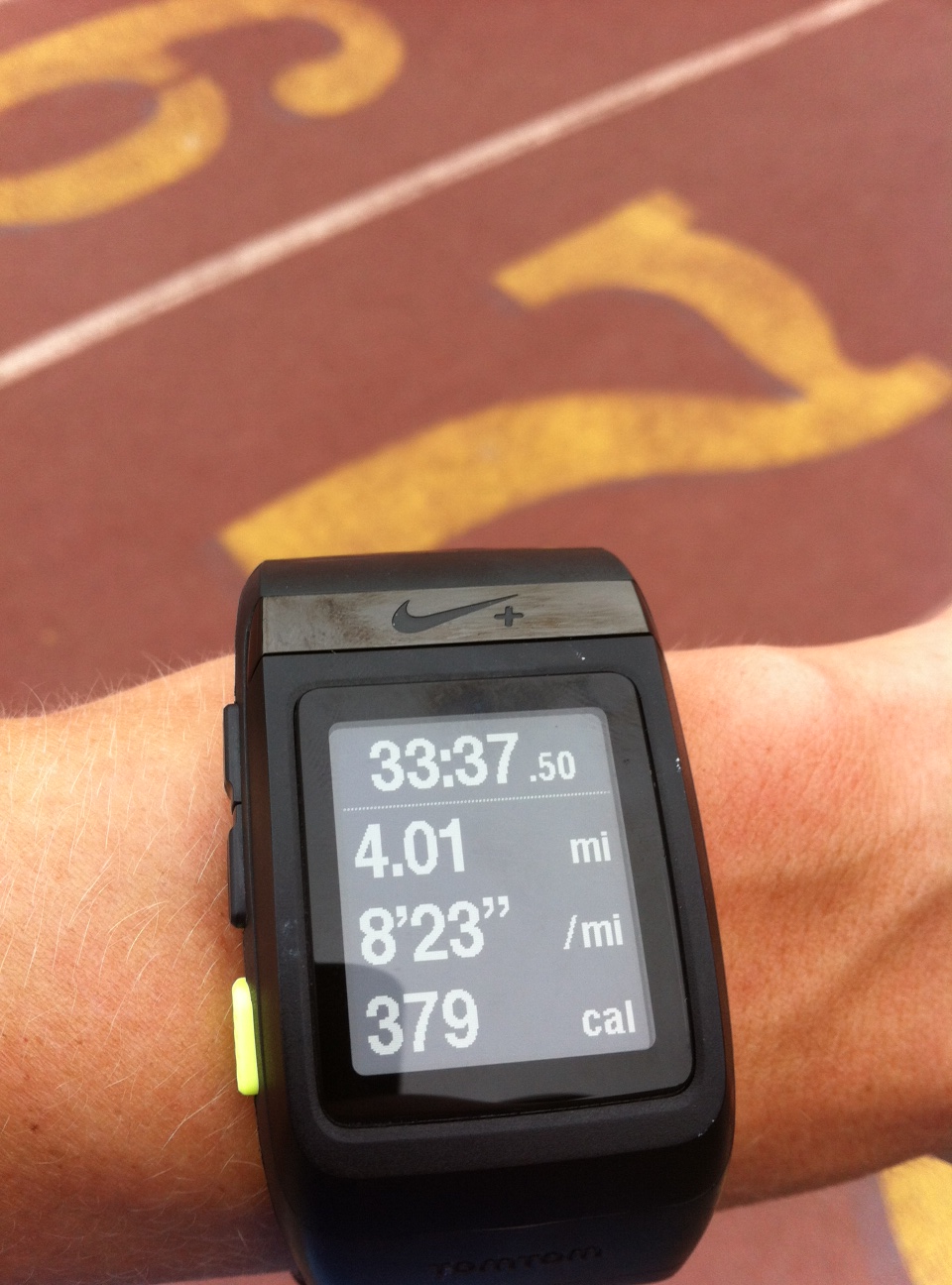
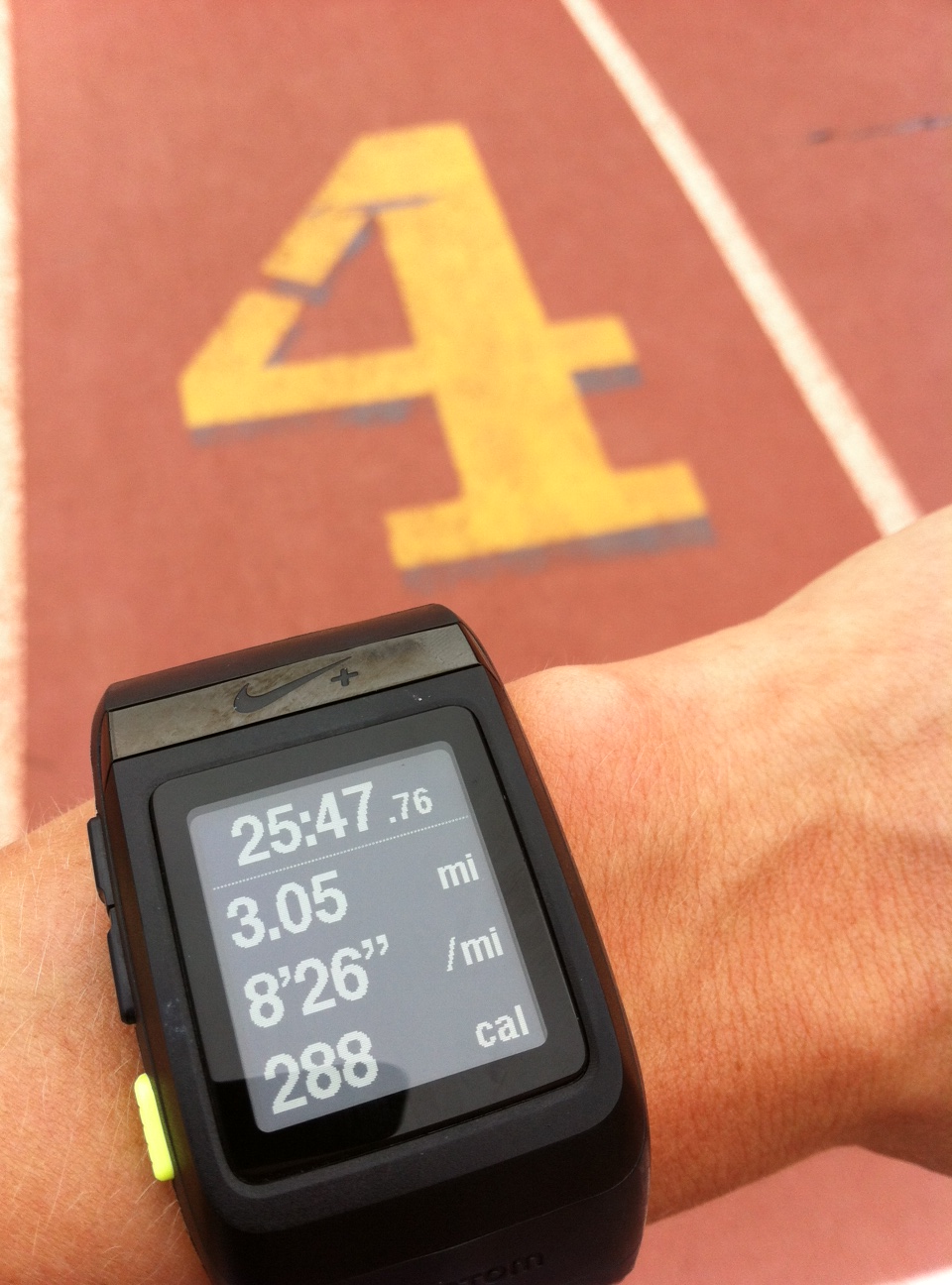
Artsy track photo FAIL…but thumbs up for some sun (finally)

Here’s what the schedule looked like for Week 5:

  • Tempo run – 5 mi
  • Track workout – 10 x 400s
  • Long run – 14 mi

Rather than getting fancy with a new route for Tuesday morning’s tempo, I decided to just extend my usual out-and-back three-miler.

The strategy? Look for the flattest street possible to add the extra two miles, which ended up taking me into a new part of town.

And lo and behold, I stumbled onto this:
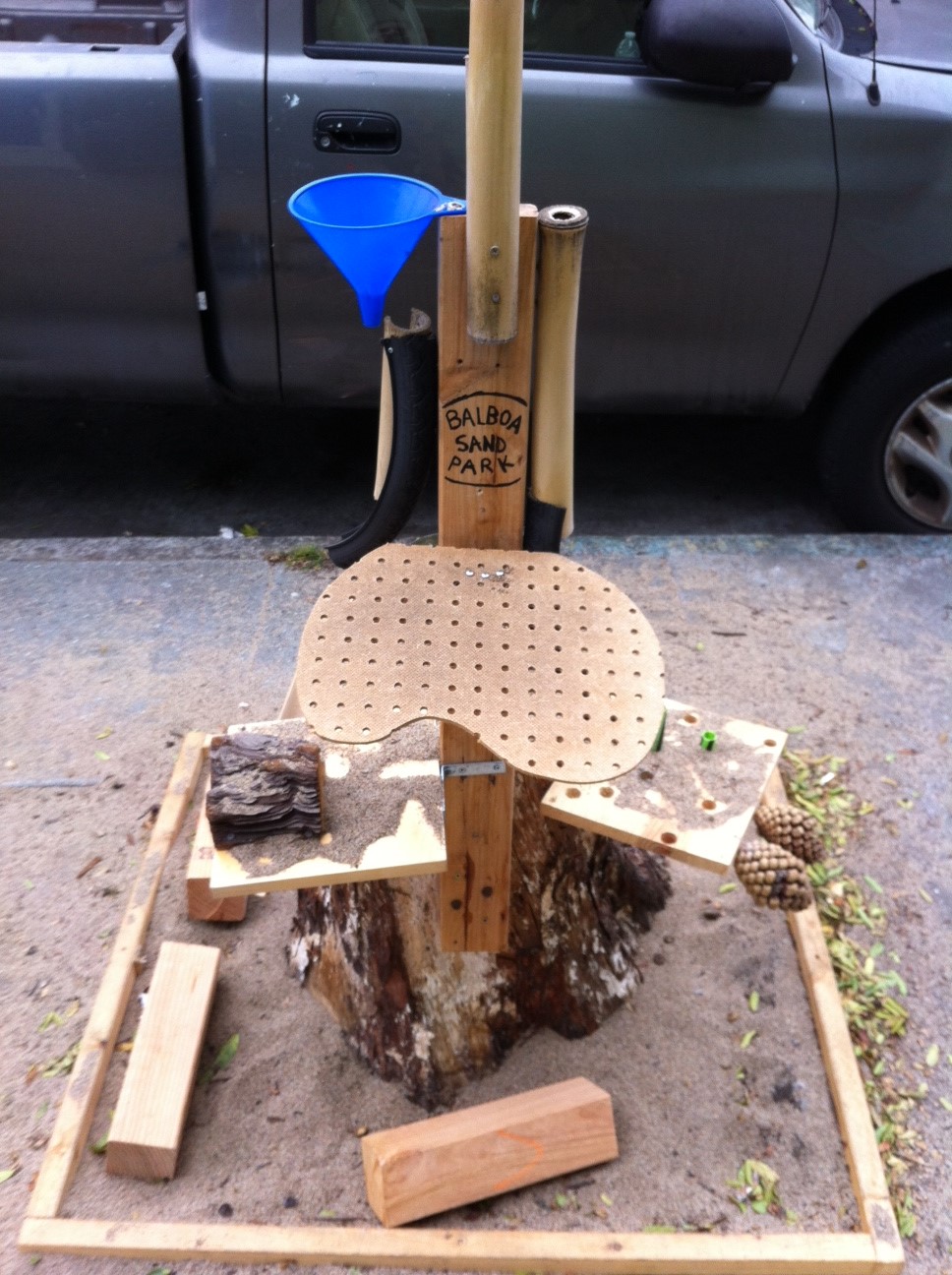
photo5

It just so happens to be the city’s smallest “sand park,” all of about four square feet on the side of the road.

And, shhh, it’s a secret! Gotta love the creative spirit (and sense of humor) here in San Francisco.

By the time Thursday rolled around, I had prepared myself for another foggy evening track workout, but was pleasantly surprised to find the opposite once I arrived at Kezar Stadium.

photo2

Still a brisk 60, but I’ll take it!

Between juggling my stopwatch app and workout playlist, I forgot to turn on my GPS watch for the first two 400-meter laps, but the remaining eight flew by.

I also took the opportunity to test out a new headband from Violet Love ($17), which helped keep flyaways at bay.

The signature “no headache, no slip fabric” strikes the perfect balance of staying put without being painfully tight.

photo1

On a side note, I’m really enjoying these weekly track workouts.

It’s easy to slip into a mental monotony with longer runs because progress is slow, so the quick bursts help infuse some feelings of accomplishment into training.

photo4

Of course, it also helped that there were a few super-speedy sprinters making the rounds.

I wasn’t even going to try to keep up with them, but I hate getting lapped, so I stepped up my pace to a range of 1:39-1:46 instead of the 1:50-1:52 target.

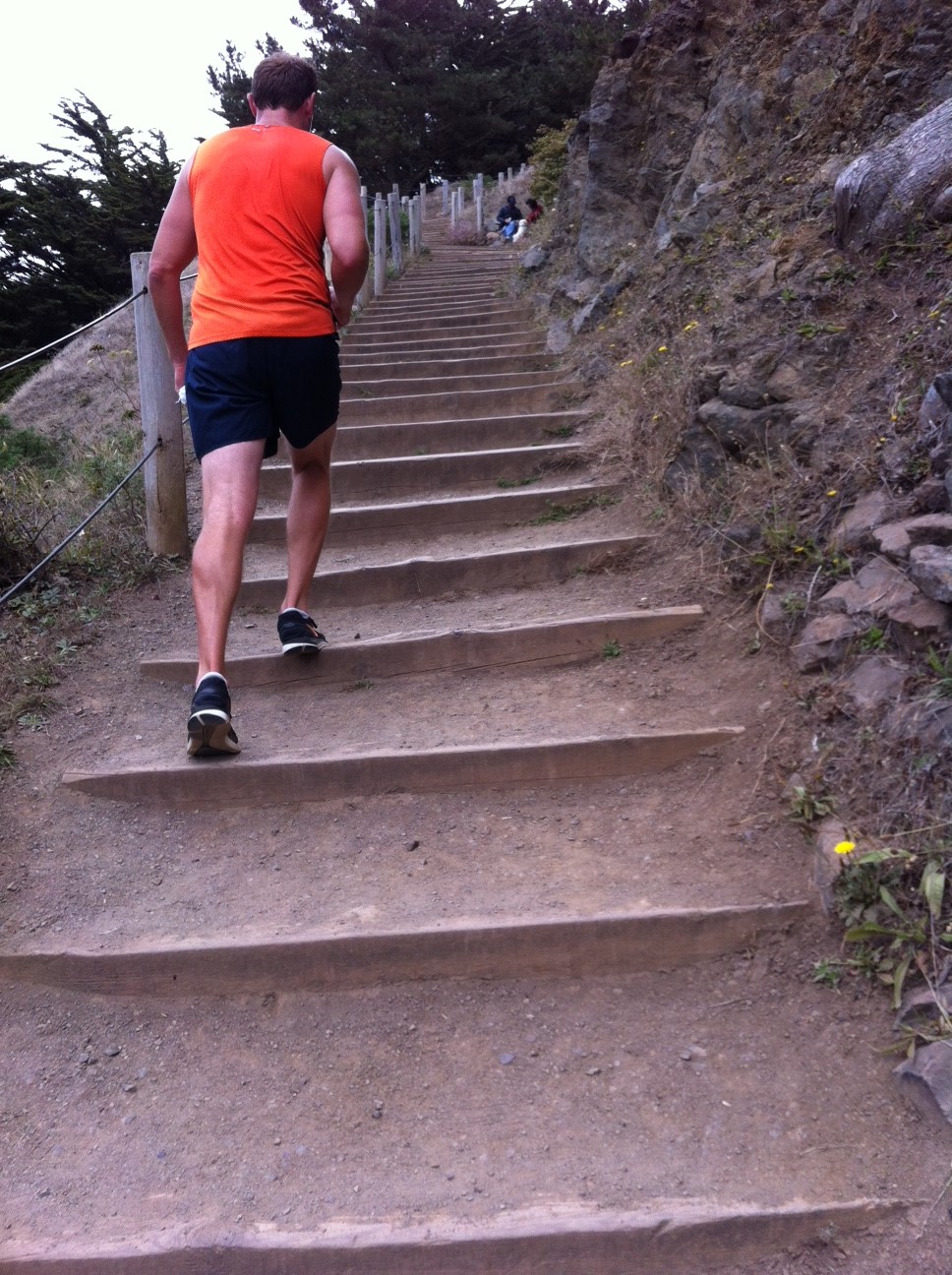
Oh, and another benefit of the track? It’s flat! As my long runs get longer, there’s no avoiding the inevitable elevation changes that come with traversing the city.

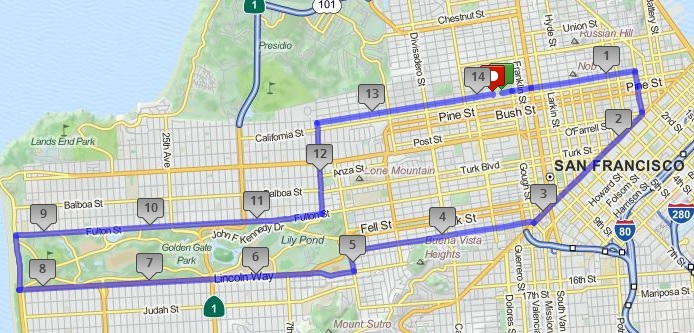
Case in point: Saturday’s 14-miler.
14milerSF

The route looped downtown, through Chinatown, which is always bustling and full of good window shopping and people watching.

photo6

I wove my way through the financial district and onto Market Street before heading over to the infamous stretch that is Haight Street.

photo7

Despite Haight’s hills, I had plenty to look at to distract me – like this pigeon-stalking cat on one corner.

He drew quite the crowd, although we humans seemed a lot more impressed by his antics than any of the birds.
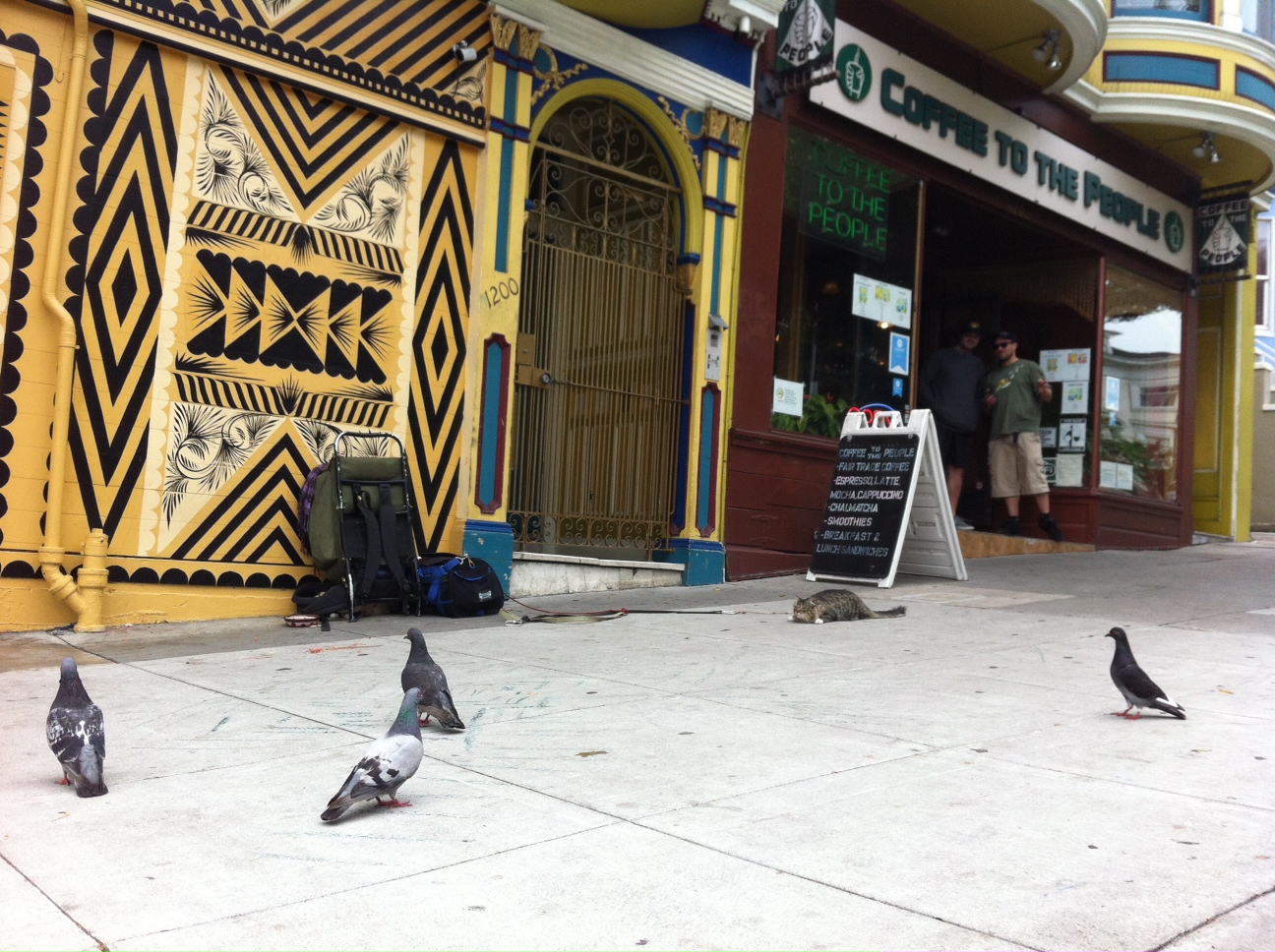
photo8

The route then took me around Golden Gate Park to Ocean Beach, which is on the westernmost border of San Francisco.

photo9

Between the clouds and the wind, it was pretty chilly, so aside from a few brave runners, the only action on the beach was from people huddled around bonfires.

photo10

I had to stop and walk along shore for a minute to take in the view…which, of course, meant carrying some of the beach back with me (in the form of sand-filled socks) for the remainder of the run.

photo11

Ben joined me a few miles from home for moral support during the home stretch.

Aside from a tender right knee around mile five, some stiffening joints around mile 11 and an odd soreness on the top of my left foot around mile 13, we made pretty good time.

photo13

The rest of the day was dedicated to rest and recovery before we restocked our carb stores at Kevin’s on some of his “loaded baked potato pizza.” 

Yes, it’s a delicious as it sounds. And yes, I’ll see if I can get the recipe and share it here.

Stay tuned for week six!

Thanks to the folks at Violet Love for providing a sample for review; all opinions are my own. 
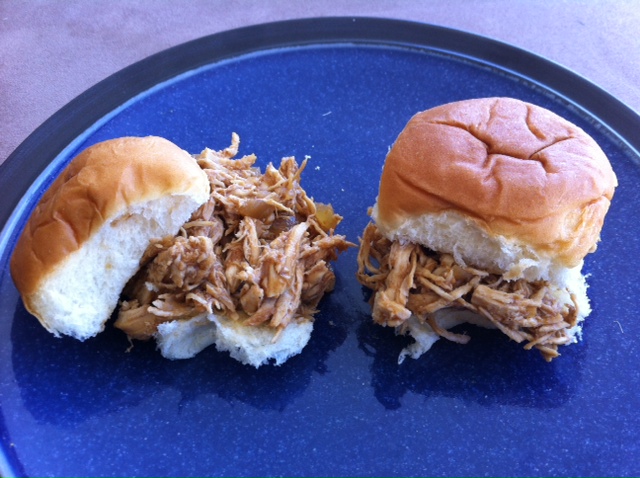
One-pot BBQ pulled chicken sandwiches

BBQ chickenNothing beats good BBQ. Present me with a plate of smoky goodness, and I just.cannot.resist.

But the fact that the average person eats more than 3,000 calories in a single BBQ sitting? That’s not nearly as appealing.

So when my husband came up with this tangy take on a classic pulled pork sandwich, my heart (and stomach) skipped a beat.

Sure, he swaps in chicken to cut fat and calories – but I’ll vouch that there’s no shortage of finger-lickin’ flavor!

One-Pot BBQ Pulled Chicken Sandwiches

Ingredients:

  • 4 boneless chicken breasts
  • 1 onion, finely chopped
  • 4 cloves garlic, minced
  • 1.5 cups water
  • 1.5 cups BBQ sauce (your favorite brand)
  • .5 cup apple cider vinegar
  • Package King’s Hawaiian sweet rolls
  • Monterey Jack cheese slices
  • Salt and pepper, to taste
  • Hot sauce, optional
  • Pepperoncini, optional

Directions:

  1. Season raw chicken with salt and pepper.
  2. In large pot (a dutch oven works best), add chicken, onion, garlic, BBQ sauce and apple cider vinegar. Cover with water, and bring to a boil.
  3. Reduce heat, simmer on low for 45-60 minutes to cook.
  4. Remove chicken, reduce liquid by half (to sauce-like consistency) by slowly bringing heat up. Stir often to keep from burning.
  5. Shred cooked chicken, adding meat into sauce and stirring to combine.
  6. Assemble sandwiches using sweet rolls, meat and cheese. Add hot sauce and/or pepperoncini, as desired.

Ladder long run treadmill workout

Ladder workouts – or speed sessions with intervals that build in increments – are a great way to work both speed and distance into a single session.

This beginner version gradually increases the length of your run/recovery intervals by one minute (rather than calling for a series of equal-length intervals) before steadily decreasing your intervals by the same one-minute increments.

Start with a five-minute warm-up at a comfortable pace. Your hard run should be at “race pace,” meaning it should feel difficult but not be an all-out sprint (in other words, not so hard that you can’t maintain it for the duration of the interval).

Jog recovery segments at an easy pace where it’s comfortable to maintain a conversation, and end the workout with a five-minute cool-down and stretch.

Use this workout whenever you feel the need to spice up your routine between races, and use it bi-weekly during training to help build your speed, confidence and endurance, regardless of race distance.

Beginner Ladder Long Run

Nike Women’s Marathon SF: Week 4 training recap

photo (78)

Foggy evening track workouts: A reality of summer in SF

You know you’re marathon training when…you get excited that this weekend’s long run is “only” a 10-miler!

Funny how quickly your perspective on things can change, huh?

So here’s what the schedule looked like for Week 4:

  • Tempo run – 3 mi
  • Track workout – 3 x 1600s
  • Long run – 10 mi

Gotta love recovery weeks! They’re a welcome respite between those three-week stretches where the mileage really ramps up.

Running is going well, so I took advantage of the downtime to mix in some cross-training, which can be a great way to enhance your overall conditioning and running performance.

We found an awesome indoor pool nearby that’s open to the public. Five bucks a pop got us access to the locker rooms, lap lanes and even two water slides (!), so a group of us ventured out (too) early Monday morning for a dip.

photo (95)

Swimming is one of the best cross-training activities for so many reasons: Not only does it help build muscular strength and endurance while improving flexibility, but it’s also a nice weightless workout that gives fatigued leg muscles a breather while providing an excellent upper body workout.

The best part, though? How therapeutic it felt to glide through the water, gently kicking (instead of relentlessly pounding) my legs to help work out some soreness from the previous weekend’s 13-miler.

But for as much as I’ve been conditioning my body on dry land, I was waaay out of my element in the water. This first week was more about getting comfortable again in the pool, so I’m excited to incorporate it into my weekly training routine going forward.

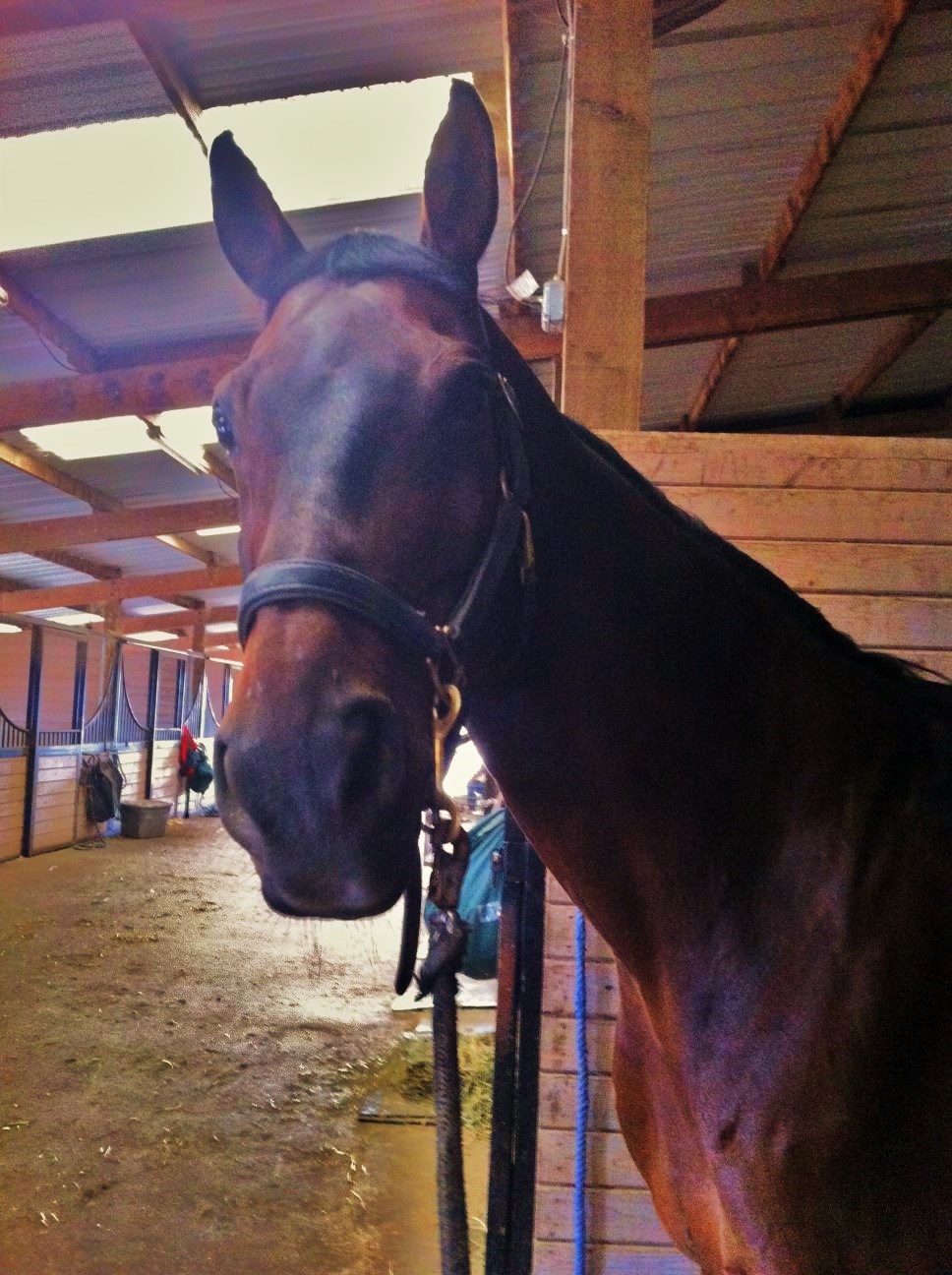
Tuesday morning’s run was a quick three-miler, but the evening’s cross-training was courtesy of this handsome fella, Bentley.

photo (94)

Although being at the barn is one of my favorite ways to take a mental break, horseback riding is not just a hobby; it’s a sport (no, the horse isn’t the only one doing the work; good riders make it look effortless, but it’s a hell of a workout).

Not only does it require a huge amount of strength, balance and control (especially when steering a guy, like the one above, who weighs more than half a ton!), but it also recruits muscles in the legs, abs, back, shoulders, chest, butt and arms.

Oh boy, did I feel each and every one of those spots the next day!

Wednesday nights are reserved for bootcamp class, which challenges every muscle from head to toe with little rest in between sets.

photo (91)

Wrapping up our workout with seemingly-endless sets of abs!

By constantly moving for an hour, we burn a ton of calories, but I like that we mix it up by targeting different muscles and trying different exercises every week to keep things fresh.

Why? Too much repetition and you’re setting yourself up for injury, burnout and boredom, so it’s important to switch up your routine often.

photo3

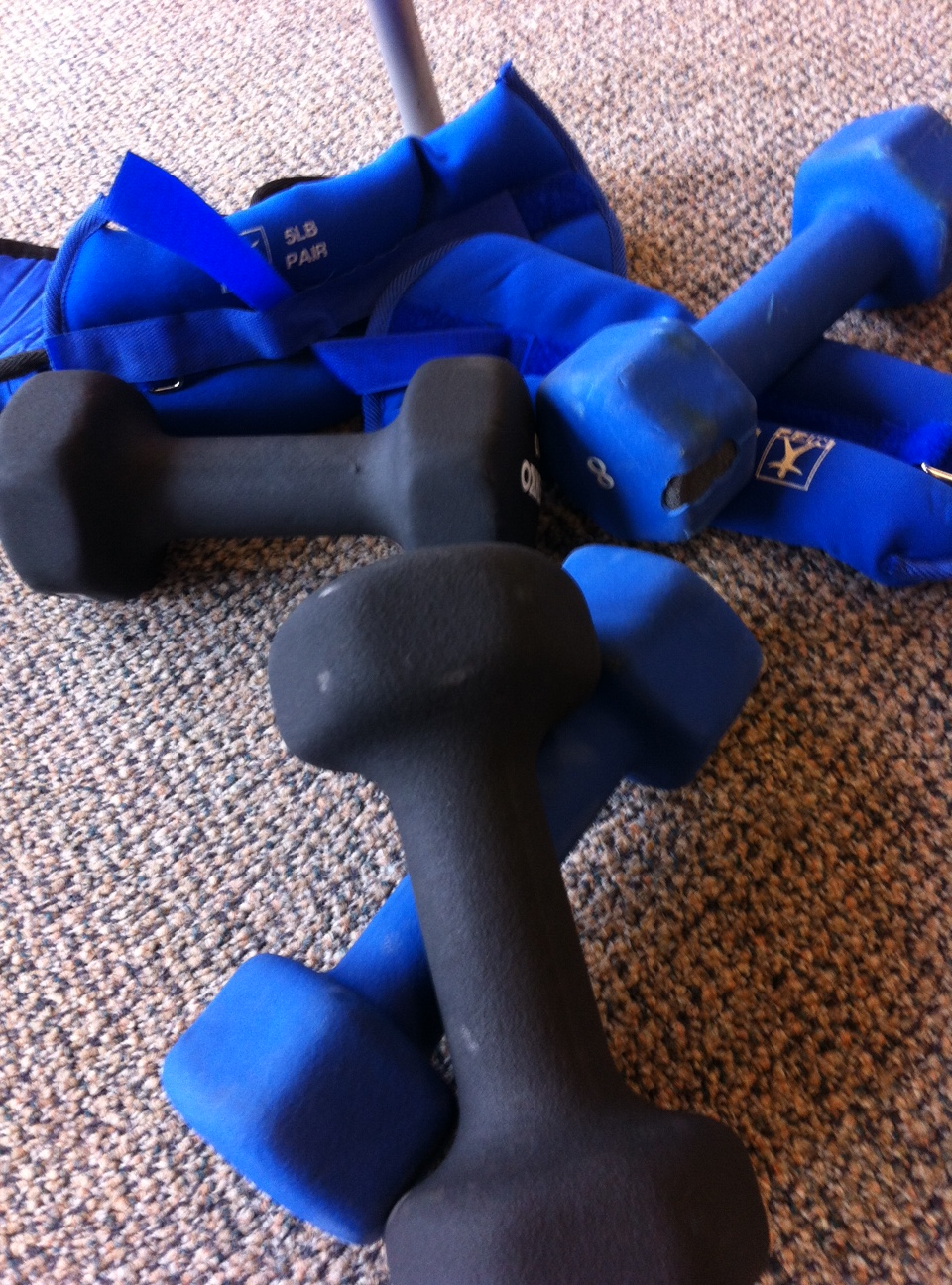
Wednesday nights = weights

Thursday’s track workout was a little chilly, but successful. My goal pace was 7:40-7:45 for each of the three miles, and somehow I managed to clock each one at 7:39, which means I’m getting a good feel for overall pacing.

photo

I figured that Saturday’s 10-mile long run would be a great opportunity to test some new gear, so I brought along my new Nathan hand-held water bottle to practice some mid-run hydration.

But it ended up being more of a nuisance than anything else; it was heavy and threw off my balance, so my shoulders and back were pretty angry by the end of the run.

So it’s back to the drawing board on the water dilemma…and I’m thinking I might try a small hydration pack on some of the upcoming long runs. Otherwise, I’m all ears if anyone has a better suggestion for week five!

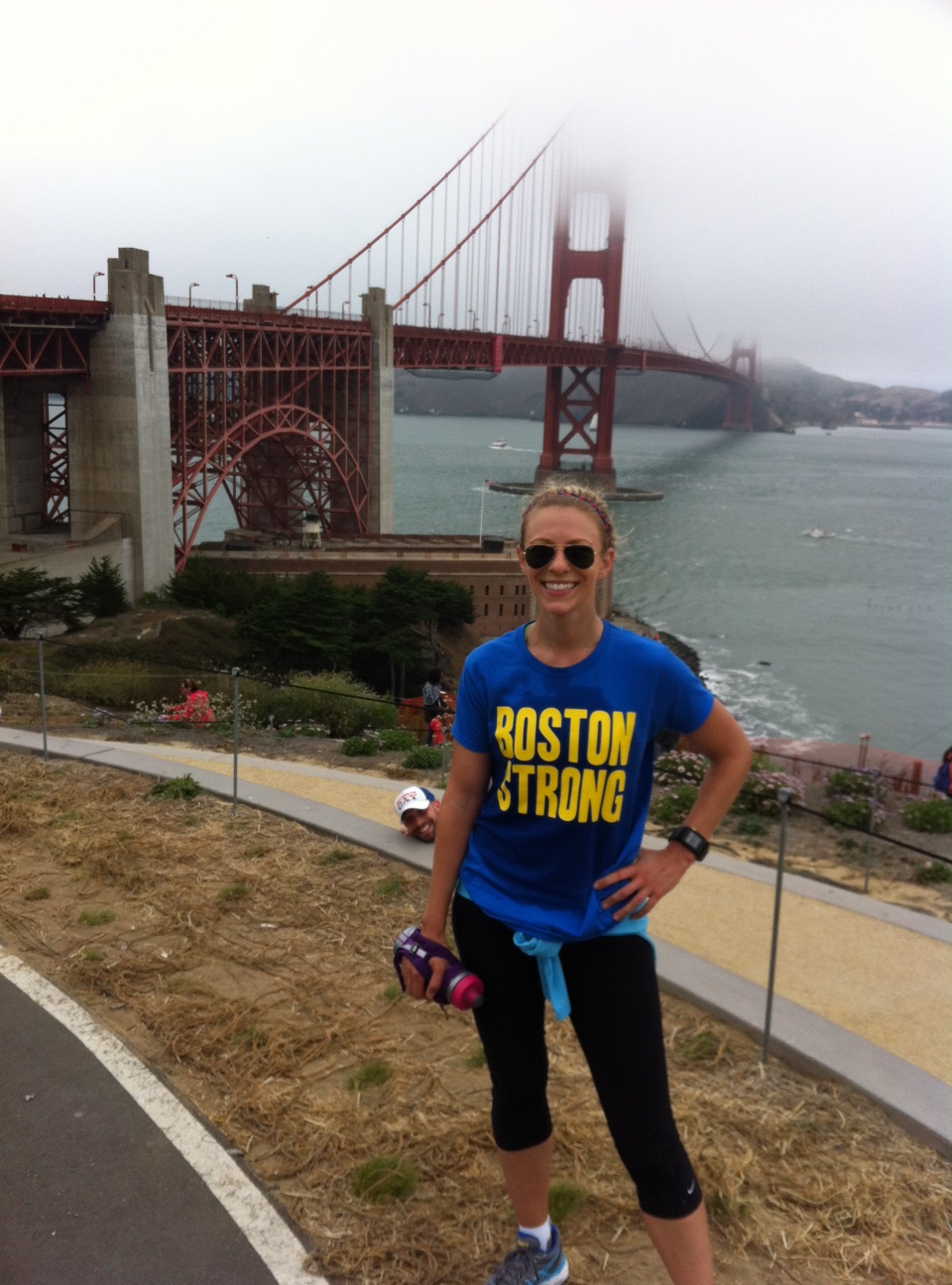
Boston Strong (and sweaty!)...bonus points if you can spot my friend Kevin in the shot

Boston Strong (and sweaty!)…bonus points if you can spot Kevin here, too

Easy ways for athletes to stay sun-safe in all seasons

Photo credit: SkinCancerPrevention.org

Photo credit: SkinCancerPrevention.org

It’s a scary, but true, fact: Athletes and outdoor enthusiasts have a higher risk of contracting sun-related skin cancers because of the increased amount of time spent in the sun, coupled with a lack of protective clothing and near-constant sweating.

If you’re a regular exerciser, you’re probably already familiar with a multitude of skin conditions (hello, blisters and chafing!), but the most important precaution to take year-round is protecting skin from wrinkle-inducing UV rays.

Below are five rules to follow to keep sun damage at bay, whether you’re headed outdoors for work or for play:

Tip #1: Seek shade when the sun’s rays are strongest.

Sometimes the best solution is the simplest. Prone to sunburn? Stay out of the sun’s rays when they’re at their peak (usually between 10 a.m. and 4 p.m.). Studies have also found that sweat can increase the sensitivity of skin and over-exercising can suppress the immune system, making athletes more susceptible to the damaging effects of the sun.

Tip #2: Create a barrier with clothing and accessories.

A plain old cotton t-shirt offers sun protection of only about SPF 7, and even less when it’s soaked with sweat. So go for gear from brands that offer additional defense, such as Mott 50, which combines both fashion and function in a line that is approved by The Skin Cancer Foundation and offers UPF sun protection in every garment.

Check for labels with an Ultraviolet Protection Factor (UPF) seal, which means that the fabric blocks UVA and UVB rays. Alternatively, you can also toss your favorite clothing in the laundry with SunGuard, a product that adds the equivalent of an SPF of 30 for up to 20 washes.

Tip #3: Hydrate and eat skin-soothing foods.

Skin acts as the first line of defense for our bodies, so help reinforce its effectiveness from the inside out. Supplementing your diet with vitamins (A, E and C, in particular), essential fatty acids and powerful antioxidants (such as those found in green tea) helps to promote cellular turnover, fight wrinkles and maintain that natural post-workout glow.

Tip #4: Protect those peepers.

Unflattering crow’s feet aside, sun exposure without proper eyewear (wraparound lenses treated to block both UVA and UVB rays) can also raise your risk for skin cancer on the eyelids, cataracts and macular degeneration. And on the bright side (pun intended), brown or amber lenses increase contrast, which can give athletes the added benefit of a competitive advantage.

Tip #5: Apply sunscreen liberally – and frequently.

Did you know that most people only use about 10 percent of the recommended amount of sunscreen? Use enough of the white stuff to fill a shot glass, applying it to exposed areas about 15 to 20 minutes before your workout to allow it to set in. And depending on how much you sweat, reapply every hour or two. Look for brands with broad-spectrum protection, an SPF of at least 30 and titanium dioxide or zinc oxide, which hold up better in heat and are less likely to irritate skin.

A great on-the-go option? Adventuress YouVee Sunscreen Swipes ($24), which provide skin with all the protection it needs against UVA/UVB rays. Packaged in individually-sealed finger pockets, the fragrance- and paraben-free swipes are an easy way to reapply SPF mid-workout, minus greasy residue on hands or fingers. I love to use them during long runs, especially now that I’m marathon training for hours on end. Just tuck one in your shorts pocket, and you’re good to go!

Create a natural citrus candle, sans wax

Photo credit: Upschool.com

Photo credit: Upschool.com

Citrus aromas make us feel refreshed and energized. But why burn toxic synthetic materials, or buy exorbitantly-priced soy and bees’ wax, when the perfect citrus-scented mood-lighting is sitting in your fridge?

Indie Lee, founder of the all-natural skincare line, Indie Lee & Co, shares one of her at-home secrets for an all-natural clementine candle – no wax necessary!

What You Need:

  • 1 Clementine
  • 2 Tbsp Olive Oil

How to Make It:

  1. Cut clementine in half
  2. Carefully peel skin off to keep whole
  3. Twist inside bottom pulp plug into a wick
  4. Fill with olive oil
  5. Light and enjoy

Extra tip: Cut a small design in the top half of the peel to make a creative candle lid.

Set sail this summer to reap mind and body benefits

sailing_to_the_sunrise

While many of us consider sailing more of a hobby than a sport (that is, unless, you’re an America’s Cup contender!), its health benefits warrant a second look at this activity as an ideal way to supplement your fitness regimen while maintaining a sense of adventure this summer.

Being out on the water has a profound effect on both mind and body, and below are just a few of the potential positive side effects should you venture on your own voyage this season.

Muscle Strength & Endurance

Many sailing movements require great arm strength (constantly pulling and hoisting the sails in order to direct the boat or yacht), which helps to strengthen muscles of the back, shoulders and thighs.

Cardiovascular Fitness

Did you know that oxygen uptake during sailing can be even greater than when you play tennis or baseball? The more intense the activity, the better, which also reduces your risk of obesity, hypertension and heart disease.

Sense of Well-Being

Salty sea air is supposedly charged with ions that aid in oxygen absorption, which can help balance your levels of serotonin, a chemical produced by the body that is associated with mood.

Stress Reduction

The rhythmic movement of the boat combined with the sounds of lapping water and wind in the sails can influence brainwave patterns, providing a soothing environment that promotes a sense of relaxation.

Balance & Agility

Maneuver quickly around a rocking boat, and you’ll soon discover that a solid set of reflexes, center of balance and hand-eye coordination are a necessity, especially when tacking and gibing.

Focus & Concentration

With a singular goal of staying safe (i.e. not sinking) the crew’s ability to focus increases exponentially, which is an especially important skill for today’s chronic multi-taskers to maintain.

Communication Skills

Both verbal and non-verbal communication is critical to the captain and crew being able to act as a cohesive unit to navigate, tack, or otherwise manipulate the boat through various scenarios.

Collaborative Environment

Finally, sailing fosters great cooperation and teamwork because each person on board has the potential to make an important contribution toward keeping the vessel afloat and running smoothly in the correct direction.

“Learning to sail is just the beginning,” according to the American Sailing Association, the leading authority on sailing instruction and sailing schools in the U.S. (check out their list of sailing schools, by state, for a location near you).

The organization’s certified professionals are capable of teaching all levels of abilities, so there’s no excuse not to set sail – safely and with confidence – this summer!

Nike Women’s Marathon SF: Week 3 training recap

After a really rocky start, I sure am glad to put this week behind me!

This is what "summer" (and I use the term loosely) looks like in San Francisco

This is what “summer” (and I use the term loosely) looks like in San Francisco

Here’s what the schedule looked like for Week 3:

  • Tempo run – 7 mi
  • Track workout – 6 x 800s
  • Long run – 13 mi

The fact that last Saturday’s 12-miler went so well got me pumped up to tackle week three, but Tuesday’s workout burst that bubble very quickly.

What started off as a typical 7-mile tempo run quickly spiraled into what shall henceforth be referred to as “The Worst Run Ever.”

Three miles in, I started to feel a little “off,” but I pushed through it, thinking that I just needed to get the lead out of my legs from the previous long run. But by mile four, I started feeling waves of nausea and lightheadedness.

In typical stubborn-runner fashion, I plugged along (partly because I “only” had three miles left at that point, and partly because it was an out-and-back run, so I was nowhere near home).

photo (79)

(Un)happy feet

By mile five, I was using every trick in my mental arsenal to just.keep.moving…from “I have to run to the end of this song” to “I’ll just stop and slump over – i.e. ‘stretch’ – by the side of the path for a minute.”

When mile six finally came, I was so dizzy and sick to my stomach that I could barely make it a block at a time before stopping to catch my breath and hunch over to get some blood to my brain. I staggered a tenth of a mile at a time, my thoughts racing back and forth between, “I just need to get home,” and “How the hell am I going to get back up the hill to get there?”

photo (80)

Runner problems

Just then, in what I attribute to some kind of divine intervention, my friend Colleen, a bestie from grade school, called me. We chatted as I slowly trudged along, telling her about the evening’s disaster.

Her response? Something that gave me just the boost I needed to get back home: “It’s funny how running works. You can go out and have the best run ever, and another time it can be horrible,” she said. “But that’s what keeps us going – because that next run might just be a great one. So I guess that’s why we keep doing it, isn’t it?”

I couldn’t have said it better myself. By the end of the call, I was home, grateful for the words of encouragement and that she helped me put it all in perspective.

(By the way, I think quinoa may have been the culprit wreaking havoc on my stomach, so note to self: Cool it on the quinoa until marathon training is over.) 

photo (77)

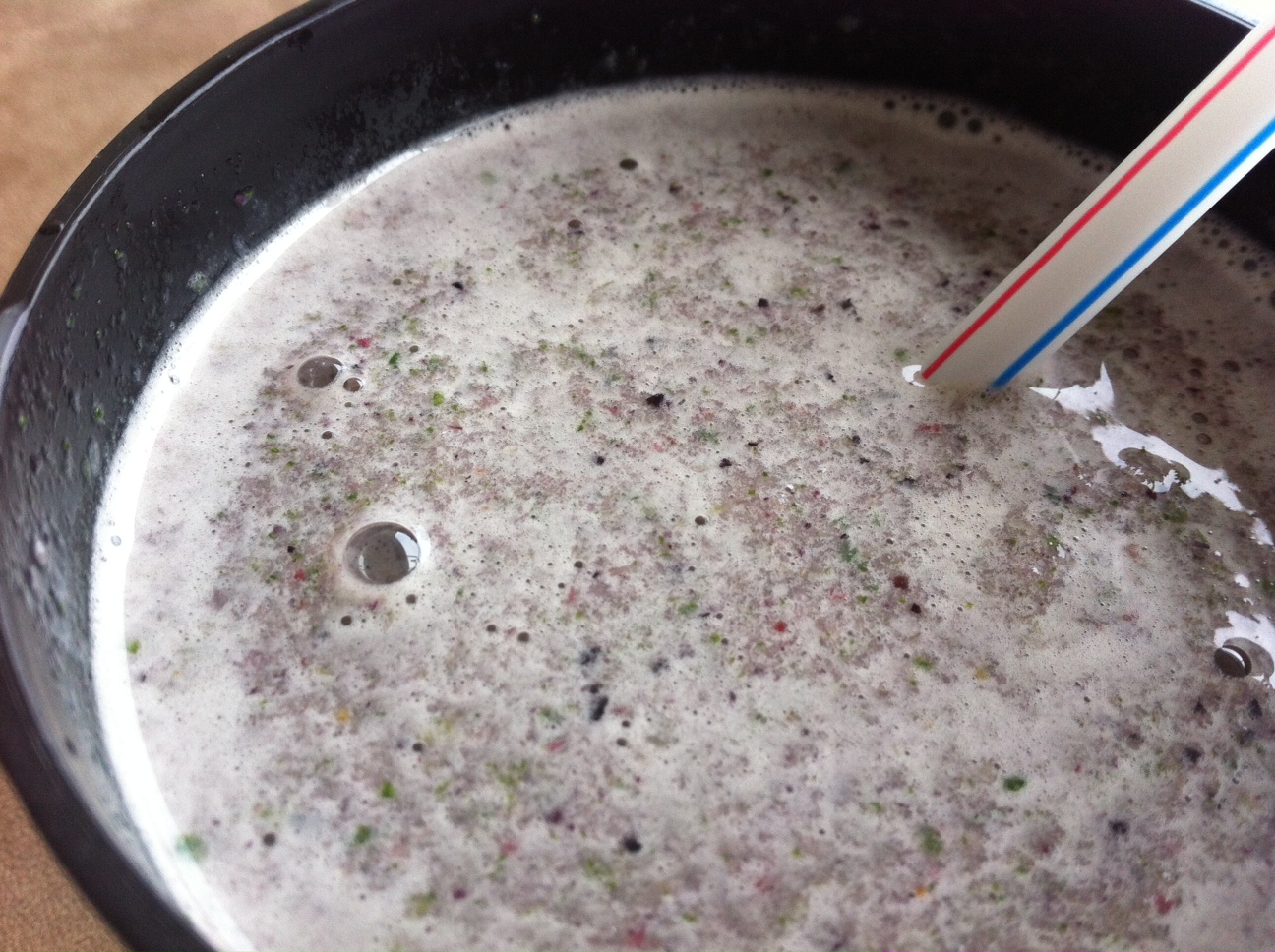
Thank goodness for recovery protein shakes

I didn’t feel back to normal until Thursday, so I was a little concerned about the evening’s track workout, but it actually went really well.

photo (75)

My pace was supposed to be in the 3:45-3:48 range for each 800, but I ended up with splits that ranged from 3:39-3:45, even with a monster headwind down the back side of the track.

photo (76)

Finally, back “on track!” (…see what I did there?)

I’m not gonna lie: Despite Thursday’s rebound running session, gearing up for Saturday’s 13-miler was a little intimidating. But we mapped out a new route that took us down by the ocean for some different scenery, which was a welcome distraction.

SF13miler

photo (82)

Unfortunately, we didn’t really factor in a little thing called “elevation,” which always keeps things interesting for runners here in the Bay Area.

photo (83)

But we finished fairly strong and rewarded ourselves by overindulging on Cajun and Creole cuisine at dinner. (If you’re in the Bay Area and get a chance to go to the Boxing Room, I highly recommend it!)

photo (81)

What’s in store for me (and my crazy compression socks) in week four? Stay tuned…

Simple tips for keeping your cool during summer workouts

Photo credit: Blisstree

Photo credit: Blisstree

Although we wait most of the year in anticipation for them, the dog days of summer can wreak havoc on workouts.

Between heat, humidity and poor air quality, suddenly even the simplest of activities can feel twice as difficult.

But don’t let zapped energy derail your exercise regimen; instead, try these tips for successfully tackling summer sweat sessions.

Mind the time. Early morning and late evening are generally the coolest stretches of the day, so rearrange your schedule to squeeze in a workout without getting beaten down by the midday sun.

Wear proper clothing. Look for lightweight and breathable clothing that wicks sweat, and opt for lighter colors, which help reflect heat better than darker ones.

Hydrate all day. Staying consistently hydrated (four to eight ounces of water every 15 to 20 minutes) helps prevent heat-induced symptoms such as dizziness, stomach cramps and headaches.

Shield skin from the sun. Sunburn is a surefire way to make any workout miserable, so wear a hat and be sure to slather on sunscreen that’s SPF 15 or higher 30 minutes before you head outside.

Allow time to acclimate. It can take anywhere from 10 to 14 days to adjust to a new climate, so as the mercury starts rising, exercise for shorter durations and at lower intensities.

Switch to summer-friendly workouts. Activities such as beach volleyball, kayaking, swimming and hiking torch calories without burning up your body and can be done in the water or the shade.

Rest early and often. You body works harder than usual in the heat, so don’t be afraid to take frequent water and walk breaks to allow it to regulate and recover.

Cool your core body temp. Take a cold shower before and after you work out, and douse your head with a squirt or two from your water bottle when you need to chill out mid-workout.

Take it indoors. When it’s just too hot to do anything outside, take advantage of your air-conditioned gym, pop in a workout video in the comfort of your basement or, when all else fails, do laps at the mall for some good people watching while getting your heart pumping.

Use common sense. Finally, know when to call it quits and stop immediately if you experience muscle cramps, nausea, vomiting, weakness, headache, dizziness and/or confusion, any of which can be cause for concern.

Six smart post-workout snacks

Photo credit: TheBetterMom.com

Photo credit: TheBetterMom.com

Breakfast may be the most important meal of the day, but did you know that your post-workout snack comes in a close second?

Topping off the tank after vigorous exercise is vital to helping your body repair muscle tissue and replenish glycogen levels.

The size of the meal depends on your calorie needs and the duration and intensity of your workout, but it should contain a mix of both protein and carbohydrates.

Studies have shown that this combo not only helps rebuild muscle, but it also reduces cortisol, a stress hormone that wears on your body during strenuous activity.

Here are six of my favorite snacks to help refuel after a particularly tough workout:

1. Protein shakes. 

Experiment with protein powders, fruits and veggies, ice and milk or juice in a blender for one of the most refreshing and satisfying recovery drinks. Or when I don’t have the time (or energy) to be creative, my go-to is Shakeology. Sure, it’s a little pricey at around $4 a pop, but it contains a proprietary blend of digestive enzymes, prebiotics, antioxidants, phytonutrients, adaptogens and all sorts of other rare ingredients from around the world.

2. Yogurt with berries. 

Skip the super-sugary fruit-on-the-bottom varieties, and indulge instead in plain or vanilla flavors (try Greek varieties, such as Oikos or Chobani) with fresh fruit. Not only is this a portable and palatable snack, but low-fat yogurt also has nearly 15 grams of protein. A handy tip? Use frozen berries, which are less expensive and will help keep your yogurt perfectly chilled in your gym bag.

3. Peanut butter. 

However you spoon it or spread it, one tablespoon of this nutty goodness contains only about 100 calories and seven grams of healthy unsaturated fat. ‘Nuff said.

4. Breadless sandwich. 

If you’re not in the mood for a full meal, eat a plate full of fillings! Make easy roll-ups by spreading flavored cream cheese (my favorites are the savory ones from Philly) on lean deli meat before rolling it up for a high-protein, grab-and-go snack. Serve with a side of sliced fruit for extra energy-boosting carbs.

5. Eggs. 

Yes, they’re an incredible, amazingly-versatile and highly-edible post-workout snack that’s low in cost and high in nutritional value. At a mere 68 calories a pop (with 6.3 grams of protein), eggs also contain zinc and vitamin B12 to boost metabolism, immunity and cell production. EatingWell offers a list of 12 healthy, easy egg recipes here.

6. Low-fat chocolate milk. 

Got milk? Try it after your next workout for more effective recovery. A study in the Journal of the American College of Nutrition named it as an ideal post-workout beverage for building muscle. Compared to plain milk, water and sports drinks, it has twice the protein and carbohydrates, an added bonus of calcium. So wear that milk mustache proudly!

For best results, aim to eat within 30 to 60 minutes of your workout, when muscles are most receptive. During this window, there’s an uptick in enzyme activity that makes the body more efficient at storing glucose for energy and rejuvenating fatigued muscles.