Leave your heart (but find your Soul) in San Francisco

SC2

You know what I love most about working out?

Just when you think you’ve got it figured out (i.e. this fall’s marathon PR), something else comes along, kicks your butt and knocks you back into reality.

Or, in my case, the lowest resistance on the spin bike.

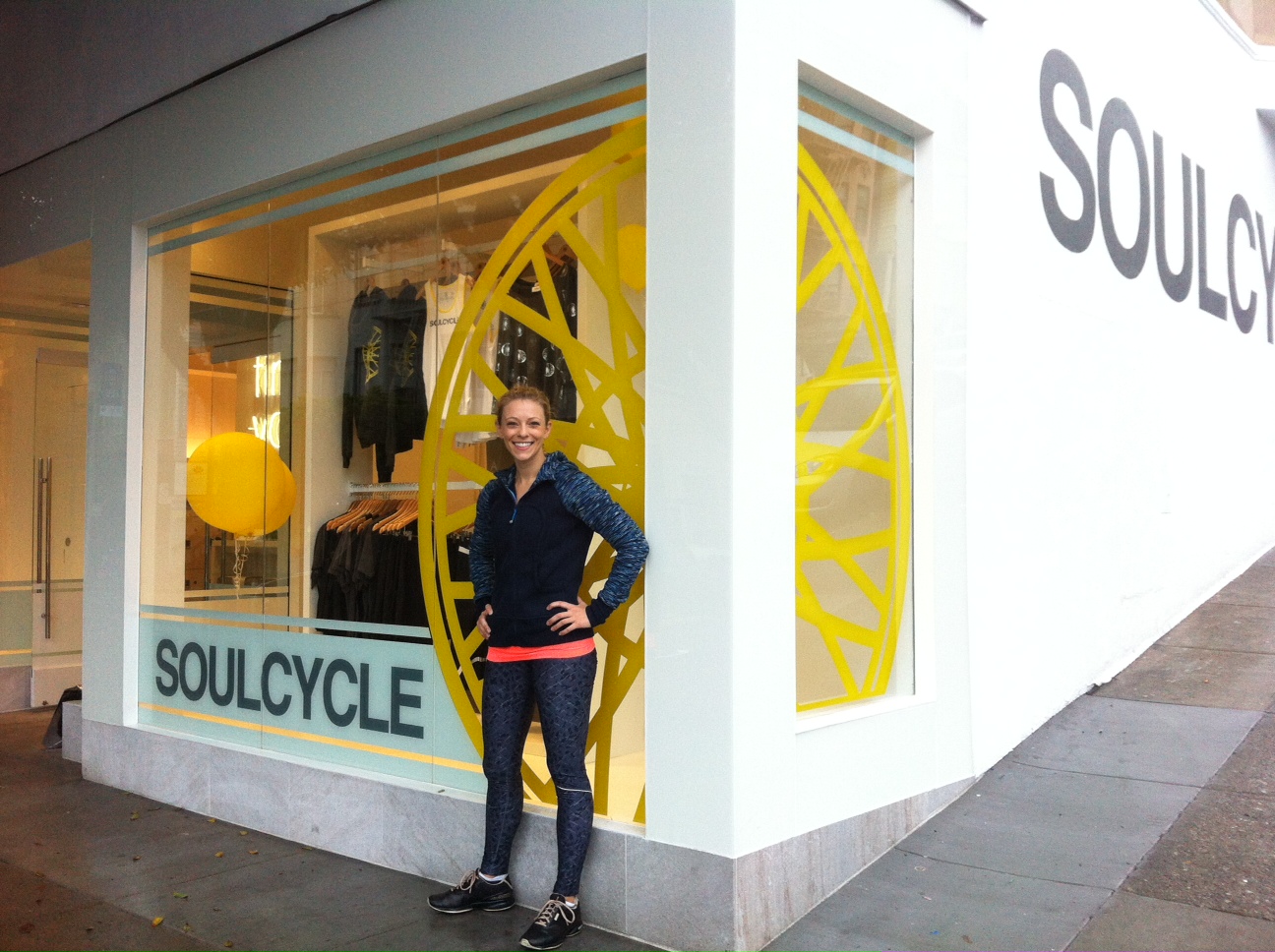
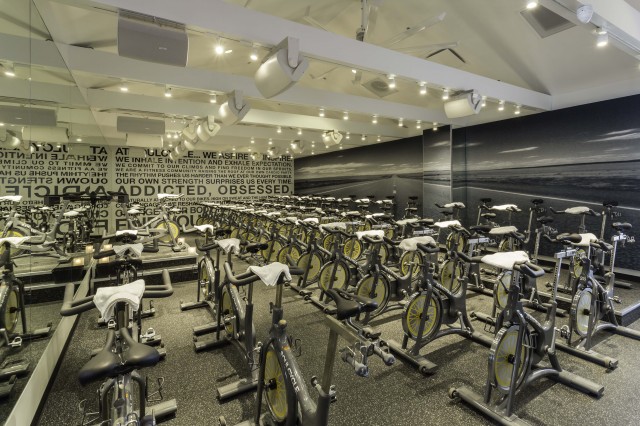
That’s how I found myself last week, getting my first taste of sweet torture at the brand-spanking-new Union Street SoulCycle studio here in San Francisco.
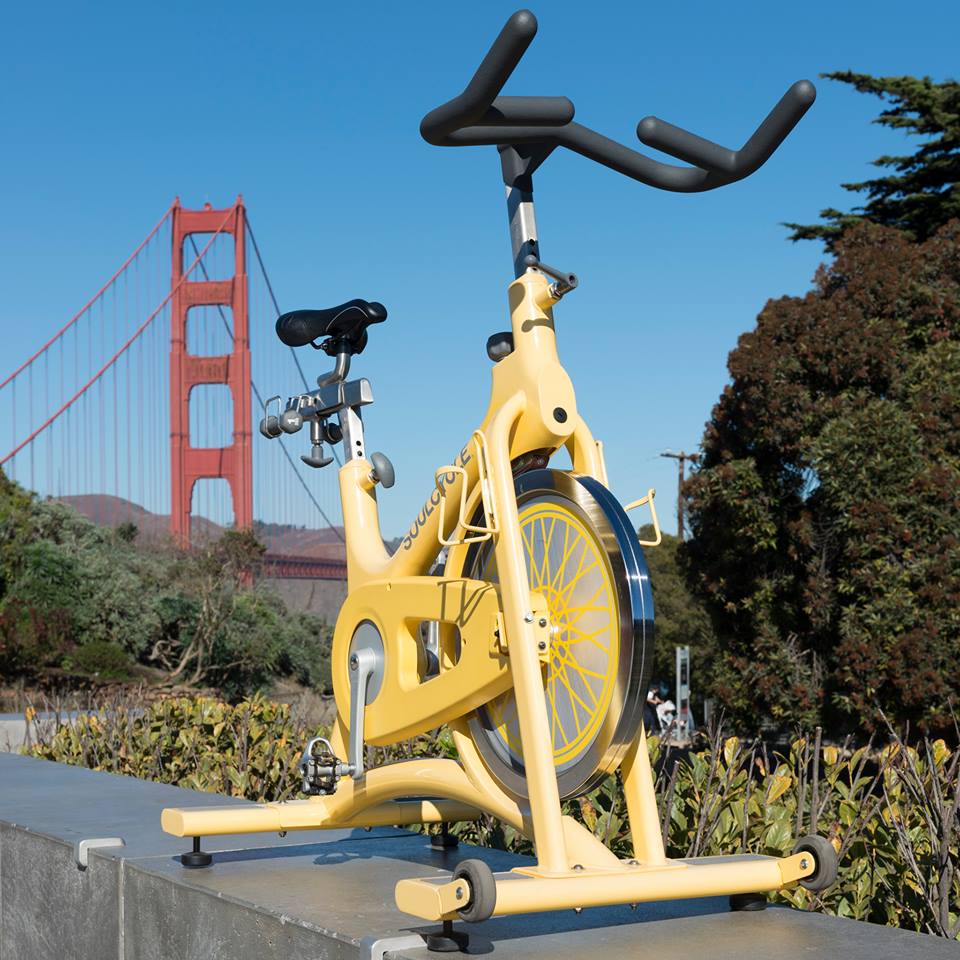
Source: SoulCycle

Source: SoulCycle

The spin-class-meets-full-body-workout has developed a cult-like following after launching in NYC a few years back, and it promises to deliver an experience like no other.

In layman’s terms, that means you’re looking at a 45-minute mix of cardio, yoga, high-energy music and inspirational coaching from instructors intent on improving both your body and your spirit.
Source: SoulCycle

Source: SoulCycle

My indoctrination into “the pack” (SoulCycle speak) started off innocently enough; I arrived a few minutes early to scope out the studio, complete with brightly-lit and well-stocked changing rooms, showers and lockers. The staff was friendly and helpful, especially with newcomers who are unfamiliar with the SoulCycle process, which goes a little something like this…

Step 1: Reserve your class. Registration opens each Monday at noon for the week following. Classes are known to fill quickly, so come hell or high water, you can bet Soul aficionados will be in close proximity to an internet connection during lunch breaks on those days.

Step 2: Get your gear. It gets mighty steamy mid-class (plus, loose pants and a fast-spinning wheel don’t mix), so ditch baggy clothing in favor of tights and tanks. Rent cycling shoes for $3, but don’t worry about bringing towels or seat cushions; SoulCycle supplies both.

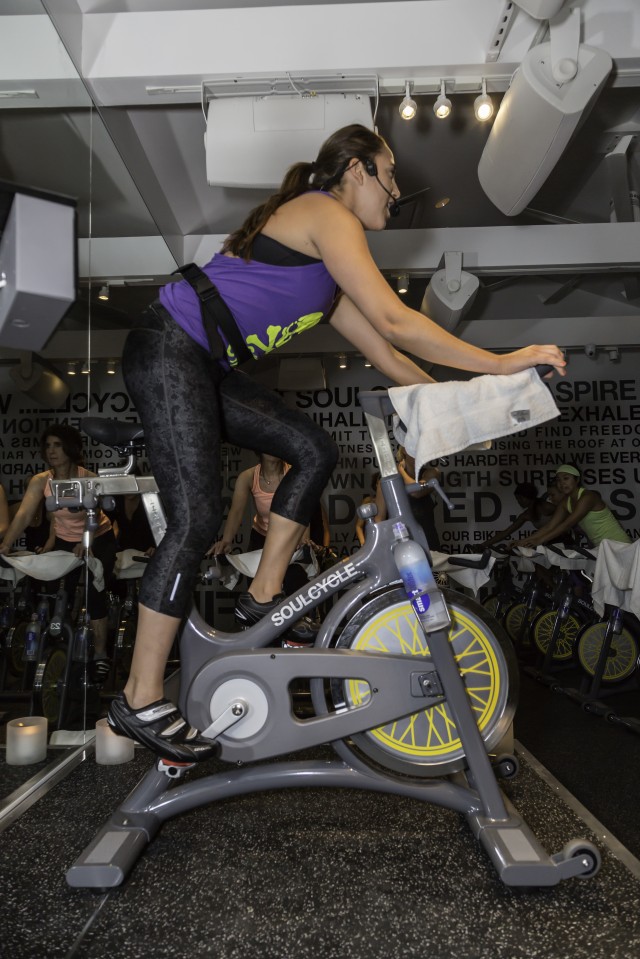
Step 3: Set up your bike. Even if you’ve taken spin classes before, do yourself a favor and ask for assistance on your maiden SoulCycle voyage. The instructor, Jenny, was more than happy to help, and even gave me my numbers so I’m locked and loaded for next time. 

Step 4: Observe the etiquette. To preserve the “soul sanctuary,” SoulCycle has a few simple requests. You can read more about ’em here, but they’re basically about using common sense and having respect for fellow riders when in close quarters.

Step 5: Find your soul. And you’re off! Give in to the “power of the pack,” and you’re in for an inspiring, energizing, full-body burn.
Source: SoulCycle

Source: SoulCycle

The class itself began with a bang; once all riders were clipped into their bikes, the candles were lit, the music went up, the lights went down, and our legs began pumping in unison to the beat.

Jenny, our instructor, explained that it’s a workout like no other — one that has brought professional athletes and Ironmen down to their knees — but I was determined to withhold judgment. After all, I can run for four hours straight, so 45 minutes in the saddle is a piece of cake, right?

Wrong.

Not 10 minutes into class, I was drenched in sweat and gasping for breath. Legs spinning, arms burning, it was a non-stop 45 minutes of give-it-all-you’ve-got effort, made possible by continual words of encouragement from Jenny, a constant beat and the collective energy of the pack around me. 

While I usually prefer solo workout routines, I couldn’t help by get inspired by the infectious energy of the pack. It’s not as much a transcendental experience as it is a “cardio sanctuary” of sorts where riders can come to clear their heads, transform their bodies and maybe even atone for recent sins of the flesh (in my case, Sift cupcakes and holiday candy).

The only downside? Classes are pricey at $30 a pop (although first-timers can go for $20; call the studio for details). But if you’re looking to jump-start a new workout routine or, like me, trying to supplement your ongoing regimen, it’s a great every-so-often option.

SC1

My final advice: Check your ego at the door, start slowly and build after you’ve got a grasp of the basics of cycling, and bring a positive attitude.

You just might enjoy a new spin on things.

For more information or to find a location near you, visit Soul-Cycle.com.
Four quick workouts to fight treadmill fatigue

Photo credit: TriathlonMagazine.com

Photo credit: TriathlonMagazine.com

If the heat, humidity and scorching summer sun are making it tough to keep your cool when exercising outdoors, there’s no shame in taking it into the gym (just ask @RunEMZ!).

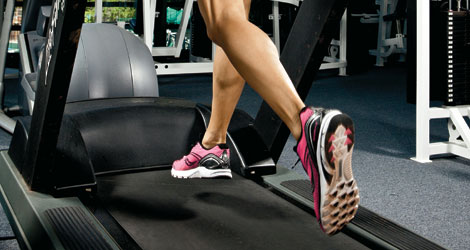
But don’t waste a workout; rather than running on autopilot, try tackling a new challenge with one of these 30-minute treadmill routines:

1. Take a hike. 

If you can’t hit the trails, mimic it indoors with a workout that combines brisk walking with various inclines to target your quads and butt.

Try this: 

  • Walk at 3.5 miles per hour on a flat belt (zero incline).
  • After the first minute, increase the incline by one percent every minute until it reaches five percent, and stay there for five minutes.
  • Next, lower and raise the belt by five percent every two minutes until you’ve been exercising for 20 minutes.
  • Spend the last 10 minutes repeating the first segment in reverse (starting at five percent incline for five minutes, gradually decreasing the incline by one percent for each of the last five minutes).

2. Roll with it. 

Once you’ve mastered walking at a small slant, it’s time to kick it up a notch and pretend you’re jogging on the rolling hills of San Francisco. Play with the speed, incline and duration to create a program that fits your needs, continually testing your limits to see greater gains in endurance.

Try this:

  • Start slowly at five miles per hour and a one percent incline for the first three minutes.
  • Bump up the speed to 6.5 mph for the next three minutes, but keep the incline the same.
  • Then, slow down to 5.5 mph, raising the incline to three percent.
  • Continue in three-minute intervals, pushing for higher speeds and slopes when your initial levels start to feel easy.

3. Play with speed. 

If sprinting in place for 30 minutes sounds like torture, try a few fun tricks to keep your mind occupied while you rack up the mileage. For example, if you’re watching a 30-minute TV program, try sprinting (80 percent of your all-out effort) during the commercials. Or if music is your motivation, make a special playlist and pick up the pace for every other song.

Try this: 

  • Take a deck of cards and get creative by assigning a speed or incline by suit, color or number.
  • Shuffle, and keep them in an envelope on the treadmill’s control panel.
  • Every two or three minutes, draw a new card and do what the card says, which adds a nice element of surprise.

4. Tone your total body. 

A circuit workout is good for both calorie burning and short attention spans. Sure, it requires some coordination hopping on and off the treadmill to perform a series of exercises in between sprints, but there’s nothing like knocking out your cardio and strength training workouts at the same time.

Try this: 

  • Warm up on the treadmill for five minutes at a light jog.
  • Hop off, and do 15 push-ups and 15 lunges.
  • Get back on the treadmill, jogging for one minute, sprinting for 30 seconds. Repeat this interval pattern three times.
  • Hop off and do 15 bicep curls and 15 tricep dips. Repeat the treadmill segment.
  • Get back off, hold a plank for one minute, and then do 15 shoulder presses. Repeat the treadmill segment.
  • For your final strength segment, do 15 squats and 15 dumbbell rows.
  • Hop on the treadmill one last time for a few minutes to cool down.

“Mix it Up” lower-body treadmill workout

I used to skimp on lower body strength training because legs get enough of a workout during weekly runs, right?

Wrong.

It’s a common misconception that strength training for the lower body is not necessary for people who do a great deal of cardiovascular exercise. But simply moving your lower body is VERY different than strengthening the muscles there.

Regular lower-body exercise not only increases bone strength, improves balance and stamina and decreases injuries to knees and hips, but it also helps slow the physical weakness that is part of the aging process and maintains balance, stamina and confidence.

I learned this the hard way during my last round of marathon training, so this time I’m not taking any chances. Here’s a fun four-miler that incorporates bouts of leg exercises between five-minute run segments on the treadmill:

LowerBodyTreadmillWorkout

For even more of a challenge, feel free to play with the incline. Aim to maintain at least a one percent grade throughout the workout to help prevent shinsplints, but if that’s too easy, adjust it up a few percentage points for a great way to increase the intensity of your workout without having to increase speed or impact on your body.

Ladder long run treadmill workout

Ladder workouts – or speed sessions with intervals that build in increments – are a great way to work both speed and distance into a single session.

This beginner version gradually increases the length of your run/recovery intervals by one minute (rather than calling for a series of equal-length intervals) before steadily decreasing your intervals by the same one-minute increments.

Start with a five-minute warm-up at a comfortable pace. Your hard run should be at “race pace,” meaning it should feel difficult but not be an all-out sprint (in other words, not so hard that you can’t maintain it for the duration of the interval).

Jog recovery segments at an easy pace where it’s comfortable to maintain a conversation, and end the workout with a five-minute cool-down and stretch.

Use this workout whenever you feel the need to spice up your routine between races, and use it bi-weekly during training to help build your speed, confidence and endurance, regardless of race distance.

Beginner Ladder Long Run

Walking incline treadmill workout

For those of you who love to mix it up on cross-training days (which are very important, by the way, for giving your body a chance to recover from the pounding of high-impact activities), I wanted to share a great walking incline treadmill workout.

But beware – even though the pace is slow, this is a real bum-buster of a workout thanks to the steep angles at which you’ll be hiking!

Starting off, you may need to hold onto the treadmill handles at the higher inclines. As your body acclimates, however, try to do the whole thing hands-free. By swinging your arms, you’ll elevate your heart rate for an extra kick of cardio.

Give it a try, and tell me what you think!

KineticFixWalkingInclineTreadmillWorkout

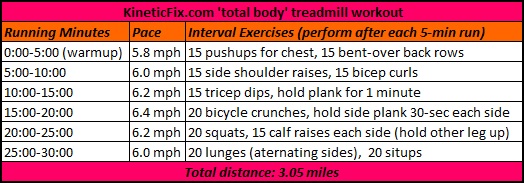
30-minute(ish) total body treadmill workout

While I can’t promise the entertainment level (or cool factor) of this ‘dancing treadmill guy,’ I do have a workout that’ll help make your next trip to the gym a lot more efficient.

It’s a cardio-strength hybrid where you’ll be hopping off the treadmill every five minutes to complete a few moves, so find a spot where you can easily maneuver back and forth without losing your machine between sets.

Before you know it, you’ll have three miles and a total body strength training session under your belt.

Now, that’s something Treadmill Guy can get behind.

KineticFixTotalBodyTreadmillWorkout

Dare to go bare: 6 tips for embracing barefoot running

Would you dare to go bare on your next run?  Photo credit: Shape.com

Would you dare to go bare on your next run?
Photo credit: Shape.com

Runners all over the world have bucked the traditional cushioning and orthotics of athletic shoes in favor of taking it all off – their feet, that is.

Inspired in part by Christopher McDougall’s book “Born to Run,” which chronicles the Tarahumara Indians’ ability to run long distances injury-free without shoes, the barefoot trend is gaining in popularity yet remains widely-debated.

Chris McDougall demonstrates his barefoot technique Photo credit: ChrisMcDougall.com

Medical minds are divided and the jury’s still out in the running community, but thanks to the endorsement of a few top athletes who swear by going bare, many weekend warriors are wondering whether or not they should join in on the ‘bare boom.’

But while the allure of improved running form, fewer impact injuries and better balance makes trying barefoot running seem like a no-brainer, there are a few potential challenges to consider, such as hygiene issues, overuse injuries and protection from sharp objects and extreme climates.

As with any new athletic endeavor, the best approach is always to keep an open mind, take it slow and see what works for you. Every runner’s body mechanics are as unique as their respective fingerprints, which means there’s no telling how your body will react and which combination of benefits and/or drawbacks you’ll experience.

So if you decide to go bare, do so with these tips in mind:

  1. Consider your environment. Where and when you run barefoot is very important, so be sure to protect feet properly in extremes and take precautions that correspond to the area in which you’re running – whether it’s urban, suburban or rural.
  2. Aim for variety. Training on hard, rough surfaces toughens feet and teaches you to run lightly to minimize impact, while soft surfaces are a welcome respite during the transition. Get creative and widen your repertoire of surfaces, including beaches (hard and soft sand), sports fields, running tracks, parks (pavement and grass), trails and sidewalks.
  3. Ease in with a minimalist shoe. If you’re not ready to completely lose your shoes (like me), try minimalist footwear that gives the feeling of a bare foot with the benefit of some light support and protection. 
  4. Allow time to transition. As tough as all runners like to think they are, everyone making the shift to barefoot will need to be patient as the body adjusts to this new activity. Avoid too much too soon; opt for short bursts of barefoot during or at the end of your current routine, which will decrease the chances of short-term injury.
  5. Gradually increase time and distance. Barefoot doesn’t translate to “injury-free,” so it’s important to build a solid foundation on which you re-work your running style. Switch from barefoot intervals during workouts to entire runs with your feet in the buff, working up to as many days running ‘footloose and sneaker-free’ as you are comfortable.
  6. Above all, use common sense. Barefoot running is not for everyone, so listen to your body and stop if you’re noticing more drawbacks than benefits. Avoid barefoot running if you have had serious injuries such bone fractures, bone disorders such as arthritis or conditions such as diabetes, which may limit the ability to feel foot pain.

And one final word of caution: Don’t forget to consult your physician before starting any new exercise regimen.

Otherwise, what have you got to lose? Well, besides your shoes 🙂

Pressed for time? Get fit in a flash with 10-Minute Trainer

TMT1

What you’ll get with the 10-Minute Trainer box set

No time to work out?

No excuse, according to 10-Minute Trainer program creator Tony Horton, who has single-handedly revolutionized the world of weight loss.

After successfully molding weekend warriors into athletes with his P90X series, Horton has turned his focus to people who simply want to get off the couch, get moving and establish a healthier routine.

“There’s a lot of this one-size-fits-all philosophy out there; you’ve got folks who have never exercised in their entire life maybe, and they’ve got 100 pounds to lose,” he said recently on the Dr. Oz Show. “You can’t ask them to do Bikram yoga and eat raw the very next day, so the idea here is, how do you stay focused, how do you create a plan, how do you stay accountable – and what is that plan, based on who you are as an individual.”

Horton’s solution was to take his popular, ultra-effective moves and condense them into bite-sized segments that can be done at home in the span of a few commercial breaks.

“I’ve turbo-charged the routines so your muscles become these fat-burning machines to get the best results in the shorted period of time,” he said. “You don’t need a gym, you don’t need fancy equipment. You just need to give me 10 minutes a day, and I will transform your life.”

10_minute_trainer

A sneak peek at Horton’s 10-Minute Trainer moves

But while the notion of getting more for less is always appealing, can you really revamp your body in just a few minutes a day?

“It really comes down to focus,” Horton assured. “You know, the 10 minutes are hard – it’s not an easy 10 minutes. We call it stacking – or muscle confusion; you’re doing several things at once, and that’s the reason why those 10 minutes work.”

But I’d argue that there’s another reason why those 10 minutes a day work: People will actually do them.

By removing the “lack of time” excuse by creating workouts in small segments that can be done at home, plus making exercises both fun and able to be adjusted for all experience levels, Horton achieves his goal of getting people up, moving and started on a routine.

Sure, it’s a little dialed down from Horton’s other programs, such as P90X2, but after trying the program myself, I still found it to be quite challenging. Horton has designed each move with a range of modifications to keep anyone, regardless fitness level, from resting on their laurels.

And on days where I wanted to up the intensity, I was able to stack a few segments together for a great full-body workout that had me sweating buckets and left me sore a few days later…which is always the mark of a great workout in my book!

TMT2

An example of a month-long schedule on the program, which alternates segments each day

Thanks to the folks at Beachbody for providing a copy for review; all opinions are my own. 

Up your endurance: Climbing interval treadmill workout

Get fitter, faster with this speedy interval workout, which I like to use when trying to pick up my overall pace.

It starts with a slow warm-up to get the blood flowing, then mixes short sprints (at a 7mph pace) with three-minute ‘climbing’ recovery segments (6.1-6.4mph) throughout the course of the workout.

Treadmill_climbing interval

Tweak this to suit your individual need for speed by adjusting the paces accordingly. Just make sure you start with an easy enough recovery pace and keep ‘climbing’ each time to gently challenge your body to recover at a faster pace.

As soon as this workout starts feeling too easy, push the sprint speed up slightly and/or adjust the recovery pace up. The first minute of recovery should feel tough, but then your energy should pick up over the next two minutes so you feel peppy enough to be able to tackle the next sprint segment.

30-minute interval workout to beat treadmill boredom

treadmill-running

If you’re nodding your head at the cartoon above, I’ve got a great workout for you!

Below is my boredom-busting treadmill routine. It’s designed to distract, so over the course of 30 minutes, you’ll be constantly adjusting your speed. And as an added benefit, this interval approach aids in burning extra calories.

So crank up the tunes, get in the zone, and watch the minutes fly by…

30mintreadmillinterval

A few things to keep in mind:

  • Maintaining an incline of one percent throughout the workout can help prevent shinsplints
  • Listen to your body: If any pace feels too fast, modify to suit your fitness level
  • Calorie burn will vary based on a number of factors: Age, weight, intensity and efficiency, to name a few
  • Finally, be sure to check with your doctor before starting any new exercise program!