8 Tips for Ditching Runner’s Trots for Good

To quote that infamous childhood book, “All living things eat, so everyone poops.”

True enough, especially if you’re a runner. And if that’s the case, there’s a good chance you know this all too well, having likely discussed it extensively with a handful of close runner friends.

The Diarrhea Dilemma

While we like to think our workouts are accompanied solely by philosophical conversations, some inevitably spiral into war stories about bodily functions. But as prevalent as these intestinal issues (aka “Runner’s Trots) may be, it’s a topic that’s not addressed in all circles.

So what’s a trot-troubled runner to do?

Well, first, realize that you’re not alone — more than half of us have experienced exercise-related GI disturbances. And, second, there’s a lot you can do to prevent (best-case) and handle (worst-case) it. But it also helps to understand exactly what’s happening so you can make an informed plan of attack.

Desperately Seeking…A Restroom

According to the Gatorade Sports Science Institute, “there are three main causes of GI symptoms: physiological (reduced blood flow to the gut), mechanical (bouncing effect of running, for example) or nutritional.”

As you exercise, the body diverts blood flow away from internal organs to support working muscles and cool the surface of your skin. Combine that with intestinal “jostling” and heavy/fatty/fiber-filled/sugary foods, and you’ve quite literally got a ticking time bomb in your gut.

Avoiding The Runs on Your Runs

Don’t want to make “that” emergency call during a long training run or veer off-course for a mid-race porta-potty pit stop? The former used to happen to me frequently, and the latter got me at mile 16 of the 2002 Chicago Marathon…sans TP; ’nuff said. 

poster_96_fullsize

Here are my eight tried-and-true tips for taming those tummy troubles for good.

1. Develop a pre-run routine. Develop a system (mine’s coffee) to “get things moving” before you head out the door, and you’ll drastically decrease your chances of a mid-run meltdown.

2. Hydrate before, during and after. Dehydration compounds stress on the GI tract, so be kind to your colon and it may just return the favor.

3. Avoid common triggers. Things like NSAIDs, ibuprofen, sugar and fiber are known to irritate or stimulate your intestines, so refrain from ingesting ’em in advance of workouts.

4. Track your habits. Keeping tabs on what you ate and how it affected you during a run can be quite revealing! I know that quinoa, for example, leaves me doubled over…while I can eat potential triggers like dairy, beans, dried fruits, etc. with no issue.

5. Experiment with fuel type. Again, what works for a runner and his/her digestive system can vary from person to person, so take the time during training to see what agrees with you — and what doesn’t.

6. Play with fuel timing. Some people start jogging while chewing their last bite of breakfast, while I prefer to give myself a few minutes to digest before heading out the door. It may take some trial and error to find your rhythm, but it’s well worth the time.

7. Slowly increase intensity. Going too fast or too far too soon can result in GI backlash. Allow your body to acclimate to the stress of speed workouts and long runs by easing in with a warm-up and building a foundation before going all-out.

8. Whip your gut into shape. I consider probiotics my secret weapon for not just gut balance, but also overall health. After experiencing success with them over the past few years (i.e. long runs that bring joy instead of fear), I’ve been taking Sound Probiotics, which came highly recommended from my Coeur pal, Erin, who’s also an accomplished Iron(wo)man.

A little PSA: Sound’s the first probiotic engineered for the competitive athlete.

Why’s this important?

Well, during training you’re more susceptible to illness and fatigue due to the sheer amount and intensity of exercise. And since as much as 80 percent of your immunity resides in your digestive tract, I consider these little pills my insurance policy for optimizing training and recovery.

After an initial adjustment period (very mild bloating), I’ve been thrilled with the results. Not only have I been able to up my mileage without incident, but I’ve also managed to avoid all the nasty bugs circulating this season — which is especially impressive considering my daily ClassPass studio-hopping habit.

That’s a small investment for exponential results. Need more incentive? Use code KINETICFIX for 10% off if you want to try ’em yourself. 

IMG_5706

If all else fails, though, consider stashing some toilet paper and a few wet wipes in your run belt for peace of mind. Plotting routes with public restrooms also helps, but if you’re concerned it might be something more serious, consult with your doctor to check for underlying health issues.

And whatever you do, don’t underestimate the effect that soothing your gut can have your overall experience, let alone performance, during training and racing. After all, as marathon legend Bill Rogers once famously said, “More marathons are won or lost in the portable toilets than at the dinner table.”

How do you prevent those mid-run stomach rumbles? 

This Spud’s For You: Health Benefits of the Humble Potato

11041718_10206006379141634_3895849945146121144_n

I used to avoid potatoes like the plague because, well…chips, fries and vodka. But then Ben and I did our Whole30 experiment at the beginning of the year and developed an entirely new appreciation for the tasty little tubers (particularly the sweet variety).

Their association with famine and high starch content aside, potatoes don’t deserve such a bad rap. Sure, when fried to a crisp or drowned in butter they can be less than healthy, but when eaten in their whole, unprocessed form they’re actually quite the nutritional powerhouses.

And popular, too — according to the U.S. Department of Agriculture, potatoes are the leading vegetable crop in the United States and the fourth most-consumed crop in the world (behind rice, wheat and corn).

Yup, we each consume an average of 55 lbs. of frozen potatoes per year, 42 lbs. of fresh potatoes, 17 lbs. of potato chips and 14 lbs. of dehydrated potato products.

So whether you’ve always been a proponent of the potato or you’re learning to love them all over again, I found a handy little guide (below) to help you make the most of this versatile veggie.

You say poh-tay-to; I say bring on the phytonutrients and fiber!

Reasons to Love the Humble Potato
“Reasons to Love the Humble Potato” on Health Perch

What’s your take on taters? 

Simple Microwave Hacks That Will Change Your Life

microwave-1960s

That’s a pretty bold claim, isn’t it?

Well, whether it’s re-heating leftovers, popping some corn for movie night or making the occasional guilty pleasure (frozen. chicken. pot. pie.), the humble microwave is the workhorse of the kitchen, having saved time-pressed home cooks for decades.

And even though our family food preferences have evolved from Lean Cuisine to “lean-and-green” — as in, and emphasis on unprocessed foods, proteins and veggies — the microwave still proves to be a very versatile appliance that can be used in unexpected ways.

For example, did you know that by nuking your citrus fruits for a few seconds you can get more juice out of them? Or that microwaving garlic and tomatoes before cooking makes them easier to peel? Or that you can clean that caked gunk off of microwave walls in just five minutes with a bowl of water and a lemon?

Yep, knowing how to better utilize your microwave will not only save you time, but also help you make the most out of your food — just check out all the cool tips in the “Microwave Hacks for Daily Life” infographic below.

I can’t wait to try some of these out myself, so I thought it was worth sharing!


Source: PartSelect.com

What are your favorite microwave hacks?

The 10 Commandments of Running Buddies

"2015 Hagg Lake Mud Runs Ultra 25k"

If you want to go fast, go alone. If you want to go far, go together. -African Proverb

The running buddy relationship is something special. As in, if you get a good one, it’s well worth it’s weight in gold. Or at least finisher’s medals.

He’s willing to hang patiently outside a public restroom while you tend to mid-run, marathon-training GI issues (thanks, Brian). You talk him out of that “dark place” while helping him conquer a new race distance (nice work, Ben). She’s a seasoned pro who selflessly paces you in your first ultramarathon (you rock, Jamie).

You meet her for “runch” to knock out a few mid-day miles (yep, Tasha). Or maybe you don’t even know each other, but you meet at the tail end of an overnight relay and provide some mutual moral support for the final few miles (shout out to Allison).

And those are just a handful of memories from the past year or so!

H2C

As much as I enjoy running solo to the tune of my own thoughts, there’s just something wonderful about the bond that forms between people who break a sweat together. And much like that elusive runner’s high, a good running buddy makes it feel effortless: The conversation flows as the miles fly by.

That’s not to say it’s a relationship without its ups and downs… Inevitably, you’ll end up seeing each other at your very worst, but you also learn the subtle art of pushing one another to be the best version of yourselves.

It’s also not a partnership to be taken lightly, which is why I love this running buddy pre-nup by Amy Marxkors. She hits the nail on the head when it comes to finding happily ever after, complete with calf cramps, bloody nipples and covered in GU. TMI?

With running comes freedom, but also a responsibility — and it’s that notion that inspired me to make my own list of “10 Commandments for Running Buddies,” a set of principles to help guide us as we tackle the roads and trails together.

silverfalls

1. Thou shalt remember that what happens on the run stays on the run. Runners usually cover more ground together than just miles, so they key is discretion when it comes to everything from topics of conversation to bodily functions.

2. Thou shalt not judge a book by its cover. Sometimes it’s the oddest couple that makes the best match, so keep an open mind and test the waters with a few casual runs before jumping into anything too serious.

3. Thou shalt aim thy bodily fluids properly. Say it, don’t spray it. Your buddy wants the news, not the weather. That goes for spit as well as snot, so just be smart and try not to unleash directly into the wind.

runch

4. Thou shalt choose thy buddy based on similar pace and goals. It’s important to have a frank discussion about where you are and where you’re looking to go. But don’t necessarily discount people of different paces! Even if they’re much faster, your tempo could be their recovery day, so it’s all about coordinating ahead of time.

5. Thou shalt respect thy buddy’s time — and vice versa. Occasional lateness is understandable, but perpetual lateness is unforgivable. Commit to whatever time you set, so you’re not leaving your buddy out in the cold (literally).

6. Thou shalt learn to read thy buddy’s body language. Some days your mouths may be running faster than your legs; other days one of you may feel like being more quiet and reflective while working through a wall. Respect each other’s space, and remember it’s ok to communicate if you need some silence.

Canyon Meadows
7. Thou shalt accommodate each other during training. Sh!t happens while running, so plan on sticking with your buddy through any kind of mid-run mishaps. Not only is it good karma, but it’s only a matter of time before he will be returning the favor.

8. Thou shalt not race without a game plan. There’s a huge difference between racing for fun and for time. If it’s the former, plan on sticking together and not paying attention to the clock. If it’s the latter, make a pact that you’re each going to run your own race — it’s every woman for herself in the pursuit of a PR.

9. Thou shalt not take things personally. Whether it’s conflicting schedules or chemistry that fizzles, recognize if something’s not working and when it might be time to move on. And just because you aren’t running soul mates doesn’t mean you can’t be yoga or boot-camp buddies instead.

jingle bell

10. Thou shalt maintain a sense of humor. Above all, remember to have fun together. Repeat after me: Keep it in perspective; it’s just one foot in front of the other, after all.

In the grand scheme of things, all the medals, PR’s and podium finishes in the world won’t outweigh the personal satisfaction that comes with forging a bond that allows you each to push each other beyond what you once thought were your limits.

Are there any running buddy commandments that you’d add to the list? 

4 Tips for Using Caffeine to Help Crank Up Your Workouts

caffeine-makes-you-work-out-better-fiar616-616x300

Have you heard the buzz over caffeine’s ability to affect your workout performance?

Studies suggest that having a cup or two of coffee, tea or cola before exercise can reduce perceived exertion, as well as help muscles recover more quickly after a sweat session. But before you buy stock in Starbucks or drink an entire pot pre-run, there are a few things to consider on your quest for a java-fueled jolt:

1. Take Duration Into Consideration

Most reports suggest that caffeine should be consumed about 45 minutes to an hour before activity in order to experience maximum effects, but since it’s absorbed quickly and lasts for hours, the exact timing won’t make or break your performance. In general, however, expect that any pre-workout boost may help postpone fatigue and provide that extra kick needed to cross the finish line for events lasting two hours or less.

2. Experiment With the Amount

An Australian study found that runners who took 95 milligrams of caffeine (equivalent to that in a cup of coffee) improved their 5K running time by an average of 10-12 seconds.While the average American’s caffeine intake is about 200 mg/day, athletes are encouraged to aim for three to six mg per kilogram of body weight, or somewhere between 210-400 mg of caffeine for a 150-pound person, for enhanced performance with minimal side effects.

4. Don’t Use It As a Crutch

If you’re relying on caffeine as an energy booster because you’re dog-tired during workouts, get to the root of what’s really causing fatigue. Are you not getting enough sleep? Are you overexercising? Or perhaps you’re not getting enough quality nutrition? Either way, something’s out of whack, so get to the bottom of it in order to make progress — and see results.

4. Keep It Clean, People

Just because you’re cleared for a cup (or two) of coffee before your workout doesn’t mean you need a triple-grande-whipped-cream-caramel-sugar-bomb to get going. Instead, create your own concoction with almond milk and cinnamon instead of processed creamers, or whip coffee or tea into your morning fruit smoothie for a more nutrient-rich start to your day.

Finally, it’s also worth mentioning a quick disclaimer: While caffeine is a widely recognized as a safe substance, it tends to affect people differently (e.g. may make you feel jittery, have a slight diuretic effect, etc.), so hydrate with plenty of water, and err on the side of caution by consulting with your doctor before adding anything into your training regimen.

Do you use caffeine as a way to enhance your workouts? 

5 Tips for Starting (& Sticking With) a Healthy Living Routine

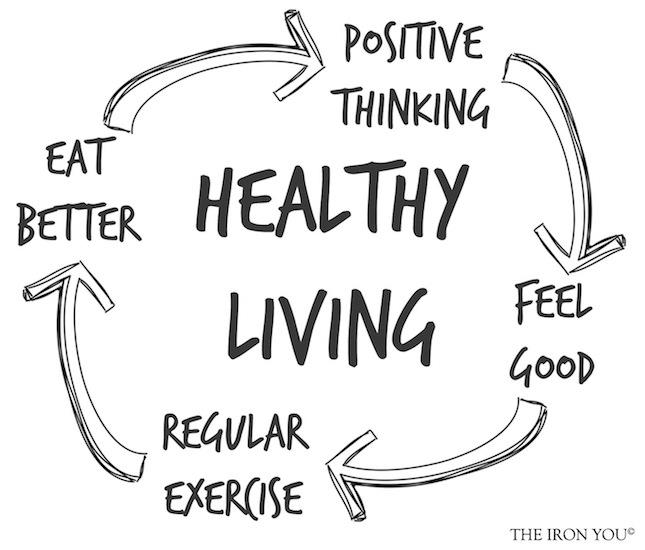
Healthy-Living-Cycle-from-Starling-Fitness

Whether you’ve got a few pounds to lose or the pressure of a big event looming, it can be tempting to seek a quick fix, such as a juice cleanse, exercise binge or fad diet. You name it, people have tried it — out of desperation, with varied luck and yielding only temporary results.

Why haven’t we learned by now that these short-sighted “solutions” only end up backfiring on us in the long-run? If our goal is finding equilibrium when it comes to a healthy weight and base level of fitness, a slow-and-steady approach works much better than engaging in erratic behavior.

I get it; eating well and working out aren’t always easy when you’re short on time, stressed and out of shape — but maintenance is much easier than bouncing back and forth, up and down, in and out. Those latter options are, quite frankly, exhausting.

So if you’re committed to forming a more sustainable diet and exercise regimen, here are a few helpful hints:

1. Think about the bigger picture

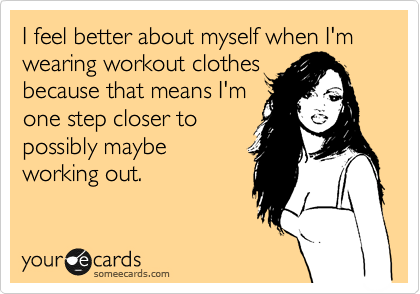
someecards-beachdiet

It took a while for you to settle into your current situation, so don’t expect any short-cuts for getting out of it.

Start by making a commitment for just 30 days. Mentally, a month is an ideal block of time to devote to a change since it easily fits in your calendar.

Once you get through that initial phase, it’ll start to become a habit. Then it’s a matter of turning that habit into a routine for at least three or four months when you’ll start to reap rewards in terms of seeing results.

2. Set yourself up for success with S.M.A.R.T. goals

1347308220959_7924560

Do you want to lose weight? How much, and by when? Improve your game? What would that look like, and how will you measure success?

Start by writing down a simple goal and quantifying it. Give yourself a reasonable amount of time in which to achieve it, and then plot out each of the milestones between Point A and Point B to keep yourself motivated along the way.

Say, for example, you want to lose 20 pounds before a wedding next month. Not gonna happen.

A better goal would be to say you want to lose 20 pounds between now and your high school reunion in the fall, based on the fact that it’s safe to lose one to two pounds a week with healthy eating and exercise.

Start by making sure your goals are Specific, Measurable, Achievable, Realistic and Timely, and you’ve taken the first step toward making them a reality.

3. Take your interests into consideration

1332295593923_7134886

The trick to keeping consistent with exercise is taking the “work” out of workouts.

There’s something for everyone, whether you thrive off the competition of a team sport, the adrenaline rush of outdoor adventures, the challenge of improving upon a race PR, the contemplative nature of yoga or even the comfort of a repetitive of a walk around the neighborhood where you can simply zone out.

If you don’t know what you like, try it all until you find something that scratches that itch you never knew you had!

4. Buddy up for better accountability

c77ae1adc881e267591d51ad22757286bd

It’s true — misery loves company, especially when it involves things like huffing and puffing through a run or learning to love vegetables.

If you’re hesitant to start a routine on your own, team up with a partner who has similar goals. Help keep each other motivated while getting over the initial hump, whether it’s empowering each other to make healthier food choices or distracting one another from checking the time on the treadmill.

Not only is sweating together more fun than going it alone, but partnering for fitness may also push you to work out harder.

5. Know when to use your “ace in the hole”

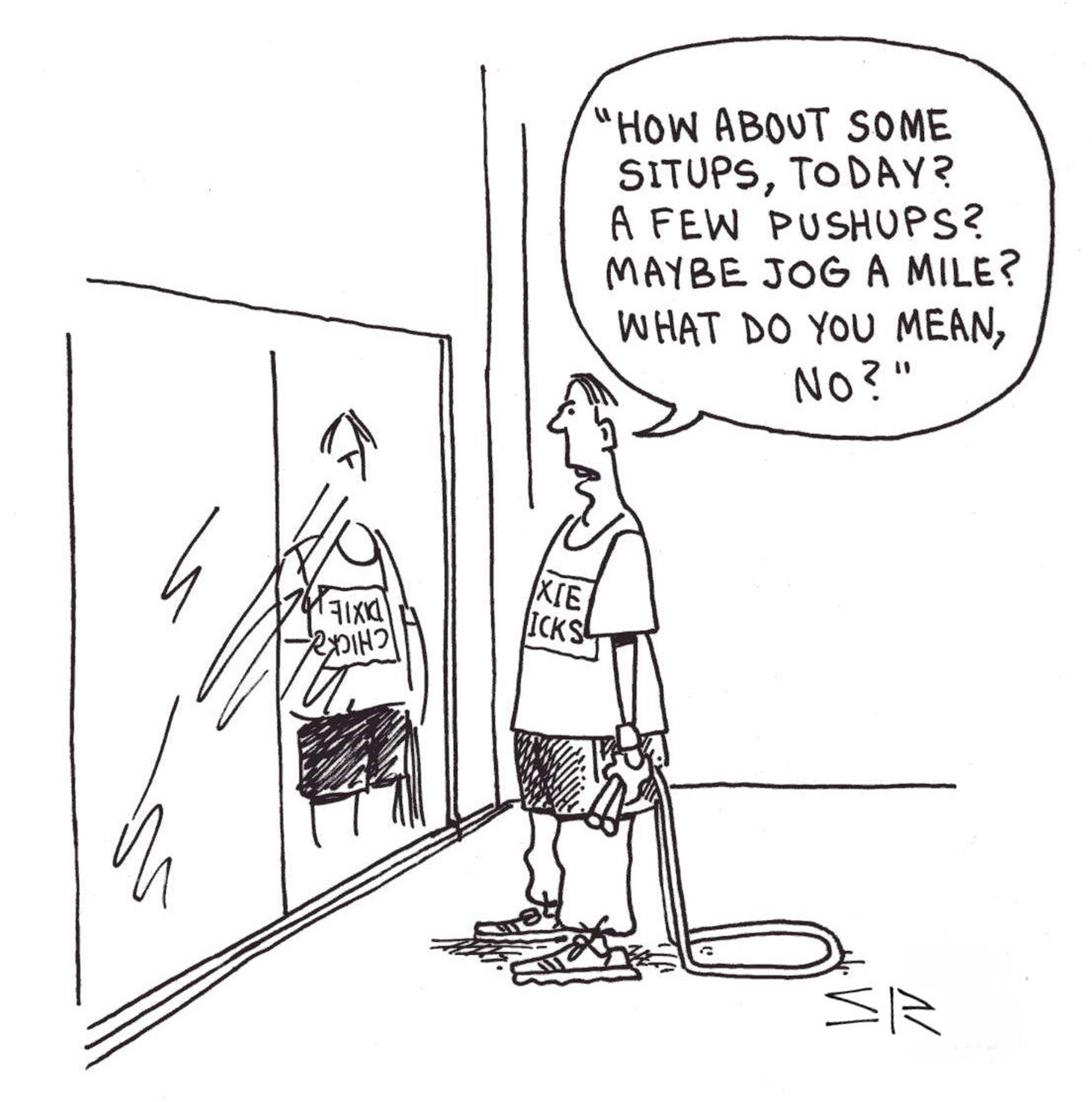
1334775049066_6795721

Finally, as with anything in life, personal accountability is crucial — both with positive and negative remifications.

Make a painful consequence — as in, if you don’t hit the gym three times this week, you have to wash and wax the car by hand this weekend — and tackling those mid-week workouts won’t seem so bad.

Positive reinforcement works just as well. Make a deal to splurge on fitness attire, a new workout gadget you’ve been eyeing, or even something as simple as a beer with dinner (within reason!), and you’ll find yourself actually looking forward to those daily sweat sessions.

What helps you stick to your healthy living routine? 

Don’t Just Sit There: DIY Standing Desk

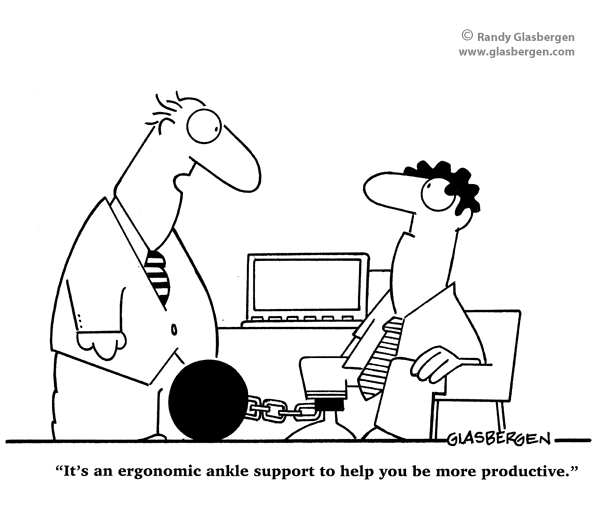
toon377

It’s funny how your body can speak volumes to someone without even saying a word.

Case in point: Every time I go in for a massage lately, my therapist gets stuck on my back. Or, rather, my back gets itself stuck, and then my massage therapist has to spend an hour convincing it to loosen up.

You see, working from home is a double-edged sword. Now I’m not complaining — my commute rocks, my workout-wear attire is comfy and my four-legged office-mates are pretty chill (unless they hear a knock at the door, then all bets are off). But the drawback is that sometimes the lack of ergonomics can be a pain in the neck — like, literally.

Some scary facts:

  • The moment you sit at your desk each morning, your calorie-burning rate immediately drops to one calorie per minute
  • Sit for six hours a day, 14 days straight: Muscles stop burning fat, blood sugar rises and maximum oxygen consumption drops.
  • After a year of sitting six hours per day, weight gain would be noticeable, as would higher cholesterol levels and loss of bone mass.

But the real kicker comes 10-20 years down the line. Us desk jockeys may need to augment retirement savings to account for medical bills. Sitting affects almost every part of our bodies from head to toe, raises risk of death by nearly 50 percent and creates a stunning 125 percent increase in the risk for cardiovascular disease.

So I’ve decided I’m not taking this sitting down. In fact, I’m taking a stand…as in, using a DIY standing desk.

Why? Well, our budget is zilch, and we’re lucky enough to have a bar-height butcher block table in the kitchen that works, so I’m trying that out for now. But Plan B is to “hack” our space using the specs and ideas below to create something that’s cheap, comfortable and won’t undo all the good I try do by way of exercise.

So, athletes, consider this my little PSA: We talk about the benefits of recovery because that’s where the body bounces back and the real gains happen. But if you’re sitting at a desk all day, you’re still doing yourself a disservice.

Get up, stand up. Stand up for your life.

Click to Enlarge Image

DIY Desk

DIY Desk
Infographic by CustomMade

Are you ergonomic at work?

Have any tips for doing it effectively (and on a budget)?

Be a Better Shredder: 3 Exercises for Snowboarders

Dec 2014 Snowboard Training 071

Forget all the fancy gear; do you really have what it takes to stay on your feet and avoid injury while hitting the slopes this season?

Mimic instability and build endurance by adding a few new moves to your existing workout routine, and it just might mean the difference between a great day of runs and having to call it quits early.

Billy Polson, founder and co-owner of DIAKADI (San Francisco’s largest personal training gym) recommends the following three exercises to condition, strengthen and help prevent injury prior to making your way to the mountain.

The best part? All you need is a BOSU ball, a balance board (or short plank of wood) and two weights.

1. Lean with it, rock with it

Place the balance board on top of the BOSU ball (flat side down) and hop up on it, spacing your weight evenly between both feet. Bend your knees and rock side to side, shifting your weight slowly, holding your core tight to maintain balance. Do this for 60 seconds.

2. Take it up a notch

Grab your two heavy weights, and step back up onto the board, finding your balance and holding in a squat position. Holding your arms at your sides, start lifting weights slowly up to shoulder height, then back down, while maintaining and proper form. Perform 2 sets of 15.

3. Practice your moves

After your last rep, drop the weights, go into a deeper squat, and hold. Practice shifting weight onto your toes, just like you are taking a turn on the mountain. Add some toe turns, move your weight into your heels, then back to your toes. Shift from side to side, practicing your turns and conditioning your legs for long runs. Do this for another 60 seconds.

Here’s a video of Billy demonstrating some of the moves. Happy shredding!

Have you hit the slopes yet this season? 

Fight the funk: Thriving in an off-season full of SADness

Source: Benjamin Brink/The Oregonian

Source: Benjamin Brink/The Oregonian

After living in California’s year-round sunshine for the last decade, the one thing everyone warned me about when moving to Portland was the winter — aka a half-year of clouds and rain. Like some inescapable boogeyman, they all seemed especially wary of it, issuing the same words of caution every time: It’s coming, and you can run but you can’t hide.

Hrmph. I brushed off what I thought were idle threats, feeling pretty confident in my plan for dealing with the lack of sun. No Vitamin D? No problem. I create my own endorphins during morning workouts, after all. It worked during San Francisco’s foggy days, plus having my fall marathon to prepare for meant I’d be keeping busy with a solid schedule of cardio, cross-training and PT work.

I’ve Got That Wintertime, Wintertime SADness

And when I got home from my travels post-marathon, I really did relish those first few lazy mornings. But then a week of planned rest days turned into two…and by the third week I found myself seriously struggling to get out of bed in the morning. That’s when I started to get concerned.

workout_blues

Of course I’m just self-diagnosing here, but I think it’s something along the lines of Seasonal Affective Disorder, which, when combined with the fact that I’ve got nothing on my race calendar in the foreseeable future, can be a dangerous combo. Plus, factor in post-marathon blues that are hitting just as I’m taking a good chunk of time (4-6 weeks) off from running, and I knew I’d have to take matters into my own hands to keep from sliding down a slippery slope.

Making a Training Plan for the Off-Season

As I was explaining my predicament to Hubby the other day, he suggested that I create a loose plan for the next few weeks since he knows I’m goal-oriented and thrive on having the structure of a training schedule. You see, the off-season isn’t really off at all; quite the contrary, it’s a break from the typical training volume and racing intensity, but cross-training to stay fit and active is still fair game.

So while I’m taking a mental break from the rigors of racing and allowing my body to (hopefully) heal once and for all from a few nagging injuries, it’s an ideal time to rejuvenate, plan for 2015 and work on getting stronger in ways that will compliment next season’s running. Here’s what my rough plan looks like for the next few weeks:

  • Monday – Yoga for flexibility
  • Tuesday – Cycling for cardio
  • Wednesday – Weights for strength
  • Thursday – Pool for non-impact
  • Friday – Freebie to explore different workouts & studios
  • Saturday – Long ride for endurance
  • Sunday – Rest day

1779773_10102577330246353_34040542_n

What About Other Goals?

Usually I try to eat pretty healthy, but ever since the marathon I’ve all but abandoned that bandwagon. A glass of wine…or three? Sure, why not! Bacon and buttered breadcrumbs on top of that mac & cheese? Yes, please! An extra helping of dessert? Don’t mind if I do! While it’s important to not get too uptight about this stuff, I do feel better when I eat fresh, whole foods, so Hubby and I are making a concerted effort to get back on track with our eating habits.

I’m also participating in a fun Holiday Sweat Challenge from the folks at RuntotheFinish, SweatGuru and Fit Approach. It’s chock full of workouts, healthy recipes and an extra dose of motivation to get us through the holidays without packing on the pounds — not to mention, there are some pretty awesome prizes up for grabs. If you want in on the action, register here!

Other stuff that’s been on my to-do list:

  • Set some short- and long-term work-related goals
  • Spend some quality time with our dogs
  • Finish setting up and organizing our apartment
  • Cook, bake and experiment with new recipes
  • Get more sleep — still in search of that eight hours!
  • Explore the local fitness scene & review classes
  • Get together more often with friends and family
  • Keep consistent date nights with Hubby
  • Start planning for 2015 for myself and the LUNA Chix PDX team

So there you have it. The holidays are here again, and it’s time for making merry, spreading cheer…and, yes, even squeezing in some killer workouts so we can fight the seasonal funk, build on this year’s successes and start 2015 off on the right foot!

How do you feel about off-season, and what are your tips for making the most of it? 

Sweat like a pig, look like a fox…and smell like neither (+ giveaway!)

soiled-air

Ever play that game where you see if you can squeeze in just one more workout out of an outfit? Well, trust me, it’s a scenario in which no one wins.

And now that we’re headed into winter (i.e. indoor workout season), I’d like to make a public service announcement: Please do yourself, your nose and the noses of those around you a favor and regularly de-funk that fitness gear.

Here are a few tricks I’ve picked up from trial and error over the years, along with some new tips for feeling so fresh and so clean next time you hit the gym.

But first — why so smelly?

Blame those moisture-wicking technical fabrics. Sure, they keep you from getting soaked during sweatfests, but their water-repellent technology also means it takes more than a simple wash cycle to penetrate those fibers. Plus, we’re used to our street clothes getting slightly soiled; workout gear gets downright dirty with trapped oils and residue, so it takes some special TLC to get things totally clean.

picard-so-much-win-bo

Ok, so what should I do?

Short of burning it or buying a whole new wardrobe, there are a few things I like to do to keep my gear from getting too gnarly:

1. Strip Down: Lounging around in sopping-wet clothing is a no-no for several reasons (ladies, you know what I mean); get it off ASAP.

2. Hang Dry: If you can’t wash clothes immediately, at least drape them over a shower rod or door handle to air out and dry.

3. Soak Up: I let super stinky stuff set for 15-30 minutes in the bathroom sink with water and one cup of vinegar before washing.

4. Wash Well: I used to think my usual detergent was sufficient, but I’ve recently been converted to WIN (details below), a detergent designed specifically to treat fitness and sport clothing.

5. Dry Thoroughly: Dry clothing on the hottest dryer setting that’s appropriate for the materials. Or hang air-dry items outside in direct sunlight to kill any remaining bacteria.

If all else fails, know when it’s time to throw in the towel (or sports bra or bike shorts) — if it’s still full of stink after several washes, wave the white flag and throw down a few bucks for a new pair!

IMG_2132

As I mentioned above, I’ve always relied on traditional detergent for washing my workout gear. Even if something seemed fresh when I pulled it out of the drawer, though, I’d occasionally notice that yucky mildew smell on some pieces as soon as they got wet (like my sports bra during last weekend’s trail race, for example).

But all clothing detergents are pretty much the same, I thought. Right?

Nope.

IMG_2253

Enter WIN, which I heard of previously while at a race expo but only recently got a chance to test. It’s specifically formulated to remove oils and residue that cause odor from synthetic fabrics — it literally breaks up all that gunk that’s accumulated on the fibers, removing the source of the smell and truly cleaning the garment.

My verdict: This stuff really works. Clothing smells good coming out of the wash, even better out of the dryer…and stays that way. So much so that I (who at one time may or may not have stocked up on so much underwear I’d only have to do laundry once a month) have done a load each day this week. Yep, it’s WIN for the win.

IMG_2254

But you don’t have to take my word for it — you can try WIN yourself! Enter via Rafflecopter below, and you’ll have the chance to win two bottles of WIN detergent (one regular and one green) to try at home on your stinkiest of workout wear.

a Rafflecopter giveaway

Got any best practices for keeping the stench out of your gym clothes? I’d love to hear!

A big thank you to Fit Approach for the opportunity to check out WIN. While I did receive samples of the product, all opinions are my own. I would never promote something I didn’t believe in.