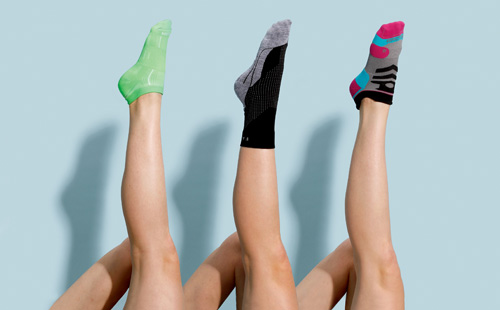
5 Surprising Myths About Running Socks

Source: Runner's World

Source: Runner’s World

Too often we’re seduced by the lower price of a product that invariably costs more over the long haul. – Bill Howard

What is the single most important piece of equipment for runners? If you said shoes, you’re close – and like many of your fellow pavement pounders, you’ve probably invested a good deal of time and money in finding the perfect pair.

But as the only source of protection between your feet and a potentially run-crippling blister, socks can mean the difference between a triumphant or a terrible outing, even in the highest-quality footwear.

I wrote a while back about some of the best socks for runners, but with a mind-boggling number of options available, how do you pick the pair that’s best for you?

Gus Blythe, founder of Drymax Sport Socks, was kind enough to weigh in on a few of the common myths about sport socks; he’s made it a mission to keep athletes’ feet happy and give them one less thing to worry about when training and racing.

So…let’s talk socks, people!

Myth #1: What you see is what you get

Contrary to what most of us probably think, socks are not to be used exclusively as decorative ornaments or as a way of helping to compensate for the imperfections inside of shoes; rather, they are standalone pieces of equipment and should be evaluated as such.

Simply put, pretty socks may be easy on the eyes but could very well be hard on the feet. It’s important to remember that feet are blind when shopping, says Blythe. After all, how much will you care about the color or logo on your socks mid-race?

Myth #2: Soft in your hands means good to your feet

When I’m sock shopping “soft” is one of the top criteria on my list – but what feels heavenly at first touch doesn’t necessarily indicate high quality, so dive deeper and look at what the sock is made of to be sure you’re not being sold smoke and mirrors.

“Many manufacturers use a fabric softener so their socks feel soft on the shelf to your hands,” says Blythe. These socks will work better after they are washed once, but may feel different afterwards, as opposed to brands such as Drymax, which Blythe says are softener-free and race-ready out of the package.

Myth #3: One style fits all

Unfortunately, just as there is no hard and fast formula for choosing the ideal running shoe (I’ve shifted loyalty among several different brands since taking up the sport nearly two decades ago), choosing a type of sock tends to be part art, part science — so prepare to experiment a bit in order to find a good fit.

For example, if you wear orthotics or insoles, you’ll probably need to look for a thinner sock with more protection in potential trouble spots, whereas a runner with narrow feet might want a bulkier sock to keep feet from shifting in shoes.

But regardless of your situation, remember that every foot is different, and what works for one person may not work for the next, so take into account these personal preferences when shopping.

Myth #4: Price is an indicator of quality

When buying socks, it’s better to think in terms of value instead of price. And even though we’ve been trained as shoppers to equate high price with high quality, it’s more important to consider the fabric and features versus getting caught up in the marketing magic.

Fewer bells and whistles might work for a quick workout or light cross-training, but do your homework if you’re looking for socks that will last for the long haul. Alas, there are no shortcuts, and what you skimp on at the register your feet could end up paying for in the end.

“If you think you can find the best sock by looking at price or by the best-known brand, you’re wrong,” says Blythe. “It’s foolish to pay too much for a sock, but it’s worse to pay too little.”

Myth #5: You’re not a real athlete if you don’t get blisters

In the past, we’d applaud runners who were able to forge on despite having horrible blisters. But thanks today’s new sock fabrics and technologies, athletes can continue to push their limits more comfortably — racing smarter, not just harder.

That means taking proper precautions to prevent blisters in the first place, which requires feet to be kept as dry as possible. And while many socks provide adequate protection for a few miles, the addition of sweat and repetitive movements over many miles, plus shifting up and down hills, makes blister prevention an increasingly difficult task for non-specialized socks, says Blythe.

“Choose your socks wisely,” he cautions. “Your feet depend on it.”

How do you keep your feet comfy for the long haul (and those long runs)?

On Edge? 4 Steps to Lessening the Effects of Stress

stressed-man

It’s sad but true: Stress has become so commonplace that it’s now a way of life.

In fact, as Tim Kreider noted in The ‘Busy’ Trap, one of my all-time favorite op-ed pieces in The New York Times, our “busyness serves as a kind of existential reassurance, a hedge against emptiness; obviously your life cannot possibly be silly or trivial or meaningless if you are so busy, completely booked, in demand every hour of the day.”

In small and infrequent doses, yes, stress can be beneficial. It fueled our ancestors’ survival instincts, and it motivates us to perform well under pressure (hello, race-day nerves!).

But when it becomes a constant, both your mind and body pay dearly for operating in non-stop emergency mode.

“While our society is the most technologically advanced on the planet, leading the way in economic growth, technological innovation and standard of living, we are paying the price for this success with unprecedented levels of chronic stress,” says Peter McCarthy, a former military officer and commercial pilot, whose book, Adrenaline Nation, explores the subject and its effect on Americans.

Our being in a chronic state of flight-or-flight disrupts nearly every system in the body, leading to serious health problems. On top of spiked blood pressure, suppressed immunity, heightened infertility rates and increased risk of heart attack and stroke, stress also speeds up the aging process and, in same cases, can even rewire the brain, leaving us more susceptible to anxiety and depression.

keep-calm

But before you get anxious at the mere thought of what all this stress is doing to you, the good news is that there are four steps you can take to lessen its effect:

  1. Learn to recognize signs of stress. The American Institute of Stress lists these 50 symptoms; some may surprise you!
  2. Stop and listen to your gut — literally. There’s a reason you’re feeling uneasy, so pause and assess the situation.
  3. Take steps to manage your triggers and reduce their harmful effects. Try a few of these ideas, for example.
  4. Incorporate other mindful ways for handling stress, which allow you to cope with the inevitable more effectively.

Of course, we all know that the best method for reducing stress is to try to prevent it in the first place. But that’s not always realistic, so stress-proof your body in advance by being sure to get enough sleep, eating a variety of nutrient-dense foods, avoiding excess stimulants and exercising regularly.

And for those times when everything just goes to hell in a handbasket? Well, try to keep it in perspective by uttering the advice from Reinhold Niebuhr’s serenity prayer, “Grant me the courage to change the things I can change, the serenity to accept the things I can’t change, and the wisdom to know the difference.”

Have you found effective ways to cope with stress? 

Simple Microwave Hacks That Will Change Your Life

microwave-1960s

That’s a pretty bold claim, isn’t it?

Well, whether it’s re-heating leftovers, popping some corn for movie night or making the occasional guilty pleasure (frozen. chicken. pot. pie.), the humble microwave is the workhorse of the kitchen, having saved time-pressed home cooks for decades.

And even though our family food preferences have evolved from Lean Cuisine to “lean-and-green” — as in, and emphasis on unprocessed foods, proteins and veggies — the microwave still proves to be a very versatile appliance that can be used in unexpected ways.

For example, did you know that by nuking your citrus fruits for a few seconds you can get more juice out of them? Or that microwaving garlic and tomatoes before cooking makes them easier to peel? Or that you can clean that caked gunk off of microwave walls in just five minutes with a bowl of water and a lemon?

Yep, knowing how to better utilize your microwave will not only save you time, but also help you make the most out of your food — just check out all the cool tips in the “Microwave Hacks for Daily Life” infographic below.

I can’t wait to try some of these out myself, so I thought it was worth sharing!


Source: PartSelect.com

What are your favorite microwave hacks?

4 Tips for Using Caffeine to Help Crank Up Your Workouts

caffeine-makes-you-work-out-better-fiar616-616x300

Have you heard the buzz over caffeine’s ability to affect your workout performance?

Studies suggest that having a cup or two of coffee, tea or cola before exercise can reduce perceived exertion, as well as help muscles recover more quickly after a sweat session. But before you buy stock in Starbucks or drink an entire pot pre-run, there are a few things to consider on your quest for a java-fueled jolt:

1. Take Duration Into Consideration

Most reports suggest that caffeine should be consumed about 45 minutes to an hour before activity in order to experience maximum effects, but since it’s absorbed quickly and lasts for hours, the exact timing won’t make or break your performance. In general, however, expect that any pre-workout boost may help postpone fatigue and provide that extra kick needed to cross the finish line for events lasting two hours or less.

2. Experiment With the Amount

An Australian study found that runners who took 95 milligrams of caffeine (equivalent to that in a cup of coffee) improved their 5K running time by an average of 10-12 seconds.While the average American’s caffeine intake is about 200 mg/day, athletes are encouraged to aim for three to six mg per kilogram of body weight, or somewhere between 210-400 mg of caffeine for a 150-pound person, for enhanced performance with minimal side effects.

4. Don’t Use It As a Crutch

If you’re relying on caffeine as an energy booster because you’re dog-tired during workouts, get to the root of what’s really causing fatigue. Are you not getting enough sleep? Are you overexercising? Or perhaps you’re not getting enough quality nutrition? Either way, something’s out of whack, so get to the bottom of it in order to make progress — and see results.

4. Keep It Clean, People

Just because you’re cleared for a cup (or two) of coffee before your workout doesn’t mean you need a triple-grande-whipped-cream-caramel-sugar-bomb to get going. Instead, create your own concoction with almond milk and cinnamon instead of processed creamers, or whip coffee or tea into your morning fruit smoothie for a more nutrient-rich start to your day.

Finally, it’s also worth mentioning a quick disclaimer: While caffeine is a widely recognized as a safe substance, it tends to affect people differently (e.g. may make you feel jittery, have a slight diuretic effect, etc.), so hydrate with plenty of water, and err on the side of caution by consulting with your doctor before adding anything into your training regimen.

Do you use caffeine as a way to enhance your workouts? 

The Ultimate Pre-Race Running Checklist

running-guide-header

Throughout the course of your running career, there’s a good chance you’ll experience a few of those race-mornings-gone-haywire, whether it’s sleeping through the alarm, overdoing it on the carb-loading or forgetting a crucial piece of gear.

Yup — been there, done all that. Still kicking myself for forgetting my time chip in the Nike Women’s Half a few years back.

While it’s true that ideal race-day conditions — the sweet spot when you feel “on,” have fueled correctly and don’t arrived stressed at the start line — are never a guarantee, there is one major thing you can do in advance when it comes to setting yourself up for success in that next event: Make a checklist.

Taking inventory will not only help you combat the surging adrenaline and dancing butterflies, but you’ll also get a better handle on those little things that can be easily forgotten or overlooked amid the excited tension. It’s a frequently overlooked, yet critical, part of training leading up to the actual race.

I like to test all my clothing, shoes, fuel, hydration and tech accessories ahead of time during training, making sure they fit well, don’t rub, agree with my stomach and are fully charged, respectively. Then it’s just a matter of laying everything out and going down the list to make sure (and double-confirm) that everything’s accounted for.

Depending on the length of the race, give yourself at least a week to start getting organized. By the night before, everything should be locked and loaded so you can operate in autopilot once the race-morning brain fog hits.

Then it’s just a matter of taking a final gander at the weather forecast, setting two alarms, prepping your pre-race breakfast, and you’re good to go.

Below is a handy infographic that may help; happy racing, friends!


Source: Fix.com

What’s on your race-day checklist?

Don’t Just Sit There: DIY Standing Desk

toon377

It’s funny how your body can speak volumes to someone without even saying a word.

Case in point: Every time I go in for a massage lately, my therapist gets stuck on my back. Or, rather, my back gets itself stuck, and then my massage therapist has to spend an hour convincing it to loosen up.

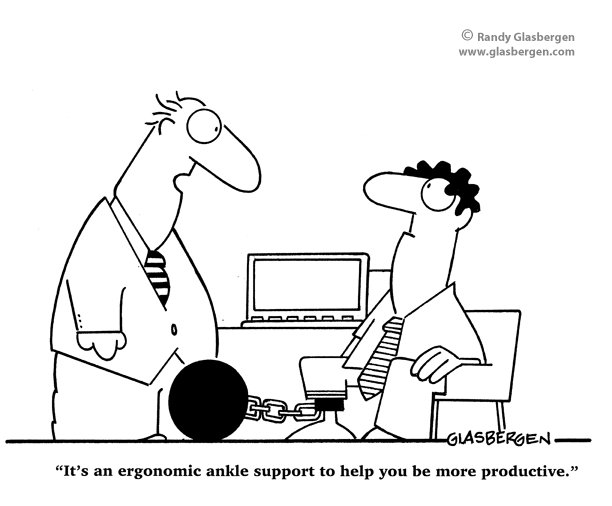
You see, working from home is a double-edged sword. Now I’m not complaining — my commute rocks, my workout-wear attire is comfy and my four-legged office-mates are pretty chill (unless they hear a knock at the door, then all bets are off). But the drawback is that sometimes the lack of ergonomics can be a pain in the neck — like, literally.

Some scary facts:

  • The moment you sit at your desk each morning, your calorie-burning rate immediately drops to one calorie per minute
  • Sit for six hours a day, 14 days straight: Muscles stop burning fat, blood sugar rises and maximum oxygen consumption drops.
  • After a year of sitting six hours per day, weight gain would be noticeable, as would higher cholesterol levels and loss of bone mass.

But the real kicker comes 10-20 years down the line. Us desk jockeys may need to augment retirement savings to account for medical bills. Sitting affects almost every part of our bodies from head to toe, raises risk of death by nearly 50 percent and creates a stunning 125 percent increase in the risk for cardiovascular disease.

So I’ve decided I’m not taking this sitting down. In fact, I’m taking a stand…as in, using a DIY standing desk.

Why? Well, our budget is zilch, and we’re lucky enough to have a bar-height butcher block table in the kitchen that works, so I’m trying that out for now. But Plan B is to “hack” our space using the specs and ideas below to create something that’s cheap, comfortable and won’t undo all the good I try do by way of exercise.

So, athletes, consider this my little PSA: We talk about the benefits of recovery because that’s where the body bounces back and the real gains happen. But if you’re sitting at a desk all day, you’re still doing yourself a disservice.

Get up, stand up. Stand up for your life.

Click to Enlarge Image

DIY Desk

DIY Desk
Infographic by CustomMade

Are you ergonomic at work?

Have any tips for doing it effectively (and on a budget)?

Be a Better Shredder: 3 Exercises for Snowboarders

Dec 2014 Snowboard Training 071

Forget all the fancy gear; do you really have what it takes to stay on your feet and avoid injury while hitting the slopes this season?

Mimic instability and build endurance by adding a few new moves to your existing workout routine, and it just might mean the difference between a great day of runs and having to call it quits early.

Billy Polson, founder and co-owner of DIAKADI (San Francisco’s largest personal training gym) recommends the following three exercises to condition, strengthen and help prevent injury prior to making your way to the mountain.

The best part? All you need is a BOSU ball, a balance board (or short plank of wood) and two weights.

1. Lean with it, rock with it

Place the balance board on top of the BOSU ball (flat side down) and hop up on it, spacing your weight evenly between both feet. Bend your knees and rock side to side, shifting your weight slowly, holding your core tight to maintain balance. Do this for 60 seconds.

2. Take it up a notch

Grab your two heavy weights, and step back up onto the board, finding your balance and holding in a squat position. Holding your arms at your sides, start lifting weights slowly up to shoulder height, then back down, while maintaining and proper form. Perform 2 sets of 15.

3. Practice your moves

After your last rep, drop the weights, go into a deeper squat, and hold. Practice shifting weight onto your toes, just like you are taking a turn on the mountain. Add some toe turns, move your weight into your heels, then back to your toes. Shift from side to side, practicing your turns and conditioning your legs for long runs. Do this for another 60 seconds.

Here’s a video of Billy demonstrating some of the moves. Happy shredding!

Have you hit the slopes yet this season? 

Swim-less in Stumptown

a3c53635ac2e6e6f_Girl-Swimming.xxxlarge_2x

Calling all swimmer/triathlete friends: I need your help.

I figured this might be a good place to crowdsource some knowledge — not just for me, but for anyone else who finds themselves in a similar predicament.

After almost 20 years (yep, dating myself there) of running, I’m mixing things up with more cycling and swimming — thanks, in large part, to the encouragement from my fellow Coeur Sports teammates.

Throughout last season, my #bikelove blossomed — from learning how to clip in to completing an Olympic distance race to long group rides on weekends.

But my #swimlove? Er, not so much.

tumblr_mq8hrlIyH41rujh0jo1_500

See, with running and biking I feel like the mechanics are pretty self-explanatory: one foot in front of the other, one pedal stroke at a time. Sure, we can shave off seconds and prevent injury by fine-tuning form and fitness, but once you have a grasp of the basics, all it takes is time and practice.

Swimming, on the other hand, is not something that feels intuitive. At all. And although I took the obligatory swim lessons as a kid, I had to re-train myself to do laps last year.

I can wrap my head around the movements — stroking, kicking, breathing — and get myself back and forth across the pool for 30-45 minutes, but there’s still something missing. Basically, I feel like I’m not moving smoothly or quickly enough for how much effort I’m putting in.

So my mission for 2015 is to figure this out once and for all, and — aside from knowing that I need some outside help — I’m not sure where to start.

6b8c8ffb74a12bb17f374d0dcbf17efa

That’s where you come in.

Step one is to whip myself into shape in the pool, then step two is to (eventually) translate that to open water. But how?

I know I need someone to watch what I’m doing, tweak my form and help me worth with, rather than against, the water…but I’m stumped on the best approach: instructor vs. coach, personalized assessment vs. lessons from scratch, one-on-one vs. group, etc.

At this point, I’m not looking to get primed for a specific event; I just need to train to be able to train, if that makes sense.

But please don’t tell me to join a local masters program. I tried that in SF and got left in the dust with a group who said they were too slow to train with the actual masters group at that pool. Between getting lapped a gazillion times and dealing with smug looks from a Michael Phelps body-double, I’m not keen to try that again anytime soon.

Runner seeking advice: I’m searching for #swimlove in 2015; can you help? 

Recipe: Thrive Energy Cookbook’s black bean, sweet corn & mango salsa

photo 4 (1)

While I’m no vegetarian, I do make an effort to incorporate plant-based, nutrient-dense, whole-food recipes into my meal planning.

Why? Well, as much as I love a good steak, I can feel my body processing it for hours on end; sometimes it’s nice to eat stuff that’s less intensive to digest, which means you’ll have more overall energy.

That’s why I was excited about checking out the new Thrive Energy Cookbook from Brendan Brazier (former pro triathlete, ultramarathon champ, creator of Vega). His purpose-driven recipes are intended to fuel performance.

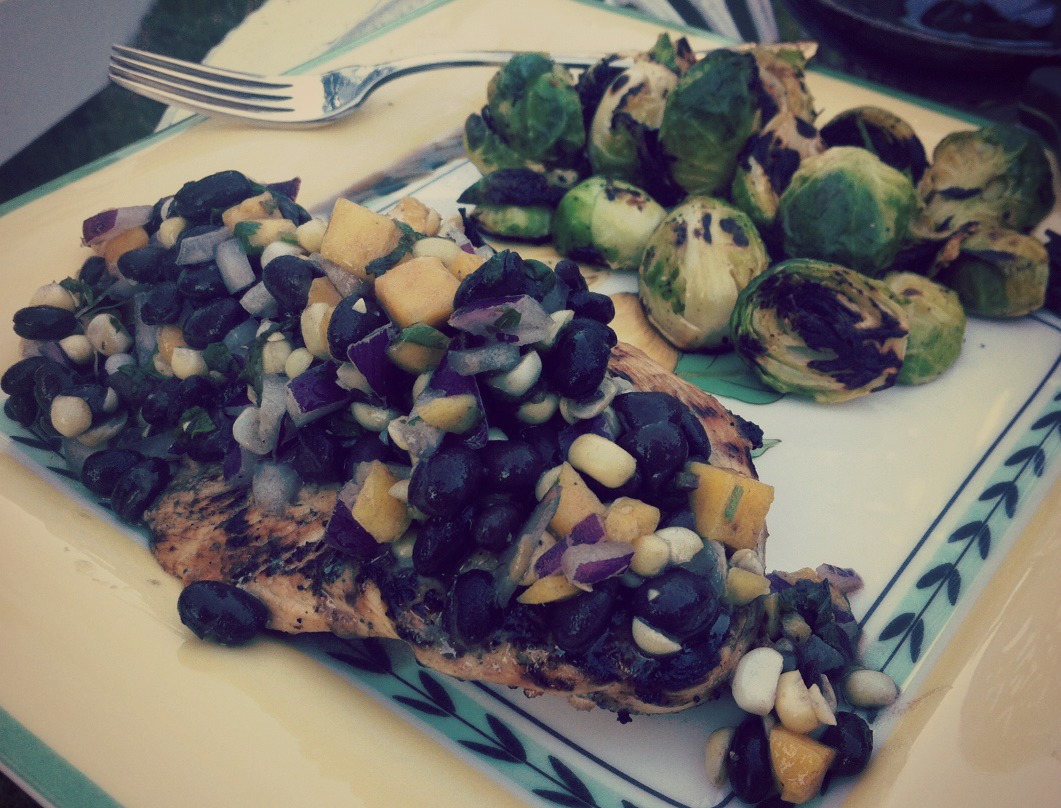
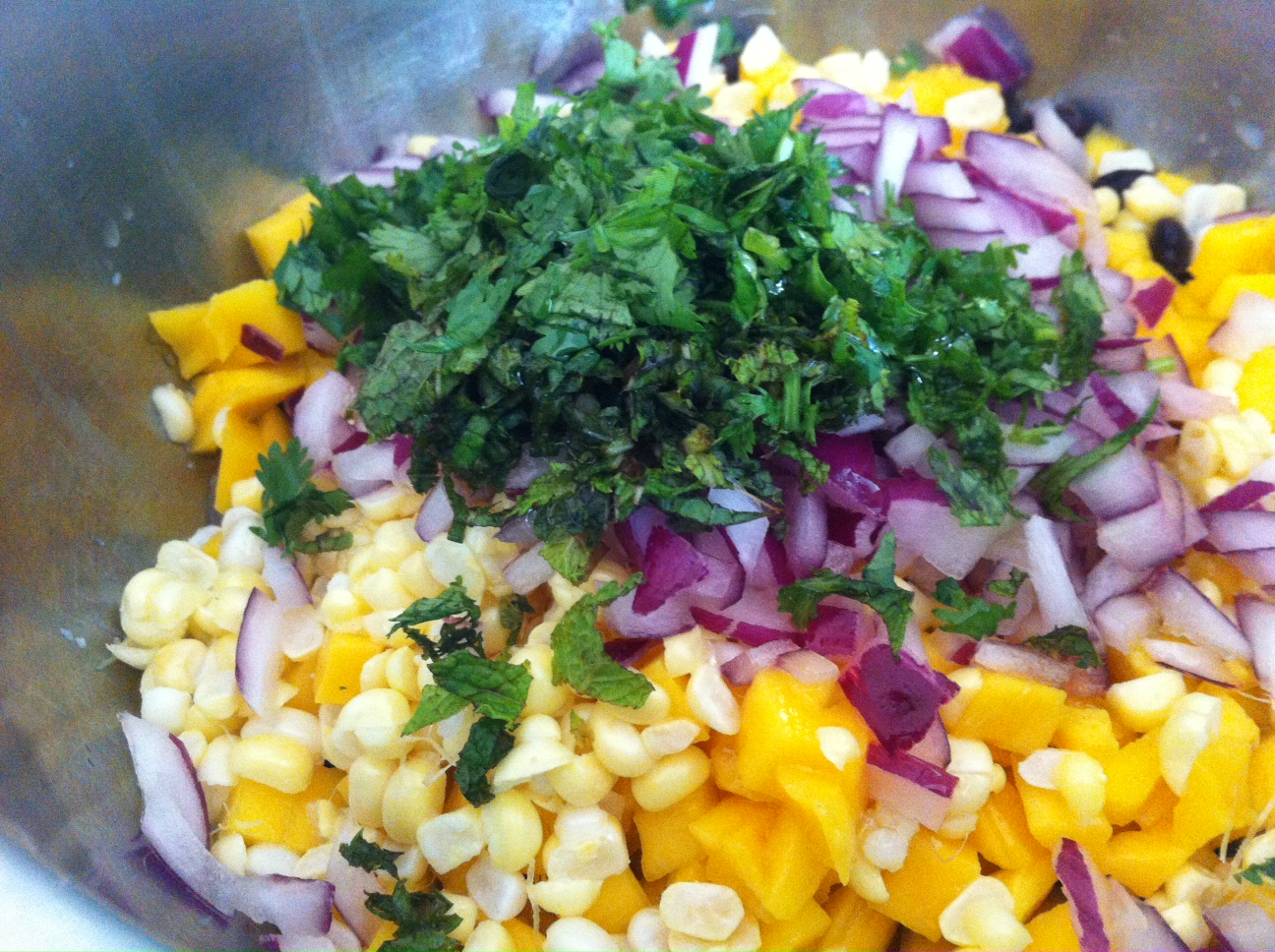
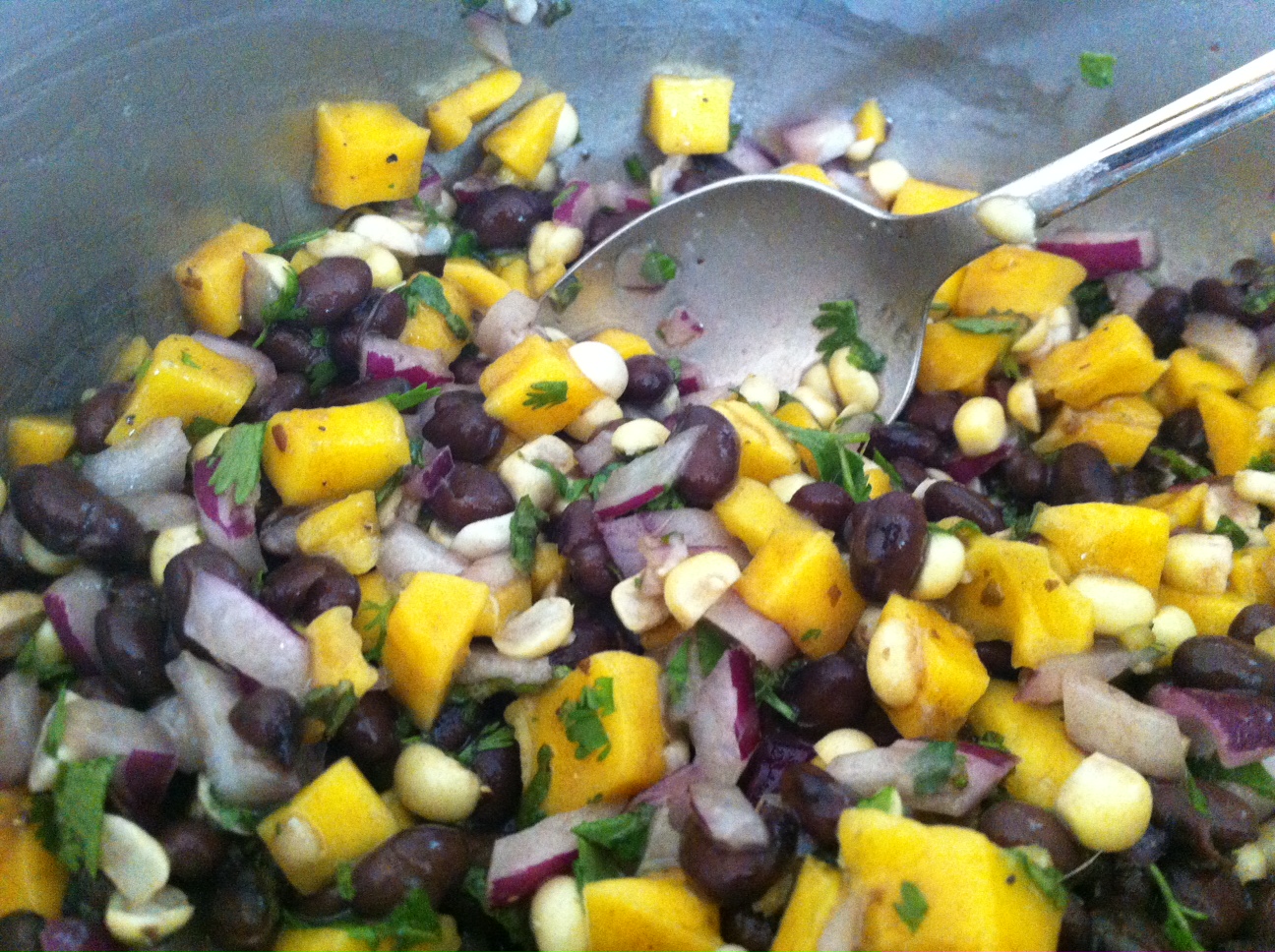
This salsa, for example, is a twist on the southwestern classic. Bursting with flavor — and protein — it’s perfect over veggies, atop a salad or (my favorite) with chicken or fish.

Thrive Energy Cookbook’s Black Bean, Sweet Corn & Mango Salsa

Ingredients:

  • 1 cup (or rinsed canned) black beans
  • 1 cup peeled and diced mango
  • 1 cup fresh sweet corn kernels (from 2 cobs)
  • 1/4 cup finely-diced red onion
  • Handful of fresh cilantro leaves, torn
  • 3-4 fresh mint leaves, thinly sliced
  • 2 tbsp freshly-squeezed lime juice
  • 1 tbsp avocado or hemp oil
  • 1 tsp agave nectar
  • Sea salt and freshly-ground black pepper, to taste

Directions:

  1. In a large bowl, combine all ingredients.
  2. Toss well. Best served immediately.

First, gather all the ingredients — note: I substituted olive oil for the avocado/hemp oil, though, and used the whole can of beans.

photo 2 (3)

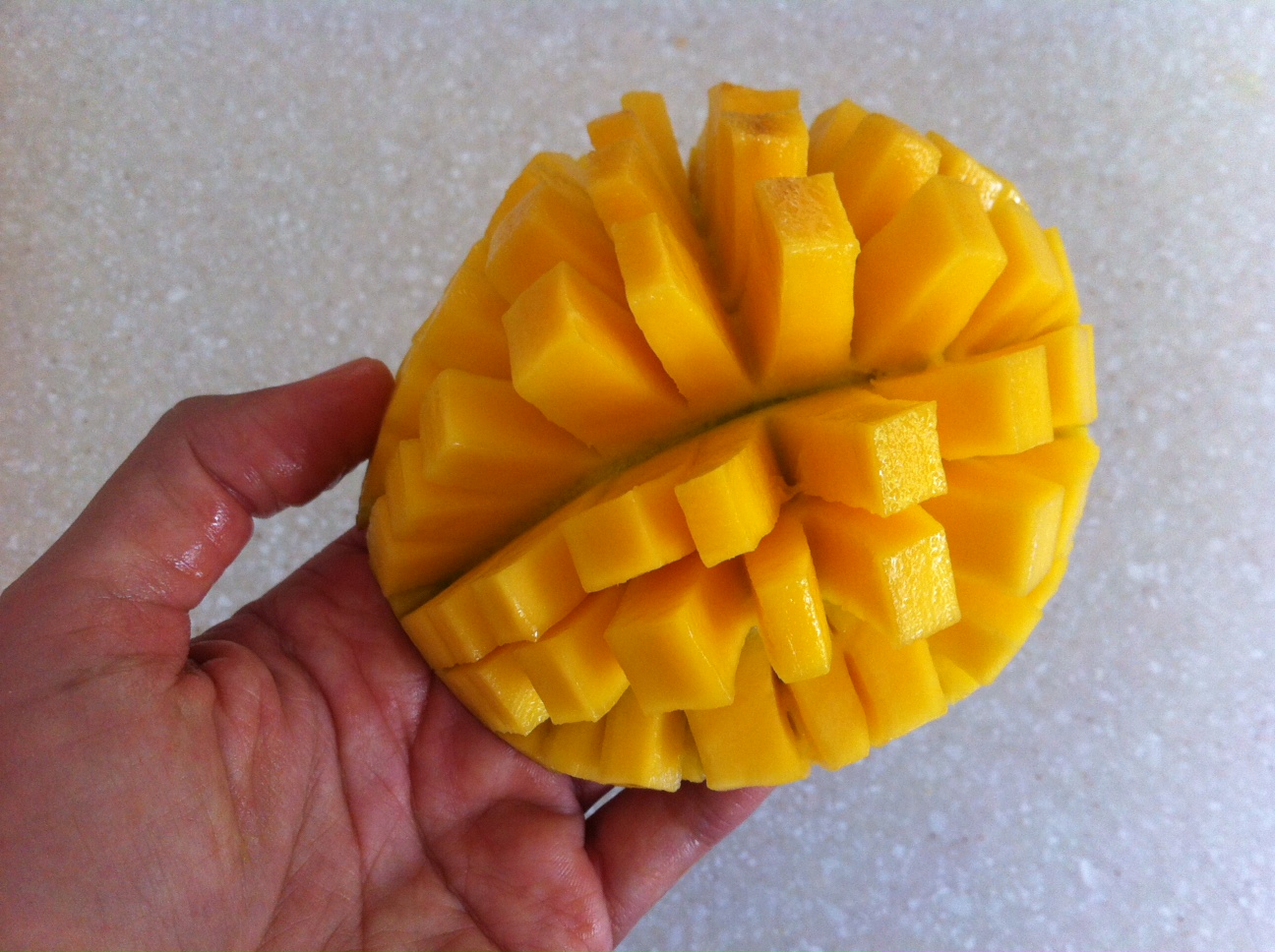
Want a trick for dicing up those tough-to-handle mangos? Slice ’em, score ’em, then flip ’em inside out and scrape out the chunks. Easy!

photo 3 (2)

Since Hubby and I are big cilantro fans, I added a bit more than the recipe called for, too.

photo 4 (2)

Look at all that awesome color! It’s a perfect pairing for quick meal on hot summer days.

photo 1 (2)

A quick stir, and you’re done — eat alone, with veggies, or spoon over grilled chicken or fish for a heartier, non-vegetarian meal.

photo 2 (2)

I’ll be sharing more recipes as I experiment with the book, but if you’d like to check out other plant-based options in the meantime, visit the Thrive Forward recipe center for more information.

Fit Fix: Olympian Natalie Coughlin on training, nutrition and leading a healthy lifestyle

NCoughlin

In a sport measured in mere fractions of a second, 12-time Olympic medalist for USA Swimming Natalie Coughlin knows a little something about how to be efficient with her time.

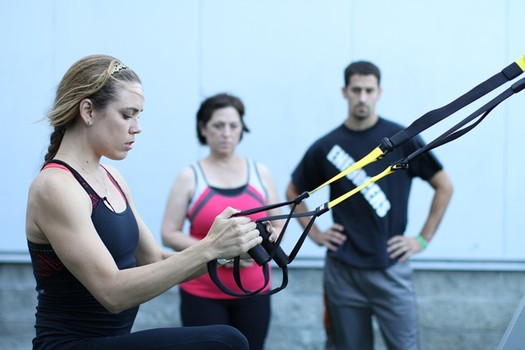
And that’s precisely why she teamed up with TRX Suspension Training after the 2008 Olympic Games, making it a training staple for maintaining her strength and stability despite a hectic schedule and frequent travels.

About a year and a half ago, I had the pleasure of sitting down with her after she led contest winners on a “Train with Natalie” TRX Olympic-level workout, so I thought it’d be fun to revisit some of the highlights from our conversation that day.

Photo courtesy of TRX

Photo courtesy of TRX

KineticFix: Can you share a training tip that’ll help us make workouts more effective?

Natalie Coughlin: An overall take-home would be to work on form. With any exercise that you do, it’s easy for us all to get competitive with one another – you look to the person on your left and you’re like, “Oh, they’re doing eight, I want to do 10.”

But just step outside of that – be competitive with yourself, and go for perfect form. That way, you’re getting the true purpose of the workout, and you’ll get a lot more of the benefit, as well.

KF: You’re 30+ now and in amazing shape; how has your workout routine evolved over the years to help you maintain your level of fitness?

NC: Evolving is important in training. I train at UC Berkeley, so I train with 18-year olds, and what’s appropriate for them at that age is not necessarily appropriate for me now.

Essentially, I’m working out to have the best performance in a race as possible. Something I learned over [the years] was that I was a little overzealous in training – I think I swam a little too much – and my [previous] performances in the Olympic Trials and the Olympics suffered because of it.

Recovery and rest is becoming much more important as I get older, but on the flip side there are some benefits to getting older: I’m much stronger, and I maintain that strength better than before.

But as you age you tend to break down faster, so it’s really important for me to keep my strength and ease back when I swim, focusing more on race relevance.

Photo courtesy of TRX

Photo courtesy of TRX

KF: When you’re not training, what does your workout look like?

NC: It always changes when I’m not in training mode. I’ve been exploring yoga, running, doing my TRX. Over the years, I’ve tried all sorts of different things, though – I’ve done kickboxing classes, Dancing with The Stars after the last Olympics, etc.

I’m always active in some way, shape or form, but that could range from a hike with my dogs to running 10 miles; it changes every day based on my mood. But I am someone who likes to be active and likes to maintain an active lifestyle – mainly because I like to eat!

KF: Do you have any advice you can share for prioritizing and incorporating exercise and healthy eating habits into a busy lifestyle?

NC: It’s really important to prioritize your fitness routine, as well as your diet, because we are all busy, and it’s easy to make poor choices when you’re on the go.

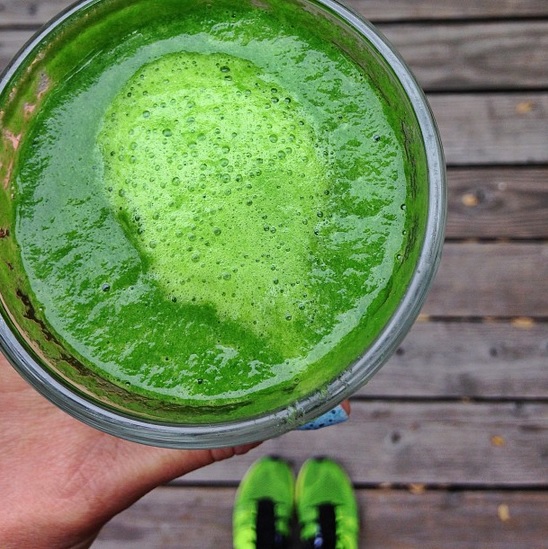
You just need to think ahead; for me, it’s making my green smoothie. I’ll make a big batch and put it in Mason jars and keep it in the fridge. In the morning I can just grab one and put it in my bag with an ice pack, so it’s waiting for me and it’s packed with nutrition.

I’ll also look at my schedule, which changes on a day-to-day basis, and carve out at least a half an hour for something active. Like what I did with [contest winners] Renae and Chad – that was an intense workout, but it was only 30 minutes. We can all find 30 minutes in our day to do that.

Photo courtesy of Natalie Coughlin (Instagram)

Photo courtesy of Natalie Coughlin (Instagram)

KF: You’re known for your backyard garden – can you share some kale recipes?

NC: I grow so much kale it’s ridiculous, mainly because a lot of my yard is shaded, but also because it’s a superfood.

I like to braise it in chicken broth and add hot chili flakes and garlic, which adds so much flavor. I also have it in my green smoothies every day. I’ll put kale, romaine, spinach and celery in with a little bit of fruit to sweeten it up.

I find that if you don’t like that bitter taste, pineapple does a really good job of balancing it with acidity and sweetness. So just get some frozen pineapple and throw it in with coconut water, and it should taste a lot better. But as your palate changes, you could do less fruit and more greens.

KF: With your interest in cooking and gardening, plus experience in fashion and entertainment, do you have any specific post-swim career aspirations?

NC: I have been blessed with wonderful sponsors, such as TRX and O’Neill (Coughlin helped design their O’Neill 365 collection), and I have had a lot of really cool opportunities because of that.

I’m still trying to figure out what my post-swimming career is going to look like, but I’m going to continue to compete for a little longer. I definitely want to write a cookbook at some point, so that’s something in the back of my mind, but right now it’s just about [staying] in shape.

KF: Do you have any lucky charms or superstitions, when it comes to competitions?

NC: I don’t have any superstitions, but I do find myself counting all the time, so when I’m in the pool, I’ll always do eight kicks off of the wall.

And another part of my routine is that I always do a running dive into the pool. It’s just something I’ve done for the past 10 years at Cal. I’m always in the end lane, and I hate getting in the water more than anything, so I just wait for everyone else to get in the water first, and then I run alongside the pool and dive in.

Photo courtesy of TRX

Photo courtesy of TRX

KF: I have to ask – what’s it really feel like to win an Olympic medal?

NC: It’s indescribable. There’s so much pressure going in that there’s a certain sense of relief, in addition to the excitement.

It’s really an emotion that there are no words for, though, and it’s something I’ll never forget.

KF: Switching gears…what are your guilty pleasures?

NC: This definitely does not go along the lines of a healthy diet, but my ultimate guilty pleasure is to be at a Raiders game with a bratwurst with relish and onions and an ice-cold beer. If I do make it out to a baseball game or a football game, that’s my treat.

KF: Any final fitness advice you can share with us?

NC: I believe that it’s important to stay active. You don’t necessarily have to go to the gym or run five miles a day.

Just fit in ways to be active – if you’re at a desk all day, get up and move around; walk around when you’re on the phone, and take the stairs when you can. Little things like that make a big difference.

And if you have 20-30 minutes in your day to get a workout in, try to superset exercises where you work on one muscle group and immediately go into next. Your heart rate will skyrocket, but you’re allowing separate muscle groups to rest in between, so you’re getting the most bang for your buck in a short amount of time.

Photo courtesy of NatalieCoughlin.com

Photo courtesy of NatalieCoughlin.com

Special thanks to Natalie for taking the time to chat!

Follow along on her adventures — athletic and otherwise — via her website. And if you think you can keep up, give her TRX Challenge a shot.