30-minute(ish) total body treadmill workout

While I can’t promise the entertainment level (or cool factor) of this ‘dancing treadmill guy,’ I do have a workout that’ll help make your next trip to the gym a lot more efficient.

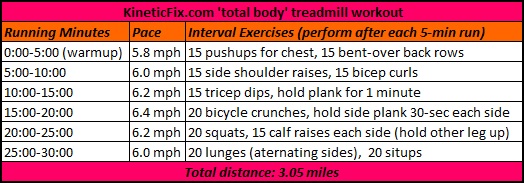
It’s a cardio-strength hybrid where you’ll be hopping off the treadmill every five minutes to complete a few moves, so find a spot where you can easily maneuver back and forth without losing your machine between sets.

Before you know it, you’ll have three miles and a total body strength training session under your belt.

Now, that’s something Treadmill Guy can get behind.

KineticFixTotalBodyTreadmillWorkout

Beat the heat: Gear for surviving summer workouts

Summer-workout-thriveportlanddotcom

Photo credit: ThrivePortland.com

I have a love/hate relationship with summer workouts.

Love? Longer days, runs at dusk with the smell of fresh-cut grass and dressing without fear of the wind chill factor.

Hate? Sunburns, jogging at a snail’s pace under the beating sun, dehydration, heat cramps and humidity.

Luckily, some of those things can be avoided by taking a few simple precautions (aka getting my butt out of bed earlier and slathering myself head-to-toe with sunscreen).

The others? Well, there’s no better excuse to get some fun, new gear to keep you from suffering through some strenuous outdoor activities in the summertime.

Here are a few of my recent favorites!

Dress to Impress

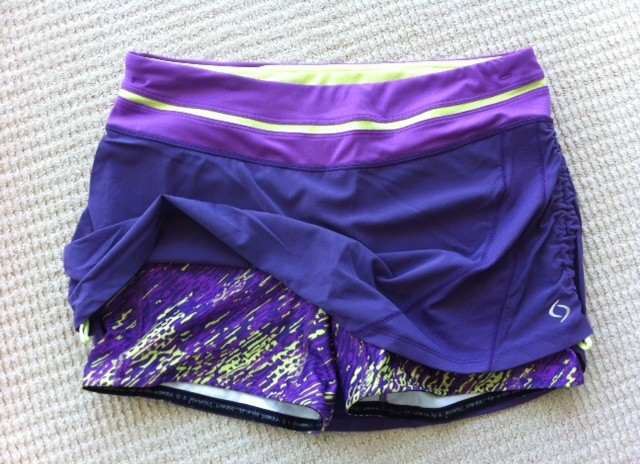
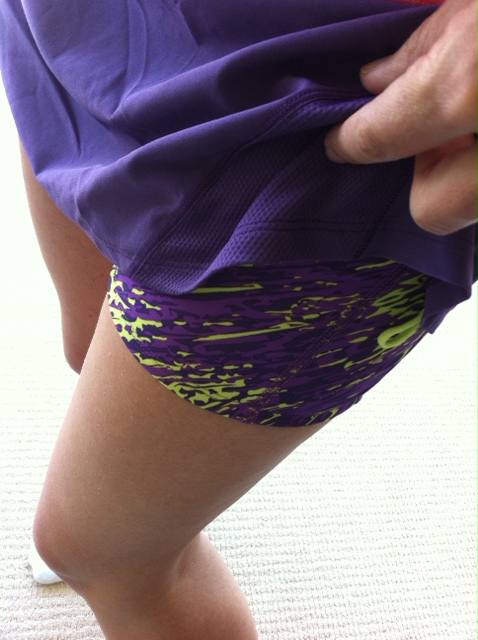
I love a good pair of yoga pants as much as the next gal, but sometimes summer just calls for bare legs. Keep your cool (without losing your dignity in some of those, ahem, ‘barely-there’ shorts) with Moving Comfort’s Sprint Tech Skort ($56), which comes complete with motivational quotes inside the lining to really get you going.

MCskirt

Peek-a-boo! Love the fun colors

MCskirt2

Go with the Flow

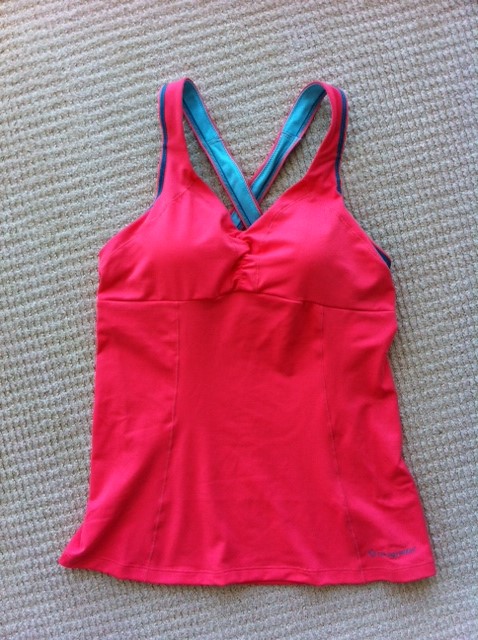
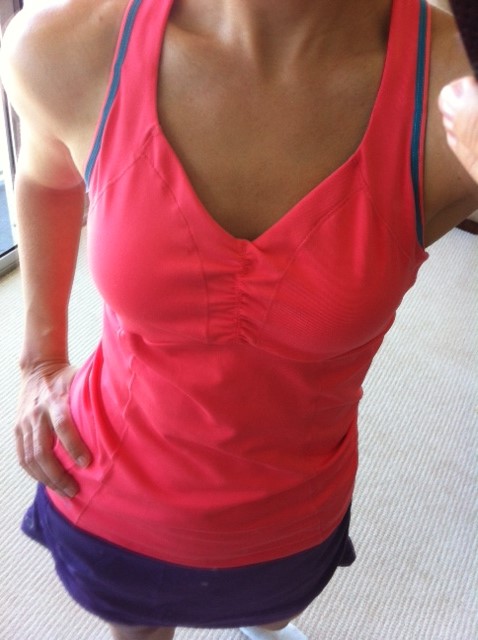
For up top, I’m a big fan of their Flow Crossback Tank ($58). As comfortable as it is cute, Moving Comfort really knocked it out of the park with this one. From the fun pop of color to the feminine ruching at the bust, this tank is not only done well design-wise, but it also has a built-in bra for support during both low- and high-impact activities.

MCtank

MCtank2


Keep a Cool Head

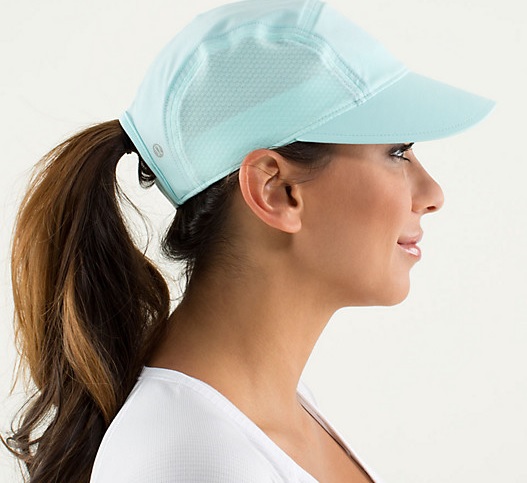
When I want to get out and feel the burn (the good kind) while going pseudo-incognito, I grab my trusty Lululemon Run Hat ($32). The lightweight, moisture-wicking and adjustable cap makes it easy to shield your eyes from the sun and keep hair from going haywire.

Photo credit: Lululemon.com

Photo credit: Lululemon.com

Hydrate, Hands-free

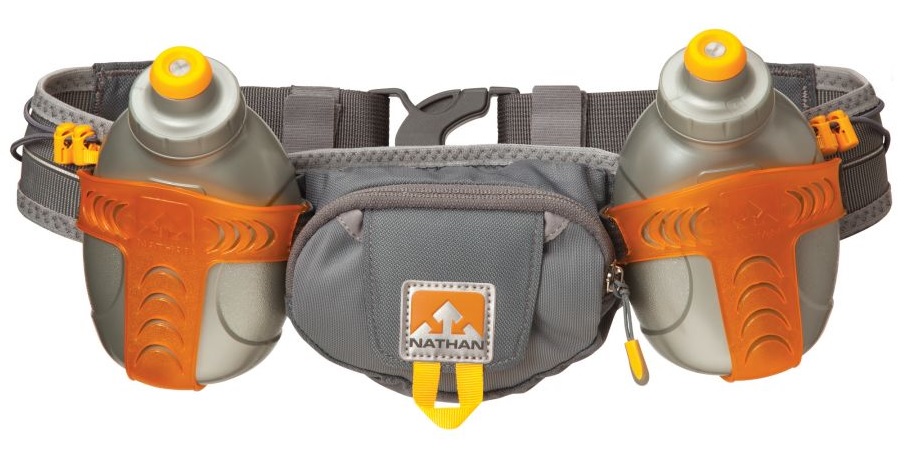
Between hydration, energy gels, keys, cash, phone, music and whatever else you need, packing for a long run can spiral out of control quickly. Contain the madness with a Nathan Hydration Belt ($45). Equipped with easy-squeeze flasks, these belts offer lightweight storage, a chafe-free ride, and easy one-handed access to hydration and other running essentials.

NathanBelt

Photo credit: NathanSports.com

Keep Your Balance

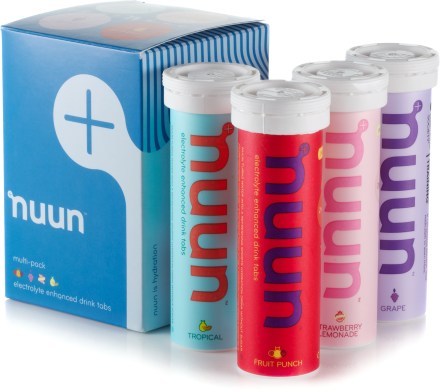
Finally, smart sports hydration takes more than just H2O. Keep from knocking your system too far out of whack by consistently sipping an electrolyte replacement, such as Nuun Active Hydration Tablets ($24 for a four-pack), which contain a quick-absorbing mix of salts and sugars that can alleviate cramps and help muscles function, communicate and burn energy efficiently. Stay cool out there!

nuun

Photo credit: REI.com

Thanks to the folks at Moving Comfort for providing samples for review; all opinions are my own. 

Wanna get lucky? Run as a couple, says survey

Happy National Running Day!

In honor of the holiday, Brooks Running Company released some fun findings from their recent Brooks Run Happy Nation Report, including tidbits related to relationships, running while traveling and runner pet-peeves, including:

Hit the street more often for a better time between the sheets? Photo credit: MesHealth.com

Hit the street more often for a better time between the sheets?
Photo credit: MensHealth.com

Bringing Sexy Back

  • The longer you run the better your sex life, the survey found, as nearly half (49 percent) of couples who run six or more miles together claim it pays dividends in the bedroom
  • Runners from the West (42 percent) are most likely to claim that running increases their time spent rolling in the hay versus the South (38 percent), Northeast (33 percent) and Midwest (32 percent)

Sweat-time Gets Social

  • More than three-quarters (76 percent) of men surveyed passed the miles by discussing their team’s latest victory (sports, 51 percent) or a cool new gadget (34 percent)
  • Ladies, on the other hand, choose to use their running time as therapy – they are most likely to talk about relationships (47 percent), both the good and the bad
  • When it comes to a favorite late-night running partner, Jimmy Fallon (27 percent) steals the spotlight, with Chelsea Handler (22 percent) and Jimmy Kimmel close behind (22 percent)

On the Road Again

  • As for their favorite running city, runners say the hills of San Francisco make their heart race (46 percent), followed by Portland (34 percent), Boston (32 percent), Boulder (30 percent) and New York City (30 percent)
  • Runners are committed! More than three-quarters of those surveyed (78 percent) maintain their run schedule while traveling, and men are more likely to keep up the routine than women (82 percent vs. 73 percent), as are those who are parents (82 percent vs. 74 percent)

No Sounds of Silence

  • Eighty-seven percent of runners like to listen to something to keep them motivated, whether a booty-shaking playlist (music, 78 percent), audiobooks (11 percent), even meditations (10 percent) or motivational speakers (9 percent)
  • Just 13 percent feel that silence is indeed golden and choose no audio companion

Pet Peeves!

  • Difficulty dressing for the weather is a bigger pet peeve for females (30 percent) than males (17.3 percent)
  • Runners are torn about the worst type of runner they encounter on their favorite trail or running spot:
      • The Spitter (30 percent claim this is their “most hated runner” category): runners who spit or hock a loogie while running;
      • The Double-Wide (29 percent): runners who run in a group and take up a lot of space;
      • The Superhero (14 percent): runners  decked out in unnecessary gear;
      • The Flasher (14 percent): runners who don’t wear enough clothes when it’s cold out

“We hear from runners every day about how hitting the road is an integral part of their daily routine, and wanted to test just how big a part running played in their relationships, travel habits and friendships,” said Heather Snavely, Brooks senior director, Brand Marketing. “The results of the report were both fun and surprising. And I have to agree with those surveyed; I personally would love to join Chelsea Handler for a martini 5K in San Francisco.”

Check out the accompanying infographic below, and to see more of the survey results, click here.

Happy running!

image001

Dare to go bare: 6 tips for embracing barefoot running

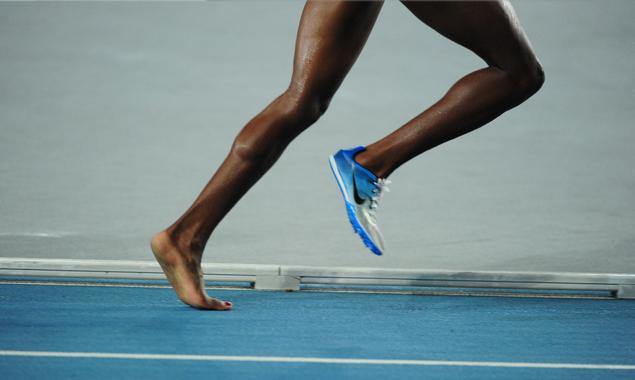
Would you dare to go bare on your next run?  Photo credit: Shape.com

Would you dare to go bare on your next run?
Photo credit: Shape.com

Runners all over the world have bucked the traditional cushioning and orthotics of athletic shoes in favor of taking it all off – their feet, that is.

Inspired in part by Christopher McDougall’s book “Born to Run,” which chronicles the Tarahumara Indians’ ability to run long distances injury-free without shoes, the barefoot trend is gaining in popularity yet remains widely-debated.

Chris McDougall demonstrates his barefoot technique Photo credit: ChrisMcDougall.com

Medical minds are divided and the jury’s still out in the running community, but thanks to the endorsement of a few top athletes who swear by going bare, many weekend warriors are wondering whether or not they should join in on the ‘bare boom.’

But while the allure of improved running form, fewer impact injuries and better balance makes trying barefoot running seem like a no-brainer, there are a few potential challenges to consider, such as hygiene issues, overuse injuries and protection from sharp objects and extreme climates.

As with any new athletic endeavor, the best approach is always to keep an open mind, take it slow and see what works for you. Every runner’s body mechanics are as unique as their respective fingerprints, which means there’s no telling how your body will react and which combination of benefits and/or drawbacks you’ll experience.

So if you decide to go bare, do so with these tips in mind:

  1. Consider your environment. Where and when you run barefoot is very important, so be sure to protect feet properly in extremes and take precautions that correspond to the area in which you’re running – whether it’s urban, suburban or rural.
  2. Aim for variety. Training on hard, rough surfaces toughens feet and teaches you to run lightly to minimize impact, while soft surfaces are a welcome respite during the transition. Get creative and widen your repertoire of surfaces, including beaches (hard and soft sand), sports fields, running tracks, parks (pavement and grass), trails and sidewalks.
  3. Ease in with a minimalist shoe. If you’re not ready to completely lose your shoes (like me), try minimalist footwear that gives the feeling of a bare foot with the benefit of some light support and protection. 
  4. Allow time to transition. As tough as all runners like to think they are, everyone making the shift to barefoot will need to be patient as the body adjusts to this new activity. Avoid too much too soon; opt for short bursts of barefoot during or at the end of your current routine, which will decrease the chances of short-term injury.
  5. Gradually increase time and distance. Barefoot doesn’t translate to “injury-free,” so it’s important to build a solid foundation on which you re-work your running style. Switch from barefoot intervals during workouts to entire runs with your feet in the buff, working up to as many days running ‘footloose and sneaker-free’ as you are comfortable.
  6. Above all, use common sense. Barefoot running is not for everyone, so listen to your body and stop if you’re noticing more drawbacks than benefits. Avoid barefoot running if you have had serious injuries such bone fractures, bone disorders such as arthritis or conditions such as diabetes, which may limit the ability to feel foot pain.

And one final word of caution: Don’t forget to consult your physician before starting any new exercise regimen.

Otherwise, what have you got to lose? Well, besides your shoes 🙂

Up your endurance: Climbing interval treadmill workout

Get fitter, faster with this speedy interval workout, which I like to use when trying to pick up my overall pace.

It starts with a slow warm-up to get the blood flowing, then mixes short sprints (at a 7mph pace) with three-minute ‘climbing’ recovery segments (6.1-6.4mph) throughout the course of the workout.

Treadmill_climbing interval

Tweak this to suit your individual need for speed by adjusting the paces accordingly. Just make sure you start with an easy enough recovery pace and keep ‘climbing’ each time to gently challenge your body to recover at a faster pace.

As soon as this workout starts feeling too easy, push the sprint speed up slightly and/or adjust the recovery pace up. The first minute of recovery should feel tough, but then your energy should pick up over the next two minutes so you feel peppy enough to be able to tackle the next sprint segment.

Photo Fix: Getting back to basics

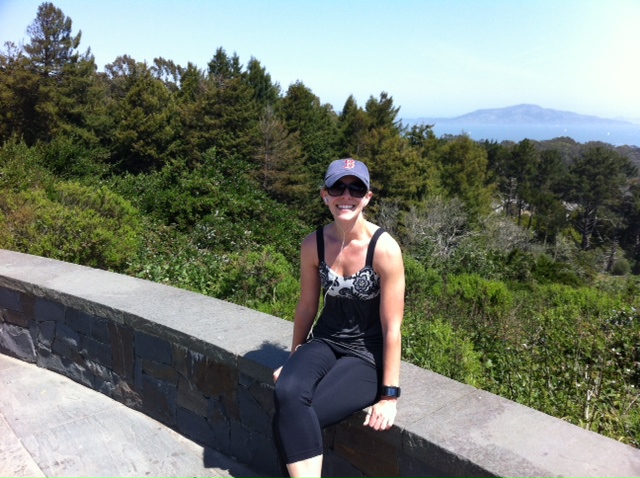
Ok, I’ve got a confession: Having lived in the Bay Area for almost 10 years now, I sometimes find myself taking the city of San Francisco for granted. (I know…I know…)

It’s just entirely too easy to get swept up in the frenetic pace of life here, aptly described as a kind of “quiet frenzy.” But all it takes is one run to reconnect with the ridiculously-majestic natural beauty by which we’re surrounded.

Which is precisely why I’m making a concerted effort to step out of the usual “training tunnel vision” during some of my runs. And I’m encouraging you to do the same!

Huh, you say? Well, start by taking one run per week and removing all expectation of time, pace, distance, etc. Instead, focus on finding the reasons you started running in the first place and taking that time to stop and smell the roses, so to speak.

Here are a few things that made me slow down and smile during a recent run. Give it a shot, and feel free to share your experiences, too!

Taking some time to stop and smell the roses...literally

Taking some time to stop and smell the roses…literally

A daily lesson in stamina - San Francisco has some serious hills

These SF hills are a daily test of stamina…and, more often than not, a blow to runners’ egos!

All my fellow children of the 80's, who wouldn't crack a smile at seeing this mid-hill?!

Fellow children of the 80’s, I dare you not to crack a smile when seeing this mid-hill

Stopping for a quick rest break, er, photo opp to take in the view at Inspiration Point

Say cheese! Stopping for a quick rest break (er, photo opp) to take in the view at Inspiration Point

Can't really beat this view...

Can’t really beat this view…

Me & the GGB! (Thanks to the kind stranger for snapping this, thus allowing me to avoid an awkward selfie)

Me & the GGB! (Thanks to the kind stranger for snapping this, thus allowing me to avoid attempting an awkward public selfie)

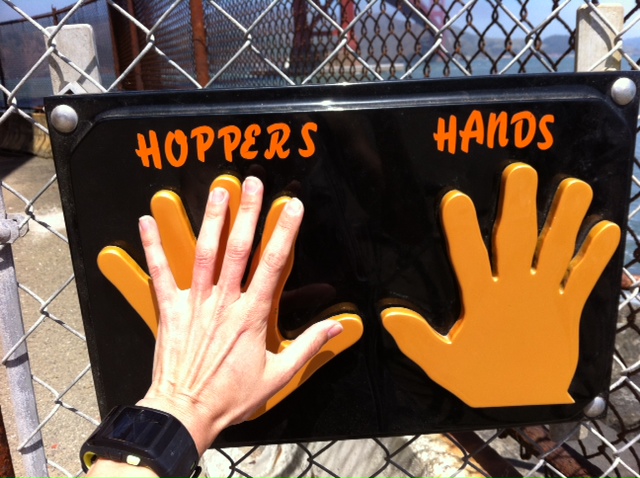
Headed down to the base of the Golden Gate Bridge...love how you can see so much of the city here, Hard not to stop and stare!

Headed down to the base of the Golden Gate Bridge…love how you can see so much of the city here

Nope, it's not a postcard; this is what it really looks like running up to the base of the bridge

Nope, it’s not a postcard; this is what it really looks like running up to the base of the bridge

Giving a high five for finishing a great run! Now it's just a matter of figuring out how to tackle those hills home...

Giving myself a high five for finishing! Now it’s just a matter of figuring out how to tackle those hills home…

Hills: Your not-so-secret trick to better running this year

Photo courtesy of WeDoRunRun.Blogspot.com

Photo courtesy of WeDoRunRun.Blogspot.com

There’s no denying that runners have a love/hate relationship with hills.

Most begrudgingly regard them as a necessary evil, others plot routes to avoid them altogether, and a small sliver actually step up to embrace the challenge.

I like to think of hills as the “vegetables” of a running regimen: They may not be the most appealing thing on the menu, but respecting and learning to love hills can make you a stronger, fitter and faster runner.

Yes, hills can hurt – both the body and the ego – but as much as they are a runner’s nemesis on the roads, they’re are also one of the ways in which runners can dramatically improve technique. But before you add them into your weekly runs, attacking them with abandon, think differently about approaching hills in order to see maximum results.

Start by following the lead of professional runners who deploy more efficient techniques for tacking hills:

  • First, rather than giving an all-out effort, try metering your exertion on the way up. The goal is not to expend all of your energy on the ascent
  • Next, fight your natural instinct to breathe that sigh of relief at the top and hold back on the descent in an attempt to recover. Instead, let the hill work for you on the downslope, and push yourself to keep pace
  • Finally, think about maintaining an even leg cadence on both sides of the hill, which will help you level out your effort. To accomplish this, you’ll have to vary speed and stride length (which, on the plus side, may just help distract you a bit from the pain).

Developing good form takes practice, so slowly add hills into your training routes and consider devoting one day each week for hill-specific drills.

In addition to evening our your exertion over the hills, be sure to maintain good posture and watch ahead for changes in terrain so you can adapt your speed and stride seamlessly. The last thing you want to do is to expend too much energy switching “gears” mid-hill.

Runners, got any more tips for mastering those mighty inclines? Feel free to share with us!

What’s your fit fix? Triathlete Kelly Wilson on making the switch to multi-sport events

KellyWaldo

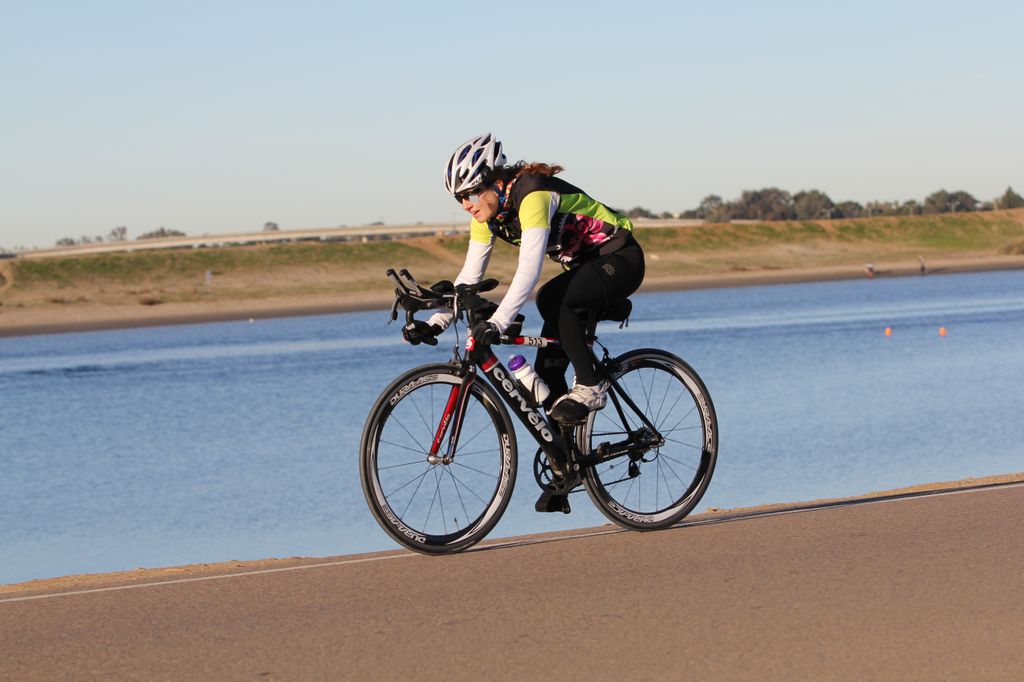
Occupational therapist by day and triathlete by mornings/evenings/weekends, Kelly Waldo Wilson has been making a real splash on the San Diego racing scene. When she’s not snagging a spot on the podium or winning her age division, there’s a good chance she’s training for it – whether biking, swimming, rock climbing or running around town with her dog, Annie.

Oh, and did I mention she’s a former track & field and cross country teammate from our high school days in Michigan?

It’s been fun following her athletic accomplishments over the years, and I can’t wait to venture down south to cheer her on in person. But until then, I thought it’d be fun to do a little Q&A with this red-hot redhead who is taking the triathlon world by storm…

Kinetic Fix: What sparked your interest in triathlon?

Kelly Wilson: It was 2011 – I was living in Virginia at the time and received a post card in the mail to join Team In Training for a sprint triathlon in Richmond. I have been a runner since high school and have completed three marathons, multiple 10Ks and numerous 5Ks. But I kept getting injured and rehabilitating myself by biking and swimming, so I figured I might as well try out the sport of triathlon and turn my “rehabilitating” into “training.” I did my first tri with Team in Training in June of 2011 and have been hooked ever since.

How do you make time for all the necessary training?

I’m a morning person, so I wake up routinely at 4:15am for a 1-2 hour training session before work. My evening workouts are usually running with my dog and/or swimming with my husband. I am NOT a night person, so I have no problem going to bed while it is still light out to get eight full hours of sleep!

Do you train with anyone? 

I train with HERevolution triathlon team here in San Diego. It’s a team started by Darcy Eaton, owner of HERevolution women’s multi-sport shop in Solana Beach, Calif. When not training with the team, I join master’s swim and spin classes at my local YMCA.

What’s on your iPod?

My iPod has a mix of hip hop, oldies, country, reggae and rock. Really anything to distract my mind and that I can sing along to. My best training sessions and races have been when I’ve had a single song in my head repeating over and over.

Got any pre- and post-race fueling tips?

Before racing I believe in routines and sticking with foods that are familiar. I always have a banana and a Balance bar; Mocha Chip and Cookie Dough are my favorites. During races I’m hooked on Espresso-Love Gu packets and Clif Margarita shot blocks. After…fruit; I always crave fresh, cold fruit.

Do you keep a strict diet or can you allow for indulgences?

For about a year and a half I have been experimenting with an anti-inflammatory diet; mainly eating foods with anti-inflammatory properties and minimizing highly-inflammatory foods. I’ve noticed a big difference in my training and recovery while sticking with this “diet.” My favorite indulgence is dark chocolate and wine.

Got any good advice on injury prevention?

I have found that alternating swimming, biking and running has kept me mostly injury-free. I do spend a lot of time on the foam roller, stretching, and I never miss my monthly deep-tissue massage.

What gear can’t you live without? 

Compression socks and compression pants. I wear my compression socks daily. I have a pair of 2XU recovery compression pants that I put on after my evening workouts and I wish I could wear 24/7. Once you feel the effects of compression after a hard training session, no other socks will do.

What would you say to beginners hoping to break into triathlon?

I had such a great experience with Team in Training. When I joined the team, I immediately had a coach and supportive teammates who were feeling just as nervous as I was. If Team in Training isn’t an option, I would recommend finding a club though your local triathlon store. For example, The Triathlon Club of San Diego has triathlons and workouts specifically for beginners only.

Finally, do you have a ‘bucket list’ race you’d like to do in the future?

My dream is to do a full Ironman, but I’d like to complete a few more half Ironman distances before committing to a full.

We are #BostonStrongSF

BostonStrongSF6

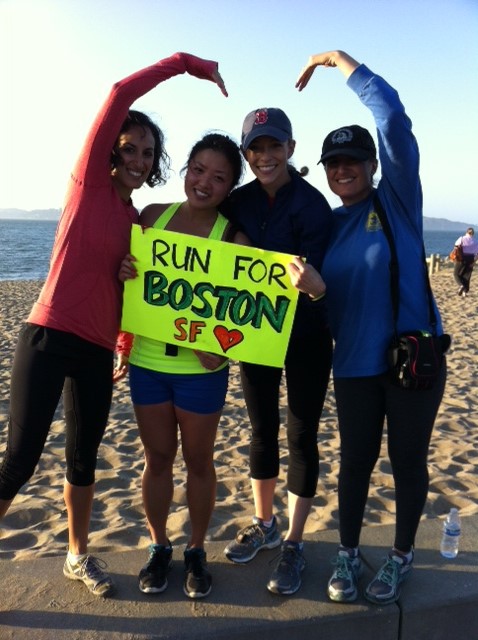
Proud to run strong for Boston tonight in San Francisco

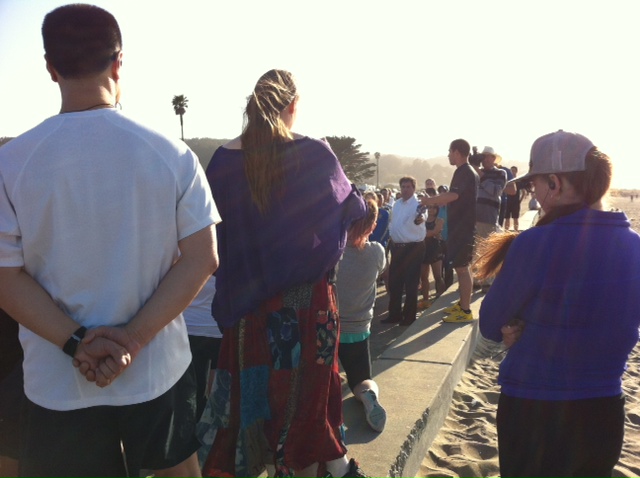
We’re a week removed from the unimaginable attacks in Boston, and so many of us in the running community are still in search of ways in which we can make sense of the madness and begin the healing process.

That’s precisely why blogger Brian Kelley of PavementRunner launched #BostonStrong, a grassroots global campaign borne out of the chaos of the Boston Marathon bombing.

It started with a simple request from a reader to join him in San Francisco for a run, and within 48 hours more than 150 people signed up to join him. This ignited global interest, and today more than 2,500 runners from 80-plus cities around the world ran between 3‐4 miles in support and remembrance.

“I feel like I need to do something. Something more than a donation. Something more than a blog post or a photo or a graphic,” said Kelley. “I’m inspired by the community and how we have come together and shown our support, shed our tears and expressed our fears. With a simple look at your Facebook page, a refresh of your Twitter feed or scroll through Instagram, and you can SEE the love. With #BostonStrong we FEEL the love.”

As a former Boston resident, last week’s tragedy hit too close to home. Not only did I have friends running and watching this year’s race, but two of my colleagues have husbands who are in local law enforcement and were on the front lines during the manhunt.

Needless to say, I jumped at the chance to participate and come together with our local running community to take a stand against what was meant to divide us.

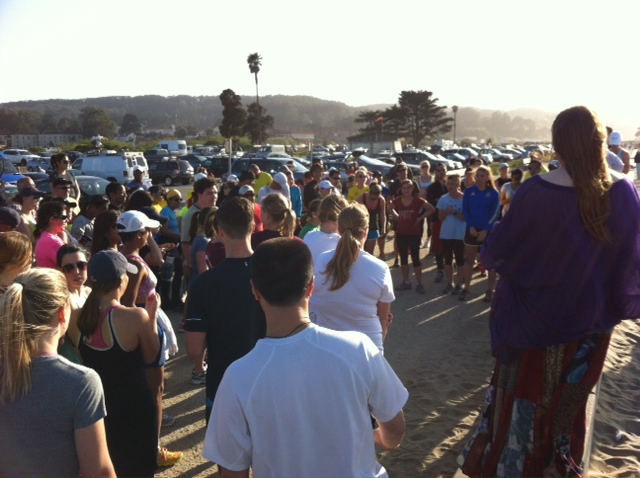
Among the group were fellow East Coast transplants, running enthusiasts of all levels, impromptu participants moved to join mid-run, as well as a few Boston Marathon runners who were there to pay their respects and begin to get some closure.

See below for a few shots from the evening…

It's a beautiful evening to run #BostonStrongSF

It’s a beautiful evening to run #BostonStrongSF

BostonStrongSF2

Pavement Runner Brian Kelley greets the group prior to our run

Great turnout from the San Francisco running community in support of Boston

Great turnout from the San Francisco running community in support of Boston

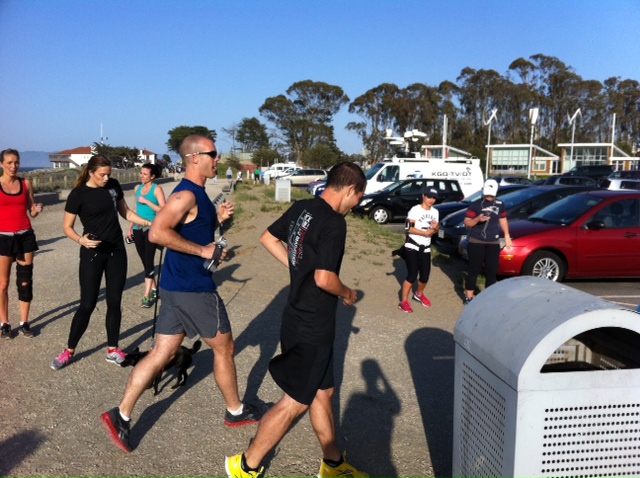
Pavement Runner Brian Kelley leads the group out on our run

Pavement Runner Brian Kelley leading the way in the #BostonStrongSF run

Such a sense of camaraderie cheering participants towards the finish

Such a sense of camaraderie cheering participants towards the finish

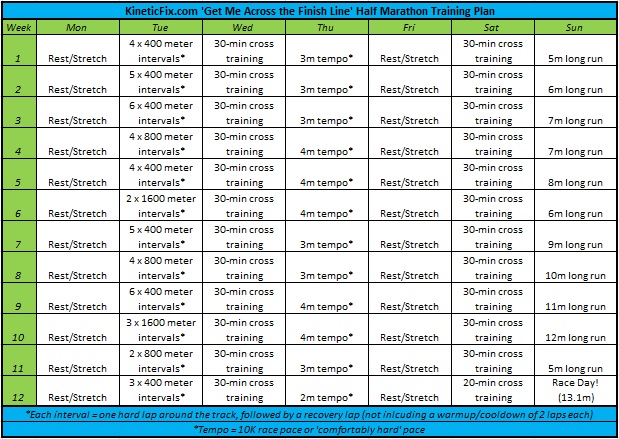
“Get me across the finish line” half marathon training plan

Note: I had drafted this post before the tragedy at the Boston Marathon, but held off running it because it just didn’t feel right making light of crossing a finish line when so many didn’t get the chance this past Monday. But now that the second bomber has been captured and is in custody, it’s time for the healing to begin. So let’s run…for Boston. 

A friend of mine just signed up for a half marathon this fall. The best part? It’s her first post-baby 13.1-miler, and she’s doing it along with her sister, who will be tackling the distance for the first time. You go, gals!

My own sister has also been a willing guinea pig participant in both the Rock n’ Roll Chicago and the Detroit Free Press International half marathons with me, so I thought I’d share our favorite training plan below.

It’s loosely based on Hal Higdon’s training program, but I tweaked it a tad for our individual schedules and fitness levels – i.e. sometimes I’ll take an extra rest day or swap a cross training session (elliptical, bike, rower, stair stepper) in for one of the mid-week runs to help aid in recovery and prevent injury.

Check it out, and let me know what you think (and if you use it for a race, I’d love to hear your results)!

FinishLineHalfMarathonPlan