A new year, a new family

1016952_408547355933228_2015275559_n

If there’s anything I’ve learned over the past year, it’s that the endurance sport community never ceases to amaze me.

From awesome running buddies who wait while you work through GI issues mid 20-miler…to inspiring athletes who run mileage in the triple digits (in less that 24 hours) to raise money for charity…from rockstar running crews who provide encouragement and great conversation on long runs…to the many other new friends I’ve made along the way, it’s a group that’s filled with grit, guts and a whole lotta heart.

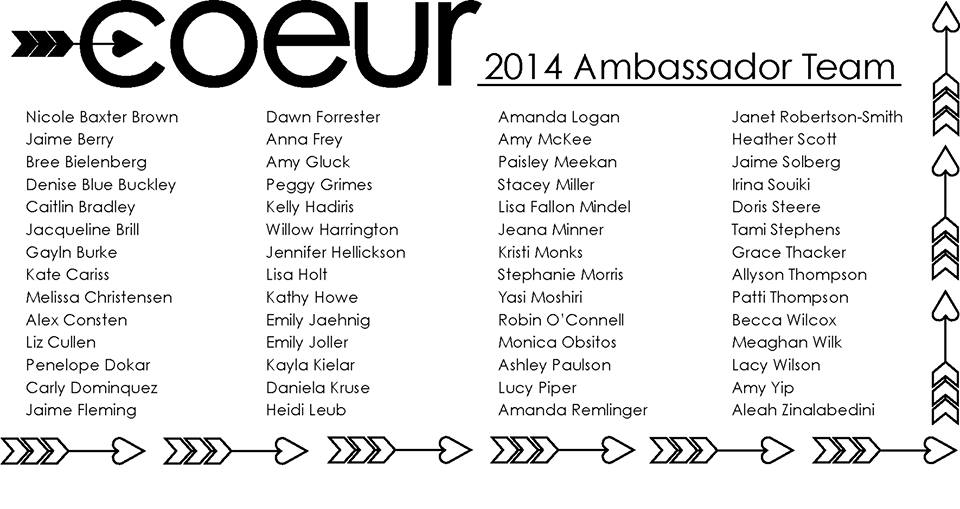
Which is exactly why I feel very fortunate to be joining the 2014 Coeur Sports Ambassador Team — to continue the tradition of “paying it forward.”

1471806_483253608462602_788932481_n

You see, Coeur is French for “heart,” and the root of the word “courage,” which is only fitting for a brand that has both style and substance. As you can see in this unofficial manifesto, the company encourages the gutsiness it takes to get to the finish line when all the body wants to do is lay down — along with a healthy dose of empathy and willingness to empower others.

That ability to lean on — and learn from — fellow athletes is exactly what helped me conquer my self-doubt while training for (and PR’ing in) this year’s marathon, and it’s what’s got me so excited about the year to come — not only in terms of setting new goals for myself (more details on those coming soon 🙂), but hopefully also helping to inspire and assist those around me as they strive to achieve theirs.

So, yes, the designs are gorgeous, the clothing’s super-comfortable, and I’m pretty pumped to have a fancy new kit to wear in my upcoming races, but it’s less about the gear — and more about the people wearing it. To Coeur, it’s just as much about being compassionate as it is being competitive, which is what attracted me to brand and makes me so darn proud to be associated with it.

They say you can tell a lot about a person by the company they keep, and I’m pretty sure the bar has been raised after joining this family of amazing women. But I’m excited to do my part to help make a real impact, and I can’t wait to see what 2014 has in store for us all.

Until then…Merry Christmas and happy holidays!

Fit Fix: Dane Rauschenberg on telling the tale of his 202-mile solo relay

Source: SeeDaneRun

Source: SeeDaneRun

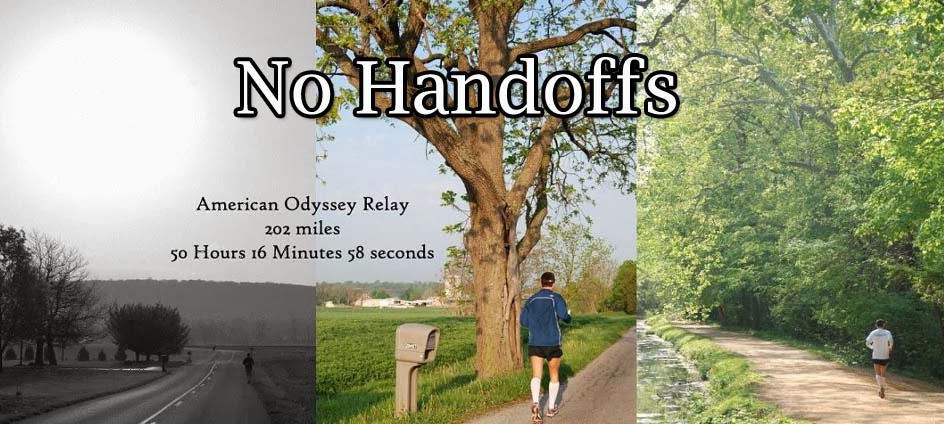
Dane Rauschenberg is already known for running 52 marathons in 52 weekends, but when he announced in 2010 that he would be taking on a solo running of the American Odyssey Relay, it seemed out of the realm of possibility. Normally reserved for teams of 6-12 runners, the 202-mile relay race can take groups of well-rested people up to 36 hours to complete.

Well, Dane not only nailed the task of running from Gettysburg, Pa., to Washington, D.C., but he did it in the astonishing time of a little more than 50 hours. And now he’s taking to Kickstarter to tell the story through a documentary that will take viewers on a roller coaster ride of emotion, physicality and humor.

I sat down with the extreme runner, author and motivational speaker to pick his brain about tackling that monstrous number of miles, as well as how he’s hoping his film will show others that they, too, can chase their own seemingly-impossible dreams.

KineticFix: You started running in law school to keep your weight in check. How’d you make the leap to extreme events/distances?

Dane Rauschenberg: It happened very suddenly. I went from barely running at all to all of a sudden planning on running 52 marathons in a year. Back in 2006 there was hardly anyone doing multiple marathons at max effort in one year, so it seemed outlandish for me to every try it. But to PR in my 42nd week of the year showed I wasn’t just out there to collect medals.

KF: Where’d you get the idea to do the American Odyssey Relay solo?

DR: It was a confluence of multiple events. I worked for a running company that put on races similar to the AOR, and that planted the seed. Then I wanted to see what was possible. I had no real idea how long it would take or how to go about doing it, but I figured out a way.

Source: SeeDaneRun

Source: SeeDaneRun

KF: Do you have a favorite moment or memory from the experience?

DR: It sounds cliché, but the finish was my favorite memory. Or more accurately, the last few hours. I was running completely alone (my crew had to return vehicles and get to the finish), and it gave me time to reflect on what I was going to achieve.

KF: What’s been tougher during your extreme running feats – the physical strain or the logistics?

DR: Logistics, without a doubt. When I ran 350 miles in one week up the Oregon Coast, it was the running that was the easy (well, easier) part. Stopping virtually every day to speak to people at events or children at schools took a great deal of time, energy and simple coordination of schedules. Throwing such a rigid timeline into running 50 miles a day made it harder than actually running the distance each day.

KF: How do you find the pure motivation to keep moving for 50+ hours?

DR: I don’t see what I do as all that special. I am not being falsely modest; I just think that if I can do something, other people probably can, too. It is just plain and simple: If you set out to do something, barring unforeseen events that can actually harm you long-term, there is no reason not to keep moving forward.

KF: What are your favorite foods to fuel up on during long runs?

DR: I have learned a great deal about fueling over time. I used to swear by pasta and “carb-loading;” now I know that carbs are important, but so are proteins, fats, etc. In fact, in my longest runs I have learned that eating real meals is very important to me. By that I mean, while I supplement with PowerBar products, I know that I need to get real food into my body. I have found that, for me, eating lean beef products has allowed me to get moving again when I thought my runs were over — even in 100-milers where I stop and eat a cheeseburger in the middle of the event.

Source: SeeDaneRun

Source: SeeDaneRun

KF: Do you have any recovery tips for being able to bounce back quickly after long runs?

DR: Massage, rest and eating right. There are no tricks. People know what to do, but they don’t want to do it. Plus, apparently, pick the right parents!

KF: How do you prevent and/or manage injury along the way?

DR: We can usually tell what happens when an injury occurs. But when injuries do not occur, it is hard to pinpoint what exactly made them not happen. I bristle at all the running books where experts tell you the “proper” way to eat, train, run, etc. Everyone is so different and how people feel able to give a generalized message in such a specific way is beyond me.

KF: What’s your weekly mileage look like when you’re not training for an extreme endurance event?

DR: I wish I could give a straight answer here. I know I have never once topped 3,000 miles in a year. I have done all of my long-distance running on a diet of high-quality, low(ish) mileage. So, if I had to ballpark it, I would say 50 miles a week is a solid average for me.

Source: SeeDaneRun

Source: SeeDaneRun

KF: What do you hope people will take from the film?

DR: I hope people realize that they can do amazing things. I never say, “You can do whatever you want to do if you just put your mind to it,” as that sets up those who fall short as not “wanting” it enough.  However, we can only find out what we can do by attempting to go beyond what we think is impossible.

KF: Got any tips for people who would like to do a half or a full marathon but don’t think they can handle it?

DR: Absolutely! Look at me. I was a 215-pound rugby player who boxed amateur. My first marathon was a 4:12. I have now run in the 2:40s for a full, and know I can get faster. I hated running. I thought it was punishment, and I wasn’t an out-of-shape guy who hated running; I was an athlete. I have failed constantly. I will continue to fail. But I will get back up and try again. So can anyone.

KF: Finally, what’s up next/what’s left on your ‘extreme bucket list?’

DR: I despise the term “bucket list.” If money were no object, there are few things in this world I wouldn’t want to do. I want to learn how to play an instrument. I would enjoy learning another language (or two) fluently. I hope to learn how to tango someday. That is how I wish to experience life.

With regards to running itself, I have learned that one must know to say “no” to the “what’s next” nagging question. We live in a world of instant gratification and instant accolades. Everyone is “awesome” or “wonderful,” and Facebook and social media allow us to have life envy of others whose lives are probably no better than our own.

We have to set our own agenda. After the past few years of sacrificing my own personal running goals with regards to getting faster in order to try and make a small difference with the little bit of publicity I have garnered, I would simply like to set a new marathon PR. I know I can go faster, and it would be wonderful to show — at age 37 — that I can find some speed again.

So in other words, everything is left on my list. I just hope I don’t run out of time.

Want to help Dean make his film a reality? Click here to make a pledge via Kickstarter! 

Source: SeeDaneRun

Source: SeeDaneRun

Holiday gift guide for athletes on the run

Source: AP/Standard Times, Peter Pereia

Source: AP/Standard Times, Peter Pereia

We’re three weeks out from Christmas, so there’s still some time to pick that perfect gift for the runner in your life. From cozy clothing and tools for recovery to techie gadgets and accessories for making any run more fun, these are my favorite picks for making any athlete merrier this season.

To keep ’em warm…

Moving Comfort Sprint Insulated Vest ($110)

On those in-between days when wearing a full jacket for your workout feels like overkill, the Sprint vest keeps your core warm and allows for unrestricted movement. Plus, the streamlined design means it’s a versatile layering piece for “running” casual errands around town, as well.

MCvest

Oiselle Lux Layer ($76)

The thought of heading out for a winter run is much more bearable when you have a velvety-soft base layer to help shield skin from the searing cold. This one is moisture-wicking and has a fitted shape that’s not too tight, along with thumb holes to keep sleeves from riding up.

Source: Oiselle

Source: Oiselle

Moving Comfort Endurance Tight ($60)

I’m digging all the crazy prints on this season’s running gear, and the Endurance tight is one of my favorites. Not only is the pattern funky (without being too over-the-top), but it’s also got great reflective details and a perfect, muffin-top-free fit thanks to a wide, flat waistband.

MCtights

To keep ’em healthy…

The GRID Mini ($25)

I credit the full-size GRID with helping me get through marathon training injury-free this fall, and the Mini makes a nice travel companion for runners who double as road warriors. Small enough to squeeze in a suitcase, it still provides targeted massage for circulation and flexibility.

Source: TPtherapy

Source: TPtherapy

Zensah Compression Ankle/Calf Sleeves ($50)

Recovery is one of the most important parts of the training process, and Zensah just raised the bar for compression with its new fusion technology. Soothe legs and feet with graduated pressure that improves circulation for muscle recovery, shin splint relief and targeted support.

Source: Zensah

Source: Zensah

The Stick Body Stick ($43)

Compact, lightweight and easy to use, The Stick is used by Olympic athletes, sports professionals, and weekend warriors to roll out muscle knots and treat trigger points. When used after tough workouts, it can help disperse lactic acid, accelerate muscle recovery and improve flexibility.

Source: The Stick

Source: The Stick

To keep ’em happy…

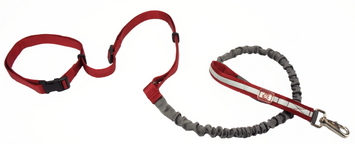
OllyDog Mt. Tam Leash ($29)

Although I don’t run with my dogs, I see many owners who do — and I’m sure they’d appreciate this handy leash for a more comfortable, hands-free run. It’s fully-adjustable, shock-absorbing and includes a reflective traffic handle for control and visibility.

Source: OllyDog

Source: OllyDog

HeavyMedalz SportHooks Race Medal Holder ($35-65)

You worked hard to earn all that race bling, so get it out of that dusty drawer and display it proudly with this wall-mounted medal hanger. Choose from one of the existing designs, or contact the company to have one specially customized.

Source: HeavyMedalz

Source: HeavyMedalz

Moving Comfort Hit the Road Carry-All ($125)

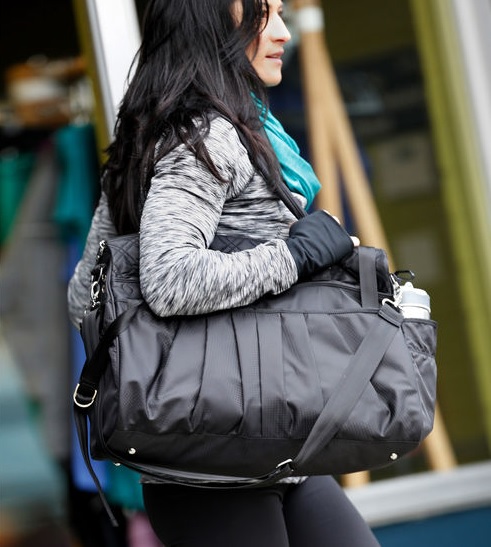
Stylish and smartly-designed, this carry-all offers ample storage — minus the look of a bulky gym bag. Use the six external pockets to store small items, while the interior pouch is large enough to hold all the essentials (and will even accommodate a full-sized yoga mat!).

Source: Moving Comfort

Source: Moving Comfort

To keep ’em connected…

JayBird BlueBuds X Bluetooth Headphones ($170)

Rid yourself of one major running pet peeve (cords that tangle and can get caught) with the smallest Bluetooth headphones available. They pack an incredible eight hours of play time, are sweat-proof, skip-free and offer two options for a comfortable, secure fit.

Source: JayBird

Source: JayBird

Nike+ Sportwatch GPS ($150)

My never-leave-home-without-it run companion, this water-resistant watch has all the bells and whistles, including GPS, pace tracker, timer, calorie counter, pedometer and lap/interval marker. Like a personal running coach on your wrist, it keeps runners motivated and on track with features like run reminders and notifications of personal records.

NikeSWgps

GoPro HERO3 White Edition ($200)

Document and share your favorite run experiences with the HERO3, which is 20 percent smaller and 15 percent lighter than previous models and is compatible with all GoPro mounts and accessories — making it the most mountable, wearable and versatile White Edition GoPro ever.

Source: GoPro

Source: GoPro

What’s on your wish list this year?

Race Recap: Turkey Trail Trot XI

TTT5

Happy holidays, and I hope you had a terrific Thanksgiving filled with family, friends and all kinds of delicious food!

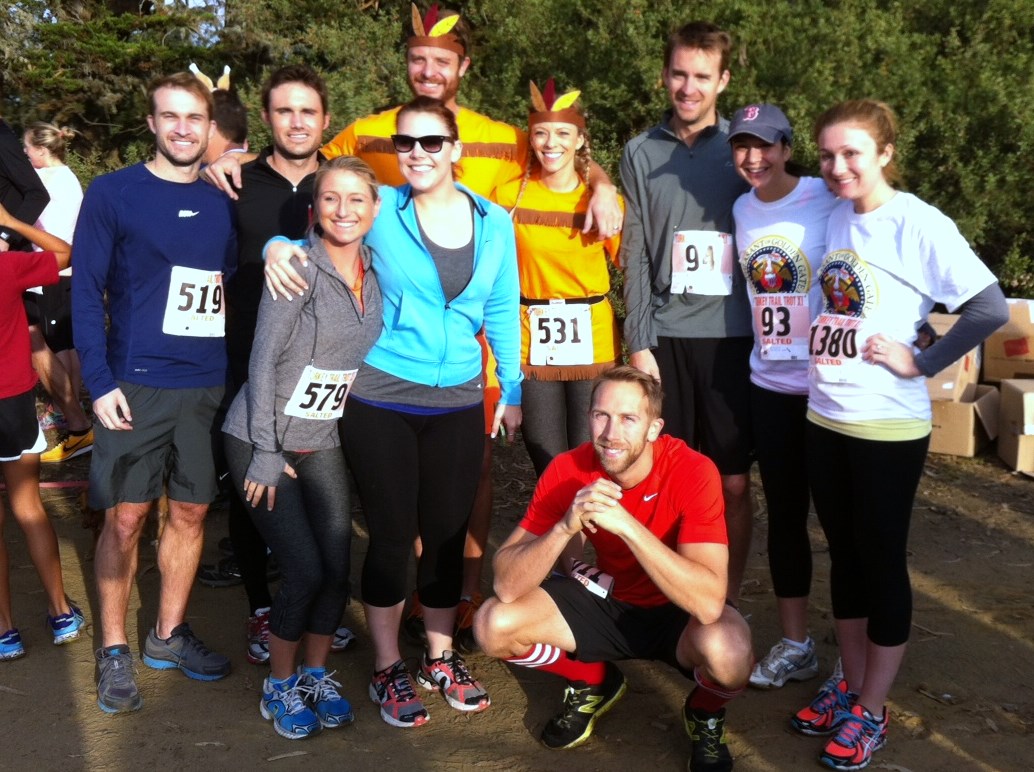
We enjoyed all of the above, but only after burning off a few pre-meal calories in the five-mile Turkey Trail Trot in San Francisco.

TTT2

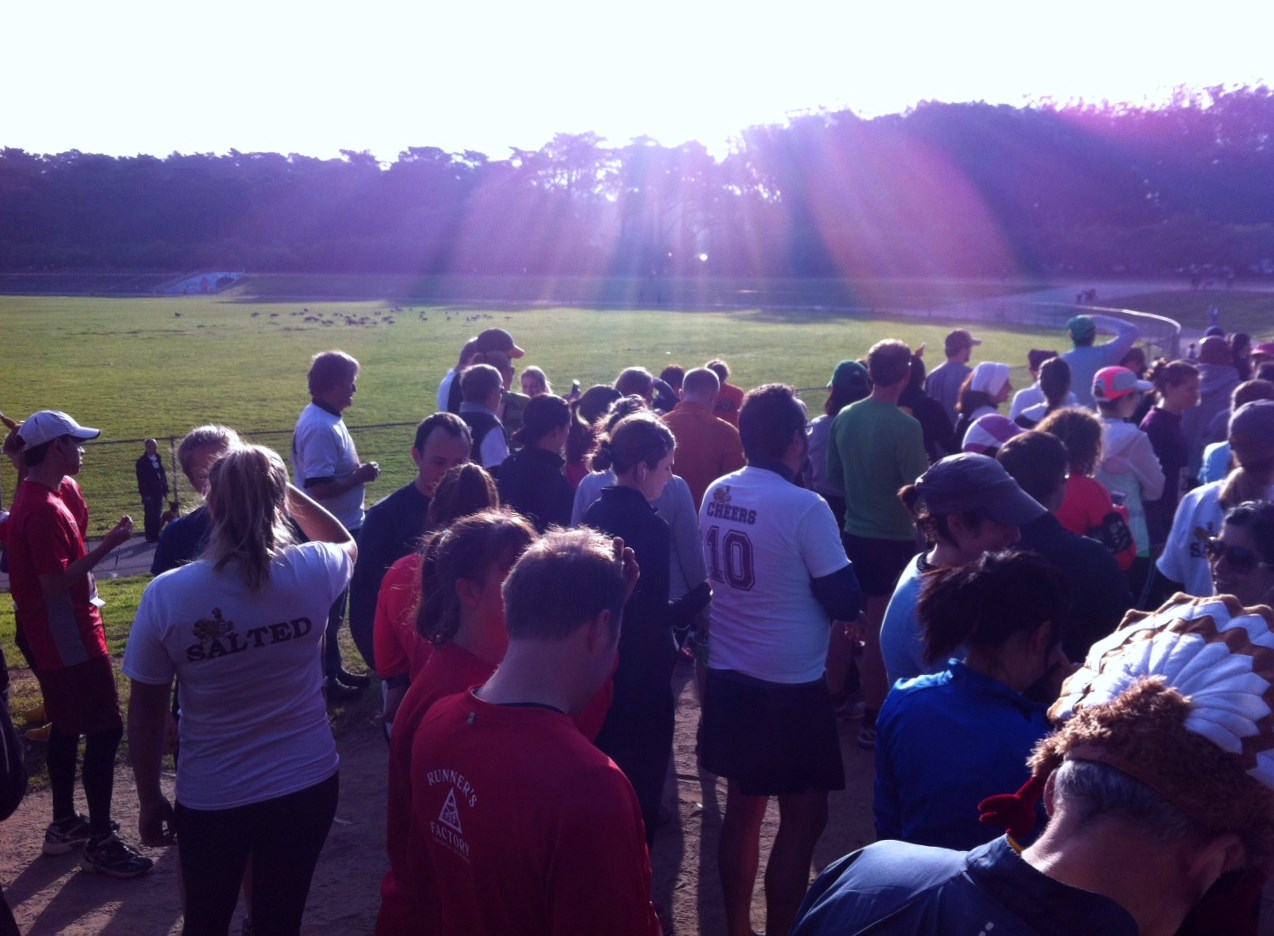
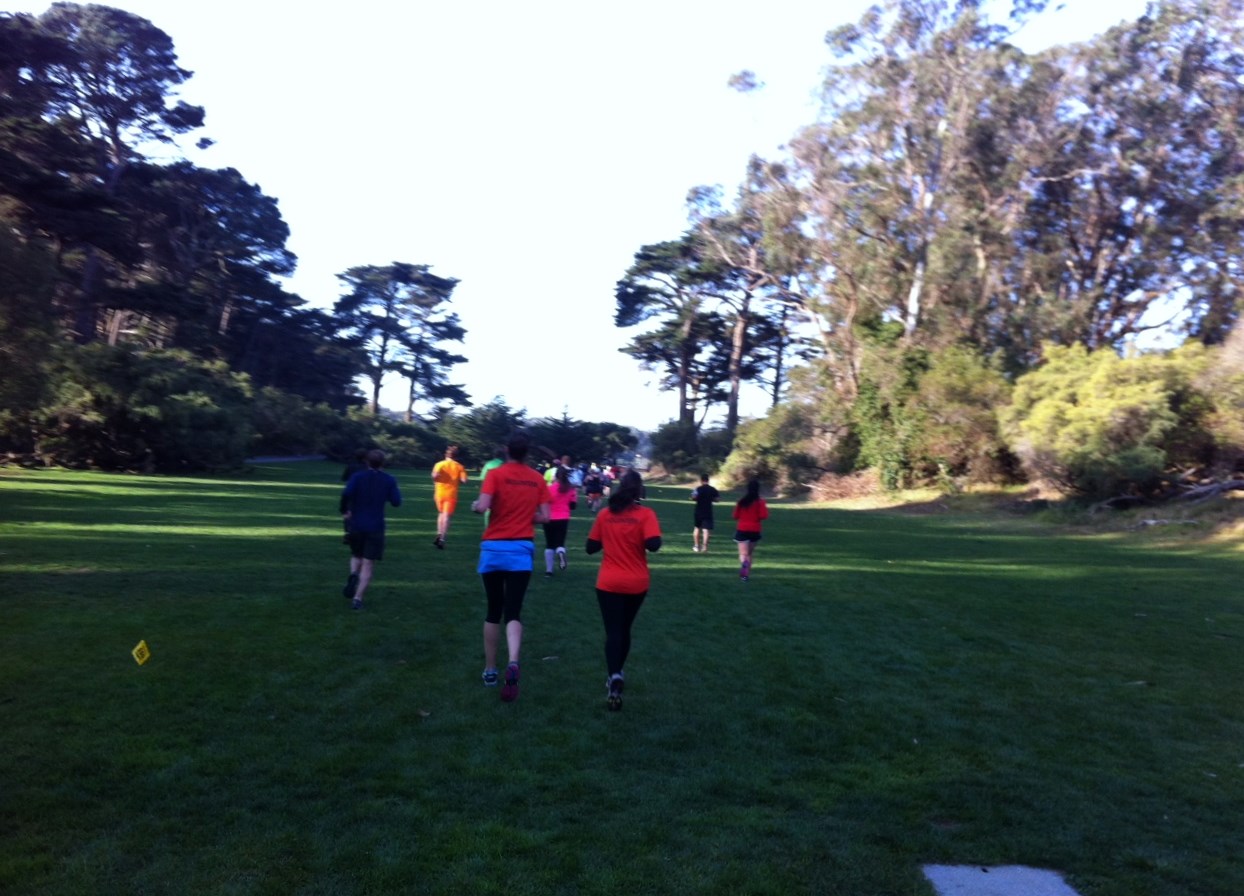
The weather was gorgeous (around 70), and they capped the field at 1,400, so it wasn’t too crowded as we gathered at the Polo Fields in Golden Gate Park for the start.

TTT1

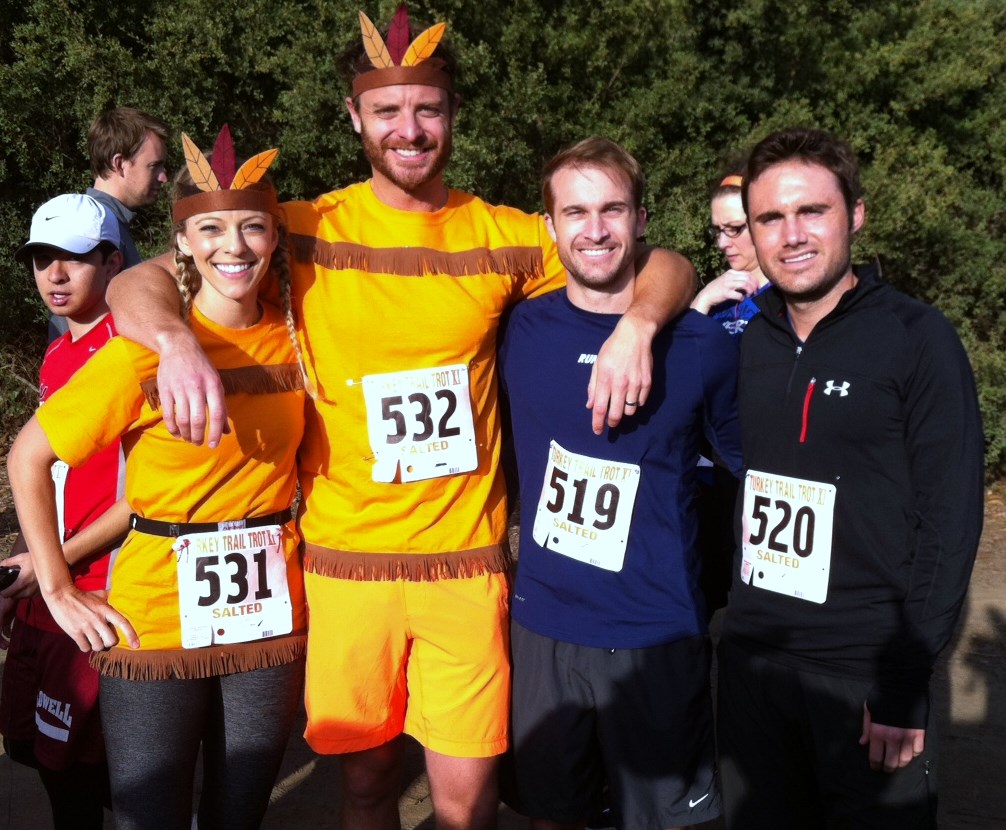
Our friend, Matt, had invited Hubby and me to join his brother and extended family in their annual Thanksgiving tradition, so a fun run seemed like the perfect way to cap off a successful running season (not to mention an excuse to dress up in costumes).

TTT3

I was coming off last weekend’s half marathon, plus my legs were pretty shot from working out with the November Project crew (more on that in another post) and taking a riding lesson the day before, so my plan was to jog it super easy, sans music, and just relax and enjoy the ride.

TTT4

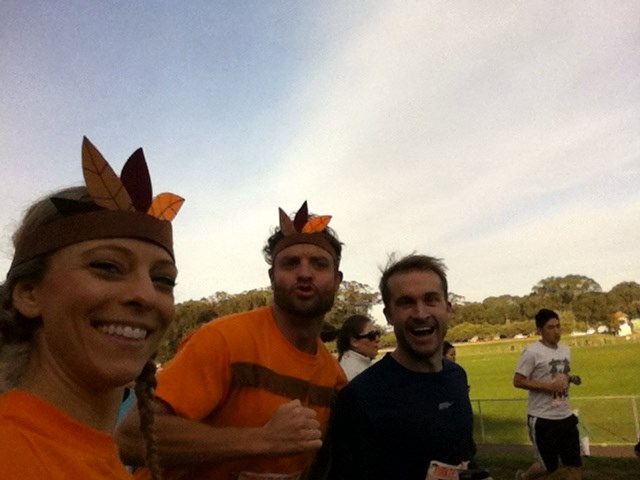
Of course, that included some super-awkward mid-run selfies along the way, but we had a blast and crossed the finish line in 47:24, averaging 9:29 minutes per mile. Not a PR, by any means, but the point was to get out, stretch the legs and prep our stomachs for the feast that evening.

TTT6

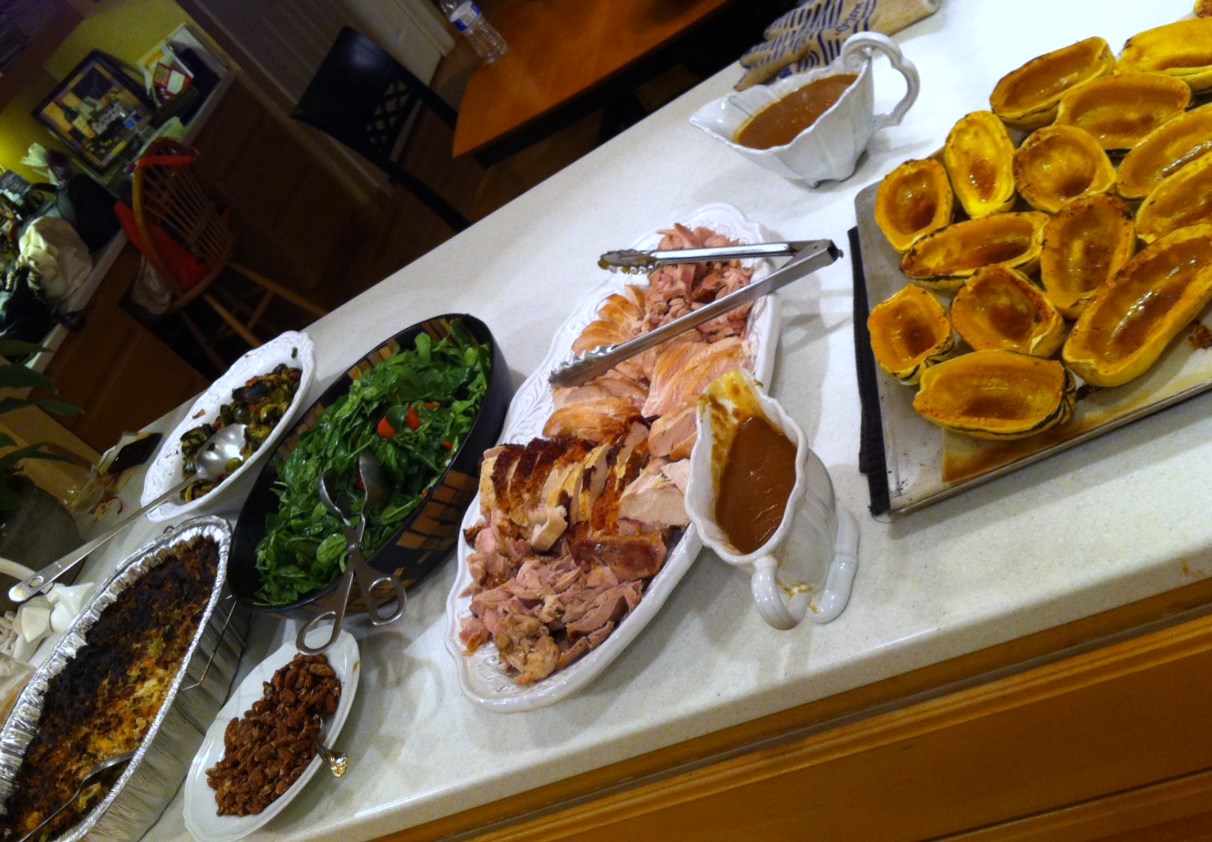
On the menu? Turkey two ways, squash, stuffing, salad, Brussels sprouts, cranberry sauce, gravy and, of course, a selection of pies (apple, pecan, peanut butter, pumpkin chiffon), plus a pear tart thrown in for good measure. Oh, and wine…lots and lots of wine.

It felt good to indulge, even if it took until mid-day the next day to fully digest everything and finally feel hungry again!

How much damage did you do on the big day?

Race Recap: Berkeley Half Marathon

Source: Berkeley Half Marathon

Source: Berkeley Half Marathon

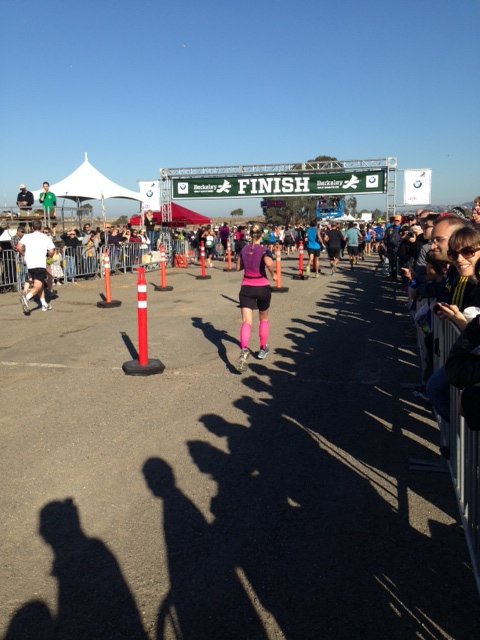
Usually I try to go into races with a solid game plan: I’ve got a decent idea as to what my level of fitness and current comfortable pace will allow, and from there comes the “awesome,” “good” and “just-finish” time targets.

But as I lined up this morning at the inaugural Berkeley Half Marathon, I was still vacillating between trying for a PR and just running it for fun. Same course, same distance, two very different mindsets.

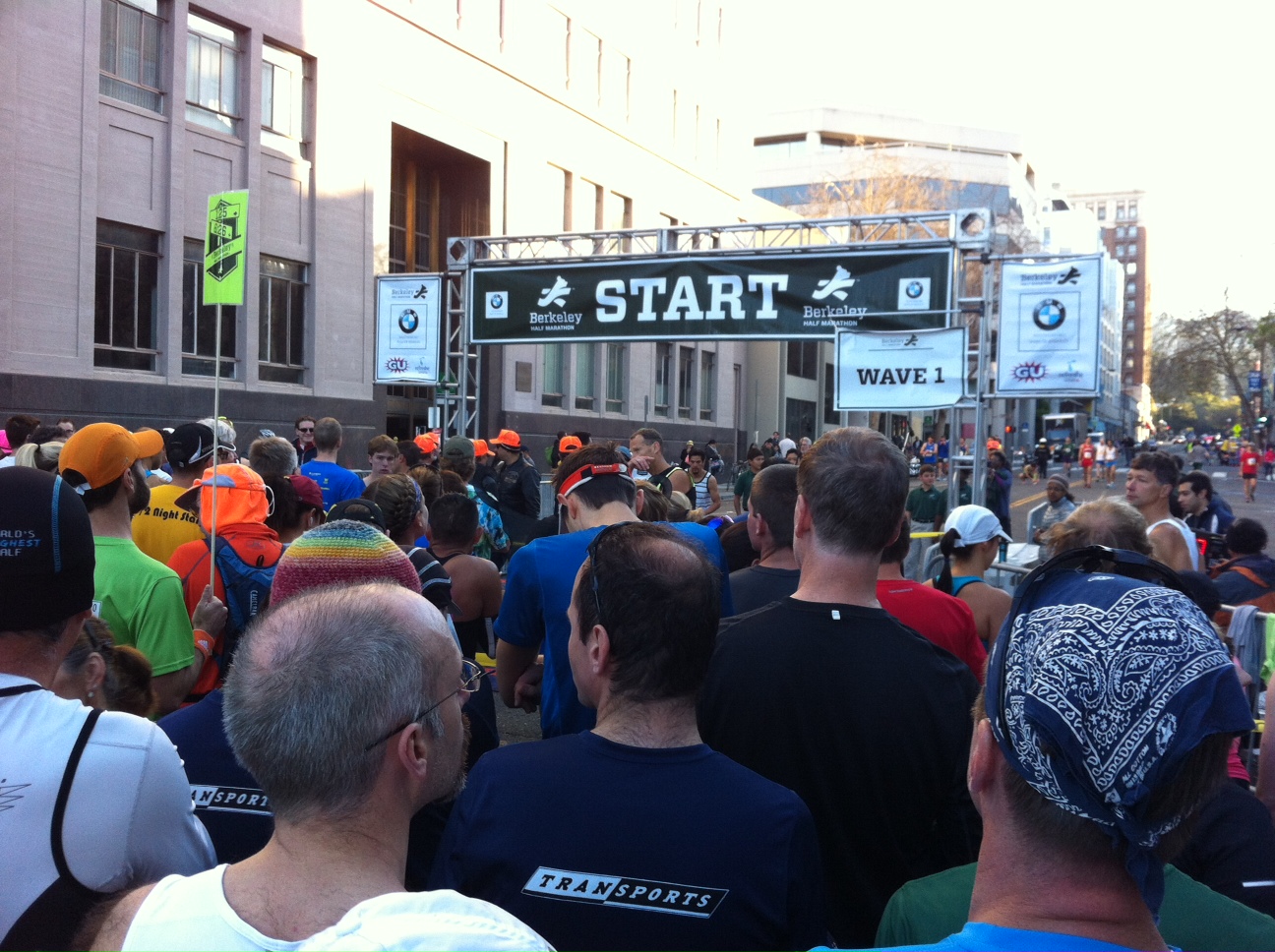
Lining up for the start

Lining up for the start

Being a little more than a month out from the Nike Women’s Marathon, my inclination was to try to take advantage of some of the accumulated endurance, but I’ve been dealing with a sore tendon in my foot, as well as some other minor aches and pains…probably from not taking my own advice and running too hard too soon during marathon recovery (I know, tsk tsk).

Ultimately, I decided to play it by ear. The game plan was that there was no game plan, and I’d simply “run by feel.” Coach Jenny Hadfield is a huge proponent of this (read her article on it here). Get out of your head, listen to your body, and you just may be pleasantly surprised, she says.

Waiting for the race to start

Waiting for the race to start

Turns out, it works. Granted a net downhill course, good weather and a number of other factors help, as well…but I PR’d with an unofficial time of 1:47:07 despite not having a pace band, aiming for specific splits or knowing where I was time-wise at each mile.

Here’s how it played out: I broke the race into four 5K’s and tackled each one separately. Of course, if I wasn’t feeling it, I’d have moseyed along, and this post would have been filled with a lot more pictures! But since I was able to get into a groove, the first 5K was warming up and settling into a comfortable pace. The second, third and fourth 5Ks were then about trying to maintain an even pace before giving it whatever was left in the tank for the last mile.

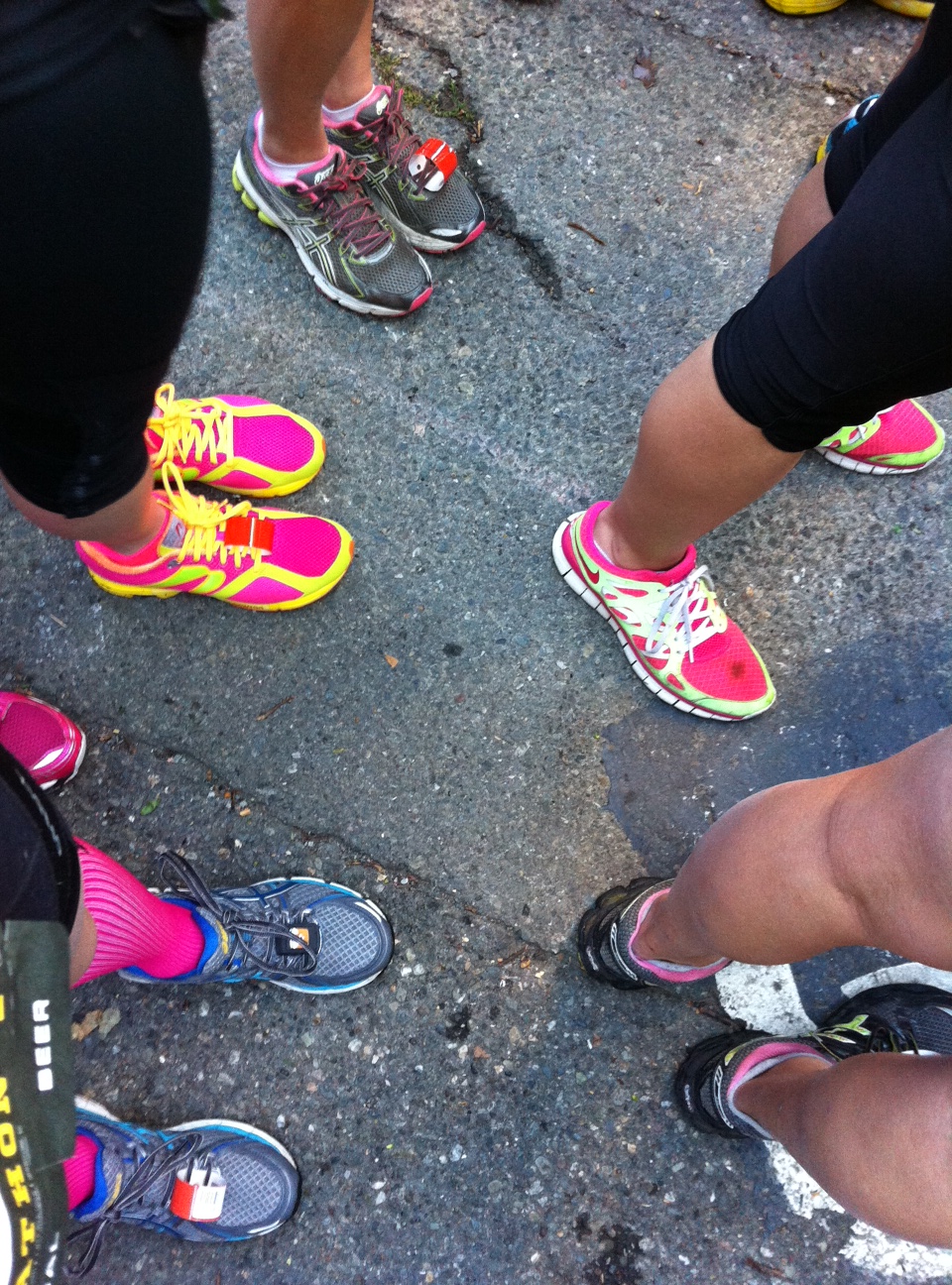
Couldn't resist snapping a shot of all the colorful shoes!

Couldn’t resist snapping a shot of all the colorful shoes!

Out of the gate, I came out fast, but there was a big downhill slope during the first few miles that I wanted to take advantage of. Once we hit the Berkeley Marina, the course was pretty flat, aside from some small hills and sections of rough road and gravel, so I just focused on keeping a strong stride.

Everything was smooth until mile 12 when I started getting super nauseous (Note to self: I think I’ve got to switch to gels instead of chews for distances of 13.1 and under), so it was a fight between trying to push hard and trying to keep my breakfast in my stomach. Throw in a monster hill at mile 12.5, which I briefly considered walking, and it was a tough final stretch, but I’m super happy with the results (and motivated for the next goal – 1:45!).

Home stretch!

Photo courtesy of official KineticFix race-day photographer, Ben 🙂

And since it was the inaugural race, I’ve got some feedback  and constructive criticism for organizers:

Pros: Nice long-sleeve technical tee, well-organized from start to finish, accessible start/finish with ample parking, lots of port-o-potties at the start, friendly feel, flat and fast (net downhill) course, multiple disciplines to choose from.

Cons: Small expo (albeit I went to the early pick-up at Sports Basement, but there wasn’t much there), I didn’t see a marker at Mile 1, no time clocks at mile markers, rough patches and gravel stretches along parts of the course, crowded last mile where all distances converged and ran around the Golden Gate Fields parking lot = clusterfest, ginormous hill at mile 12.5, point-to-point course (versus start/finish at same location).

image (3)

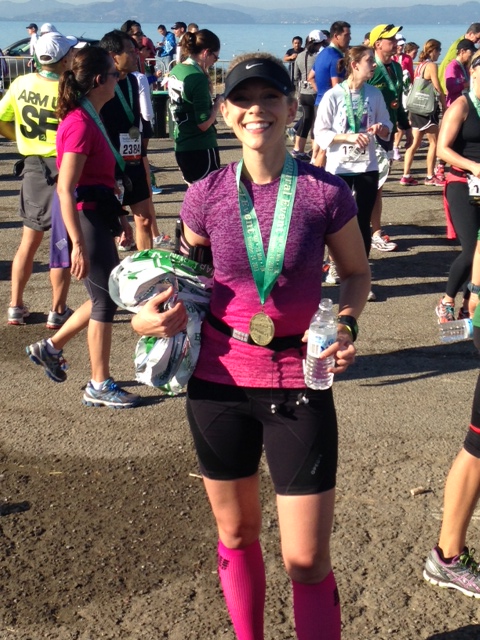
DONE! With a shiny new medal and a shiny new PR, to boot

Overall, though, it was an excellent race, and I’ll definitely be back…although maybe next time I’ll have a more specific goal in mind now that I have a handle on the course and the flow of the race.

Huge congrats to all my Bay Area blogging friends who ran today, too. We were out in full force!

And one more note – I’m thrilled to be featured in the “Runner Spotlight” on RoadRunnerGirl today; check out the post here to read my Q&A, and thanks to Mindy for the opportunity!

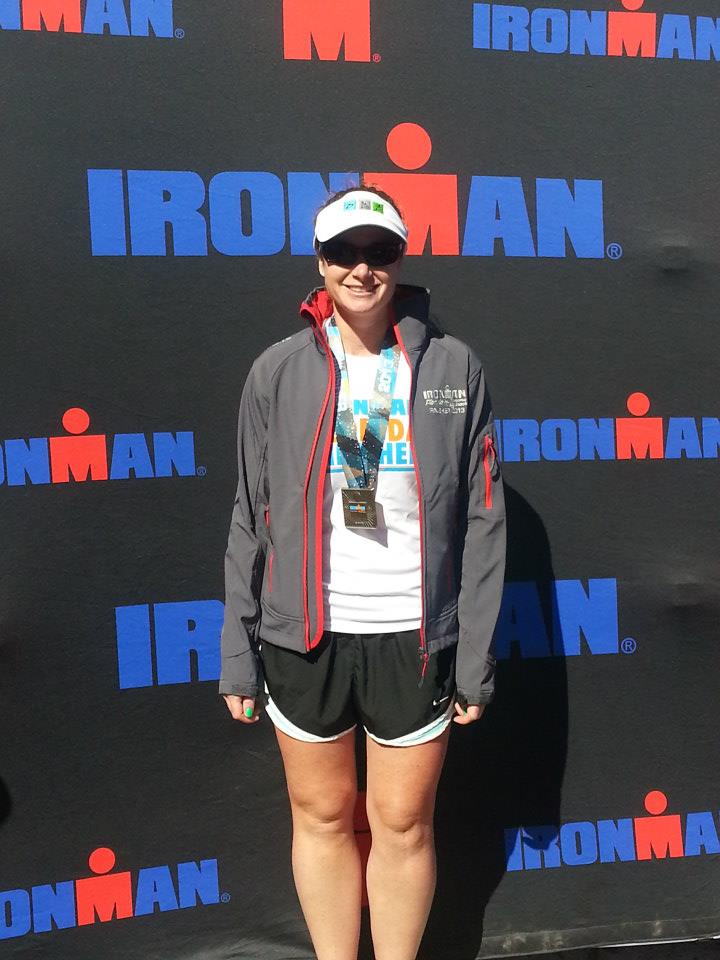
Fit Fix: Meghan Manion on becoming an Ironman triathlete

MM_Ironman6

Sometimes social media can feel invasive and impersonal, but then there are moments where you really appreciate its power to connect us with new friends, keep us in touch with old ones and make the world feel just a little bit smaller.

Case in point: When I saw triathlon training photos start popping up in my Facebook feed from Meghan Manion, sister of my best friend growing up (shout out to Katie) and daughter of my grade school Spanish teacher (hola, Senora Manion!).

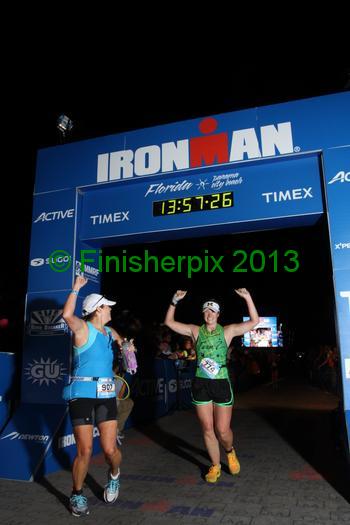
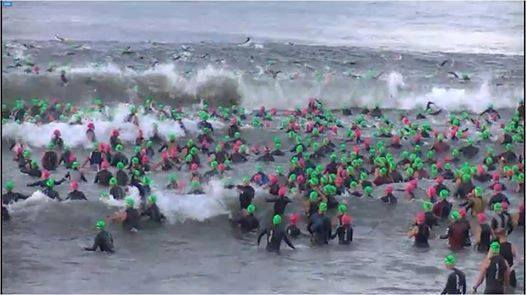
Next thing I knew, she was toeing the start line at the Florida Ironman (that’s a 2.4-mile swim, 112-mile bike and 26.2 mile run, FYI) and I was virtually cheering her on, along with hundreds of her other friends around the country, on race day earlier this month.

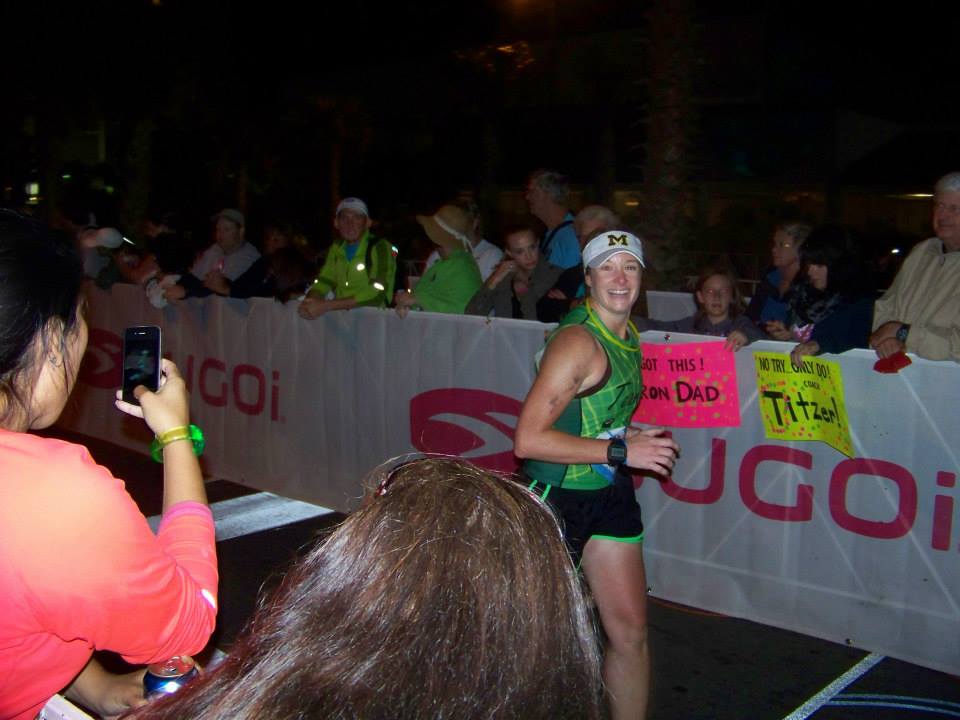
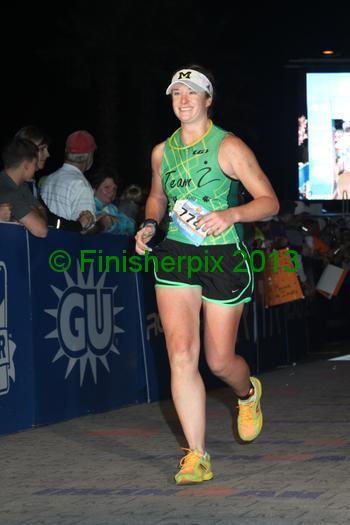
While she claims her story is about what your average person can do with with proper training and coaching, I tend to think she’s anything but average considering the dedication, courage and sheer tenacity needed for success in this sport. Manion crossed the finish line in an impressive 13:57:29, and I caught up with her after the race to get her take on the day, as well as her training leading up to it.

KineticFix: Meghan Manion, you are in Ironman. Congratulations! Can you even put that feeling into words now that you’ve completed the race?

Meghan Manion: I can finally wrap my head around it, but it took a few days. It was a really surreal thing in the days immediately after the race. I had so much fun reliving the day with my friends and family, and that has helped me form some great memories of the day. I feel so happy that my day went as planned, and when I think back to the experience of crossing that finish line, it brings tears to my eyes every time. I really think it was the most incredible day of my life so far.

KF: What’s the first thing you did when you crossed the finish line?

MM_Ironman3MM: When I crossed the finish line, a volunteer caught me immediately and congratulated me. I started crying the happiest tears of joy, and she asked if everything was ok. I told her, that it was amazing, and she hugged me and celebrated with me. The next thing I remember is looking to the left and seeing my boyfriend Nate with identical crocodile tears in his eyes. Next came my mom, pushing Nate out of her way, and she was crying, too. It was such a fantastic moment. My mom handed me the biggest can of bud light that I have ever seen. I had so many friends and family with me there at that moment, and I felt like I was on top of the world.

KF: What’s your favorite memory from race day? 

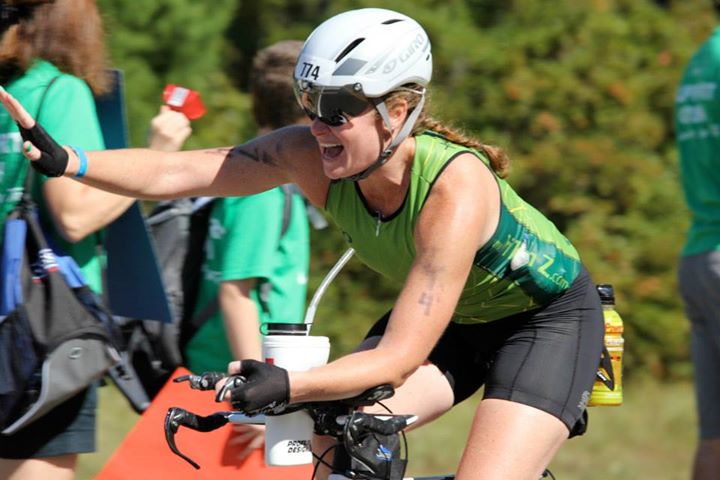
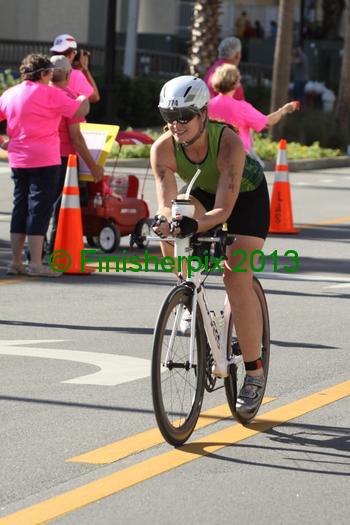
MM: My favorite memory of the race happened on the bike course at mile 60. I was coming up to a cheer station that my triathlon training team, Team Z, had set up. I noticed a lot of familiar faces along the road, and they were all lined up jumping and screaming. As I rode past, every single one of them mooned me! It was hilarious, and I laughed about it for hours afterwards. They had me distracted and amused for the rest of the race with that one!

KF: What was the toughest moment, and how did you power through it? 

MM_Ironman4MM: The toughest moment, for me, was waiting for the race to start. I fear the swim more than anything in triathlon. I’ve spent a few years learning how to swim, but I still have a long way to go. I’m not the most confident open water swimmer either, and IMFL is an ocean swim. In the days before the race, Nate swam with me each day, and we battled some pretty huge surf. The practice was great for me, and definitely helped me on race day. The funniest part about all of that pre-race nervousness is that I ended up having the swim of my life. I remember stopping at one point and realizing that I was having FUN! That is unheard of for me; I always struggle through swims. I finished the first loop smiling, eager to get back in and do it again. I never would have predicted that, and it set me up for a great day. The lesson here is that you will always doubt your training, but it is important to trust your coaches and trust in the work you have put in leading up to race day.

KF: What do you think was the key factor in your success?

MM: The key factor in my success at IMFL was joining a triathlon training team in the Washington DC area, called Team Z. Besides having amazing coaches, training plans and workouts, Team Z provides a social aspect that cannot be matched. It is so much easier to get up at 4am to go on a seven-hour training ride when you know that 100+ of your friends will be waiting for you, they will ride with you all day, and then your coach will welcome you to the finish with a beer and a burger. We had 40 people compete in IMFL, and hundreds more come down just to cheer us on. It was a race day experience that I feel very lucky to have had. I really recommend looking for local triathlon clubs or training programs when taking on the Ironman. It can make all of the difference.

KF: Anything that surprised you or that you weren’t expecting?

MM_Ironman8MM: Yes! The wonders of hot chicken broth! I had heard from previous Ironmen that there is nothing quite like the broth that Ironman serves on the run after the sun goes down. I did not know the power of this stuff until I decided to give it a try. The sun sets early at IMFL, and I did half of the run in the dark. I was chilly and feeling weak. That salty treat perked me right up at the perfect moment.

KF: Is there anything you’d do differently next time?

MM: I really don’t think I would change a thing! I had such an unbelievable day, and I really have no regrets at all. Well…I guess I could follow the rules better, to be completely honest! I received a drafting penalty early on in the race. It made me laugh more than anything. I had to stop at the next Penalty Tent and serve a four-minute penalty for drafting off of the person in front of me. I guess I’d try to not be a “cheater” next time around!

KF: Your background is mostly in running. So how’d you get into triathlon?
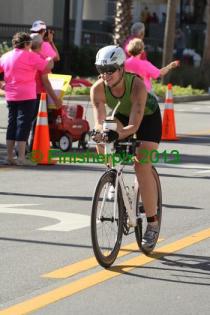
MM_Ironman5MM: I started running marathons in 2006. I never really loved running like some people do, but it was an easy way to burn the calories. Once I was bored with marathons, I bought my first road bike for some cross training. Next thing I knew, I was signed up with Team in Training for my first Olympic Distance Tri in 2010. The rest is history! I really enjoyed the challenge of learning a new skill (swimming) as an adult. I also enjoy the variety of the three events. Plus, riding your bike is just plain fun!

KF: When did you join Team Z & how has that factored into your racing? 

MM: I joined Team Z in October of 2011. Just two years later, they led me to my first Ironman. That is incredible! I feel like I am an unlikely Ironman. I was never the most athletic person growing up. Team Z showed me what a normal person can do with the right training and coaching. It is truly incredible to learn what the human body is capable of with proper training. I have also formed countless friendships through  my team.

KF: Walk us through your decision to take on the Ironman distance. 

MM: I traveled to Panama City Beach in 2012 to watch a great friend from college compete in her first Ironman. Stacie Edington is one of my friends from the water-ski team at the University of Michigan. She was supposed to have her Ironman year in 2011, but fell off of her bike on a training ride that year. She postponed her race for a year while she recovered from a broken leg. I was really inspired by her determination and toughness. She powered through the rehab, and had a fantastic race at IMFL 2012. Watching her was amazing. She encouraged me to sign up, and along with some more pressure from one of my Team Z coaches, (Ryan Pettengill) I just suddenly found myself in the line to sign up. It was a decision that I considered for about 10 minutes before handing over my credit card. I’m thrilled that it happened like it did

KF: Any advice for people looking to get into triathlon?

MM_Ironman2MM: My coach Ed Zerkle has a famous line that I love: “You’ll never know unless you Tri.” That just says it all. Find yourself some good people to help you a long the way, and give it a go. You never know where you will end up after doing that first Sprint tri. You might just surprise yourself.

KF: Any advice for runners, in particular, who want to try it but who are afraid of open water and intimidated by the bike?

MM: Being afraid of open water and/or the bike are problems that every triathlete has faced. They are real fears! The fun comes in conquering them. With determination, you can learn to overcome those fears, and when it happens, you’ll never feel better. Be sure to celebrate along the way as you achieve even small goals. Give yourself some credit for the awesome things you can accomplish!

KF: You’re an accomplished endurance athlete with quite a few races under your belt; got any tips for training hard but keeping injury at bay?

MM: I believe in training just enough, and not over-training. I do just what my coach prescribes, never more (but…yes, sometimes a little less!!). When something flares up, you have to be willing to take a break while it heals. A few missed workouts will not ruin your race, but a chronic injury might. Seek professional help early, and do what you are told!!

KF: I’ve heard that there are two reactions upon completing an Ironman: A) “Never again!”, and B) “When’s the next one?” Which camp are you in & why?

MM_Ironman1MM: I haven’t decided yet! I loved my day so much, and I don’t know if it could ever be the same the second time around. I might be happy to take this experience, continue celebrating it, and be happy with shorter races going forward. I have a feeling that at some point the idea of trying and Ironman again with come up. I’ll have to figure that out then. I know that at a minimum, I will take the next year to let myself recover, and enjoy some shorter distance racing.

KF: What the next goal you’ve set your sights on?

MM: I’m going to Disney World! (For real!) My Ironman inspiration, Stacie, suggested trying the Goofy Challenge in January. We will run a half marathon on Saturday, followed by a full marathon on Sunday all at Disney World. We signed up for the races with a big group of friends, and I am looking forward to the craziness!

KF: Any final words of wisdom that you can pass along to other Ironman hopefuls?

MM_Ironman7MM: One more piece of advice for future Ironmen: We all focus on the physical training. It is so important! But remember that Ironman day is a mental race, too. I was lucky enough to do some pre-race mental prep sessions with accomplished Ironman, Kendra Goffredo. She helped me train my brain for race day, using a variety of strategies, such as visualization. I cannot say enough about the importance of paying attention to this part of the training in addition to your workouts.

Many thanks to Meghan for taking the time to share some wonderful triathlon tips and Ironman memories. And congratulations on your incredible race results; your story will no doubt inspire all of us to ‘tri’ something new!

Fave Fix: Opedix CORE-Tec Shorts

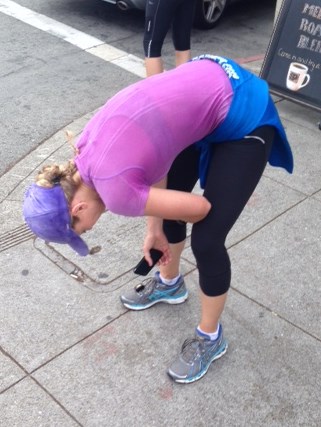
Runners are no strangers to the occasional aches and pains, but during my marathon training this fall I found myself struggling with nagging lower back pain on longer runs.

More often than not, I’d have to pull over mid-way through to stretch for some relief. Case in point: This was me about 14 miles into one of my weekend runs (thanks to Hubby for capturing this oh-so-flattering moment).

op11

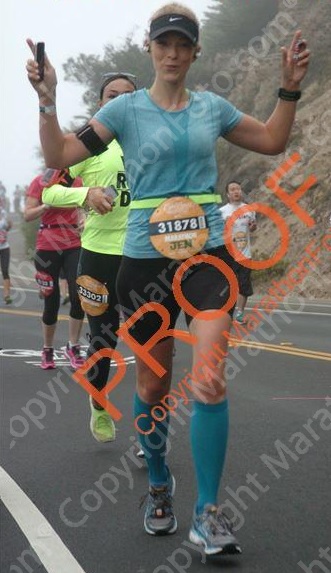
In comparison, here’s another shot of me about 11 miles into the marathon — with no back pain whatsoever.

So…what gives?

Source: MarathonFoto.com

Source: MarathonFoto.com

Well, in a word: Opedix.

Never heard of ’em? Me neither, until I started doing some research on support gear that would allow me to run longer, stronger.

I’m already a big fan of compression socks, and I’ve had success with CW-X tights, but Opedix technology is scientifically designed to aid the recovery of back, leg and knee injuries, which can improve performance for runners, as well as athletes across other disciplines.

The company makes what they call “Kinetic Health” gear to enhance performance, recovery and rehabilitation by improving joint alignment and promoting proper movement.

Bottom line: They make shorts that could possibly let me say “sayonara” to back pain, so I decided to put them to the ultimate test — marathon training.

op1

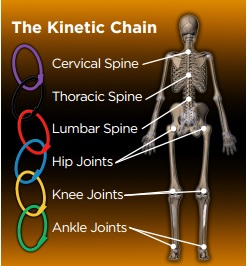
Here’s the lowdown on how they work: Think of the joints in your body as being connected structurally and functionally in a kinetic chain (meaning, it’s dynamic). Most of your joints have a three-dimensional range of motion, and the concurrent motion of these joints produces movement.

op12Since most of us are a little off-kilter in one way or another (due to imbalances, previous injury, etc.), athletic performance is reduced when your body can’t move optimally.

When this happens, your muscles fatigue more quickly and your body is exposed to unnecessary stress that causes the progressive destruction of your joints.

The result? A chain reaction that can range from annoying…to downright nasty.

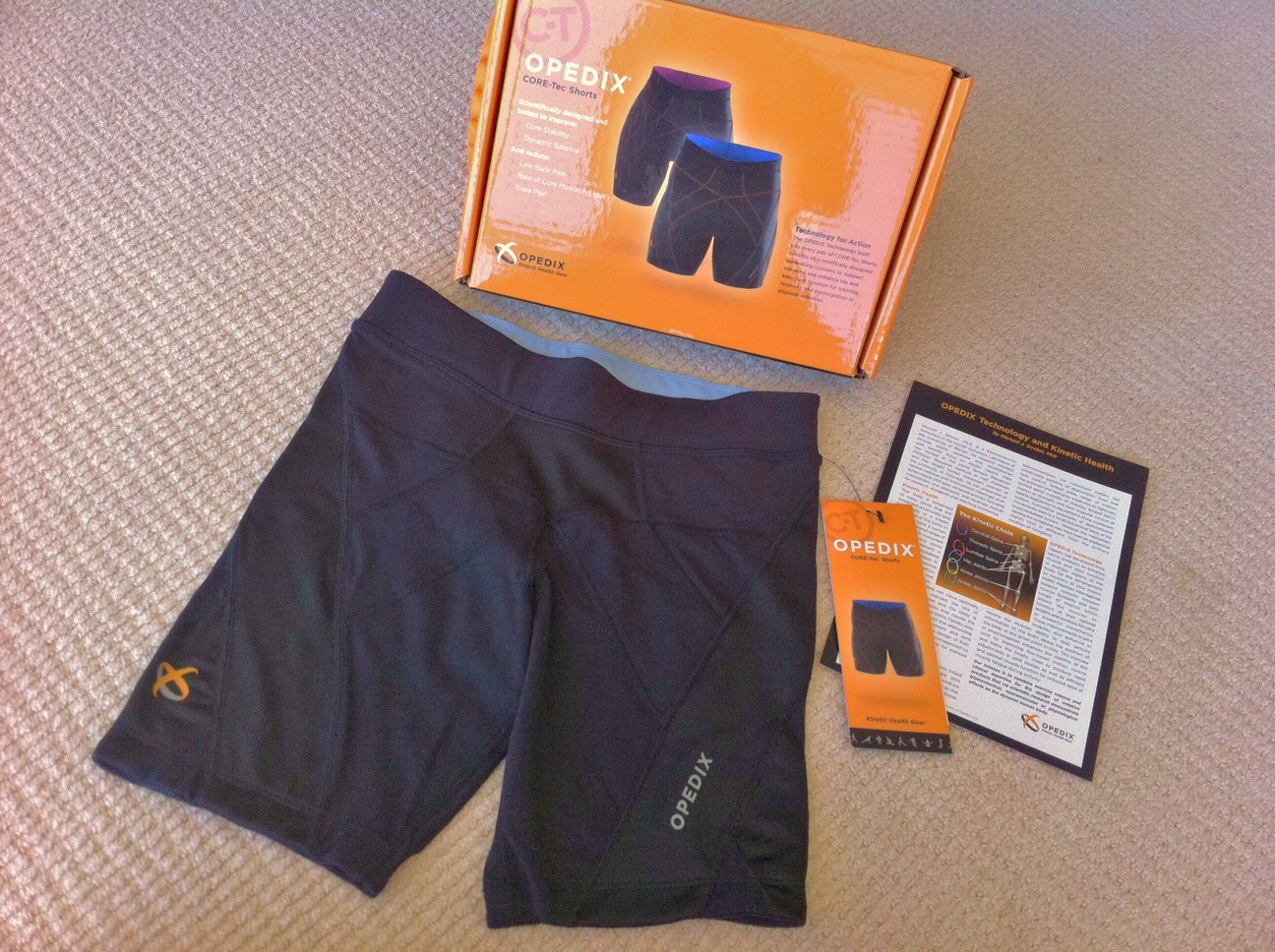
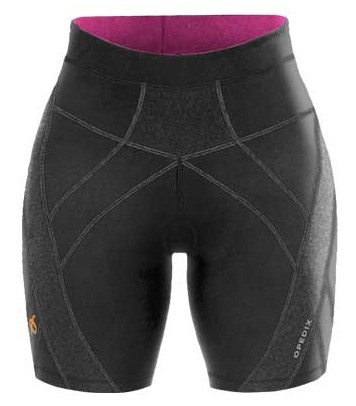
But Opedix’s CORE-Tec Shorts are designed to work like an extra layer of muscle and use a combination of fabric tensions to anatomically direct the body’s inside forces and reconnect the joints to harmoniously function in that kinetic chain.

Source: Opedix

Source: Opedix

We could all use a little extra support (that’s putting it mildly!), and Opedix claims to deliver just that — and in just the right spots.

But do they really work?

Yes; I tested them on several different types of training runs (speed, tempo and long) before using them in my actual race, and they performed beautifully every time.

Full disclosure — they are a bit snug and the waist sits high — but once you get used to the feel of this fit and realize that it’s in the name of function, you all but forget you’ve got ’em on.

The fabric is also breathable, moisture-wicking and anti-stink, which also comes in handy on those mega-long runs and vigorous workouts.

op7

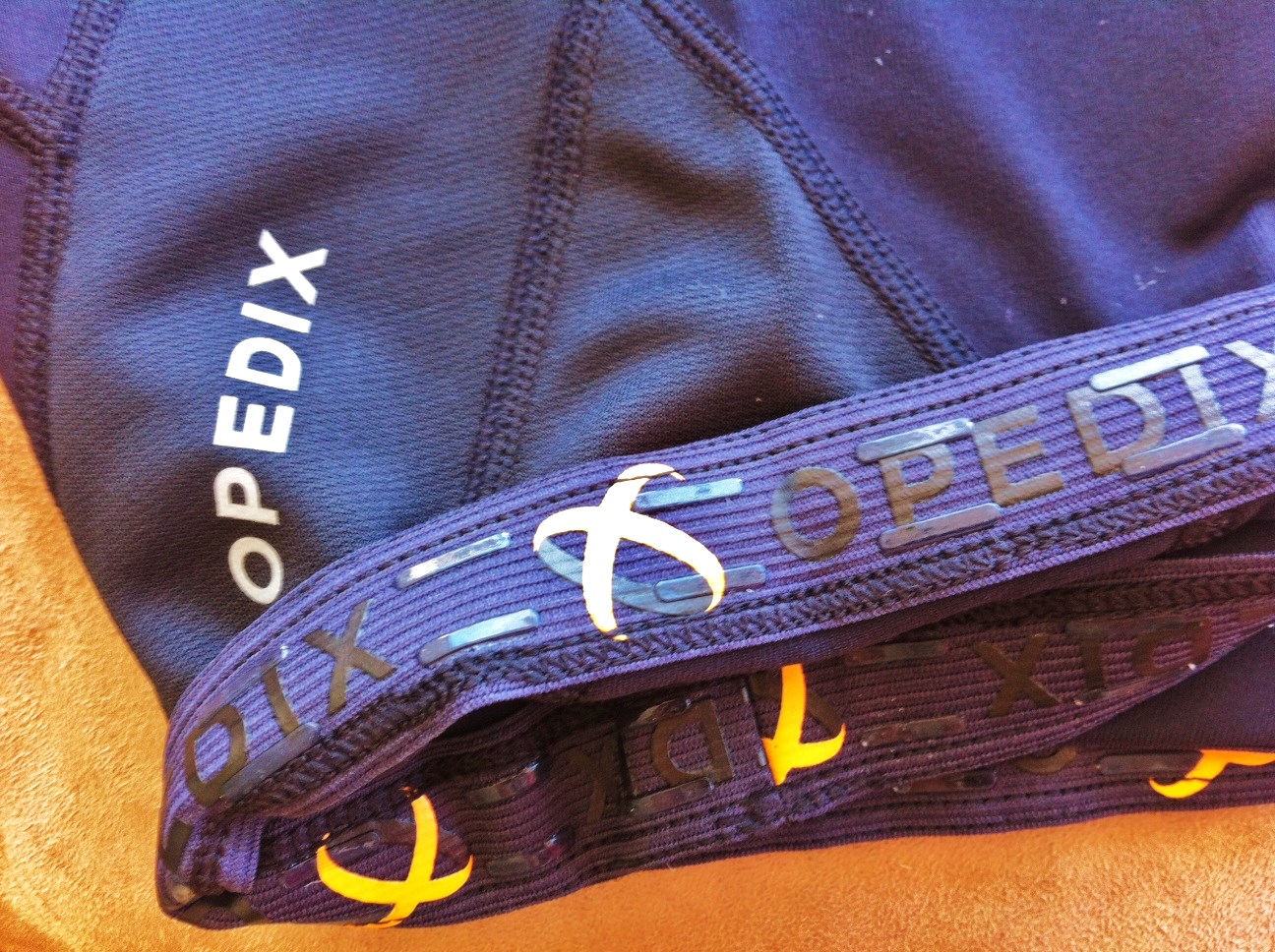
And they’re well-made, too. Not only is the design top-notch (there’s a strategic 29-panel construction with a combination of stretch and non-stretch fabrics), but Opedix also pays special attention to the small details, such as silicon elastic binding at the leg-openings to help keep the shorts properly anchored.

op3

Now, if you’re plagued with poor form or an existing injury, these shorts won’t rid you of either — let’s be realistic — but they can help delay the effects of fatigue, keep you better aligned and give you that extra boost to keep doing what you love with less bodily wear and tear.

Now that’s gear that’s gear that’s good for you for long runs…and in the long run.

op8

Thanks to the folks at Opedix for providing a sample for review; all opinions are my own. 

Happy World Run Day!
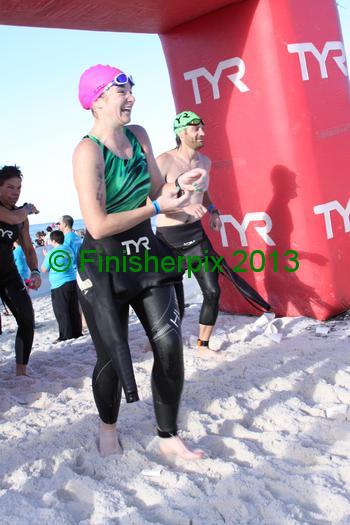
If you haven’t logged your daily miles on the trails, track or treadmill, there are still a few more hours to get out and celebrate World Run Day, an annual event that celebrates (surprise!) running and charitable giving.

Source: Active.com

Source: Active.com

The event was created in 1999 by Long Island runner Bill McDermott in remembrance of his brother, who was killed in an automobile accident on Nov. 8, 1983. Since then, World Run Day takes place on the Sunday closest to November 8 each year, and has counted tens of thousands of participants to-date.

WRD-2013activeWorld Run Day’s mission is “to broaden and promote the health benefits of running while also encouraging runners to donate to their favorite charity.” It’s the only event of its kind celebrated simultaneously around the globe with group events, both large and small, in cities such as San Francisco, London, Sydney and even Afghanistan.

Each year, World Run Day event organizers and participants hope to further the sport by helping to:

  • Promote running — Partner organizations highlight the health benefits of running for all citizens young and old
  • Encourage charitable giving — The event serves as a rallying cry throughout the running community to help others
  • Mobilize the running community — To elevate the sport of running while promoting its benefits and providing locations for people to run locally
  • Offer event director tools — Free resources are available to produce local World Run Day events
  • Inspire future running leaders — A campus outreach program is intended to inspire members of a younger generation

For more information, or to participate in this year’s event, visit RunDay.com.

How are you planning on observing the ‘holiday?’

On marathoning and marriage

Source: Jordan Siemens

Source: Jordan Siemens

Between all the miles logged in training (i.e. time to think) and the fact that Hubby and I recently celebrated our seven year anniversary, I’ve been noticing some parallels between marathoning and marriage.

If you look at it as a race – not in the competitive sense, but in wanting to have a rewarding and successful journey – many of us get caught up in the ‘start.’ We struggle because ‘we’re young,’ ‘we don’t have any money’ or [insert whatever excuse here]. Truth be told, that’s a sprinter’s take on the subject when what would serve us better is more of a marathoner’s mentality.

See, sprinters know that the start is a critical element because time is of the essence when there’s little ground to cover; there’s no room for error. But marathons, on the other hand, are just the opposite. Even with a rocky start, we have the luxury of time to bounce back and ultimately have a great race.

Source: London Evening Standard

Source: London Evening Standard

Why? Because it’s not the start that’s important; it’s the endurance.

That change in focus can empower partners for ‘the long haul’ when it comes to pushing through conflicts without hitting the proverbial wall and quitting. No, there are no quick fixes to either marathons or marriage (and neither are painless!)…but I think we’d all agree that the potential reward is worth all the effort.

Now, I’m by no means an expert at either marathoning or marriage…but I thought I’d share a few of the nuggets of running wisdom that I believe just may translate into more moments of wedded bliss.

1. Have a goal in mind. 

Just as we choose races to stay motivated, it can help to set milestones for your marriage. Having common goals help both parties to get on the same page, and having something to work toward keeps you moving forward rather that getting stuck in a rut.

2. You get out what you put in.

If we want to get technical here, pretty much anyone who wants to do a marathon could probably cover 26.2 miles, but for the best possible experience, it’s smart to prepare properly. This means putting in the work up front to reap the rewards on the back end. There’s something to be said for a little hard work, dedication and delayed gratification – that means sticking to a training plan and putting some real effort into figuring out what it takes to whip your relationship into shape, as well.

3. Run your own race.

The most critical piece of racing advice is to not start out too quickly. Trying to keep pace with faster runners will only bite you in the behind in the second half of the race when you burn through your energy stores and hit the wall with a thud. The same can be said for marriage; just as every body is different, so is every union, so you’ve got to work toward your own personal best…not someone else’s.

4. Pace yourself.

If you’ve set a goal and trained toward it, it’s important to check in at regular intervals during the race to make sure you’re moving along steadily. The same goes for marriage. It’s not about showing your partner how much you love them in fits and spurts with the occasional grand gesture, but committing to treat each other well year-round because the little things really do add up.

5. Prepare for peaks & valleys.

For as many moments of triumph, there will be the inevitable time in the trenches. If you think you’re immune, you’re only fooling yourself, so it’s best to go in with a realistic approach and an open mind. Knowing that there will be ups and downs in your relationship will allow you to approach both with a good head on your shoulders. That way, you and your partner can ride the highs, work through the lows and realize that it’s all part of the experience – and not indicative of the final outcome.

6. Work through the wall.

It may be inevitable, but it doesn’t have to be fatal. Again, being aware of (and having a healthy respect for) the wall will help inform your plan of attack if/when it rears it’s ugly head. Instead of getting blindsided, throwing your hands up in the air and giving up, you’ll realize that sometimes it just takes a little extra push to work though what feels like hell – and that you may just come out better for it on the other side.

7. Rejoice in the journey.

Finally, in racing and in life, it’s all what you make of it. Having a sense of humor and not taking yourself too seriously (after all, I don’t expect to win a marathon…or a marriage-of-the-year award), helps keep things in perspective. One day, you’ll look back and realize that even though 26.2 miles – or whatever rough patch you may have been going though at the time – felt like it would never end, it was only a small segment in the grand scheme of your life.

What running wisdom do you apply to your relationships? 

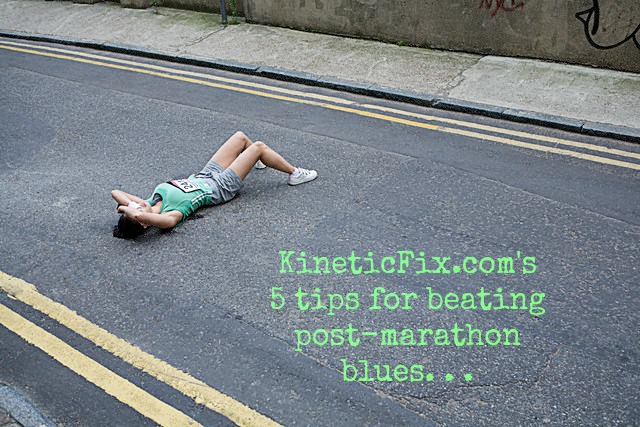
I just ran 26.2 miles…now what?!

1394468_610296182347262_477887480_n (2)

If you read my race recap, you know that as soon as I crossed the finish line of my recent marathon, I actually told Hubby I never wanted to do it again. Ever.

But he called my bluff: “Ha. I give it two weeks, and you’ll be planning your next race.” 

As much as we joke (and he was right, by the way), it got me thinking about the inevitable post-event letdown.

You see, the marathon’s not over once you cross the finish line. Whether you ultimately rock it or it rocked you, there’s a lot of buildup to that big day. Those months of preparation become all-consuming and include hundreds of miles, a roller-coaster of emotions and a hell of a lot of commitment.

So how do you fight boredom, stay sane and find a sense of purpose once the intensity of training has ceased? It’s actually quite simple, when you think in terms of planning for it with as much care as you plan for everything that precedes the race…

Women on Road laying down1

1. Replenish your body. Now’s the time to re-stock what you’ve depleted during months of hard training and a grueling race. Not only will it help move the recovery process along, but rewarding yourself with a favorite treat can also help lift the spirits (just don’t make a habit of it).

2. Kick up your feet. Although it feels counter-intuitive to avoid the very thing that helps you release stress and anxiety (working out), it’s important to let your body rest and recover because it sets the stage for your next round of training.

3. Set a new goal. Think both short- and long-term here. Start by assessing your race performance, then set a master goal, along with incremental goals to help get you there. Maybe one marathon was enough, so you choose a new distance and focus on training toward that. Perhaps you’re hungry to PR in your next marathon, so you focus on building speed and endurance to create a stronger base. Or if this marathon was a stepping stone to a longer race (ultras, triathlon), you can use it as a learning experience to inform your training going forward.

4. Ease back in slowly. Hit it too hard too soon, and you may end up setting yourself back with illness or injury. The general rule of thumb is to take an easy day for each mile you run in a race, so now is the perfect time to pick up a non-impact cross-training activity that will help strengthen your running down the road.

5. Listen to your body. Again, it can be tough to shift gears after months of putting pedal to the metal toward a singular focus, but make a concerted effort to quiet your brain and allow your body to lead the way. Did you notice any weak links during the race? Are you feeling lingering aches and pains in particular spots afterward? Now’s the time to address imbalances so you can “train up” those weaknesses for the next time you toe the start line.

So where am I at this point? Well, I’m happy it’s done, but sad that it’s over.

I’m thrilled with how my marathon went, although there are some things I might tweak next time around. Yes, I said “next time.” And no, I’m not signing up for one in the immediate future…but I’d be lying if I said I haven’t thought about giving that elusive sub-four goal another shot at some point.

For now, though, my main goal is to focus on increasing my speed so I can shoot for PRs at other distances — the half marathon and 10K, in particular. In terms of smaller goals in the interim, I crave the consistency of a regular training schedule, so I’ll be putting together a mix of speed-focused workouts, along with complimentary cross-training.

And, after allowing my body to properly bounce back, I’ll hopefully be ready to hit it hard in the next training cycle.

How do you beat the post-race blues?