Portland Fit Fix: Strengthening ‘Mommy’ Muscles at Mod Physique

IMG_9891

Entering into a new phase of fitness has taught me a lot these past few months, not the least of which being that there’s a serious lack of attention paid to prenatal programs for women who want to work out — thoroughly, safely and effectively — while pregnant. From what I’ve seen, most of the options out there seem to fall into one of two camps: Either wing it in your usual classes, trying to modify and keep up where you can, or hit up a prenatal yoga class, which ends up just being a lot of slow stretching.

That feels lovely, yes, but I can’t help but wonder about the functionality beyond learning to control breathing and practicing relaxation techniques. Both are important tools for labor, sure, but what about properly prepping the body and strengthening those special muscles to aid in getting Baby from point A to point B on delivery day?

This is something I’ve been especially focused on during my weekly MYMA Mama prenatal movement classes; both the exercises we do and don’t do come with the specific purpose of helping to ease our bodies into the idea of labor. So when my friend, fellow blogger and LUNA teammate Tiffany mentioned she’d heard about a new series of similar prenatal workouts in the area, we both jumped at the chance to check ’em out.
IMG_9883

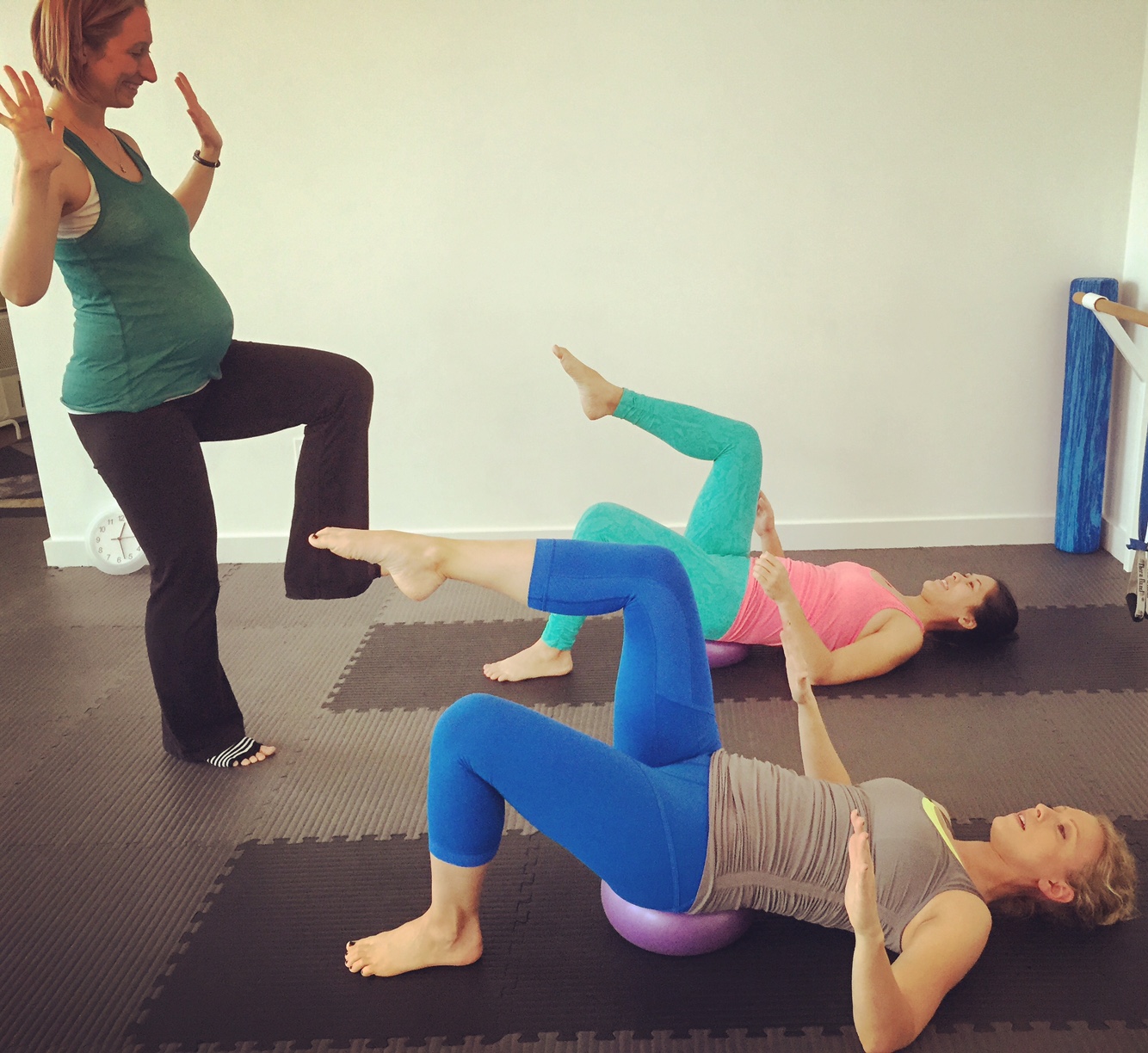
Tiffany’s about 19 weeks along, and I’m 24 weeks, so we’ve both hit what I’ve been calling the “sweet spot” of the second trimester where workouts are fun again — and not just an energy suck like those first few months where our bodies were working overtime to turn a tiny ball of cells into something! We both also enjoy a good workout; so when Jessa Freeman, founder and owner of Mod Physique, invited us to her studio last weekend to take a Mod-Mama class, we hoped it’d hit the mark when it came to expectations.

The first thing I noticed when we stepped into the room was a lack of mirrors. This is by design, as Mod Physique prefers that students gain more body awareness by able to “feel the movement” in their bodies versus being distracted by their reflections.

Fair enough, especially now with an expanding belly — once in a while I’ll catch a passing glimpse in a mirror and have to to a double-take because I don’t recognize my shape-shifting self!
IMG_9877

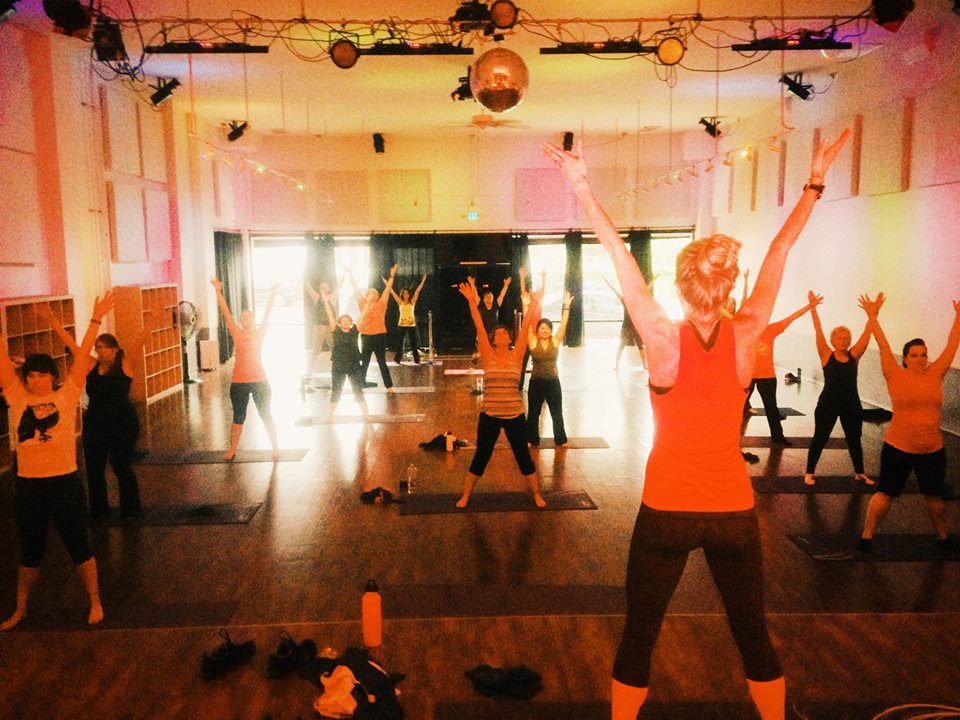
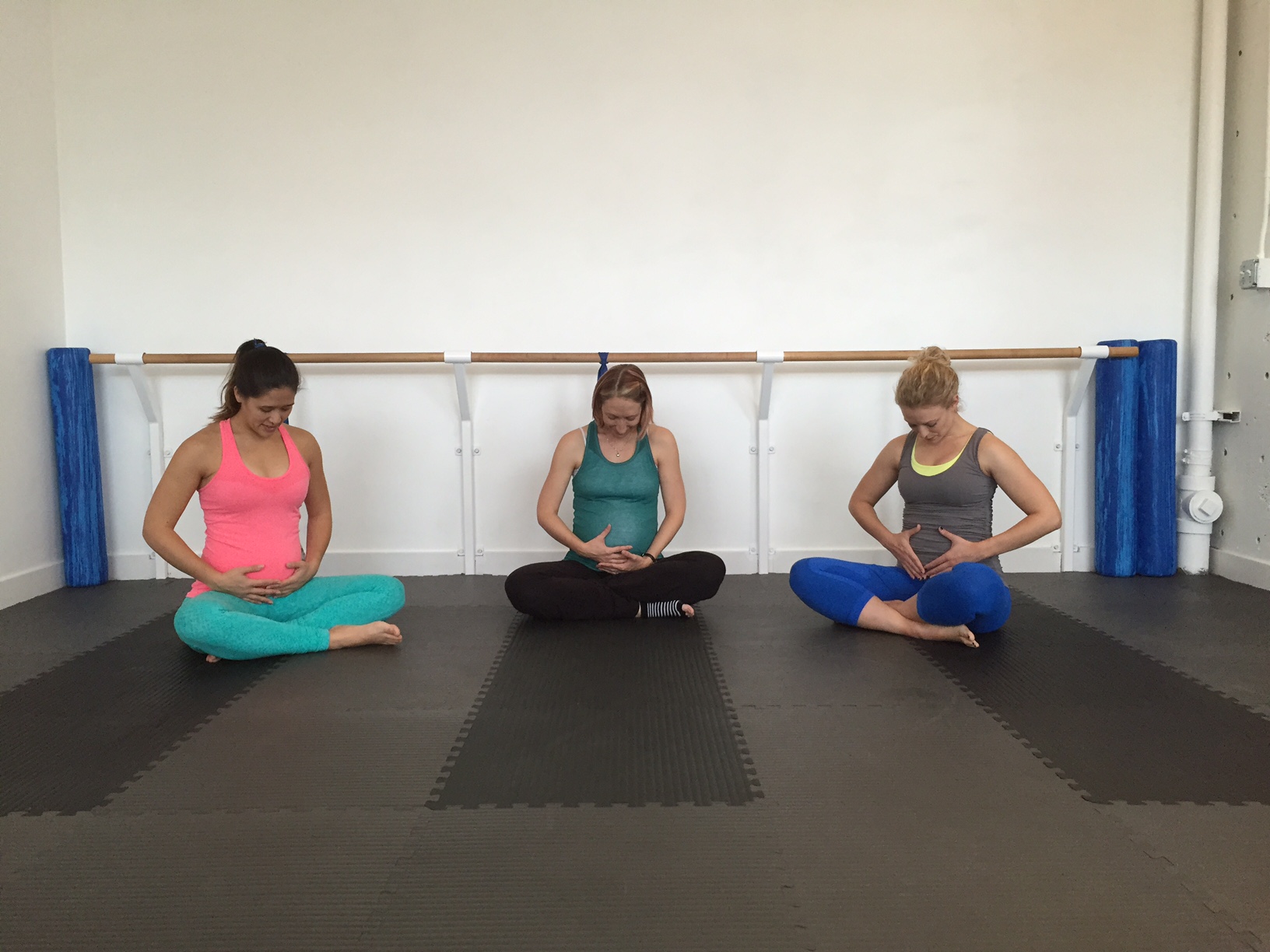
Instructor (and soon-to-be-new-mom!) Kerri Maskol started the class by explaining that we’d be addressing some of the alignment and postural changes that occur during pregnancy. That means strengthening the core to help support the lower back and getting those glutes firing to help balance things out as the pelvis starts its forward tilt.

In layman’s terms, this means ballet barre and Pilates-based mat and resistance training with props — all of which are done with the philosophy that “just because you can’t do crunches doesn’t mean you can’t keep your core strong and your body healthy.” Amen to that. 

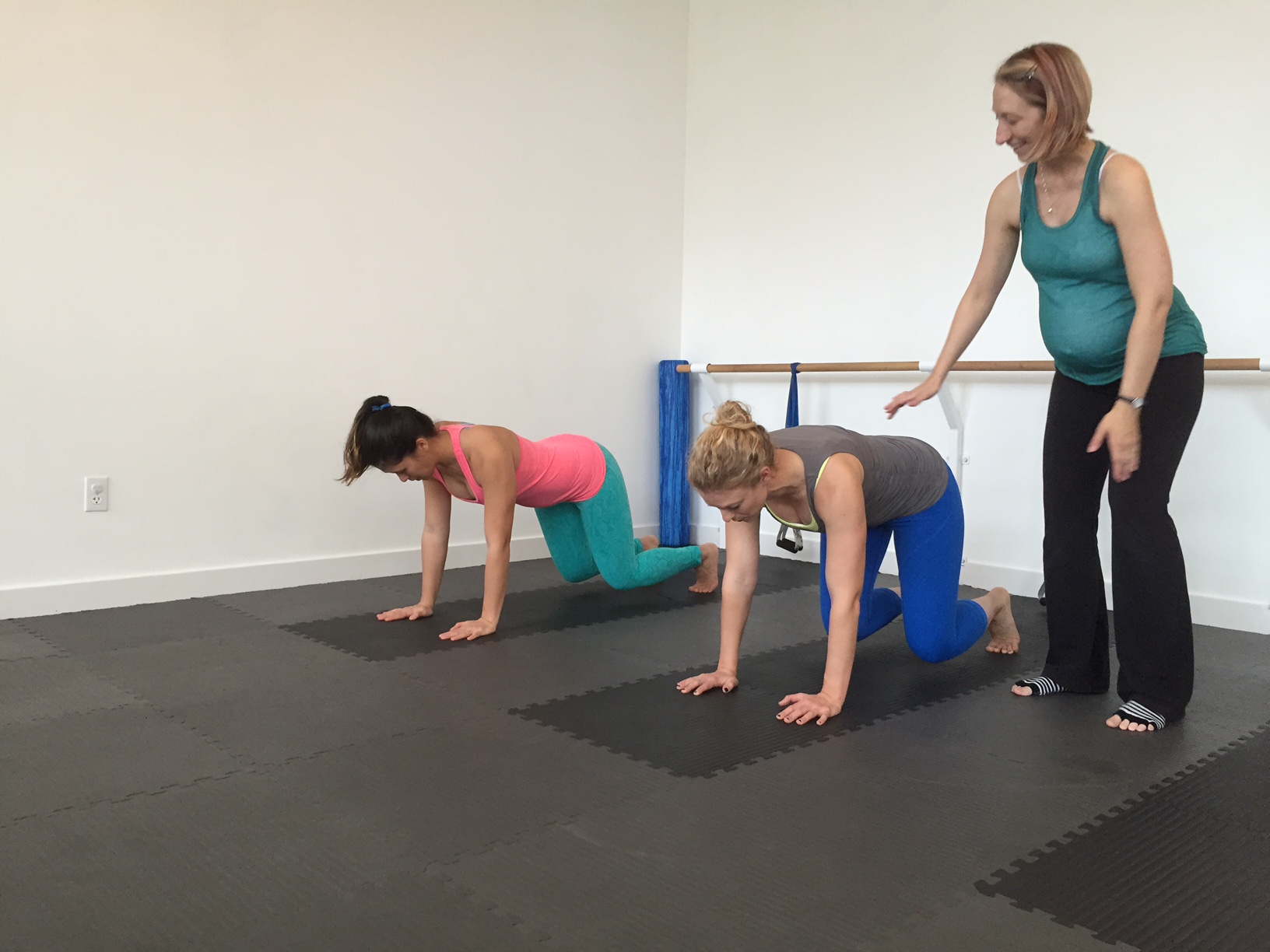
After leading us through a gentle, cardio-based warm-up to help loosen up our muscles, Kerri wasted no time in getting us into some of the more advanced (read: challenging!) moves. Think upper body strength work for holding baby, core and pelvic floor work to prepare for pushing and recovery, hip stabilization from fine-tuning surrounding muscles, as well as some soft stretches in between.
IMG_9879

This was no walk-in-the-park prenatal class by any means, though. Both Tiffany and I were laughing as we found ourselves doused in sweat and grunting as we felt the burn of the isometric holds and floundered our way through the stability work while trying to navigate our now-changing centers of balance.

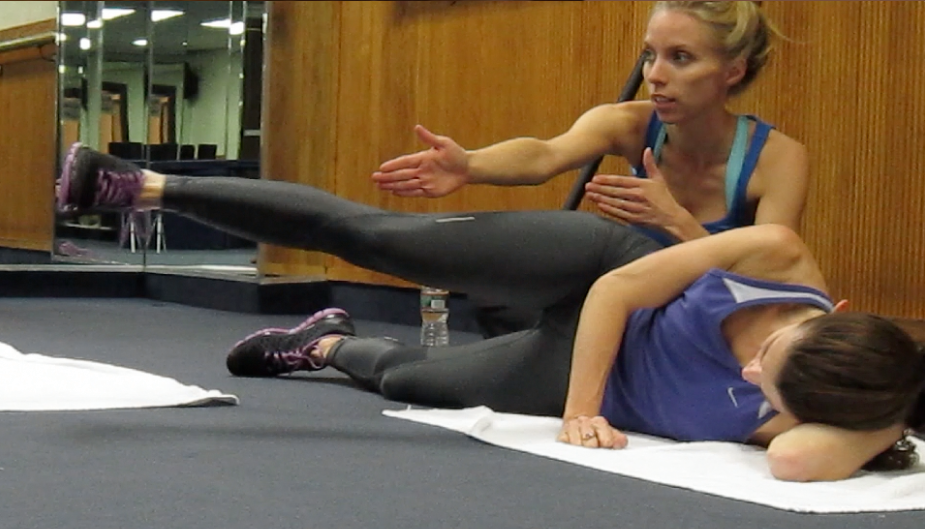
Kerri kept a keen eye on form throughout, slightly adjusting us during each exercise for maximum impact and safety. And at the start of each exercise, she’d remind us to “hug baby in” in order to keep our cores engaged and lower backs out of the equation. This turned out to be a really helpful cue!

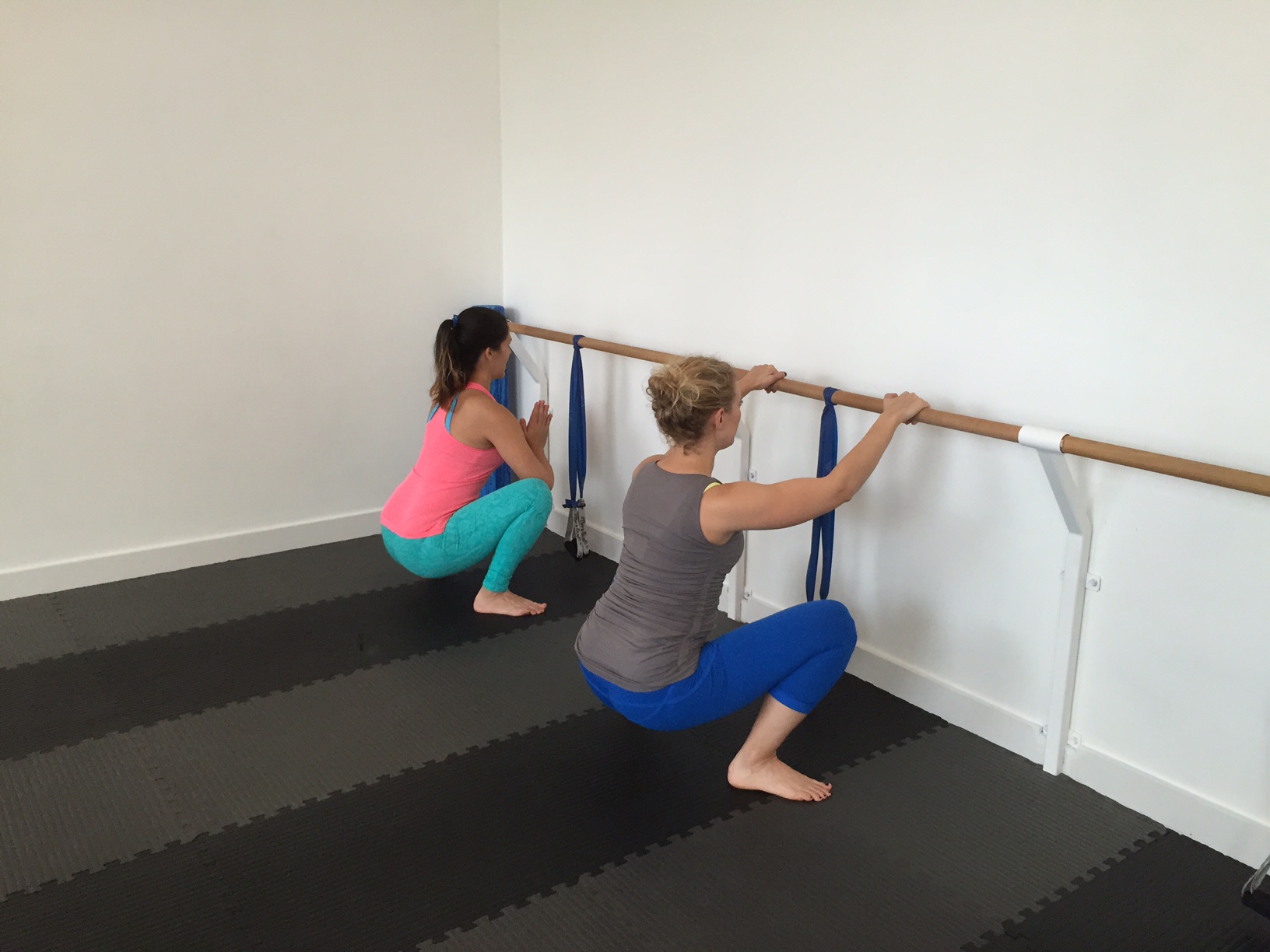
We ended class with a 90-second squat at the barre, which she reminded us would be the length of a contraction during the more intense part of labor (Huh?! Cue slight wave of panic). It’s not only a thigh-burner of a stretch now, but it’s also a great position to practice for later when we want to help open up the hips so baby can more easily pass through.
IMG_9873

I appreciated the variety in class, as well as the fact that “prenatal” didn’t translate to “we’ll just sit and stretch.” And I’m even more excited to have found another fitness option to add to my pregnancy repertoire.

The lesson in all of this? It is possible to get an awesome workout that’ll challenge your body, as well as help prepare it for what’s to come in just a few short months.

And despite not getting down on the mat to do traditional ab work, my core was pleasantly sore the next day. They’ve also got a post-natal series, which I’m looking forward to checking out once Baby H makes his/her debut in the spring.

IMG_9868

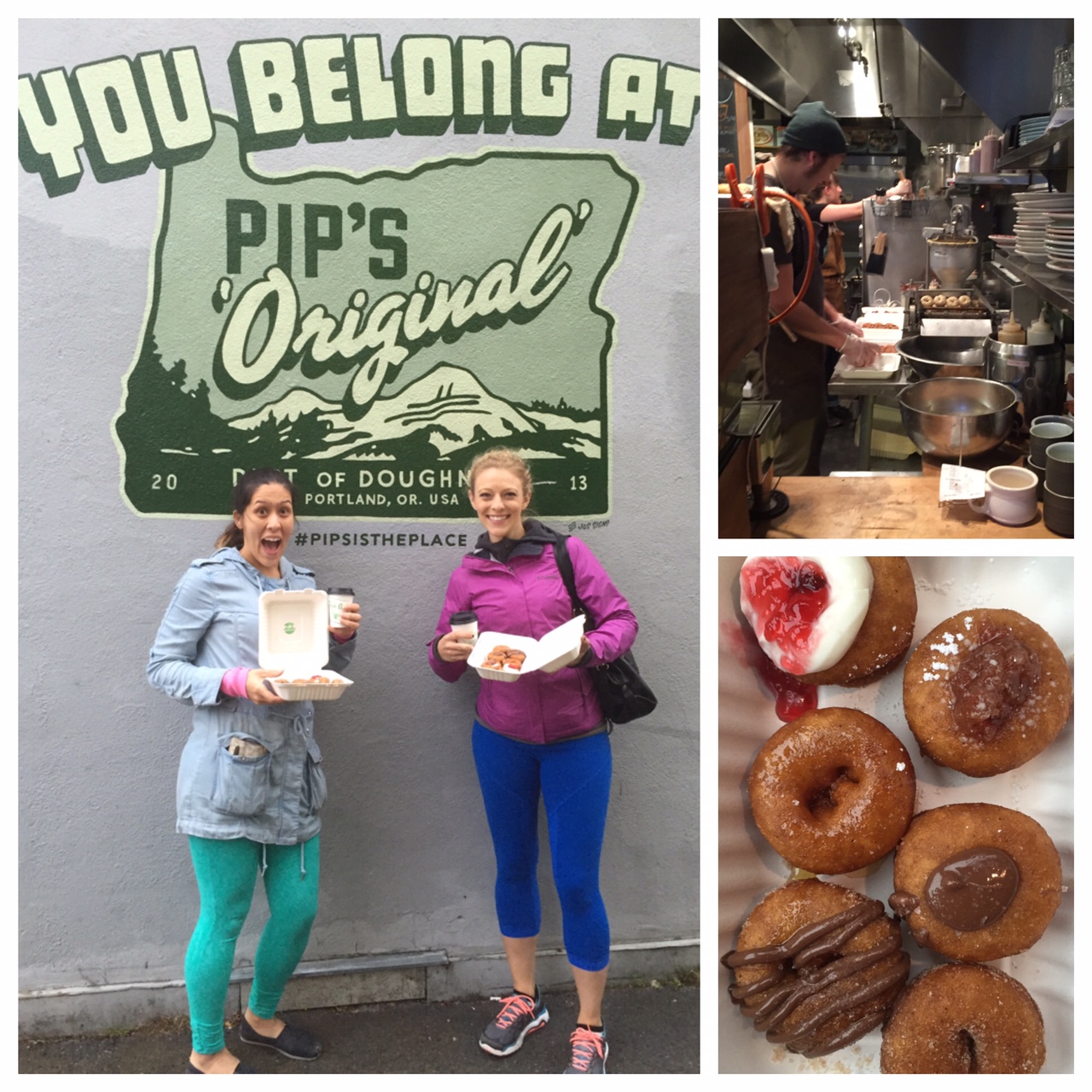
Oh, and the only responsible thing for two preggos to do after burning a bunch of calories during a weekend workout is to re-fuel, right? At least this was Tiffany’s and my reasoning when we stopped off at Pip’s Original on the way home…

Pips’ has earned the reputation of being one of Portland’s best doughnuts shops; I usually don’t buy into the hype, but after trying them I’d wholeheartedly have to agree. Made-to-order, these mini bites of heaven are perfectly spiced and crispy on the outside with a nice, fluffy cake-like center.

They remind me of my favorite cider mill doughnuts back home in the Midwest. Totally worth the wait (and there usually is one) if you’re in Portland anytime soon!
IMG_9892

Have you found any good ‘prenatal’ workouts? And, more importantly, what’s your favorite way to refuel afterwards?

My Pregnancy Fitness Philosophy and “Training” Plan

Workouts3

I’ve been getting a lot of questions about my pregnancy workout routine and how “training” has changed over the course of the past few months, so I figured I’d do a post on the topic. It’s interesting to look back on how things have evolved now that I’m sweating for two, although it’s important to remember that everyone has and/or will have a different experience; this is just what I happen to be going through, so take it for what it’s worth!

Let’s start at the beginning: Pre-pregnancy, I was what I call in “maintenance training mode” — meaning, I’d set a specific training plan for a major event (i.e. last fall’s marathon) but otherwise would try to maintain a level of fitness that’d allow me to not have to start from scratch each time. It’s an approach I highly recommend; building slow and steady means fewer injuries, and maintenance in between allows you to push harder with each cycle.

After lots of racing in 2014 (marathon, Olympic-distance triathlon, ultramarathon and more), I knew 2015 would be a year filled with more reflection, recovery…and, apparently, reproduction! I had dialed back the aggressive goals early on — not only to keep myself from getting sidetracked while adjusting to the first year in a new city, but also to keep from burning out, which I felt close to towards the end of last year.

Fast forward a few months, and we got the big surprise-on-a-stick! And, for better or worse, almost immediately I could tell my body was in the process of changing (I think years of tuning in — and out — during training and racing have honed these skills). I was determined, though, to find my personal form of “pregnancy maintenance mode” where I could challenge myself without causing injury to myself or harm to Baby H.

Little did I know that what I was aiming for would be a moving target!

Here’s one week’s worth of workouts I logged from very early on during my first trimester — while I was still trying to keep up “maintenance mode:”

  • Monday: 45-minute indoor cycling class
  • Tuesday: 30-minute elliptical + yoga class
  • Wednesday: Portland Trail Series 5-mile race
  • Thursday: 30-minute run + barre class
  • Friday: Strength training class + 60 minutes of walking to/from meetings
  • Saturday: 3-mile run + prenatal movement class
  • Sunday: OFF

Workouts1

As I look back through my logs, I see that during the later weeks of my first trimester (once the pregnancy symptoms really hit) most of my cardio was walking. Running just felt “off;” my bladder was heavy, and I was out of breath about 10 seconds into a run. That, combined with sheer exhaustion, and I knew I was lucky to be able to continue some kind — any kind — of activity, even if it wasn’t at my usual intensity.

Here’s a week from my log during that time — I call it “survival mode:”

  • Monday: 30-minute walk with dogs + Pilates class
  • Tuesday: 60 minutes of walking to/from meetings + yoga class
  • Wednesday: 30-minute elliptical + some bodyweight exercises
  • Thursday: 60 minutes of walking to/from errands
  • Friday: Strength training class
  • Saturday: OFF
  • Sunday: 5-mile run

Around week 17 I hit a sweet spot, though, where running felt great again. I was hitting the pavement (or the trails) two or three times a week, and my goal was to do at least a six-miler each weekend to keep my mileage up.

That lasted for all of maybe six weeks.

Now, as I’m creeping toward the end of the second trimester, running (at least at the moment) isn’t working for me anymore. I ran an awesome six-miler with friends on Nov. 1, but later that afternoon got blindsided with what felt like a strained a ligament in my groin and could barely walk for two days.

Physically, I get it; my body’s got a lot going on, and something’s gotta give. But it’s been much more difficult, mentally and emotionally, to detach from my “happy place.”

With pregnancy comes a lot of uncertainty, and who knows what will feel good a few weeks from now, let along a few months down the road. But it’s an excellent lesson in learning to roll with the punches, look at the bigger picture, get creative and be grateful for what you can do rather than what you cannot.

So here’s where I was as of last week, which I’m calling “the new normal mode:”

  • Monday: 60-minute walk during lunch + prenatal yoga class
  • Tuesday: 30-minute elliptical + barre class
  • Wednesday: 30-minute stair stepper + prenatal movement class
  • Thursday: 30-minute laps in the pool + barre class
  • Friday: 45-minute indoor cycling class
  • Saturday: OFF
  • Sunday: 3-mile run (painful!)

Workouts2

And in the meantime, I’m keeping things fluid, taking it day-by-day and approaching fitness with a more pregnancy-friendly set of principles:

  1. Listen to my body. I modify like nobody’s business, and if I’m not up for something, I don’t do it. It’s as simple as that!
  2. Keep it a priority. Fitness has always been and always will be important to me. I make it work around other commitments.
  3. Keep it in perspective. Races and PRs will be there waiting for me. Right now, I want to stay in the moment and enjoy this time.
  4. Have fun. Whether it’s meeting up with friends or trying a new class, I love having more freedom to experiment.
  5. Mix things up. Even if my new default is walking, I’m trying to get as much variety as I can to keep my mind and body engaged.
  6. Re-think “training.” As in, my immediate focus is getting through childbirth come March, then being healthy enough to chase a kiddo.
  7. Stay curious. Gone are strict training schedules for the time being, so I’m just enjoying figuring out how to work this “new” body.
  8. Be grateful. I’ll do whatever I can for as long as I’m able. It feels good to move, and I want to honor my body where it’s at as this process progresses.

And, on the bright side, I’m also hoping that if I do have to take a good chunk of time off of running, I might finally heal some nagging injuries (old: SI joint, new: ligaments/groin). For example, my plantar fasciitis is almost a distant memory now that I’ve dialed down the impact activities, which I’ll take as a win.

So where will I go from here? Your guess is as good as mine, but I’ll keep you posted.

How did your perspective on fitness change during pregnancy? 

Navigating a Changing Pregnancy Body and Preparing for Birth with an Open Mind

MYMA3

Courtesy of MYMA

In my last post, I introduced Angi Purinton McClure and her longevity-based workout program, MYMA Movement. Today I’m posting the second part of our chat, which delves deeper into her work with mamas-to-be — yours truly included! — from exercises to help avoid injury to self-massage techniques to relieve common aches and pains.

Angi believes that pre-natal maintenance is important during pregnancy because it helps bring the focus inward and discover a new, changing body. Her MYMA Mama classes connect the ‘how’ and the ‘why’ to movement during such rapid change.

Not only does she develop a pre-natal movement routine that will rejuvenate her clients’ bodies during pregnancy, but she also helps us prepare for birth with an open mind. Something easier said than done, in some cases, I’m sure!

I’ve been working with Angi for a few months now, and I can’t say enough about how great it is to have someone to lean on who is both super knowledgeable about the body, as well as focused on long-term, sustainable results. Here’s her take on the ins and outs — and do’s and don’ts of pre-natal fitness.

5. Whats your overall philosophy on pregnancy & fitness?

While many women hear “make sure you exercise” during the pregnancy, many are misguided in wondering ‘what type of exercise’ and ‘what is right for my body?’

Unfortunately, there aren’t many smart, safe, and balanced Mama pre-natal classes. So what happens is that many women continue exercising they way they have been, not knowing how to listen to their changing body until there’s pain — or many women will jump into a pre-natal yoga class thinking this is their only option.

It’s not true. There’s a balance. If you work out, you need to know that you have to predict how to soften your routines while your body changes. You need movement, but it has to be kind movement that will help your body feel open, loved, and prepared for the birth.

6. We hear a lot about “body after baby,” but you emphasize pre-natal movement. Why’s that piece so important?

We need to move. We need to mentally, emotionally and physically connect before we give birth. This is the time in a woman’s life when she learns more about her body in a nine month period than most do in a lifetime.

Moving and maintaining the body during pregnancy will not only help you during the labor experience and help you heal faster postpartum, but it also benefits the body during the pregnancy. Exercise during pregnancy will help fetal development, connect you to you baby, and it will also aid in a healthy pregnancy and lessen aches and pain.

Besides, what a fun time to get to know your body while you’re growing a baby! So exciting and empowering.

Courtesy of MYMA

Courtesy of MYMA

7. Walk us through what goes on in one of your MYMA Mama classes.

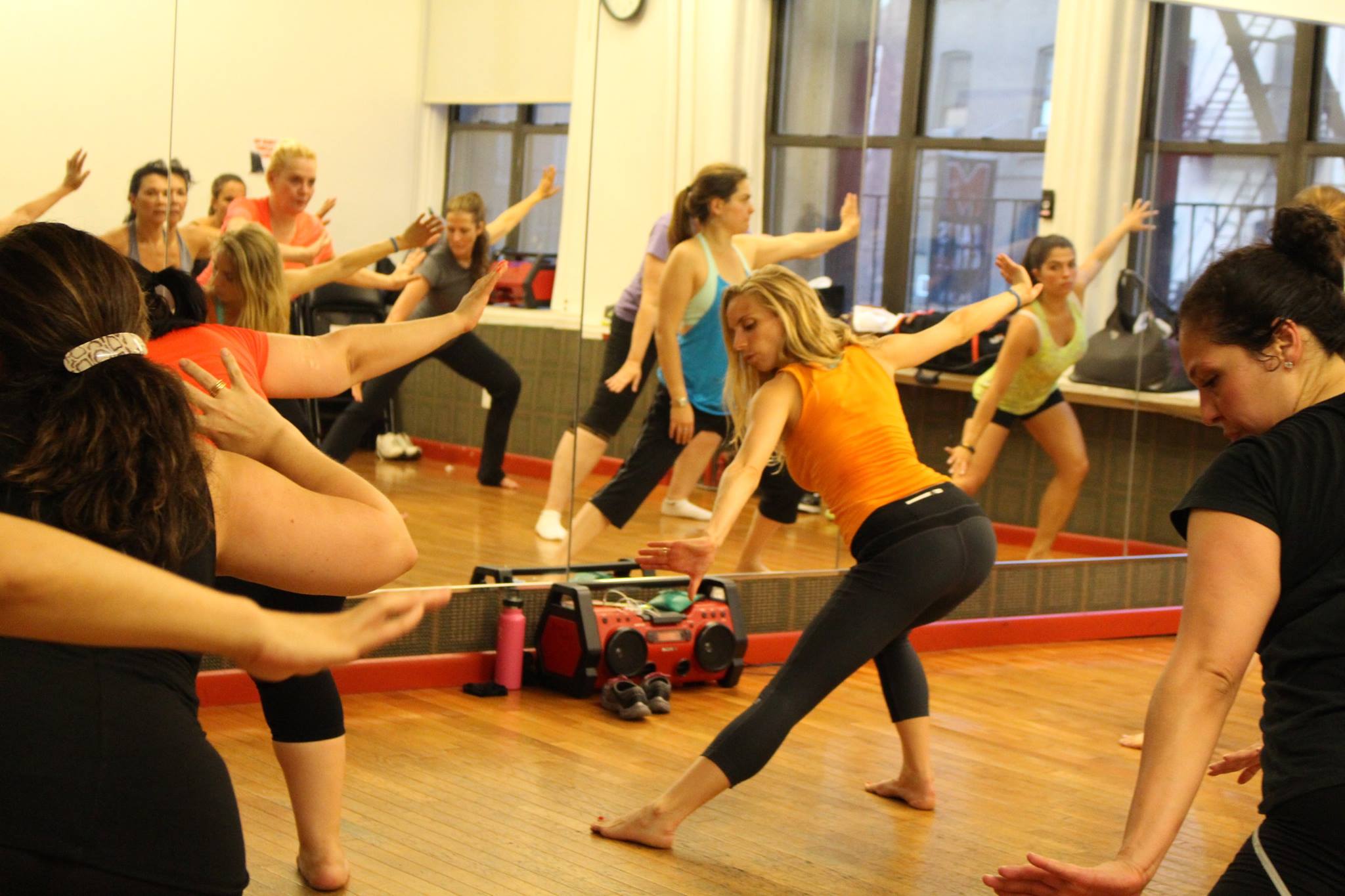
In a MYMA Mama class, we exercise with corrective exercises to keep your body strong and loose. We address aches and pains and move through some self-massage exercises that you can take home to use whenever you need. We also open up the conversation of how the body is changing and how you can adapt through: sleeping positioning, partner massage, self-massage, acupressure points, mantras, pre-birth education and more.

We move, we roll, we laugh, and we share stories. It’s a beautiful time in a woman’s life to learn the life-long skills for body care and body awareness. It’s always an honor to meet women and learn their stories, fears, questions, hopes and, of course, meet their baby later on!

8. What are the most common misconceptions you’ve run across when it comes to pregnancy & fitness?

A common misconception that I witness is to ‘take it easy’ and ‘don’t exercise.’ You should always listen to your body (and some have doctors order for bed-rest) and know that if you don’t feel like exercising that day, fine. However, don’t make a habit out of it; walking is good, stairs (going up) are great for opening up the pelvis, and dancing is great, too.

Our bodies are changing and getting tighter, so don’t allow muscles to get weaker at the same time. Move in moderation, move within a time frame that doesn’t fatigue you. Movement should invigorate you. Be it a quick dance with a song you love or choosing to take a 15-minute walk with a set of stairs, you should feel like you got a breath of fresh air and you don’t ache as much. It’s minimal but so, so important to keep moving.

9. Which exercises are the biggest no-no’s that make you cringe when you see pregnant women doing them?

Well, crunches make me cringe but for many who feel their womb grow, it becomes a no-brainer. So the other no-no is over-exercise. People sometimes like to start a new fitness routine while pregnant. It may seem bizarre but it’s true.

I had a client who came to MYMA Mama after a terrible injury while learning kettlebells at 26 weeks pregnant. Yes. They are out there.

If you have been running, weight lifting, biking, etc. before you got pregnant, keep going! Just do it in moderation and listen to your body. Know that you won’t move the same while pregnant, but allow yourself to exercise your mentality by slowing things down. If it feel enjoyable, continue.

Courtesy of MYMA

Courtesy of MYMA

10. What should all moms-to-be be doing more of in their pre-natal fitness routines?

More maintenance work. Those who come to my MYMA Mama class leave with tools for at-home self-care, and they need it.

My moms always thank me as their back pain lessens from the MYMA Mama classes. Their swelling went down because they knew the methods to calm the body. Their labors were more empowered due to faith they restored in their body as they learned how their body has the power to heal (and give birth).

I also feel that pre-natal fitness needs more mental preparation, such as mantras to soothe the mind and open the body.

11. If nothing else, what’s the one exercise moms should be doing during pregnancy & why?

First I have to say, that you should always consult your doctor because certain exercises won’t be good for certain bodies.

That said, my main exercise that women forget to do is Kegels. Yes, even during the pregnancy, you want that Qi (“chee”) or energy of intention to move upward to hold the baby and pelvic floor. If you have pubic symphysis, you’ll love this even more because you want to keep a strong pelvic floor.

Don’t worry — you won’t get so tight that the baby can’t come out! This is the beauty of our bodies. They adapt. Balanced, our bodies are to be loose and strong.

Kegels can also help with breathing: Breathe out and let go of the body, then with the next inhalation, feel the pelvic floor lift. (It’s as if you are going to the bathroom and then you stop the flow of urine.) As you inhale, keep the body relaxed as you feel the ‘lift’. Hold the lift as you exhale, then slowly and gently let it go until the next inhale. Don’t ‘drop it’ — you would never just collapse after a squat, so don’t just ‘drop’ the pelvic floor. Think of it like an elevator lifting and taking time to go down as you release.

This is such an amazing time for a woman. These exercises are so important in our later years and to begin them NOW is a head start on living a long, healthy, happy life!

To learn more about Angi’s MYMA Movement and related classes, visit MYMAMovement.com.

Have you added smart, safe balanced movement as part of your workout routine?

Learn How to ‘Make Your Mind Aware’ with MYMA Movement

Courtesy of MYMA

Courtesy of MYMA

“Ok, can I tell you something?” I said between labored breaths mid-run with my friend Anabel a few months back.

It was before I officially broke my own pregnancy news, but she was already a few months along herself. And since we’re both pretty in-tune with our bodies, I figured it’d be nice to commiserate with each other about our usually-predictable systems going somewhat haywire while growing tiny humans.

Since then, we’ve swapped stories, traded tips, and I’ve listened to her advice with all ears since she’s got a few months’ heads up on how this whole thing works. Sharing this experience together has created a special bond, but having a “pregnancy mentor” who isn’t afraid to show you the ropes and call it like it is has proved invaluable.

Case in point: Early on, Anabel introduced me to Angi Purinton McClure, creator of MYMA Movement here in Portland. Like me, Anabel’s eager to get back on the proverbial “race” horse post-baby (her: triathlon, me: running), but we both know that it’s going to take some planning and preparation ahead of time — not to mention some recovery, rehab and ramping up after.

Luckily, Angi’s come to our rescue. Not only is she a licensed massage therapist, fitness instructor and trained doula, but her use of Chinese Medicine, evidence-based exercises, and self-massage techniques also translate to a more innovative and balanced approach to fitness.

But best of all? This ain’t your mama’s prenatal workout; while Angi does work with new mamas and mamas-to-be, what she really specializes in is working with people through every phase of their life in order to make them more aware of their bodies and help them learn how to properly move so they can move forever.

Angi calls it ‘body longevity,’ and I wanted to pick her brain more about the topic, so we sat down to chat about her approach in a two-part interview. Read on for more on the importance of adding safe, smart and balanced movement into your fitness routine!

1. Tell us about MYMA and your mentality towards fitness.

MYMA is an acronym for Make Your Mind Aware, it’s a movement-based education service that focuses on body longevity. Based around fitness theory and Chinese Medicine, MYMA offers classes, workshops and online programs to help empower your body awareness so you can move in a smart, safe and balanced manner.

I feel that there’s a gap when it comes to long-term movement and fitness. We see 21-day results as a natural outcome from dedicated fitness efforts; however, no one is looking into the future wondering, how can we continue to move well as we age?

We need to learn balance in our movement and maintenance within our fitness routines. And MYMA is here to offer the tools and knowledge to set you on the right path. What we do today shapes our future, so let’s move now to move forever.

2. Your work blends Eastern and Western modalities; what’s the benefit to that approach?

I love to talk about balance, and Chinese Medicine is the root of how we move and care for our bodies. Within the fitness industry, many people can better relate to science-based methods; however, it is important to understand that the individual cannot be measured as a whole, so it’s vital that we learn how our minds and bodies may benefit from ALL perspectives of both eastern and western philosophy.

Besides, Chinese Medicine is the missing piece towards healing movement. Many use Chinese movement methods throughout the world, yet it’s not incorporated in our western fitness society. Until MYMA.

Courtesy of MYMA

Courtesy of MYMA

3. In a world of quick-fix gurus, why did you choose to focus on things like longevity, self-care and maintenance?

Working with seniors for over a decade now, I have ‘seen our future’ or so I like to say. If we are short-sighted in our approach to health, we’ll expend all our energy in our youth. Over-exercise, burnout, adrenal fatigue, injury, wear and tear, etc. are just a few instances of where we are headed in our bodies. I tell my clients, I want to continue standing to put on my underwear (a task that is not easy in your later years!).

Balance, suppleness, strength, proprioception, foot health, back health, etc. all apply to the ability of putting on underwear while standing, and yet many of my 30 year-old clients are sitting to put their shoes on after a session. This gets you thinking…you realize how in the ripe age of thirty people are already on their way to sitting down while dressing.

We have to think long-term in our movement and self-care.

4. You’re a holistic movement therapist, licensed massage therapist and doula — how did your MYMA Mama program come about?

While I was attending Pacific College of Oriental Medicine I was also teaching as a fitness instructor. While training to become a bodyworker I was also training in my own time to become a holistic movement educator because I realized people were not balanced in their ideas of fitness.

MYMA was the base I needed for people to have access to self-care tools, workout tips and mental guidance for those who knew that they needed to alter their current fitness habits and rethink how they want to continue to move in their later years.

Courtesy of MYMA

Courtesy of MYMA

Stay tuned for part two of my interview with Angi — in Friday’s post, we’ll be talking specifically about her recommendations for mamas-to-be with pre-natal prep and post-natal maintenance.

And if you’re interested in more information on Angi’s MYMA Movement in the meantime, check out MYMAMovement.com for details.

Are you thinking long-term when it comes to your health and fitness? 

Back to Basics: My Favorite All-Natural Skincare Products

IMG_9552

Welcome to your 30’s, where it’s possible to have both pimples and wrinkles at the same time. And don’t even get me started on what pregnancy hormones do when thrown into the mix. 

You know what that means, though? Living a healthy lifestyle isn’t just limited to what you put into your body (nutrition) or how you keep it in shape (exercise); it’s also about developing a strategy for keeping its largest, most protective organ — aka our skin — in tip-top shape.

sunscreen+-burnt+pig

So I’ll let you in on a little secret: I’m a total junkie when it comes to beauty products. Maybe it was watching my mom do Miracle Whip facials and mayonnaise hair conditioning treatments when I was a kid, but you name it, and I’ll try it on the quest for smoother skin, shinier hair or a dewier glow.

And while I typically don’t discriminate against ingredients (I know, I know…but I have yet to find a natural deodorant or shampoo/conditioner that actually works), I’ve done a 180 with Baby H on board these past few months.

The last thing I want to do is expose him/her to harmful chemicals, regardless of how small the amounts may be, so I’ve been on the hunt for the best all-natural (or as close as possible) alternatives. Here are the current favorites on heavy rotation in my routine:

Step 1: Remove Makeup

At 99.1% natural, Burt’s Bees Facial Cleansing Towelettes ($6) supposedly remove makeup, cleanse and tone in one easy step, leaving skin clean without the need for rinsing. But I prefer to use them as a first line of defense in removing even the most stubborn makeup without irritating skin.

Step 2: Cleanse

Made with 100% Certified Fair Trade ingredients, I first spotted Alaffia EveryDay Coconut Cleansing Face Wash ($13) while shopping at Whole Foods and decided to give it a whirl. Because it’s all-natural, it isn’t quite powerful enough to remove heavy-duty makeup or waterproof mascara on its own, but works well in conjunction with the Burt’s Bees towelettes.

My friend Corey also shared some Arbonne Calm ($123 for the full-sized set) samples with me because the line is not only free from the usual chemical suspects, but it’s also made up of naturally-derived and food-grade ingredients that do not contain fragrance or color. I’ve been using these mostly while traveling a) because they’re travel-sized and b) because dry airplane air can wreak havoc on skin, but the products have lived up to their name.

Step 3: Tone

After years of using harsh toners that would leave my skin feeling stripped and tight, I’ve learned my lesson and now take a gentler approach with Scientific Organics Spirulina Toner ($30), which adjusts pH, removes dead skin cells and prepares skin for better product absorption. Best of all, it’s made of pure, potent botanicals instead of chemicals and has a minimum of 70% organic ingredients.

Step 4: Treat

Because some of the best anti-agers (retinols) are a no-no during pregnancy, I’ve adopted Mad Hippie Vitamin C Serum ($34) as my new treatment of choice. It’s got eight “actives” or ingredients with known antioxidant and skin rejuvenating properties and none of the bad stuff, so I can help reduce the effects of photoaging and not feel guilty in the process.

And when I want to have a “spa moment” but don’t have extra time or cash for a facial, I turn to BioRepublic Eco-Friendly Sheet Masks ($5 each) which is are ultra-soothing facial masks infused with natural cucumber extract, plant collagen and vitamin E. I’ll pop one on during an evening TV show, and in 20 minutes stressed out skin feels soothed and rejuvenated.

Step 5: Moisturize

I’m been a big fan of Acure Organics Night Cream ($18), which I found at the local Pharmaca and used for about four months with great results (they don’t call it “nature’s nocturnal miracle” for nothin’). However, the scent became a little too much thanks to the association with the first trimester queasies, so I’ve been looking for something new that would still do the trick for tired skin.

Enter Farmaesthetics Nourishing Lavender Milk ($38), which is my new multitasking best friend at bedtime; not only is it made of 100% natural ingredients that are certified organic (as indicated), but the lavender smell helps me relax as I drift off to sleep. Plus, it’s got one of the all-time best skincare ingredients — Calendula — which is an ancient remedy for healing wounds (as well as a diaper rash treatment that my sister swears by).

Step 6: Remember the Body

I’d be remiss if I didn’t also include some skincare items for the benefit of your body, as well (because hello, pregnancy bacne)…

Case in point: Pura Naturals Peppermint Volcano Soap-Infused Active Slice Sponges ($9 for a 3-pack), which are awesome, patent-pending soap infusion sponges that will cut your shower time in half. They’re infused with ground pumice and a bunch of rich extracts and oils — all great, yes — but what makes them really cool is that they’re created from renewable plant materials and the manufacturing process actually removes carbon from the atmosphere, so every purchase is akin to buying a personal carbon offset.

And, finally, no skincare post that references pregnancy would be complete without mention of something to keep the dreaded itchy belly at bay. My two favorites are Booda Butter ($14) and  The Spoiled Mama Tummy Butter ($34), both of which smell like cocoa and immediately give me a chocolate chip cookie craving each time I apply them. But they’re also smooth without being greasy and mild enough scent-wise to be used all throughout pregnancy.

Which natural beauty items are on your must-have list? I’d love to hear which products you swear by! 

5 Takeaways From Training in the First Trimester

Source: TheBump.com

Source: TheBump.com

Once the positive pregnancy test comes back, most of us know the drill: Visit the OB? Check. Pop prenatal vitamins? Check. Avoid booze, soft cheese and deli meat like the plague? Check.

But one question unexpectedly threw me for a total loop: What will happen with my workouts?!

In my un-pregnant state, I’d always just assumed it’d be business as usual, especially since you’re technically able to safely maintain the level of activity you were at pre-pregnancy. Right??

Well, my pregnant body had something else in mind entirely.

Here’s what I learned about being active during those first 13 weeks with a bun in the oven.

1. Run your own “race” rings true. Sure, you’ll be hyper-aware of all the changes happening (hello, boobs!), but it took me a while to translate what that actually meant when it came to working out and being competitive, even if it’s just with myself.

For example, my expanding abdomen felt like I’d pulled a groin muscle, so my usual MO of “powering through” was no longer an option. I learned quickly that everyone’s experience is different, and what’s right for one person may not work for another, so listen to your body — not anyone else’s.

2. Eat, sleep, repeat. In the early weeks, I wondered if what felt more like a severe case of narcolepsy was misdiagnosed as pregnancy. Early morning workouts were off the table, so I adjusted my schedule and worked earlier hours to allow for a mid-morning break to get the blood pumping.

Although I was fortunate enough to avoid morning sickness, I did find myself straddling that fine line between I-think-I’m-getting-nauseous and get-out-of-my-way-I-NEED-food more often than not. My husband promptly nicknamed me “Velociraptor” for the voraciousness with which I ate meals, so I learned to eat smaller portions more frequently to stay out of the danger zone.

3. Check your ego at the door. There’s nothing more disheartening to a runner than watching your pace-per-mile creep up. And up. Workouts feel like max effort yet are half the speed, and it takes you twice as long to recover.

My first trail race this summer very quickly put me in check when I completely lost control of my heart rate and breathing during a long, steep ascent. There was nothing to do but pull over, let people pass, collect myself and find some equilibrium before proceeding more carefully. Lesson learned!

4. Hydrate, hydrate, hydrate. And then hydrate some more. Again, I learned this the hard way during the first few weeks of pregnancy when I’d forget to drink at regular intervals and would develop nagging headaches.

My wise sister sent me a 40-ounce insulated water bottle and recommended I carry it with me throughout the day. Problem solved! Not only does my water stay nice and cold (Hydro Flasks are the best!), but I make it a goal to finish the bottle by dinnertime to ensure I’m taking in enough liquids.

5. Seek a support system. Whether it’s fellow female athletes who are in the same boat or a fabulous coach of some sort to help you navigate the murky pregnancy fitness waters, finding your little tribe is an invaluable thing during this journey.

I’m fortunate enough to have a handful of friends from the triathlon, running and strength training worlds who are all due within a few months of each other, so I’ve been especially appreciative of having people with which I can swap advice. Several of us are even taking pre-natal movement classes together, which I’ll go into in an upcoming post because it’s been such a fantastic experience!

What’s your advice from working out during the first trimester?

Workout: ‘Fall Back’ Into Fitness This Season

FallBackIntoFitness

Has summer sidelined you from your usual fitness routine? Don’t beat yourself up; just recommit to making exercise a priority as you set your fall schedule.

Easier said than done, though, right? 

Well, give me 20 minutes, and I’ve got a fun way to help get you back on track. Perform this tabata-style routine a few times times a week, and you’ll set yourself up for better success by the time the holiday frenzy hits.

Or if you’ve been consistent over the past few months, this workout is also a great addition to your current regimen. Whether you’re short on time, need to switch up your routine or want improve endurance and speed, it’s one of the most efficient ways to burn fat and build lean muscle.

So set the timer, and get ready for what will likely feel like the longest four minutes of your life!

Are you revamping your fitness plans for fall?

Are We Fitness ‘Fadded’ Out?

From big box gyms to boutique fitness studios. From hot yoga to cold workouts. From barefoot to maximalist running shoes. From quality of life to quantified self.

No matter which way the pendulum seems to swing, we never seem to tire of chasing after the latest fitness fad. And while each new twist on tradition is encouraging — it means that the general population recognizes the importance of being active — I can’t help but think that the more we’re consumed with distracting ourselves from the actual task at hand, the more we’re missing the point.

Don’t get me wrong; I’m all for keeping fitness fun and mixing up workouts to make things more interesting. But where’s the line between science and marketing, safe and potentially dangerous, effective and inherently counterproductive?

Case in point: ThighMaster, Shake Weight, 8-Minute Abs, Ab Roller (and countless more). ‘Nuff said.

Sure, fads can be fun; I’ve tried my fair share over the years. But when they derail you from legitimately pursuing better fitness, they do more harm than good.

So how do you avoid getting scammed? I’ve got five tips for deciding whether or not you should jump on the bandwagon or throw in the towel when it comes to that next trendy workout:

  1. Don’t believe all the hype. If it sounds too good to be true, it probably is.
  2. Take celeb endorsements with a grain of salt. They’re paid to tell you that!
  3. Remind yourself that there’s no quick fix. Real, lasting results take time and effort.
  4. When in doubt, do some digging. Is there scientific proof behind the claims?
  5. Invest only in what works — for you. There’s no silver bullet or one-size-fits-all answer.

As your body evolves so will your fitness program, and there’s no one-size-fits-all solution for everyone.

The secret to getting fit — for good — is actually a lot more simple than you’d think: Find and do what works best for you.

Are fitness fads our friends or foes? 

10 Things to Know Before Your First Trail Race

Source: Holimites.com

Source: Holimites.com

Whether you’re stuck in a running rut, sick of the same old routes or simply in between training cycles and not sure quite what to do with yourself, it may be time to trade in that treadmill, take a break from the roads and head for the hills. Trust me: There’s nothing quite like a trail run to challenge your body, calm your mind and recharge your spirit.

As someone who had been running, training (and getting injured) on roads for years before discovering the trails, I know that there’s a period of adjustment before truly feeling comfortable on new terrain. But it’s well worth the time and effort — not only will you reap the benefits of fresh air and fantastic scenery, but you’ll also satisfy a primal need to connect with nature.

So here’s what to know as you venture off the beaten path:

1. Get the right gear. At minimum, invest in a pair of trail shoes. Not only do they have a lower profile to reduce the chance of ankle rolls, but they’ve also got a rugged tread to offer better traction when wet conditions make for slick footing.

2. Figure out fueling. Depending on the distance, most races will have several aid stations. But since you burn an estimated 10 percent more calories on the trails versus the road, I usually play it safe and carry a little food with me, just in case.

3. Stay hydrated. Your performance is impaired when you’re dehydrated by as little as two percent of your body weight. Again, even if there are aid stations on the course, I wear a backpack for longer distances or carry a hand-held water bottle for races lasting less than and hour.

4. On your mark, get set… Forget about waiting for the gun to go off at trail races; these events are much more mellow than your usual road-based affairs. So around start time, be sure to listen up because somebody will usually provide a quick countdown or simply say “go.”

5. Mind your manners. Don’t worry about elbowing, cutting people off or jockeying for position; trail runners are typically a polite, orderly bunch. Just stay on the right side of the path where you can to allow faster runners to pass, particularly if you notice a line forming behind you.

6. It’s all about balance. When you’re running on more technical trails with roots and rocks, it helps to keep your arms a little wider for balance. And prep your body in advance by adding some strength and balance exercises into your weekly workout regimen to develop strength and stability.

7. Focus on form. If you’re used to zoning out on road runs, remember that trails will require you to be more conscious about where you’re stepping. Run relaxed, keep your hips and shoulders in alignment, and scan a few yards ahead of you on the trail to watch for potential obstacles.

8. Forget about time. Sure, you can have a general goal in mind, but don’t try to use your road racing pace as reference because it won’t translate. Between elevation changes and navigating over difficult terrain

9. Leave no trace. Unlike road races where volunteers are positioned at aid stations to sweep up cups, you’ll be running on quiet trails, so be prepared to leave with what you bring in. This is another reason you’ll want that hand-held water bottle or hydration pack to help you tote it out.

10. Remember, it’s only a hill… Get over it! Take short, quick steps when going up, and use your arms. There’s also no shame in walking up bigger inclines; many ultrarunners use this strategy and then run the downhills and flats. As long as you’re moving forward, you’re doing it correctly.

Most importantly, have fun and stay safe — but be prepared to get hooked!

Would you add anything to the list? 

How I’m Celebrating National Girlfriends Day

Girlfriends

No, really. It’s a thing!

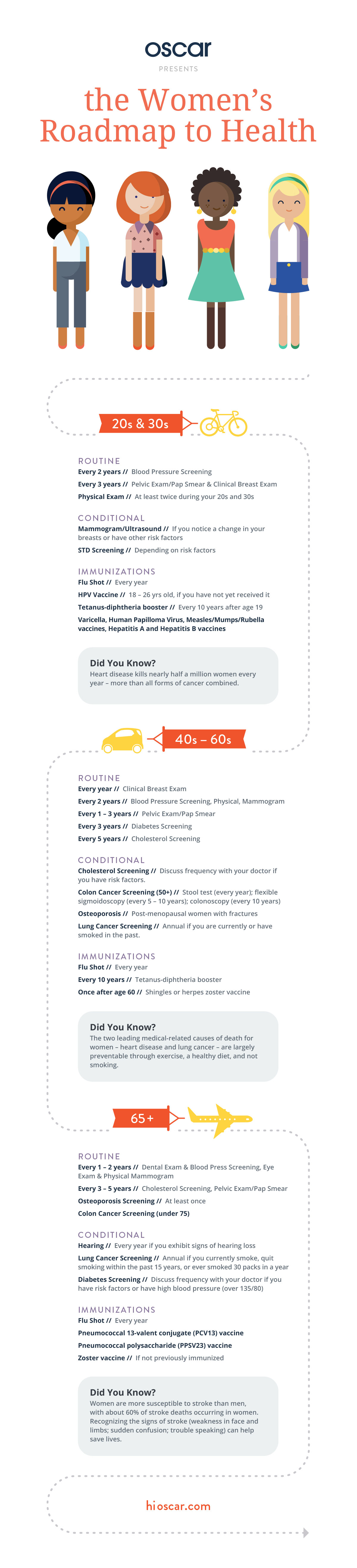
National Girlfriends Day is commemorated every year on August 1st, thanks to the CDC. Not only is the day meant to celebrate female friendships, but it’s also about empowering your girlfriends to take health into their own hands and live a healthier life.

But (sorry, ladies!) there will be no cliché spa days or shopping trips this year. Instead I’ve got a different challenge for each of you: Focus on women’s health and the importance of getting necessary medical check-ups. Take a moment to show your girlfriends how much they mean to you by helping them stay safe and live well.

And no, this is not a sponsored post; I just love the information below from Oscar Health Insurance Company and wanted to help get the word out about doing something simple, yet meaningful, for the ones you love. Because you never know when a conversation like this could save a life!

oscar_pngLRG

Will you celebrate National Girlfriends Day with your girlfriends?