Portland Fit Fix: Calling All ‘Cardio Gangstas’ to Burncycle

Burncycle1

A perennial favorite on the list of best bike cities, Portland reigns supreme when it comes to two wheels. So it should come as no surprise that there’s no shortage of cycling studios for us fair-weather riders in search of a good workout during the winter months.

Enter Burncycle, which opened in fall of 2013 and offers full-body spinning, integrating hand weights, push-ups and core work on the bike. Jessi Duley, owner/instructor, pint-sized powerhouse of positivity and self-professed spin-class fanatic, opened its doors just three short weeks after giving birth to her first child– how’s that for dedication?!

jessi duley

Apparently she also made Santa’s “nice” list last year because Burncycle just got more bikes in time for the flood of New Year’s resolution riders (yay for no more wait-lists!).

Duley wants riders to feel empowered and ready to seize the day, and her goal for the studio is to “do everything with intention so you can lock in the zone, be present and earn your sweat,” as embodied in the mural that greets you when you walk in the door.

IMG_2656

But what can you expect when you come to class?

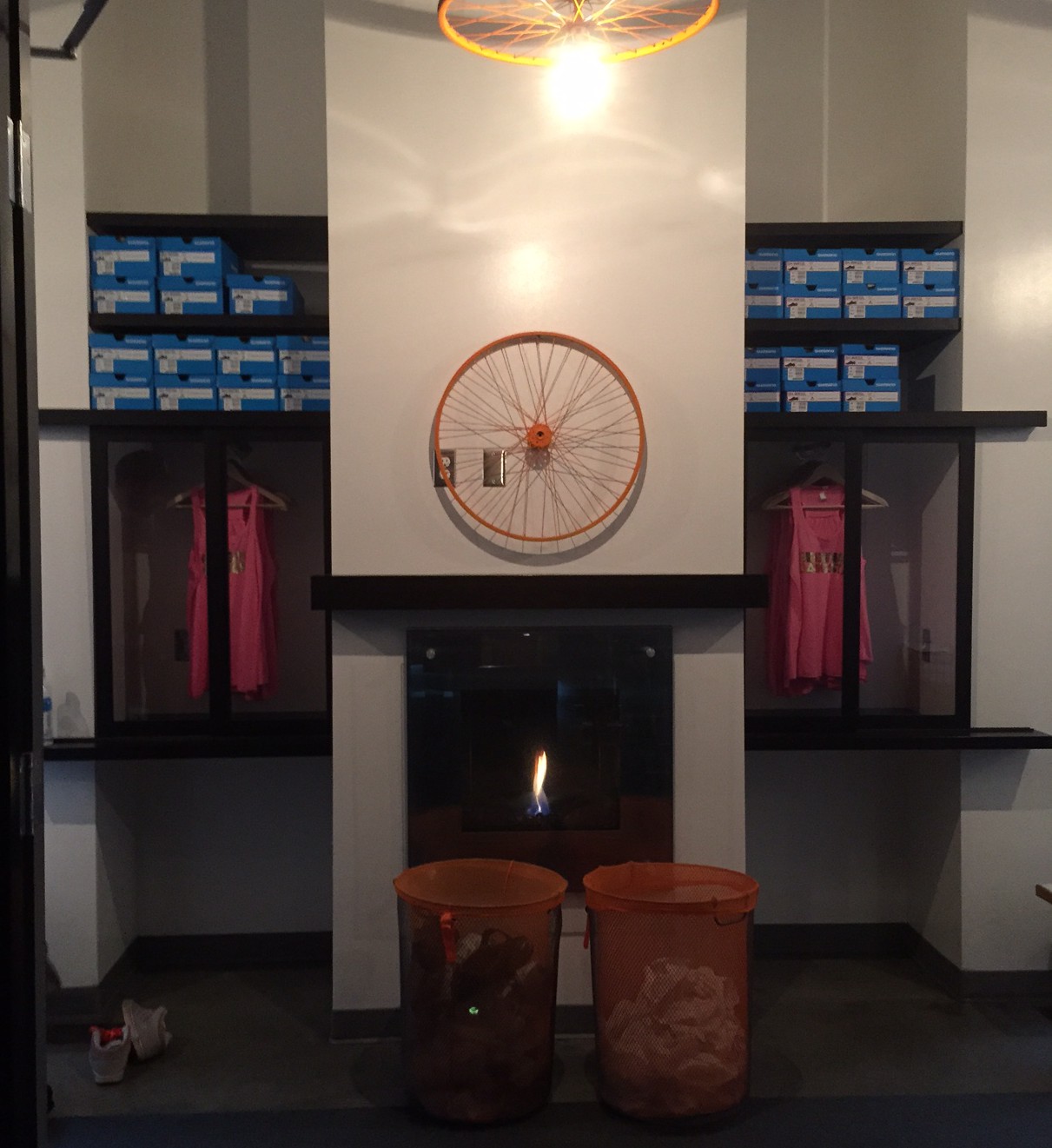
Well, for starters, smiles at the front desk from the ladies who will get you set up with rental shoes, fitted on your bike and teach you how to clip in.

IMG_2660

Next, there’s the matter of Burn etiquette. If you want to join this pack, you’ve gotta bring a good attitude, give it your all, focus on the 45-minute task at hand and bring enough energy to help rock the room.

Or if you’re a little low on the energy part, you can always rely on your pack-mates; just don’t pop a squat in the front row if you want to do your own thing that day.

IMG_2657

As far as the ride itself, there are three things that set Burncycle apart (and may feel Soulcycle-esque for those of you who are familiar):

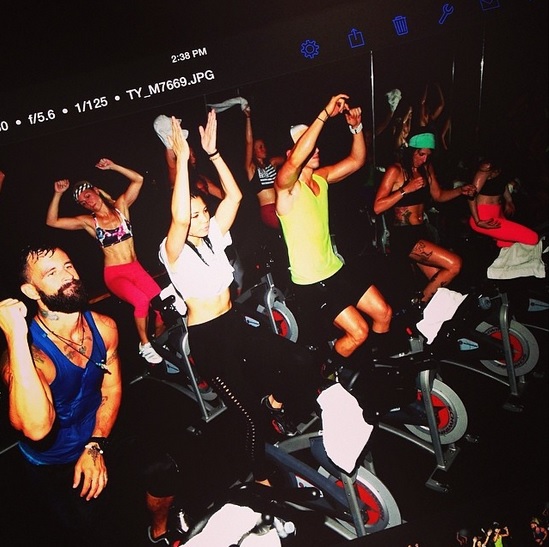
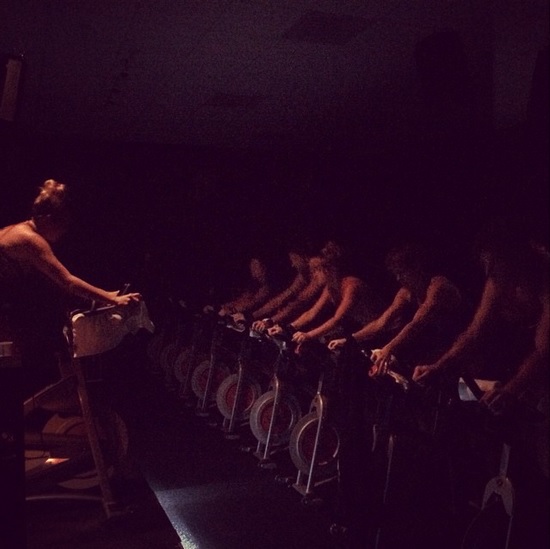
First, the room is dark so you can get in the zone. Second, you’ll use some small dumbbells in the second-to-last segment of each ride to give your upper body some lovin’. And, last but not least, there’s the pack mentality where you’ll feed off one another’s energy as the ride progresses.

IMG_2658

Our firecracker of an instructor, Kira, led us through a series of energetic jumps, tap backs, runs and sprints interspersed with all kinds of push-ups, dips, presses and crunches for a heart-pounding, ear-thumping dance-party of a workout.

Between affirmations she worked the lights to set the mood during different songs and encouraged us to pedal away our worries for the week. And before I knew it, we were onto our weight segment and swinging towels around our heads to rally for the final few minutes of class.

Final verdict? Party with this pack, and you’ll leave sweaty and smiling.

Burncycle

What to know before you go:

  • New riders get their first class free in January (resolution, anyone?!)
  • Otherwise you pay a $18 drop-in fee for one class or can buy a package for multiple classes
  • You’ll also need a pair of cycling shoes; bring your own or rent a pair for $2
  • Expect to have a blast; the room’s dark, the music’s loud and the energy’s through the roof
  • Refrain from wearing loose clothing that could get caught in the bike; I like capris and tanks
  • Hydrate before, during and after — and fuel up with a light snack 30 minutes before class
  • Bring a positive attitude, an open mind and prepare to feel the burn!

IMG_2659

Want to hit up a class and experience the feel-good vibes yourself? Visit BurncyclePDX.com for more information.

Fave Fix: GoodBelly 12-Day Belly Reboot

IMG_3207

The holidays tend out to bring out the crazy in all of us, right?

Case in point: After months of excess, we toss kale in our grocery carts and halfheartedly call it “eating healthy” (even though we’re buying roughly twice as many calories per serving in food now, as compared to the holidays, says this study) or commit to a crazy cleanse or restrictive diet that’s destined to leave us yoyo-ing throughout 2015.

Why abuse your gut in an effort to lose it?

My suggestion instead: Be nicer to your belly with a 12-Day Belly Reboot.

safe_image

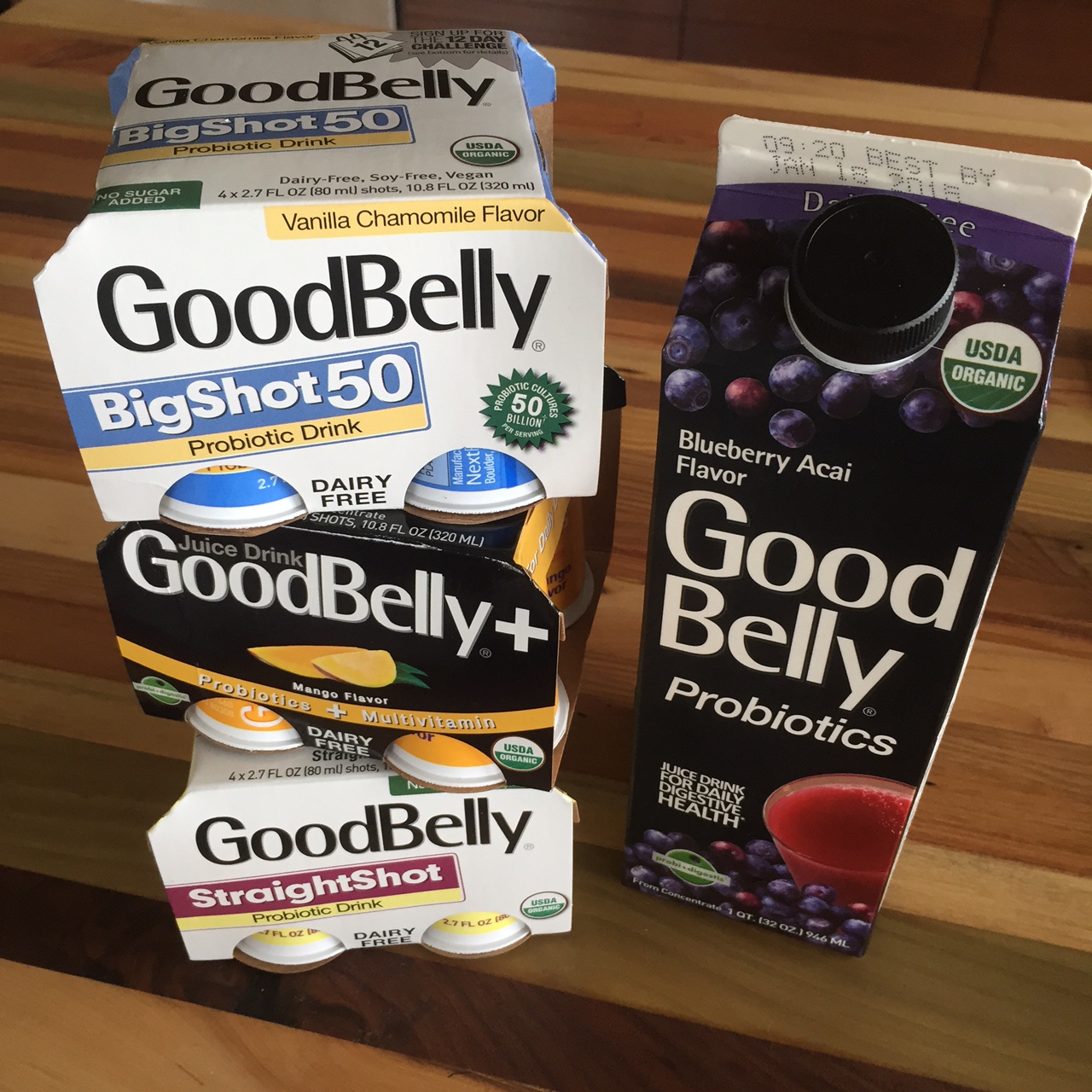
The kind folks over at GoodBelly contacted me to check out their new program, which launched just in time for the New Year. During the Reboot, you drink one 8 oz. glass or one shot of GoodBelly a day for 12 days. Along the way, you’ll be able to track exactly what’s happening in your body and get extra motivation in the form of tips and coupons.

“Since probiotics do their work in the belly and beyond, there hasn’t necessarily been a way to see tangible results of their impact on overall health, ” said Alan Murray, CEO of GoodBelly. “Our new Belly Reboot was created to offer consumers a way to really track and understand how probiotics can impact the way they feel in just 12 days.”

Made with the well-researched probiotic strain, Lactobacillus plantarum 299v (LP299V®), GoodBelly supports digestive health. Unlike many other live and active cultures, though, LP299V survives passage beyond the stomach’s acidic environment in order to support the rest of the digestive system, and ultimately overall health.*

IMG_3206

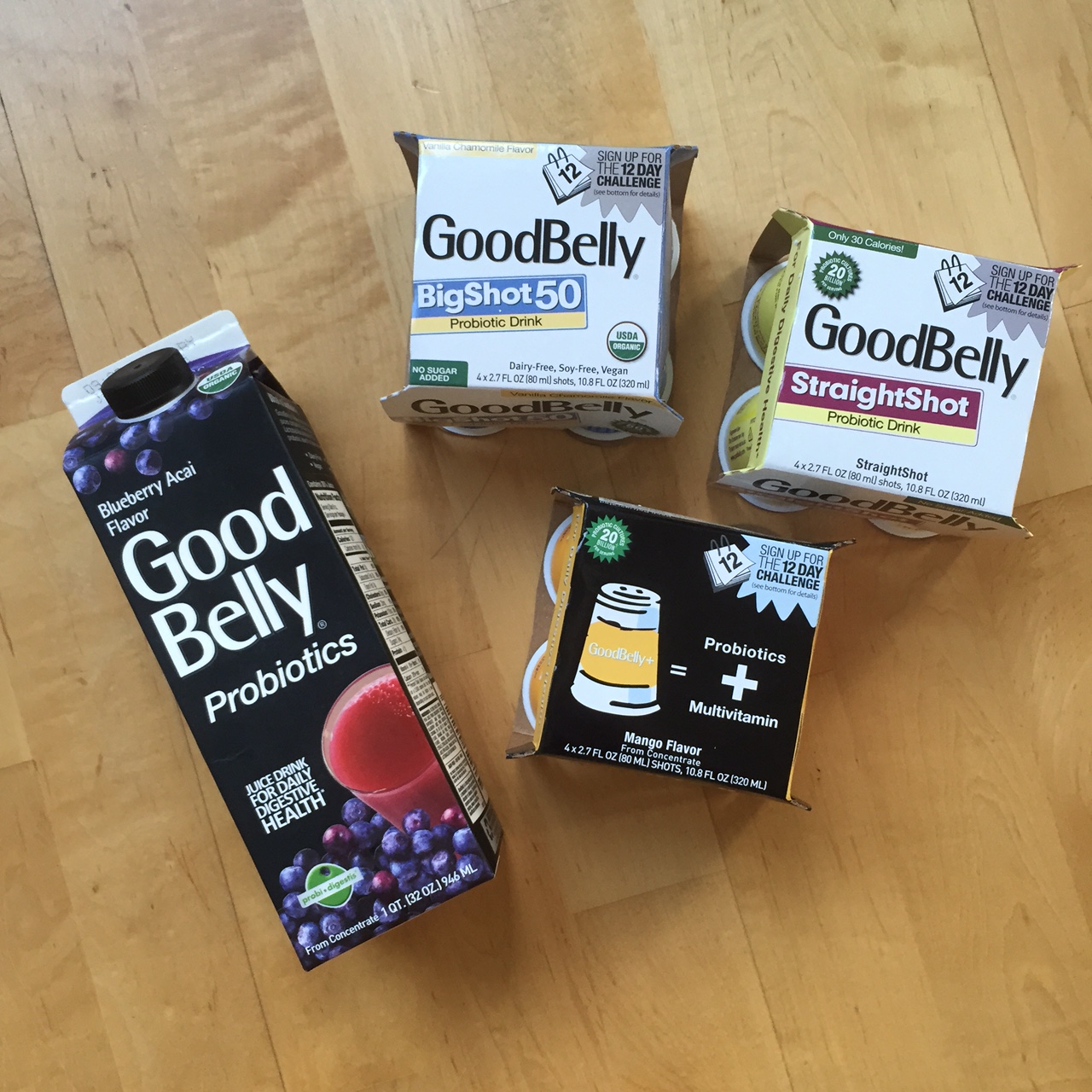
GoodBelly offers multi-serving quarts and single serving shots, available in flavors like Blueberry Acai, Mango, Pomegranate Blackberry and Strawberry. Each serving packs 20-50 billion live and active probiotic cultures to promote healthy digestive and immune systems, as 70 percent of the body’s immune system resides in the digestive tract.*

I kicked off my  12-day test just as things got hectic around the holidays. The juice was delicious, and the shots were convenient (some sweet, some tart, depending on the flavor), but best of all? Between last-minute shopping stress, unusually decadent meals, lots of travel and — to top it off — an especially active cold and flu season, I was not only able to stave off sickness, but also keep my energy up and banish bloat.

If you’re on the supplement bandwagon, like me, you may already take probiotic pills. In that case, GoodBelly’s a great way to add some variety (not to mention extra vitamins and calcium) to your diet. And if you’re new to the idea, it’s an easy — and delicious — way to augment your healthy eating habits for 2015.

IMG_3210

“We believe that what you eat and drink has a direct impact on your overall health,” said Murray. “Which is why we’re committed to creating functional beverages in exciting flavors that are easy to drink and absolutely delicious.”

Now, that’s really going with your gut.

For more information on the GoodBelly 12-Day Belly Reboot, click here.

*Some studies suggest GoodBelly’s probiotic may help balance the bacteria in your gut when consumed daily as part of a nutritious diet and healthy lifestyle. GoodBelly is a food product and not a treatment or cure for any medical disorder or disease. If you have any concerns about your digestive system, please consult a health care professional.

My 5 Goals for 2015

2015Goals

Aside from freezing my butt off (#packingfail) while running around Michigan over the holidays, I had some time to think about goals for 2015.

2014 was pretty epic. It would be hard to top, and to try would likely be setting myself up for trouble. So, in light of my evaluation of last season and my “train smarter, not harder” mantra for 2015, I’m on a mission to build a solid foundation for a further (50M?), faster (sub-4 marathon?) 2016.

My 2015 goals are as follows:

1. Seek Balance. One of my goals for 2014 was to race roughly once per month, and while I enjoy motivating and challenging myself this way, I want 2015’s racing schedule (still TBD) to be based on quality, not quantity.

2. Train Smarter. I sound like a broken record with this one, but I want to take 2014’s lessons and apply them in 2015 — namely, building an aerobic base using heart rate, continuing strength training and pre-hab to activate glutes, along with regular cross-training for flexibility and functional fitness.

3. Face Fears. 2014 was the year of #bikelove — I went from never having clipped in to competing in an Olympic triathlon to completing a 50-mile solo ride and loving.it. — so I want to make the same strides as far as swimming goes. Gulp.

4. Push Myself. Nothing’s set in stone yet, but I’m tossing around a few ideas for challenges to keep me stoked and give me something for which to strive in the New Year, including a duathlon, another 50K and a century ride.

5. Give Back. It’s easy to get lost in your own little training world each season, so in 2015 I’m leading the Team LUNA Chix Portland Run crew in order to help inspire and encourage women to get outside and play, all while raising money and awareness for the Breast Cancer Fund.

Have you set your goals yet for 2015? What are they?

Recipe: Banana Carrot Muffins

IMG_2573

I don’t know about you, but rainy weather and cold temperatures always put me in the mood for baking. That can get out of hand pretty quickly in a wet climate like Portland, though, so I’m making an effort to incorporate more nutrients into my sweet treats this season.

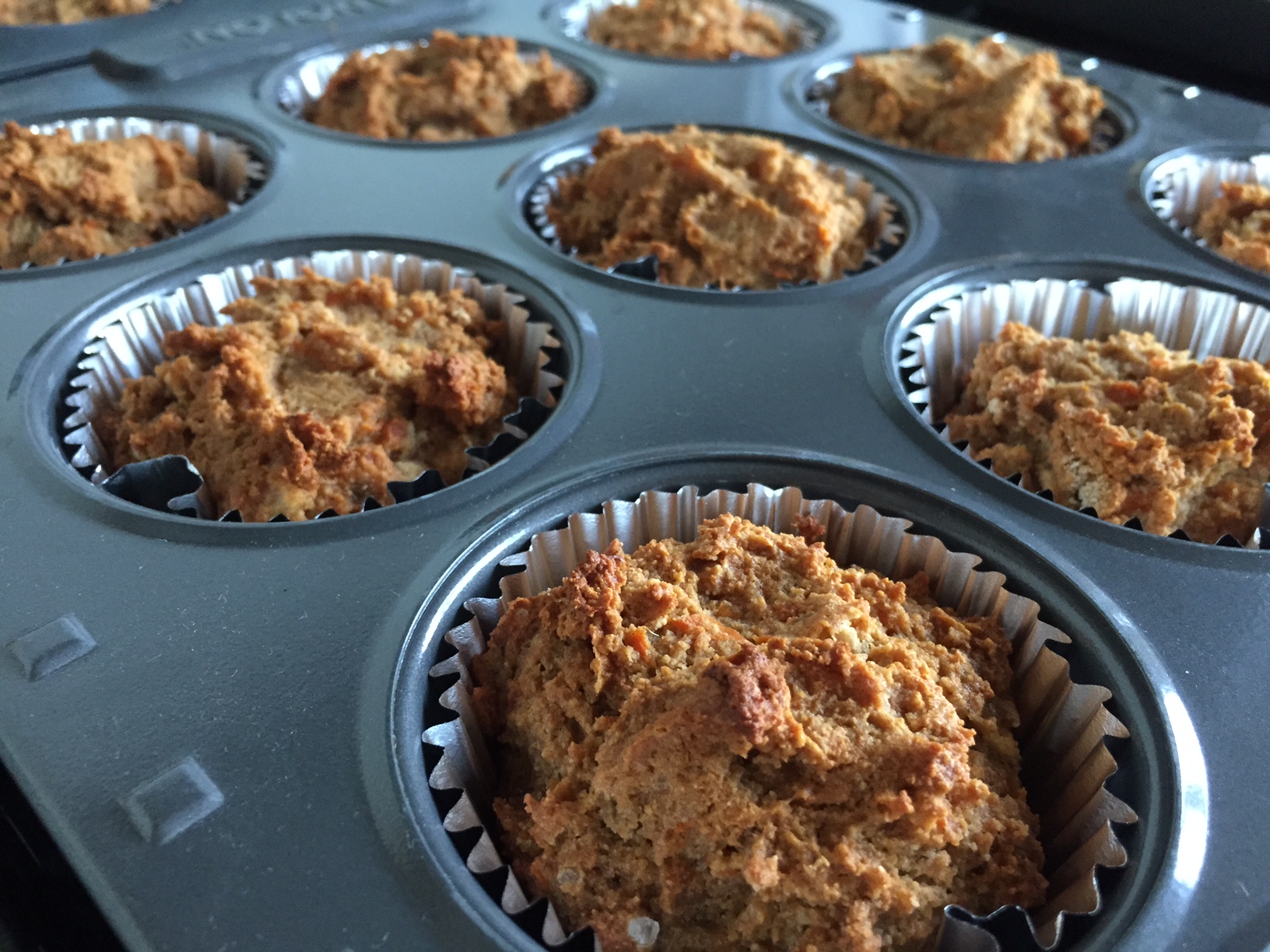
Case in point: I adapted the following recipe from Wassner Twins’ delicious Chocolate Chip Banana Bread, making some substitutions based on ingredients we happened to have on hand. The result is a perfect little pick-me-up for enjoying with your morning coffee — and it won’t leave you feeling sluggish for hours after.

Banana Carrot Muffins

Ingredients:

  • 3 bananas
  • 3 teaspoons cinnamon
  • 1/4 cup Agave syrup
  • 1/2 cup coconut oil
  • 2 eggs
  • 1/2 teaspoon vanilla
  • 3/4 cup all-purpose flour
  • 3/4 cup coconut flour
  • 1 1/2 teaspoons baking powder
  • 1 1/2 teaspoons baking soda
  • 1 tsp salt
  • 3 medium carrots, grated with a box grater (about 1 cup)

Directions:

  1. Preheat oven to 350 degrees.
  2. In a small mixing bowl, use a fork to mash bananas with cinnamon.
  3. Add Agave, oil, eggs and vanilla. Beat with a hand mixer on medium (or rigorously by hand) until combined.
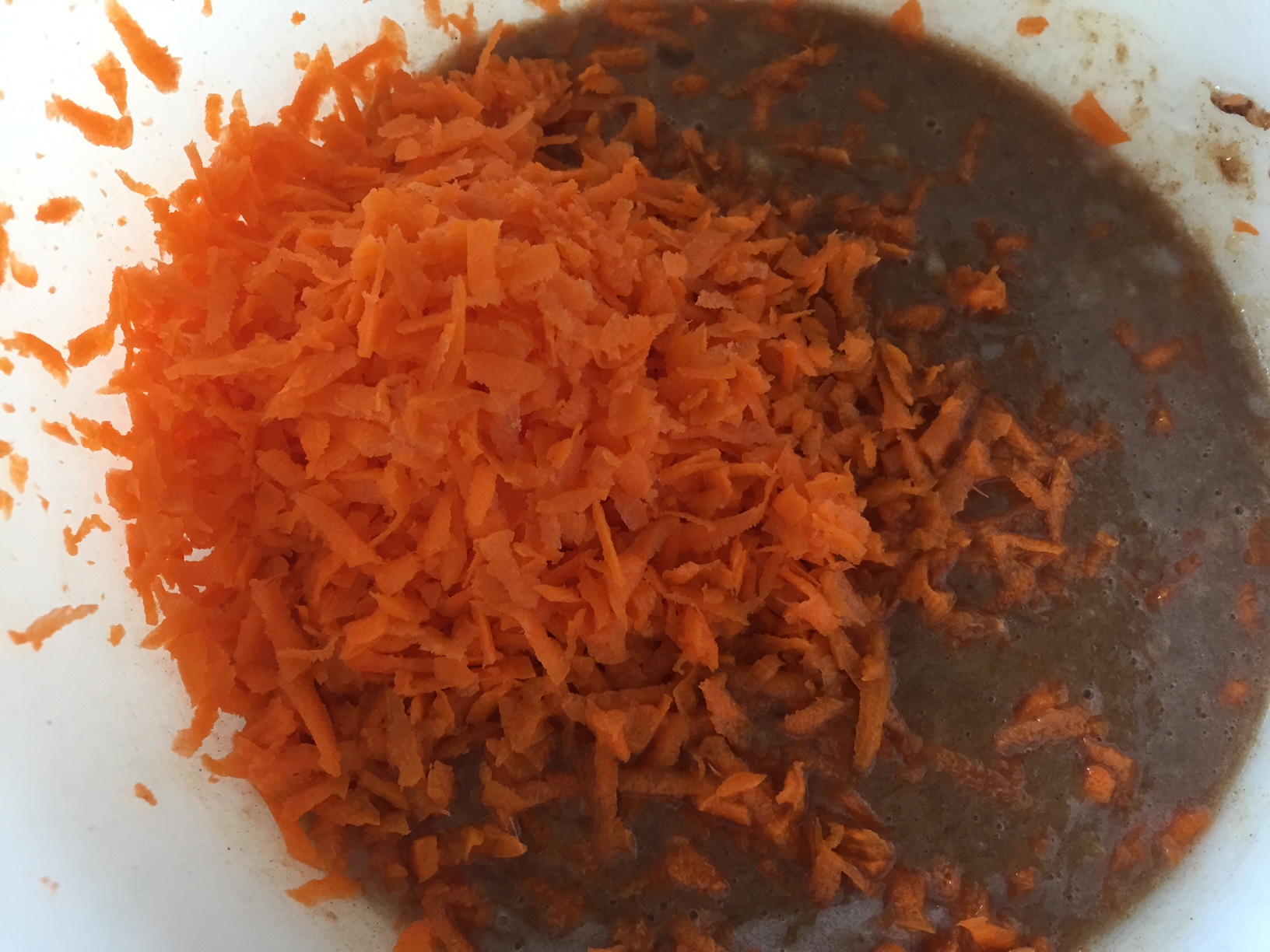
  4. Stir in carrots until they’re evenly dispersed throughout the batter.
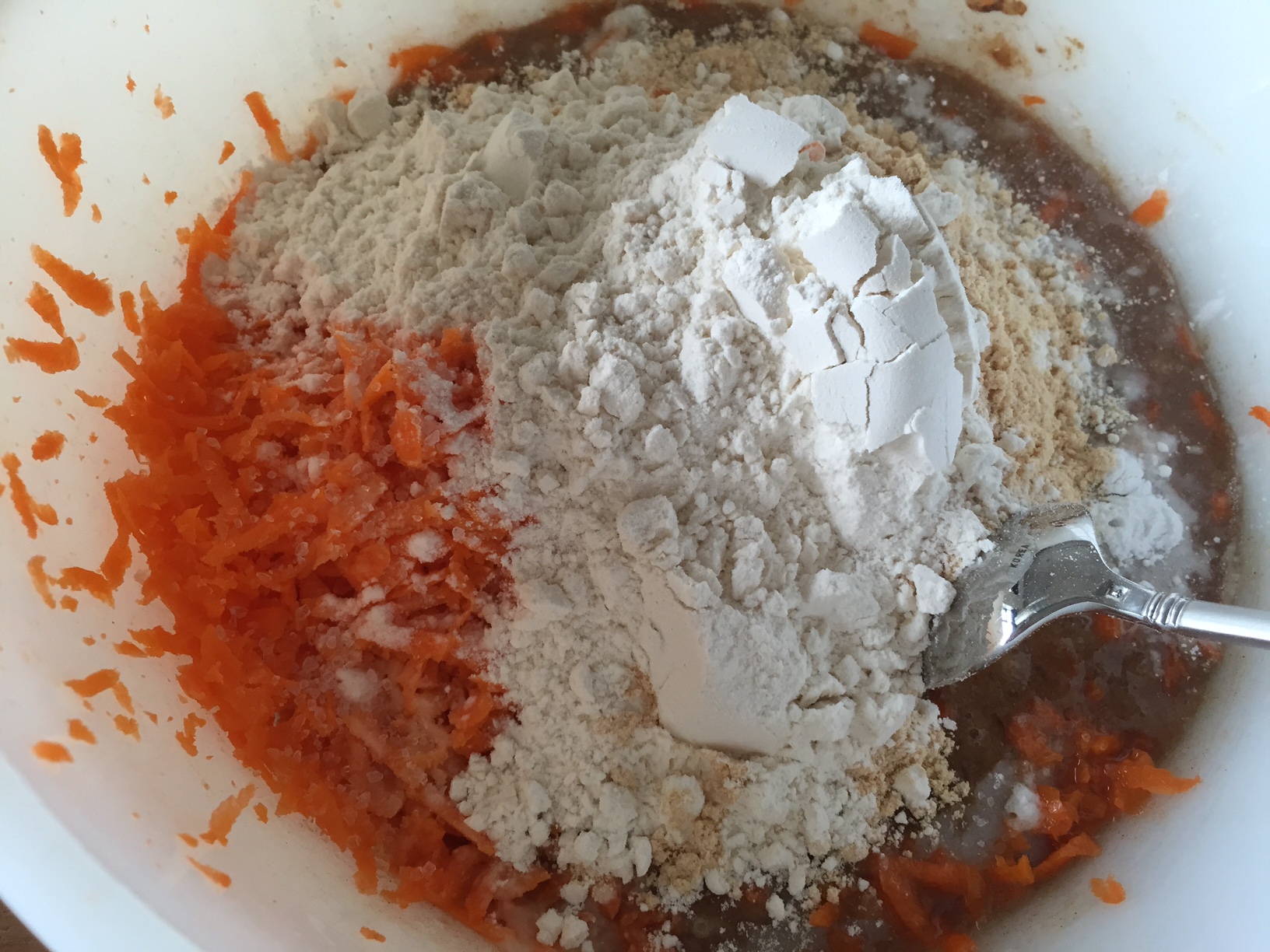
  5. Add flours, baking powder, baking soda and salt, mixing by hand until the dry ingredients are incorporated.
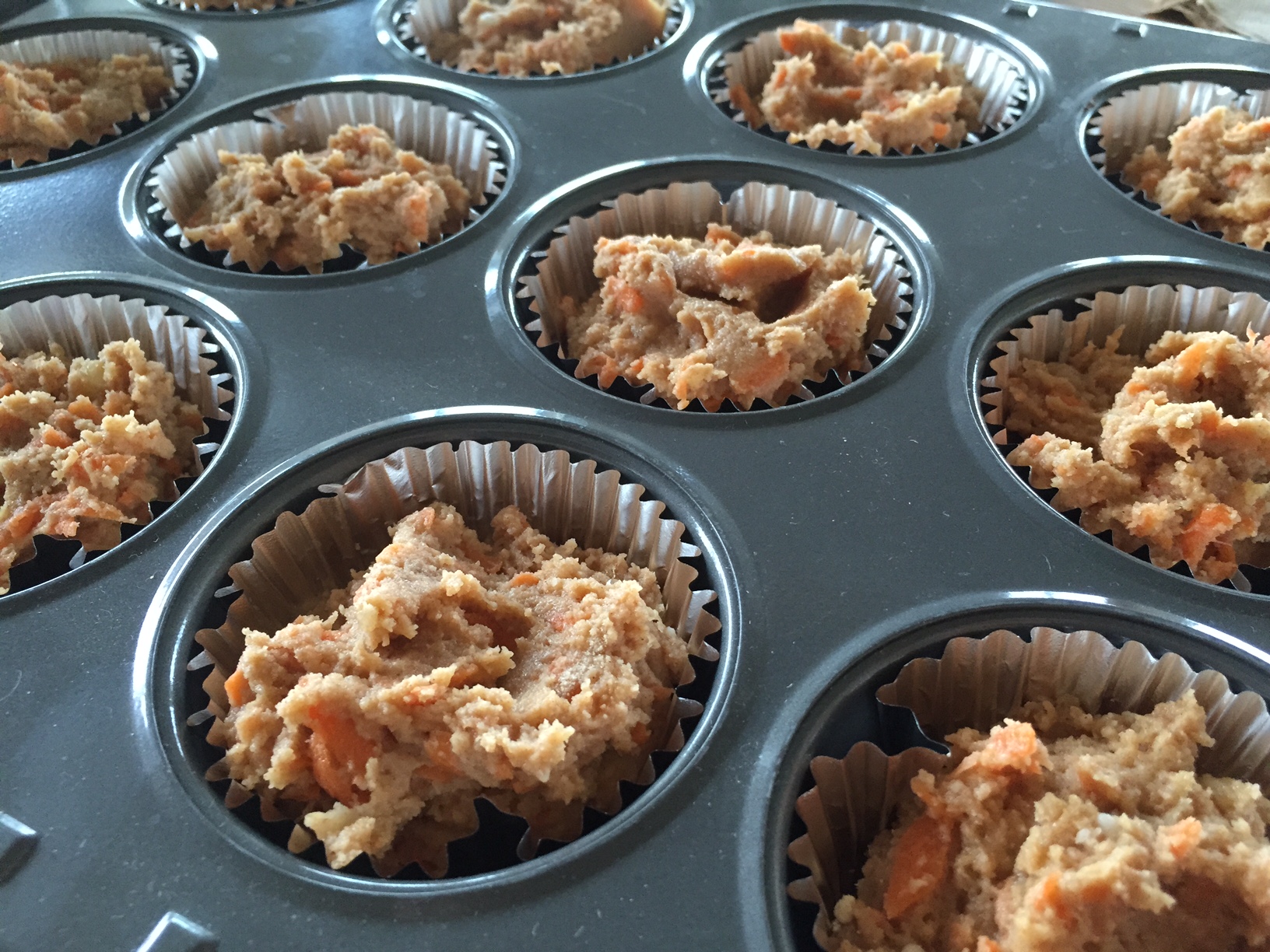
  6. Divide mixture into lined muffin pans, filling each one about three-quarters to full (batter won’t rise much).
  7. Bake 20-30 minutes or until edges are golden and a tooth pick inserted into the middle of each muffin comes out clean.

The Wassners recommend using bananas that aren’t over-ripe so the recipe doesn’t get too sweet, but you may want to adjust accordingly if you find that this recipe isn’t sweet enough to your taste.

IMG_2565

You can also play around with the amount of Agave to get the batter to your desired level of sweetness.

IMG_2566

And who would have thought to add carrot into banana bread?

But it’s a great way to get some good vitamin A, as well as a host of other powerful health benefits, including beautiful skin, cancer prevention and anti-aging properties.

IMG_2567

Another area in which you can experiment is the flours: If you’re gluten-free, feel free to swap out the all-purpose flour for your favorite alternative.

But I like to retain some of the white stuff to keep the muffins from getting too dense.

IMG_2568

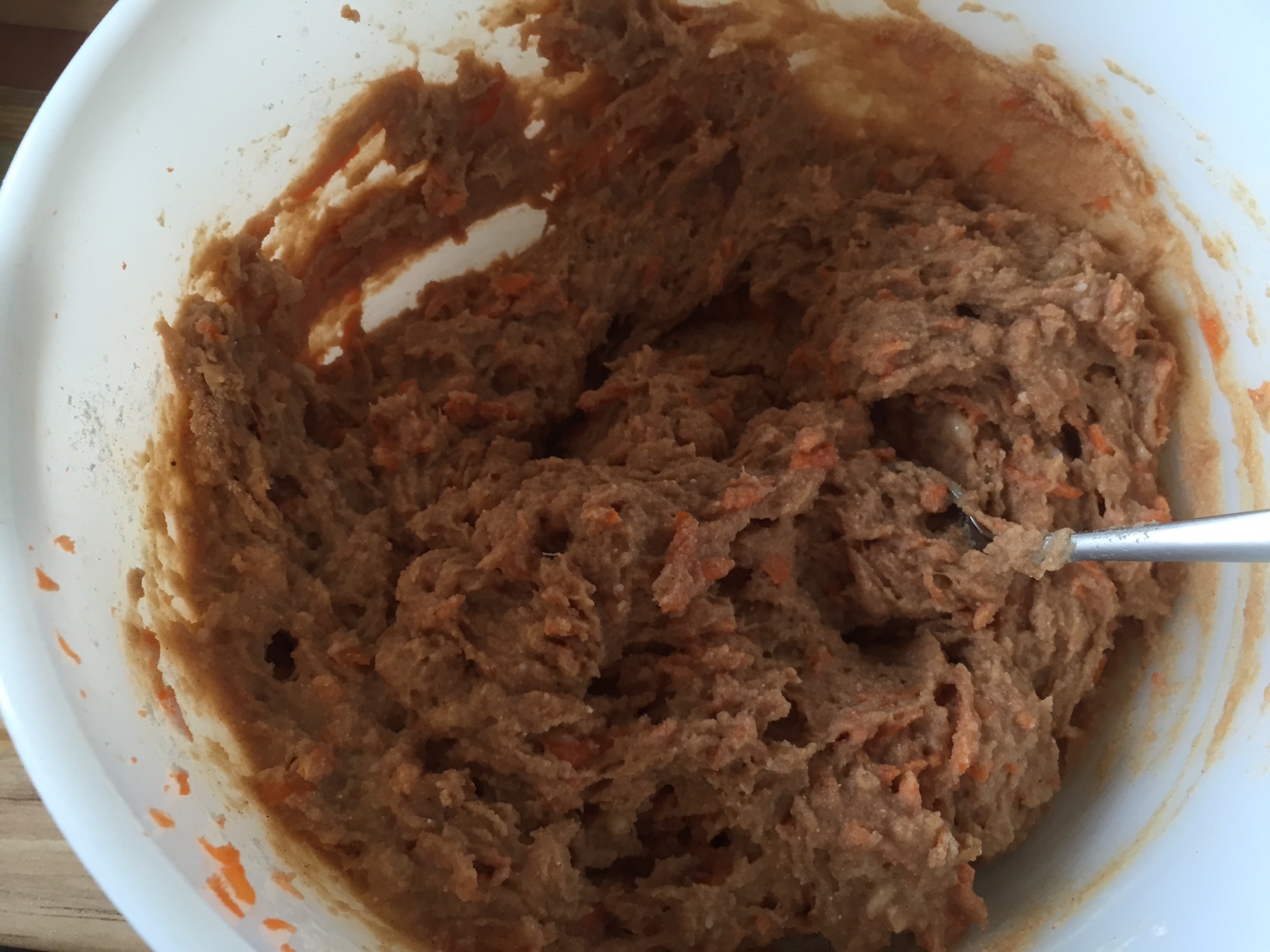
One word of warning: The batter will be dry and thick, but don’t worry! Simply scoop it into your muffin cups instead of pouring it in.

IMG_2569

Because it is so thick, you’ll also want to smush it down in the cups to make sure they’re filled evenly.

IMG_2570

As you can see, they won’t rise much — if at all — so the best way to tell whether or not they’re done is to make sure to do the toothpick test.

Not only do oven temperatures vary, but these tend to take a bit longer to cook than traditional muffins, so don’t be surprised if their cooking time is on the higher end.

IMG_2574

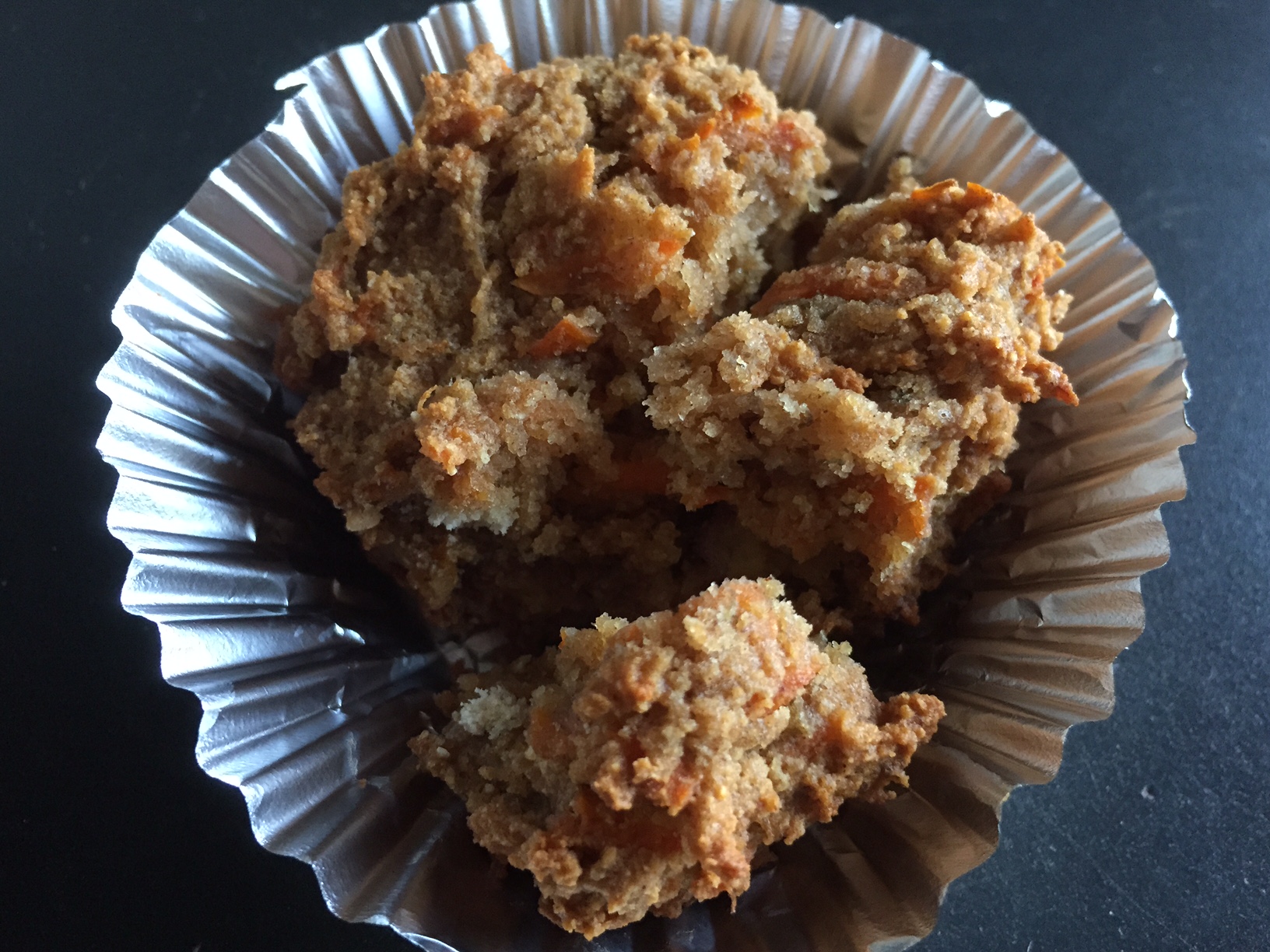
I promise, though, they’re worth the wait. Your house will smell lovely, and you can eat as many as you’d like, guilt-free…well, within reason.

IMG_2576

What’s your go-to activity when the weather is crummy?

Race Report: LifeTime Fitness 2015 Indoor Triathlon

IMG_3603

Although I said I’d hold off on registering for another triathlon until I work on my swim, I couldn’t help myself when I found out that the Indoor Triathlon Hour powered by Life Time Tri and IRONMAN would be happening while I was in Michigan.

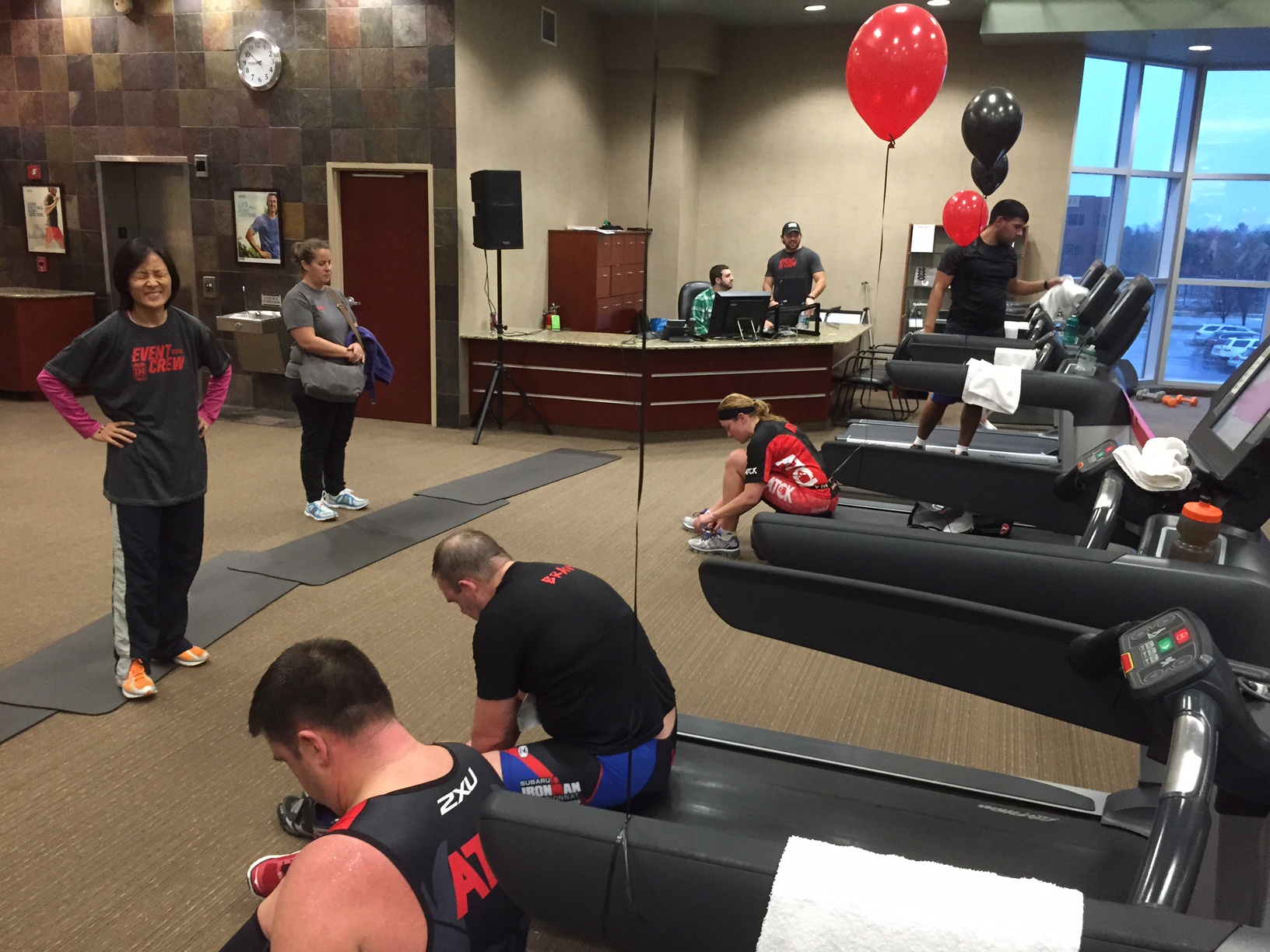
In an effort to inspire the community to consider and commit to racing triathlon in 2015, LifeTime Fitness created the event as a way to offer an inspirationally-charged, safe and indoor environment for athletes of all fitness levels to experience the nation’s fastest growing sport of triathlon.

I did a similar event last year at a different location, and while my distances were slightly shorter this time for the same time-frames (damn!) — 10-minute swim/30-minute bike/20-minute run — I can’t complain too much because my training has been consistent but not particularly focused lately.

My wave — the first of the day — started promptly at 8 a.m., so I arrived about 20 minutes early to check in, get my cap and number and get organized in the locker room transition area. And then it was go time!

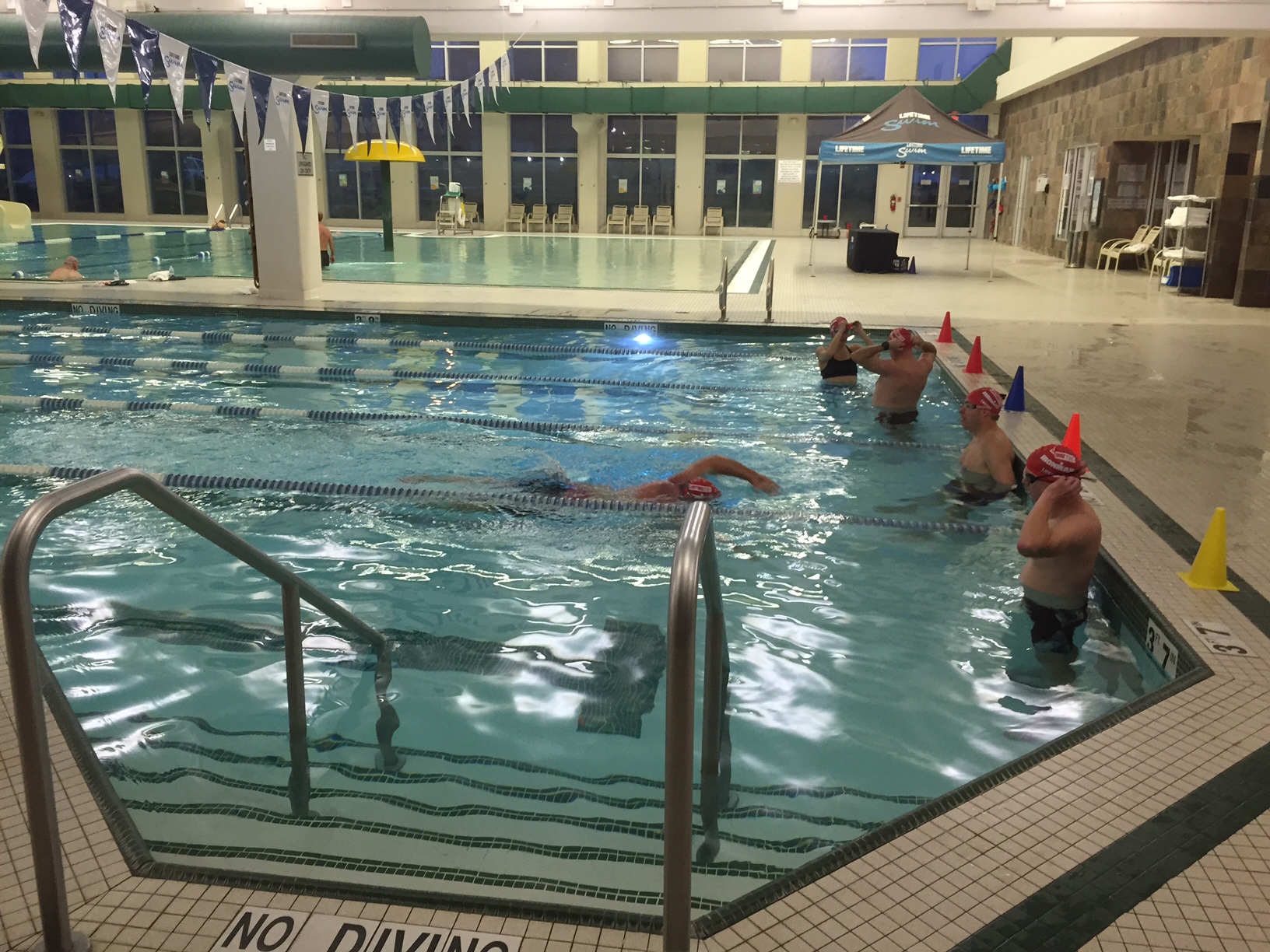
Swim: 10 minutes = 17 lengths

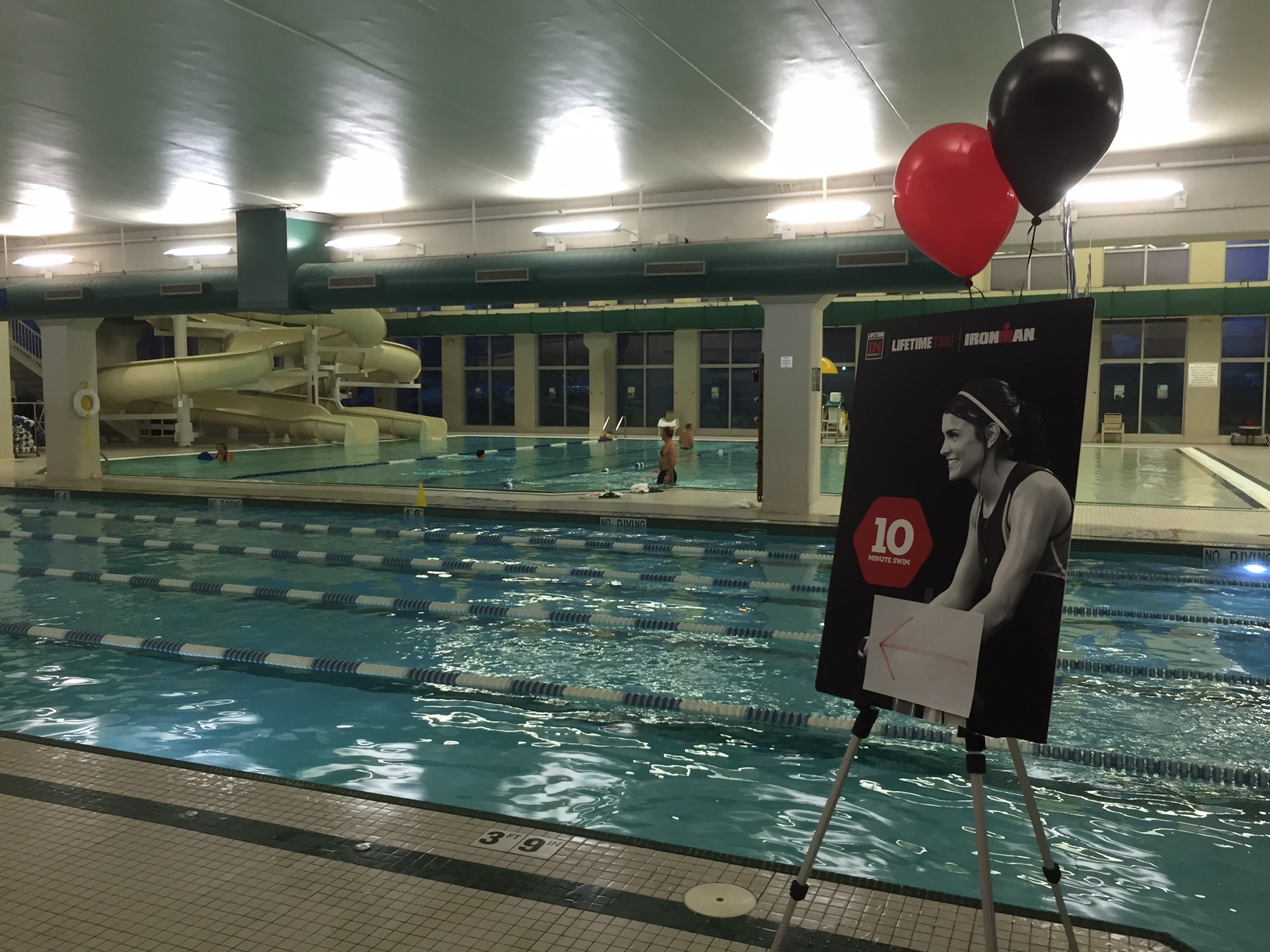
Clean, clear water and only two people to a lane? Now, that’s how I start to get my swim mojo back.

And apparently my lane buddy, Eric, had the same idea. He’d done outdoor triathlons before but had a bad swim experience recently, as well, so both of us joked about just wanting to just get through that part of every race.

IMG_3595

Since the lap pool there has five lanes, they limited each heat to 10 people. By the time I had arrived, people were already starting to warm up, so I hopped in and swam one length to try to get the pre-race jitters out.

This is about when I also noticed that my wave-mates were a pretty athletic looking bunch. I was one of three ladies, and I could tell quickly that this wasn’t a group who was trying triathlon for the first time; these people were here to kick off their seasons, so I figured I’d just try to keep up.

IMG_3594

My adrenaline didn’t work in my favor because I went out way too quickly. And the combination of being against the wall (aka swallowing back-splash) and getting bumped a few times took me right back to my Olympic triathlon back in April, and I could feel myself start to panic.

This is where the giant countdown clock came in handy, though, because I’d raise my head at the end of the lane and think, You can do anything for five more minutes. Gradually, I got my rhythm back and, thankfully, the whistle blew for us to stop after I’d gotten 17 lengths under my belt.

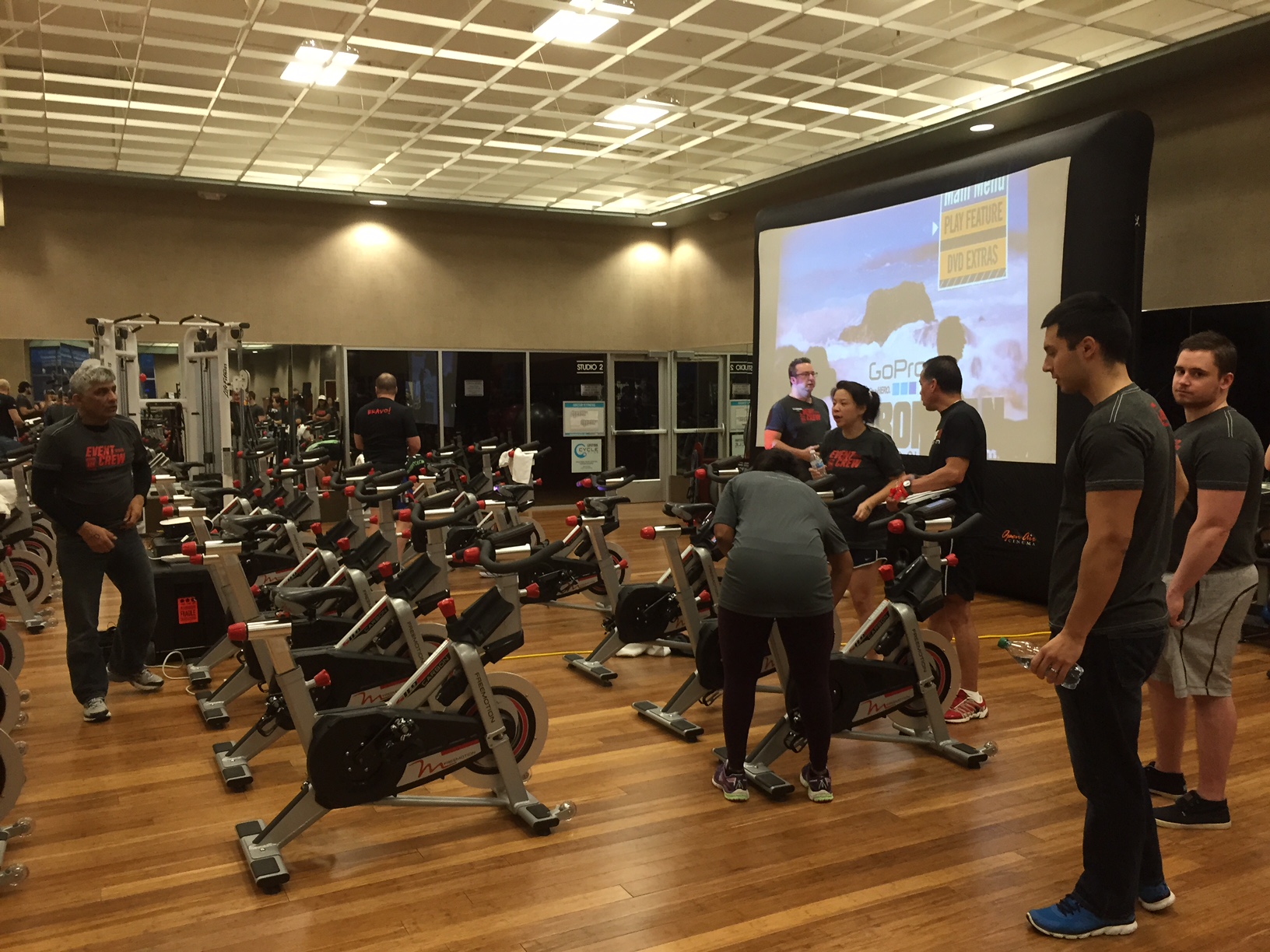
Bike: 30 minutes = 7.7 miles

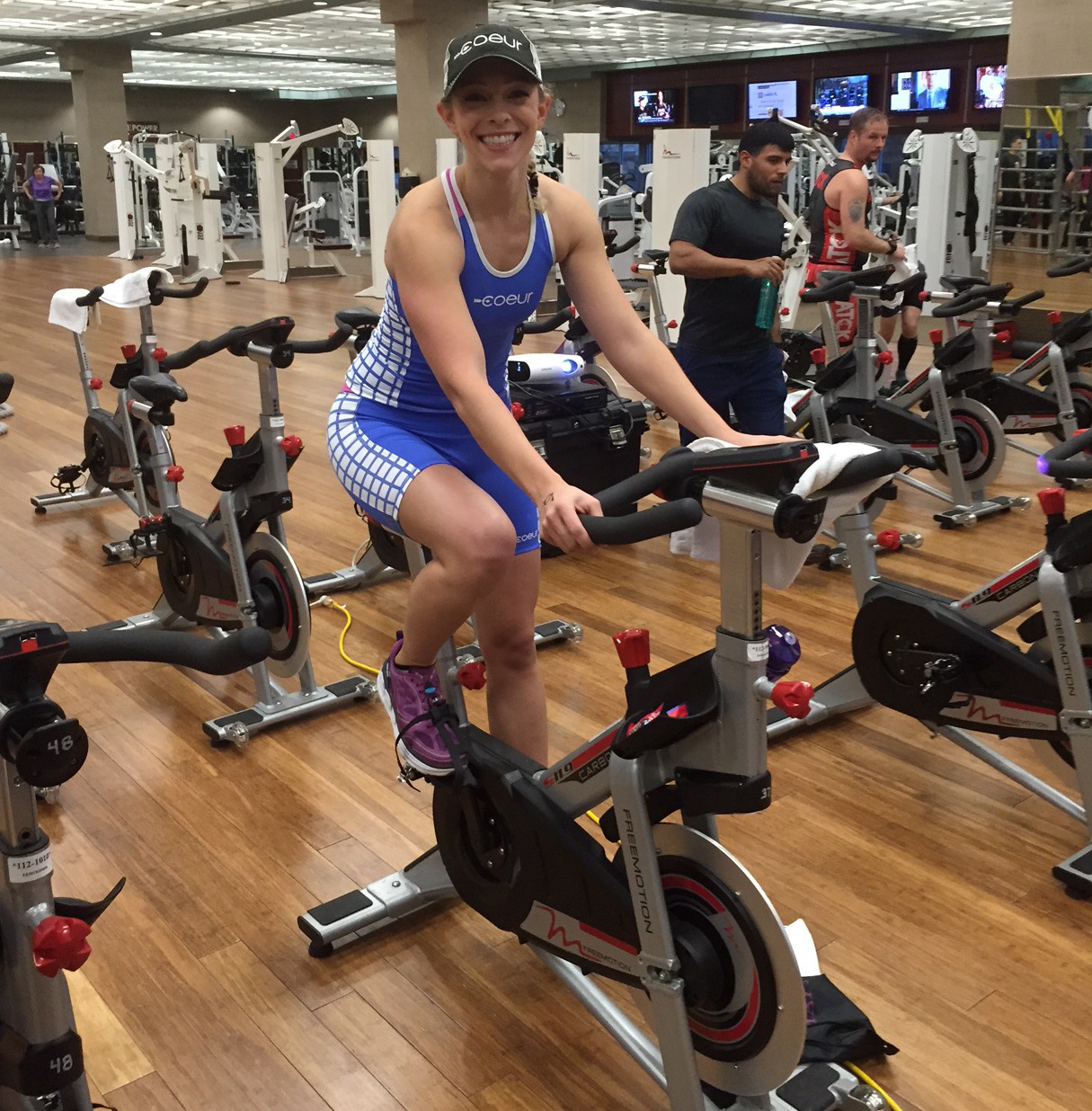
Although they gave us a generous 10 minutes to transition from the swim to the bike, the time flew by. I tugged off my suit in the locker room, threw on my Coeur kit and headed upstairs to the bike area that they had sectioned off by the cardio equipment.

For some added motivation, we could watch Ironman videos on the projection screen, so I snagged a front-row seat for the action. I didn’t have my bike shoes to be able to clip in, so I secured my running shoes in the pedals and prepped my nutrition: a bottle of water and a trusty Chocolate Peppermint Stick LUNA bar.

IMG_3596

And we were off again! The music pumping nice and loud, so I tried to ride to the beat and turned down my resistance as much as possible to gain some of the ground I lost in the pool.

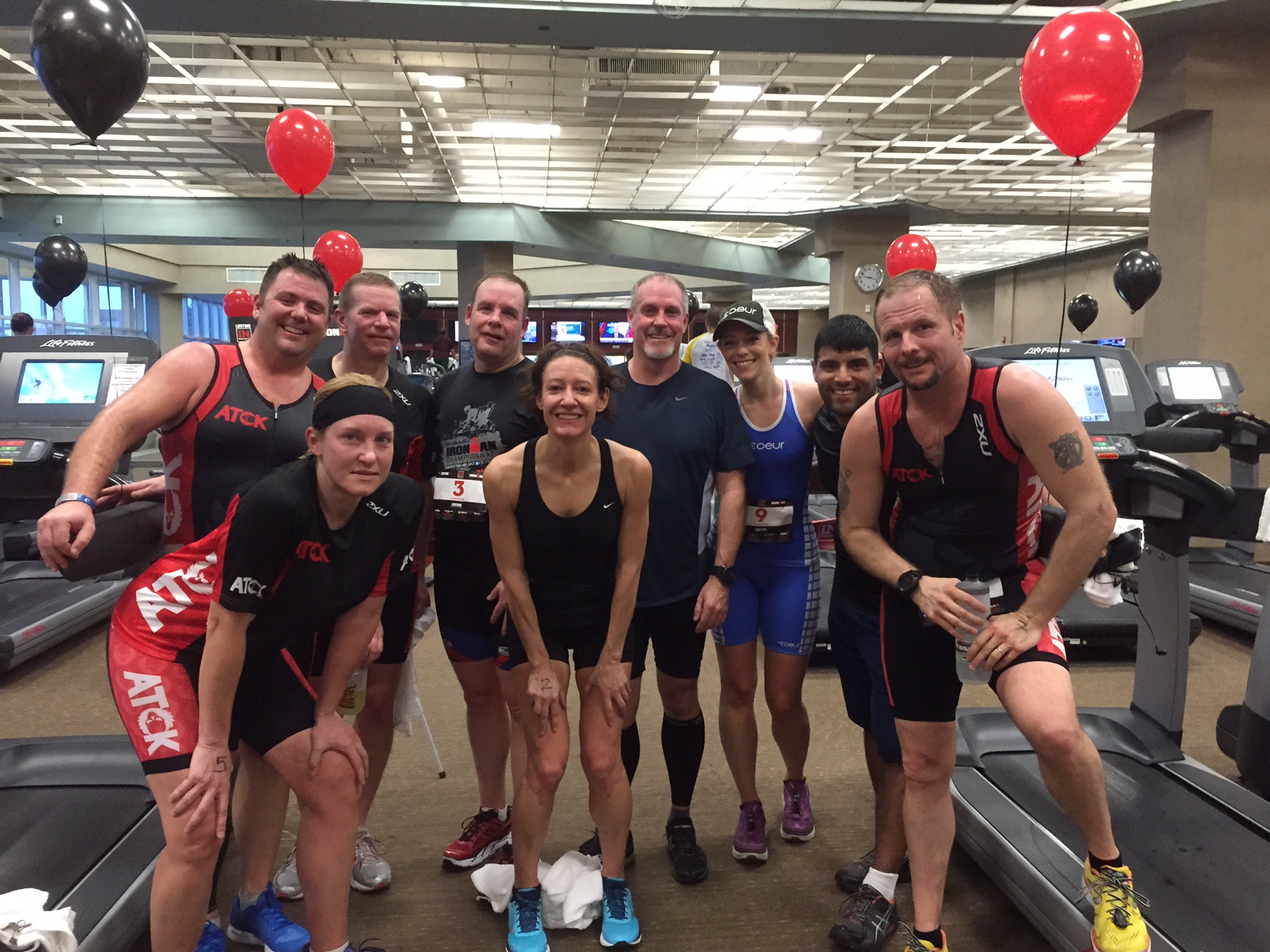
I got the feeling that a few of my heat-mates train together because they rode in a group and were encouraging each other throughout the ride, which was inspiring to hear. We pedaled furiously as a small crowd gathered to watch us push onward, still dripping a bit from the pool, but smiling from ear to ear.

IMG_3598

I think the bikes may have been calibrated differently from last year’s race because my just-under-eight-miles seemed like a conservative estimate for how strongly I felt like I was riding (especially after getting a comment form one of my heat-mates to the same effect). But, regardless, I stayed pretty steady throughout, ate and drank consistently, and was proud of my overall effort.

The second wave came up to join us with about 10 minutes to spare in our ride, so we pedaled as a large group for the final portion. Their energy was a breath of fresh air after hammering away on the stationary bike, and just a few minutes after they got settled the whistle blew for our final transition.

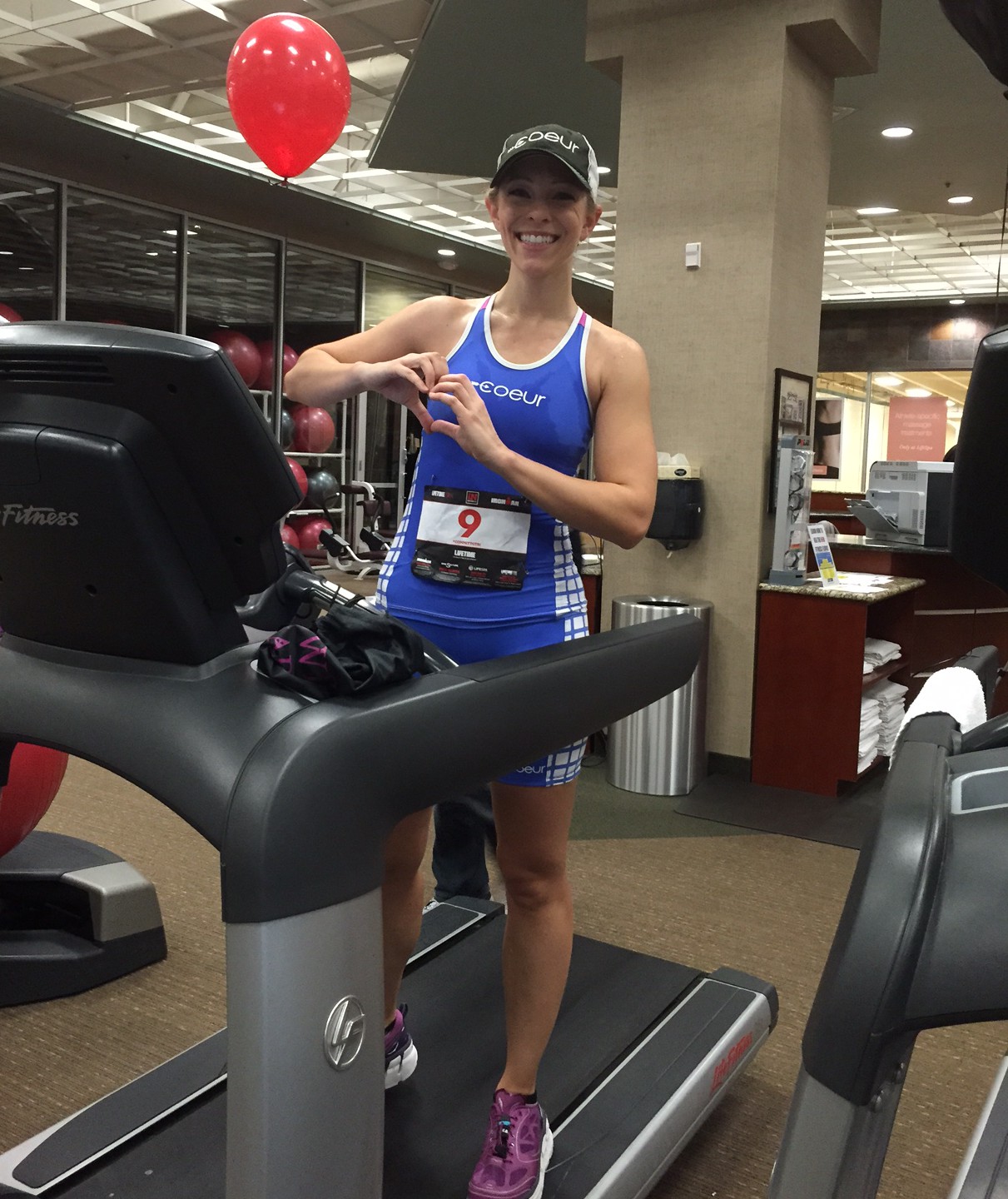
Run: 20 minutes = 2.69 miles

We had five minutes to get from the bikes to the treadmills, but they were just a few yards away, so I grabbed a towel and got situated quickly because I already had my Hoka Conquests on.

My heat-mate next to me had a treadmill malfunction at the very last second, so he scooted over to another machine just as they started a countdown to the third and final portion of the event.

IMG_3601

Because I’ve been managing what I’ve self-diagnosed as some SI joint pain (note to self: must continue to work on my lack of ankle mobility, which is likely the culprit!) since my marathon, my plan was to run a conservative first 10 minutes and then gradually increase my speed over the next 10 minutes to warm up properly.

I started off at 6.8 mph and increased to around 7.5 when one of the volunteers came by, daring me, “I think can go faster than that.” Yep, she was right; I wasn’t really out of breath, so I pumped it up a few tenths of a mile every minute or two until I was up to 8.5 mph 15 minutes in.

IMG_3599

I was hoping to inch up the speed to 9.0 mph like last year, but I started feeling a little lightheaded with three minutes to go, so I gritted my teeth and ran on. Maybe increasing the speed wasn’t an option, but I sure as hell wasn’t backing down at that point!

When the final whistle blew, I ended at 2.69 miles. Not PR territory, but a solid performance with an average pace of 7:26/mile, so I’ll take it…especially considering I’ve eaten my weight in Christmas cookies over the past few weeks.

It was also a wake-up call: Fitness-wise, I’m close to what I was last March, so I’m happy to have been able to maintain. Training-wise, however, I’ve got to dial things in better if I want to progress. And, nutritionally, I think I did ok, but probably could have used some extra oomph for the run in the form of Osmo or Tailwind in addition to the LUNA bar.

All in all, it was an event I’d highly recommend, especially if you’re looking to kick off your training with a low-pressure race and get a baseline in place.

Congrats to everyone who participated, and cheers to a successful 2015 racing season!

9 Questions to Ask Yourself Before Next Season

db412d15533baa53d7d8b49556691179

Back in November I got pretty fired up after reading blogger friend and fellow Coeur Sports teammate Kecia’s blog post, which talked about evaluating her 2014 triathlon journey in order to set S.M.A.R.T. goals for 2015. It inspired me so much, in fact, that I thought I’d do the same in anticipation of my own fitness planning for the upcoming year.

Using this article in USA Triathlon as her guide, Kecia addressed nine critical, but often overlooked, steps to effectively evaluating her season. As the author says, “Allowing your success to be determined solely by the finish line clock or your ranking is not fair to all the effort and time you invested. You deserve more credit than that.”

I couldn’t agree more. So as we all prepare to spend the next 360-odd days training for something (or a lot of things), take a stab at the questions below and see how your efforts from last year stack up. Be critical, be honest, but — above all — be open to changing tactics in order to see some strategic gains in 2015.

1. In hindsight, were your season goals clear and attainable?
Did you achieve what you set out to do at the start of the year? Knowing what you know now could you have aimed higher, or were you somewhat unrealistic in your expectations of your time, commitments or the physical skills you needed to develop? Use hindsight as a barometer for thinking ahead to next year and create goals that push you and inspire you to go for it.

My main goal was to PR in the marathon and finish in under four hours, which didn’t happen. My secondary goals were to tackle some new events, such as an Olympic triathlon and an ultramarathon in the process. Check and check. Although I was able to maintain a higher level of fitness throughout the year and dial in my nutrition during training and racing, I failed miserably at being able to do it injury-free.

In hindsight, I was overzealous in taking on a high-volume marathon training program after upping my racing frequency and without a proper pre-hab and rehab regimen in place. As a result, a few underlying issues — namely, plantar fasciitis, stiff ankles and weak glutes — caused me to compensate in other areas, and my training was cut short with a pre-stress fracture in my tibia.

2. What were you most proud of this season?
Was it the improvement you saw in your swim, bike and run splits? Or your dedication and ability to balance your other responsibilities around the sport? How you overcame setbacks and still performed at a high level? Think of the big things and the little moments that you look back on with pride and delight in what you accomplished.

Generally? Pushing my limits and being open to trying new things outside of road running.

Specifically? Well, a few things: First off, 2014 was the year I found #bikelove, having progressed from my first clipped-in ride to an Olympic triathlon to a 50-mile solo ride. Second, this year I got onto the trails, moving from the Bay Area’s ocean-side scenery to Portland’s lush green landscape. Off the roads, I was able to push my body farther than ever before (literally) in my first ultramarathon. And, finally, I’m proud that I took the necessary steps to finally discover what might be hindering me from reaching my running goals.

3. What would you like to duplicate next year?
Perhaps it’s working with the same coach or training plan, continuing to do a variety of races and taking on big challenges that excite you and motivate you to train consistently. Of the things that you really enjoyed, what would you like to be sure you experience again?

That statement above hit the nail on the head: Taking on big challenges that excite me and motivate me to train consistently. I love the thrill of accomplishing something I previously didn’t think was possible, plus learning something new in the process is icing on the cake. And in between, I found my sweet spot with varied and frequent cross training, which not only helps keep me functionally fit, but also prevents me from getting bored.

4. What frustrated or disappointed you the most this season?
Did you struggle to see consistent improvement in your speed? Fail to summon your determination when things got hard? Were you unable to overcome nagging injuries? What concerned you and took some of your energy away from the positive things?

The most frustrating part of my season was having to succumb to overuse injury, step back from my training plan and hold myself back from running all-out in my A-race, the Detroit Marathon. After a successful first half of marathon training (including a new 10k PR), I wasn’t able to see how it would ultimately translate to the marathon distance.

At the root of all of this are those underlying weaknesses, which were the most disappointing part. The truth was a hard pill to swallow: As much as I’d been training and (I thought) strengthening my body, I was going about it the hard way — not the smart way.

5. What do you not want to happen again next year?
Were you unprepared for some races and found you performed better in training than in racing? Did you take yourself and the sport too seriously, forgetting to have fun along the way? Look for insights from question four — things that you need to avoid in order to be at your best. Put emphasis and focus on things that you can control or influence.

Physically, I don’t want to ignore my blind spots. Now I know exactly where I need to focus; sure, a 20-mile training run or a mile done at a certain pace help, but I need to seek out the small wins — like ankle flexibility and glute activation — in order to build a strong foundation for success.

Mentally, I don’t ever want to “wing it” in a race. I should have known that I was avoiding open water during training for a reason, and next time I won’t wait for race-day to confirm why.

6. What did you learn by going through these experiences?
We all have good and bad days (and races and seasons) but what you take away from them can make all the difference the next time around. Despite the challenges or painful times, what valuable lessons did you learn? What meaningful lessons can you take forward as you build on your experience as an athlete? How can you catch yourself from slipping backward the next time you hit a rough patch?

I learned three valuable lessons this year: 1) More is not always more; sometimes it’s less about intensity and more about approach. 2) I’ve got a lot of grit from which I can draw, and that stubborn streak can sometimes work in my favor. 3) There’s nothing quite as enjoying or empowering as trying new things and expanding your skill set.

7. What decisions did you make that were empowering for you?
Think about the conscious decisions you made about what you committed to or improved: your nutrition, getting support from a coach or community, your approach to training and recovery, how you managed your life around your workouts, the number or frequency of races, etc. What were some of the most important decisions of the year for you, both related to triathlon and other parts of your life where relevant? And therefore, what decisions must you make for next season to experience even more success?

Pre-injury, the frequency of races allowed me to use some as training runs, which was an ideal means of tracking progress and made the mileage more fun. Post-injury, seeking outside help was a real turning point for my running.

Working with a PT allowed me to rehab correctly, troubleshoot issues and get to the start line of the Detroit Marathon. And although I haven’t had training guidance since high school, working with a run coach and having some frank discussions about goals, possibilities and reality was what got me across the finish line.

8. What habits seemed to hold you back from achieving your potential?
We all have them. Recurring ways of behaving and thinking which sometimes we realize — even when we know it’s not in our best interest — and sometimes we don’t. What causes you to skip training sessions? What do you tend to say to yourself during a race or training session, or when the alarm goes off before sunrise? In which ways has your diet been limiting your body’s potential? Where have you procrastinated or not been as disciplined as you’d like to be? Be really honest and list the items that you must change in order to achieve your goals.

Three habits I’d like to work on in 2015: 1) Not every workout needs to be all-out; don’t let my excitement to try something new or laser focus on a singular goal prevent me from taking time to let my body catch up to my training. 2) Don’t neglect pre-hab and rehab; ’nuff said. 3) Quit taking nutrition for granted; I’ve made progress with better consistency here in 2014, but can delve deeper into how what I eat affects my performance and my health.

9. What decisions should you make in order to have your best year ahead?
Building off your insights from all the previous questions, what will you continue to do, where do you need to get extra help, what will you stop doing? This is a critical step, take your time and identify the key decisions you need to make.

I’ve said it before and I’ll say it again, 2015 needs to be about working smarter…not harder!

I need to work on my running form and strengthen my weak spots, particularly those stiff ankles and sleepy glutes. Before I get injured again. I need to keep challenging myself with Big Hairy Audacious Goals and keep things interesting by experimenting with new pursuits. But not get too overzealous in the process. I need to get my running under control, build on last year’s #bikelove, and tackle that open-water fear once and for all. Then sign up for another triathlon. I need to remain open to tools and/or outside help, which will allow me to train smarter, not harder, this year. And then kick butt. 

Stay tuned for my 2015 goals…

What were your biggest lessons learned from 2014?

Year in Review: 2014’s Highs & Lows

ae7c0ba63b27f194d8e788f9041b799a

October’s Best & Worst of Racing Link-Up post was so much fun that I figured I’d revisit each of this year’s races in the same manner.

So on the eve of 2015, I’m taking a little walk down memory lane…starting way back in January with our chocolate-fueled 15K and ending with December’s holiday-themed run.

I was going to add up all the mileage, but instead of boring you with stats, I’ll just get to the good stuff 🙂

Best Post-Race Bellyache

We soared away with mega sugar highs after January’s Hot Chocolate 15K. Not only did Kelly, Ben and I have a blast running the scenic route, which looped around Golden Gate Park and down Highway 1, but we also (over)indulged in the most decadent post-race spread of fondue, hot chocolate, marshmallows, cookies and all kinds of other goodies.

photo-4

Best Mid-Race Meetup

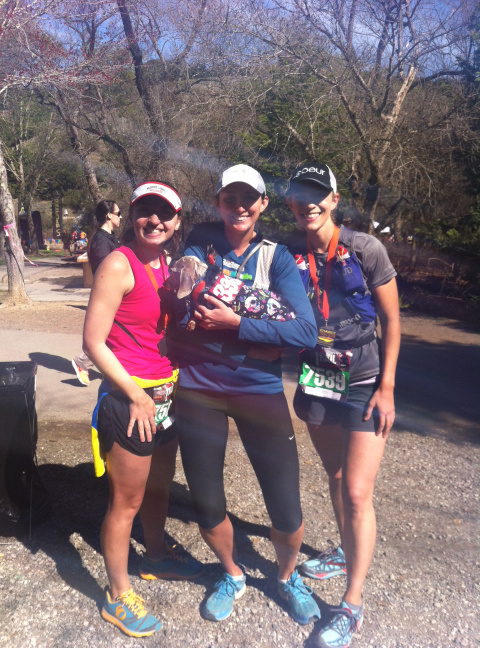
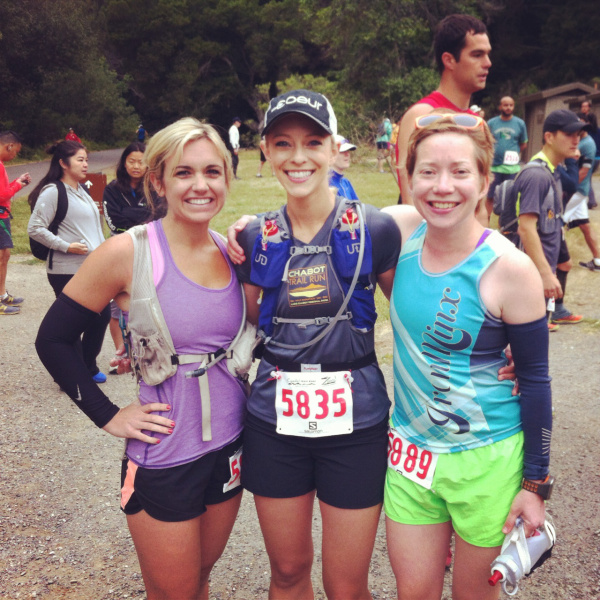
You know it’s going to be a good race when you become fast friends with someone you meet two miles in (hey, Molly!) and get to hang out afterwards with the one and only Catra “Dirt Diva” Corbett and her running companion, a dachshund named TruMan. Just some of the many amazing running memories that Vivi and I — college friends reunited as running buddies — made at the Chabot Trail Run 30K in February!

photo-39

Least-Intimidating Triathlon

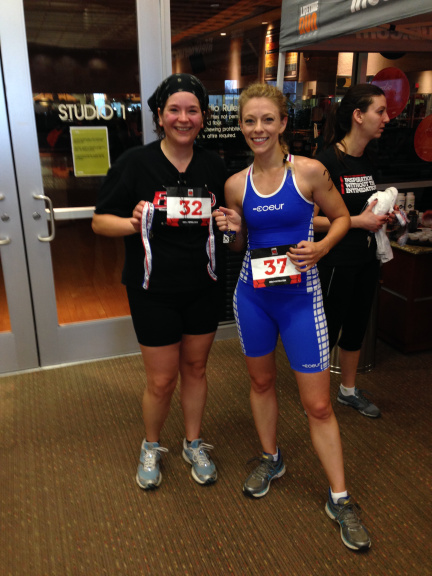
At home and on a whim, I signed up for the LifeTime Fitness Indoor Sprint Triathlon with my friend Colleen in March. Not only was the 10-minute swim, 30-minute bike and 20-minute run a nice way to ease into triathlon for the year, but it was also a great workaround for being able to “race” while there was still snow on the ground outside.

Best of all, though? The 10-minute locker-room transitions, which may have permanently ruined us for “real” ones.

img_1840

Friendliest Faces Race

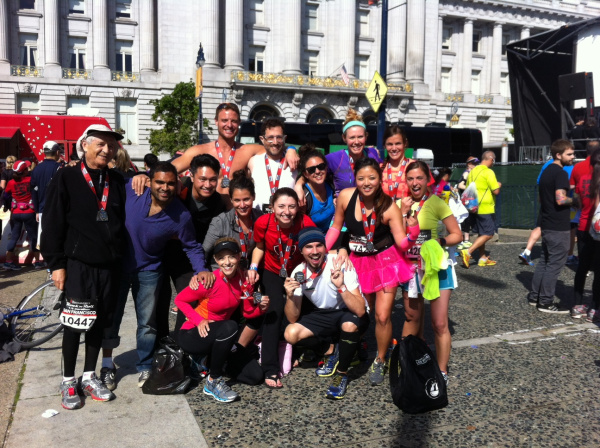
Our entire SF community came out in full force for the Rock ‘n’ Roll San Francisco Half Marathon back in April. The weather cooperated, I helped pace Barry’s Bootcamp owner Adam Shane for the start of his first 13.1 finish, and friends and family came out of the woodwork to run and spectate along a course that was much tougher and hillier than anticipated.

photo-2-2

Worst Race Ever

Lest you think this rundown of races is all rainbows and puppy dogs, I present to you my darkest moment from the 2014 season: the HITS Napa Valley Olympic Triathlon.

Struggling with sickness and self-doubt, I battled for more than four hours through a panic attack on the swim, not being able to catch my breath on the bike and a miserably hot run that day. But as far as my performance was from perfect, I’m proud that I didn’t quit — and, hey, it can only go up from here, right?!

photo-3-11

Most Revealing Race

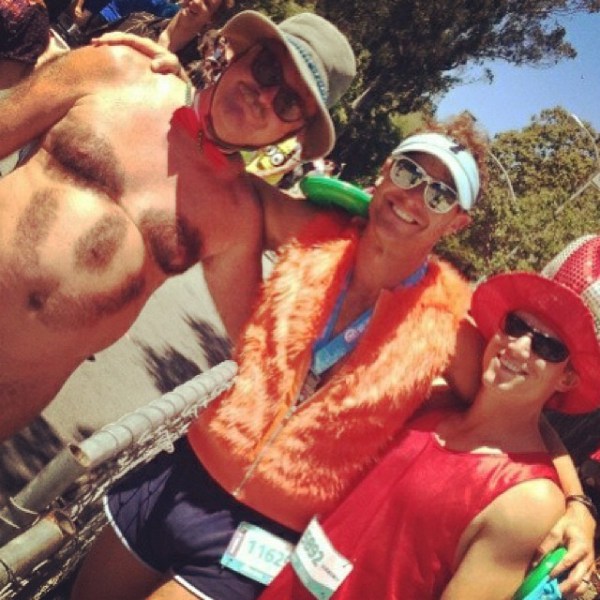
If you’ve never run Bay to Breakers in May in San Francisco, you’ve got to add it to your runner’s bucket list. Not only is it the oldest consecutively run annual footrace in the world, but it’s also some of the best people-watching and partying you’ll ever witness in the city. And no, don’t count on a PR, but do plan on getting an eyeful while covering the 12K course.

10366250_10152123773087919_3005133432005592419_n

Ultra-Freakin’-Awesome Race

Each time you run farther than you’ve ever run before, it’s an exhilarating experience. Jamie, my pacer extraordinaire for my first Canyon Meadow Trail 50K Ultramarathon, fortunately understood this and dealt with my exclamations every mile on the mile after 26.2: “Guess what? This is officially the longest I’ve ever run!”

And it may have been the first, but it won’t be the last…

cm50k1

Biggest Post-Race Double-Take

As in, I had to check the race results twice to make sure I read them correctly. Hubby paced me to a shiny, new 10K PR in the Beaverton Sun Run, and I credit the Hanson’s marathon plan for the speedy finish. Sure, I got injured soon thereafter from the sheer volume and high threshold of training (plus lack of pre-hab), but it was fun while it lasted!

photo-2-51

Best-Worst Race Experience

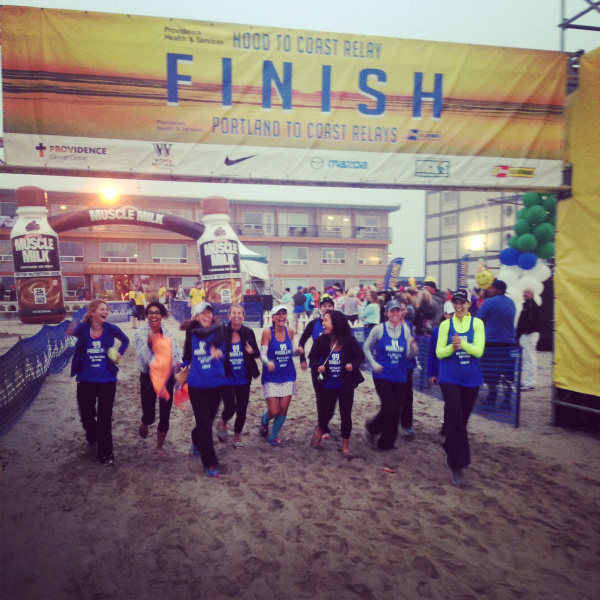
Was it real or was it a dream? You may never know…because after more than 24 hours of being awake, driving and running for almost 200 miles the hallucinations start to set in. I can’t even really do justice to the insanity and hilarity of an overnight relay, particularly the “Mother of ’em all,” but I can say that this year’s Hood to Coast Relay was something I’ll always remember!

photo-4 (1)

Favorite Street Cred Race

Yes, I’m referencing the location, but I’m also alluding to the fact that, after five weeks off during peak mileage building, I had something to prove with this race — and, per usual, it was to myself. Both being able to run and highlight my hometown, plus be able to finish the Detroit Marathon was an incredible way to cap off a fall full of physical frustrations.

img_1935

Most Instagrammable Race

No joke, the first thing I did when I found out we were moving to Oregon was to put the lottery date for the Silver Falls Trail Half Marathon on my calendar because I heard it had some fantastic scenery. And the price we paid — in crazy elevation changes, rough footing and cold, crappy weather — was totally worth it!

img_2250

Most Spirited Race

From the looks of some of the creative costumes involved in this event, I have a feeling several of the participants may have taken the holiday “spirit” part of the race literally. Not only did Carolyn, a fellow LUNA Chix teammate, finish her first-ever race with flying colors, but the Jingle Bell Run 5K for Arthritis also ended up being an ideal way to round out the year just the way we started: with friends.

IMG_3041

Looking back, I’m feeling really thankful for a year chock-full of memories made, laughs shared and miles covered with friends and family.

Cheers to an even more eventful 2015!

Which moments are you most thankful for from 2014? I’d love to hear!
How I Run: Boston-bound Amy “The Punisher” Leedham

Amy2

Contrary her nickname, Amy “The Punisher” Leedham doesn’t actually enjoy inflicting pain on others. Well, at least not on purpose. She does, however, regularly push herself to her limits…and tends to do the same for her workout buddies, which they usually thank her for later (after they catch their breaths, that is).

I first met Amy through November Project in San Francisco — we hit it off over a mutual love for running, Boston and Shalane Flanagan — but it wasn’t until she took me up on an invite for my first-ever clipped-in bike ride with the Coeur Sports ladies that we truly bonded: Powering through a few thousand feet of elevation in the Bay Area foothills after getting lost and trouble-shooting a flat tire together will tend to do that to people!

Amy’s now about to embark on her annual Bostom Marathon training cycle, so I thought it’d be fun to check in and see how she’s faring.

1. What’s your favorite route? My favorite running experience thus far has to be the descent from Skeleton point to the Colorado River on the South Kaibab Trail in the Grand Canyon. However, that is hardly my go-to route. I would have to say my favorite place to run is in Redwood Regional Park in Oakland, Calif. I had never really run on trails until I moved to California, and the first time I attempted it I was seriously humbled, but now that park is my go-to on the weekends. Its large enough to have tons of variety, but small enough to feel like its in my backyard.
2. What shoes do you wear? For trails I am rocking the Brooks Pureflow, and I love them. On the road I am pretty minimal and am loving my Merrell Gloves. I have about 12 other pairs of running shoes in my closet, though, because I can’t bring myself to throw them away. I even still have my college XC racing flats.

3. What other run gear can’t you live without? I absolutely love my Jaybird wireless headphones. I fully support listening to music while you run if it makes you happy or run better, and the lack of an annoying cord makes a huge difference in the comfort of running with headphones. I also love my Garmin because I am huge data nerd.

Amy1

4. What’s your best time-saver or “runhack?” If I am pressed for time after a run I stretch in the shower. Its kind of awkward, but you get get in some really good stretches while washing your hair and shaving your legs.

5. What running-related thing are you better at than anyone else? Not running. Actually I suck at this, as my husband says, but sometimes you must adapt. My agonizingly-slow recovery from what was supposed to be minor knee surgery in April has caused me to appreciate and dominate pretty much every physical thing one can do that’s not running.

6. What do you listen to while running? For faster runs, I am somewhat ashamed to admit that I have several playlists with awful music by the likes of Pitbull, but damn is it so good for running. When I head out to the trails for some R&R I usually leave my music behind and listen out for this one eagle that lives in Redwood Regional Park.

7. What are you currently training for? Boston 2015. I have a problem. I keep re-qualifying and can’t let myself not register. Boston is the first city I lived in after leaving my childhood home, and it was my home for (a very formative) 6.5 years.

I ran the Boston Marathon in 2013 and, even though I was not physically impacted by what happened, that day will stay with me for the rest of my life, as will the experience of running it the year after. More importantly, though, I am training to be able to keep running for the rest of my life.

8. What are your recovery & sleep routines like? I’m admittedly not great at maintaining a good sleep routine, but when I get into proper training my body kind of makes the decision on when to go to sleep for me. Usually I’ll be in bed at 9:30 p.m. and get up for a run at 5:30 a.m. or so.

As for recovery, I recently wrote a blog post about it. I also love compression tights and Epsom salt baths. A good sports massage is just the right kind of pain, and is totally worth the financial investment.

Amy3

9. What’s the best running advice you’ve ever received? It’s not advice as much as finally letting a certain lesson sink in: Not every run needs to be (or should be) a full-out hard run. Those days of easy running are essential to maintaining a healthy body and building fitness.

10. What’s your favorite running-related memory? It’s a cliche, but it’s got to be running Boston last year. The combination of the unbelievable emotional energy pulsing throughout the city, the camaraderie of running with a friend who I knew was feeling all the same things I was feeling (I had never run any race with someone before) and the burst of energy and love from the mile 18 November Project cheer station all combined to be pretty unbeatable as far as running experiences go. Oh, and PR-ing doesn’t hurt either.

11. Fill in the blank: I’d love to go on a run with __________. Shalane Flanagan. I am not ashamed to admit that my fandom of Shalane rivals that of a 13-year-old girl for One Direction. When she ran past our cheer section at the Nike Women’s Half Marathon, I freaked out and sprinted up the hill after her only to realize I had no idea what I wanted to say and that I looked a little crazy. As my husband pointed out later, “I would have thought you would have had a plan in place knowing you were going to see her on the course!”

Thanks for playing, Amy! I miss our weekly workouts, but hope to cheer you on in Boston in 2015. Keep on punishing in the meantime!

Runner friends of all levels, please email me — info (at) kineticfix.com — if you’d like to be featured.

Portland Fit Fix: Breaking Through Plateaus with Barre3

IMG_2892

The next stop on my tour of Portland’s fitness hot spots? Barre3, a fusion workout in which ballet barre meets yoga and pilates.

For someone with a background of being in toe shoes and tutus for almost a decade and a half while growing up, this should be a piece of cake…right?!

Nope; quite the contrary, as I quickly found out…

IMG_2460

Barre3 evolves the dancer’s workout by combining “the grace of the ballet barre with the wisdom of yoga and the strength of Pilates” to deliver a total-body workout designed to burn fat, build muscle and transform the body.

The goal is to promote balance, strength and flexibility equally through a signature three-step sequence of:

1. Isometric holds to work muscles to their deepest points for strength and endurance.

2. Controlled movements to heat the body, increase core strength and rev metabolism.

3. Dynamic moves to flush muscles, lift heart rate, improve circulation and re-energize.

IMG_2884

Basically, this means that you’ll be performing a sequence of postures set to an upbeat soundtrack at a fairly vigorous pace.

After a quick warm-up in the middle of the room, we took our places at the barre for two segments of deceivingly-difficult moves (leg lifts, holds and pulses). The final segment was a series of seated exercises on the mat that left my core crying, “Uncle!”

Never have I moved so little yet had all of my muscles shake so much, but it’s a good sign because it means that they’re being put under a new kind of stress that they aren’t used to (i.e. they’re getting stronger!).

IMG_2886

Barre3 is also low impact, so it’s especially handy if you’re injured or easing back into an exercise program. Our class had people of all ages and ability levels, yet we struggled just the same since moves can be modified different ways. And, yes, it got my sleepy glutes firing.

What I really love about this workout, though, is that it’s super functional: Barre3’s goal is to teach alignment principles that apply to everything from sports performance to holding kids to sitting at a computer.

Although you’ll feel the effects during workouts, it’s much more about being able to bring a more balanced body to what you’re doing the rest of the day!

IMG_2889

Want to get your barre on? Visit Barre3’s website here for more information. 

5 Tips for Building a Budget-Friendly Home Gym

modern-home-gym

Bring your workouts closer to home for 2015 — meaning, in it. No matter how small your space or budget, it’s easier than you think to build an effective gym without breaking the bank.

Here are five ways to become a healthier homebody — and for shrinking your waistline, not your wallet — in the New Year:

1. Go weightless.

These aren’t your father’s push-ups and sit-ups; today’s body weight exercises are high-performance maneuvers designed for building and maintaining muscle strength and endurance, along with interval training. Don’t believe me? Check out this video and tell me that’s not an intense workout!

2. Think DIY.

Function often trumps form when it comes to gym gear, so before you buy it, try making it on the cheap. Use hot water bottle bladders under your feet in place of a pricey Bosu balance trainer, tap into your woodworking skills to build your own plyo boxes, and make medicine balls from old basketballs and some sand, for example.

3. Buy secondhand.

Wait a few more weeks, and plenty of New Year’s resolutionists will be hawking their (barely used) exercise equipment on Craigslist. But don’t stop there: Visit stores such as Play It Again Sports to snag a deal on pre-owned gear, scout your local gym for used equipment sales after yearly upgrades or ask for discounts on floor models at retailers.

4. Press play.

There’s an app for that — or a video game, a gadget, a DVD, etc. Whether it’s tracking activity with a Runtastic Orbit, turning your smartphone into you own personal trainer with Nike Training Club or popping in a video from home-fitness giant Beachbody, harness technology to keep you healthy and active throughout the day, not just in the confines of a gym.

5. Embrace co-op.

Finally, if your motivation comes in the form of group fitness, consider creating a co-op gym space with relatives, friends or neighbors. Split the cost of equipment (either by machine or overall, depending on how your crew wants to divvy it up), and store everything at one home where everyone can congregate for workouts.

How do you curb your workout costs?