Fighting the good fight against plantar fasciitis

photo

During my Detroit Marathon week seven training recap, I mentioned that I’ve been dealing with a case of plantar fasciitisPlantar-huh, you say?

Here’s what it is

Unless you’ve been plagued by it (and in that case you know all too well), plantar fasciitis (or fasciosis, as some say) reveals itself as heel pain. Technically, it’s been described as an inflammation (hence “itis”) of the plantar fascia, which is the flat band of tissue (ligament) that connects your heel bone to your toes.

Non-technically speaking? It sucks.

The most common symptom is a very painful first few steps out of bed in the morning. Once the foot warms up, the pain subsides, only to rear its ugly head again after long periods of standing or after getting up from a seated position.
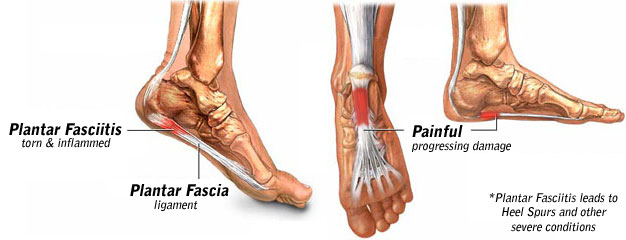
plantar_fasciitis_clip_image001

How’d it happen? I can’t pinpoint a specific incident, just that it appeared toward the end of training for my marathon last fall. Certain types of exercise (i.e. running), faulty foot mechanics, age, obesity and long periods of time in your feet are the usual suspects in terms of contributing factors, though.

What I can say for certain is that it’s frustrating — not only because it threatens to derail training, but also because there is no real consensus on treatment. So in the meantime, I’ve been taking matters into my own hands to manage the heel pain, which morphed into a related calf/shin injury after Hood to Coast.

Here’s what I’m doing about it

1. Sensible Shoes. 

Because I spent a few weeks this summer traipsing around Italy in flats and sandals (whoops), I’m paying the price. So now I opt for shoes with a low to moderate heel, good arch support and shock absorbency. And while I haven’t completely given up flip flops, I also try not to go barefoot for long stretches of time, especially on hard surfaces.

2. Enough Rest.

Although not running is one way to try to stop PF, it’s no guarantee. And even though I’m mid-training, I do try to give my feet a rest when I can. This means not only cutting back on activities like walking or running on hard surfaces without proper support, but also taking advantage of rest days and putting my feet up whenever I can.

3. Ample Ice. 

I’m not always great about it, but when possible I try to reduce pain and inflammation with ice. The protocol is to hold an ice pack over the area of pain for 15-20 minutes three or four times a day or after activity. But my favorite is an ice massage: I freeze a water bottle full of water and roll my foot back and forth over it for 10 minutes.

4. Anti-inflammatory Meds.

To kill the dull ache (and try to keep things from getting too inflamed after a workout, I’ll take an over-the-counter pain reliever like ibuprofen (such as Advil or Motrin), naproxen (such as Aleve) or aspirin. All of these are non-steroidal anti-inflammatory drugs (NSAIDs) which help relieve minor aches and pains.

5. Rolling and Stretching.

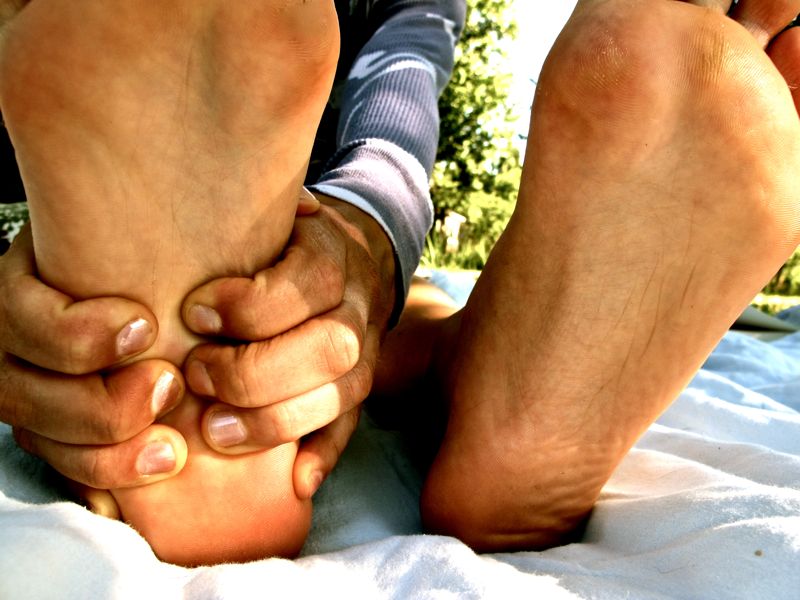
Immediately after activity, I try to stretch out my plantar fascia, Achilles tendon and calf muscles. But the best tip I got was from when I was at a fitness studio in Seattle: They had us step on a lacrosse ball to roll out our arch, so I went right home and bought one. Now it’s my favorite thing to do in front of the TV or on a  conference call.
acupuncture-for-plantar-fasciitis_full

6. Night Splints.

I ordered a Strassburg Sock, which stretches my calf and the arch of my foot while I sleep. The idea is to hold the plantar fascia and Achilles tendon in a lengthened position for an extended period of time, although it’s not super comfortable sleeping with a flexed foot, so I haven’t been consistent enough with this to say whether or not it works.

7. Insoles and Orthotics. 

My running shoes are outfitted with Superfeet’s Berry insoles for added support and impact reduction, but I also wear these arch sleeves — thanks to a recommendation from Twitter friends! Not only do they keep my foot from rolling in, but the gentle massage feels great when I know I’m going to be standing for long periods of time.

8. Replacing Shoes. 

Did you know that running shoes lose their support and cushioning after around 300-500 miles of use? Here’s my trick: I buy two pairs at once and alternate them every other run to allow each pair an “off day” to bounce back, plus I’m tracking their mileage carefully to make sure I’m not wearing anything past the point of no return.

9. Ah, Massage.

There are countless health benefits to a good massage, plus it’s one of my favorite rewards for training and recovery. ‘Nuff said.

10. Non-Running Work. 

Even though I’m a former personal trainer, training myself for a marathon leaves me with little time (or energy) to focus on the other stuff. That’s why I’m consulting with a local trainer to help me build a base of stability and range of motion to correct any underlying imbalances, manage injury and keep me running safe and strong in the long run.

11. Physical Therapy.

Finally, another medical professional I’ve recently started working with is a PT. She was able to diagnose some underlying issues and imbalances and provide me with a series of exercises to help get my foot more mobile, stretch the plantar fascia and Achilles tendon and strengthen my lower leg muscles, which stabilize the ankle and heel. Plus, she offers a host of other tips and tricks, which will hopefully get me up and running again soon!

Have you successfully dealt with PF? And, if so, what worked?
Detroit Marathon: Week 12 training recap

running-through-pain-funny

I’m not quite sure how to start this one off, except to call it “the week that wasn’t.”

Here’s what was on the schedule:

DTWweek12

How much of it got done? Zip. Zilch. Nada.

What happened?

Well, after last weekend’s long run (a 16-miler), I felt pretty good. Yes, the calf/shin “tweak” was still there, but I seemed to warm up out of it a few miles in and was able to run with minimal discomfort.

Monday morning, though, I awoke with the same lingering pain; only this time it was more of a constant dull ache. At this point, I knew that it wasn’t getting better and I was probably only going to make it worse if I kept hammering away at it, so Hubby and I swam and biked instead.

Early Tuesday morning I set out for the track, determined to try to get back on track with my workouts, but a block away from my apartment I stopped, turned around and walked home. No, the pain wasn’t any different or worse, but I just knew in my gut that something wasn’t right. From years of running — and subsequent injuries! — I was fairly certain that this wasn’t a passing sore muscle.

Yesterday I was finally able to get in to see a professional and get some answers. I found a place that specializes in runners and triathletes (and therefore knows our quirks – i.e. me calling obsessively every day this week to see if someone cancelled and I could get in earlier to see what was up), and the PT there is amazing. She was my favorite kind of medical professional — straightforward, to the point and totally knows her stuff.

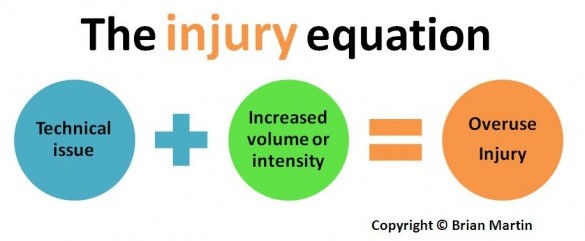
So after a series of evaluations, exercises, pokes and prods, she diagnosed me with a locked-up right midfoot (I’m not able to properly pronate through the joints), which most likely has contributed to my lingering case of plantar fasciitis (aha!) and most recently caused the acute “stress response” near my tibia. More culprits? Weak glutes, hips and core muscles — all of which are being “lazy” and throwing everything else off (oops).

Injury-equation-e1303429868404

The good news? It’s not a stress fracture (yet); I caught it just in time. The bad news? No running for likely two weeks (maybe more), which totally throws a wrench into my training plans. Although she said that if I’m conservative with my activity and do my homework exercises to strengthen my glutes, hips and core in the meantime, I should be able to get stronger in month and can likely run my marathon in October — although the PR part may be questionable.

What’s next?

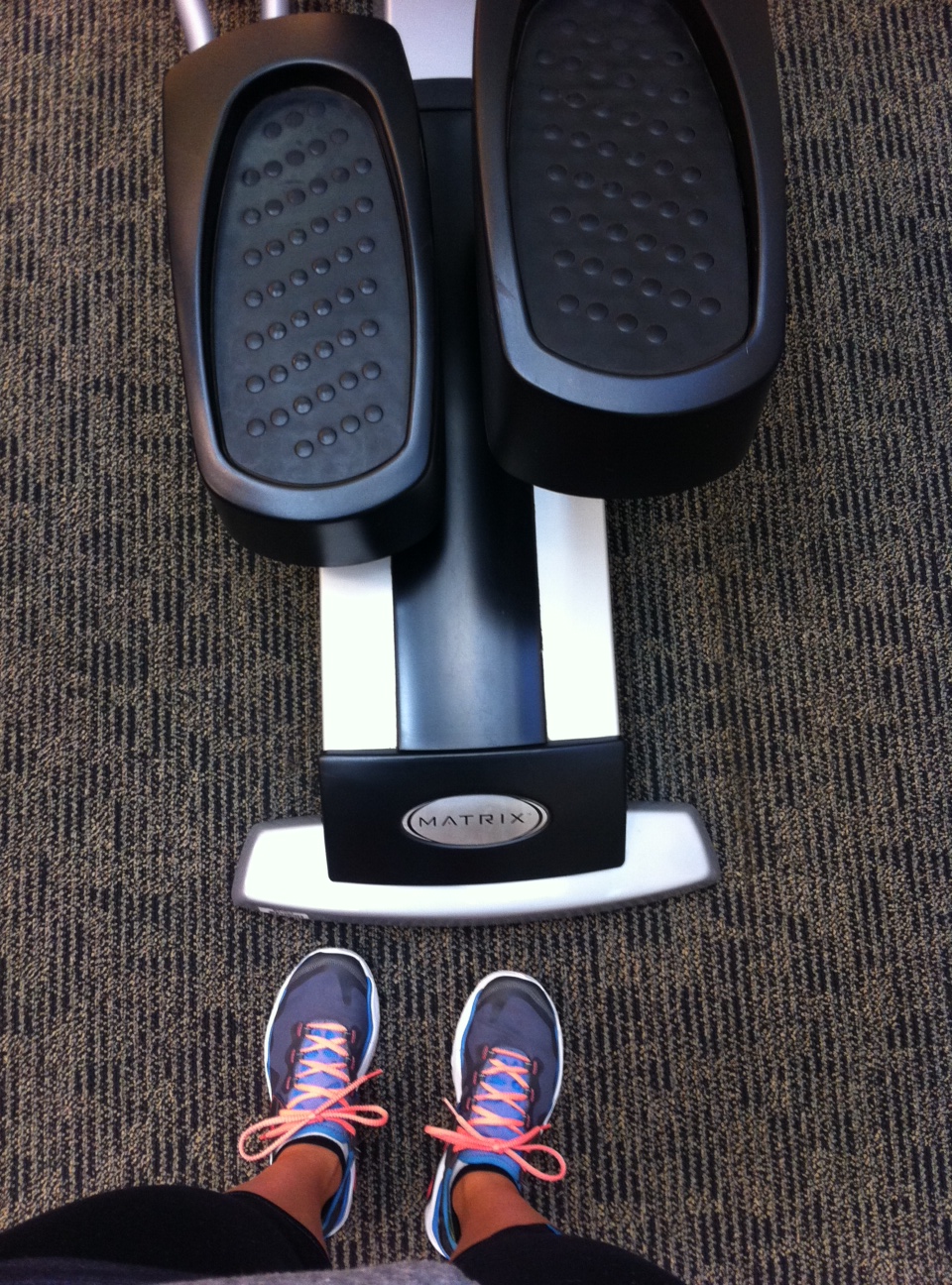
Because running is off the table for the immediate future, I’ll be re-acquainting myself with the pool, the bike…and this fellow, my cross-training nemesis: the elliptical. It used to be one of my main forms of cardio during college (with a magazine, no less!), but since then it’s something that’s been reserved for injuries and off days.

photo (2)

Emotionally, I did give myself a few days to mope around; it’s usually easy to adjust to these things physically — but it’s the mental part that’s the most difficult. Adjusting your course when you’ve been going full-throttle in one direction toward a goal can be tough, and I’d be lying if I said I wasn’t disappointed. But now that I’ve had a chance to process things, I’m picking myself up and getting ready to attack this next phase of training with the same dedication as my previous one.

The lesson here: Being injured isn’t an excuse to throw up your hands and quit. It doesn’t mean you’ll never reach your goal; you’ve just got to figure out an alternate route to get there. It’s an opportunity to work on your weaknesses, get stronger and come back healthier. And it’s about a long-term plan, versus a short-term focus.

The other lesson? Get yourself checked out by a professional sooner rather than later, people! I am kicking myself that I didn’t go to see someone about my plantar fasciitis earlier because we might have been able to recognize the underlying issue and address it earlier. But hindsight is 20-20, and I’m thankful that I found someone who is helping me address it now so I can be a smarter, stronger and more efficient runner in the future.

Onward and upward to week 13 — let’s hope it’s a luckier one!

Fave Fix: Ahnu Sugarpine hiking boot

photo 3
Having left behind the epic trail scenery of San Francisco and Marin, it’s about time we checked out what Oregon has to offer on those just-gotta-get-out-of-the-city days. And after living on both coasts, plus a few cities in between, I’d say there’s hardly a better place to be in summer than the Pacific Northwest, especially if you’re into hiking…and, oh, waterfalls.

photo 1 (2)

So a few weekends ago when we had some friends in town from the Bay Area, we decided to whet our appetites for adventure by paying a visit to Oregon’s tallest waterfall, Multnomah Falls. It’s home to one of Oregon’s most popular trails — a moderate, 2.2-mile hike with 700 feet of elevation gain to the top of the 542-foot, “two-tiered plume that plummets into a misty, mossy forest grotto.”

photo 2 (2)

Not only was it a great way to work off the Blue Star doughnuts we inhaled for breakfast that morning, but it was also a good opportunity for me to test out my new pair of Ahnu Sugarpine hiking boots. This style came highly recommended by Melissa, a friend and former colleague who now works for the company, in anticipation of me taking to the beautiful, bountiful trails of Oregon.

photo 1

Aside from getting a few compliments from fellow hikers on my way up the switchbacks — this style is known for its bright color, yet low profile — I was more interested in the function rather than the fashion of these shoes. But true to Ahnu form they performed beautifully, giving me just the right amount of traction, support, stability, shock absorption and protection…in what felt as comfy as my favorite pair of sneakers.

photo 2

Did I mention they’re waterproof, too? I’ve been hearing that kind of gear will come in handy for the season that follows summer up here: Rain.

This isn’t a sponsored post; just helping a friend get the word out about a great company with good products. For more information on Ahnu, visit the site here

Recipe: Best-Ever Blackberry Pie

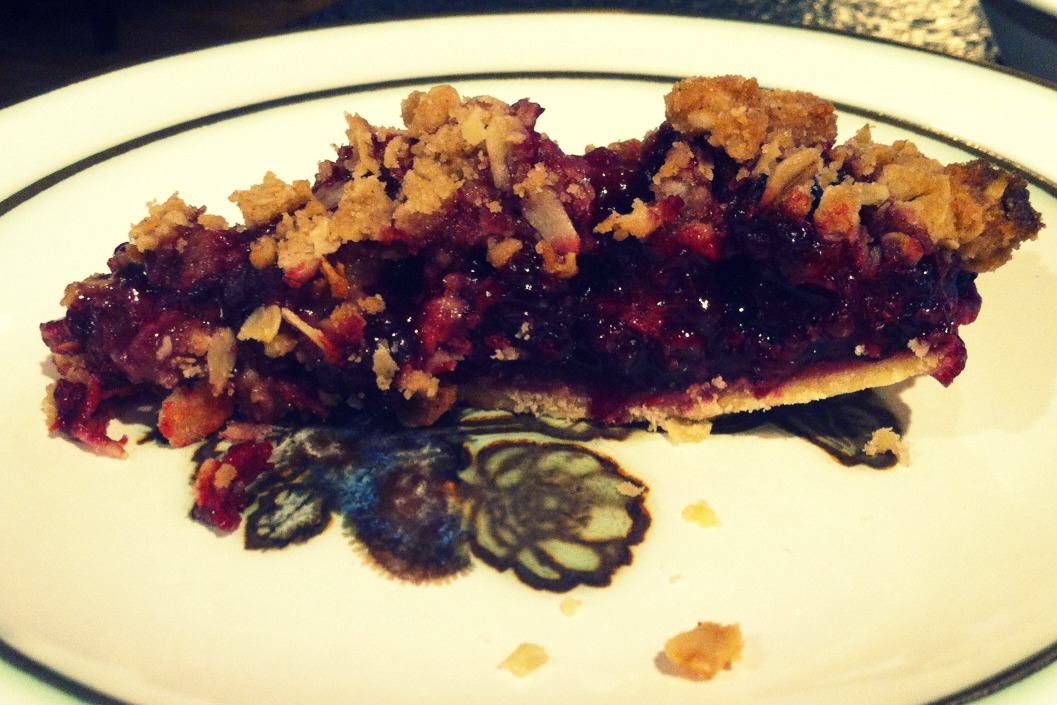
photo 1 (2)

Hubby traditionally requests a birthday pie instead of a cake, and I always thought it was a little odd. Until now.

Oregon’s blackberries are in season, and these little gems are tangy, sweet and downright addictive. Every so often we’ll walk (or run) by a bush and get a whiff of ripened berries, so it was a no-brainer to pick them fresh and use them in this year’s celebratory pie.

I Googled around for what looked like a winning recipe, then made a few tweaks for what turned out to be a new family favorite.

KineticFix’s Best-Ever Blackberry Pie

Adapted from Not Derby Pie’s recipe.

Ingredients: 

  • 6 cups blackberries, rinsed, picked clean and patted dry
  • 1/2 cup sugar
  • 1 tsp lemon juice
  • 1 tsp lemon zest
  • 1/2 tsp cinnamon
  • 1/8 tsp nutmeg
  • 1/2 tsp vanilla extract
  • 3 Tbsp tapioca flour
  • 1 cup flour
  • 1 cup brown sugar
  • 1/4 cup butter
  • 1/4 cup dry oatmeal
  • 1/2 tsp cinnamon
  • 1/4 tsp nutmeg
  • Pie crust (I used a pre-made frozen one to cut time!)

Directions: 

  1. Preheat oven to 400 degrees.
  2. Put blackberries, sugar, lemon juice and zest, cinnamon, nutmeg, vanilla and tapioca flour into a large bowl. Toss gently to coat berries evenly, and leave to macerate for 20 minutes.
  3. While the berries are hanging out, prepare the crumb topping. Add flour, brown sugar, oatmeal, cinnamon and nutmeg to a medium bowl. Cut butter into cubes and add, mixing with hands until the mixture resembles wet sand.
  4. Spoon blackberries into bottom crust. Sprinkle crumb topping evenly over the top of the pie.
  5. Set the pie on a baking sheet lined with foil, and bake for 30 minutes. Reduce heat to 350 degrees, and bake another 30-35 minutes, until juices are bubbling and crumb topping is browned. Let cool at least 30 minutes before eating.

And, as NDP says, “serve with vanilla ice cream, for the win.” Fantastic!

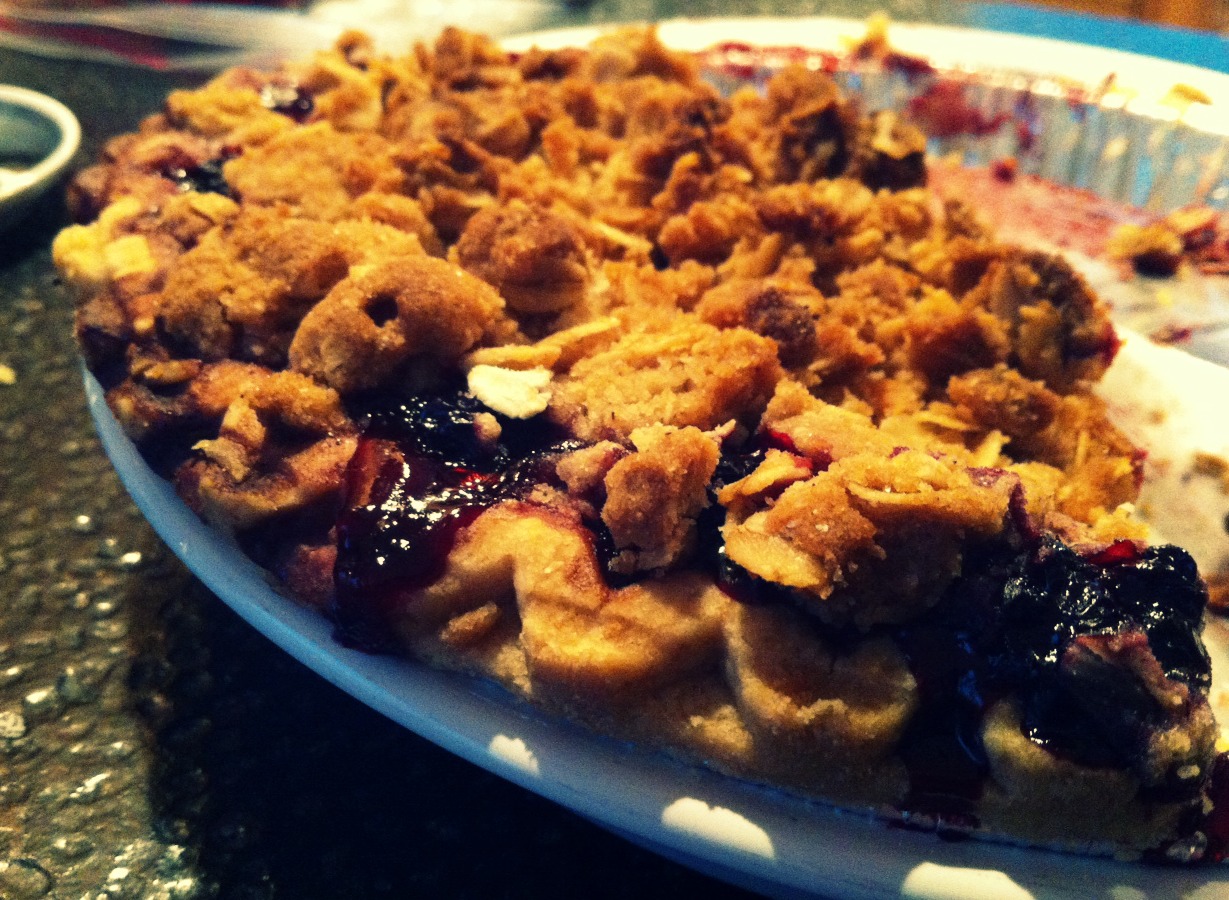
photo 2 (14)