10-Minute Bar-Based Core Blaster Workout

MjAxMi01NDE5ZTU1ODIwMGYyNzMw

I’ll let you in on a little secret: Ab exercises are my fitness kryptonite. As much as I love working out, I go deer-in-headlights at mere mention of the word “sit-up.”

But skipping out on my midsection isn’t an option; core strength is critical — not just for support and stability but, let’s face it, also fitting into this season’s skinny jeans.

My solution? Sneak in core strength training through a series of compound exercises (working several muscles groups at a time), rather than isolation exercises (working one muscle group), thus avoiding a mid-gym meltdown.

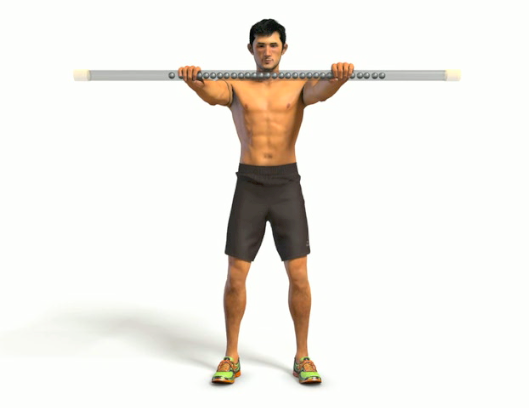
Enlisting the help of some innovative new equipment helps, too: Enter the ActivMotion Bar, which I’ve been experimenting with recently thanks to the folks at Fit Approach. It’s a weighted bar filled with rolling steel weights, which creates instability through a fluid-like motion to better challenge your body during some of your typical workout moves.
554518_403174249794718_1853194260_n

Got 10 minutes? Try this bar-based core series — perform each of the five exercises below for one minute each, and then repeat the entire circuit.

Use a broomstick in a pinch, a weighted bar at the gym, or invest in an ActivMotion Bar if you want to kick things up a notch for at-home workouts.

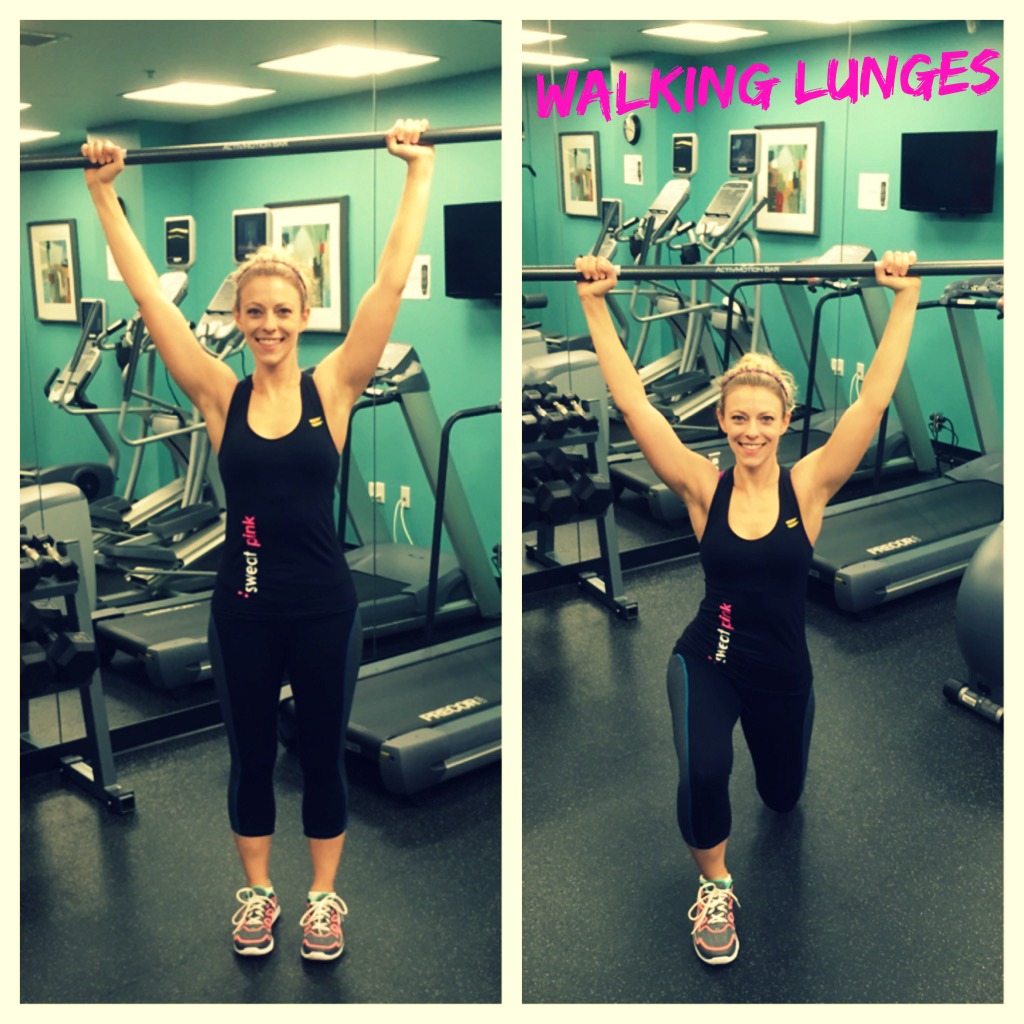
1. Walking Lunges

Stand tall with head and feet facing forward and core engaged. Raise bar straight above head, straightening arms but keeping shoulders down. Keeping abs and butt tight to stabilize yourself, slowly step out with right foot into a lunge.

Make sure your knee doesn’t go beyond your toes, and try to keep both legs at 90-degree angles. Pressing into your front heel, lift up to a standing position; alternate sides across the room for 60 seconds.
IMG_3942

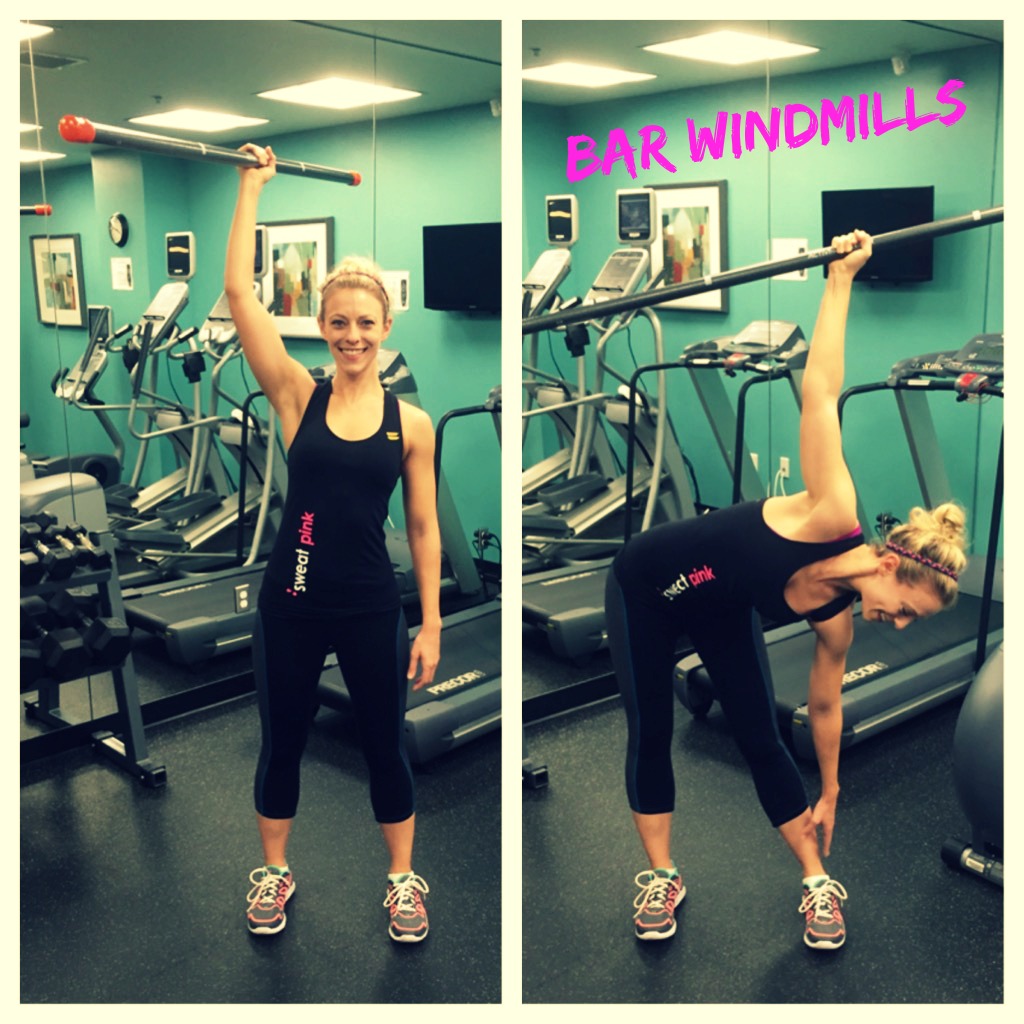
2. Bar Windmills

Again, start by standing tall with head and feet facing forward and core engaged. Press bar up with right hand, taking care to keep shoulder down and core engaged. Slowly bend to the left side, reaching for your left foot while keeping right arm directly above your right shoulder.

Pause for a beat before rising carefully back to a standing position. Repeat pattern for 30 seconds before switching sides and raising your left arm while bending to the right.
IMG_3943

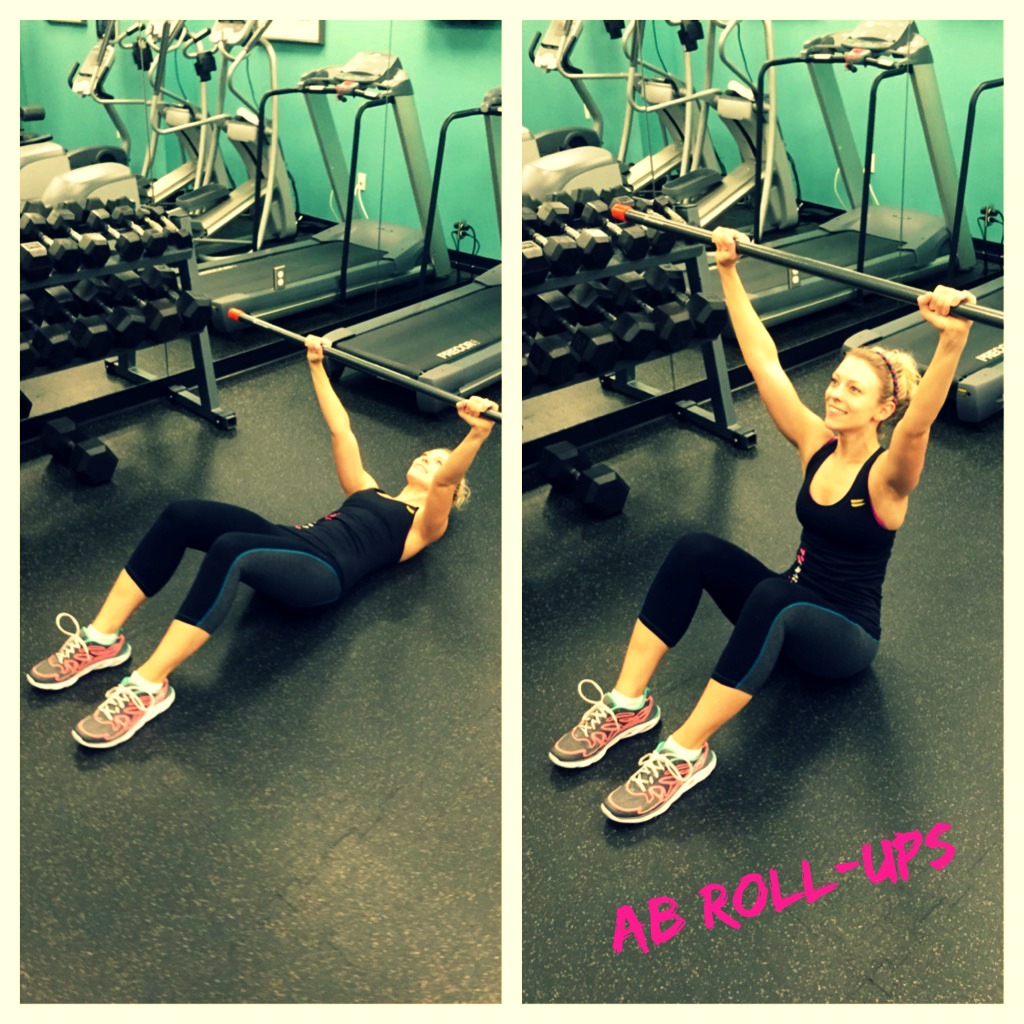
3. Ab Roll-Ups

Lie on the floor with our feet shoulder-width apart, soles of your feet touching the ground, knees bent and core engaged (think about pulling your belly button through your spine and down to the floor). Using both hands, raise the bar above your shoulders — try to keep some softness in your elbow so you don’t lock out the joint.

Slowly roll up, one vertebrae at a time, keeping bar lifted toward the ceiling and core engaged. Once you’re sitting up, slowly lower back down through each vertebrae, keeping bar raised. Repeat for 60 seconds.
IMG_3944

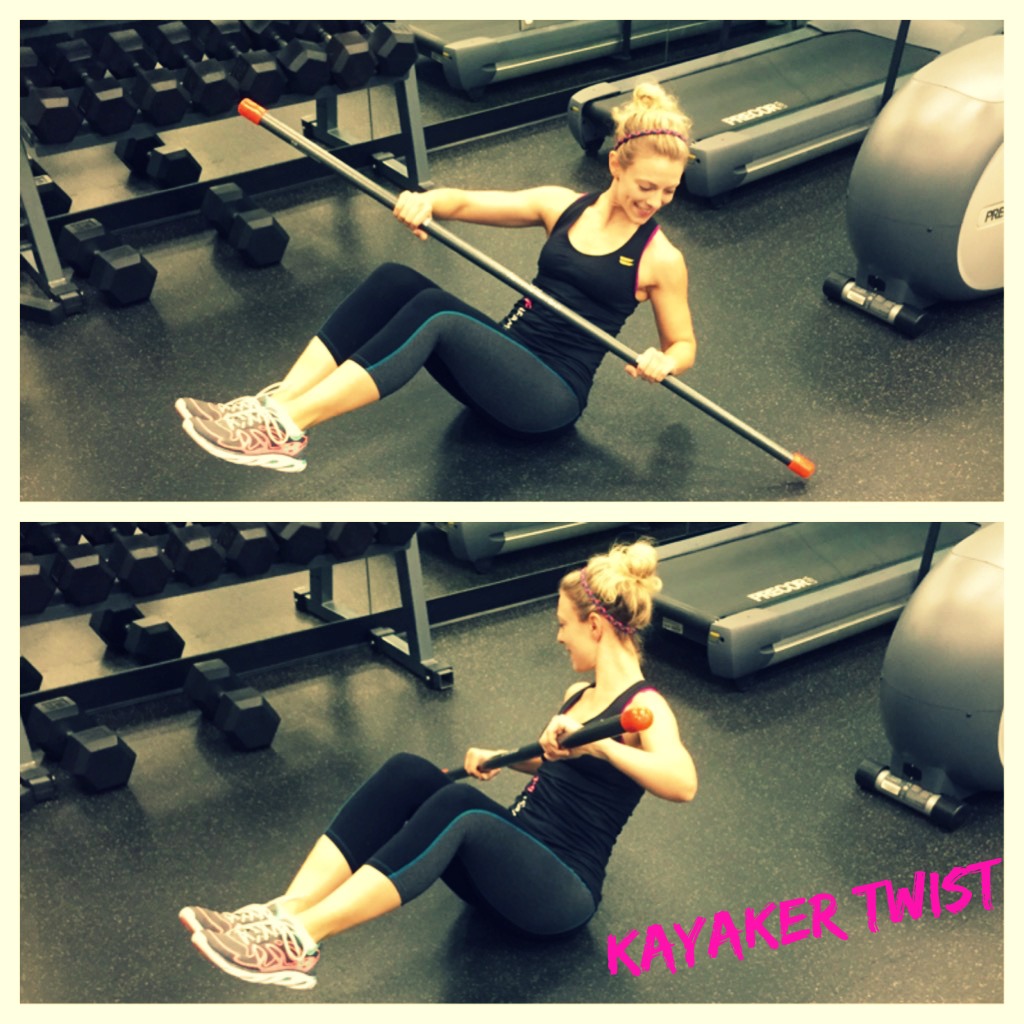
4. Kayaker Twist

Sitting on the floor with your feet out in front of you and your knees bent, lift feet a few inches off of the floor (option to modify: keep feet on floor). Lean back slightly, but be sure to use core to keep spine straight — no hunching forward or arching your back.

Hold bar in both hands, and with a steady rowing motion, slowly turn to left side and dip the bar toward the ground. Lift back up and through center before twisting to the right and letting bar dip down on that side. Alternating sides, repeat for 60 seconds.
IMG_3945

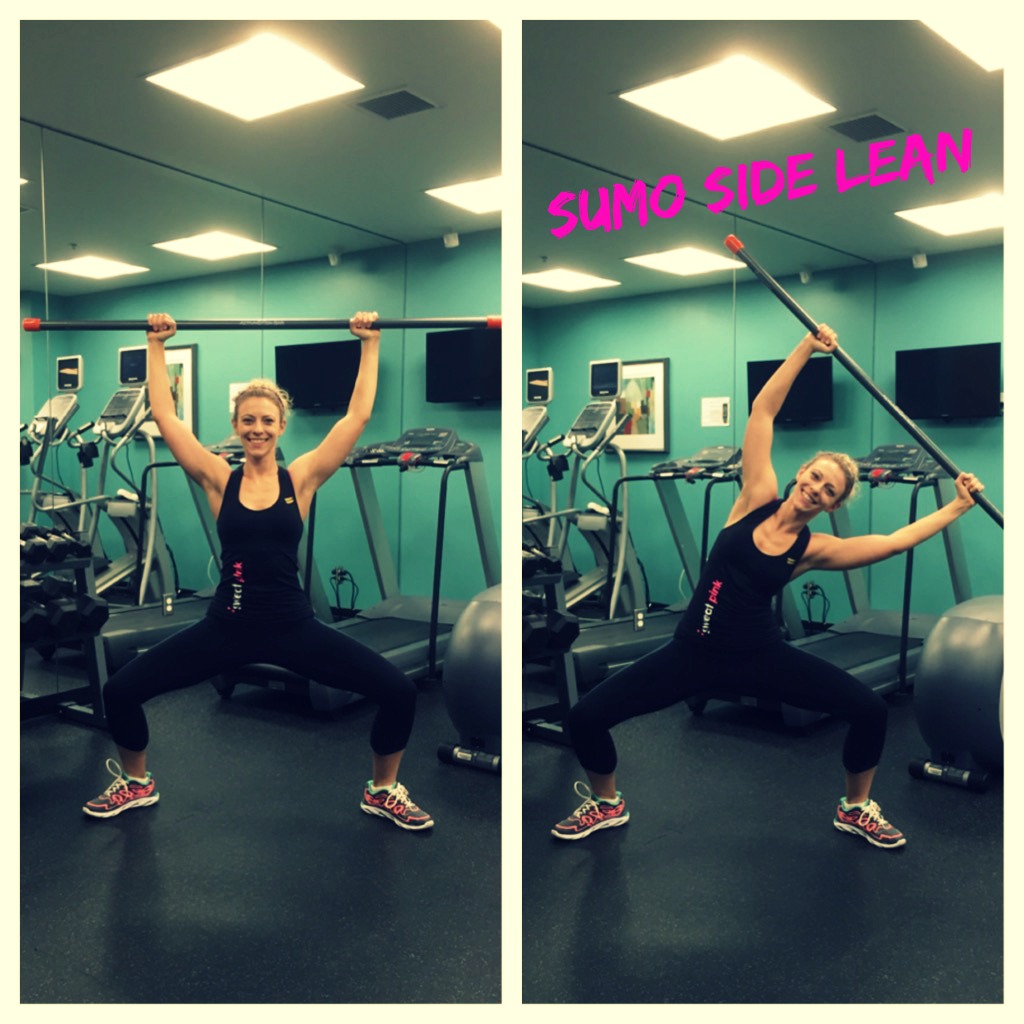
5. Sumo Side Lean

Take a wide stance with feet slightly turned out. Raise bar straight above head with both hands, taking care to keep shoulders down and back straight. Lower into a sumo squat, checking to make sure that knees are in line with ankles and don’t extend beyond toes.

Slowly lean to left side without twisting; your body should remain in one plane when viewed from the side. Return to starting position and, keeping bar above head, lower to the right side. Repeat, alternating sides, for 60 seconds.
IMG_3947

For more information on this product, check out ActivMotion Bar’s website here.

Disclaimer: You’re doing these exercises at your own risk, so please be careful. If you’ve got an injury or concern, it’s best to consult with your health care provider and/or trainer to make sure you’re cleared to work out and are using proper form.
Booty-Blaster: 5 Band-Based Exercises to Activate Glutes

someecards-old

Ever since my most recent marathon-training injury, I’ve been on a mission to get my sleepy glutes firing again on all cylinders. Studies link glute weakness to Achilles tendinitis, shinsplints, runner’s knee and iliotibial-band syndrome, along with a host of other overuse injuries (i.e. my medial tibial stress response), so a strong booty is key to not only keeping a steady core, but also the body’s entire kinetic chain from getting out of whack.

My PT prescribed a series of exercises using a Thera-Band, which got me race-ready. But during my post-marathon running hiatus I’ve been kicking it up a notch with the ReXist360 resistance training system, which is designed to intensify band-based workouts without any unwanted pressure added to the back, knees or ankle joints.

Read on for my five favorite butt-busting resistance exercises!

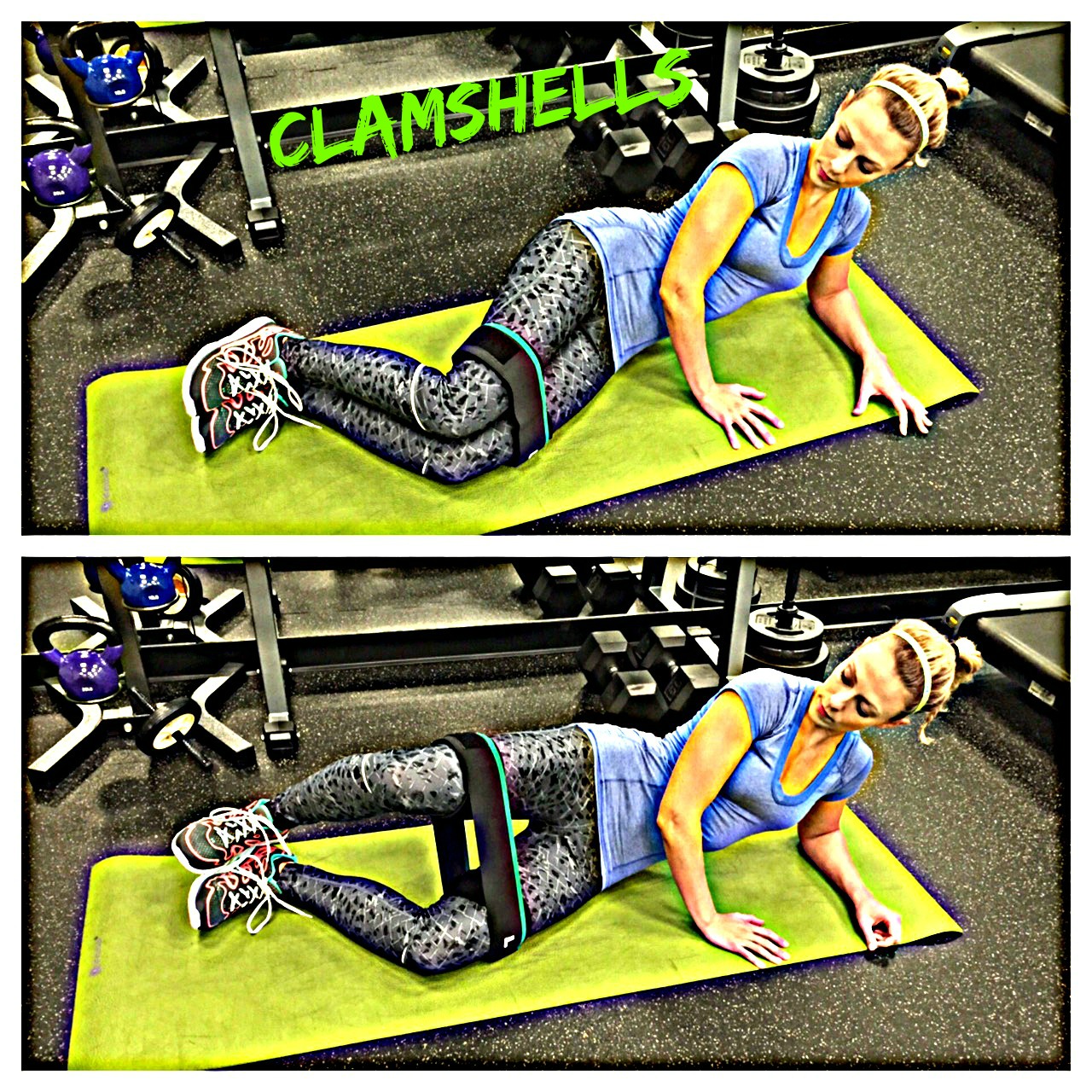
1. Clamshells

Place band above your knees. Lie on one side, prop your upper body up on one arm and stack your legs on top of one another with knees bent. Slowly lift top knee toward the ceiling, keeping feet together and body in alignment. Hold for a second at the top, squeezing glutes, before lowering in a controlled manner. Repeat 20 times before switching to other side.

IMG_2911

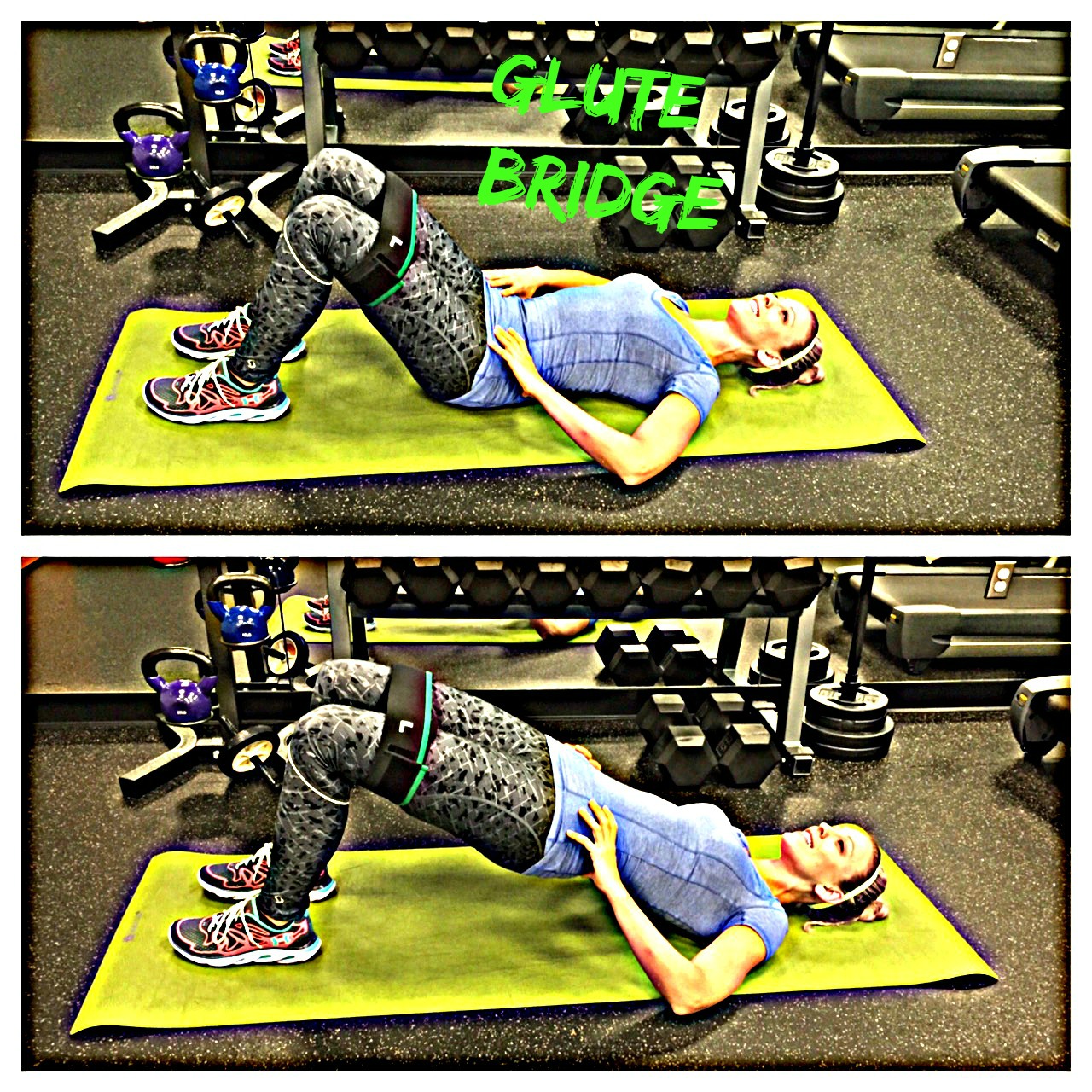
2. Glute Bridges

Place band above your knees. Lie with back on the floor, and bring heels close enough to be able to touch them with your fingertips when arms are extended down by your sides. Place hands on hips, and open knees slightly so they press out against band to activate glutes. Driving your heels into the ground, lift hips toward the ceiling, and squeeze glutes before lowering. Repeat 20 times.

IMG_2912

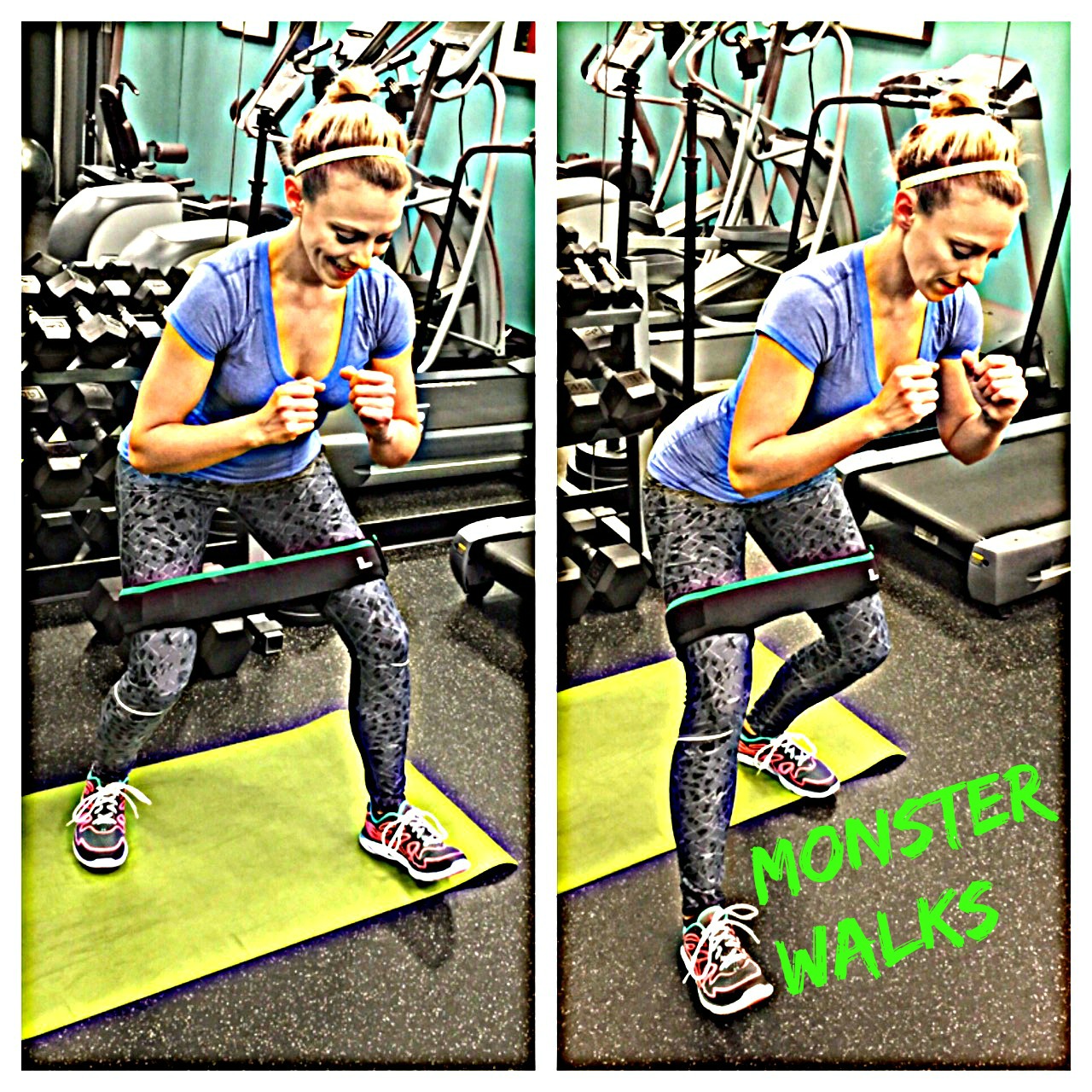
3. Monster Walks

Place band above your knees (or around ankles to make it tougher!). Step legs out until they’re hip- to shoulder-width apart. Sink butt into squat position, making sure that knees don’t extend beyond your toes — think about sitting further back and lowering your behind into the position to protect knees. Maintaining that wide-legged stance, slowly squat-walk across the room. After about 30 steps, turn around and repeat.

As you can see, I’ve still got some work to do on my ankle mobility to get down into the correct position!

IMG_2913

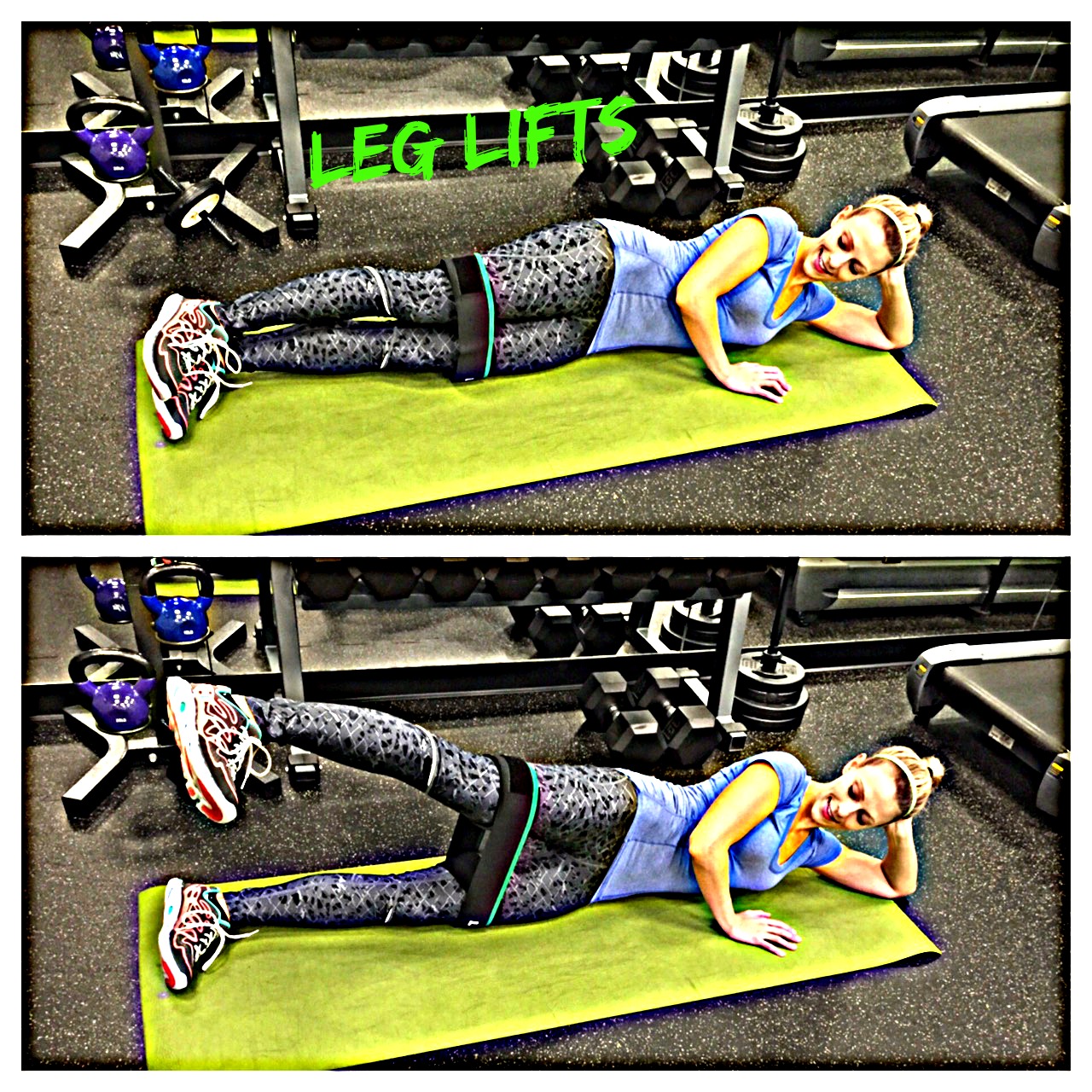
4. Side Lifts

Place band around knees (or, again, ankles to make it more difficult). Use bottom arm to support head and top arm to steady yourself. Straighten and stack legs, lining up hips, knees and ankles. Keeping core engaged and top foot parallel to foot on floor, slowly lift top leg toward ceiling. Pause at the top of the movement, squeezing glutes before lowering. Repeat 20 times before switching to other side.

IMG_2914

5. Squats

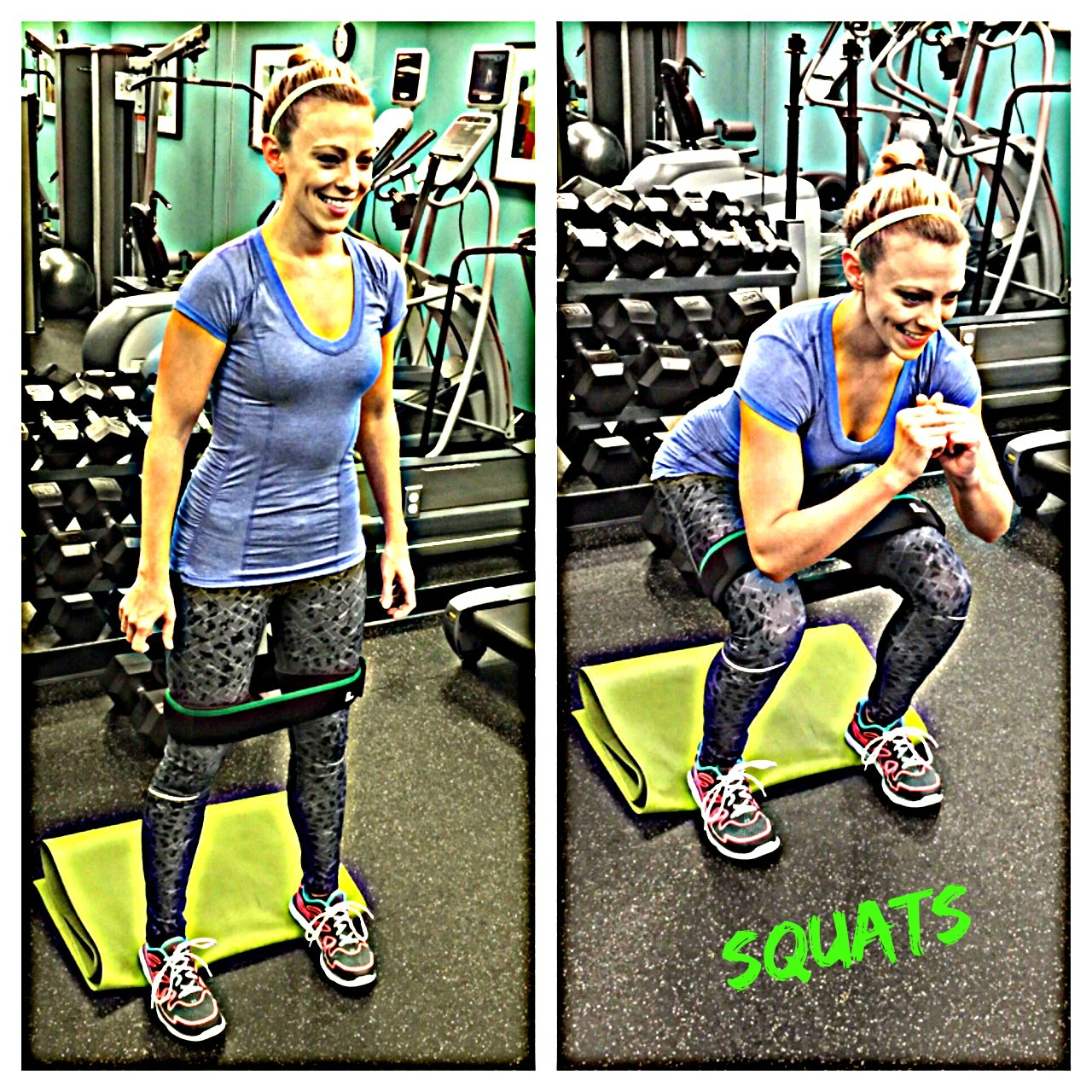
Place band above knees. Stand with feet parallel and hip-width apart. Slowly sink your butt back until legs are at a 90-degree angle (thighs are parallel to the ground). Again, take care to keep knees from caving in toward one another or extending beyond toes, and keep chest up as much as possible (I’m still working on my form, hence the mat under my heels). Hold for a second before driving back up through heels to come back to standing. Repeat 25 times.

IMG_2915

Disclaimer: I’m not a PT or a doctor; these are simply some exercises I’ve found helpful for getting those glutes firing again! If you’ve got an injury or concern, though, be sure to check with your own health care provider first so you can make a plan of action together.

Have workouts, will travel: How I stay fit on the road

Photo courtesy of DangerouslyFit.com

Photo courtesy of DangerouslyFit.com

We all know that the best way to stay healthy is to make eating well and exercising a daily habit. But what happens when a trip throws you off your usual routine?

Between travel and a move, Hubby and I are hypothetically “homeless” (that is, without a permanent address) for almost two months this summer. Deep breath. 

We need a constant amid the chaos. And for us, that’s a good sweat session. So here’s how I plan to stay on track when everything else feels like it’s spinning out of control:

1. Make a plan. Figure out what works with your schedule, and commit to making it your new routine for the interim. For me, that’ll be a quick morning run before breakfast each day to start things off on the right foot.

2. Have a goal. It’s easier to motivate yourself when there’s something bigger at stake. Having my marathon training all mapped out will help me take the guesswork out of my daily workouts.

3. Keep it simple. K.I.S.S. — yep, “Keep it simple, Stupid.” Between running and body-weight exercises, I’ll be streamlining my workouts as much as possible over the next few weeks to keep things uncomplicated.

4. Mix it up. Variety is the spice of life, so when I’m running a lot I mix in complimentary workouts. This often means adding a few new DVDs into the rotation:

Yoga helps balance tight running muscles, so I’ll pop in one of the 12 Yoga Warrior 365 classes and laugh along with instructor Rudy Mettia’s irreverent approach to the practice.

– And for an intense, efficient cardio session when the weather’s not cooperating, I’ve been turning to BurstFIT Fire for a full-body, high-intensity interval workout in a mere 20 minutes.

5. Enlist some help. Having a partner in crime makes it much easier to get up and out each morning. That’s when I lean on Hubby; we keep each other honest about our workouts while on vacation, plus it’s fun to explore new cities that way.

6. Cut some slack. When things get super hectic, it’s good to know when to give yourself a break. Over the years, I’ve realized that an extra rest day here and there won’t hurt my training; in fact, taking a breather can actually help in the long run.

What are your best tips for sticking to a fitness routine while traveling? 

30-Minute Total-Body Elliptical Workout

3328_elliptical-workout-628x250

Confession: I’m not a real fan of the elliptical machine. I think it dates back to my college days when I used to read a magazine during some so-called “workouts” and barely break a sweat.

But after avoiding it like the plague for years, I figured it was about time to reconsider my attitude toward the machine — especially since my sister happens to love hers.

So I started playing with different elements to keep things fresh, and I added in a few strength-training moves mid-session for more of a total-body workout.

The result? A fun, non-impact way to cross-train on those days off from running…or a great way to break up the monotony of typical treadmill time at the gym.

Here’s one of my favorite workouts, which will get your heart pumping and your muscles burning — all in 30 minutes (not including warm-up and cool-down).

TotalBodyElliptical

Once you’ve mastered the moves above, kick things up a notch by throwing in some backward pedaling and alternating between pushing and pulling the handles.

Another tip: Work the core, test your balance and challenge stabilizing muscles by going hands-free for a 10-20 count of strides every few minutes.

Happy ellipticaling!

Pick-a-stick workout

Source: Ashley Benson Fitness

Source: Ashley Benson Fitness

We all have those weeks where it’s tough to find either the time or the motivation to work out. Whether you’re slammed at work, between training schedules, overwhelmed at home, trying to get back in the groove or just on the road and out of your usual routine, removing the obstacle of having to choose your workout makes it more likely that you’ll actually get to the working out part.

But all you need for this is a few items — and virtually no equipment — so it’s easy to do in the comfort of your home or hotel room. And if you don’t want to pack the sticks while traveling, you can print out the list below and choose numbers instead of colors to create the day’s combination.

When you just need a quickie sweat session, simply pull one stick of each color and perform the moves. Or if you want a longer challenge, repeat the set of four exercises a few times, depending on how much time you have. And if you really want to mix things up, get crazy and pull several sticks of each color for a more varied total-body workout.

What you need: 

  • 40 Popsicle sticks
  • 5 permanent markers, each a different color (black, red, green, blue, yellow, for example)
  • 2 Mason jars or cups

How to do it: 

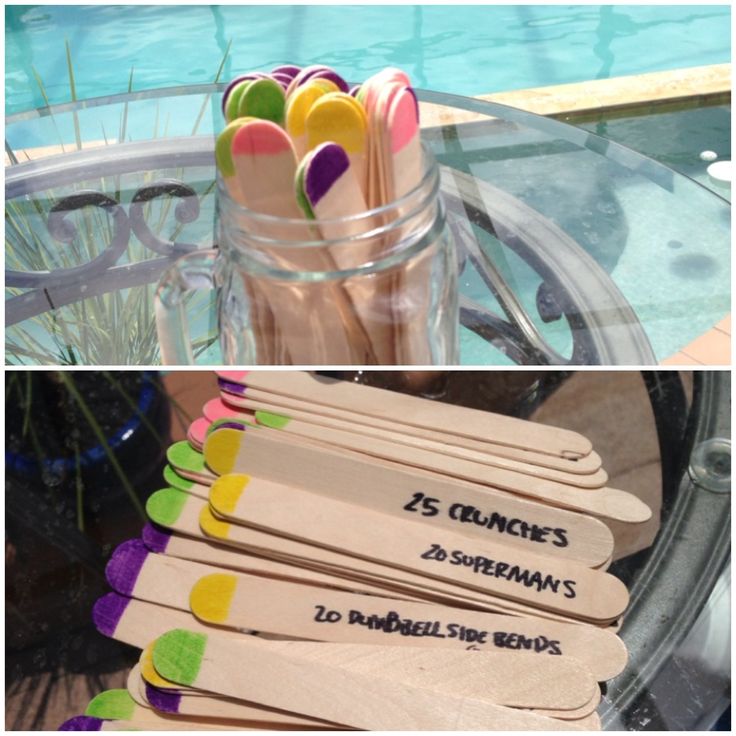
  1. Divide the Popsicle sticks into four groups of 10, and color the ends of each group of sticks with a different colored marker (so when you’re done, you’ll have 10 sticks tagged with red, 10 sticks with green, 10 sticks with blue and 10 sticks with yellow)
  2. Assign one color to each of the exercise groups (i.e. red = upper body, green = lower body, blue = core, and yellow = cardio)
  3. Take the black marker and write a corresponding exercise on each stick — refer to the list below for some ideas, but if you have other favorites, feel free to swap them in
  4. Put all the sticks (colored ends up) in one jar labeled “Do it!” And when you’re ready for a workout, just grab one stick of each color.
  5. Once the workout is complete, place the used sticks in the second jar labeled “Done!”
Source: Pinterest

Source: Pinterest

Exercise ideas: 

  • Upper Body
    1. 25 Standard Push-Ups
    2. 25 Diamond Push-Ups (tips of thumbs and index fingers touch)
    3. 20 Push-Ups with Side Arm Balance (alternate sides)
    4. 20 Plank Up-Downs (alternating arms)
    5. 15 Lateral Raises (using dumbbells, water bottles or cans)
    6. 20 Incline/Decline Push-Ups (elevate feet for 10, elevate hands for 10)
    7. 15 Bent-Over Rows (using dumbbells, water bottles or cans)
    8. 15 Hammer Curls (using dumbbells, water bottles or cans)
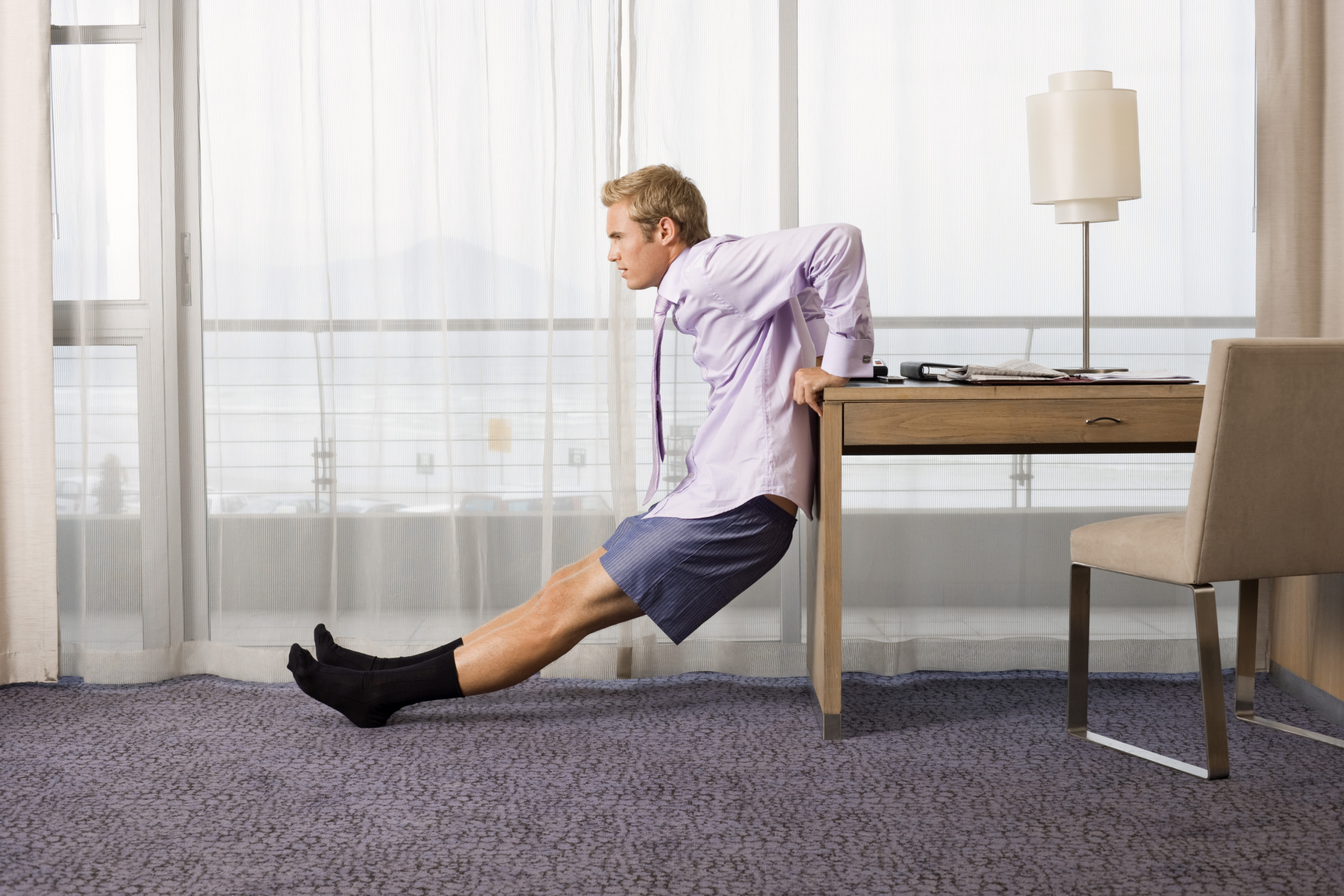
    9. 25 Tricep Dips
  • Lower Body
    1. 30 Walking Lunges (alternating legs)
    2. 40 Squats
    3. 60-second Wall Sit
    4. 30 Reverse Lunges (alternating legs)
    5. 30 Calf Raises (10 each with toes facing in, straight, out)
    6. 30 Side Lunges (15 each side)
    7. 40 Plie/Sumo Squats
    8. 50 One-Legged Dead Lifts (25 each side)
    9. 50 Donkey Kicks (25 each side)
    10. 30 Curtsy Lunges (15 each side)
  • Core
    1. 60-second High Plank (arms straight under shoulders)
    2. 20 Mountain Climbers
    3. 60-second Superman
    4. 30-second Side Plank (each side)
    5. 50 Crunches
    6. 50 Bicycles (25 each side)
    7. 60-second Low Plank (on elbows)
    8. 45-second Flutter Kick
    9. 15 Sliding Pikes (with towel under feet on uncarpeted floor)
    10. 30 Bird Dogs (on knees, lift opposite arm and opposite leg)
  • Cardio
    1. 25 Burpees
    2. 60 Jumping Jacks
    3. 40 Stair Hop-Ups (jump up with both feet onto one step)
    4. 50 High Knees (jog in place, bringing knees as high as possible)
    5. 50 Butt Kicks (touch heel to glute)
    6. 90-second Stairs (time yourself running up and down a flight)
    7. 15 Tuck Jumps (bringing both legs to chest)
    8. 20 Squat Jumps (squat, then jump as high as you can)
    9. 25 Lunge Jumps (lunge, then jump into the air and switch legs)
    10. 30-second Single Leg Hops (each side; jump back and forth over an object, such as a towel)

Of course, the disclaimer: Always check with your physician to get the go-ahead before you start any new exercise program!

The three stats I track for every workout

photo-7

Although I claim to be mathematically-challenged (much to the chagrin of my dad, who is an engineer), I totally geek out when it comes to workout stats. Whether it’s miles ran, swam or biked, there’s just something so fulfilling about poring over the numbers after a particularly tough workout — not only to celebrate great days and learn from not-so-great ones, but also to set benchmarks for gauging current performance and goal setting.

But the ways in which we can now quantify ourselves is almost getting out of hand: From calories burned, miles traveled, heart rate, steps taken, sleep patterns, weight, etc. — it’s easy to get caught up in quantity to the detriment of quality (i.e. the bigger picture). For example, sometimes I’m so intent on hitting mileage goals with my runs that I’m tempted to swap a stretch session in favor of more time to log miles. Big mistake!

Everybody (and every body) is different, so you’ve got to find what works for you, your lifestyle and your goals, but I tend to think it’s best to keep it simple when it comes to tracking stats. Granted, there are certain times and training cycles where this may change, but as a rule I live by quantifying the following three things for each workout.

1. Shoe Mileage

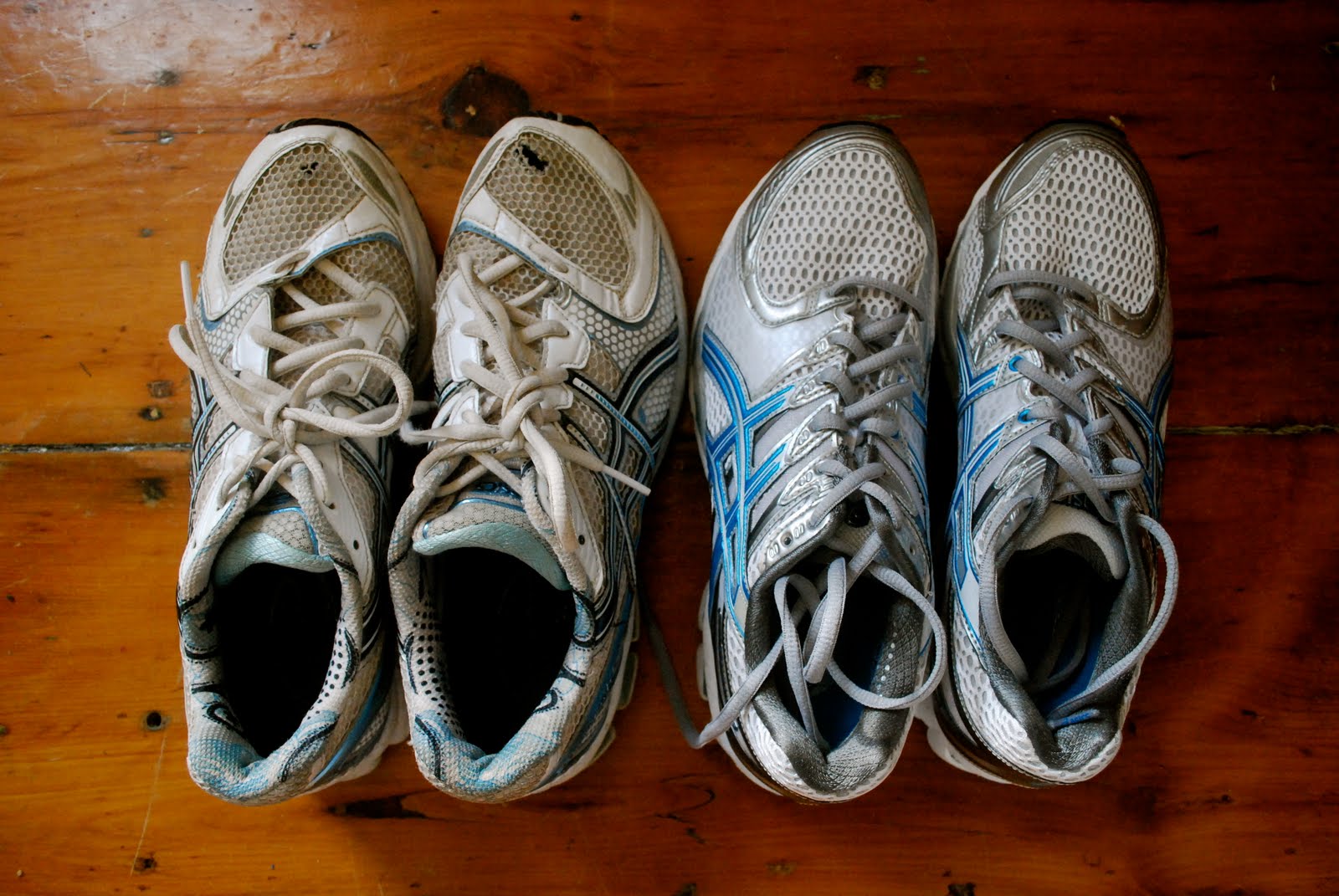
Why: I used to run my shoes into the ground (literally) trying to save a few bucks by stretching out their life as long as possible. But when minor aches and pains crept up and morphed into injuries, I learned my lesson: A pair of good shoes that will support and cushion you properly is priceless.

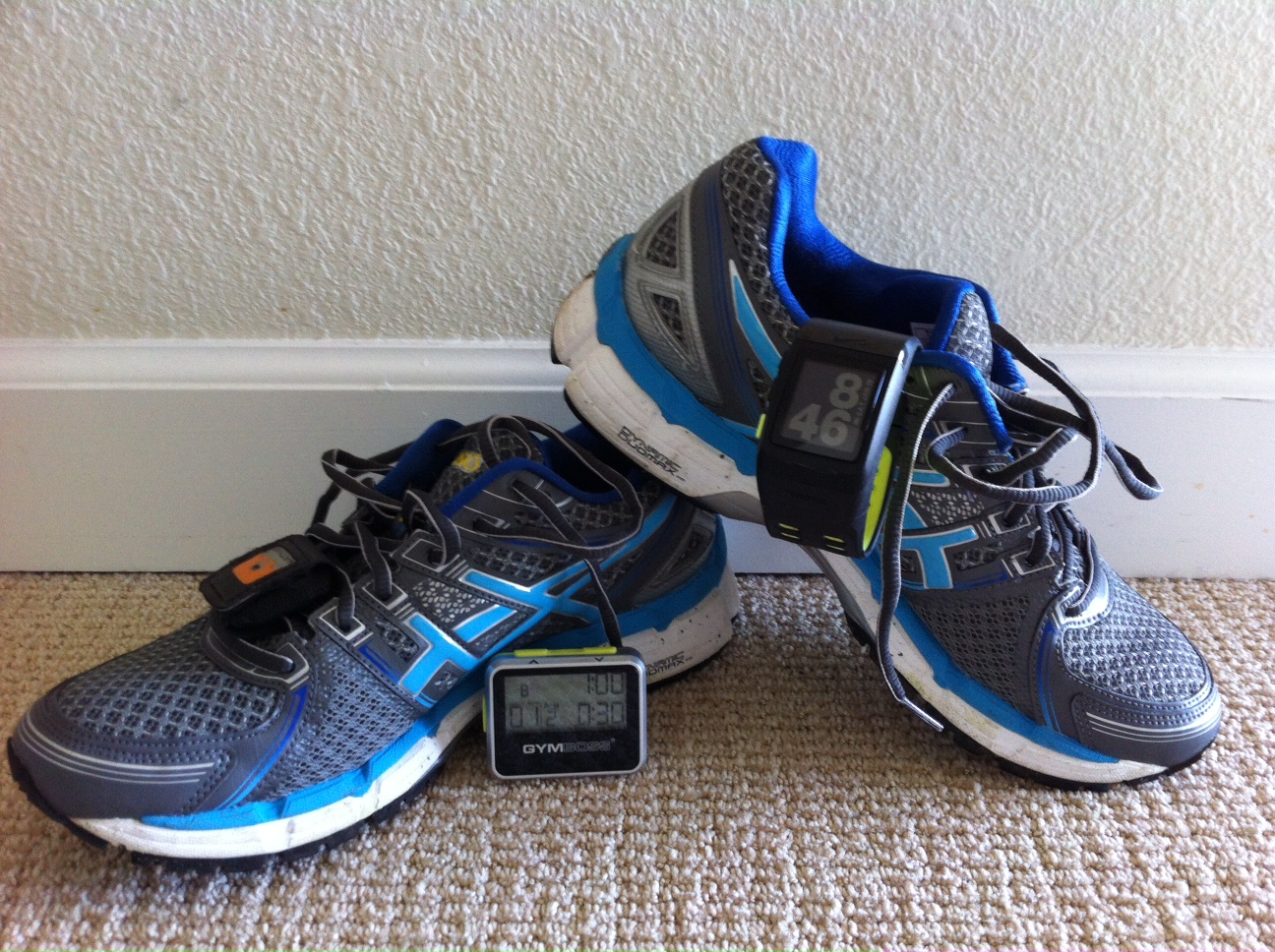
How: Rather than running in one pair until it feels “flat,” I buy two pairs of shoes and rotate them on a weekly basis to give the cushioning time to bounce back. I’m also getting better about tracking actual mileage — one of my goals for 2014 is to figure out exactly how many miles it takes for me to wear my shoes out (the average is about 300-500, depending on the runner) — so I’m keeping a tally on each to know when to rotate future pairs.

Source: OneMomInMaine.com

Source: OneMomInMaine.com

2. Exercise Duration

Why: We’re all time-crunched and multitasking to the max, so it’s easy to get in that mid-workout daze and just power through reps as quickly as possible. But by giving myself a set about of time for each exercise and working out for that entire interval, it forces me to focus on form, which inevitably gives me more bang for my buck in the long run.

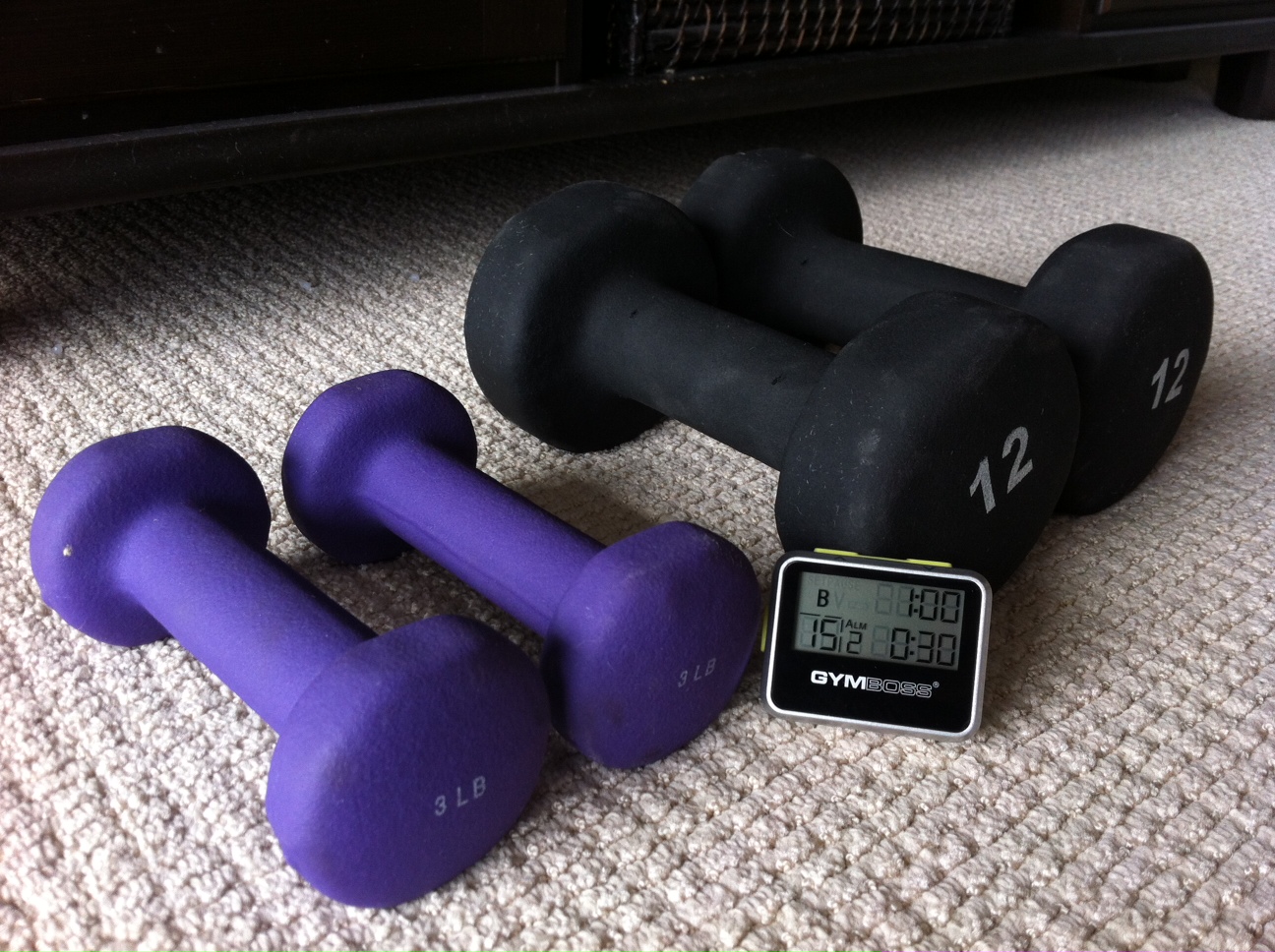
How: Whether it’s with a stopwatch or another kind of timer (my favorite is GYMBOSS because it’s a repeating interval timer, countdown timer and stopwatch all in one), set your segments and actually stick to ’em. You’d be surprised how long 30 seconds feels when you’re working hard — but keep yourself honest, and you’ll see results that much faster.

photo (13)

3. Workout Details

Why: Logging workouts not only provides a sense of accomplishment, but it also allows me to analyze performance, discover trends (i.e. running after a leg day leaves me feeling slow and heavy, so I switch up the schedule for better results), recognize potential issues and injuries, as well as motivate myself to make goals for future sweat sessions.

How: I still keep an old-school workout log, which I fill out every day (even on my off days; in fact, it reminds me to schedule them in!) with workout type, details, duration, etc. But you can get as specific as you’d like when recording individual workouts. For example, you might want to use a GPS watch to keep track of pace, distance and other elements of runs (I currently use the Nike+ GPS SportWatch, but have heard enough good things about Garmin to want to check it out), or there are apps and programs that will also help you keep track of workouts in other ways (I use MapMyRun to create routes, and I’m also testing Strava to challenge myself on rides and runs).

However you decide to quantify your workouts — or not — it’s all about finding tools that work with your workout style and allow you to stay motivated, train more effectively and have fun in the process!

STRAVA-biker-resize

What stats do you track when working out? 

Are you guilty of one of these workout time wasters?

girlfriend-girls-chatting-gym

We’ve all had those days when, even with the best of intentions, your workout gets sidetracked once you set foot in the gym. But with time at a premium, efficiency is a critical part of the fitness formula is you want to keep making progress.

“Almost everyone could benefit from getting a more effective workout in less time and reaching their goals sooner,” says Jennifer Beaton, VP and general manager at Western Athletic Clubs and a certified personal trainer at Bay Club San Francisco.

So take a look at these four common workout time wasters, and make a mental note to avoid them if you want to maximize your next trip to the gym:

1. Excessive rest. All those minutes spent sitting on the bench staring at your watch really add up. “If you can sit down and read the paper between sets, you are likely resting too long,” warns Beaton. To see better results with the very same moves, and to optimize your time, try super-setting exercises, such as push-ups and squats, to allow rest of a muscle group while you work another muscle group. Replacing station rest with active rest such as 30 seconds of high intensity cardio can also optimize calories burned and muscle recovery.

2. Steady-state cardio. In other words, those marathon (no pun intended) treadmill sessions. “We see many members who do the same 60 minutes of cardio at the same intensity every day for 15 years. These individuals no longer see improvements and often start to see declines in overall condition. They would benefit by mixing up their routine, adding intervals and high intensity work,” says Beaton.

3. Isolation exercises. “Life is full of dynamic movement, and therefore our workouts should simulate and enhance those efforts by using multi-joint, compound movements, such as squats, lunges and pull-ups as opposed to, for example, adductor/abductor machines or bicep curls. To get the most bang for your buck, focus on performing movements that recruit as many muscles as possible; those smaller secondary muscles will get plenty of work as they support the larger muscle groups during those movements,” Beaton adds.

4. Endless crunches. Likewise, if your goal is a great-looking midsection, ab-isolating exercises may miss the mark. “I often see people doing 15-20 minutes of crunches in hopes that it’ll deliver six-pack abs,” says Beaton. “Their time would be better spent on nutrition, a solid full-body strength routine, and a balanced cardiovascular program.”

How do you make the most of your time at the gym?

Jump-start 2014 with this ‘New Year, New Outlook’ workout

220113_body

Happy New Year! Your motivation is probably at an all-time high — so now is the time to take advantage of the new-found burst of energy.

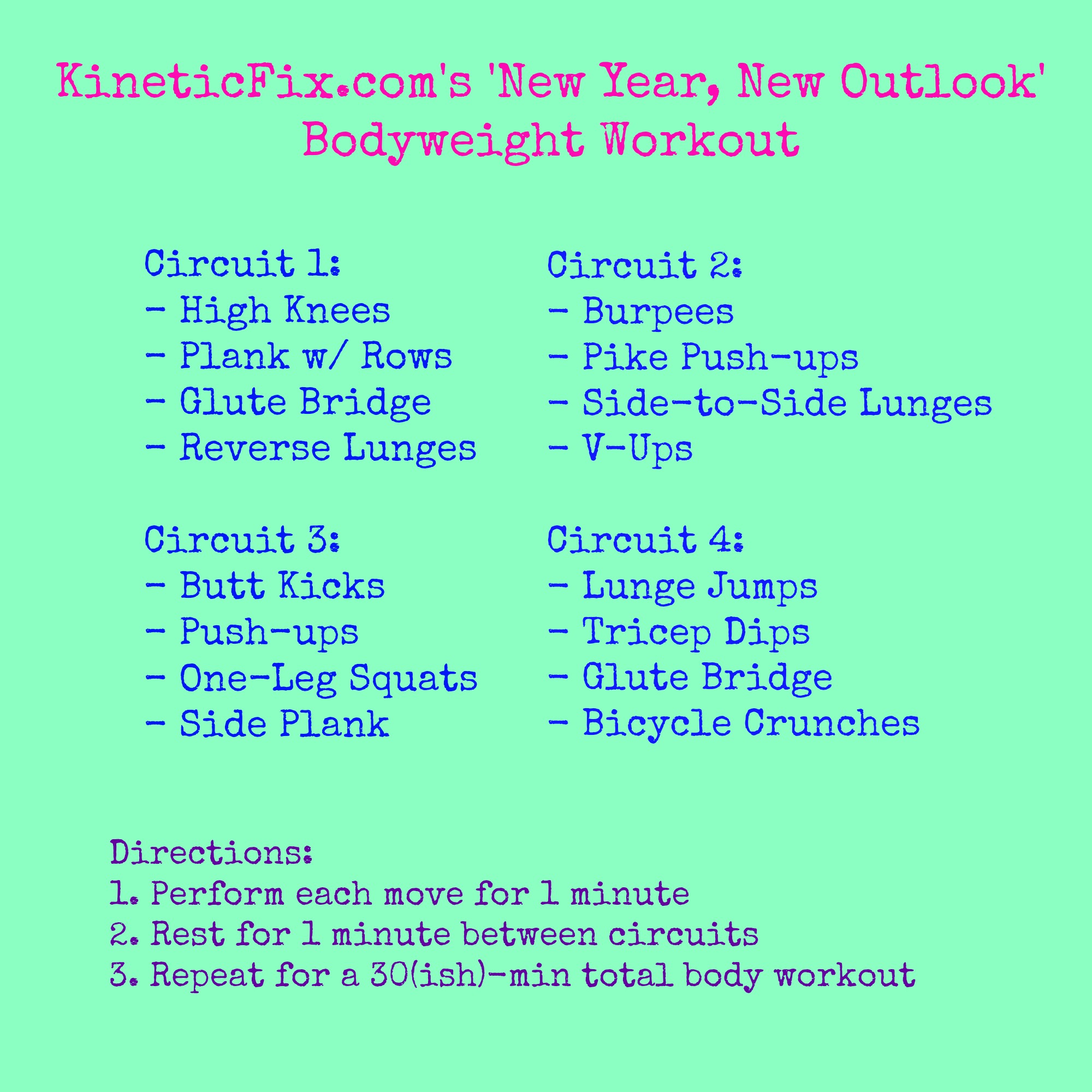
No gym? No equipment? No excuses. This simple body-weight workout can be done in the comfort your living room (however space-challenged you may be), and the only thing you’ll need is a timer (my favorite is Gymboss) to count down the intervals…and maybe a towel to mop up all the sweat.

The workout itself consists of four circuits of four exercises. Each circuit’s exercises efficiently cover one (or more!) of the following elements: Cardio, Upper Body, Lower Body and Core. If you’re unfamiliar with a move, just Google the name for a list of descriptions and/or demo videos.

It’s an easy way to trick yourself into a quick — yet intense — total body workout and to get that jump-start on 2014’s fitness goals.

NewYearNewOutlookWkt

Fit Fix: Interview with real-life X-Man, Tony Horton

Source: Beachbody

Source: Beachbody

It’s a generally-accepted rule that most sequels pale in comparison to the originals, but Tony Horton‘s P90X program has bucked the trend of workout one-hit wonders. His philosophy is simple, yet struck a chord with millions: Avoid boredom, plateau and injury – the three things that can cause people to lose their exercise mojo.

After selling more than 4.5 million copies of the original, Horton released a second installment, P90X2, last year to rave reviews. I can personally attest to the program’s results-oriented approach, having knocked nearly a minute off my mile run time after completing the 90-day circuit (read more about it herehere and here). So it’s no surprise that recent release of P90X3 has people buzzing again.

It’s also no secret that I’m a big fan of Beachbody when it comes to getting in shape in the comfort of your living room. So I thought it only fitting to revisit a conversation I had with Horton about the success of the series, his “laws” for health and fitness, as well as how he stays fitter and healthier than men half his age…

Kinetic Fix: What’s your current workout & nutrition regimen? 

Tony Horton: I’m getting away from the linear, traditional training programs of the past. If you’ve done P90X2, you’re familiar with PAP, which is pretty cutting-edge when it comes to athletic and multi-plane training – jumping, turning and twisting like an athlete would on the court. And in terms of nutrition, I’ve changed a bit and have gotten into eating fish and chicken again in order to maintain size and strength as I moved into my 50s. I always try to have at least one massive salad a day, and another big shift has been cutting out sugar, which has been tough because I’m kind of a sugar addict.

KF: We’re coming up on resolution time; how do you get motivated when you’re just not in the mood to work out?

TH: For me, that’s like asking, ‘How to you stay motivated to breathe, eat or sleep?’ Although it’s a task I choose instead of one that helps me survive, I know that if I do it, I’m a better man for it. My health and my immunity improve, and I’m less vulnerable to aches and pains. It’s a universal fact that if you move and eat right, you’re better for it. When you exercise, you slow the aging clock, and when you don’t you speed it up.

KF: Can you share your favorite piece of advice when it comes to staying in shape?

TH: Your goal should be to get fit and stay that way for the rest of your life; it shouldn’t be an up and down pattern where you keep gaining and losing. I have 11 laws of health and fitness, but there are five that rise to the top, which are variety, consistency, intensity, purpose and planning.

Variety means doing what you’re good at – and what you’re not. Consistency means working out five to seven days a week. Intensity means to stop doing it the same way; showing up is 90 percent of it, but the other 10 percent is paying attention and being willing to improve. Purpose means having something so powerful driving you that there’s no question you’re going to miss a workout. And planning and accountability mean figuring out what you’re doing – and when – and fitting that into your schedule. It becomes automatic at that point, like breathing and sleeping.

KF: What do you tell people who may feel too intimated to attempt the P90X DVDs?

TH: When people hear P90X, sometimes they assume that it means 90-minute workouts. There’s an extreme aspect, if you want it, but almost every single move has a modification. This is what gets you through the P90X series. It’s a slow, patient process over time, but you just have to show up and do it. Instead of giving it to you, you have to earn it – but once you earn it, it’s yours and no one can take it away.

KF: Finally, any advice for P90X and P90X2 grads who are hoping to tackle P90X3?

TH: I like to say that it isn’t harder, but it’s different – but it’s harder because it’s different. To graduate from one to the other requires the knowledge that you kind of have to start over because it takes a fit, healthy body and trains it like an athlete. It’s indoor training for the outside world.

Thanks again to Tony for taking the time to chat! Click here for my original interview with him, and visit Beachbody.com for more information or to order P90X3. 

Undo holiday damage with ‘Deck the Halls’ workout

DeckTheHalls1

‘Tis the week of Christmas, and you might be feeling less than motivated to break a sweat amid the festivities. Or maybe you’ve been cooped up inside, and the opposite is true: You’re just itching to burn off some extra energy.

Either way, I’ve got a great solution that’s both challenging and fun — all you need is a deck of cards and some comfortable workout clothing and shoes…no other gear required!

Work through the entire deck (52 cards) if you’ve got the time or the inclination; otherwise pull one at a time, performing the prescribed moves for a set number of cards (e.g. 25 cards’ worth of moves) or duration of time (e.g. 30-minutes worth of moves).

If you’ve got access to machines and want a more cardio-focused workout, add a five-minute warm-up and cool-down, plus five-minute intervals on the machine every five cards.

If you’ve got weights and want to work in additional strength training, try holding them while performing some of the moves (lunges, squats), or mix things up with a set of bicep curls, shoulder presses, rows, etc. after every few cards drawn.

However you do it, enjoy! And maybe even challenge your relatives to get in on the fun to make fitness a family affair this holiday 😉

DeckTheHallsWkt