Fighting the good fight against plantar fasciitis

photo

During my Detroit Marathon week seven training recap, I mentioned that I’ve been dealing with a case of plantar fasciitisPlantar-huh, you say?

Here’s what it is

Unless you’ve been plagued by it (and in that case you know all too well), plantar fasciitis (or fasciosis, as some say) reveals itself as heel pain. Technically, it’s been described as an inflammation (hence “itis”) of the plantar fascia, which is the flat band of tissue (ligament) that connects your heel bone to your toes.

Non-technically speaking? It sucks.

The most common symptom is a very painful first few steps out of bed in the morning. Once the foot warms up, the pain subsides, only to rear its ugly head again after long periods of standing or after getting up from a seated position.
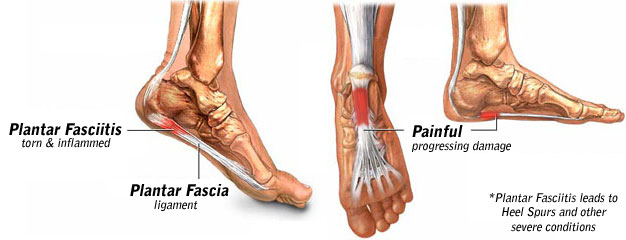
plantar_fasciitis_clip_image001

How’d it happen? I can’t pinpoint a specific incident, just that it appeared toward the end of training for my marathon last fall. Certain types of exercise (i.e. running), faulty foot mechanics, age, obesity and long periods of time in your feet are the usual suspects in terms of contributing factors, though.

What I can say for certain is that it’s frustrating — not only because it threatens to derail training, but also because there is no real consensus on treatment. So in the meantime, I’ve been taking matters into my own hands to manage the heel pain, which morphed into a related calf/shin injury after Hood to Coast.

Here’s what I’m doing about it

1. Sensible Shoes. 

Because I spent a few weeks this summer traipsing around Italy in flats and sandals (whoops), I’m paying the price. So now I opt for shoes with a low to moderate heel, good arch support and shock absorbency. And while I haven’t completely given up flip flops, I also try not to go barefoot for long stretches of time, especially on hard surfaces.

2. Enough Rest.

Although not running is one way to try to stop PF, it’s no guarantee. And even though I’m mid-training, I do try to give my feet a rest when I can. This means not only cutting back on activities like walking or running on hard surfaces without proper support, but also taking advantage of rest days and putting my feet up whenever I can.

3. Ample Ice. 

I’m not always great about it, but when possible I try to reduce pain and inflammation with ice. The protocol is to hold an ice pack over the area of pain for 15-20 minutes three or four times a day or after activity. But my favorite is an ice massage: I freeze a water bottle full of water and roll my foot back and forth over it for 10 minutes.

4. Anti-inflammatory Meds.

To kill the dull ache (and try to keep things from getting too inflamed after a workout, I’ll take an over-the-counter pain reliever like ibuprofen (such as Advil or Motrin), naproxen (such as Aleve) or aspirin. All of these are non-steroidal anti-inflammatory drugs (NSAIDs) which help relieve minor aches and pains.

5. Rolling and Stretching.

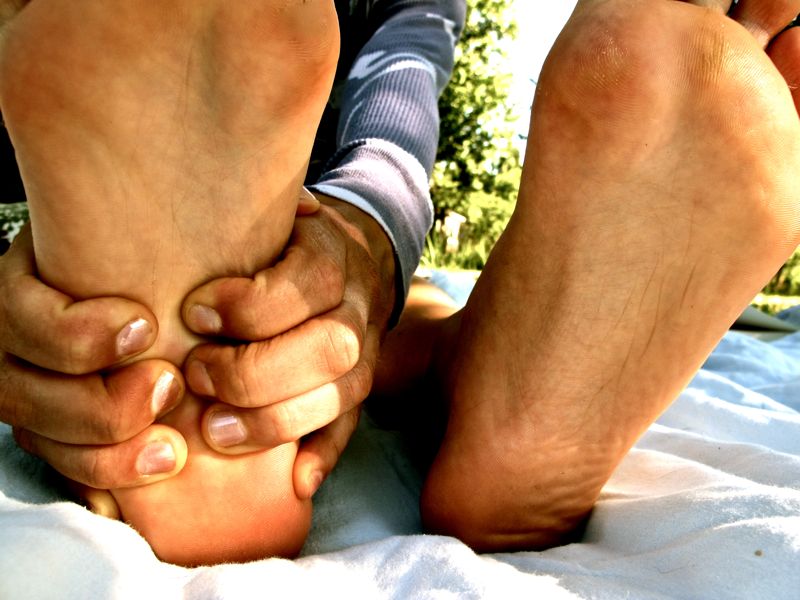
Immediately after activity, I try to stretch out my plantar fascia, Achilles tendon and calf muscles. But the best tip I got was from when I was at a fitness studio in Seattle: They had us step on a lacrosse ball to roll out our arch, so I went right home and bought one. Now it’s my favorite thing to do in front of the TV or on a  conference call.
acupuncture-for-plantar-fasciitis_full

6. Night Splints.

I ordered a Strassburg Sock, which stretches my calf and the arch of my foot while I sleep. The idea is to hold the plantar fascia and Achilles tendon in a lengthened position for an extended period of time, although it’s not super comfortable sleeping with a flexed foot, so I haven’t been consistent enough with this to say whether or not it works.

7. Insoles and Orthotics. 

My running shoes are outfitted with Superfeet’s Berry insoles for added support and impact reduction, but I also wear these arch sleeves — thanks to a recommendation from Twitter friends! Not only do they keep my foot from rolling in, but the gentle massage feels great when I know I’m going to be standing for long periods of time.

8. Replacing Shoes. 

Did you know that running shoes lose their support and cushioning after around 300-500 miles of use? Here’s my trick: I buy two pairs at once and alternate them every other run to allow each pair an “off day” to bounce back, plus I’m tracking their mileage carefully to make sure I’m not wearing anything past the point of no return.

9. Ah, Massage.

There are countless health benefits to a good massage, plus it’s one of my favorite rewards for training and recovery. ‘Nuff said.

10. Non-Running Work. 

Even though I’m a former personal trainer, training myself for a marathon leaves me with little time (or energy) to focus on the other stuff. That’s why I’m consulting with a local trainer to help me build a base of stability and range of motion to correct any underlying imbalances, manage injury and keep me running safe and strong in the long run.

11. Physical Therapy.

Finally, another medical professional I’ve recently started working with is a PT. She was able to diagnose some underlying issues and imbalances and provide me with a series of exercises to help get my foot more mobile, stretch the plantar fascia and Achilles tendon and strengthen my lower leg muscles, which stabilize the ankle and heel. Plus, she offers a host of other tips and tricks, which will hopefully get me up and running again soon!

Have you successfully dealt with PF? And, if so, what worked?

Reviewing the new Runtastic 24/7 fitness tracker

photo (5)

Late last month Runtastic — an innovative suite of apps, products and services that track and manage health and fitness data — released their new Runtastic Orbit wearable, which is the latest and greatest in 24-hour tracking devices that allow users to monitor daily movements, fitness activities and sleep cycles.

In a nutshell, the Orbit’s similar to existing trackers such as FitBit and Jawbone Up, but it’s also got a few new bells and whistles I’m pretty excited to check out — namely that it’s waterproof (to an impressive 300 feet), syncs up with ANY of the Runtastic apps, has a proprietary sleep tracker (which I find fascinating), plus a battery life that can last up to a week.

135136-62928866-432d-4b93-a9f1-62adeb687932-orbit_teaser_sleep_tracker_01-large-1404731889

Specifically, the Orbit tracks Steps, Active Minutes, Calories Burned, Sleep Cycles, Goals and Ambient Lighting. Other features include an OLED Display, Time & Alarm and Bluetooth Smart Technology (which means it syncs to your phone automatically; yay for no cables!).

I’ll be testing it out over the course of the next few weeks, which coincides perfectly with training and racing so I can really put it through the paces. But after just a few days in, though, I can already say I’ve been pleasantly surprised with some of the features.

Stay tuned for my full review with photos; and if you’d like more information on the Orbit in the meantime, visit the website here

Feel the squeeze: 4 reasons to try compression gear (+ giveaway!)

shutterstock_112606778

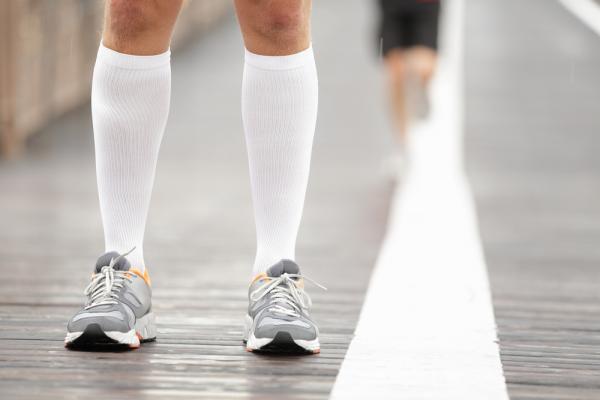
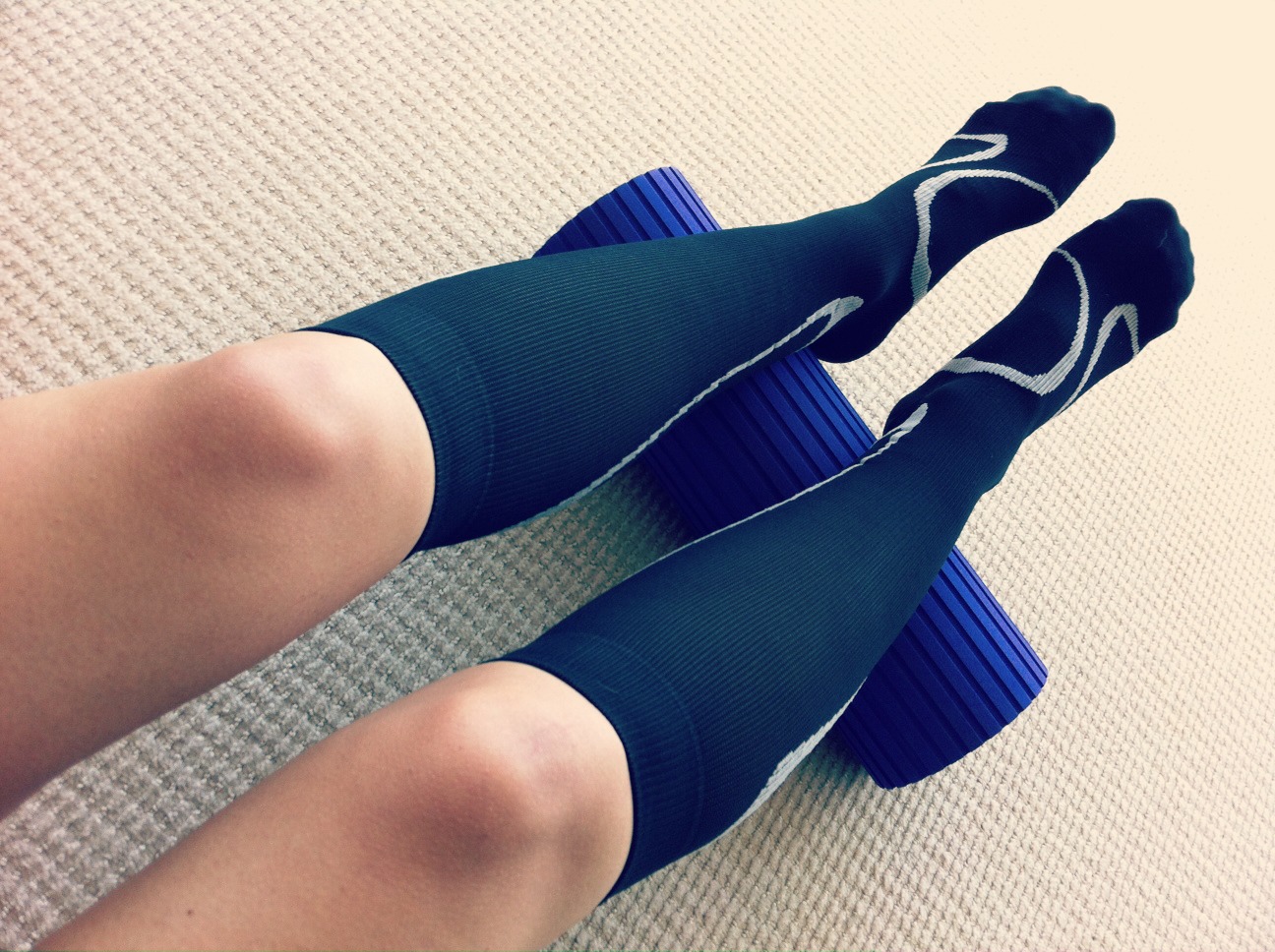
Once reserved for diabetics and frequent flyers, compression socks have gone mainstream, thanks to athletes who swear by their performance benefits in training, racing and recovery.

“I started wearing compression gear in 2007, and I sure got some funny looks as the first person in the USA to wear them [at Ironman Louisville that year],” said Chris McDonald, a professional triathlete and four-time Ironman champion. “I was chatting with a surgeon about post-op recovery, and he said to me, ‘I know nothing about sport, but I can’t tell you quality compression socks will help with return blood flow.’ So I just tried them!”

Although experts are still debating whether the effects are more in your head than your legs, I’m a proponent of compression gear, based on experience. Not only do my legs feel fresher mid-run, but they’re also less sore the day after. Plus, blindingly-bright colors keep me happy during hard workouts 🙂

Personal opinions aside, though, there are a few reasons why it may be worth setting your gear budget back a few bucks (prices for these puppies are in the $45-70 range) to get ahead in your training:

1. Improve circulation. Ever get that “heavy legged” feeling while working out? Compression gear can help prevent blood from pooling in hard-working muscles to keep legs feeling peppy.

2. Stay comfortable. If you’re worried that wearing compression socks means you’ll have to give up your favorite cushy, anti-blister socks, think again. Many brands offer arch support and extra padding in the toe and heel.

3. Increase protection. Socks aren’t just for shielding feet against shoes. Much of today’s compression gear does double duty with special materials that provide a cooling effect and SPF sun protection.

4. Speed recovery. Bounce back faster with recovery-based styles, which are engineered to help get fresh blood into muscles and flush out byproducts, such as lactic acid.

All the brands and technology out there can get overwhelming, which is why I recommend starting at a site like BrightLifeGo. They’re an authority on the subject of compression, having tested and handpicked their entire collection of socks and stockings — both for athletic use and everyday wear. 

I even found a new favorite brand there — Sigvaris. Style-wise, they’re a departure from my usual obnoxiously-colored gear…but functionally, I just couldn’t pass up their graduated compression design, extra-cushy footbed and anti-blister toe fabric. 

sigvaris

Factor in all the other bells and whistles, like high-tech fibers to regulate temperature (and odor), Achilles Tendon Protectors to reduce vibrations on ligaments, plus extra-wide top bands to keep everything in place…and, well, I pretty much live in these things when training, racing and traveling. 

Want to feel the squeeze yourself? Here are a few things to take into account when picking your perfect pair: 

  • Length: Do you want a knee-high sock or a full-length legging?
  • Use: Are you looking to use compression for work, play — or both?
  • Level: How tight do you want it — mild relief or moderate support? 
  • Design: Is form (aka style) just as important as function? 

“I definitely feel the benefits with both performance and recovery time,” said McDonald. “If you can recover quicker you can train harder. Put on compression for all travel (including drives over two hours), wear them during and post workout, and put a pair of compression socks on as you are sitting around at night. It’s not rocket science; it just takes routine.”

Is compression a part of your training and racing attire?

Enter my Rafflecopter giveaway to win two FREE pairs of Sigvaris compression socks or sleeves, courtesy of BrightLifeGo!

Three shortcuts to help you nail that New Year’s resolution

Weight

With time, energy and willpower at a minimum right about now, there’s no more critical moment to make a solid game plan for the resolutions you’ll utter on January 1st.

What initially seems doable may, in fact, prove impractical, so set yourself up for success by taking a moment to reconsider your approach – and give these three shortcuts a shot to help you realize those resolutions, once and for all:

#1: Aim for 80 percent

We come crashing out of the gates every year saying, “This one will be different!” And it usually is. For two weeks. Then the holiday high wears off, so it’s important to reevaluate and be realistic about your goals.

First, recognize that adopting an “all-or-nothing” mentality rarely works. Just as perfection isn’t attainable, it’s difficult to expect to hit the gym every day or eat clean at every meal. Inevitably, you’ll miss a workout or veer off course diet-wise, then one day or one cookie turns into one week or one bag, respectively. It’s a slippery slope trying to get back on track after getting tripped-up.

Second, re-frame your definition of success, focusing on changing your behavior 80 percent of the time. If your goal is to eat well, it’s much more palatable to try for five days of healthy meals and two “off” days, giving yourself a better chance to actually follow through.

#2: Cut some corners

No one has access to an endless supply of money, motivation or time when it comes to doing what it takes to get healthy, so it’s important to cut yourself some slack. Instead of making excuses, take stock of your potential blind spots, and don’t be afraid to rely on people and programs to help you make good on those resolutions.

For example, if you find yourself skipping too many workouts due to an overloaded schedule, setting an appointment with a trainer is a terrific way to keep yourself accountable each week. Or if you fall back on fast food after a long day at work, try a meal delivery program such as Nutrisystem, with its portion-controlled meals in microwave-ready packages.

Make it easier on yourself by making it foolproof. Take stock of your weak spots and plan accordingly, whether it’s sleeping in workout gear to make it easier to work out in the morning, or simply prepping a week’s worth of meals on Sunday to take the guesswork out what you’ll be eating each day.

#3: Use positive reinforcement

When all else fails, don’t be above bribing yourself into better habits. Nothing’s quite as motivating – or satisfying – as being rewarded for hard work. And depending on how you’re tracking against your goal, you may need to readjust and make the qualifying milestones smaller in order to maintain momentum.

The best rewards are non-essential items; when you don’t need something, it’s a lot easier to want to earn it. Try relating your treat to working out (a race entry for a month of running or a special yoga class for a week of weight lifting), and enjoy benefits that are two-fold: Not only do you gain that extra burst of motivation, but you are also reinforcing good behavior in the process. Start with a small reward; you’d be surprised how even a $10-20 indulgence can work wonders.

How are you planning to keep yourself on track with healthy habits in the New Year? 

Fight the flu: 8 tips for beating bugs this season

Source: Spencer Platt/Getty Images

Source: Spencer Platt/Getty Images

With widespread outbreaks inevitable and not a cure in sight, there’s no denying it could be another nasty cold and flu season.

While over-the-counter treatments can bring some relief and help shorten the duration of symptoms, your best bet is to take a preventative approach to try to ward off bugs before they take hold.

Below are a few immunity-boosting tips to help stave off sickness this season:

1. Get a flu shot. Yes, the CDC recommends a yearly flu vaccine as the first and most important step in defending your body from viruses. Although there are many different flu viruses circulating, the vaccine is designed to protect against the three that research suggests will be most common.

2. Wash your hands. One of the simplest yet most effective ways in which you can stop bugs from entering your body is by practicing the correct hand washing technique. Use warm water, plenty of soap and do it for about 20 seconds (Need a timer? Hum the “Happy Birthday” song from beginning to end twice).

3. Mind your diet. Sugar can suppress the immune system, so cut back on holiday sweets and alcohol, wherever possible. Instead, load up on antioxidant- and vitamin-rich fruits and veggies, which help keep your immune system running strong.

4. Manage stress levels. Another immunity-killer is both chronic and daily stress, which will leave your body ill-equipped to fight infections. Decrease stress by taking some time out, whether that’s practicing meditation, getting a massage or simply going for a walk.

5. Get ample rest. Along those same lines, a tired body is one that’s also more prone to illness. Aim for a good stretch of uninterrupted sleep each night, ranging anywhere from seven to eight hours for most adults.

6. Break a sweat. The health benefits of exercise are endless, including increased circulation and blood flow, which helps keep your immune system oxygenated and strong – not to mention, it’s a terrific way to reduce stress (see No. 4 above).

7. Stay well hydrated. Most of us need around half an ounce of non-caffeinated fluids for each pound of body weight daily to maintain proper hydration. This helps detox the body, carry nutrients to cells and keep mucous membranes moist, which lessens the likelihood of cold or flu bugs invading your nose or lungs.

8. Look on the bright side. Finally, do yourself a favor, and lighten up. Scientific evidence shows that laughter not only helps people breathe easier, but it also massages the heart and vital organs and may increase the release of disease-fighting cells of the immune system.

What are your secrets to staying well during cold and flu season?