30-Minute Total-Body Elliptical Workout

3328_elliptical-workout-628x250

Confession: I’m not a real fan of the elliptical machine. I think it dates back to my college days when I used to read a magazine during some so-called “workouts” and barely break a sweat.

But after avoiding it like the plague for years, I figured it was about time to reconsider my attitude toward the machine — especially since my sister happens to love hers.

So I started playing with different elements to keep things fresh, and I added in a few strength-training moves mid-session for more of a total-body workout.

The result? A fun, non-impact way to cross-train on those days off from running…or a great way to break up the monotony of typical treadmill time at the gym.

Here’s one of my favorite workouts, which will get your heart pumping and your muscles burning — all in 30 minutes (not including warm-up and cool-down).

TotalBodyElliptical

Once you’ve mastered the moves above, kick things up a notch by throwing in some backward pedaling and alternating between pushing and pulling the handles.

Another tip: Work the core, test your balance and challenge stabilizing muscles by going hands-free for a 10-20 count of strides every few minutes.

Happy ellipticaling!

Barry’s or Bust: Taking to LA to test the ‘Best Workout in the World’


photo 4 (4)

It’s a good thing typing only requires moving my fingers — because pretty much every other muscle in my body is sore today after yesterday’s field trip down to LA for my first taste of the serious sweatfest that is Barry’s Bootcamp.

The Los Angeles-based company, whose popular program combines treadmill sprints and strength-training intervals for hour-long workouts, is coming soon to San Francisco thanks to Adam Shane (owner of the SF franchise). He invited a group of us to see firsthand how the brand earned its reputation as the “Best Workout in the World” among celebs, athletes and enthusiasts alike.
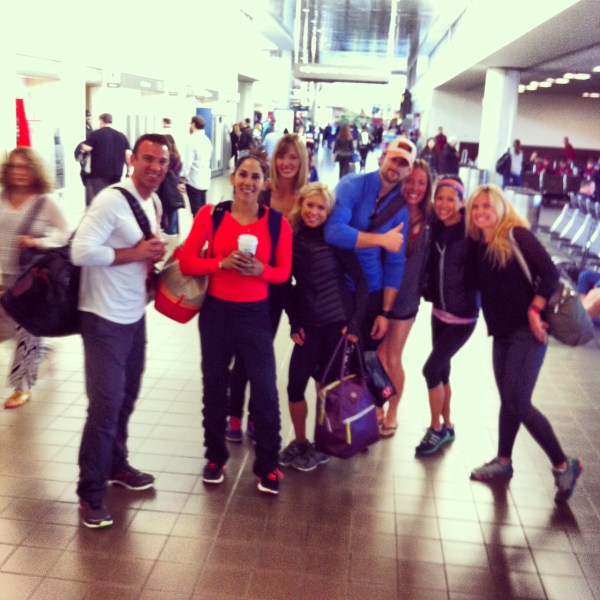
photo 1 (13)

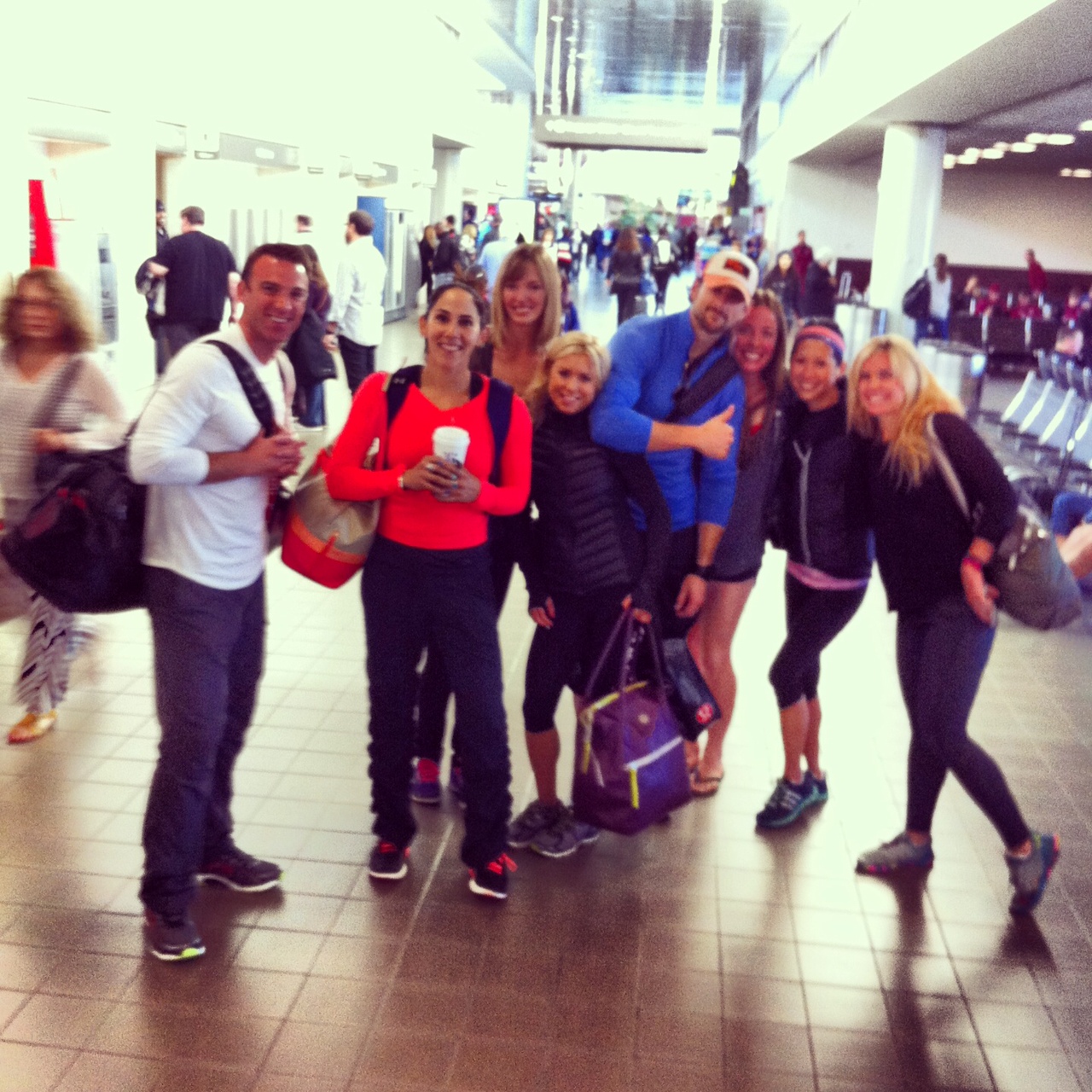
Among our travel crew were a few of the new Barry’s SF instructors, who just so happen to boast beauty, brawn and brains (we’re talkin’ Ivy league-educated, PhD-toting fit pros here), which is very much by design. Shane hand-picked the team himself, selecting some of the city’s top trainers with a goal of whipping the Bay Area into shape like never before.

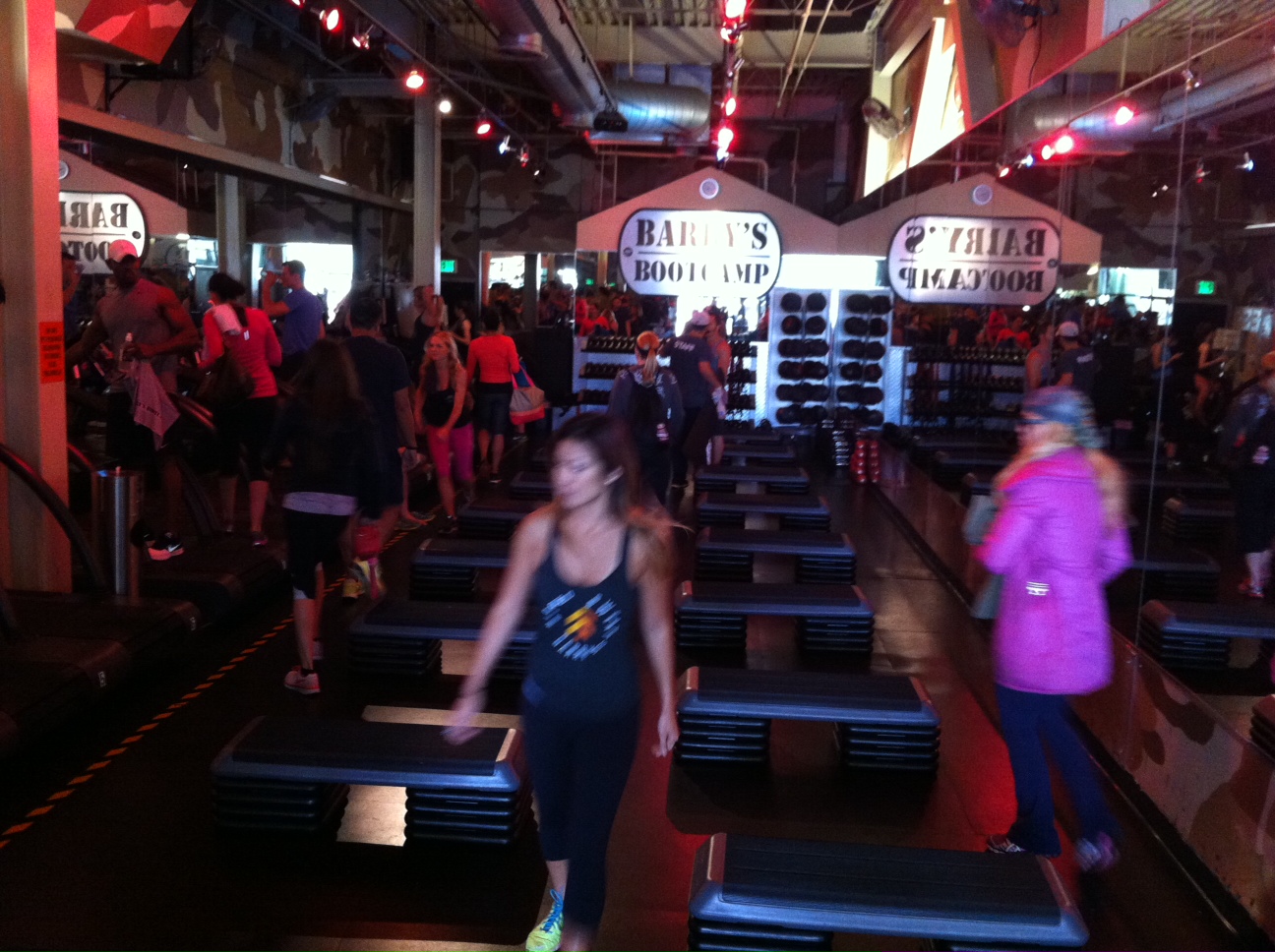
On the day’s agenda? A double-whammy workout with not one, but two (!) Barry’s classes — some morning madness at the Sherman Oaks location with master instructor Martin George, and some afternoon abuse with ‘entertrainer’ extraordinaire Seth Gee.

photo 1 (14)

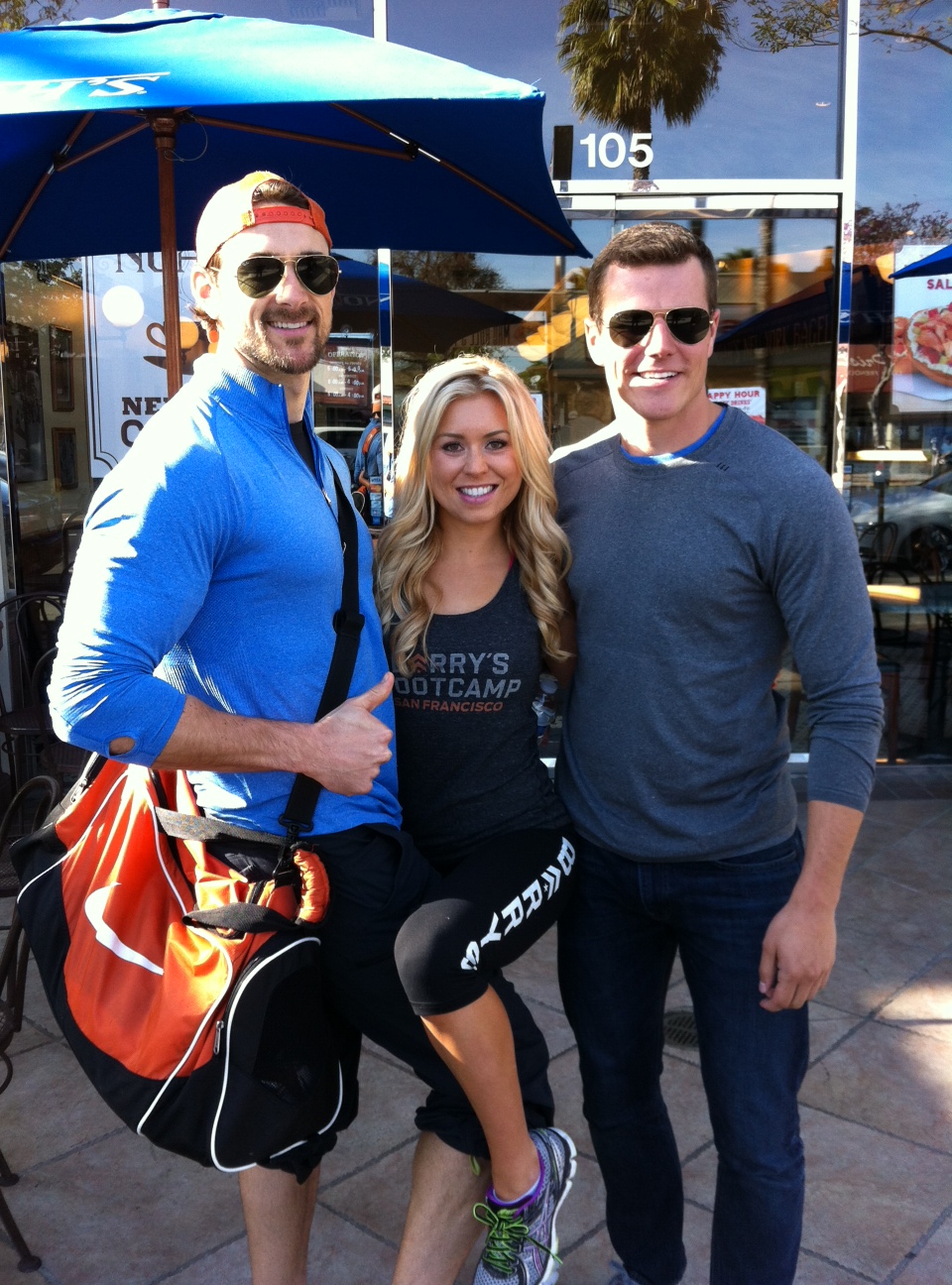
By the way, get to know these faces — Barry’s SF instructors Tommy, Erica and Tommy — because you’re going to develop a love/hate relationship with them when they kick your ass in class come this spring.
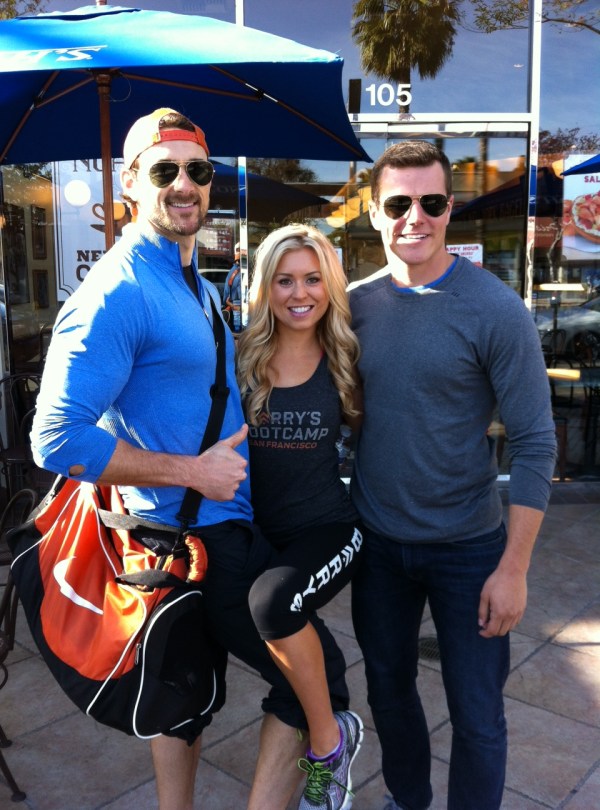
photo 1 (15)

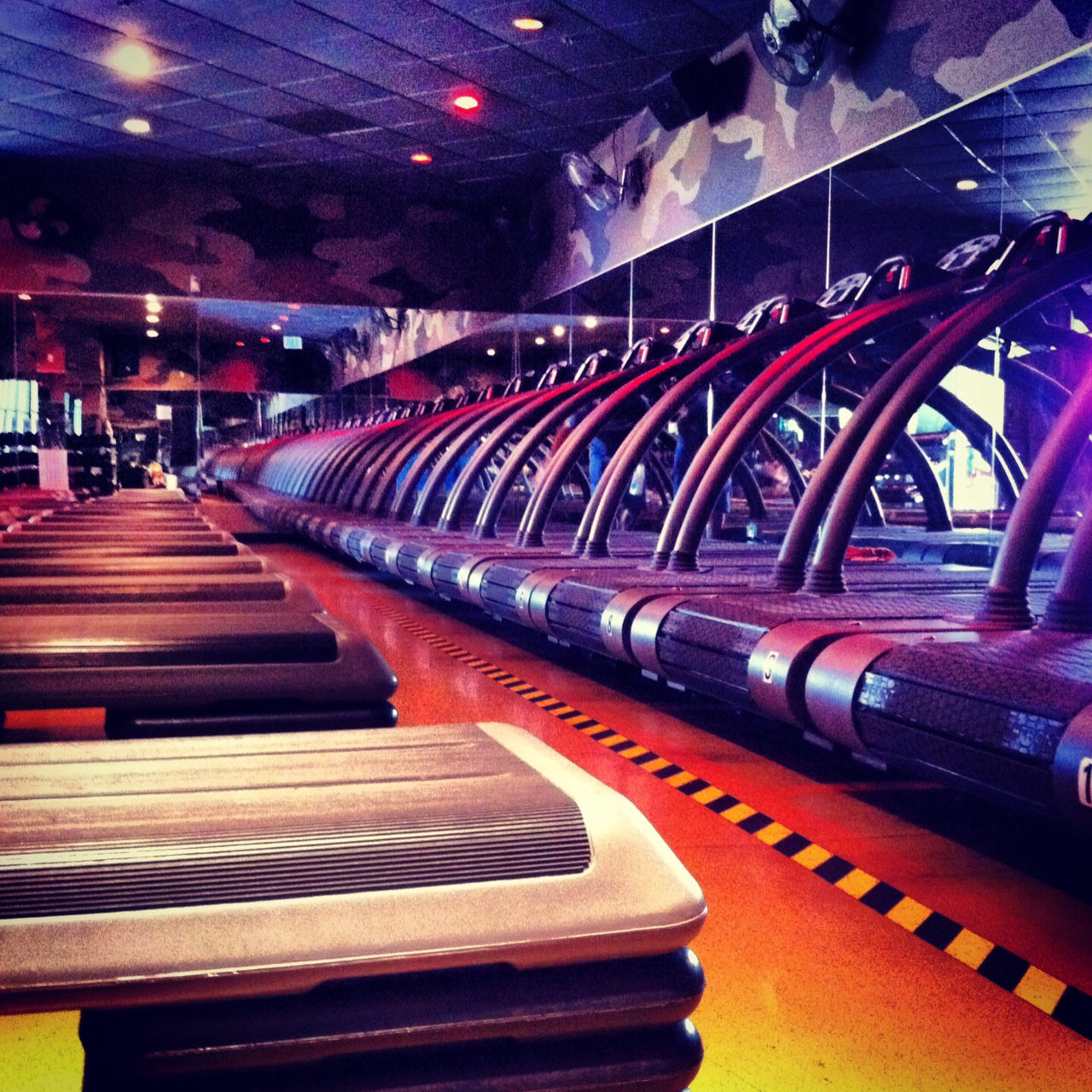
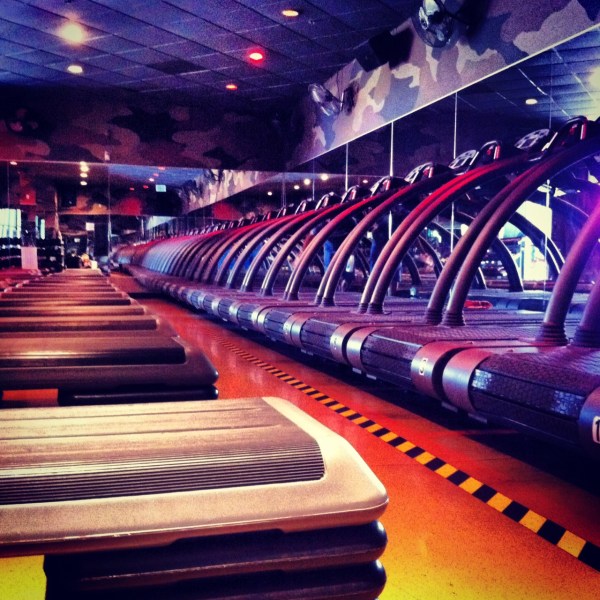
Back to the workout: Each class is split between high-intensity treadmill cardio and weight lifting moves on the floor. But the real kicker is that the instructors switch it up every time, so you never know what to expect — and neither does your body, which is what makes these moves more effective that some other super-repetitive routines.

Thursday was ‘core’ day, so George told us to grab a few dumbbells and take to the makeshift step stations for a series of crunches, lifts, twists and other forms of abdominal torture. All I know is that I was seriously struggling — and that every bit of my midsection got worked to submission.

And just when I thought I may have to wave my white towel in defeat, we swapped placed with the treadmill group.
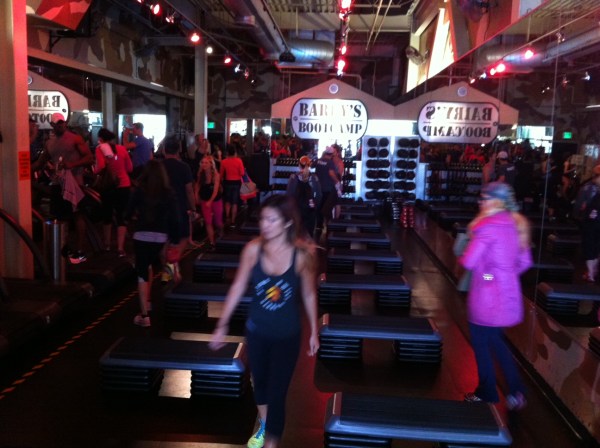
photo 2 (13)

I relaxed a bit as I cranked up the speed — after all, I’m a runner, and the treadmill is my ‘security blanket’ — but after a series of sprints, hills and backwards drills (on a 12 percent incline, no less), it sunk in that there would be no room for slacking off, zoning out or taking a breather during class.

George seamlessly struck a balance between monitoring both groups, shouting out intervals to the runners and counting down sets on the floor, plus orchestrating music and lighting changes while simultaneously giving feedback on form.

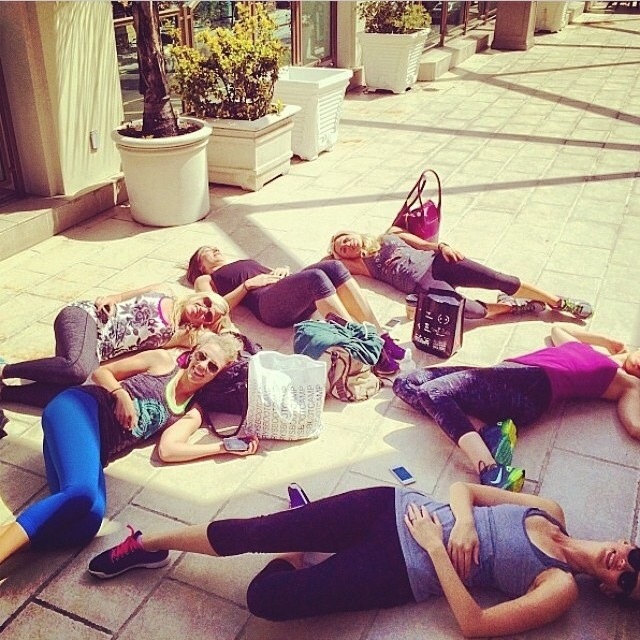
We swapped places twice more for a total of three different treadmill segments and three floor sessions each, and before we knew it the class was coming to an end. We did a quick cooldown stretch and promptly collapsed outside in the sun for a few moments to recover and figure out how we were going to make it through another hour of this kind of intensity later in the afternoon.
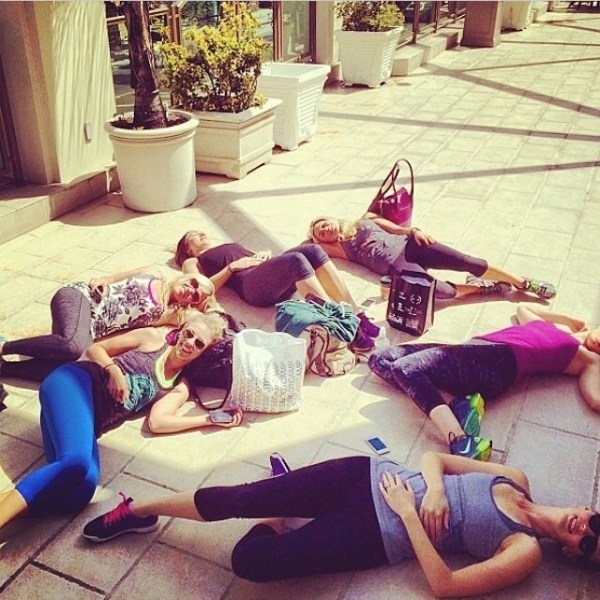
photo 2 (14)

After a quick snack (it’s important to refuel within 30 minutes after class to help your body recover and repair) and change of clothes, we headed down the street for lunch and to meet with company CEO John Mumford and President/Founder Rachel Mumford to learn a bit about how Barry’s came about.

The story’s a great one — Mumford recognized the potential in developing Barry’s Bootcamp’s program and lifestyle into a recognizable brand after religiously taking bootcamp classes from Director of Curriculum/Founder Barry Jay years ago. She convinced her husband to invest initially, and then eventually take on business operations and strategic planning — and the rest, as they say is history.
photo 2 (15)After a little time to digest (apparently if you puke mid-class, you get a t-shirt; no thanks), we headed over to West Hollywood to the original Barry’s Bootcamp location for our afternoon class with Gee. I was concerned the session might be a bit repetitive due to the same cardio/core focus as our morning workout, but Gee immediately had us grab a weighted ball and set the treadmills to dynamic mode (you’ve got to propel the belt yourself)…there’s no such thing as the same two workouts here.

Although we followed a similar class structure — three sets on the treadmill and three sets on the floor — the exercises, intervals and overall feel of the session were completely different. In between ‘sprints’ where we ran with all our might on a non-powered treadmill, we did kettleball-type swings, dead lifts and a bunch of Russian twists — but no single exercise on the floor or segment on the treadmill was repeated from the morning’s workout.
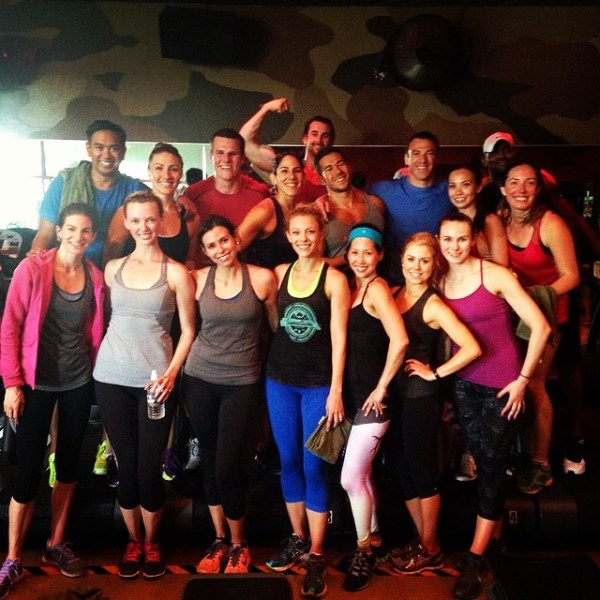
photo 5 (4)

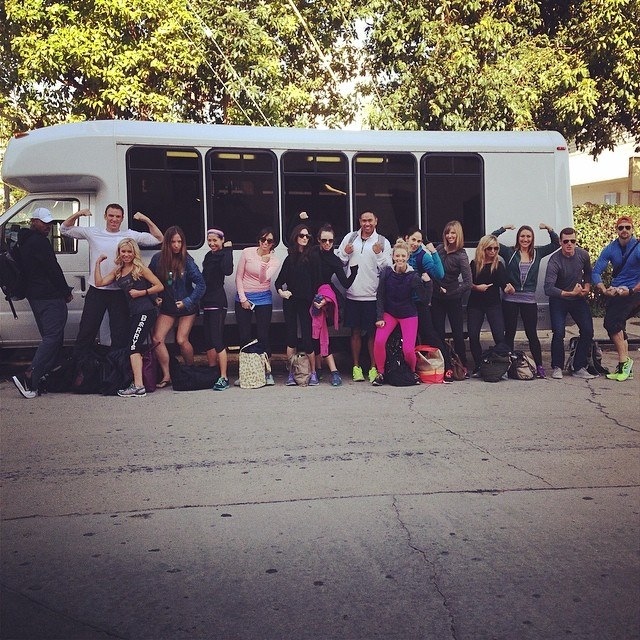
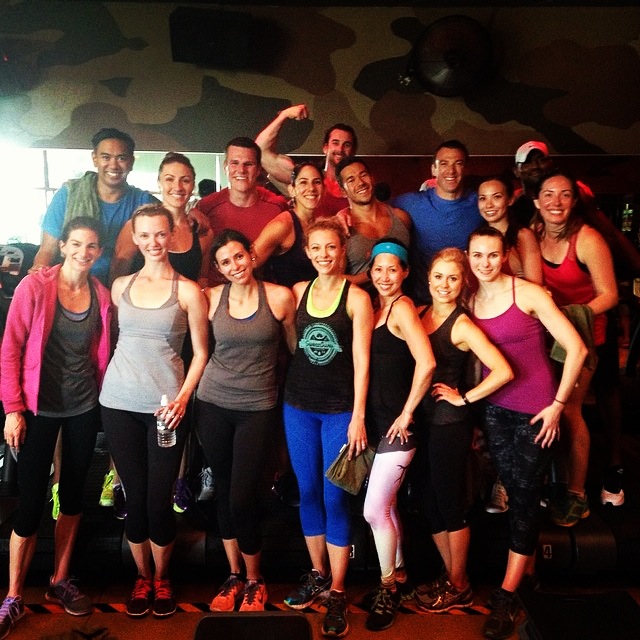
Don’t let those grins fool you — we were happy, but certainly hurting, after a double dose of Barry’s. In fact, after a ride back to the airport and a quick dinner together, most of us looked like this on the plan ride home: Exhausted!

photo 3 (14)

My takeaways from the day?

It’s a serious workout. Don’t expect to waltz your way through class; although the moves are modifiable, you’ve got to bring your A-game. At more than one point, as I was struggling for just. one. more. rep, I looked around and saw that everyone else around me was hurting just as badly (yes, even the biggest, buffest guys!).

It really works. Not only does the body part focus change each day, but the individual instructors have their own respective styles and moves. You might swap back and forth from floor to treadmill all workout or you might have a 30-on/30-off day, so your body and mind are constantly working to adapt.

It’s ideal cross-training for athletes. As I was telling Shane on the plane ride home, I’ve been slacking on my strength training, core work and interval training in my quest for pure mileage on the bike, in the pool and on the road during training season. So this is an awesome way to mix things up and train away any weaknesses in between — not to mention a great way to maintain fitness during the off season.

It’s damn fun. Between the instructors, lighting and music, the mood in the room is amazing. Very no-nonsense — you’re gonna get a hardcore workout — but you’re not gonna get yelled at or intimidated. You can focus on beating your personal best, or motivate yourself by trying to keep up with the person next to you…but either way, the time will fly by and you’ll be wanting to come back for more.

For more information on Barry’s Bootcamp, check out their website here. And stay tuned, Bay Area friends, for the opening of the new SF location this spring! 

Are you guilty of one of these workout time wasters?

girlfriend-girls-chatting-gym

We’ve all had those days when, even with the best of intentions, your workout gets sidetracked once you set foot in the gym. But with time at a premium, efficiency is a critical part of the fitness formula is you want to keep making progress.

“Almost everyone could benefit from getting a more effective workout in less time and reaching their goals sooner,” says Jennifer Beaton, VP and general manager at Western Athletic Clubs and a certified personal trainer at Bay Club San Francisco.

So take a look at these four common workout time wasters, and make a mental note to avoid them if you want to maximize your next trip to the gym:

1. Excessive rest. All those minutes spent sitting on the bench staring at your watch really add up. “If you can sit down and read the paper between sets, you are likely resting too long,” warns Beaton. To see better results with the very same moves, and to optimize your time, try super-setting exercises, such as push-ups and squats, to allow rest of a muscle group while you work another muscle group. Replacing station rest with active rest such as 30 seconds of high intensity cardio can also optimize calories burned and muscle recovery.

2. Steady-state cardio. In other words, those marathon (no pun intended) treadmill sessions. “We see many members who do the same 60 minutes of cardio at the same intensity every day for 15 years. These individuals no longer see improvements and often start to see declines in overall condition. They would benefit by mixing up their routine, adding intervals and high intensity work,” says Beaton.

3. Isolation exercises. “Life is full of dynamic movement, and therefore our workouts should simulate and enhance those efforts by using multi-joint, compound movements, such as squats, lunges and pull-ups as opposed to, for example, adductor/abductor machines or bicep curls. To get the most bang for your buck, focus on performing movements that recruit as many muscles as possible; those smaller secondary muscles will get plenty of work as they support the larger muscle groups during those movements,” Beaton adds.

4. Endless crunches. Likewise, if your goal is a great-looking midsection, ab-isolating exercises may miss the mark. “I often see people doing 15-20 minutes of crunches in hopes that it’ll deliver six-pack abs,” says Beaton. “Their time would be better spent on nutrition, a solid full-body strength routine, and a balanced cardiovascular program.”

How do you make the most of your time at the gym?

Fit Fix: Interview with real-life X-Man, Tony Horton

Source: Beachbody

Source: Beachbody

It’s a generally-accepted rule that most sequels pale in comparison to the originals, but Tony Horton‘s P90X program has bucked the trend of workout one-hit wonders. His philosophy is simple, yet struck a chord with millions: Avoid boredom, plateau and injury – the three things that can cause people to lose their exercise mojo.

After selling more than 4.5 million copies of the original, Horton released a second installment, P90X2, last year to rave reviews. I can personally attest to the program’s results-oriented approach, having knocked nearly a minute off my mile run time after completing the 90-day circuit (read more about it herehere and here). So it’s no surprise that recent release of P90X3 has people buzzing again.

It’s also no secret that I’m a big fan of Beachbody when it comes to getting in shape in the comfort of your living room. So I thought it only fitting to revisit a conversation I had with Horton about the success of the series, his “laws” for health and fitness, as well as how he stays fitter and healthier than men half his age…

Kinetic Fix: What’s your current workout & nutrition regimen? 

Tony Horton: I’m getting away from the linear, traditional training programs of the past. If you’ve done P90X2, you’re familiar with PAP, which is pretty cutting-edge when it comes to athletic and multi-plane training – jumping, turning and twisting like an athlete would on the court. And in terms of nutrition, I’ve changed a bit and have gotten into eating fish and chicken again in order to maintain size and strength as I moved into my 50s. I always try to have at least one massive salad a day, and another big shift has been cutting out sugar, which has been tough because I’m kind of a sugar addict.

KF: We’re coming up on resolution time; how do you get motivated when you’re just not in the mood to work out?

TH: For me, that’s like asking, ‘How to you stay motivated to breathe, eat or sleep?’ Although it’s a task I choose instead of one that helps me survive, I know that if I do it, I’m a better man for it. My health and my immunity improve, and I’m less vulnerable to aches and pains. It’s a universal fact that if you move and eat right, you’re better for it. When you exercise, you slow the aging clock, and when you don’t you speed it up.

KF: Can you share your favorite piece of advice when it comes to staying in shape?

TH: Your goal should be to get fit and stay that way for the rest of your life; it shouldn’t be an up and down pattern where you keep gaining and losing. I have 11 laws of health and fitness, but there are five that rise to the top, which are variety, consistency, intensity, purpose and planning.

Variety means doing what you’re good at – and what you’re not. Consistency means working out five to seven days a week. Intensity means to stop doing it the same way; showing up is 90 percent of it, but the other 10 percent is paying attention and being willing to improve. Purpose means having something so powerful driving you that there’s no question you’re going to miss a workout. And planning and accountability mean figuring out what you’re doing – and when – and fitting that into your schedule. It becomes automatic at that point, like breathing and sleeping.

KF: What do you tell people who may feel too intimated to attempt the P90X DVDs?

TH: When people hear P90X, sometimes they assume that it means 90-minute workouts. There’s an extreme aspect, if you want it, but almost every single move has a modification. This is what gets you through the P90X series. It’s a slow, patient process over time, but you just have to show up and do it. Instead of giving it to you, you have to earn it – but once you earn it, it’s yours and no one can take it away.

KF: Finally, any advice for P90X and P90X2 grads who are hoping to tackle P90X3?

TH: I like to say that it isn’t harder, but it’s different – but it’s harder because it’s different. To graduate from one to the other requires the knowledge that you kind of have to start over because it takes a fit, healthy body and trains it like an athlete. It’s indoor training for the outside world.

Thanks again to Tony for taking the time to chat! Click here for my original interview with him, and visit Beachbody.com for more information or to order P90X3. 

Undo holiday damage with ‘Deck the Halls’ workout

DeckTheHalls1

‘Tis the week of Christmas, and you might be feeling less than motivated to break a sweat amid the festivities. Or maybe you’ve been cooped up inside, and the opposite is true: You’re just itching to burn off some extra energy.

Either way, I’ve got a great solution that’s both challenging and fun — all you need is a deck of cards and some comfortable workout clothing and shoes…no other gear required!

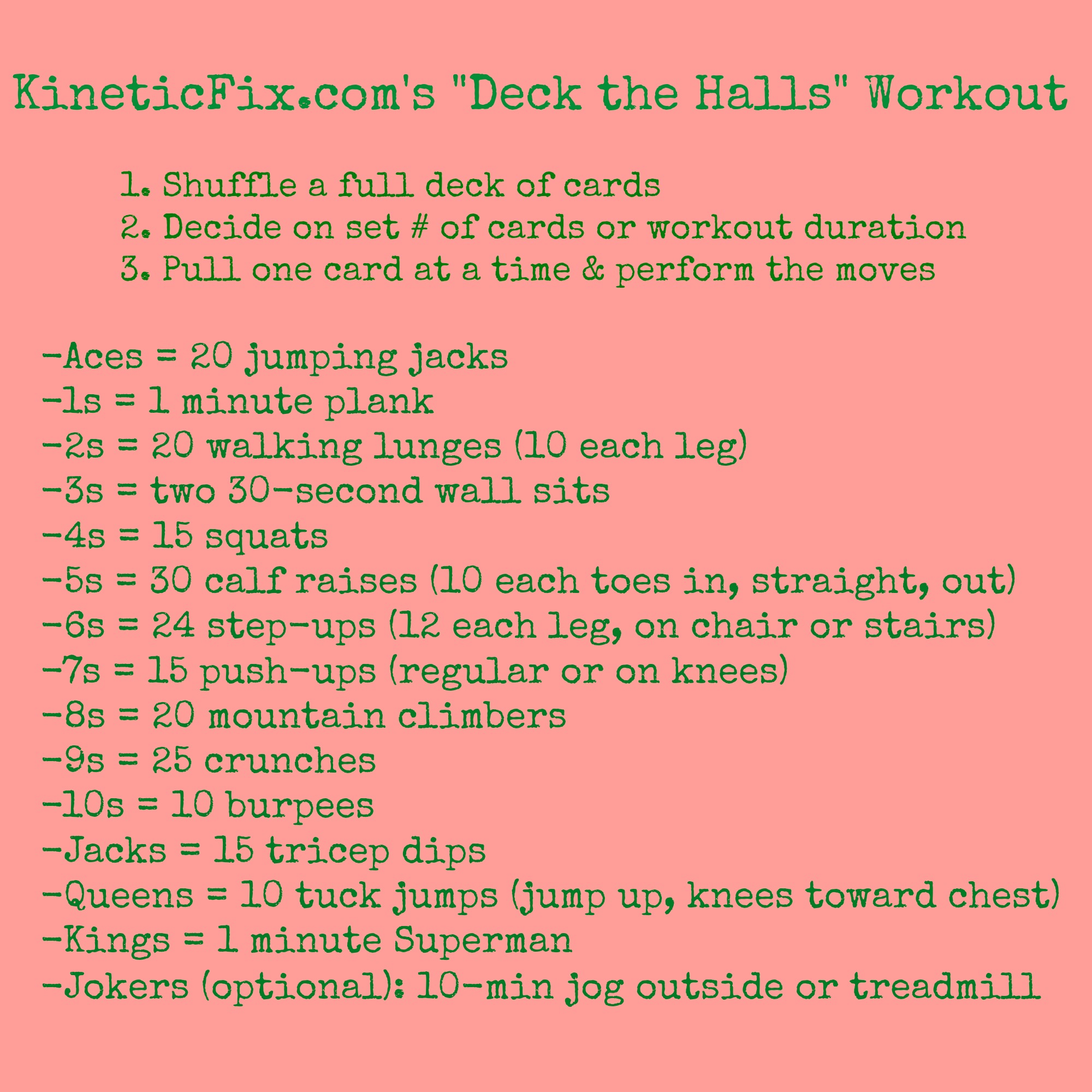
Work through the entire deck (52 cards) if you’ve got the time or the inclination; otherwise pull one at a time, performing the prescribed moves for a set number of cards (e.g. 25 cards’ worth of moves) or duration of time (e.g. 30-minutes worth of moves).

If you’ve got access to machines and want a more cardio-focused workout, add a five-minute warm-up and cool-down, plus five-minute intervals on the machine every five cards.

If you’ve got weights and want to work in additional strength training, try holding them while performing some of the moves (lunges, squats), or mix things up with a set of bicep curls, shoulder presses, rows, etc. after every few cards drawn.

However you do it, enjoy! And maybe even challenge your relatives to get in on the fun to make fitness a family affair this holiday 😉

DeckTheHallsWkt

What’s your fit fix? Bobsledder Dominic Crucitti on his ‘push’ for Olympics

Source: Dominic Crucitti

Source: Dominic Crucitti

Although they may not see the same levels of pay or pricey endorsements, there is something that bobsledders do share with their footballer counterparts: massive strength and explosive speed.

That’s precisely why the evolution from one sport to another isn’t unprecedented: Former Dallas Cowboy Herschel Walker competed on the 1992 Winter Olympics bobsled team; Thomas White, former walk-on football player at Baylor University, has set his sights on the 2014 Winter Olympics; and Todd Hays, a former college linebacker, is the head coach of the women’s team, to name a few.

So for Dominic Crucitti, a former college football player himself, the transition to USA Bobsled push athlete has been a natural one. We sat down recently to chat about his Olympic aspirations, training techniques and tips for pushing the limits.

KineticFix: So, how exactly did you get into bobsledding?

Dominic Crucitti: I got involved in the sport after figuring out that you could try out for the US team in 2010. After playing football in college I was searching for a new sport, and bobsled requires similar physical qualities to football. I thought, “What the hell? I’m going to try this.” I emailed a few of the coaches, and I was up in Lake Placid pushing for one of the developmental drivers soon after. I’ve been addicted to the sport ever since.

sledKF: What specific skills are required to be an Olympic-caliber bobsledder?

DC: The guys on the US Bobsled team are incredible athletes. +500lb squats, +350lb cleans and and sub-4.4 second 40-yard dashes are a common occurrence. I don’t think bobsled athletes get enough credit as the combination of size, strength and speed is unmatched in any other sport. All anyone thinks about is the movie Cool Runnings when they think of bobsled!

KF: Where are you with your training, and what goals are you working toward?

DC: My current training is revolving around getting bigger and stronger. My current goals are to squat 500 pounds and put on 3-5 pounds of muscle. I’m about 212 pounds right now, and I’d like to get my body weight to around 215-218. I’m doing minimal sprint work at the moment because my weight room training volume is very high, and you can only train so much!

KF: What’s your training philosophy for accomplishing all of that?

DC: Currently my focus is on pushing the weights on up on my lower body compound lifts (squat and deadlift variations) and strengthening some of my weak spots with accessory movements. I’m doing a lot of work for the hamstrings and lower back.

KF: Walk us through a typical week of workouts when you’re in training.

DC: My training changes pretty frequently throughout the year, I’m constantly reevaluating and changing things to ensure I’m progressing. I think once someone gets to a more advanced level of strength training, it becomes much more individualized and instinctive. If something isn’t working it has to go!

Currently I’m lifting four days a week: two upper-body workouts and two lower-body workouts. One workout will focus on absolute strength (1-3 reps) and the other is more of a traditional “bodybuilding” type day with higher reps on accessory movements. I also sprint at the track twice per week.

Source: Dominic Crucitti

Source: Dominic Crucitti

KF: How does your nutrition come into play?

DC: Nutritionally, I’m eating about +200g of protein a day and +500g carbs a day. I don’t really keep track of dietary fat, but I don’t shy away from high-fat foods. I’m not too strict with the type of foods I eat as long as I’m hitting my macronutrient goals. If you want to train hard and progress, you need to give your body lots of fuel.

KF: Speaking of training, tell us about your job as a strength & conditioning coach.

DC: I actually started working as a personal trainer before I played college football. I started working at a 24hr Fitness. I ended up meeting and working with Adam Shipley, who would later become the strength coach at Santa Barbara City College, at Fueled Sports Performance in Santa Barbara, Calif.

Ever since I met Adam and started training some of his high school athletes for him, I knew this was the career for me. I was lucky enough while I was living in NYC to get a job at Sports Lab NYC and work with some rockstar coaches and a lot of great athletes. I’m currently coaching people in San Francisco at an independent facility called Synergy Fitness Studio.

Source: Dominic Crucitti

Source: Dominic Crucitti

KF: Can you share your top tips for those of us who are interested in gaining speed?

DC: A lot of people and coaches make training for speed very complicated, but in reality anyone can get faster by understanding that sprinting speed is mostly about an individuals power-to-weight ratio. Most of the fastest people also have very high relative strength. The more force you put into the ground, the faster you will move forward!

The top tips I can give would be to increase absolute strength with compound lower body exercises like deadlifts and squats, train the glutes and hamstrings with additional exercises, and increase explosive strength with jumping exercises and/or sprinting. Of course, this advice assumes that the person asking is physically prepared to train in this fashion.

KF: Finally, what’s the question you get asked most by clients, and how do you answer it?

DC: The number one question I get asked, by a large margin, is “How do I get abs/lose body fat?!” My initial advice is very simple: I tell people to 1. Drink lots of water; 2. Build all of your meals around a protein source; 3. Get as strong as you can. Usually that’s all I have to tell my clients, and they get pretty dramatic physique changes just from that.

The next variable is to adjust carbohydrate intake, but this is usually not necessary unless someone wants to get very lean for a vacation, reunion or something very specific. I, of course, could get more complicated than that but I need to constantly remind myself that not everyone is as excited about training and eating protein as I am!

Want to follow along on Dominic’s quest to represent Team USA in Bobsled? Check out his website, DominicCrucitti.com.

“Mix it Up” lower-body treadmill workout

I used to skimp on lower body strength training because legs get enough of a workout during weekly runs, right?

Wrong.

It’s a common misconception that strength training for the lower body is not necessary for people who do a great deal of cardiovascular exercise. But simply moving your lower body is VERY different than strengthening the muscles there.

Regular lower-body exercise not only increases bone strength, improves balance and stamina and decreases injuries to knees and hips, but it also helps slow the physical weakness that is part of the aging process and maintains balance, stamina and confidence.

I learned this the hard way during my last round of marathon training, so this time I’m not taking any chances. Here’s a fun four-miler that incorporates bouts of leg exercises between five-minute run segments on the treadmill:

LowerBodyTreadmillWorkout

For even more of a challenge, feel free to play with the incline. Aim to maintain at least a one percent grade throughout the workout to help prevent shinsplints, but if that’s too easy, adjust it up a few percentage points for a great way to increase the intensity of your workout without having to increase speed or impact on your body.

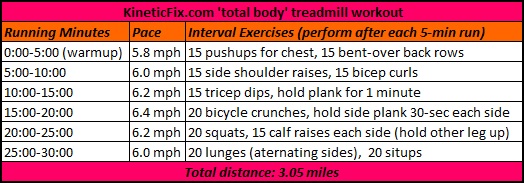
30-minute(ish) total body treadmill workout

While I can’t promise the entertainment level (or cool factor) of this ‘dancing treadmill guy,’ I do have a workout that’ll help make your next trip to the gym a lot more efficient.

It’s a cardio-strength hybrid where you’ll be hopping off the treadmill every five minutes to complete a few moves, so find a spot where you can easily maneuver back and forth without losing your machine between sets.

Before you know it, you’ll have three miles and a total body strength training session under your belt.

Now, that’s something Treadmill Guy can get behind.

KineticFixTotalBodyTreadmillWorkout