HITS Napa Olympic Triathlon: Week 1 training recap

photo (26)

Whew, what a week! 

Usually when I set a start date for training and work out the weekly schedule, I make every effort to stick to it (within reason). But with my 30K race smack-dab at the end of this first week, it’s pretty safe to say that most of my focus was heavily weighted toward that one particular discipline.  

Here’s what was on the schedule — and what actually ended up happening (in purple)…

Week 1 Olympic Distance Training Plan: 

  • Swim 45 min. (45 min. spin class)
  • Bike 60-90 min. / Run 20-30 min. off the bike (45 min. spin class)
  • Swim 45 min. (45 min. swim)
  • Easy run, 45 min. (easy run, 10 miles)
  • Rest or active recovery (Rest)
  • Long bike, 90-150 min (45 min. spin class)
  • Long run, 9 miles (30K trail race, 18.5 miles)

As you can see, running was the theme of the week; I only got in one swim at the pool, and the three bike sessions were indoor spin classes, so the name of the game for week two will be to get my act together when it comes to following the suggested workouts — and taking the swim and bike portions outdoors. 

But first, a peek at the week’s highlights: First up was the 10-miler I squeezed in early on to shake out the legs before Saturday’s race. One of my favorite scenic routes is over the Golden Gate Bridge to catch some great views of the city on sunny days. 

photo

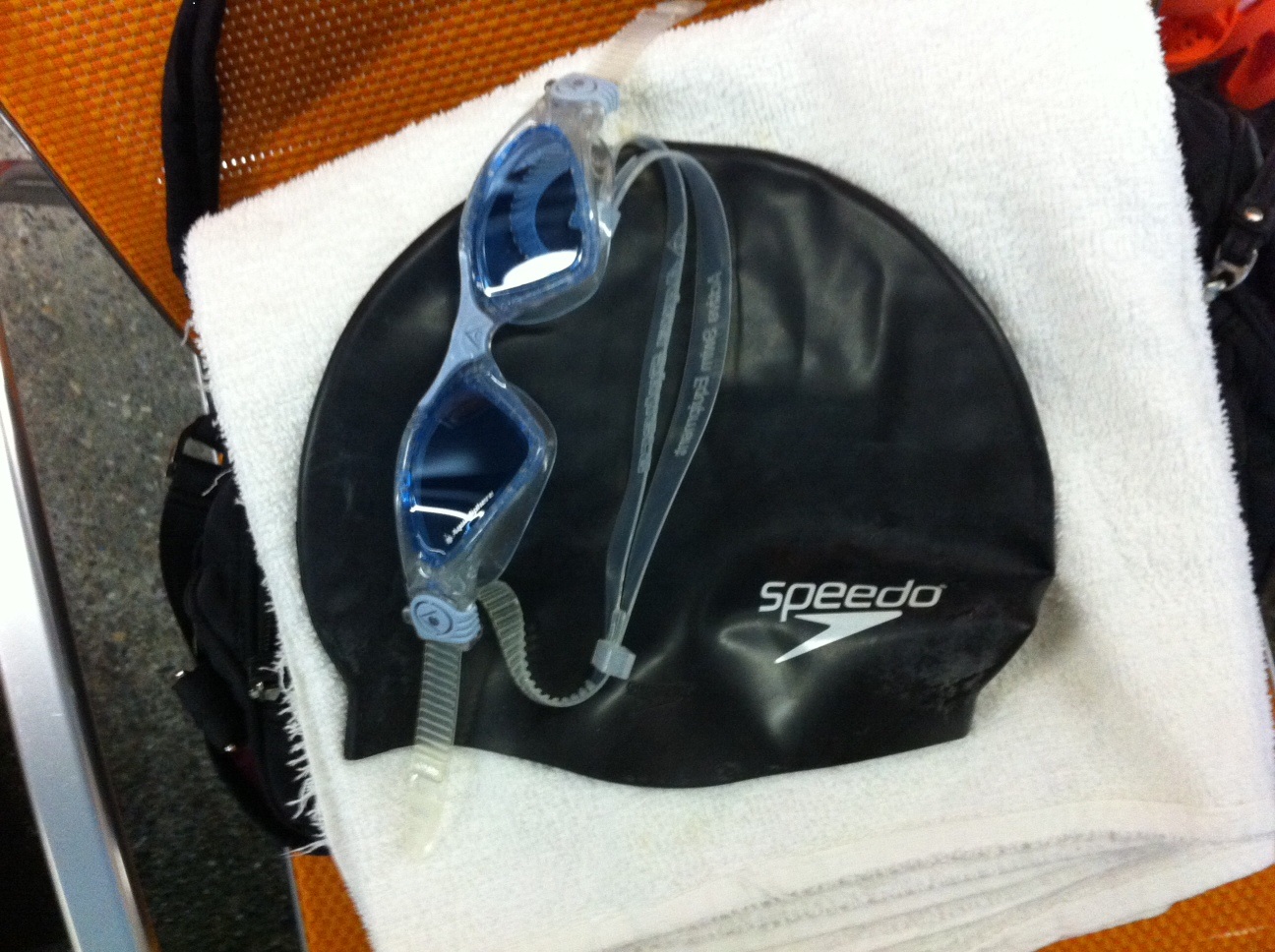
Next up was the lone pool workout. The good news is that I’m getting much more comfortable in the water, so I’m trying to work more on refining my form and technique…and hoping to use this confidence to start chipping away at that open-water swim! 

photo (25)

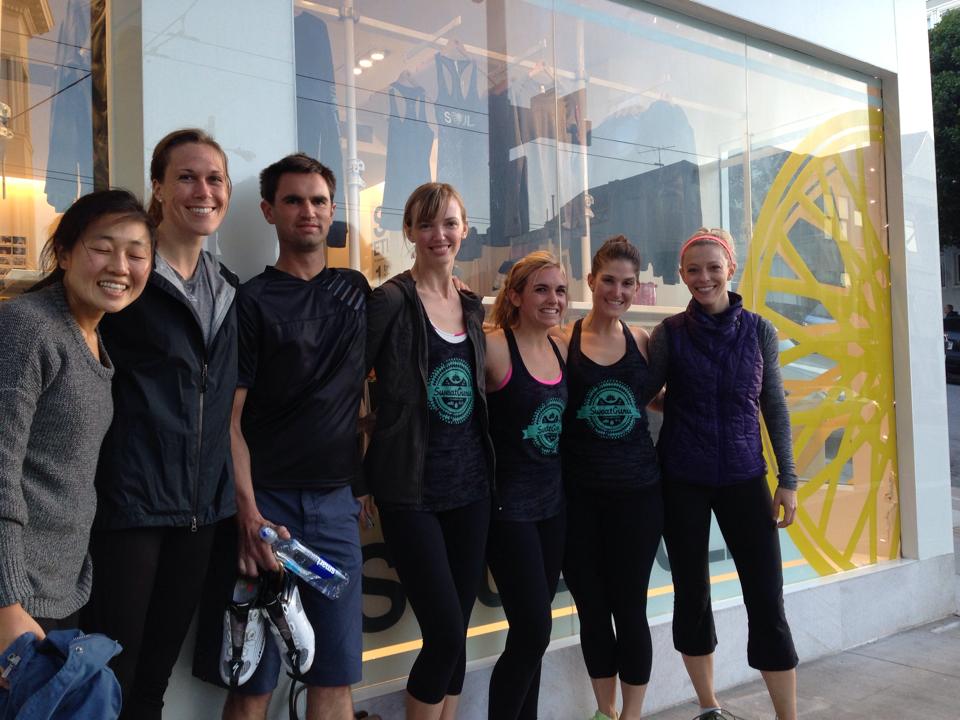
My three spin classes were all for fun reasons, which made each a special event: The first was to accompany my college friend Brian on his first SoulCycle ride, the second was to celebrate my friend Mariana’s birthday, and the third was an office outing with the SweatGuru crew…now that’s what I call a “happy hour.”

7791_10152261924920903_1122622474_n

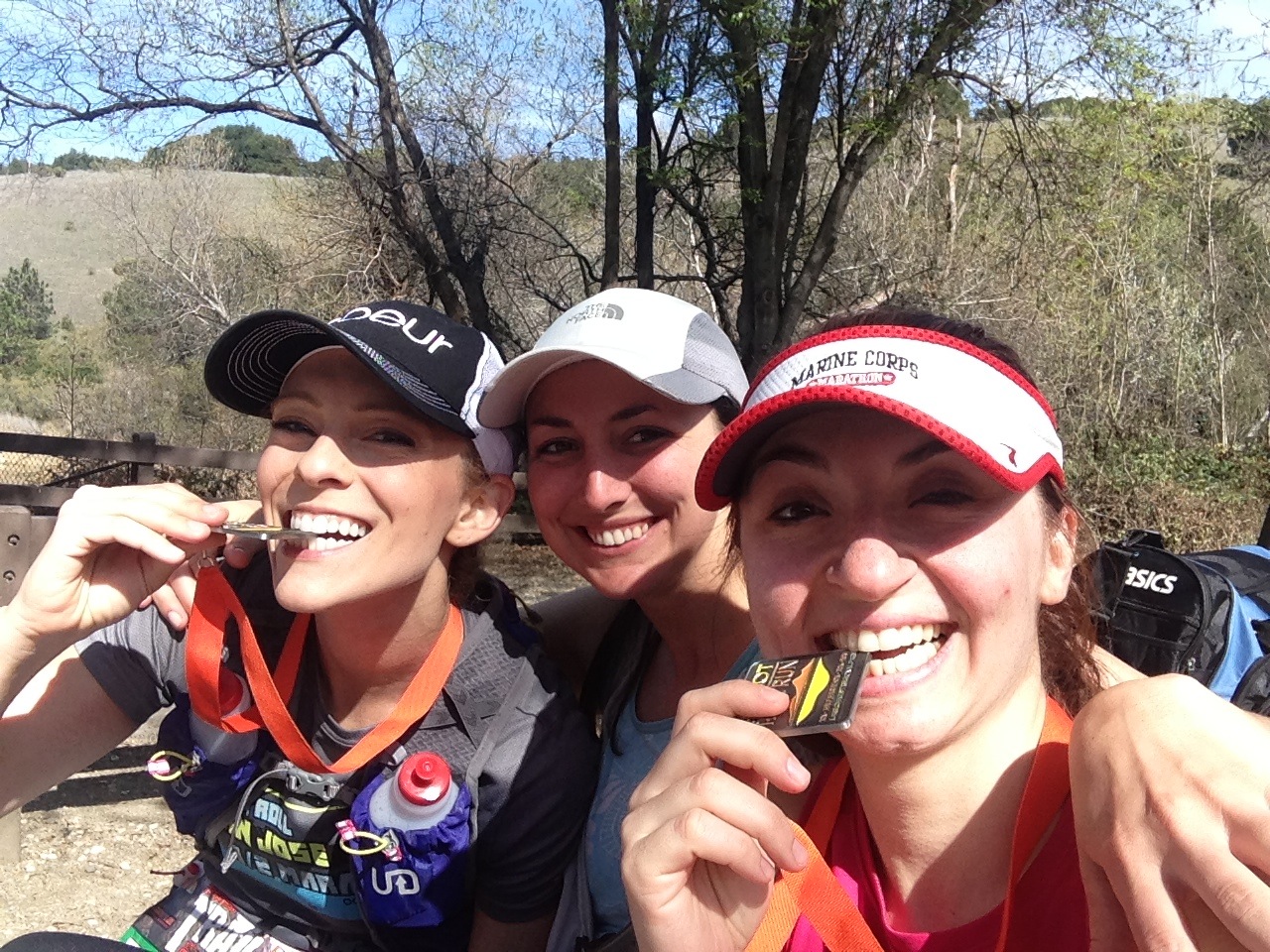
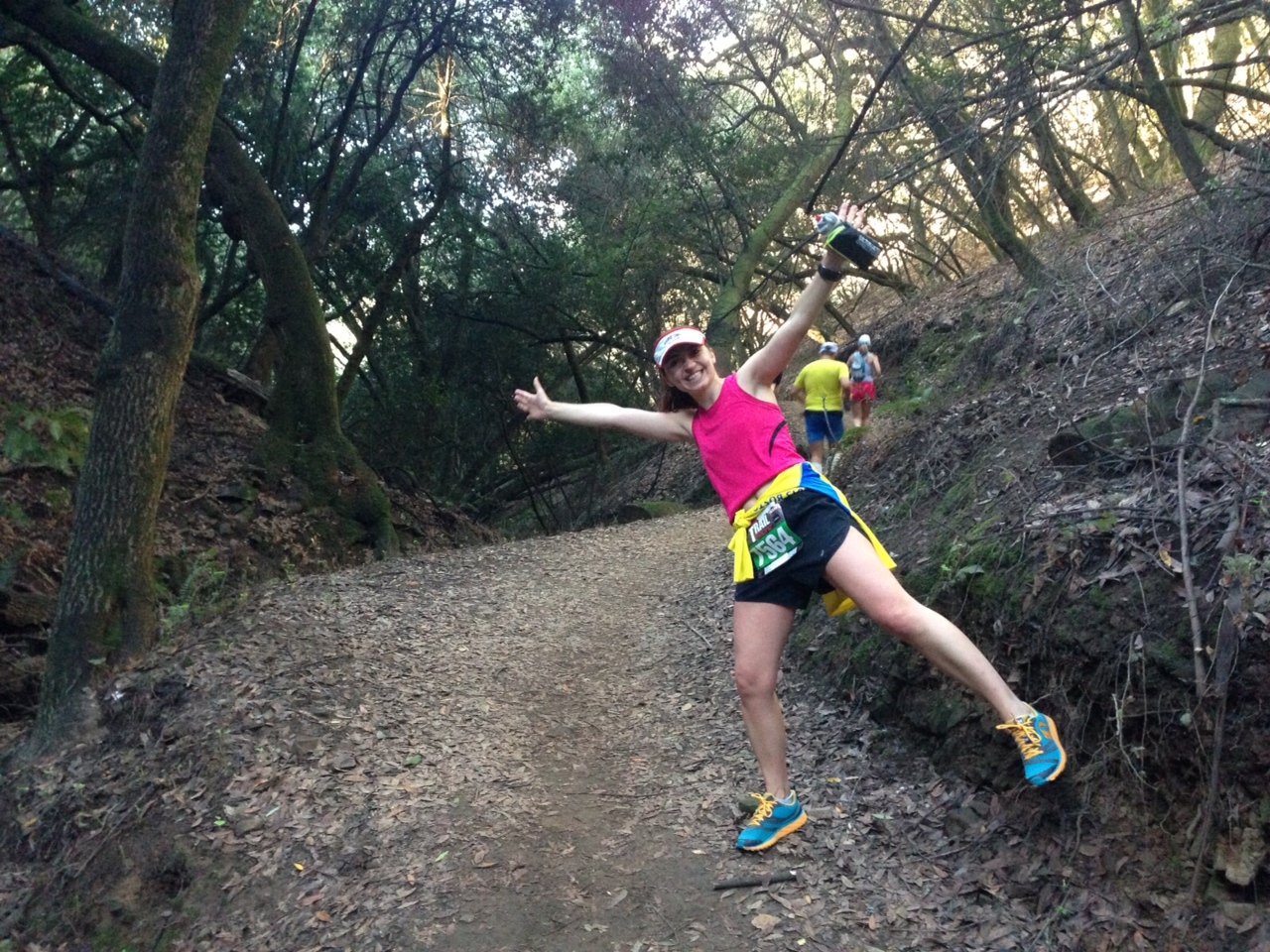
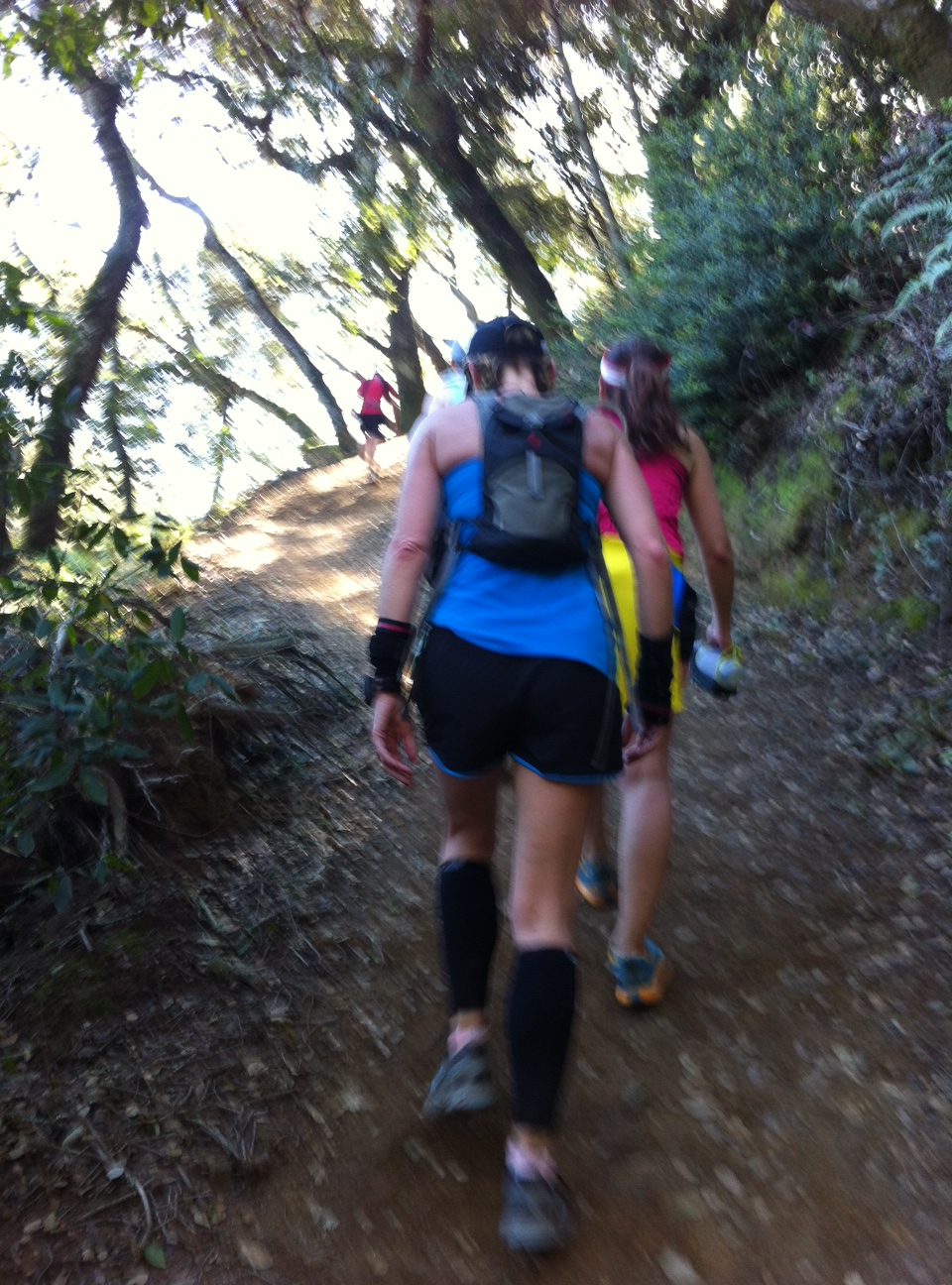
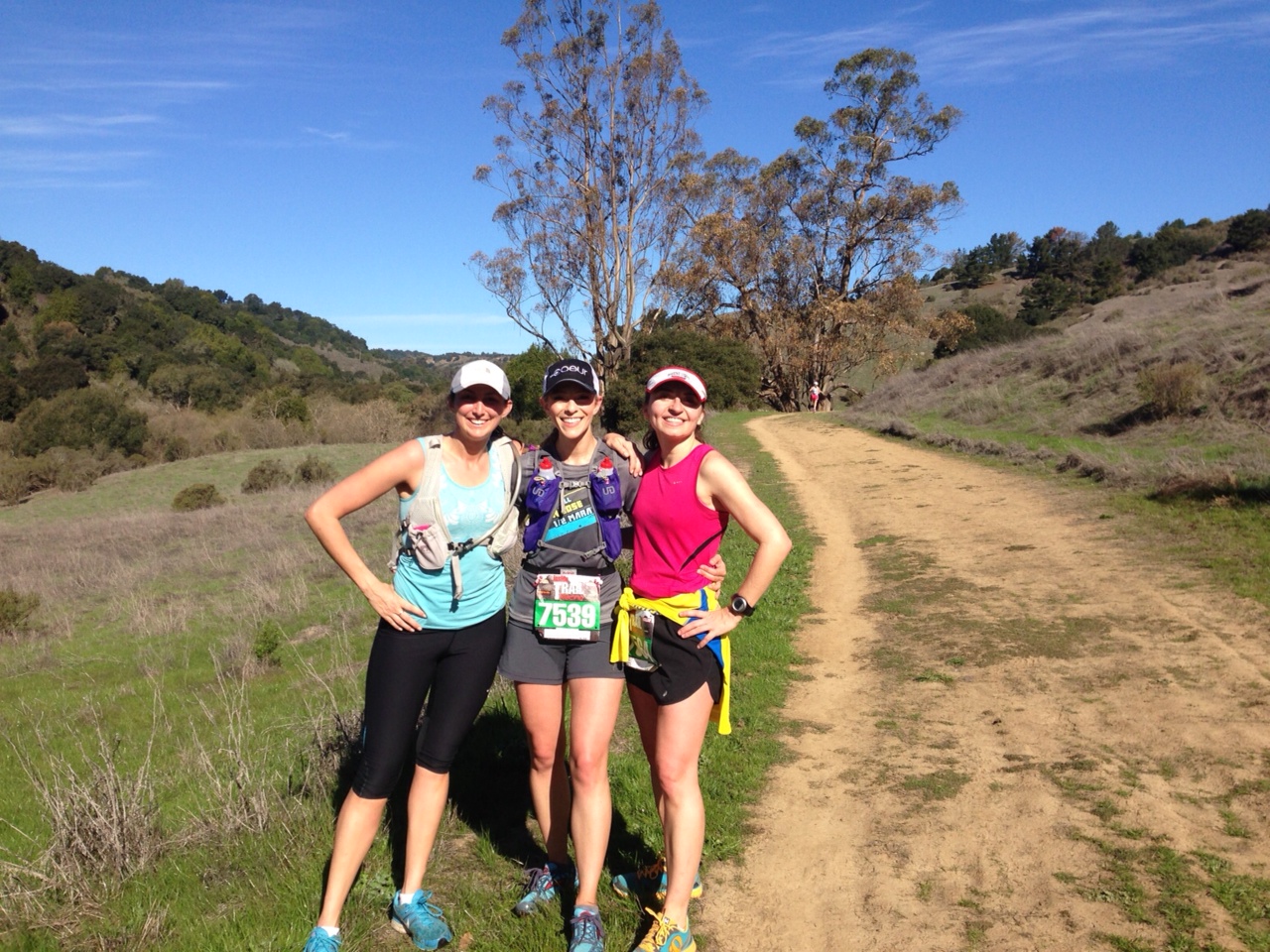
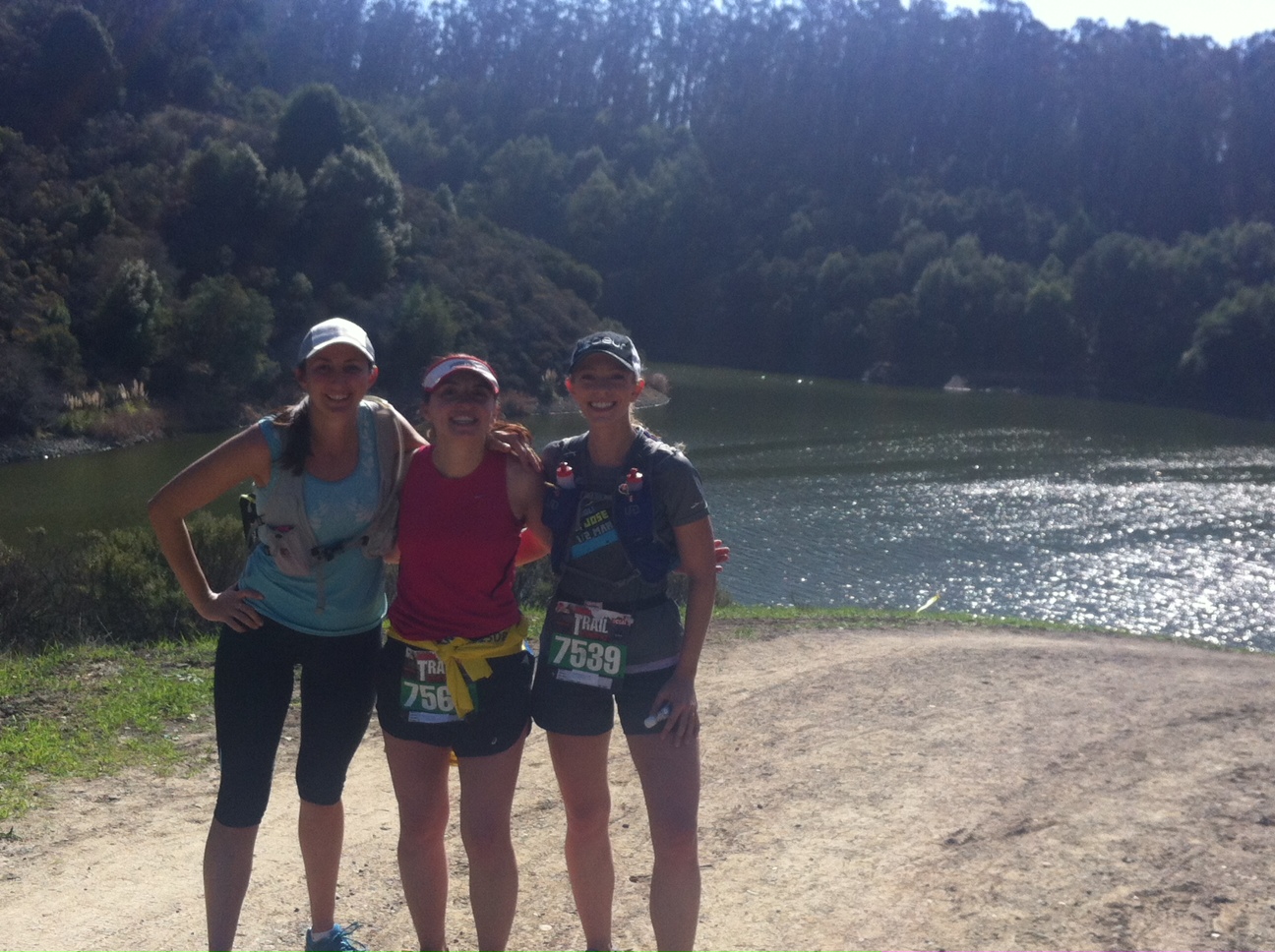
Finally, I capped of the week with Saturday’s 30K with Vivi and Molly. Here’s an action shot from one of the mid-race climbs. 

photo (27)

Stay tuned for week two…where I actually get with the program! 


Race Recap: Chabot Trail Run 30K

photo (30)

As a fitting follow-up to last weekend’s ‘ride of firsts,’ today was a ‘run of firsts’ at the Chabot Trail Run in Castro Valley, Calif.: First longer trail race, and first 30K distance in the books! And as I sat recovering on the couch and sorting out the day’s events, I decided it’d be best described as equal parts exhilarating adventure and happy coincidence.

But, to back up for a moment…Vivi, my running partner in craziness crime, and I signed up for the event on a whim (although she did talk me down from the 50K, thank goodness), thinking it’d not only be a nice change of scenery, but also a good way to give our legs a rest from the roads, as well as a perfect proving ground race to test our trail mettle.

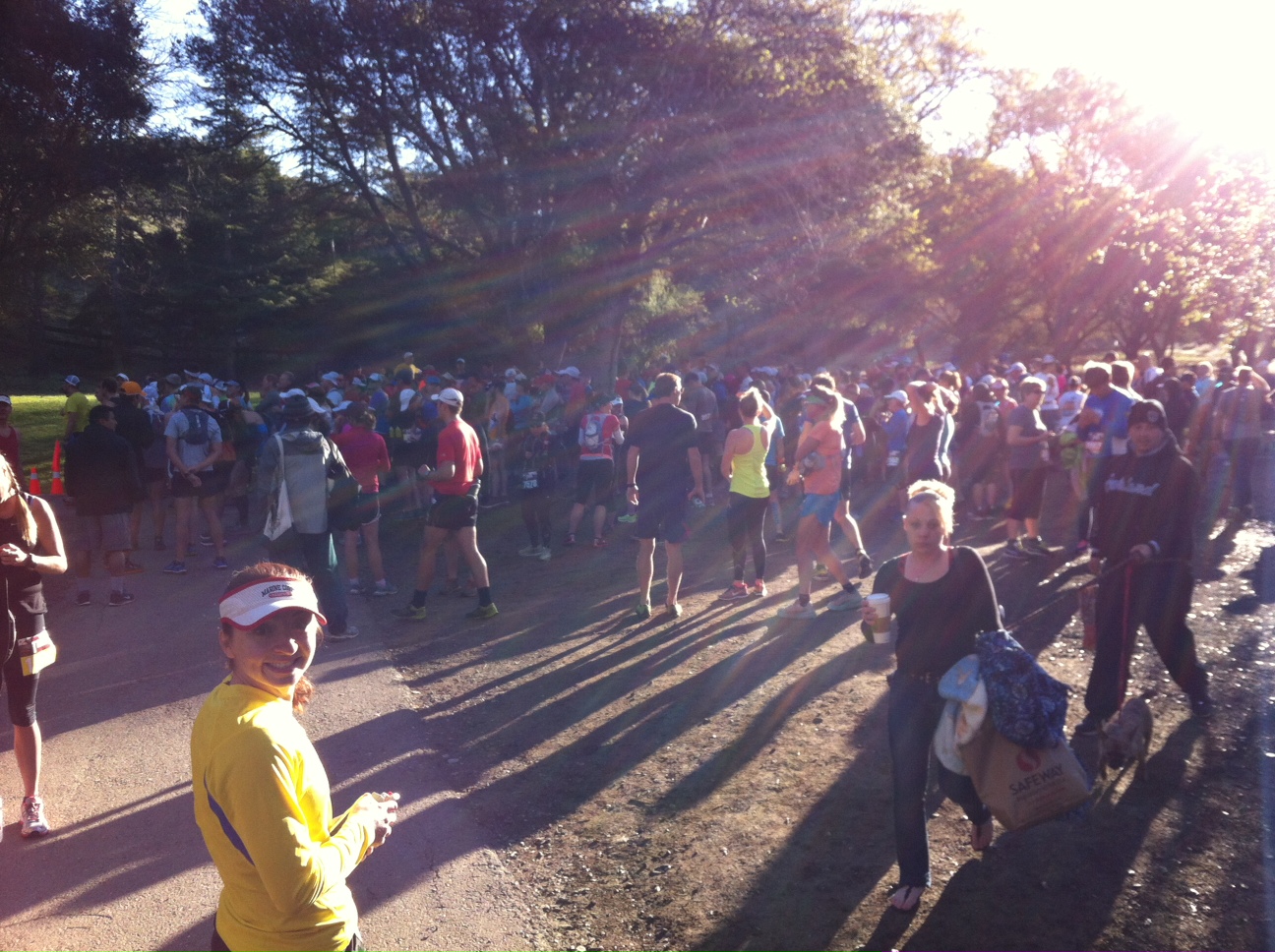
photo (47)We arrived to the start area about 45 minutes before the 8:30 a.m. gun time and managed to snag the last parking spot (good race karma, we decided) before picking up our packets, hitting the bathroom and swinging back by the car to drop our sweats.

By the time we did all that, we could hear the race organizers lining people up, so we jogged over to the start.

photo (46)

After giving a few last-minute instructions, the event director started the final countdown, and we were off!

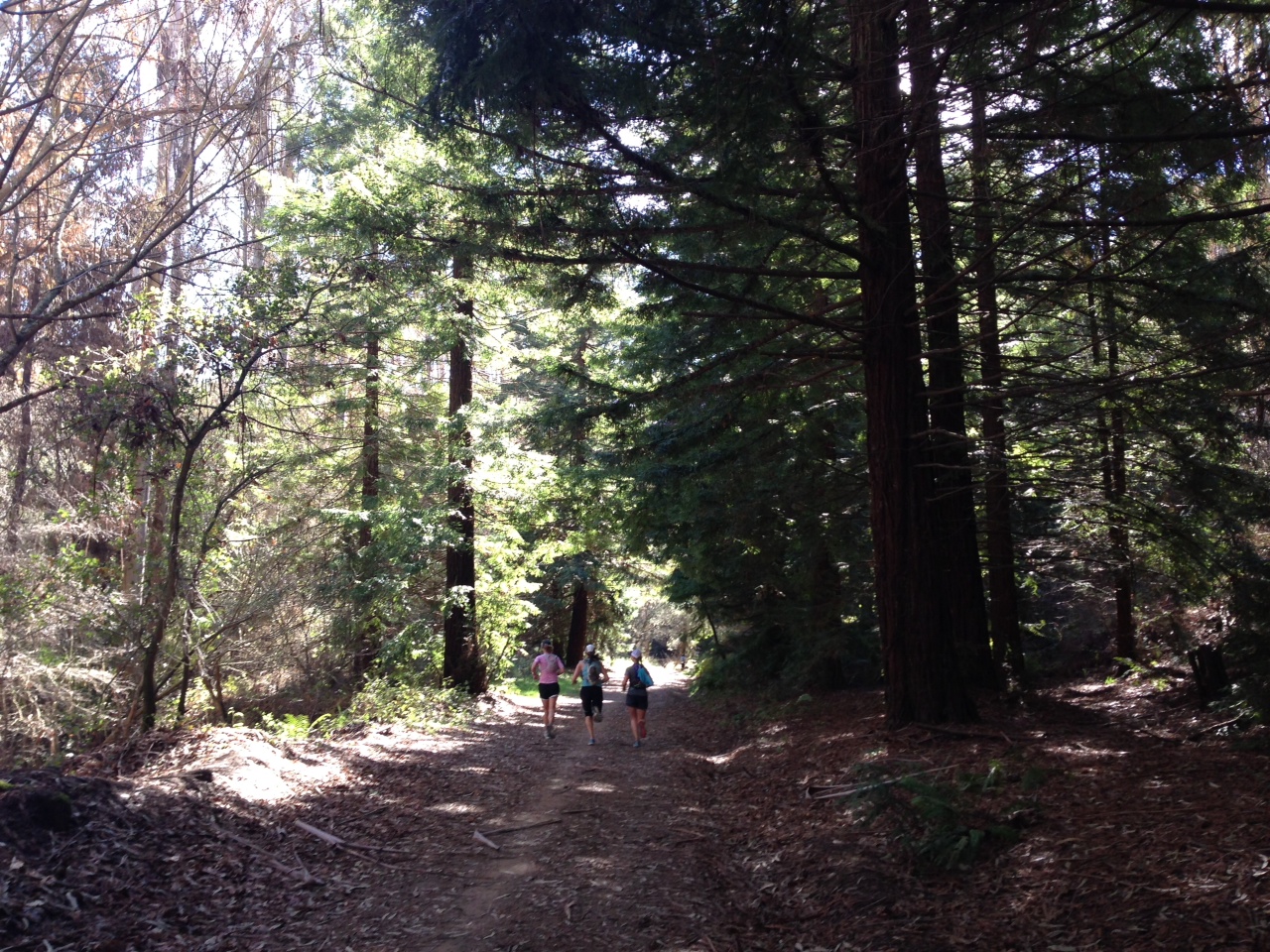
The first mile or two was on paved roads around the lake, so we eased in at a conservative 9:00-mile pace. Then the pavement gave way to dirt and we got onto the good stuff…a bouncy footbridge followed by soft trail.

photo (45)

Now, about that happy coincidence: Vivi had put out a call on Facebook the previous evening to our November Project friends about the race, letting them know we’d be running and inviting them to join in to pace us or cheer us along.

We figured it might be too last-minute to have anyone take us up, but a little ways into the run we heard someone come up behind us and say, “Are you Jen and Vivi?”

photo (32)

Enter Molly, whom I nicknamed my Race Angel for the day! She’s training for the Boston Marathon and had a 19-miler on the schedule for the weekend, so she figured she’d kill two birds with one stone and grab some miles while gabbing with some fellow runner gals.

In yet another testament to the amazing running community, we all immediately started chatting like old pals…and the miles flew by because we were so immersed in conversation.

Before we knew it, we had tackled the first of four major climbs (walking the steep parts because I wanted to heed my ultrarunner friend Jamie’s advice to conserve energy) and hit the first aid station. 

photo (40)

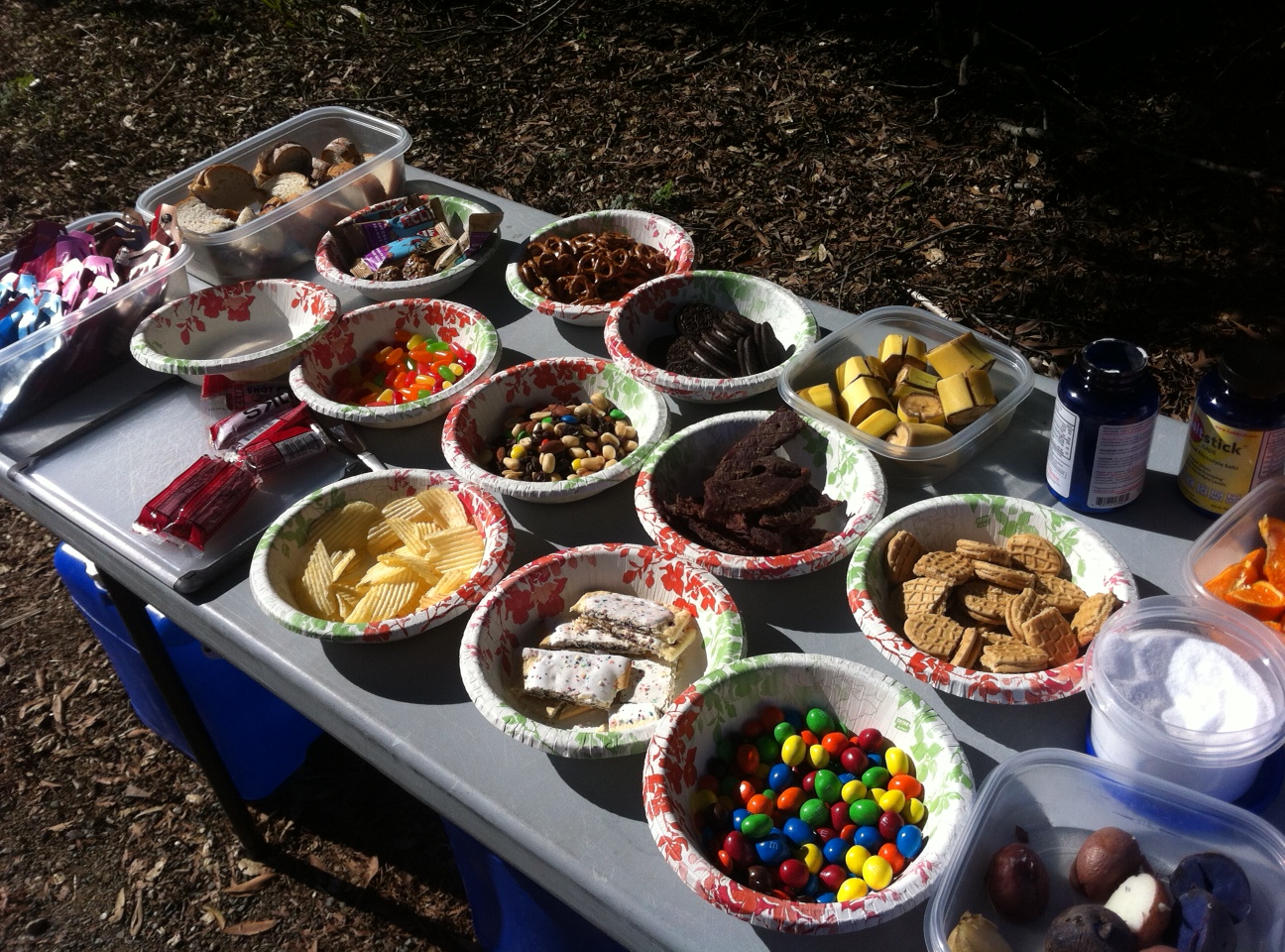
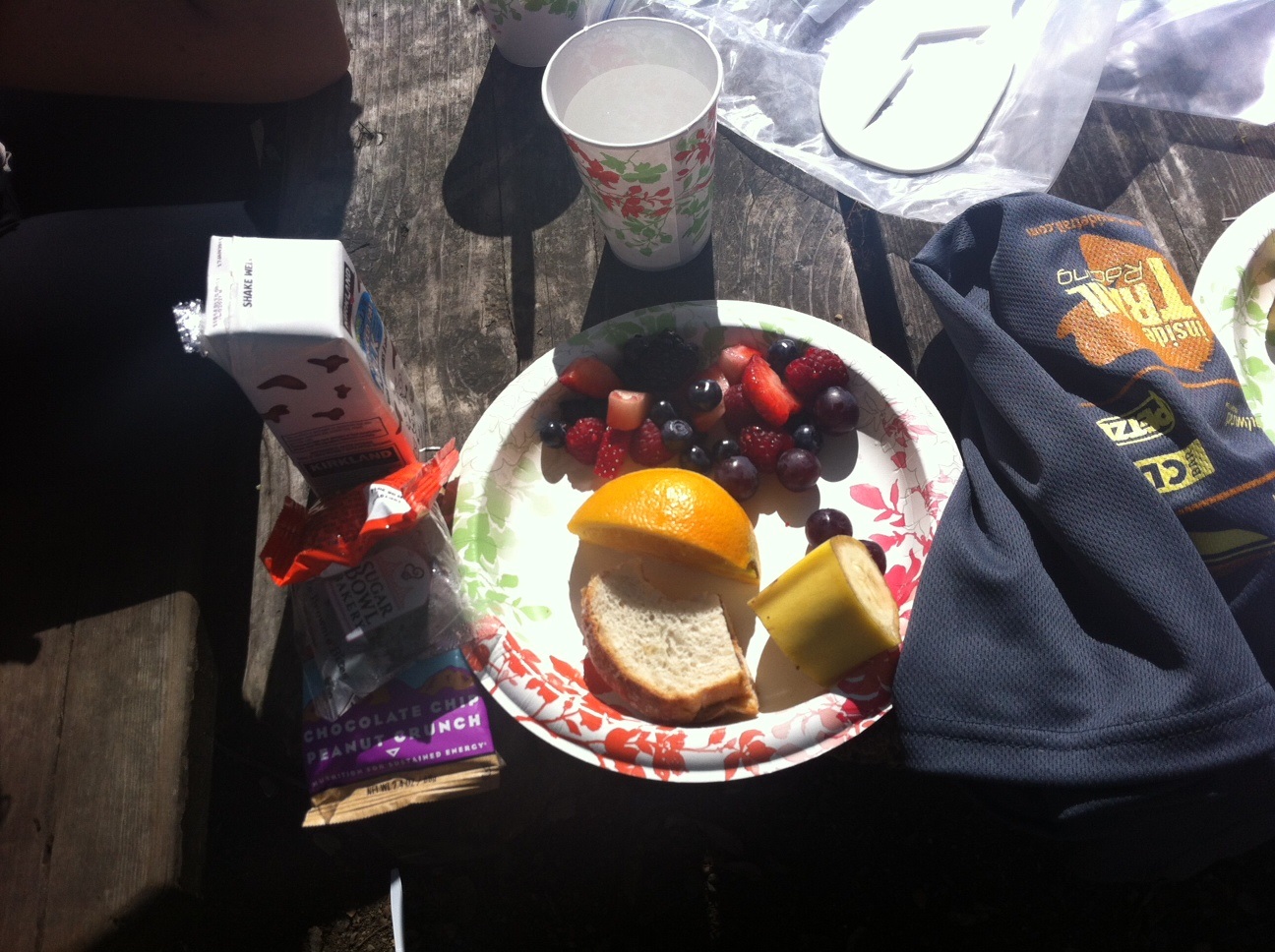
And, wow. They should call these mini-buffets instead of aid stations. It was like a mirage in the desert, such an amazing spread with all kinds of items, both healthy and not-so-healthy. Huge kudos to Inside Trail Racing for really taking care of us runners.

With my sweet tooth, I thought I would have to restrain myself around all the candy, but I actually wasn’t craving it at ALL. In all my pre-race hydration focus, I ended up making a rookie nutrition mistake (more on that later), so I grabbed a PB&J sandwich square to stay on the safe side.

And then we were off again!

photo

Over the next few miles we met up with a super-nice woman named Leslie — a mom in her 50’s who had taken up ultra-running and was doing the 50K as a wait to train for her upcoming 50-miler.

That’s the great part about these longer distances; not only are they so much less crowded that road races, but you can run alongside people at a slower pace and actually have some great conversations along the way.

photo (31)

I think (hope?) people enjoyed running with us, as well. We were having such a great time being out there, laughing and taking it all in, that we must have served as some interesting on-course entertainment!

photo (36)

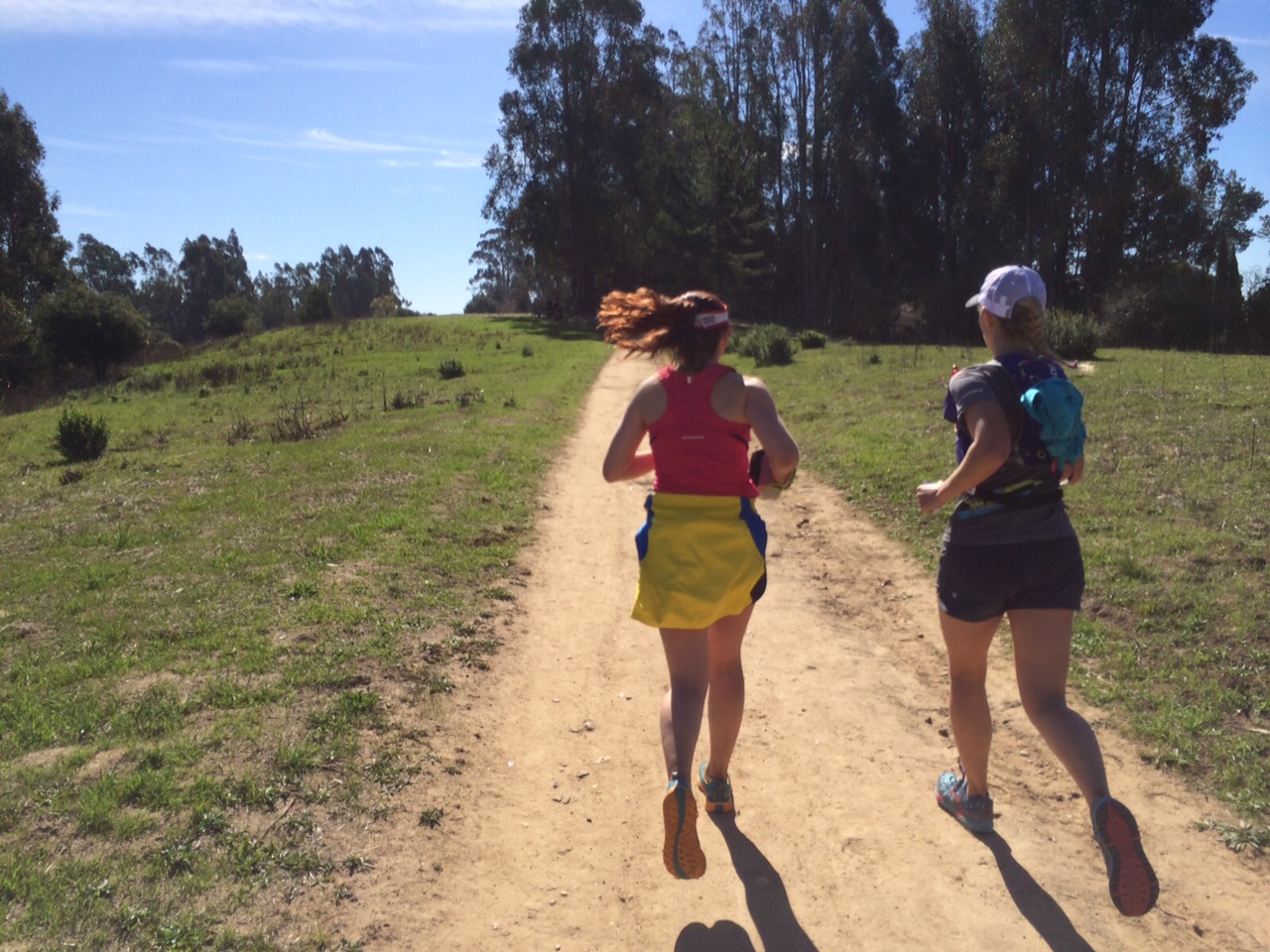
Despite the intermittent climbs, our spirits stayed high as we alternated jogging on the flats and small rolling hills with walking up the steeper areas.

I also tried to stay on top of my hydration and fueling, which was Leslie’s main advice, taking sips of Osmo Nutrition Active Hydration and nips off my PocketFuel every mile or so.

photo (34)

After we had done another four miles (~10 total), we came upon the second aid station. By this time, my stomach was starting to feel a little grumbly (Note to self: My big mistake was to eat salad for lunch the day before the race – never again, as it didn’t set well).

I tried a combo of boiled potatoes dipped in salt, along with a Dixie cup of Pepsi, which helped. And then we were off again!

photo (43)

The third and final aid station before the finish was about four miles away (~mile 14), and we were still feeling pretty strong at this point. So strong, in fact, that a fellow runner commented on how upbeat we seemed as we hiked up a steep hill.

She identified herself as a triathlete by training, and said that her half Ironman races were much easier than the 30K distance, which made me very happy to hear in light of my upcoming April Olympic distance!

photo (44)

We made good time to the final aid station, and I grabbed more Pepsi and salted potatoes, filling the flasks in my Ultimate Direction Jenny Ultra Vesta (ok, I may have gotten it for the name, but it’s such a handy and comfy vest for long runs) with water mixed with the Tailwind electrolyte drink that they had on the course.

photo (35)

By this time, we were out of the wooded areas and running in full sun, along dirt paths through some really beautiful scenery (another benefit of trail events).

We kept commenting on how lucky we were to have such good weather, too — it was a perfect 65 degrees.

photo (42)

About 15 miles in, I remember telling Vivi and Molly that I couldn’t believe how good I felt.

Admittedly, we were undertrained for the race — I was hoping to get 14-15 miles the weekend we attempted the Double Dipsea last month, but the weather never cooperated, and we called it a day at 10. So we were attempting 18+ miles, having completed only a 12-mile “long” training run in advance of the race.

IMG_0175

Well, apparently I provoked the running gods by saying that — and it turns out they’ve got a wicked sense of humor. No sooner did I utter those words than the wheels started slowly coming off, and thus began a gradual unraveling over the next few miles.

I forced myself to keep sipping and eating small amounts, but every incline got tougher as the accumulated climbing of the day started to take its toll. Our solution? A few photo opps as we made our way slowly toward the finish (i.e. chances to rest for a minute, catch our breaths and bring our heart rates down).

photo (41)

With a mix of jogging down straightaways and walking up inclines, we slowly ticked off another mile and saw a sign that indicated we were a mile away from the finish. Heartened, we picked up the pace to bring it home. But at the end of that mile, when the finish line was nowhere in sight, I hit the mental wall.

We figured we couldn’t have more than another mile, and Vivi got her second wind, so she ran ahead while Molly hung back and kept me distracted enough to keep going despite my rebelling mind and body.

When we turned the final corner, saw the finish line and noticed that the clock was under 3:30 (Vivi and I were thinking we’d aim for under 4:00, but would thrilled with 3:30), it was enough to give us that final boost to get across the finish. Final time: 3:23:21.

And then the feasting began!

photo (7)

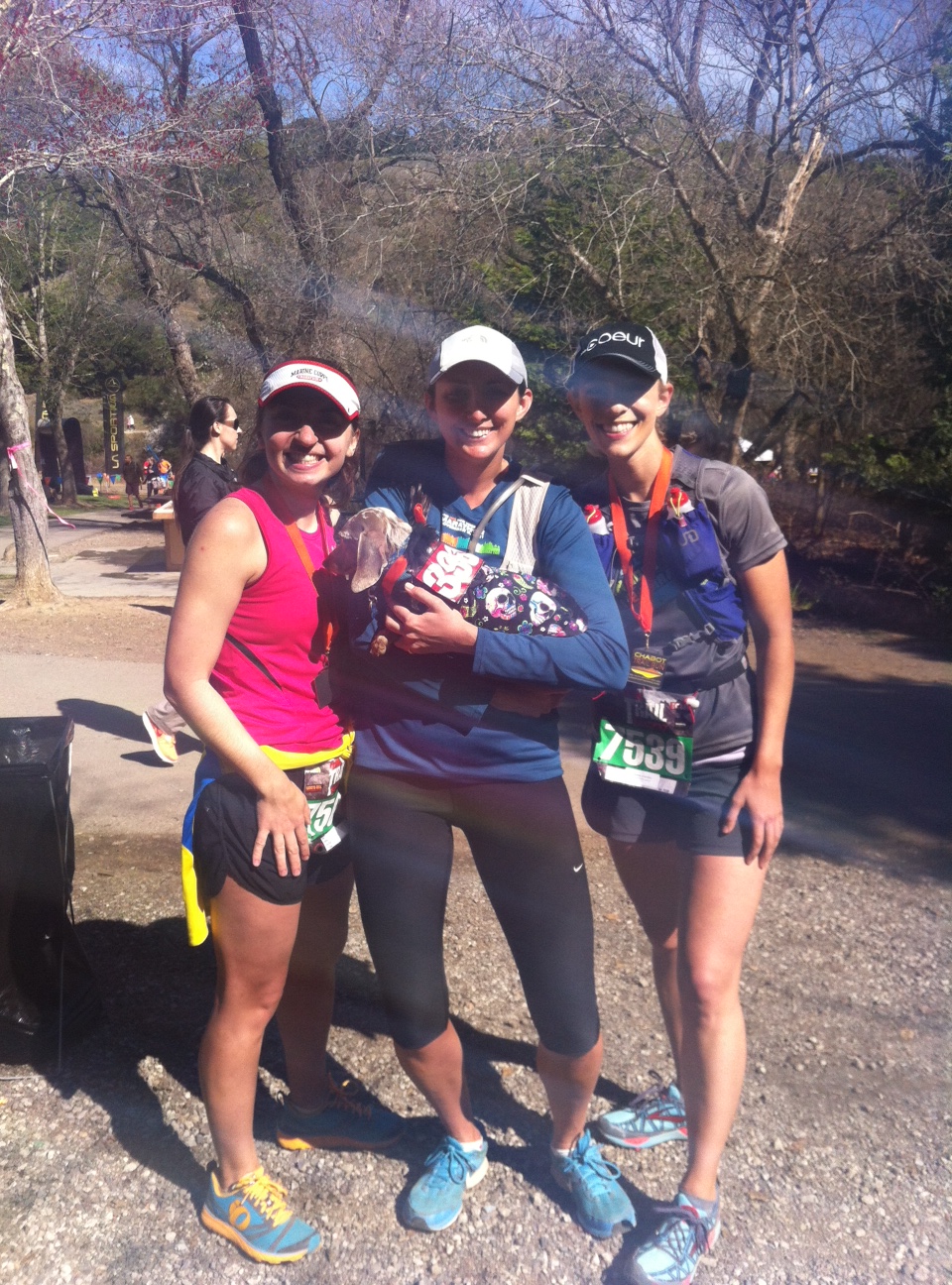
On the way out of the park, we ran into a woman who races with her Dachshund. He had completed the half marathon today, and he’s training for his first marathon later this year — so, of course, we had to get a shot with the impressive little guy and his bib (yes, he was officially registered for the race).

Leslie (our new ultra hero from the race) had also mentioned that it was her rule to make a new friend during every event — so between her, Molly and our new four-legged mascot, we not only met but happily exceeded that goal for the day!

photo (39)

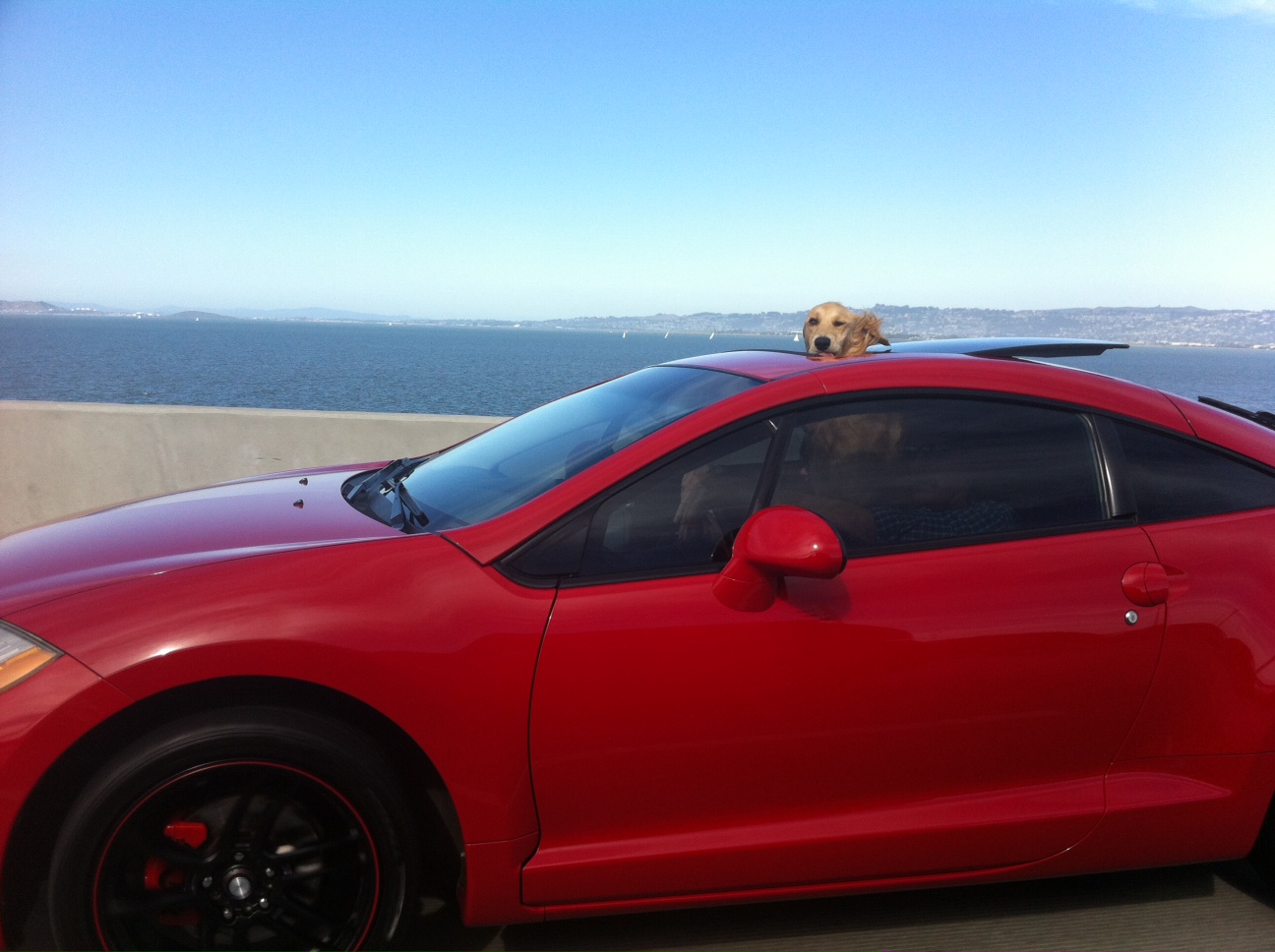
And I’ve just got to share something that Vivi and I saw on our way home over the Bay Bridge that gave us a laugh…

This furry fellow was also enjoying himself today, catching some rays and taking in the views from the sunroof.

photo (38)

There certainly is something to be said for taking on another round of firsts. You never know where it’ll take you — and who you’ll meet along the way.

Happy running and racing, friends!

5 quick tips for taking your running to the trails

Trail Run

One of my new running goals is to spend some time getting comfortable on the trails in 2014. Not only is the soil a more forgiving surface (much to the delight of knees and other joints), but the uneven terrain and occasional obstacles also make dashing through the woods a more exciting — and challenging — way to train both mind and body.

So if the thought of another day on the treadmill has you running for the hills, embrace it. You may have to slow your roll slightly in the beginning to master a different form and technique, but the benefits of trail running are well worth the effort.

How? Well, not only does it burn more calories than a run on your usual route, but it also does wonders for your balance, agility and coordination. Below are a few tips to help make your transition to the trails a breeze this spring.

1. Use correct footwear. Regular running shoes work for clear-cut paths, but for rocky routes, you’ll need special trail-running kicks, which provide better protection and traction over uneven terrain.

2. Ease into it. Acclimate leg muscles and ankle joints slowly by starting out on a flat path for short outings, increasing your time and distance by no more than 10 percent each week.

3. Adjust speed and stride. Take shorter steps and lift your feet higher to avoid pesky roots and rocks, and don’t be afraid to walk up steep hills or over tricky hurdles like streams or logs.

4. Keep an eye out. Your best bet to avoid getting tripped up by obstacles is to keep your gaze on the trail – about 10 feet ahead – to give yourself enough time to react.

5. Mind your manners. Follow the rules of the road, and stay to the right of the trail, avoiding a potential collision with oncoming traffic and allowing faster runners to pass on your left.

What’s on your list of running goals for the New Year? 

Love the run you’re with: 6 tricks to push through a tough workout

Source: Lee Boyce Training

Source: Lee Boyce Training

If working out were easy, everyone would do it. But in reality, only 20 percent of American adults get the recommended amount of exercise, according to a recent study by the Centers for Disease Control and Prevention (CDC).

The truth is, the probability of physical discomfort is often much less of a deterrent than a lack of mental motivation. Even the most committed of exercisers have the occasional day when they’re just not feelin’ it — me included.

So how do I get out of my funk and into a better frame of mind — not only to start a sweat session, but to actually stick with it long enough to make it count? Here are a few of my dirty little tricks for fooling myself into (and through) those I-just-don’t-waaaanna workouts.

1. Buddy up. It may take some time, but finding a set of solid workout partners is key. If you’re close in pace, have similar goals and you can push each other through the inevitable ups and downs of each workout, you’re golden. For example, Pavement Runner and I would meet up while marathon training last fall, which not only kept me motivated for those early wake-up calls, but also kept me from wimping out mid-way through many double-digit runs.

2. Try something new. Sometimes a new adventure can be invigorating. I knew I’d need a little break from pounding the pavement after said marathon, and trail running seemed like a great way to stay in running shape while letting the legs bounce back, so my friend Vivi and I signed up for a 30K. Our runs are challenging, yes, but when you’re learning new skills, exploring scenic routes and getting a different kind of workout, they become something we not only look forward to, but also appreciate as novel experiences.

3. Get specific. Workouts can feel overwhelming when you’re trying to tackle too many things at once — be it mileage, pace, terrain, etc. So on those days where you feel like you’re spreading yourself too thin, plan a purposeful workout where you work on only one thing. Fix your form, run hill repeats for speed, or map out mileage and leave the watch at home. Instead of multitasking, distract your brain by focusing on the pleasure of accomplishing a singular task.

4. Find the fun. Hubby is great at this, so I am try to take a page from his book with this one. Whether it’s splashing in puddles on a rainy day, racing to the next stop sign or stopping at a jungle gym for an impromptu set of pull-ups, making a game of it can put a smile on your face and help you find a little fun in something you were otherwise dreading.

5. Bribe yo’self. There’s a reason why most of my morning runs end near a coffee shop: I am not above a good bribe to get myself out of bed. There’s nothing better than capping off a good morning workout with a hot cup of joe. You’d be surprised at how much a little ritual like that helps.

6. Embrace the suck. Let’s face it, some workouts are just going to be crappy, for one reason or another. If it’s one of those days, don’t waste your time or energy fighting it. Just accept it, try to find the humor in the situation, and realize that this too shall pass. I had a run like this during marathon training where everything seemed to go wrong; I ended up calling one of my oldest girlfriends on the way home as I slogged my way up the final hill, and we had a good laugh at it, which always keeps things in perspective.

One final disclaimer, of course: There’s a big difference between “that voice” in your head and a gut feeling that something’s wrong. Experiencing a few aches and pains during training is common, but if you’re in significant pain, always be sure to listen to your body.

Knowing the difference between discomfort (which you can push through) and pain (when you should stop) is important for being able to train effectively and prevent injury.

What are your tricks for tackling tough workouts?

Fit Fix: Catching up with triathlete Terra Castro

Terra1

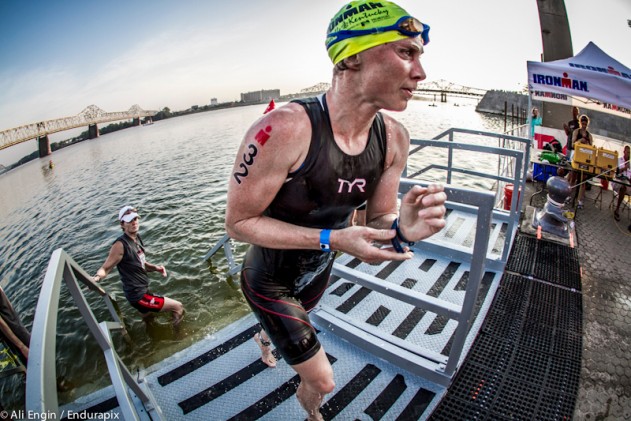
Terra exiting the swim at the 2012 Ironman Louisville race

In my last post, I talked about prepping for my upcoming Olympic-distance triathlon and, in light of this new adventure, I thought it’d be fun to revisit a previous interview I did with my friend Terra Castro, a retired professional triathlete (although don’t let the ‘retired’ fool you; she just won a recent race in our hometown).

I had the pleasure of running alongside Terra during our high school track and cross country days in Michigan, and when she wasn’t leading the team by example, we’d inevitably find her cheering every last person across the finish line. So it was no surprise to any of us when this unparalleled display of work ethic, dedication and heart allowed Terra to achieve her dream of becoming a professional triathlete and racing around the world. 

But even though she closed that 16-year chapter of her career last year, Terra shows no signs of slowing. She continues to teach Team Luna Chix clinics and coach track and cross country, which no doubt will allow her to mold, motivate and inspire generations of athletes to come. Below is an excerpt of my chat with this all-around amazing lady.

Kinetic Fix: What is it that you love about triathlons, so much so that you made it a career?

Terra Castro: I love the challenge that is triathlon: How mentally tough it makes you, and how there are three sports so you always have stuff to work on and improve. I love that it brings people together from all walks of life. I was able to make a living at it, which was a blessing, but even as  professional triathlete it was so cool to race alongside other age group competitors, including my mother and grandfather.

KF: What, in your opinion, are the benefits of multi-sport events?

TC: The variety of the three sports keeps you motivated, and you don’t get bored because there’s always a challenge ahead. It promotes endurance development; you become really fit due to the demands of multi-sport races. It’s beginner-friendly, and there are all types of distances and race options for everyone – from sprint distance to Ironman, aquathon to aquabike – everyone can compete!

It’s also a great way to meet people and have fun, plus you learn about yourself and become much stronger and more focused in the process. And, last but not least, finishing is a huge achievement; it never gets old seeing someone cross the finish line in their first race. The moment is priceless!

KF: You’re on a gluten-free diet – why, and how did that factor into your training?

TC: I found out in 2000 that I have Celiac Intolerance. I wasn’t recovering from training, and had huge GI issues, a weak immune system, etc. Since then, I have focused on being gluten-free, dairy-free and egg-free. In training, I just planned more specifically my meal menu and layout – especially on training days – because I couldn’t just grab a bagel or a sandwich (I need the gluten-free version).

Source: Competitor.com

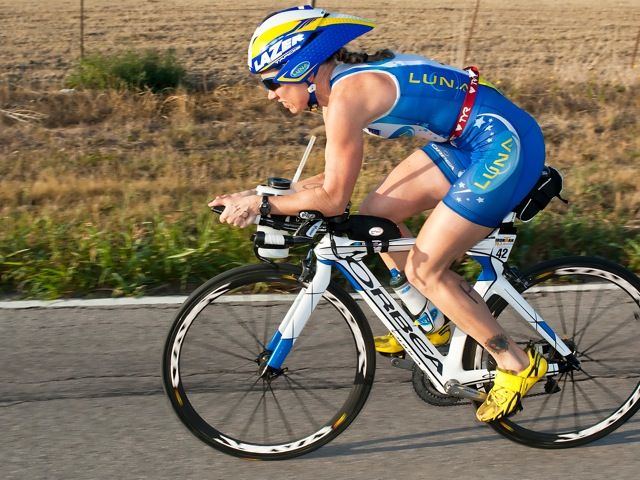
Terra at the 2011 Ironman 70.3 race in Austin (Source: Competitor.com)

KF: How do you pass the time during workouts?

TC: During training I am focused on the skill in the session – the task at hand – so I don’t use music. Unless I am on the treadmill or riding the bike on my trainer inside…then I must have jams to keep the energy high!

KF: So what’s on your iPod right now?

TC: I have an iPod, but I don’t know how to use it, which is sad because my brother works for Apple! I use Pandora on my phone; I LOVE Mumford and Sons, but I still keep to Detroit roots with Eminem.

KF: Back when you were in full training mode, what did a typical day look like for you?

TC: It depended on the day; triathlon is three sports, so on bigger days I’d wake up early and start with coffee, a snack and morning bible study before I headed to the pool. I’d be in the water at 6am for an hour and 15 minutes, and then head back home for breakfast and onto the bike for a few hours.

I live in Arlington, Va., so I’d head out to Maryland past the National Monuments (never gets old!) before going home to refuel and nap (recovery is key to training!) in my Recovery Pump. The evening workout was usually a run of an hour through the hills of Arlington, then I’d have dinner by 7pm, and I’d be in bed by 9:30. Wake up and repeat!

KF: One last question – what’s your advice for beginners who are hoping to tackle their first triathlon this season?

TC: First, remember the key is to have fun, so don’t put too much pressure on yourself. Tackle one thing at a time, focusing on the process and not the big picture because it can be overwhelming. Next, take the time to train properly, but keep it simple – even if it means getting your ride in as commuting to work or your run as chasing the kiddos around the track. Finally, find a local training group or friends to hold you accountable and keep you motivated when you want to just sleep in!

To keep tabs on Terra’s latest adventures, check out her website and blog, or follow her on Twitter here.

The plan: HITS Napa Valley olympic-distance triathlon

Source: David Kiviat

Source: David Kiviat

Now that I’m going to look the part (a.k.a. a runner in some pretty sweet triathlete’s clothing, thanks to Coeur Sports), it’s time to get serious about training for my first Olympic-distance race, which is set to take place in April at HITS Napa Valley.

The 6.2-mile run? No problem; I know it’ll be tough, but doable, especially with all the trail time I’ve been logging in preparation for this month’s 30K. But the 1500-meter swim and 24.8-mile bike? Ha! That’s another story altogether.

When I registered, I told myself that I wouldn’t let my lack of comfort in the water or on two wheels hold me back, and thus created a four-step plan of attack. Here’s how I’m breaking down the process of getting myself to the start line…which, oddly enough, seems more daunting at this point than getting from there to the finish.

Step 1: Get reacquainted with the other disciplines

You know the saying, “it’s like riding a bike,” which means it’s easy to recall how to do something you’ve already learned? Well, that’s a downright lie. My childhood swim lessons and neighborhood bike rides clearly didn’t translate to automatic success in tackling the swim and bike portions of triathlon, so I’ve been putting in time at the local pool and in spin classes to create a solid endurance base for each discipline.

Step 2: Ease into open water and the road

Once I could do a full 1600 meters of laps and had countless spin classes under my belt, it was time to bite the bullet and take my workouts into the terrifying great outdoors. Enter the open-water swim and road bike, both still very much works-in progress at this point. I know I can handle the distances; it’s just a matter of developing confidence and the respective skill sets needed to handle inevitable variables as they arise, be it cloudy water or a rogue skateboard that crosses my wheel path.

Step 3: Get psyched up (and geared up)  

It’s always a bit of a chicken-and-egg scenario when you’re getting into a new sport: Having decent gear makes the learning process more enjoyable, but when you don’t want to sink a lot of cash into it when you’re just starting out. So I waited until I found a good deal on an XTERRA wetsuit to buy one, and I’m making due with my “vintage” (read: Craigslist) Cannondale road bike.

I will, however, be making the leap to clipless pedals so I can wear cleats to maximize efficiency. This is something I’ve been obsessively extensively researching because I’m not thrilled about the idea of having my feet stuck in case of an emergency. Cycling snobs be damned, this noob decided to transition slowly with a set of easy-in, easy-out Shimano Click’r pedals. I’m sure I’ll have some stories to share after I install them and attempt to test ’em out…

Step 4: Pick a plan…and stick to it

Last but not least — and because it’s my first Olympic-distance event — I’m looking to follow a pretty specific plan to make sure I feel properly prepared come race day. My friend Kelly just so happens to be deep in the throes of training for her first full Ironman, so I figured there’d be no better brain to pick when it came to this.

She recommended a book called The Woman Triathlete, which features advice from an all-star cast of female triathletes and coaches. It also contains training plans for each of the distances, and the eight-week Level I Olympic Distance Training Plan looked like a winner. Day one of training starts on February 17, and I’ll be tracking my journey here, so stay tuned!

The three stats I track for every workout

photo-7

Although I claim to be mathematically-challenged (much to the chagrin of my dad, who is an engineer), I totally geek out when it comes to workout stats. Whether it’s miles ran, swam or biked, there’s just something so fulfilling about poring over the numbers after a particularly tough workout — not only to celebrate great days and learn from not-so-great ones, but also to set benchmarks for gauging current performance and goal setting.

But the ways in which we can now quantify ourselves is almost getting out of hand: From calories burned, miles traveled, heart rate, steps taken, sleep patterns, weight, etc. — it’s easy to get caught up in quantity to the detriment of quality (i.e. the bigger picture). For example, sometimes I’m so intent on hitting mileage goals with my runs that I’m tempted to swap a stretch session in favor of more time to log miles. Big mistake!

Everybody (and every body) is different, so you’ve got to find what works for you, your lifestyle and your goals, but I tend to think it’s best to keep it simple when it comes to tracking stats. Granted, there are certain times and training cycles where this may change, but as a rule I live by quantifying the following three things for each workout.

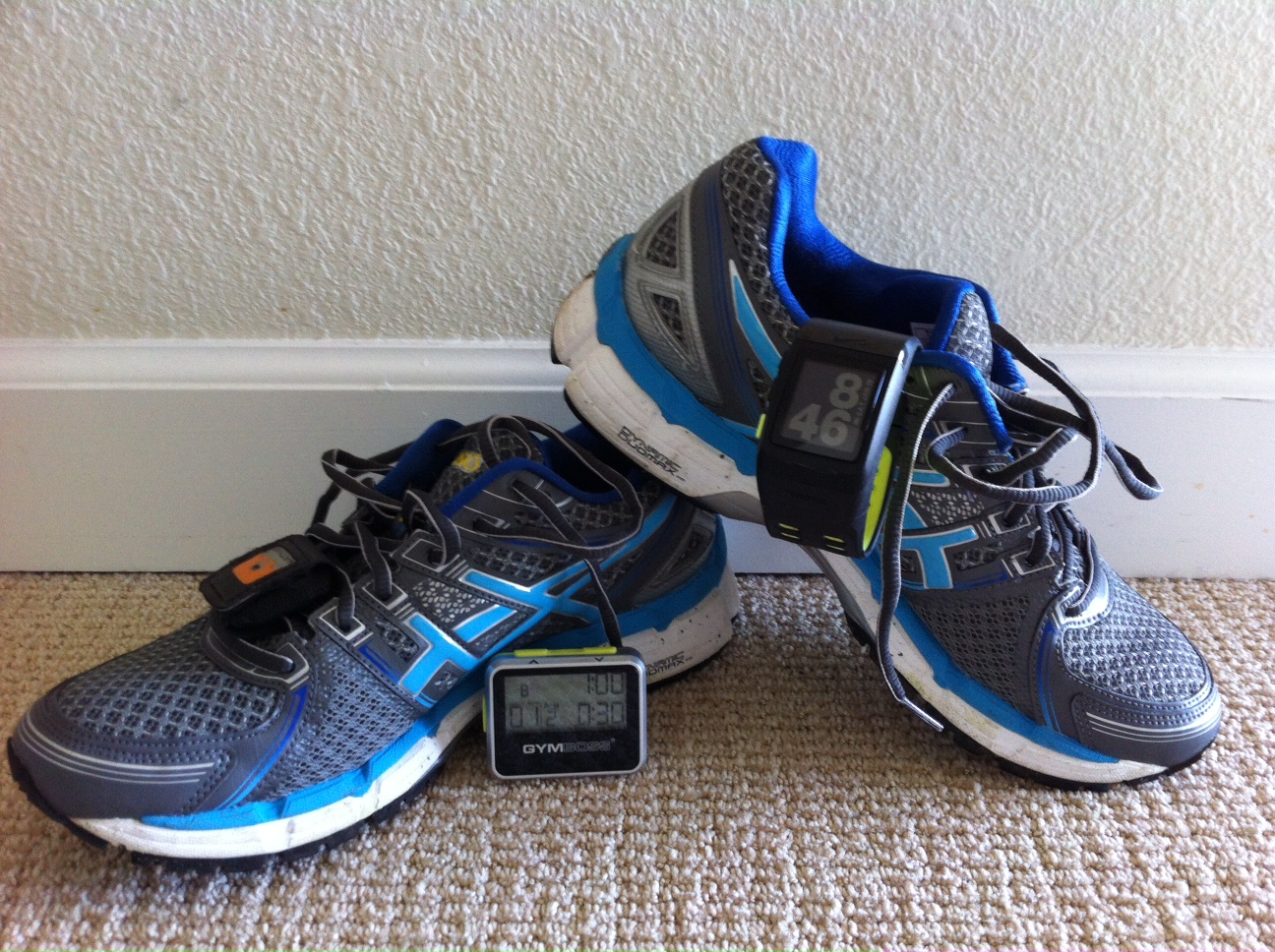
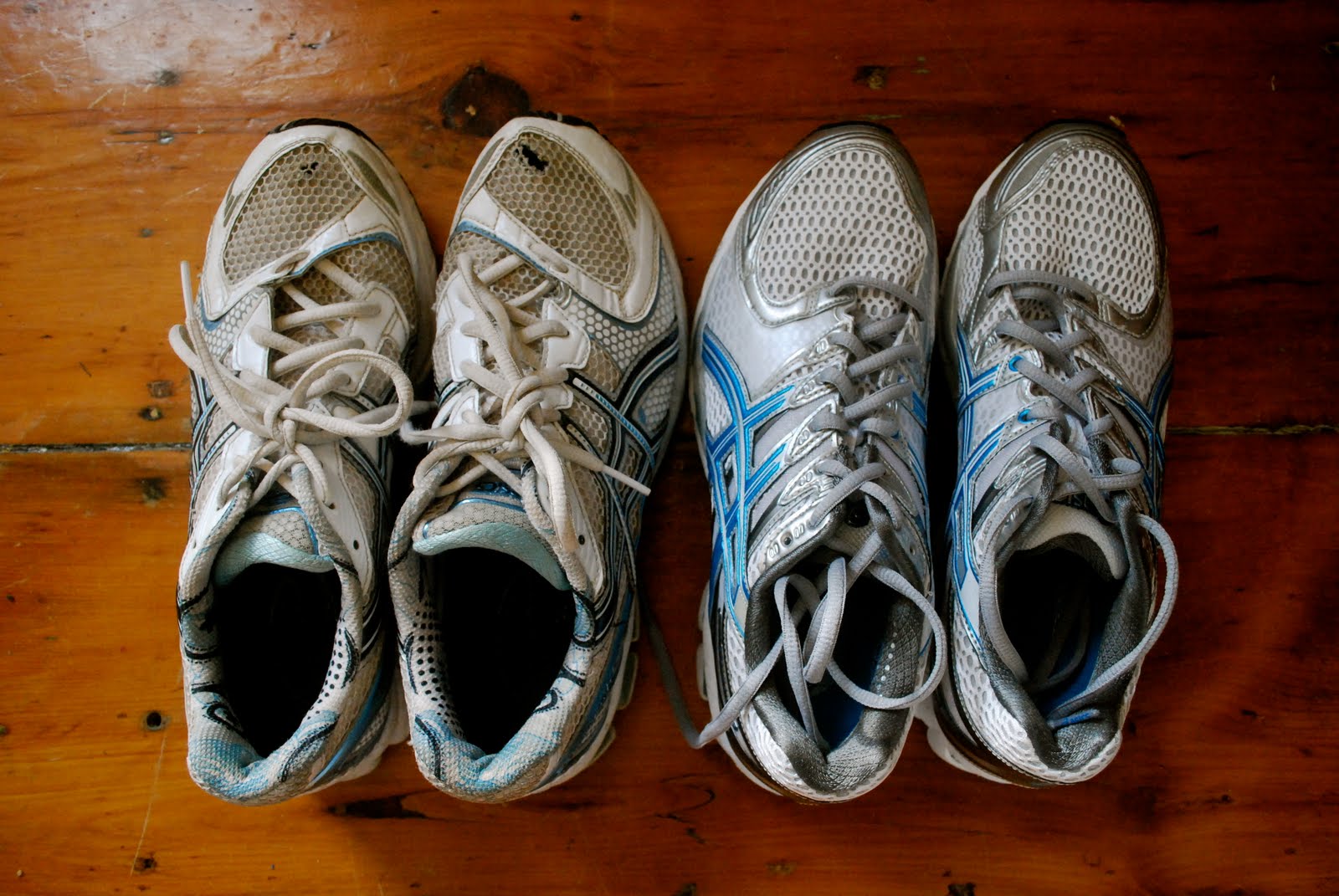
1. Shoe Mileage

Why: I used to run my shoes into the ground (literally) trying to save a few bucks by stretching out their life as long as possible. But when minor aches and pains crept up and morphed into injuries, I learned my lesson: A pair of good shoes that will support and cushion you properly is priceless.

How: Rather than running in one pair until it feels “flat,” I buy two pairs of shoes and rotate them on a weekly basis to give the cushioning time to bounce back. I’m also getting better about tracking actual mileage — one of my goals for 2014 is to figure out exactly how many miles it takes for me to wear my shoes out (the average is about 300-500, depending on the runner) — so I’m keeping a tally on each to know when to rotate future pairs.

Source: OneMomInMaine.com

Source: OneMomInMaine.com

2. Exercise Duration

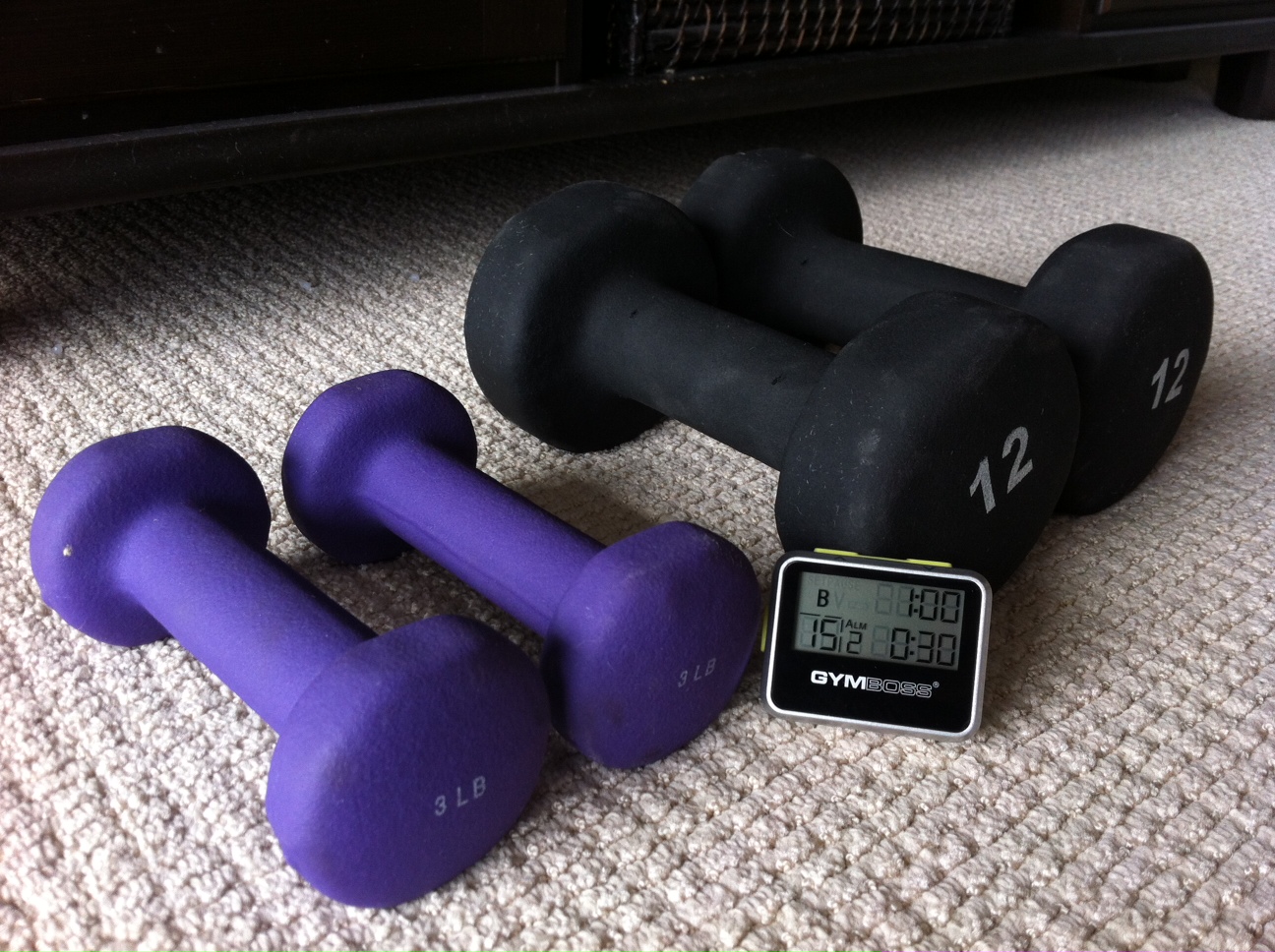
Why: We’re all time-crunched and multitasking to the max, so it’s easy to get in that mid-workout daze and just power through reps as quickly as possible. But by giving myself a set about of time for each exercise and working out for that entire interval, it forces me to focus on form, which inevitably gives me more bang for my buck in the long run.

How: Whether it’s with a stopwatch or another kind of timer (my favorite is GYMBOSS because it’s a repeating interval timer, countdown timer and stopwatch all in one), set your segments and actually stick to ’em. You’d be surprised how long 30 seconds feels when you’re working hard — but keep yourself honest, and you’ll see results that much faster.

photo (13)

3. Workout Details

Why: Logging workouts not only provides a sense of accomplishment, but it also allows me to analyze performance, discover trends (i.e. running after a leg day leaves me feeling slow and heavy, so I switch up the schedule for better results), recognize potential issues and injuries, as well as motivate myself to make goals for future sweat sessions.

How: I still keep an old-school workout log, which I fill out every day (even on my off days; in fact, it reminds me to schedule them in!) with workout type, details, duration, etc. But you can get as specific as you’d like when recording individual workouts. For example, you might want to use a GPS watch to keep track of pace, distance and other elements of runs (I currently use the Nike+ GPS SportWatch, but have heard enough good things about Garmin to want to check it out), or there are apps and programs that will also help you keep track of workouts in other ways (I use MapMyRun to create routes, and I’m also testing Strava to challenge myself on rides and runs).

However you decide to quantify your workouts — or not — it’s all about finding tools that work with your workout style and allow you to stay motivated, train more effectively and have fun in the process!

STRAVA-biker-resize

What stats do you track when working out? 

Fit Fix: Sarah Evans on bouncing back (with a PR/BQ) post-pregnancy

Source: Sarah Evans

Source: Sarah Evans

After wrapping up my own racing season at the end of November, I spent much of the final month of 2013 not only reflecting, recovering and planning, but also (and perhaps more importantly) returning some of the love I felt this year by rooting on fellow runners as they rounded out their respective seasons.

And in the Bay Area, as I’ve come to find out, that usually happens at one particular event: the California International Marathon, a popular race with a flat, fast course that serves as a focal point in many a runner’s calendar.

On that day, aside from me having some major anxiety while tracking friends and cheering them along online, there was much to celebrate: Not only did Stephanie (a new blogger friend) finish her first full marathon in an impressive 4:09, and Pavement Runner (my trusty training partner & all-around amazing dude) rock an 11-minute PR to finish in 3:37, but Page (a fellow Coeur lady) also snagged her own PR — at a blazing 7:22 pace, no less — to finish in 3:12. Congratulations again, guys!

But there was one other success story from CIM that, when spotted on Twitter, stopped me in my tracks:

SE7

Wait….what?! I had to meet this rockstar runner and hear her story.

So thanks to the power of social media, the rest is history. Her name is Sarah Evans, and she’s one of the most down-to-Earth, no-nonsense, inspiring and motivating athletes and (new) mamas you’ll ever meet (oh, and did I mention she’s an Ironman, too?).

Below is our conversation, which I promised her will be continued (when I eventually work up the guts to join her) on the trails…

Kinetic Fix: Congrats on your recent PR/BQ at CIM! You’re just four months out from having a baby; what was your game plan going into the race & to what do you attribute the awesome result?

Sarah Evans: Thank you!  It was a great day, and I’m so proud of my PR and Boston qualifying time! The last four months have been a whirlwind adjusting to life as a new mom.

My game plan for CIM was to push myself, see just how fast I could go and, ultimately, just enjoy being out there. It was important for me to have a goal time, as well, since I am very competitive with myself. Having a specific race to train for after having my baby girl was important to me so that I could still maintain my identity as a runner.

I wasn’t sure how I would feel or what kind of pace I would be able to hold until I started actually training about a month after giving birth. My husband knew how important it was to me to get back to running, so he was very supportive in helping me achieve the balance between new motherhood and having some time to myself, which for me meant tying up my shoes and going for a run. I seemed to feel stronger and stronger as the weeks passed from having my baby girl and almost relieved to run “solo” so I could see how hard I can push myself.

Achieving a PR was not really a priority at first, but as I started training again, my speed work splits and endurance told me that my best time might be within reach. That fueled my long weekend runs on the trails to build my base and helped me turn up the tempo on my short, interval-based workouts on the treadmill. While I would consider the treadmill to be my least favorite method, it was a great way to work out and still keep an eye on my baby. The fact that I was in running shape throughout my pregnancy also gave me a great foundation when it came time to train specifically for the marathon.

KF: You’re definitely no stranger to a tough workout; tell us a bit about your pre-pregnancy training, accomplishments and level of fitness. 

SE: My pre-pregnancy fitness was at an all-time high due to the volume of runs and the type of running I was doing on the trails.  In the recent years, I fell in love with trail running and believe it’s responsible for a lot of my endurance, strength and, ultimately, my success with road races.

In addition to speed work during the week, every Sunday I meet up with a small group to run the Marin wilderness. Discovering more about my abilities as a runner, as well as taking in nature’s beauty each week, refuels my spirit and gives me confidence – but it also gave me my most significant running injury to date, a broken foot before the 2012 Northface Challenge.

Six months after breaking my foot in Muir Woods, I toed the line at Northface and completed my first trail marathon, which gave me a real sense of accomplishment. But that race will always mark a more significant event in my life because I found out I was pregnant the next morning! So I was lucky enough to go right into my pregnancy in marathon shape, which meant I was trained and healthy enough (with the support and consent of my OBGYN) to continue running and training up to a marathon distance.

While I have maintained general fitness since my college track and field days as a sprinter, I have focused on training for endurance events starting in 2007. Over the past six years, I’ve done six marathons, seven half marathons and six triathlons, including Ironman Lake Placid in 2009. My marathon and half-marathon PRs are 3:26:23 and 1:35:30 respectively, and I am a three-time Boston qualifier, running it in 2013.
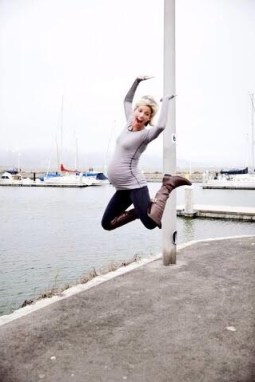
Source: Sarah Evans

Source: Sarah Evans

KF: Wow, finding out you were pregnant the day after your marathon must’ve been an exhilarating few days, to say the least! So, what was your attitude toward working out with baby-on-board?

SE: I was excited to be so fit at the beginning of my pregnancy because I knew that would put me ahead of the curve for being healthy and staying in shape. I’m very much a “no-excuses” kind of girl, so during the first few weeks, even though I felt a bit nauseous, sick and exhausted, I got myself out the door to exercise every day. It actually made me feel much better, once I got halfway through a workout, and gave me more energy afterwards. There were some workouts I had to fight through, but I knew it would do my body good in the end so I embraced the discomfort.

“Hurts so good” is definitely a mantra I embody, but I was, of course, cognizant of my baby’s health and made sure anything I did was approved by my doctor. I also recognized a fact that I believe is universal for all expectant women: Running while pregnant is typically more cumbersome, uncomfortable and induced a bit more soreness than usual. But as long as that discomfort was within the realm of what my doctor and I considered to be safe, then I was determined to continue to run.

KF: And run you did, all throughout your pregnancy, including completing the Boston Marathon. Can you tell us what was it like doing 26.2 with a “passenger?”

SE: I feel fortunate that I had no complications during my pregnancy and was given the green light by my doctor to continue to run. In fact, her main concern was that I would suddenly stop running, which I was told might be more detrimental to my health and pregnancy than anything. I continued to run a lot of trails, which helped build strength and balance and gave me more cushioning for my joints and back than the road and pavement.

Running the Boston Marathon with a baby on board was really a coincidence, as I had qualified and booked the trip before I knew I was expecting. It had always been a dream to run this race, and relaying that desire to my OBGYN was among the first topics of my first appointment. With everyone’s support — including my husband, who initially thought that this might be too much — I set myself a goal of sub four hours (realistic and challenging enough, but allowing for some fun along the course) and finished feeling strong and healthy.

Despite finishing 30 minutes slower than my qualifying time, I felt fortunate. And the day’s tragic events helped keep everything in perspective.
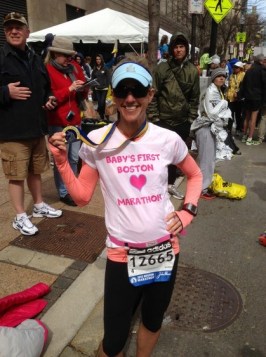
Source: Sarah Evans

Source: Sarah Evans

KF: What surprised you most about running while pregnant?

SE: That I lost my speed quickly! I know it sounds ridiculous, but I thought carrying a few extra pounds wouldn’t slow me so fast, but to be fair it wasn’t just being pregnant that slowed me down. Bouncing back after I broke my foot was not as easy as I thought because I had a fair amount of apprehension starting back running on the trails on a healed foot AND being pregnant at the same time.

So I built up the miles gradually at the new slower pace and found that even warming up took twice as long as before. Easing slowly into a run was new for me, as I was used to taking off quickly, and I had to challenge myself not to turn back after two miles because I wasn’t “feeling it,” knowing that my growing situation meant that I had to be patient to find my running happy place.

There were plenty of times towards the end of my pregnancy when I felt like skipping my runs, but in the back of my mind I had to remind myself that these times running solo would soon be limited. Mostly, I was anticipating the period after birth when I couldn’t really exercise due to having a C-section (my stubborn little girl was breech and couldn’t be flipped). And any running, however slow and uncomfortable, was going to beat being on bed rest for a while after birth!

KF: Can you share some of your favorite tips for moms-to-be who want to follow your lead and keep up with their running?

SE: First and foremost, clear it with your doctor. While a few are still old-school enough to recommend just sitting on the couch and resting, thankfully most will assess your current fitness and exercise level to suggest what effort you can take on.

Next, realize that it might not always feel comfortable but no matter how bad you feel, just lace up your shoes and get out the door – if only for a mile. You may (and most likely will) find yourself running longer than you anticipated and enjoying the fresh air, which can really invigorate you and make you feel better.  The only special “equipment” I got was a bellyband that supposedly helped support my mid section along with providing some back support.

Finally, and especially for first-time moms, remember that you might not have this kind of freedom after baby is born to run and be active. Trust me, as tired as I felt while pregnant, it doesn’t compare to how exhausted being a mother can make me feel. And there is no better excuse to skip a run than to cuddle with your sweet baby – thankfully I can make time for both, but it does take its toll. Another huge benefit that you should keep in mind is that keeping fit will prepare your body for labor, help speed things along, give you the energy you will need, and ultimately make it easier to bounce back.

KF: Did you do anything else to stay in shape throughout your pregnancy?

SE: Throughout my pregnancy I tried to change as little as possible about my routine and exercise habits, though I did avoid outdoor cycling on the road, as well as skiing and winter sports (doctor’s recommendation). What I found was that I could still do my usual variation of cross-training activities, but just at a lower level of exertion.

I did a lot of strength training to keep some muscle tone, and spinning was one of the best exercises to relieve the pressure on my joints. It gave me some time off of my feet, and I think it’s one of the best ways to keep in cardio shape during pregnancy if running gets to be too much. I also did more power and vinyasa flow yoga classes, which helped me relax, feel one with my body, and stretch out my sore ligaments.

During my maternity leave (two weeks prior to birth), I also took advantage of the extra time by pampering myself, which meant spending some additional time working out! 🙂 I was lucky enough to get in one last run and yoga workout the morning the day my water broke and my baby girl arrived, so I held on to the end!
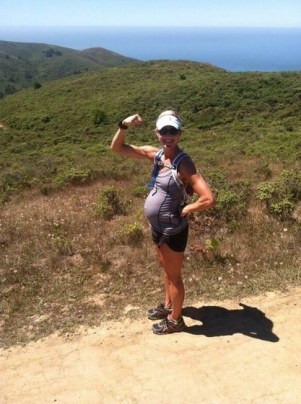
Source: Sarah Evans

Source: Sarah Evans

KF: Sounds like it! And then you were able to get back on the trainer and go running a few weeks after your C-section; how was the transition back to your usual activity levels?

SE: Having a C-section was not my plan, as I really wanted to have a drug-free, “natural” birth, but my little one was stubborn and turned breech so I was relegated to a C-section. It did slow down my recovery and my return to running, but what felt like an eternity only ended up being a limited timeframe.

My OBGYN gave me the green light to start exercising 18 days after I had my baby girl, and the first thing I did was 40 minutes on my bike trainer that very afternoon! I eased in carefully the next day by walking uphill on the treadmill for 30 minutes and the following day by doing intervals of slow jogging and walking uphill on the treadmill. I did these kind of workouts for the next 10 days, and exactly 4 weeks after having my baby girl I went for my first run outside: a lovely, solo six miles, and it felt amazing! I couldn’t have been happier (if a bit sore) to be running again – especially without the extra weight on my frame!

I think I bounced back so quickly because of my mental drive and strength – it didn’t hurt that I also went into my pregnancy in top shape. I was resolved, as much as I could, to stay in running shape and continue to run up to the day I gave birth. I really pushed hard to get back to running as soon as possible, and I was also lucky to have no complications other than my unplanned surgical procedure. The support of my family and husband, who knew how important it was for me to get a little piece of myself back after giving birth, also aided in my quick turn around and recovery.

KF: Now that you’re a few months out, how do you think having a baby has changed your running, currently?

SE: Honestly, I feel like having a baby has made me a stronger runner. I have a quickness in my step that wasn’t there before (maybe it’s getting home faster to hold her!), but I also think it comes from the extra weight load I’m not carrying and an increased mental toughness from going through pregnancy and birth.

While it’s nice to be able to head out the door for a run, I’ve learned that efficient and quality runs are now much more important since I don’t have all the time in the world to be out and away from my family. When I’m struggling on a run now, I think about how I felt right after giving birth, hobbling to get to the kitchen or feeling sore after a 20-minute walk. The fact that I’m now able to exercise again encourages me to pick up the pace and not take for granted how quickly I bounced back.

I think that if I could handle the pain of pregnancy and birth but still love and enjoy every minute of it, then I can handle the physicality of the last miles of an intense running effort. Many athletes understand the odd enjoyment with the pain of a marathon, racing, or pushing yourself on a run, but to experience the parallels between exercise and pregnancy is particularly rewarding.

KF: With baby girl in the picture, how have you adjusted/will you adjust your routine going forward?

SE: My routine has definitely changed! I can’t wake up on the weekends and head out the door whenever I’m feeling up for a run or come home from work early and go for a 5pm yoga class.

Now I wake-up earlier, especially during the weekdays before my husband leaves for work, if I want to get in a solo run outside. Otherwise, I know I will be running on the treadmill (it’s a blessing and a curse to have the option of a treadmill in my home). Most recently I got a BOB Ironman running stroller, which is a good option to get out on a slower run with my daughter, but race-specific training is best done without my adorable companion.

I do have my standing day, Sunday mornings, when I trail run with my group. My husband knows how much I enjoy getting out on the trails, so we make Sunday my “free mama” day! For me, being able to run and have some solo time makes for a better, happier and saner person and mom at home. I think it’s important to have a set day and time every week that’s just for you, no matter what you feel like doing with it!

Another big adjustment is working out from home a lot more. I’ve had a long maternity leave and worked from my home office a lot before I went out, so I get in my workouts whenever I can in my little fitness area (which is set up in our garage). That relieves any stress of getting out the door and preparing baby for a gym daycare. Working out at home has really given me the best way to stay in shape and get it in when I can!
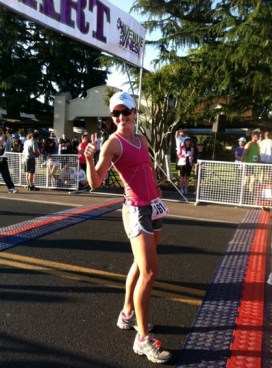
Source: Sarah Evans

Source: Sarah Evans

KF: Speaking of — can you share your favorite exercises for toning up and getting your core strength back post-baby?

SE: Getting my core strength back was probably the toughest part of recovering from baby. I didn’t start any specific core workouts until about six weeks out from giving birth, and when I did I started with planks — both regular and side planks. I also added in leg throws, v-ups, planks with a twist under and roll-ups. Then I added in a P90X ab workout (a quick 15 minutes of intense abs; perfect to do on a yoga mat in your living room when baby is rolling around on her playmat!).

I’ve recently added in some cross-fit type work (specifically called IronStrength that I found on RunnersWorld) that incorporates so many mixes of activities that you don’t realize work on your core. All of this is done at home in my living room on a yoga mat with little equipment needed, and it’s something you can do while your baby is awake and incorporate them into the routine.

I do a lot more core work and abs now than I did before pregnancy because I feel that area was the most difficult to tone while pregnant, and it didn’t quite bounce back like everything else. I also need the extra stability in my back to carry around baby, car seat and lug everything around. So I would say planks and incorporating a short 15-minute ab workout 2-3 times a week would be a good combo to building that core strength back!

KF: Great advice! Finally, do you have any other best practices you can share with new moms who are finding it a struggle to get fit again?

SE: Schedule it into your day! Like anything else — a meeting, a doctor’s appointment or lunch with a friend — try to schedule your workout. On the other hand, you have to be very flexible, too, so be willing to fit it in when you can.

I have recently canceled my gym membership and am solely working out at home between naps, feedings, etc. I have a mix of free weights, a treadmill, bike on a trainer, yoga mats, exercise ball, Pilates ring and bench all set up along with some of my favorite workout DVDs and a few online yoga sessions that I follow.

Many times I’ve had to end a workout early to get her up from a nap or change a diaper, and I just pick up the workout later in the day. So I piece together my workouts…or if all else fails, I go for a long walk.

I also try to wake up early a few times a week before she awakes if I want to run outside solo or fit in a worry-free workout before my husband leaves for work. This is obviously much more realistic once baby is sleeping through the night, which I am thankful to say is now happening!

Another thing I suggest is to get on the floor with your baby while they play and roll around. You can do abs, a little yoga session or stretch. I get my baby girl involved with my workouts, holding her or carrying her while lunging or doing squats, or laying her on my legs while we do crunches or lifting heels to the sky. And right after she was born (and before I could be too active), we went for a lot of walks! A more recent “bonding” exercise is running with her in the BOB stroller, which has been an additional challenge to my running strength!

Make your baby and your health a priority, and schedule in time for yourself – for me, that time is almost always spent on a run or a workout, which helps me maintain my old identity as a runner, but also embrace my new role as a mom!

Thanks to Sarah for taking the time to chat! And you can find her here on Twitter, if you’d like to follow along on her adventures in training, racing — and motherhood. 

Race Recap: Hot Chocolate 15K

photo-4

A priority race for elite runners the Hot Chocolate 15K is not…but it was a bucket list item for this professional sweet tooth.

So after hearing all the hype from other cities, we (me, Hubby and our friend, Kelly) decided to take the plunge and kick off 2014 with a fun, themed run.

Dubbed “America’s Sweetest Race,” the event features a one-of-a-kind post-race party where runners enjoy music and a family-friendly kid-zone, plus finisher’s mugs filled with hot chocolate, chocolate fondue and tasty, dippable treats.

Drooling yet?

photo

Here’s how the day went down:

Despite leaving early to get a jump on the traffic and parking situation, we ended up getting a late start (as in jumping into the corral behind our assigned one) because it was a more of of a hike than anticipated to the start line from the gear check area. No complaints, though; I’m not a fan of hanging out in the corrals way before the gun goes off anyway (too much nervous energy!), and since this was a more causal fun run, we weren’t too concerned about jockeying for position.

In terms of time goals, we were aiming for under 1:20 (between 8:30-9:00 pace) for a few reasons: First, it was a new race distance for all of us to figure out; second, we were realistic about the likelihood of the course being pretty crowded; and third, because we were using it more as a training/pacing run during a mileage-building cycle (specifically, in preparation for next month’s 30K).

The gun went off, and our first three miles took us through Golden Gate Park toward the ocean. It took a good two miles until the crowd thinned out enough for us to be able to get up to pace, but the mood was light and the weather was perfect (about 50 and sunny), so we took in the scenery and slowly settled into a steady rhythm. Once we hit the Great Highway, we had a four-mile stretch ahead of us (two miles down, two miles back) and things really started to open up, so we pushed it up to a 7:45 pace as we marveled at the waves crashing wildly on the beach.

Going in, I was apprehensive about this particular stretch because it was tough, mentally, during my fall marathon…but before I knew it, we were back up at Golden Gate Park and had just under three miles to go to get to the finish. This is also where we realized that the first three miles were net downhill, though, because we had a few rolling climbs to cover on way back. But thanks to the addition of our recent hill training (shout out to November Project!), I noticed I was able to attack the inclines rather than back off on ’em.

With the finish line in sight, we gave it a final push and crossed in 1:17:03 (8:17 pace). Not blazingly fast, by any means, but a strong finish — and more importantly, a healthy start to the 2014 racing season.

photo-3

Thinking of my Team Coeur 2014 gals!

Another major difference in this race (besides the unique distance)? Instead of the usual finisher’s chute  process (medal, photo, mylar blanket, food), we had a bit of a walk back to the “village” for the post-race party.

But it was definitely worth it once we saw the deliciousness that awaited us: Not only were we given steaming cups of hot chocolate, but the partitioned plastic mugs also contained melted chocolate, fruit, marshmallows, Rice Krispie treats, pretzels, etc.

photo-1

It’s definitely a must-do event for all the chocolate lovers out there — probably not the way I’d want to fuel up after all my runs (an hour later, I was majorly craving  something salty!), but the theme was cute, and both the volunteers and the participants were especially, ahem, “sweet” in keeping with the spirit of the race.

If you’re interested in running one in your area, click here to see a list of current locations (14 cities, and counting, around the U.S.).

Tri-ing something new for 2014

Source: Soles Inspired

Source: Soles Inspired

After a whole lot of time, training and trial and error, I was able to push hard, stay healthy and get a banner year of running under my belt in 2013 (i.e. PR’s in the 10K, half marathon and marathon distances). But in typical endurance athlete fashion, I found myself spending less time celebrating and more time thinking, “Ok…what next?”

Don’t get me wrong — I definitely savored every moment along the way, but each little win only added fuel to the fire within that had been smoldering ever since getting injured and having to drop out two weeks before a previous marathon. So after proving to myself that my body can handle it (plus, older = wiser when it comes to preventing injury), and with my confidence levels returning, the question then became, “Of what am I capable?”

Naturally, since running is my first love, a part of me wanted to give the sub-four marathon goal another shot after coming so close in October (4:07), while another part wanted to push my distance boundaries and try an ultra trail race (50K) to take a break from the roads, which gave my legs quite a beating this past year.

Ultimately, though, I decided to go in a different direction and “tri” something new for 2014.

Don’t worry; those running goals above are still in progress (as evidenced on my race page; the second half of the year is still TBD), but in the words of fellow Coeur Sports Ambassador Becca Wilcox, “2013 was my year to experiment, 2014 is where I grow.”

See, I like to think I’ve only casually dated triathlon so far; I’ve completed two sprint distances, muscling through them with minimal training, more as a method of staying in shape between major running events. But this year, my goal is to grow as a more well-rounded age-group athlete — more specifically, to train properly and compete in a middle-distance event (Olympic) to see if we hit it off and can get serious, with the hope of turning it into a long-term relationship (i.e. longer distances).

It hasn’t been an easy road so far — my first pseudo-Masters workout left me slinking under the lane dividers over to the slow lane after I could neither understand the workout lingo nor keep up with anyone, and my first long bike ride after a year-long hiatus left me terrified and with leg bruises, a black toenail and a jammed wrist after colliding with a runaway skateboard — but that’s part of the thrill of any new adventure, isn’t it?

As Nelson Mandela once said, “Courage is not the absence of fear, but the triumph over it.” So, it’s with that in mind that I start this latest chapter — inspired by athletes (in particular, two former high school cross country teammates-turned-triathletes, Terra Castro and Kelly Wilson, along with Meghan Manion, another friend who just completed her first Ironman) and in partnership with an amazing brand with which I completely admire and identify (Coeur Sports, where they’re all about heart and courage).

I’m currently in the process of finalizing my training plan, which I’ll be sharing shortly, along with all the thrills, chills and (hopefully not too many) spills along the way. I’ll also be soliciting advice and tips from my fellow Coeur teammates, many of whom are Iron[wo]men and know a thing or two (…or 15) about the sport.

Get pumped, guys; we’re only a few days in, and 2014 is already shaping up to be an exciting year. Here’s to aiming high, pushing hard and giving it everything we’ve got to reach our goals in 2014!

What challenges are you preparing to conquer in the New Year?