
The 10-minute self-check that could save your life

Self-exams can alert you to changes in your skin and aid in the early detection of skin cancer Photo credit: PreventCancer.org

Self-exams can alert you to changes in your skin
and aid in the early detection of skin cancer
Photo credit: PreventCancer.org

Skin cancer is the most common of all cancers, afflicting more than two million Americans each year, a number that is rising rapidly.

But the good news is that it’s also the easiest to cure – if diagnosed and treated early.

This is why the Skin Cancer Foundation recommends monthly head-to-toe skin self exams, so you can find any new or changing lesions that might be cancerous or precancerous.

“Checking your skin for skin cancer only requires your eyes and a mirror,” said Thomas E. Rohrer, MD, FAAD, a board-certified dermatologist in Chestnut Hill, Mass. “Examining your skin only takes a few minutes, but it could save your life.”

If You Can Spot It, You Can Stop It

Here’s a step-by-step guide for checking your skin, which should take no more than 10 minutes:

  1. Stand in front of a mirror and start by looking at the front and back of your body.
  2. Raise your arms and examine the right and left sides of the body.
  3. Bend your elbows, looking carefully at your forearms, upper underarms and palms.
  4. Next, examine your entire leg (don’t forget backs, soles and between toes!).
  5. Then, examine hard-to see areas like your back, buttocks and top of head.
  6. Use a mirror to inspect the back of your neck and scalp, parting hair for a better view.

ABCDE’s of Melanoma

The American Academy of Dermatology’s recommends seeking treatment if any of your moles exhibit the following signs:

a-asymmetryA – Asymmetry: Normal moles or freckles are completely symmetrical. Be suspicious is one half of the spot is unlike the other half.

b-borderB – Border: The spot has an irregular, scalloped or poorly-defined border, which could include blurry or jagged-looking edges.
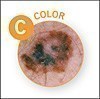
c-colorC – Color: The spot has varying colors from one area to the next, such as shades of tan, brown, or black, or with areas of white, red or blue.

d-diameterD – Diameter: Melanomas are usually greater than 6mm, or about the size of a pencil eraser when they are diagnosed, but they can be smaller.

e-evolvingE – Evolving: A mole or spot on your skin that looks different from the rest or is changing in size, shape, or color.

“Current estimates show one in five Americans will be diagnosed with skin cancer in their lifetime, so it’s important to be familiar with your skin, especially your moles,” said Dr. Rohrer. “Catching skin cancer early is key for successful treatment, so check your skin regularly and see a board-certified dermatologist if you spot anything suspicious.”


Dietary self-defense: 5 tips for avoiding popular food label traps

honest_labels_600

Food labels: More than meets the eye

Confused about calorie counts? Don’t know the difference between “low-fat” and “reduced fat” when it comes to your favorite foods?

You’re not alone.

In an online survey of more than 25,000 respondents in 56 countries, market research firm Nielsen found that 59 percent of consumers admitted they have difficulty deciphering nutritional labels on food packaging.

Another 78 percent also said they’re trying to lose weight through dietary changes – which begs the question: How can we be effective at doing that if we’re not really sure what we’re eating?

foodaisle_4

The fact is, most people don’t understand enough about what’s on food labels to make an informed choice about what’s best for them.

So next time you find yourself strolling the aisles, cut through the confusion by familiarizing yourself with the five most common tricks when it comes to food labeling:

1. Serving Size.

Although the numbers are based on a single serving, the package may contain several. Do the math and make sure to multiply accordingly – it adds up.

2. Calorie Count. 

When it comes to numbers, think quality over quantity. Some healthy foods are higher in calories (likewise, there are unhealthy foods that are low in calories but high in sodium or sugar), so it’s important to factor in nutrient density when making meal choices.

3. Ingredient List.

Say the first ingredient listed in chocolate cake is enriched bleached flour. Sounds healthy enough, right? Wrong. Even though ingredients are listed in order of descending amounts, some items are used in several forms (e.g. sugar) and listed under various names (i.e. corn syrup, fructose, juice concentrate), so be sure to add ’em up to determine true amounts.

4. Percentages.

Here’s where food makers deploy another trick of the trade. Take two percent milk, for example; we assume it’s 98 percent fat-free, but what it actually means is that two percent of the weight of the milk is fat (whole milk is four percent, FYI).

So while two percent is reduced, it’s not low – in fact, about 30 percent of the calories in a cup of two percent milk come from fat. The same applies to ground meats, so when in doubt, buy skim and go for the highest percentage of lean you can find.

5. Terminology.

Think “reduced” and “low” are the same thing? Think again. A food that says reduced simply means it contains at least 25 percent less of something.

Soy sauce, for example, may contain less sodium than the original version, but that doesn’t mean it’s “low” in sodium (in fact, one tablespoon packs about 700 milligrams, closing in on your daily cap of 1,500 to 2,300 milligrams). When in doubt, check labels and compare against dietary guidelines to determine whether or not the label is misleading.

Want a good laugh on the subject? Check out comedian Brian Regan‘s bit about food labels here.

5 tips for building a budget-friendly home gym

homegym

Photo credit: BusinessWeek

The only thing worse than not using the gym membership you signed up for way back in January?

Paying steep monthly fees for the rest of 2013 while it remains unused.

So before you shell out any more unnecessary cash, cut your losses and bring your workout closer to home (meaning, in it).

No matter how small a space or budget, it’s easier than you think to build an effective gym without breaking the bank. Here are five tips to becoming a healthier homebody – and for shrinking your waistline, not your wallet.

  1. Go weightless. These aren’t your father’s push-ups and sit-ups; today’s body weight exercises are high-performance maneuvers designed for building and maintaining muscle strength and endurance, along with interval training. Don’t believe me? Check out this video and tell me that’s not one intense workout!
  2. Think DIY. Function often trumps form when it comes to gym gear, so before you buy it, try making it on the cheap. Use hot water bottles under your feet in place of a pricey Bosu balance trainer, tap into your woodworking skills to build your own plyo boxes, and make medicine balls from old basketballs, a drill or awl and some sand, for example.
  3. Buy secondhand. Certainties in life: Death, taxes and the fact that there will always be people hawking their (barely used) exercise equipment on Craigslist. But don’t stop there; visit stores such as Play It Again Sports to snag a deal on pre-owned gear, scout your local gym for used equipment sales after yearly upgrades or ask for discounts on floor models at retailers.
  4. Press play. There’s an app for that – or a video game, a gadget, a DVD and more. Whether it’s tracking your calories burned throughout the day with Fitbit, turning your smartphone into you own personal trainer with RunKeeper or popping in a video from home fitness giant Beachbody, harness technology to keep you healthy and active throughout the day, not just in the confines of a gym.
  5. Embrace co-op. Finally, if your motivation comes in the form of group fitness, consider creating a co-op gym space with relatives, friends or neighbors. Split the cost of equipment among the group (either by machine or overall, depending on how your crew wants to divvy it up), and store everything at one home where the group can congregate for workouts.

Running by the numbers: What’s your treadmill pace?

For someone who is admittedly not much of a math person (apologies to my engineer father), I can get pretty nerdy about numbers when it comes to running.

Ask me to do much more than tally a restaurant tip, and I’ll most likely feign a hearing problem. But start a conversation about stats such as personal records and pacing, and I’m a bonafide mathlete!

I love playing with pacing as a way to motivate myself during workouts, especially on the treadmill: Can I run negative splits, doing each mile just a bit faster that the last? What’s my average pace, and will I be able to decrease it over time? How far can I run in 30 minutes? How quickly can I run a 5K?

But while trying to convert the treadmill’s miles-per-hour readout to my pace per mile can help kill some time, sometimes you just want to focus on the task at hand, so here’s a handy conversion chart. Check it out if you’re curious about how fast you’re going, both per mile and per hour.

TreadmillConversionChart

Note: Treadmills are notoriously inaccurate, especially if you don’t calibrate it with your personal information, so expect a small margin of error when it comes to exact speed, distance and amount of calories burned.