10 Things to Know Before Your First Trail Race

Source: Holimites.com

Source: Holimites.com

Whether you’re stuck in a running rut, sick of the same old routes or simply in between training cycles and not sure quite what to do with yourself, it may be time to trade in that treadmill, take a break from the roads and head for the hills. Trust me: There’s nothing quite like a trail run to challenge your body, calm your mind and recharge your spirit.

As someone who had been running, training (and getting injured) on roads for years before discovering the trails, I know that there’s a period of adjustment before truly feeling comfortable on new terrain. But it’s well worth the time and effort — not only will you reap the benefits of fresh air and fantastic scenery, but you’ll also satisfy a primal need to connect with nature.

So here’s what to know as you venture off the beaten path:

1. Get the right gear. At minimum, invest in a pair of trail shoes. Not only do they have a lower profile to reduce the chance of ankle rolls, but they’ve also got a rugged tread to offer better traction when wet conditions make for slick footing.

2. Figure out fueling. Depending on the distance, most races will have several aid stations. But since you burn an estimated 10 percent more calories on the trails versus the road, I usually play it safe and carry a little food with me, just in case.

3. Stay hydrated. Your performance is impaired when you’re dehydrated by as little as two percent of your body weight. Again, even if there are aid stations on the course, I wear a backpack for longer distances or carry a hand-held water bottle for races lasting less than and hour.

4. On your mark, get set… Forget about waiting for the gun to go off at trail races; these events are much more mellow than your usual road-based affairs. So around start time, be sure to listen up because somebody will usually provide a quick countdown or simply say “go.”

5. Mind your manners. Don’t worry about elbowing, cutting people off or jockeying for position; trail runners are typically a polite, orderly bunch. Just stay on the right side of the path where you can to allow faster runners to pass, particularly if you notice a line forming behind you.

6. It’s all about balance. When you’re running on more technical trails with roots and rocks, it helps to keep your arms a little wider for balance. And prep your body in advance by adding some strength and balance exercises into your weekly workout regimen to develop strength and stability.

7. Focus on form. If you’re used to zoning out on road runs, remember that trails will require you to be more conscious about where you’re stepping. Run relaxed, keep your hips and shoulders in alignment, and scan a few yards ahead of you on the trail to watch for potential obstacles.

8. Forget about time. Sure, you can have a general goal in mind, but don’t try to use your road racing pace as reference because it won’t translate. Between elevation changes and navigating over difficult terrain

9. Leave no trace. Unlike road races where volunteers are positioned at aid stations to sweep up cups, you’ll be running on quiet trails, so be prepared to leave with what you bring in. This is another reason you’ll want that hand-held water bottle or hydration pack to help you tote it out.

10. Remember, it’s only a hill… Get over it! Take short, quick steps when going up, and use your arms. There’s also no shame in walking up bigger inclines; many ultrarunners use this strategy and then run the downhills and flats. As long as you’re moving forward, you’re doing it correctly.

Most importantly, have fun and stay safe — but be prepared to get hooked!
Would you add anything to the list? 

How I’m Celebrating National Girlfriends Day

Girlfriends

No, really. It’s a thing!

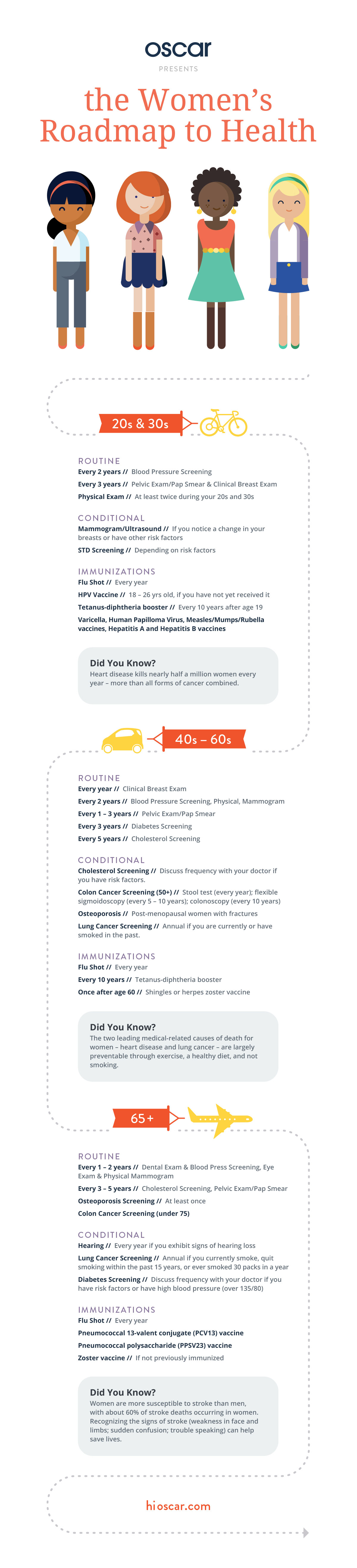
National Girlfriends Day is commemorated every year on August 1st, thanks to the CDC. Not only is the day meant to celebrate female friendships, but it’s also about empowering your girlfriends to take health into their own hands and live a healthier life.

But (sorry, ladies!) there will be no cliché spa days or shopping trips this year. Instead I’ve got a different challenge for each of you: Focus on women’s health and the importance of getting necessary medical check-ups. Take a moment to show your girlfriends how much they mean to you by helping them stay safe and live well.

And no, this is not a sponsored post; I just love the information below from Oscar Health Insurance Company and wanted to help get the word out about doing something simple, yet meaningful, for the ones you love. Because you never know when a conversation like this could save a life!

oscar_pngLRG

Will you celebrate National Girlfriends Day with your girlfriends?

My favorite life-changing kitchen hack

c595e8c0ebcb5003204b84ec9f2fcc7d

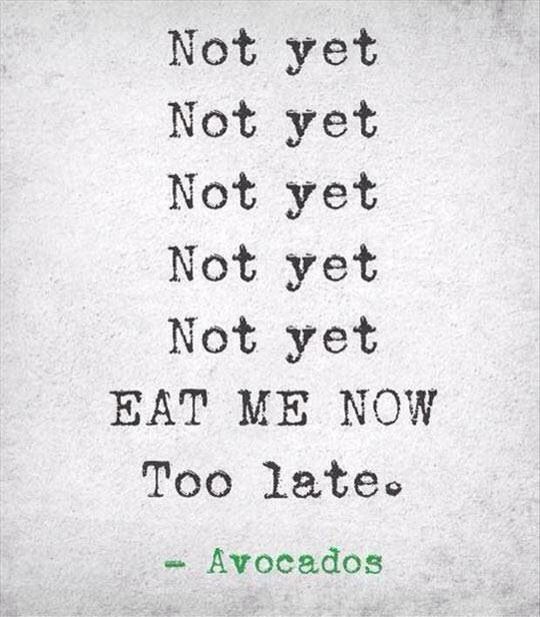
Ok, that title is a bit dramatic. But for someone who eats — on average — an avocado a day, it’s become imperative to find an easier way to prepare these slippery little suckers.

Previously, I’d cut them in half lengthwise and clumsily attempt to peel the skin away on each side only to have it disintegrate into hand-held guacamole. Or I’d cut them in half and scoop out the flesh, but that’s not really an option if you’re looking for pretty avocado slices or dices.

Enter this genius little kitchen hack. Total game changer!

First, use a sharp knife to carefully cut a ripe avocado in half, lengthwise. You’ll have to rotate it as you go because you can’t cut through the pit, and then gently twist to get the two halves apart.

IMG_7237

Next, remove the pit by striking it with the heel of the knife until the blade goes about 1/4 into it. Carefully twist the knife to remove the pit.

IMG_7238

After that, slice each half lengthwise again. Now you’ve got it cleanly quartered and are ready to strip the skin.

IMG_7239

No more fumbling around, though. If the avocado is ripe enough, the whole piece will come off in one fell swoop. Voilà!

IMG_7240

Now you’ve got some gorgeous avocado to use however you choose. My favorites are in salads to add good fats, on sandwiches in place of mayo and in good ol’ guacamole…with tortilla chips and salsa, of course.

IMG_7241

What’s your tried-and-true kitchen hack?

5 Steps to Becoming a Morning Workout Person

morning-workout-1024x682

It’s time to say “sayonara” to the snooze button.

Even though experts claim that the best time to exercise depends on your schedule and your body, the odds are still in favor of morning workouts. I mean, really, who wants to say no to happy hour?!

Here are five ways I finally motivated myself to kick off the covers and make the shift from night owl to early bird when it comes to working out:

1. Adjust your attitude.

For years the excuse that I “just wasn’t a morning person” kept me from fully committing to morning workouts. But then I realized that even the earliest of birds aren’t necessarily always keen to wake up and hit the gym first thing.

It may sound corny, but it works: fake it ’til ya make it! Don’t expect it to be easy, but do expect more consistency, progress and success with your training when you prioritize it — and, ultimately, yourself — as the first accomplishment of the day.

2. Shift your schedule.

Previously, my MO was to sleep in as late as possible. Workouts would (or wouldn’t) get slotted in on the way home from work, then by the time dinner was made, eaten and digested, it was late and I’d push the alarm back to catch a few extra z’s.

What finally made a difference for us was deciding, as a family, to eat earlier (usually around 6 or 7 p.m., as opposed to 8 or 9 p.m.). This had a reverse domino effect on our day; evenings were longer, we got to bed at a decent time, and getting up an hour earlier became doable.

Monday-morning-workouts

3. Remove any roadblocks. 

Getting up from the warm cocoon of my bed when it’s dark and cold out is nearly impossible. Solution? I throw open the shade and adjust our thermostat to come on about a half hour before we wake up so it’s a more inviting atmosphere.

I also make sure to work through any other potential sticking points — whether it’s picking an outfit, getting my gear together or deciding which route I’ll take, etc. — ahead of time. Tee up the essentials, and the question isn’t whether or not you’ll work out, but when.

4. Use positive reinforcement. 

I’ve said it before, and I’ll say it again: I am not above bribery when it comes to getting myself to morning workouts. And my currency of choice? Coffee (along with the occasional pastry or biscuit — just #keepingitreal; you’ve gotta find what works for you).

If it’s a long run, sure, I’ll have a cup beforehand to get things moving. But if it’s a shorter jog or I’m cross training or strength training, never underestimate the power of that caffeine-fueled carrot: a lovely cup o’ joe.

5. Reap the benefits. 

Lest you think making the switch to morning workouts is a chore (case in point: all those “change this” or “don’t do that” ideas above), it’s important to recognize that there’s a pretty awesome payoff: Being able to reclaim my evenings was nothing short of life-changing.

Because, let’s face it, when you’ve got to choose between a workout vs. a last-minute girls’ night, networking event, work dinner or even date night, we all know the odds aren’t in favor of going to the gym. Get it out of the way first thing and feel empowered that you ran your day (literally) instead of it running you.

Are you down with morning workouts? Got any more tips to share? 

My 7 Favorite Strategies for Slowing Down

Source: Huffington Post

Source: Huffington Post

Beware the barrenness of a busy life. ~Socrates

Now that I’m taking a short breather from training and racing, you’d think I’d have all this extra downtime with which to play, right?

Wrong. Somehow I quickly filled up all those extra hours — and then some. 

Granted, launching your own business isn’t exactly conducive to oodles of work/life balance, but being “busy” is something I’ve been pondering a lot lately.

Whether it’s with respect to work, relationships or just life, in general, I grow increasingly anxious as my calendar books out weeks in advance. Days fly by, to-do’s add up, appointments are made…and somewhere lost in that shuffle I find myself hoping that time will stop flying.

So I’ve decided that it’s time to take a stand.

Let’s rebel against our hectic schedules, reassess our priorities and take some time to actually enjoy the life we’re living instead of constantly looking ahead for the one we think we should have.

That’s not to say we should delete our social media accounts, pack up, head for the hills and live entirely off the grid; it’s more about eliminating the automatic ‘yes’ from our vocabulary and being mindful about how, where — and with whom — we choose to spend our time. It’s a precious resource, after all.

Wanna join me? I wrote previously about why I’m slowing down, but I wanted to talk a bit about how with some of my favorite strategies. Here are seven of ’em:

1. Do less. 

What sets successful people apart is not that they do a lot, but that they don’t do a lot. I’m making a conscious effort to try to filter out extraneous “stuff,” and deliberately choosing to focus instead on just a few important tasks to make meaningful strides instead of feeling like I’m running in circles.

2. Just breathe. 

Life coach, lifestyle guru and friend Ashley Paquin gifted me with an invaluable tool for bringing myself back into the moment. Her “5-2-5” breathing technique — breathe in for five seconds, hold for two, breathe out for five, hold for two, and repeat — works wonders by quieting the nervous system and taking the body out of fight-or-flight mode.

3. Be mindful. 

I know, I know. It’s become a bit of a buzzword. But paying attention to my thoughts and sensations — and accepting them, without judgment — has helped me tap into a whole new level of awareness that’s been incredibly helpful and empowering.

4. Limit multitasking. 

Sometimes this feels more like an addiction — especially when I’m toggling back and forth between 17 open tabs while on a conference call and absolutely getting nothing accomplished. Going cold-turkey is tough, though, so I’m easing into the art of “single-tasking.”

5. Be present. 

Slowing down doesn’t help much if you’re not mindful of what you’re doing at the moment. Again, I put Ashley’s sage advice into play: When I find myself thinking about something I need to do, or something that’s already happened, or something that might happen…I gently tug my mind back to the present moment, like a playful puppy on a leash.

6. Disconnect. 

Being constantly tethered to computers and phones where you’re either distracted by or at the mercy of others is hardly conducive to being able to focus. Whether it’s weeknight phone-free dinners or weekend traipsing out of cell service range, Ben and I try to unplug every so often.

7. Enjoy nature. 

Warm sun, serene water, salty sea breezes and the damp musk of the forest are all good for the soul. I try to exercise outdoors as much as I can, whether it’s running the trails, hiking the mountains, wading in the river or simply rolling around in the grass with our four-legged family members.

What are your favorite ways to live life in the slow lane? 

Round Out Your Training with an Obstacle-Based Workout

Brent Doscher's Best Action Pics

Source: Brent Doscher

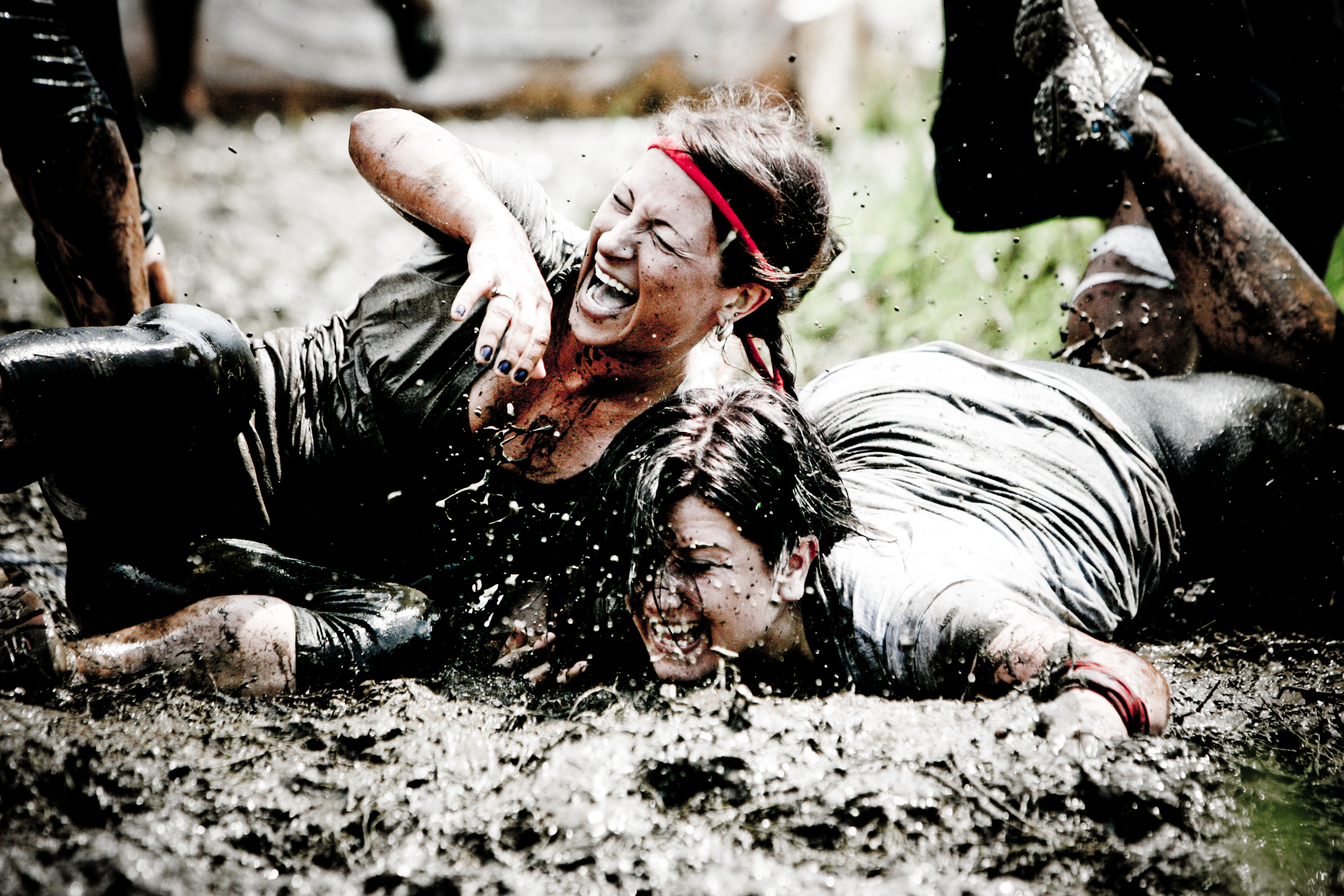
Whether you’re planning on tackling a Tough Mudder or simply thinking about switching up your workouts this summer, obstacle-course-style training can offer a whole new way to hone your strength, power, balance, coordination and strategy.

Because the physicality required to navigate obstacle courses mimics functional, whole-body movements of our ancestors and presents complex challenges, the focus shifts from being the best athlete to becoming the most well-rounded one.

The upside of all this work? Workouts are full of fun and variety, both your mind and body become more adaptable and, as a result, you get into kick-ass shape.

Of course, if you have a particular event in mind, you’ll want to choose a race-specific training program that mimics the actual physical demands of the race. But if you’re looking to just dip your toes into the obstacle course waters, here’s an ideal workout to help you get going.

Start with one session per week with the exercises below, and gradually work your way up to two sessions. Adjust the distance of the runs based on your conditioning level and the length of your race.

Obstacle Course Training Guide
Source: Fix.com

Need more of a challenge? Feel free to swap some of the exercises below into the strength-training portion — or change up your exercises during each of the different sets, which will create an even more well-rounded workout.

  • Walking lunges
  • Front and/or side planks
  • Squat jumps (or box jumps)
  • Mountain climbers
  • Push presses
  • Body-weight rows
  • Weighted carries
  • Crawling (hands/knees, hands/feet, or army)

If that’s still too easy, consider implementing some different types of workouts into your weekly training regimen to help develop the skills needed to excel at obstacle-based events. This could include, but certainly isn’t limited to:

  • Trail running: To simulate the muddy, rocky, hilly terrain of an obstacle race
  • Hill repeats: To build endurance and strength
  • Cross country races: To test your race-day skills on both trails and hills
  • Fartleks: To get used to changing gears and running at different speeds
  • Parkour: To practice balance and agility for challenging movements

You don’t have to be a super-human athlete to complete, compete or even train for these types of events; all that’s required is an open mind, a positive attitude and the willingness to identify and work on your potential areas of weakness.

Now, go forth and dominate!

What’s your take on obstacle races: yay or nay?  

Brace Yourself: Title Nine Fit Fest (+ giveaway!)

IMG_6668

If you read my recent piece on the nine things you just shouldn’t wear when working out, you know that one of my pet peeves is unsupportive sports bras. Because the last thing us ladies want to worry about during a workout is painful, sag-inducing bouncing, right?

Ain’t nobody got time for that. 

But who actually enjoys shopping for sports bras?! Most of us are unsure about our size (all the measurements!) and are even more clueless when it comes to how it should fit (strap ’em down or hike ’em up?). And don’t even get me started on the process of trying them on; it takes a Cirque-du-Soleil level of contortionism to wrestle into some of the styles out there.

If you’re anything like me, you emerge a hot, sweaty mess from the dressing room with nothing more than a deflated ego to show for all that effort. So you make an educated guess, hope for the best, shell out some cash and then get the hell out of there with something — anything.

Sound familiar? 

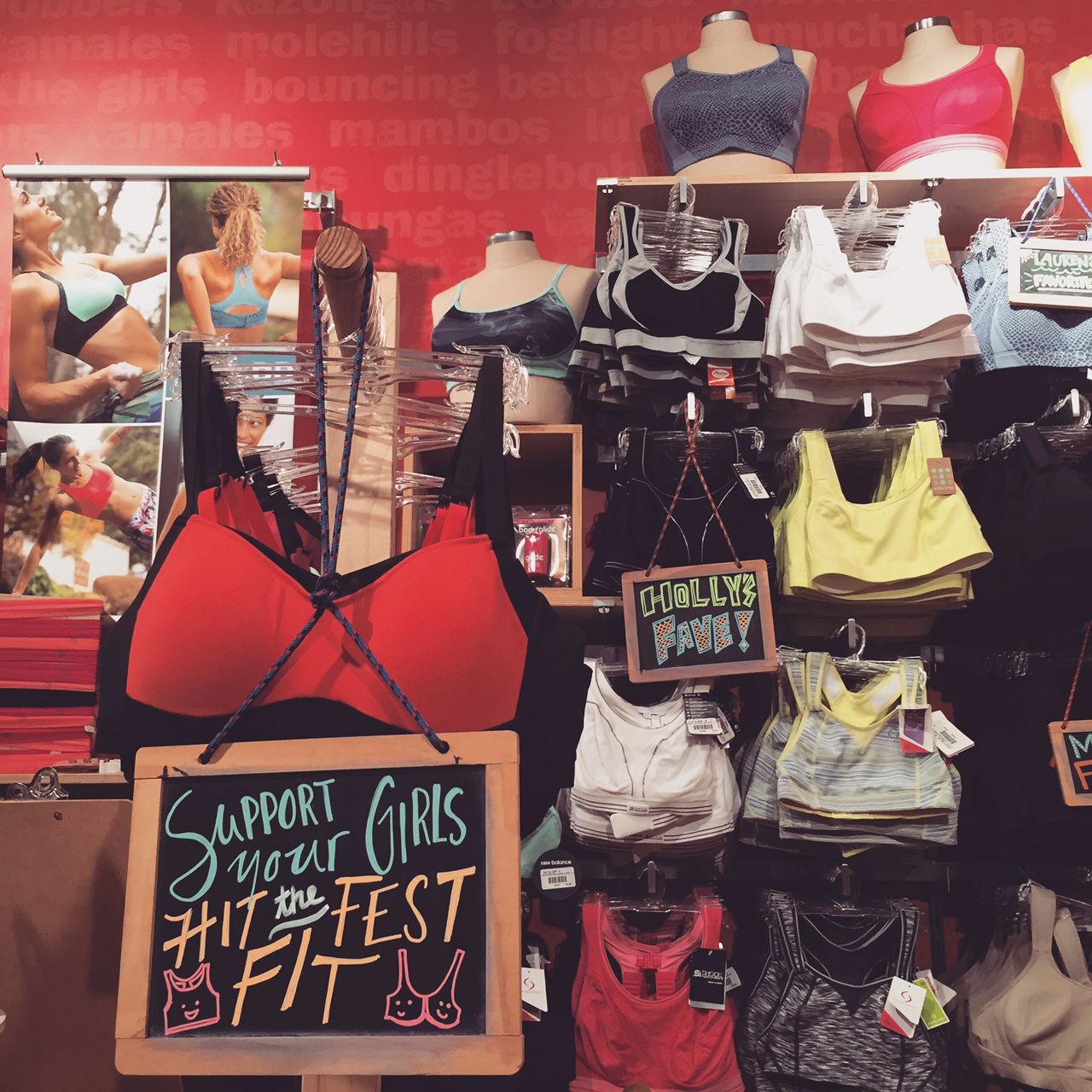
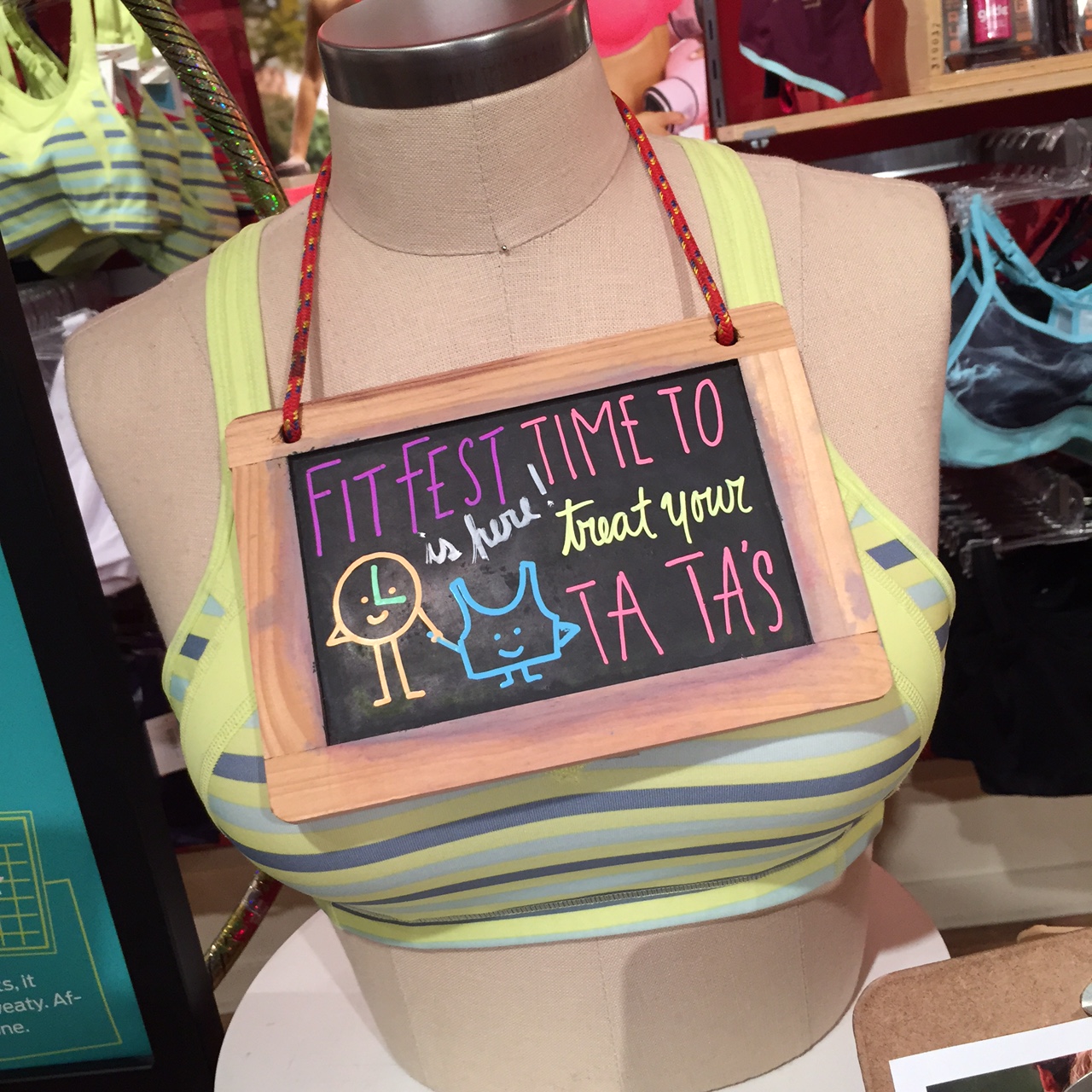
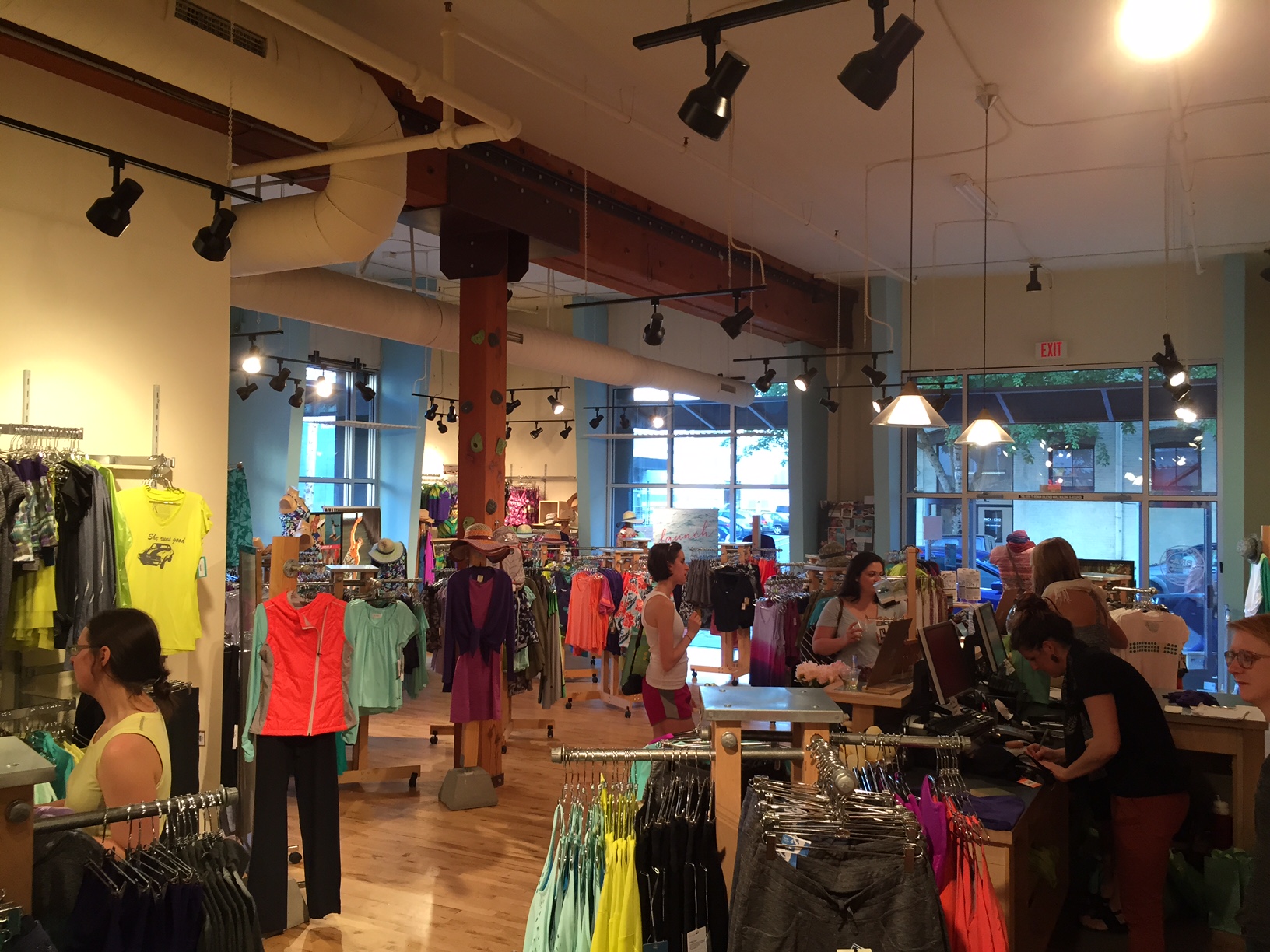
Well, it turns out that bra experts at Title Nine feel our pain — literally — and are making it easier (and more fun) to find the correct sports bra by hosting local “FitFest” events to help every athlete find her perfect fit and get on the road to a more comfortable workout.

IMG_6664

As we all know (or should know), the most important foundation for any workout is a bra designed specifically for each of our unique body types, sizes and activities. Title Nine’s FitFest aims to help ladies address all those pain points — and more — by featuring:

  • Personalized bra fitting advice from a “bravangelist” expert
  • An expanded assortment of bras for every size and shape
  • Bras for different activities: sports, work-to-workout, everyday and date night
  • A “Bounce-ath-a-lon” for people to put bras to the test, with stations like hula hooping, jump roping, running and burpees
  • Snacks and drinks (because, duh, pretty much anything is more fun with a glass of vino in hand)

So when the invitation for Portland’s FitFest landed in my inbox, I knew we were in store for an interesting evening of bonding over…boobs! I’ve never been professionally fit before, and with all the different workouts I do, I figured my Bravengelist would have her work cut out for her.

IMG_6670

Jamie, Tasha, Liz and I met up for happy hour, and then we made our way over to the event to check things out. After mingling with some of Portland’s fittest ladies (bloggers and industry folks), the Bravangelists met with us one-by-one to get down to business.

First, they took personalized measurements and asked a few questions about our preferences, lifestyle and favorite activities. Next, they combed the racks for styles that would be a good match.

My Bravangelist, Jamie, pulled several bras that would be good for high-impact workouts, as well as a wide range of cross-training activities. Basically, I told her I needed the girls to be able to take whatever I throw at ’em, so she went straight for the heavy artillery styles with all kinds of snaps, straps and adjustable pieces.

IMG_6674

As I tried on each style, Jamie came in to check the fit and how well it performed with a variety of bounce tests. Mostly this consisted of me jumping up and down to test the support of each bra.

Normally I grab a cute one, guesstimate my size and try it on to make sure it fits ok, but after going through the FitFest, I see now why it’s so important to try a range of styles at once. Not only does it give you more variety from which to choose, but when you try them on in succession, you also have a much better idea how they perform in comparison to one another.

Also — I’m not a fan of mirror selfies…but in the interest of #keepingitreal,  I’m including one shot of the bra I ended up choosing.

IMG_6678

I picked Moving Comfort’s She Be Fierce Bra in Celery Stripe ($44), which delivers all the features us less-endowed ladies demand without feeling overbuilt, overpadded and overdone. It’s easy on/off, there’s separate encapsulation inside to avoid the dreaded “uniboob,” plus the material’s supposed to dry crazy-fast after the sweatiest of workouts.

And I just love the name, which happens to be based on Shakespeare’s line, “And though she be but little, she is fierce.” Whether he was talking about this bra or the wearers, I’d like to think he was right.

But the best part of the evening? 

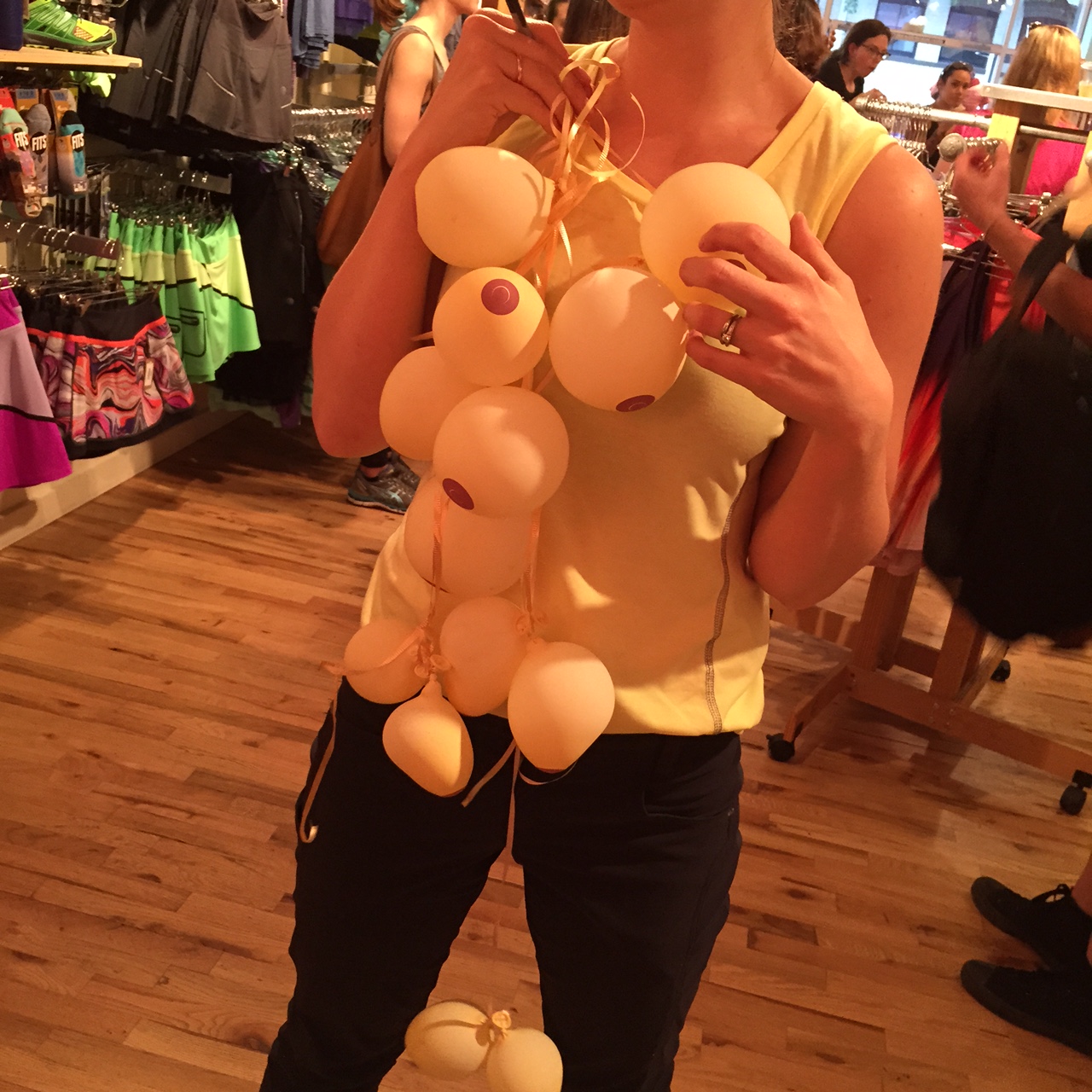
Well, if boobs are funny, then boob balloons are funnier. And apparently we’re all 30-something-going-on-13 because we really got a kick out of these things.

IMG_6665

Interested in attending a FitFest in a city near you? Visit TitleNine.com for a full list of participating locations and details.

Or, better yet, CLICK HERE TO ENTER my giveaway for a FREE PERSONALIZED FITTING (either in-store or by-phone, depending on location) and ONE SPORTS BRA! 

Note: Winners within driving distance of a Title Nine store will be asked to redeem their prize at the closest/preferred retail location.

Good luck, and remember to give your girls some support!

9 Things You Just Shouldn’t Wear When Working Out

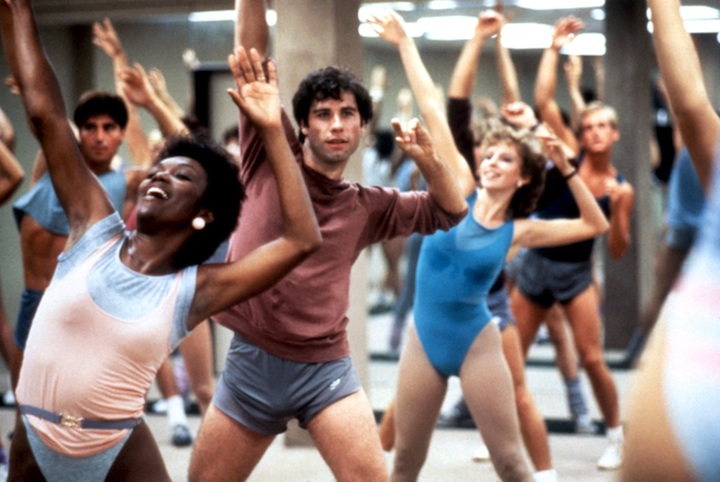
PERFECT, John Travolta, 1985. ©Columbia Pictures/courtesy Everett Collection

PERFECT, John Travolta, 1985. ©Columbia Pictures/courtesy Everett Collection

I was out walking my dogs the other day when a woman jogged past, and I couldn’t help but notice her chest, which happened to be bouncing out of control. Three thoughts immediately ran through my head:

Way to go! I love seeing people putting in work and breaking a sweat. 

Dear God, that looks painful. Does she know what’s happening to those poor ligaments?! 

Huh, having something there to actually bounce must be nice, though…

I’ll spare you the details of the rest of my internal monologue, but the point is that it reminded me of the importance of wearing the right gear — not only to maximize your workouts, but also to minimize any potential nasty side effects, such as said bouncing, chafing, snagging, riding up, falling down, constricting, tripping or worse (injury).

Plus, let’s face it — when you look good, you feel good. And when you feel good, you can give it all you’ve got, whether you’re hitting the gym, running the trails or competing at an event.

Jazzexercise_Main

Here are my nine no-no’s when it comes to suiting up for that next sweat session:

1. Unsupportive Sports Bras (or Shorts)

Ladies, did you know that you can do permanent damage to connective tissue over time if you neglect to give your breasts the correct support? And, gentlemen, you’re not immune to the jostling of certain body parts either. So, regardless of gender, do yourself a favor and find something that provides plenty of reinforcement for high-impact activities.

2. 100 Percent Cotton Clothing

It might be the fabric of our lives, but it’s the foe of comfortable workouts. Cotton is wonderfully absorbent, but that’s also it’s downfall; damp, slow-drying shirts tend to bring on chills and irritate skin. Instead, opt for synthetics and moisture-wicking fabrics, which are quick-drying, lightweight and designed for efficient evaporation.

3. Baggy Layers

Tempted to tent that not-quite-beach-ready body in loose-fitting clothing? Little do you know, you’re creating a potential safety hazard. Not only does extra material up your chances of getting snagged on equipment, but it also prevents you from checking form and alignment. Exchange oversized apparel for more form-fitting gear, which doubles as extra incentive to get to the gym!

4. Overly-Constrictive Pieces

Too loose isn’t good, but too tight isn’t any better. Any outfit you have to pour yourself into will only hamper movement, threaten circulation and probably make you feel pretty self-conscious. Instead, find a happy medium with fabrics and cuts that skim your figure and allow for a full range of motion.

5. Past-Their-Prime Shoes 

You maybe tempted to squeeze a few more miles into fraying footwear, but it’s better to ditch your kicks before you put yourself at risk for injury. Worn-out treads and flattened arch support won’t serve you well in the long run — and could actually do some damage during long runs. Replace your sneakers every 500 miles or so, and consider a gait analysis to find the best model for you.

6. Too Much Bling

I may sound old-school, and it’s probably because this was drilled into me early in my high school track & field years, but the only metal objects you should be swinging around at the gym are kettlebells. This will allow you to concentrate on the task at hand, rather than keeping your necklace or earrings from getting caught or damaged.

Rings, especially, should be kept at home or stowed away. You only have to hear one horror story about an engagement bauble getting stolen after being left behind in a gym shower to set you straight on this one. True story.

7. Eau de Poo Poo

An inside joke in my family, this is the nickname we give to stinky perfumes. Whether you’re squeezed into the close quarters of spin class, taking a dip in your gym’s pool or lined up mat-to-mat in yoga, please forgo strong scents. Body heat and sweat only intensify the issue, and the last thing you want is to ruin your classmate’s workout by giving them a stomach-turning headache.

8. Untested Apparel 

You snag a deal on some gear, and then later realize why it was deeply discounted — because it sucks. Yep, been there, done that. It was mid-bootcamp, in fact, when a friend gave me a heads up on my too-thin tights (oops). So take it from me: Use the ‘try before you buy’ rule by jumping around and bending over in the dressing room in order to avoid anything see-through, low-cut or otherwise offensive.

9. Almost Anything Gray

Unless you’re prepared to own some pretty awkwardly-placed post-workout sweat stains, avoid the color gray for super-intense exercise. I learned this the hard way while marathon training in one of my favorite styles of (gray) capris last fall. I still love ’em, but now I just use that pair for less sweaty endeavors, such as restorative yoga, hiking and Pilates classes.

Are there any off-limits outfits you’d add to the list? 

5 Surprising Myths About Running Socks

Source: Runner's World

Source: Runner’s World

Too often we’re seduced by the lower price of a product that invariably costs more over the long haul. – Bill Howard

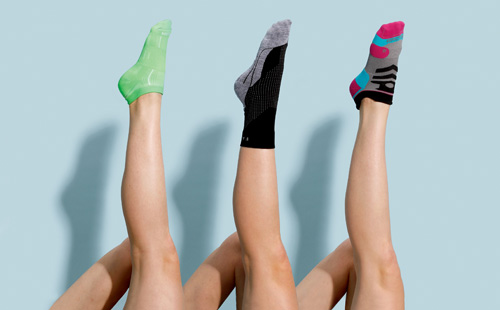
What is the single most important piece of equipment for runners? If you said shoes, you’re close – and like many of your fellow pavement pounders, you’ve probably invested a good deal of time and money in finding the perfect pair.

But as the only source of protection between your feet and a potentially run-crippling blister, socks can mean the difference between a triumphant or a terrible outing, even in the highest-quality footwear.

I wrote a while back about some of the best socks for runners, but with a mind-boggling number of options available, how do you pick the pair that’s best for you?

Gus Blythe, founder of Drymax Sport Socks, was kind enough to weigh in on a few of the common myths about sport socks; he’s made it a mission to keep athletes’ feet happy and give them one less thing to worry about when training and racing.

So…let’s talk socks, people!

Myth #1: What you see is what you get

Contrary to what most of us probably think, socks are not to be used exclusively as decorative ornaments or as a way of helping to compensate for the imperfections inside of shoes; rather, they are standalone pieces of equipment and should be evaluated as such.

Simply put, pretty socks may be easy on the eyes but could very well be hard on the feet. It’s important to remember that feet are blind when shopping, says Blythe. After all, how much will you care about the color or logo on your socks mid-race?

Myth #2: Soft in your hands means good to your feet

When I’m sock shopping “soft” is one of the top criteria on my list – but what feels heavenly at first touch doesn’t necessarily indicate high quality, so dive deeper and look at what the sock is made of to be sure you’re not being sold smoke and mirrors.

“Many manufacturers use a fabric softener so their socks feel soft on the shelf to your hands,” says Blythe. These socks will work better after they are washed once, but may feel different afterwards, as opposed to brands such as Drymax, which Blythe says are softener-free and race-ready out of the package.

Myth #3: One style fits all

Unfortunately, just as there is no hard and fast formula for choosing the ideal running shoe (I’ve shifted loyalty among several different brands since taking up the sport nearly two decades ago), choosing a type of sock tends to be part art, part science — so prepare to experiment a bit in order to find a good fit.

For example, if you wear orthotics or insoles, you’ll probably need to look for a thinner sock with more protection in potential trouble spots, whereas a runner with narrow feet might want a bulkier sock to keep feet from shifting in shoes.

But regardless of your situation, remember that every foot is different, and what works for one person may not work for the next, so take into account these personal preferences when shopping.

Myth #4: Price is an indicator of quality

When buying socks, it’s better to think in terms of value instead of price. And even though we’ve been trained as shoppers to equate high price with high quality, it’s more important to consider the fabric and features versus getting caught up in the marketing magic.

Fewer bells and whistles might work for a quick workout or light cross-training, but do your homework if you’re looking for socks that will last for the long haul. Alas, there are no shortcuts, and what you skimp on at the register your feet could end up paying for in the end.

“If you think you can find the best sock by looking at price or by the best-known brand, you’re wrong,” says Blythe. “It’s foolish to pay too much for a sock, but it’s worse to pay too little.”

Myth #5: You’re not a real athlete if you don’t get blisters

In the past, we’d applaud runners who were able to forge on despite having horrible blisters. But thanks today’s new sock fabrics and technologies, athletes can continue to push their limits more comfortably — racing smarter, not just harder.

That means taking proper precautions to prevent blisters in the first place, which requires feet to be kept as dry as possible. And while many socks provide adequate protection for a few miles, the addition of sweat and repetitive movements over many miles, plus shifting up and down hills, makes blister prevention an increasingly difficult task for non-specialized socks, says Blythe.

“Choose your socks wisely,” he cautions. “Your feet depend on it.”

How do you keep your feet comfy for the long haul (and those long runs)?

The ‘Lazy’ Gal’s (or Guy’s) Guide To Getting Fit

morningworkouts

An object at rest stays at rest and an object in motion stays in motion with the same speed and in the same direction unless acted upon by an unbalanced force. -Newton’s first law of motion

My girlfriends and I were discussing workout habits while on a group run the other morning, and I joked about being one of the “laziest active people” around. Yes, I work out — probably more than the average person — but I’ve also learned how to make it easy on myself.

Easy? Well, there’s a bit of effort required, but the concept is simple: Make the path of least resistance the one that leads to fitness.

Huh? Ok, allow me to explain.

You see, years ago my workout routine consisted of dragging myself to the gym after work and halfheartedly hitting the elliptical machine for a half hour (while reading a magazine) before calling it a day. I was too tired to cook well, bedtime would get pushed back, I’d sleep in to try to catch up, etc.

Repeat again and again with the exception of a few races. I’d schedule and train for them, but fall off the wagon in between.

4687879_orig

It wasn’t until my fall marathon in 2013 that I finally decided to stop the vicious cycle once and for all. I was sick of training hard into injury, then spending months healing and recovering…only to find myself back at square one.

You can only play Jenga with yourself so many times before the excitement of seeing how high you can stack the pile before everything comes crashing down loses its appeal.

Instead, I vowed to take a new approach, one that would allow me to once and for all create a solid foundation. Step one was deciding to make fitness a lifestyle — something that I live and breathe every day — instead of an option. Step two was to figuring out a game plan. And step three was putting it in action and conservatively building on successes.

So here’s how I started offsetting my sedentary habits for good:

1. Stop thinking, start doing.

Get up! Quite simply, sit less and move more – and once you start, don’t stop. It began with a nightly walk around the block with my dogs, then I started building up my mileage and adding strength training between races to push my fitness threshold.

Weekend runs were no longer just a means to an end (i.e. the same five-mile loop to our farmer’s market for fresh kettle corn); they became part of a bigger plan of slowly building a larger base so I wouldn’t have to start from zero each training cycle.

2. Watch your mouth.

As in, what you put in it. You are what you eat, and it’ll translate into your training, so make it count. Avoid processed foods, practice portion control and aim to incorporate more fruits, vegetables and whole grains.

Once I started seeing food as fuel and feeling the impact of my choices — both good and bad — I wanted to give my body what it needed to get stronger and stay healthy. Rather than viewing it as extra work, I got excited when I saw how it was so closely connected to performance.

3. Ask for help. 

It can be intimidating starting a new routine, so seek out people on whom you can rely for advice, motivation and inspiration. Join a local running club or swim team for coaching, or enlist the help of friends who are seasoned athletes and can explain the finer points of various training concepts.

You’ve got to know yourself and what works for you; I get bored easily, so I knew I’d need to mix things up. I started adding cross-training in the form of different classes, which not only challenged my mind, but also made me a stronger runner. My November Project tribe was also immensely helpful when it came to staying motivated; there was always someone doing something — or someone who was game for anything.

4. DIY at home.

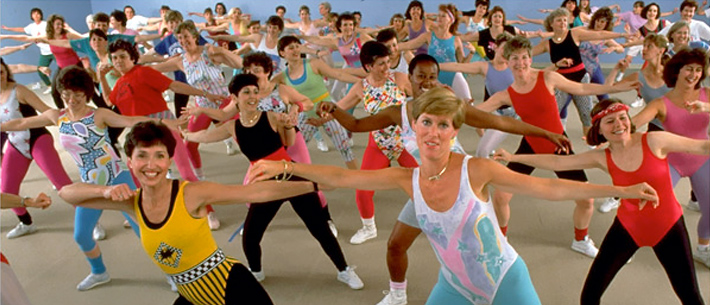
You can thank Jane Fonda for this one. After inspiring a home video fitness craze among millions of baby boomers, she paved the way for P90X, Insanity and a host of other DVD-based workout programs in our generation.

Let’s face it, we all get our days when we’d rather hit the couch than the treadmill. So I made a deal with myself that if I didn’t get to the gym for a workout, I’d at least move around at home with one of my workout DVDs (I happen to love Beachbody’s, and they don’t pay me to say that).

5. Sign up for a race.

A mere two months of three 20-30 minute sessions per week stand between you and the finish line, so it’s totally doable. Check out my couch-to-five-miler plan, which takes you step-by-step through the process if you’ve got your eye on an event this season but don’t know where to start.

When all else fails, having a deadline can be very motivating. And once you have that race date in the calendar, the key is to back out from that day and create a training plan (the actual length will depend on your current level of fitness and the race duration).

I put my marathon plans front and center on the fridge and even make check boxes so I can cross off runs as I complete them. Take it one step at a time, one workout at a time and before you know it, you’ll be living — and actually looking forward to — a more active lifestyle.

How do you motivate yourself out of a workout slump?