Avoid the Bunny-induced binge: 8 ideas for a healthier Easter

Source: Lynda Giddens, Flickr

Source: Lynda Giddens, Flickr

Spring has sprung, but it’s not just the longer days and slowly-warming temperatures that signal the change in seasons – it’s the aisles of Easter candy that have hopped into area stores.

While children have been waiting with bated breath for the Bunny to bring baskets filled with goodies, it’s a holiday that can fill adults with dread when they are in the midst of trying to lose (or maintain) weight.

But don’t despair – there’s still hope for taking part in all the fun without abandoning your current diet plan. Below are a few easy tips for those who are on the hunt for a healthier Easter this year:

1. Focus on non-food traditions

For those who practice the holiday, it’s about more than candy-filled Easter baskets, so create lasting memories with some new family customs that highlight the true meaning of the season.

2. Plan for holiday splurges

Deprivation is never good because you’ll inevitably set yourself up for failure later; rather, make smart choices earlier in the day if you know that you’ll be eating heavier at afternoon parties.

3. Practice portion control

It’s not only about what you eat, but how much; give bags of pre-portioned candy or shop the bulk food section of your local store to purchase only what you need for baskets.

4. Hands off the goods

Resist the temptation to crack open that bag of jelly beans before breakfast; stores stock candy early expressly for this purpose, counting on the fact that you’ll polish it off and be back for round tw0.

5. Don’t go into meals unprepared

Never sit down with an empty stomach because you are almost always guaranteed to overeat; instead, drink plenty of water and snack sensibly between meals to prevent spikes and dips in blood sugar levels (at just 76 calories, a hard-boiled egg is a great option).

6. Add some activity to your day

Easter egg hunts, parades or even strolling to church or around your neighborhood to look at decorations are also other healthy options for getting fresh air and helping to burn some calorie.

7. Rethink the Easter basket

Non-traditional gifts such as bubbles, books, Dollar Store items, crayons, gift cards, sidewalk chalk, clothing and more are unexpected and can be even more exciting for recipients.

8. Consider healthy meal substitutions

Tweak traditional recipes to lower their calorie, fat and sugar content; try substituting applesauce for oil, skim milk for cream, egg whites for eggs, and simply reduce the amount of sugar in baked goods without sacrificing sweetness.

Do you have any favorite healthy Easter tips to share?

A blast from the past at the LUNA Chix Summit

photo 3 (18)

Back in February, I posted an interview with my high-school-teammate-turned-pro-triathlete Terra Castro who, after a successful 16-year career, has since retired and returned to her running roots, now competing as a LUNA Sponsored Athlete and coaching full-time.

She’s always been such a powerful influence with a positive message, that I have no doubt her business, “Be Bold Crew,” which specializes in coaching teenagers using mentorship and accountability, will make a meaningful impact.

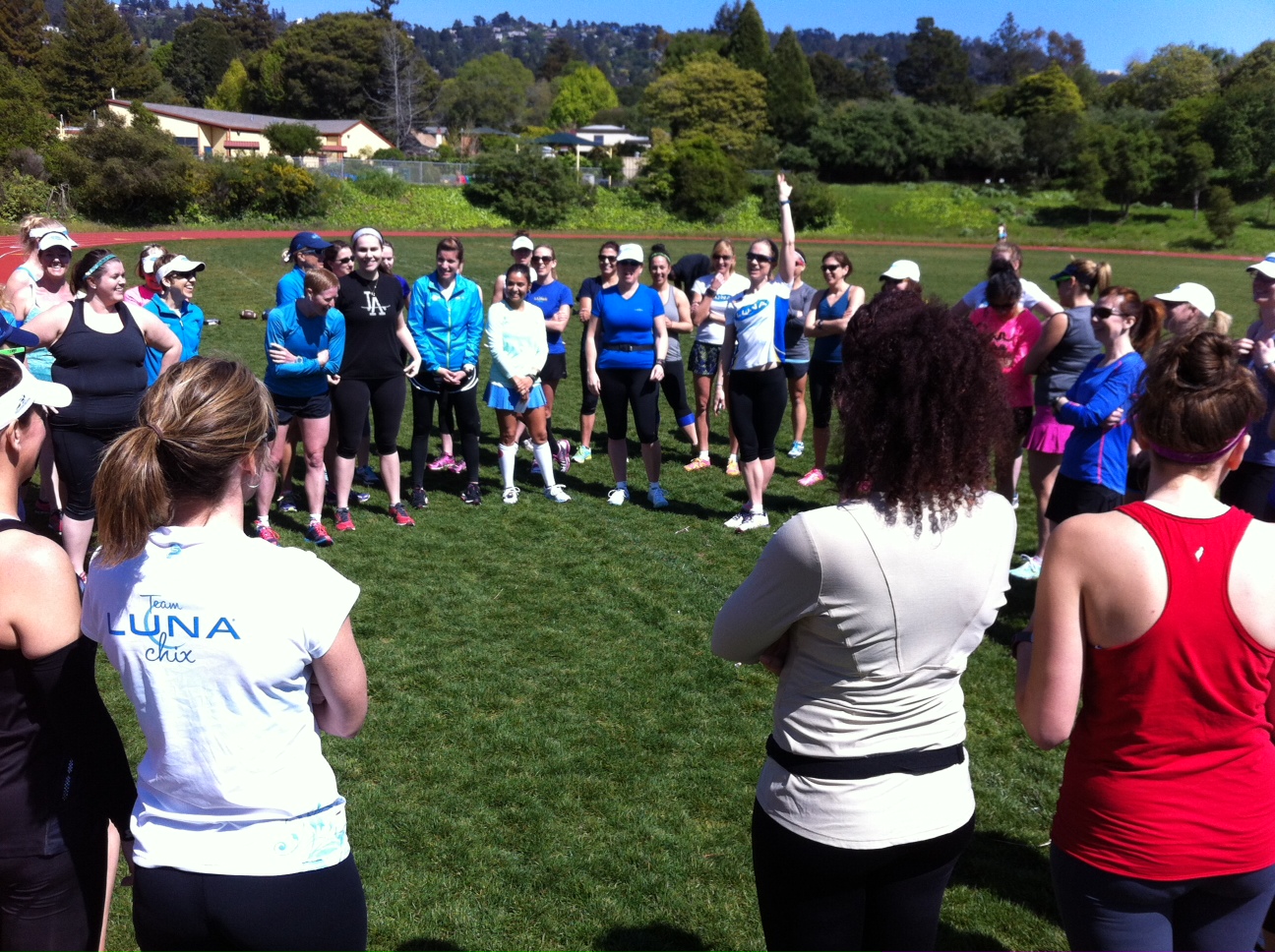
But between learning to balance coaching with training for her first open marathon in fall 2014, Castro also takes time to work with Team LUNA Chix, whose mission is to bring women together who are interested in learning new sports, staying active and inspiring others to do the same.

She invited me to this weekend’s summit in Berkeley, Calif. to see firsthand how the local teams train, compete and support each other, while fundraising for LUNA’s non-profit partner, the Breast Cancer Fund.

photo 2 (21)

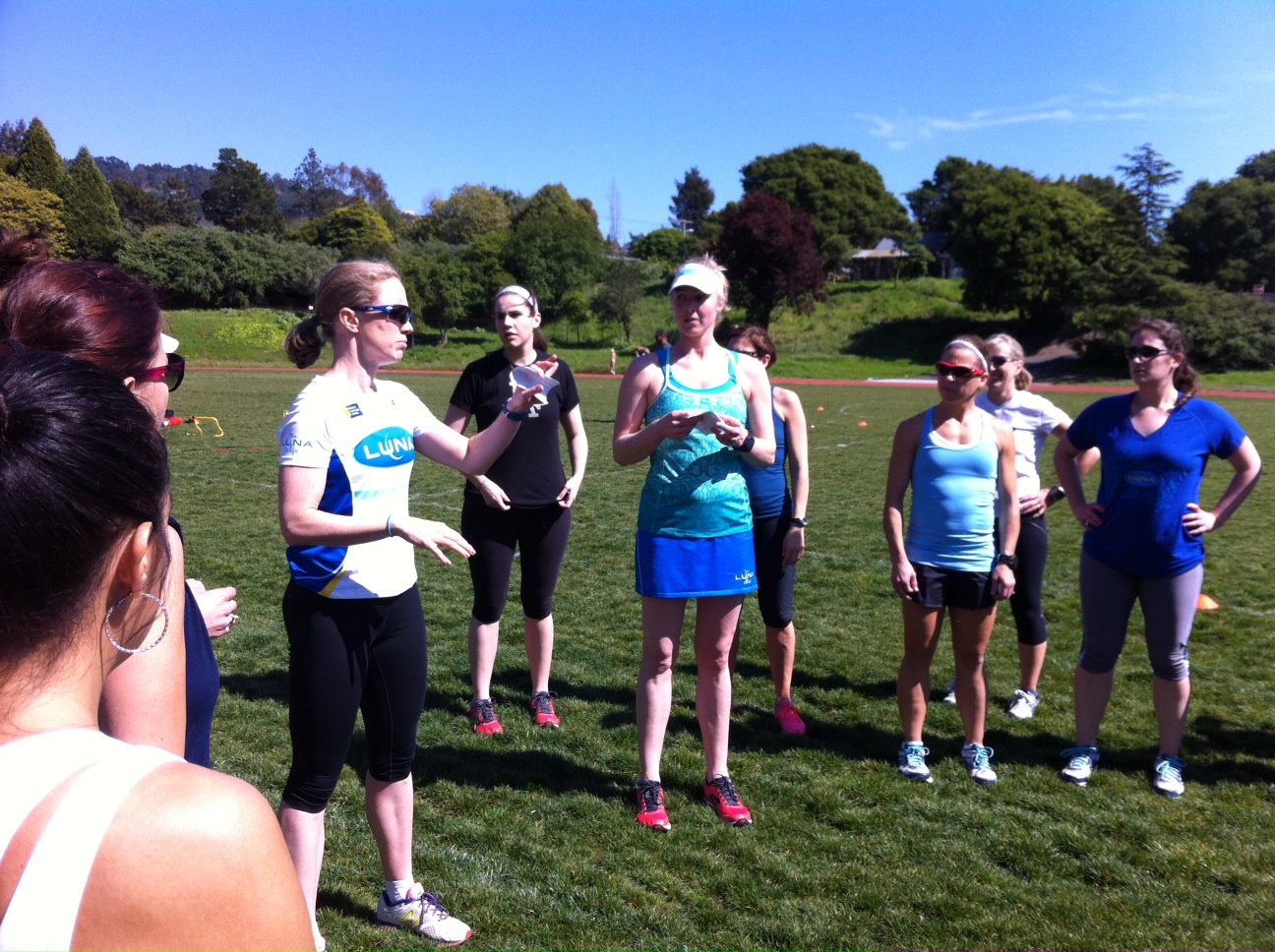
I stopped by for yesterday afternoon’s sessions — first up on agenda was a run clinic in which Castro coached captains on how to lead track workouts for their respective teams. We divided into groups and broke the session into segments with each group in charge of a specific aspect of the workout.

photo 3 (17)

Admittedly, I felt a little nervous walking in as a non-official team member, but that didn’t last for long; the ladies welcomed me with big smiles, kind words and open arms.

I even got some great swim pointers from Julie (from the Boston triathlon team) as we warmed up on the track, and Melanie (from the Austin run team) and I pushed each other during the 800 and 400 repeats. Thanks, guys!

photo 4 (7)

After a quick cool-down and recap, we made our way back to the shuttle — but not before exiting the track through an “encouragement tunnel” of cheers.

Castro summed up the team’s vibe perfectly: “Remember no matter what level of athlete you are to encourage and uplift others. True victory and joy can be found there.”

photo 1 (20)

Next up were breakout sessions to work on sport-specific skills, and I chose bike maintenance. Yep, if you remember my flat tire change adventure on my first long ride, you know that this is an area in which I could definitely pick up a few pointers.

Enter Dusty LaBarr, bike mechanic for the Luna Pro Team, who took us through everything from bike cleaning to tire changing , as well as safety precautions and other helpful pointers. While I may not look forward to my next flat, at least I’ll be much better prepared for it now!

photo 2 (22)

The theme of the weekend? Tell your story. As Castro said, “In sharing you story you can empower, encourage and ignite others to walk boldly within their own story.”

In that vein, we listened to all kinds of amazing, encouraging, inspiring and emotional stories during dinner — from Jeanne Rizzo (president and CEO of the Beast Cancer Fund) to the LUNA Chix Pro Team panel, along with several LUNA sponsored athletes and local team leaders.

It’s quite apparent that this group is a force to be reckoned with — not only are they competitive athletes who do well, but they’re also compassionate teammates who go above and beyond to do good, whether it’s supporting one another, encouraging female athletes of all levels, lending a hand in the community or working to raise awareness and funds to support the Breast Cancer Fund.

photo 5 (8)

The best part, though? Reconnecting with a dear friend.

Terra and I have our own story — we ran track & field and cross country together in Michigan many moons ago — and it was such a treat to get together again.

Needless to say, we had a lot of catching up to do…and I’m excited that we were able to start another chapter together after all these years!

photo 4 (8)

For more information about Team Luna Chix — or to get involved in your local team — check out their site here.

Spring clean your workout routine

cdn-write.demandstudios.com-upload--image-B3-27-37897326-0893-434B-B067-A6C7947327B3-37897326-0893-434B-B067-A6C7947327B3

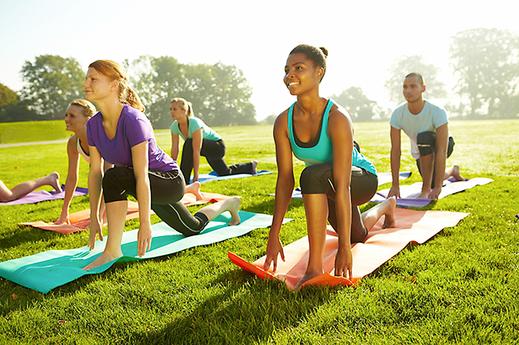
Even if you’ve maintained a regular workout program throughout the winter, there’s a good chance you’ll hit a plateau at some point, so spring is an ideal time to switch up your workout routine.

Why? Much like your mind, your body becomes bored with predictability, so a change of exercise scenery may be all that’s needed to keep it from becoming acclimated — and unresponsive — to your efforts.

Here are a few ways I like to spruce up my workout regimen for spring:

– Shake up your schedule. Early bird? Take advantage of the extra hours of daylight to get active in the evening. If you’re a night owl, challenge yourself to get up an hour earlier to get your workout done before work.

– Try a change in venue. If the cold weather has had you cooped up all winter, take it outside. Or if you’ve been out battling the elements for the past few months, mix things up with a weekly group class for cross-training.

– Play with sequence. If you break workouts into specific combinations of body parts on different days (say, legs/back, arms/shoulders, chest/abs), pair them oppositely to force your body to adjust.

– Get some new gear. Nothing makes a workout more fun than trying out the latest and greatest exercise equipment. Case in point: I just got a new set of wheels, and I’m loving the new challenge of honing my skills on the bike.

– Develop a need for speed. Repeat after me: “Intervals are my friend!” Scrap your usual pace and add in walk breaks and sprints to trick your body into working harder.

– Tune-up your fuel. Re-evaluate your current dietary habits, and make a few incremental, measurable and attainable changes in what you consume, whether it’s adding in more fruits and veggies – or cutting down on junk food. And don’t forget to hydrate!

– Set the mood with music. Shop around on iTunes for new exercise mixes, sample a new music genre or allow personalized music sites, such as Pandora or Spotify, to suggest songs for you.

– Use the buddy system. Sometimes all it takes is a little company (i.e. my Monday SweatGuru runch dates) to kick it up a notch; picking up a partner can be a huge motivator in terms of support, friendly competition and accountability.

Try easing into a few changes at a time; do too much too soon, and you’ll risk getting injured. Always consult your doctor before beginning a new workout program, and use common sense – be sure to stop exercising if anything hurts.

How do you adjust your workout routine to stay fresh in a new season?

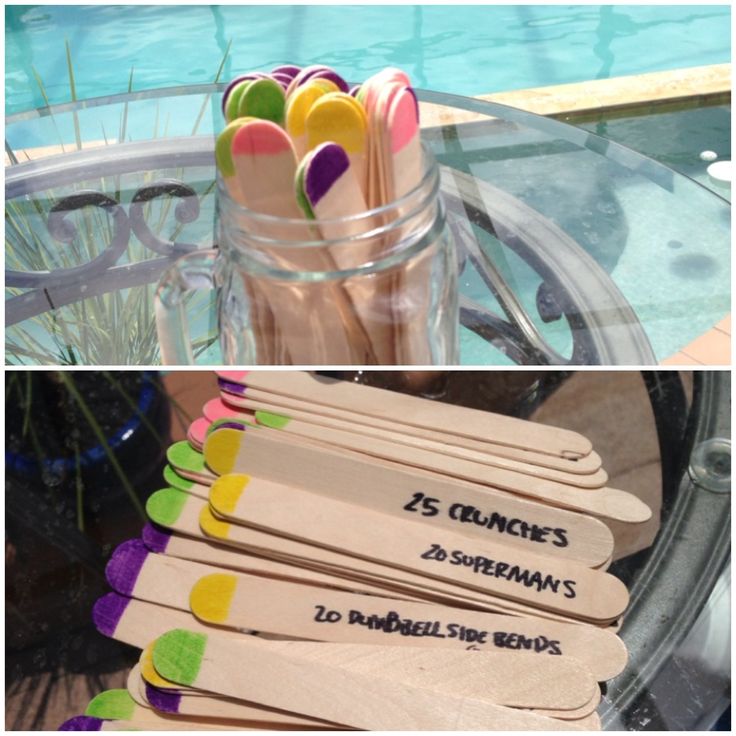
Pick-a-stick workout

Source: Ashley Benson Fitness

Source: Ashley Benson Fitness

We all have those weeks where it’s tough to find either the time or the motivation to work out. Whether you’re slammed at work, between training schedules, overwhelmed at home, trying to get back in the groove or just on the road and out of your usual routine, removing the obstacle of having to choose your workout makes it more likely that you’ll actually get to the working out part.

But all you need for this is a few items — and virtually no equipment — so it’s easy to do in the comfort of your home or hotel room. And if you don’t want to pack the sticks while traveling, you can print out the list below and choose numbers instead of colors to create the day’s combination.

When you just need a quickie sweat session, simply pull one stick of each color and perform the moves. Or if you want a longer challenge, repeat the set of four exercises a few times, depending on how much time you have. And if you really want to mix things up, get crazy and pull several sticks of each color for a more varied total-body workout.

What you need: 

  • 40 Popsicle sticks
  • 5 permanent markers, each a different color (black, red, green, blue, yellow, for example)
  • 2 Mason jars or cups

How to do it: 

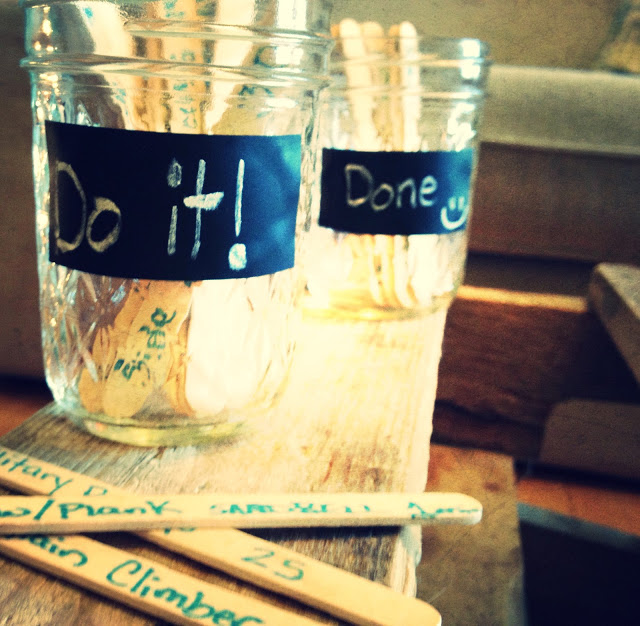
  1. Divide the Popsicle sticks into four groups of 10, and color the ends of each group of sticks with a different colored marker (so when you’re done, you’ll have 10 sticks tagged with red, 10 sticks with green, 10 sticks with blue and 10 sticks with yellow)
  2. Assign one color to each of the exercise groups (i.e. red = upper body, green = lower body, blue = core, and yellow = cardio)
  3. Take the black marker and write a corresponding exercise on each stick — refer to the list below for some ideas, but if you have other favorites, feel free to swap them in
  4. Put all the sticks (colored ends up) in one jar labeled “Do it!” And when you’re ready for a workout, just grab one stick of each color.
  5. Once the workout is complete, place the used sticks in the second jar labeled “Done!”
Source: Pinterest

Source: Pinterest

Exercise ideas: 

  • Upper Body
    1. 25 Standard Push-Ups
    2. 25 Diamond Push-Ups (tips of thumbs and index fingers touch)
    3. 20 Push-Ups with Side Arm Balance (alternate sides)
    4. 20 Plank Up-Downs (alternating arms)
    5. 15 Lateral Raises (using dumbbells, water bottles or cans)
    6. 20 Incline/Decline Push-Ups (elevate feet for 10, elevate hands for 10)
    7. 15 Bent-Over Rows (using dumbbells, water bottles or cans)
    8. 15 Hammer Curls (using dumbbells, water bottles or cans)
    9. 25 Tricep Dips
  • Lower Body
    1. 30 Walking Lunges (alternating legs)
    2. 40 Squats
    3. 60-second Wall Sit
    4. 30 Reverse Lunges (alternating legs)
    5. 30 Calf Raises (10 each with toes facing in, straight, out)
    6. 30 Side Lunges (15 each side)
    7. 40 Plie/Sumo Squats
    8. 50 One-Legged Dead Lifts (25 each side)
    9. 50 Donkey Kicks (25 each side)
    10. 30 Curtsy Lunges (15 each side)
  • Core
    1. 60-second High Plank (arms straight under shoulders)
    2. 20 Mountain Climbers
    3. 60-second Superman
    4. 30-second Side Plank (each side)
    5. 50 Crunches
    6. 50 Bicycles (25 each side)
    7. 60-second Low Plank (on elbows)
    8. 45-second Flutter Kick
    9. 15 Sliding Pikes (with towel under feet on uncarpeted floor)
    10. 30 Bird Dogs (on knees, lift opposite arm and opposite leg)
  • Cardio
    1. 25 Burpees
    2. 60 Jumping Jacks
    3. 40 Stair Hop-Ups (jump up with both feet onto one step)
    4. 50 High Knees (jog in place, bringing knees as high as possible)
    5. 50 Butt Kicks (touch heel to glute)
    6. 90-second Stairs (time yourself running up and down a flight)
    7. 15 Tuck Jumps (bringing both legs to chest)
    8. 20 Squat Jumps (squat, then jump as high as you can)
    9. 25 Lunge Jumps (lunge, then jump into the air and switch legs)
    10. 30-second Single Leg Hops (each side; jump back and forth over an object, such as a towel)

Of course, the disclaimer: Always check with your physician to get the go-ahead before you start any new exercise program!

Scenes from a Sunday ride of firsts

Source: Jess Smith

Source: Jess Smith

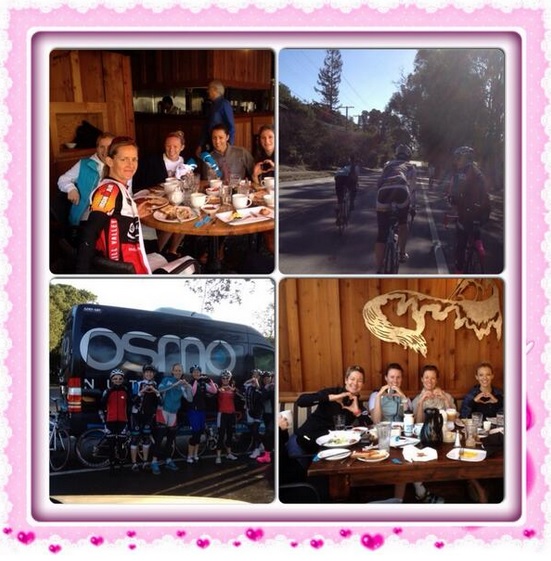
“Coeur” is French for “heart,” so it was only fitting that those of us in the Bay Area met up during Valentine’s weekend for our first of (hopefully!) many ladies’ bike ‘n’ brunch rides with Coeur Sports and Osmo Nutrition.

Interestingly enough, “coeur” is also the root of the word “courage,” and I ended up needing a good dose of it in order to get myself out the door this morning. To say I was nervous pulling up to our meeting spot would be putting it mildly…I mean, this group touts some serious racing resumes (we’re talking pro triathletes, Ironman finishers and all-around endurance sport superstars), and I’m still very much a noob when it comes to the swim and bike stuff.

Our hosts Hailey and Jess not only welcomed everyone with open arms, though, but they also offered encouraging words as I admitted to them that I was feeling super intimated and in waaay over my head. But before I knew it, we were off…and it was sink or swim (or more like punk out or pedal), so I rode along with my friend Amy, a fellow runner and November Project member, and we joined up with Doris, a local triathlete with whom we both hit it off immediately.

It turned out to be a ride of many firsts as we hit the road for our adventure:

First time meeting the Coeur crew in-person and cycling in a group…

photo (27)

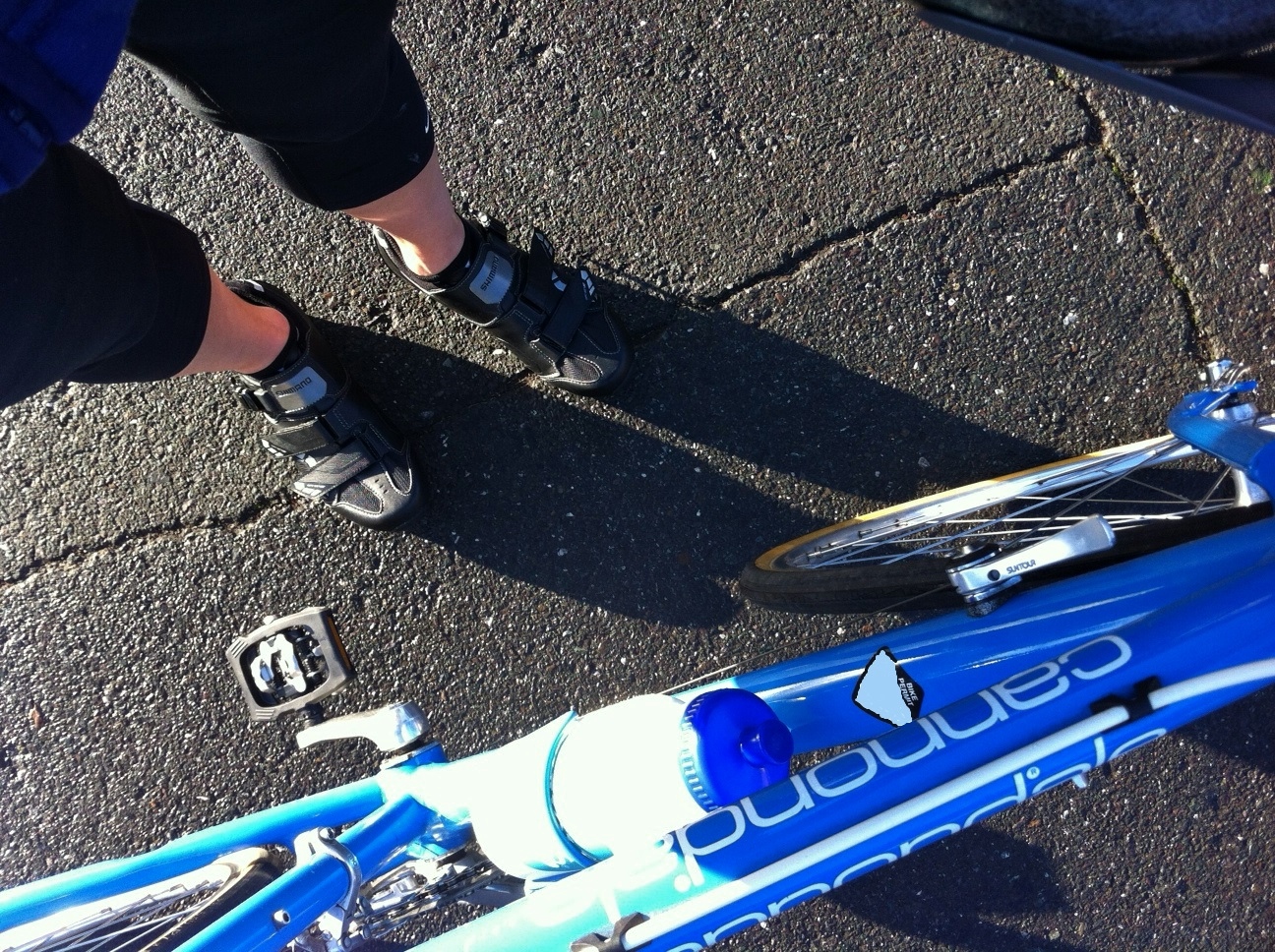
First time riding in bike shoes and cleats…

photo (35)1

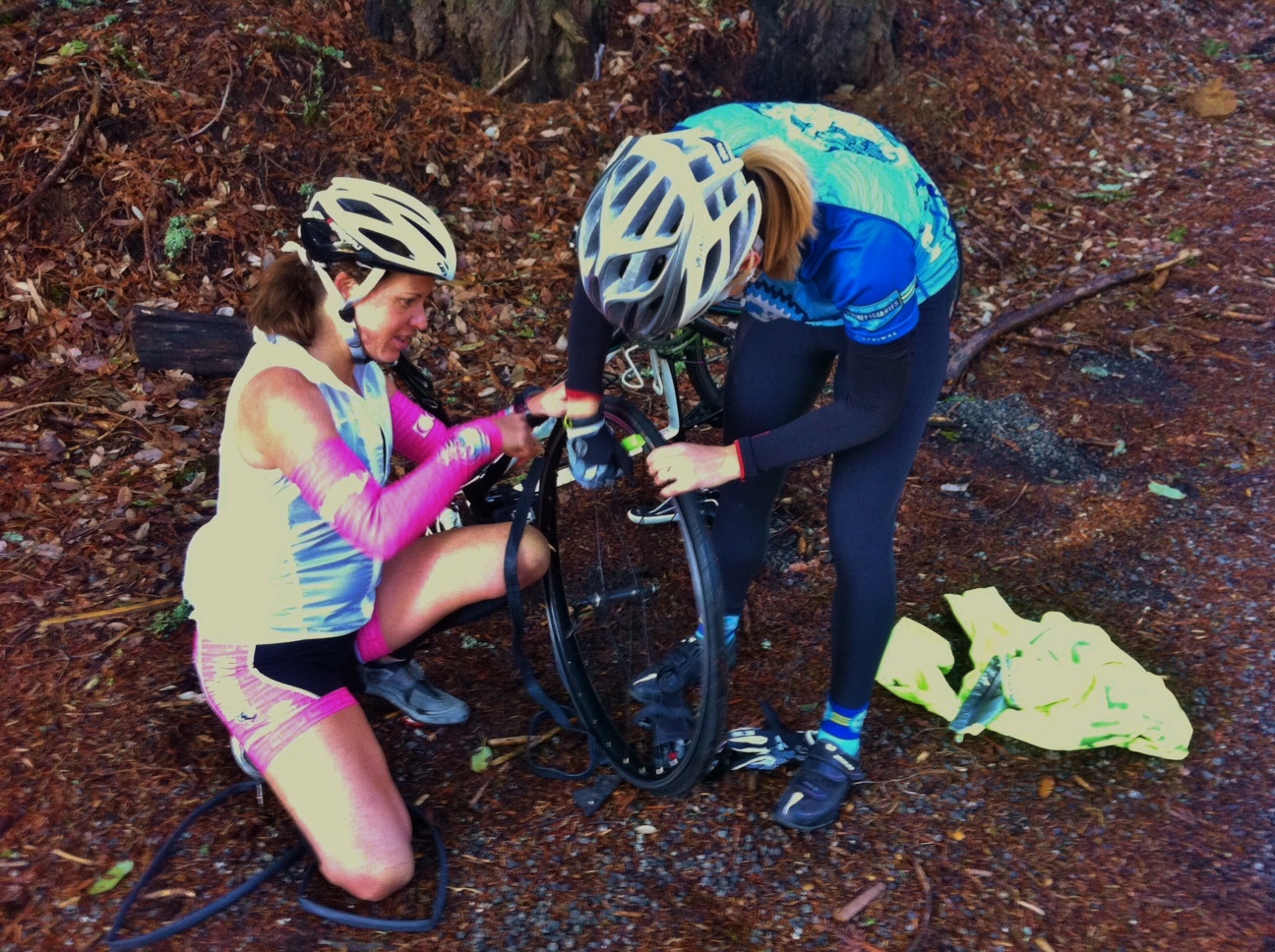
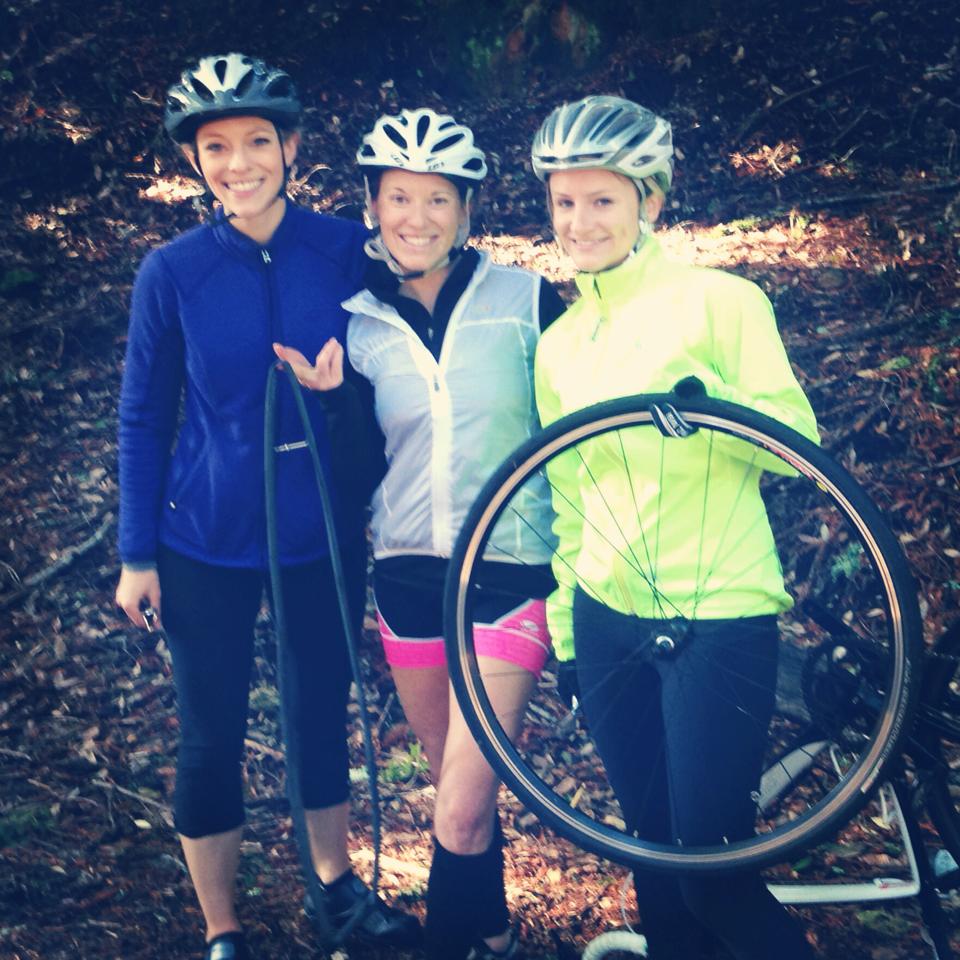
First time helping to change a flat tire (successfully, I might add!)…

photo (30)


Source: Doris Steere

Source: Doris Steere

First time taking in the beautiful scenery in Woodside, Calif. (although we did get a bit lost)…

photo (32)


photo (28)

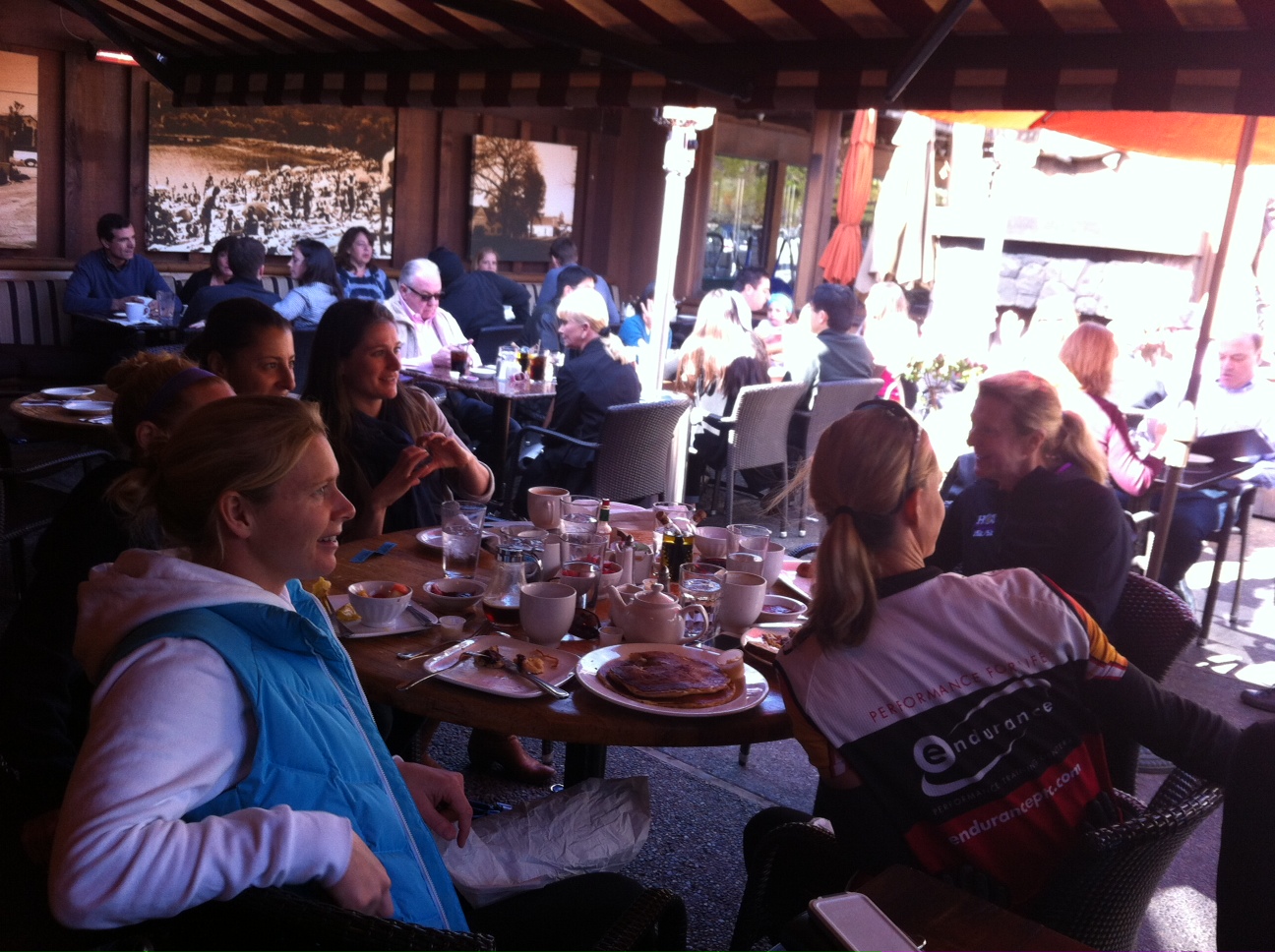
First time realizing how good brunch tastes after a ride, especially when you’re surrounded by incredibly inspiring women…

photo (34)


photo (33)

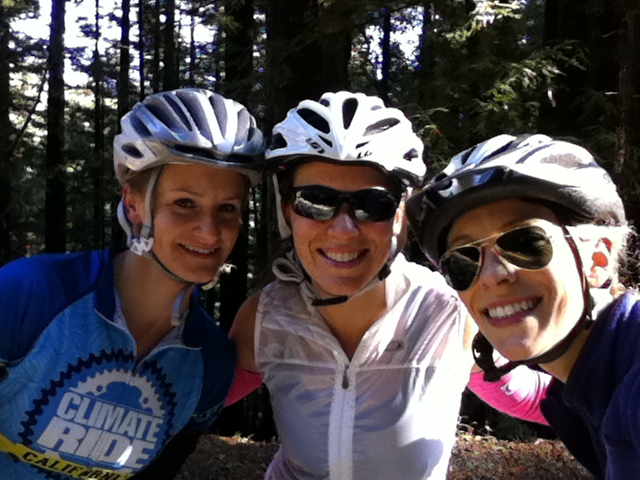
And, finally, first time in a long time realizing you’re never too old to still have “firsts” — whether it’s making new friends, conquering fears, tackling challenges or simply believing in yourself…

photo (29)

We ended up riding about 18.5 miles total, which included almost 2,500 feet of elevation gain for what I dubbed the “thigh-thrasher” workout. While it ended up being a more, er, “creative” route (read: we got lost and took a totally different path), it was a good metaphor for the day: It’s not always about sticking to the planned journey; sometimes it’s when we veer off track that the magic truly happens.

Love the run you’re with: 6 tricks to push through a tough workout

Source: Lee Boyce Training

Source: Lee Boyce Training

If working out were easy, everyone would do it. But in reality, only 20 percent of American adults get the recommended amount of exercise, according to a recent study by the Centers for Disease Control and Prevention (CDC).

The truth is, the probability of physical discomfort is often much less of a deterrent than a lack of mental motivation. Even the most committed of exercisers have the occasional day when they’re just not feelin’ it — me included.

So how do I get out of my funk and into a better frame of mind — not only to start a sweat session, but to actually stick with it long enough to make it count? Here are a few of my dirty little tricks for fooling myself into (and through) those I-just-don’t-waaaanna workouts.

1. Buddy up. It may take some time, but finding a set of solid workout partners is key. If you’re close in pace, have similar goals and you can push each other through the inevitable ups and downs of each workout, you’re golden. For example, Pavement Runner and I would meet up while marathon training last fall, which not only kept me motivated for those early wake-up calls, but also kept me from wimping out mid-way through many double-digit runs.

2. Try something new. Sometimes a new adventure can be invigorating. I knew I’d need a little break from pounding the pavement after said marathon, and trail running seemed like a great way to stay in running shape while letting the legs bounce back, so my friend Vivi and I signed up for a 30K. Our runs are challenging, yes, but when you’re learning new skills, exploring scenic routes and getting a different kind of workout, they become something we not only look forward to, but also appreciate as novel experiences.

3. Get specific. Workouts can feel overwhelming when you’re trying to tackle too many things at once — be it mileage, pace, terrain, etc. So on those days where you feel like you’re spreading yourself too thin, plan a purposeful workout where you work on only one thing. Fix your form, run hill repeats for speed, or map out mileage and leave the watch at home. Instead of multitasking, distract your brain by focusing on the pleasure of accomplishing a singular task.

4. Find the fun. Hubby is great at this, so I am try to take a page from his book with this one. Whether it’s splashing in puddles on a rainy day, racing to the next stop sign or stopping at a jungle gym for an impromptu set of pull-ups, making a game of it can put a smile on your face and help you find a little fun in something you were otherwise dreading.

5. Bribe yo’self. There’s a reason why most of my morning runs end near a coffee shop: I am not above a good bribe to get myself out of bed. There’s nothing better than capping off a good morning workout with a hot cup of joe. You’d be surprised at how much a little ritual like that helps.

6. Embrace the suck. Let’s face it, some workouts are just going to be crappy, for one reason or another. If it’s one of those days, don’t waste your time or energy fighting it. Just accept it, try to find the humor in the situation, and realize that this too shall pass. I had a run like this during marathon training where everything seemed to go wrong; I ended up calling one of my oldest girlfriends on the way home as I slogged my way up the final hill, and we had a good laugh at it, which always keeps things in perspective.

One final disclaimer, of course: There’s a big difference between “that voice” in your head and a gut feeling that something’s wrong. Experiencing a few aches and pains during training is common, but if you’re in significant pain, always be sure to listen to your body.

Knowing the difference between discomfort (which you can push through) and pain (when you should stop) is important for being able to train effectively and prevent injury.

What are your tricks for tackling tough workouts?

The three stats I track for every workout

photo-7

Although I claim to be mathematically-challenged (much to the chagrin of my dad, who is an engineer), I totally geek out when it comes to workout stats. Whether it’s miles ran, swam or biked, there’s just something so fulfilling about poring over the numbers after a particularly tough workout — not only to celebrate great days and learn from not-so-great ones, but also to set benchmarks for gauging current performance and goal setting.

But the ways in which we can now quantify ourselves is almost getting out of hand: From calories burned, miles traveled, heart rate, steps taken, sleep patterns, weight, etc. — it’s easy to get caught up in quantity to the detriment of quality (i.e. the bigger picture). For example, sometimes I’m so intent on hitting mileage goals with my runs that I’m tempted to swap a stretch session in favor of more time to log miles. Big mistake!

Everybody (and every body) is different, so you’ve got to find what works for you, your lifestyle and your goals, but I tend to think it’s best to keep it simple when it comes to tracking stats. Granted, there are certain times and training cycles where this may change, but as a rule I live by quantifying the following three things for each workout.

1. Shoe Mileage

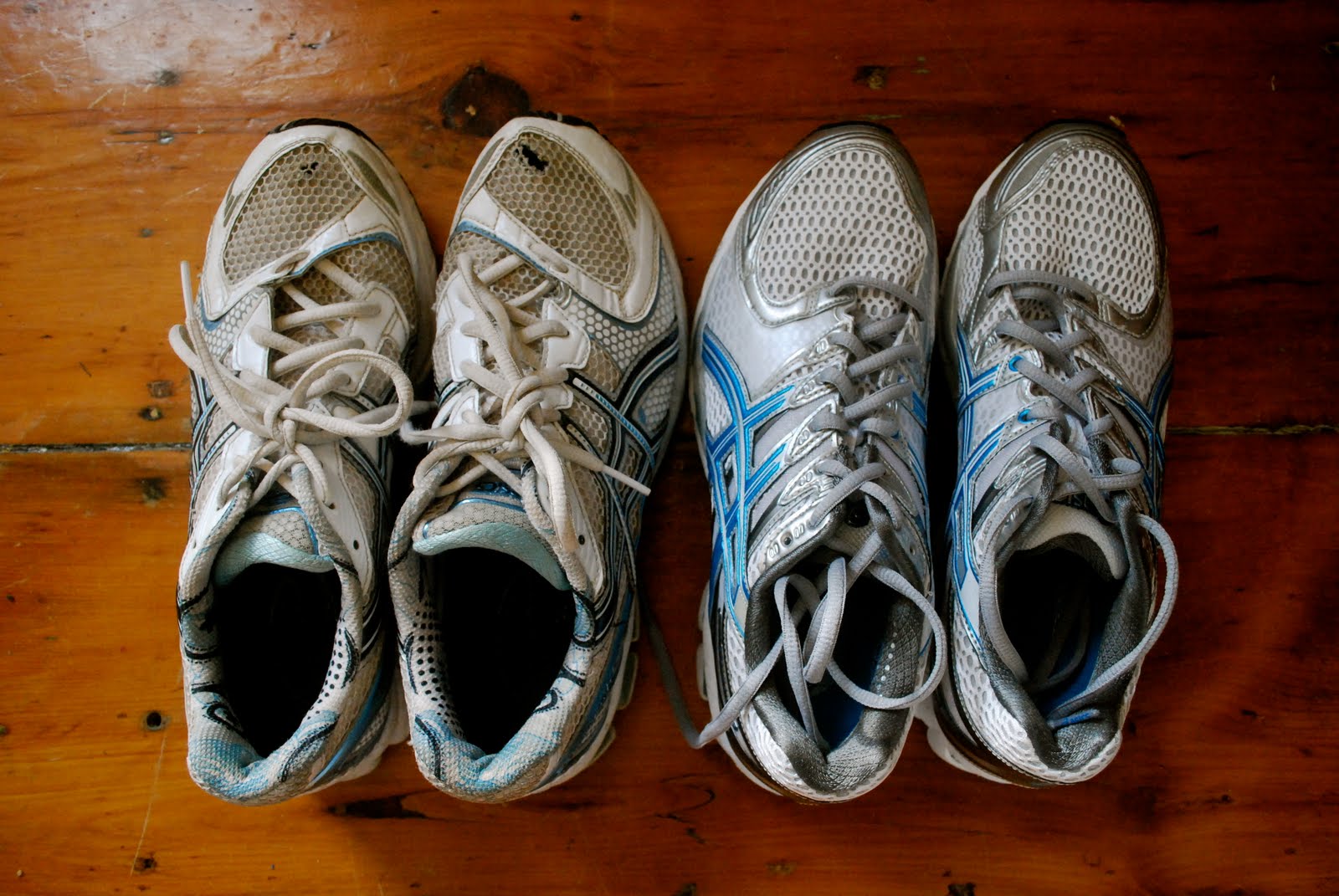
Why: I used to run my shoes into the ground (literally) trying to save a few bucks by stretching out their life as long as possible. But when minor aches and pains crept up and morphed into injuries, I learned my lesson: A pair of good shoes that will support and cushion you properly is priceless.

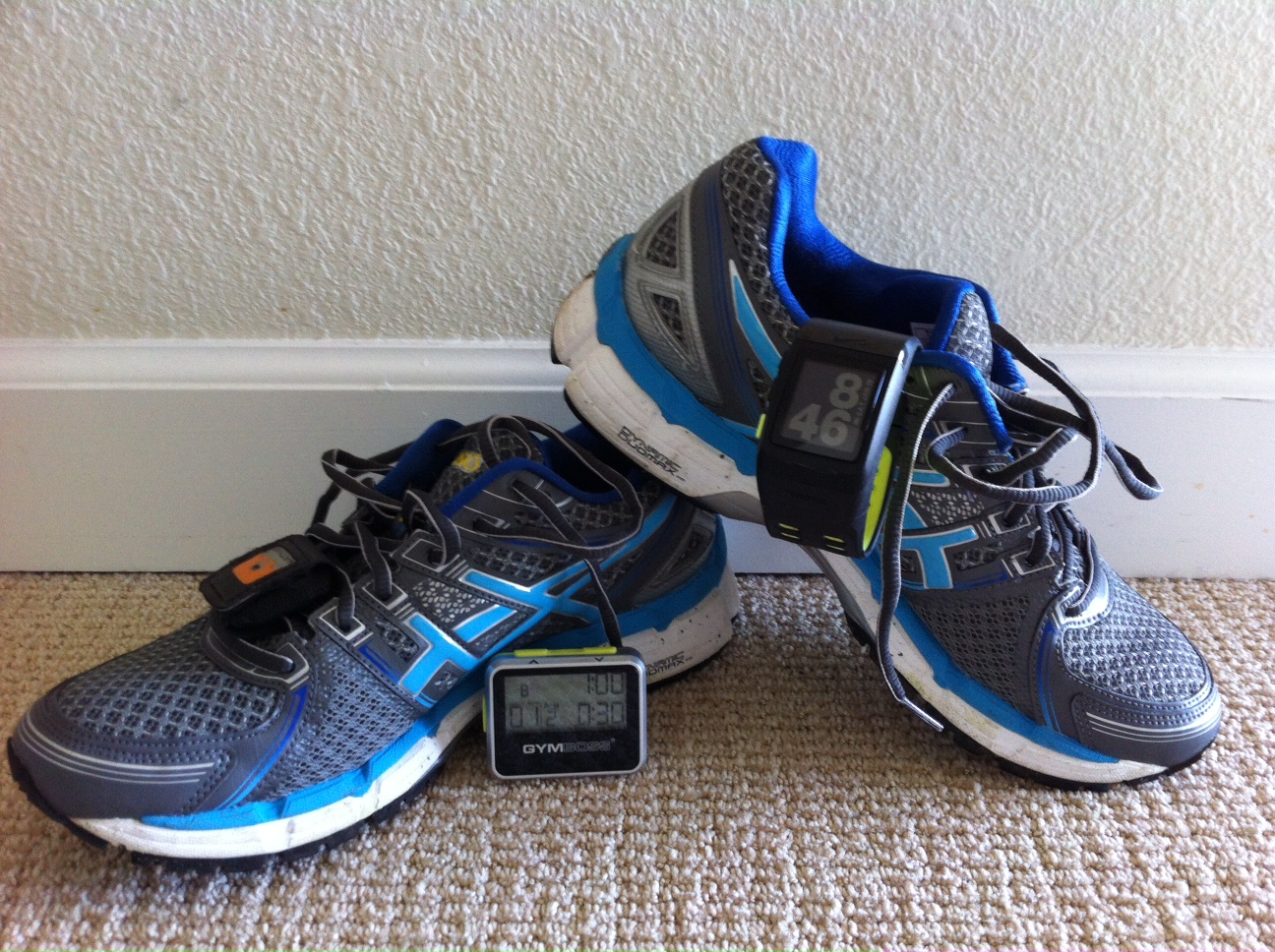
How: Rather than running in one pair until it feels “flat,” I buy two pairs of shoes and rotate them on a weekly basis to give the cushioning time to bounce back. I’m also getting better about tracking actual mileage — one of my goals for 2014 is to figure out exactly how many miles it takes for me to wear my shoes out (the average is about 300-500, depending on the runner) — so I’m keeping a tally on each to know when to rotate future pairs.

Source: OneMomInMaine.com

Source: OneMomInMaine.com

2. Exercise Duration

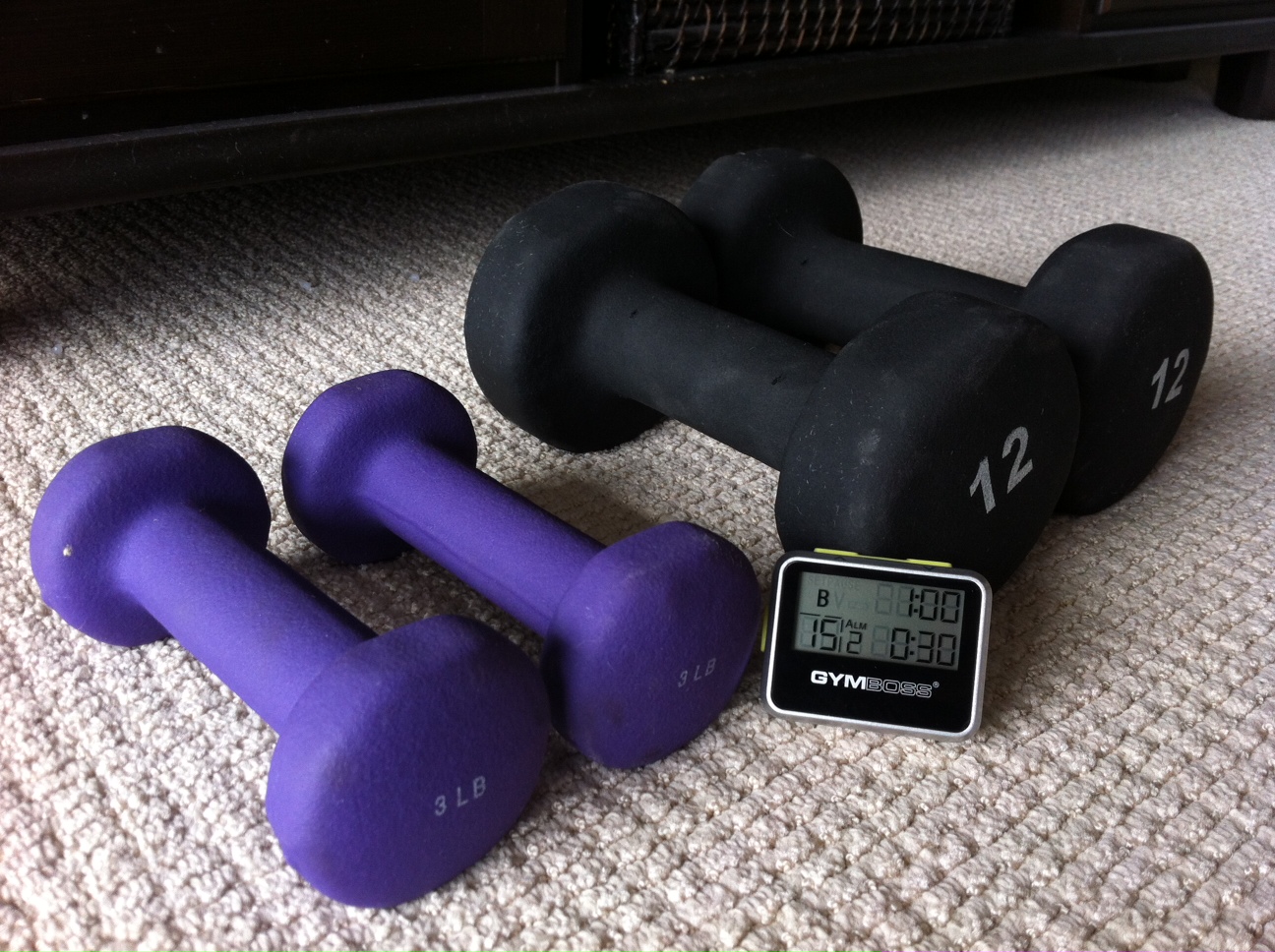
Why: We’re all time-crunched and multitasking to the max, so it’s easy to get in that mid-workout daze and just power through reps as quickly as possible. But by giving myself a set about of time for each exercise and working out for that entire interval, it forces me to focus on form, which inevitably gives me more bang for my buck in the long run.

How: Whether it’s with a stopwatch or another kind of timer (my favorite is GYMBOSS because it’s a repeating interval timer, countdown timer and stopwatch all in one), set your segments and actually stick to ’em. You’d be surprised how long 30 seconds feels when you’re working hard — but keep yourself honest, and you’ll see results that much faster.

photo (13)

3. Workout Details

Why: Logging workouts not only provides a sense of accomplishment, but it also allows me to analyze performance, discover trends (i.e. running after a leg day leaves me feeling slow and heavy, so I switch up the schedule for better results), recognize potential issues and injuries, as well as motivate myself to make goals for future sweat sessions.

How: I still keep an old-school workout log, which I fill out every day (even on my off days; in fact, it reminds me to schedule them in!) with workout type, details, duration, etc. But you can get as specific as you’d like when recording individual workouts. For example, you might want to use a GPS watch to keep track of pace, distance and other elements of runs (I currently use the Nike+ GPS SportWatch, but have heard enough good things about Garmin to want to check it out), or there are apps and programs that will also help you keep track of workouts in other ways (I use MapMyRun to create routes, and I’m also testing Strava to challenge myself on rides and runs).

However you decide to quantify your workouts — or not — it’s all about finding tools that work with your workout style and allow you to stay motivated, train more effectively and have fun in the process!

STRAVA-biker-resize

What stats do you track when working out? 

A night with Nike Training Club

photo (2)

When it comes to Kool-Aid, I’ll drink whatever flavor Nike’s got on tap. So when my gal Sam, ambassador extraordinaire, put out the invite for a week-long extravaganza of Nike Training Club events, I knew we were in for a good time.

Vivi, my workout partner-in-crime, and I headed down to meet up with the ladies at The Box SF on Tuesday night to check out the yoga session. An instructor from Yoga to the People was on hand to lead us through a Vinyasa Flow class, which was a much-needed (read: mellow) workout after Saturday’s adventure in the bay and Sunday’s long run.

photo (1)

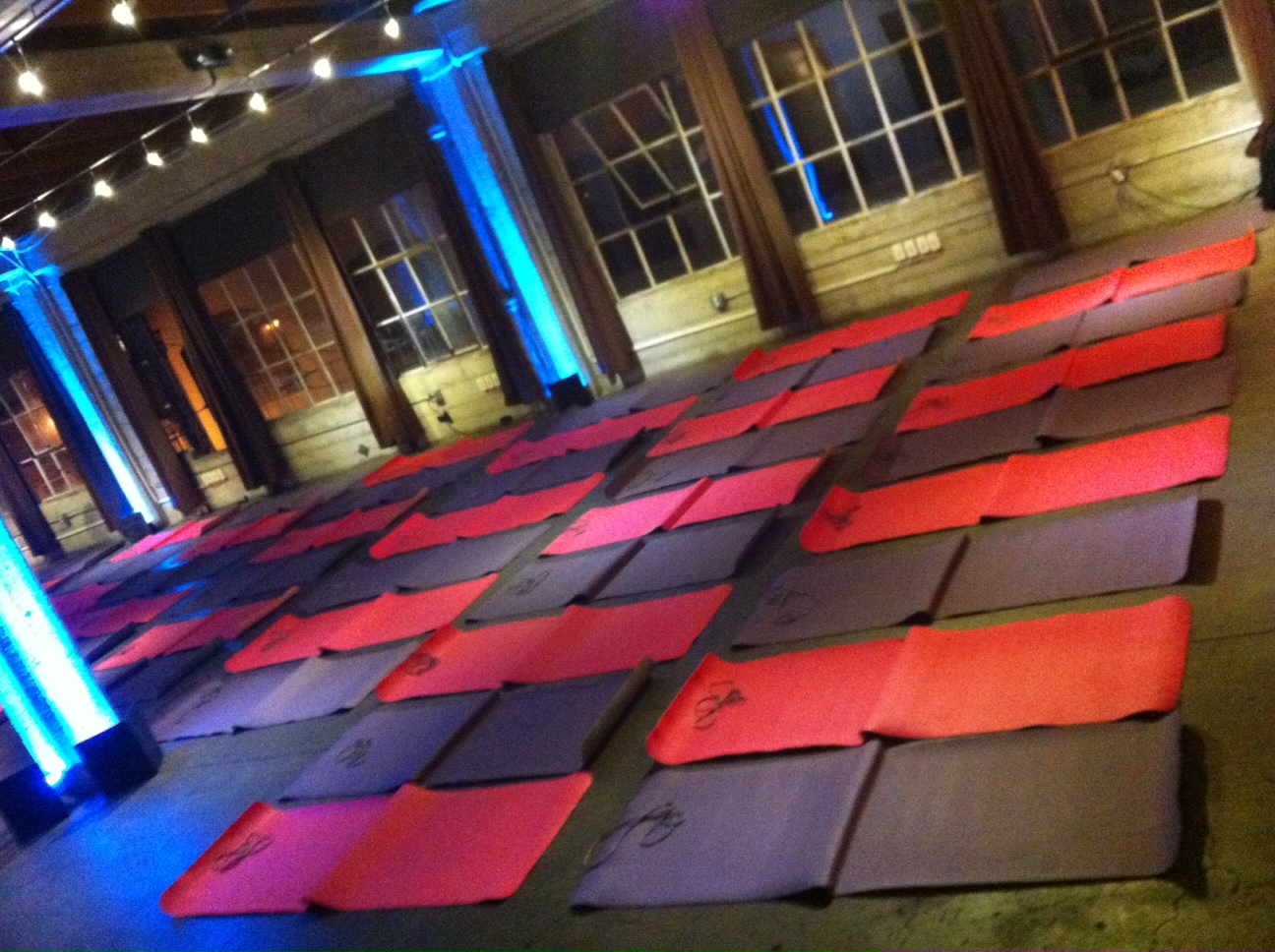
We arrived to  a serene space filled with pink and purple yoga mats. After a checking in and checking our bags, we grabbed a spot up front with some of our fellow November Project peeps (yup, the group that crushes hills together must also work out the quad and hammie kinks together).

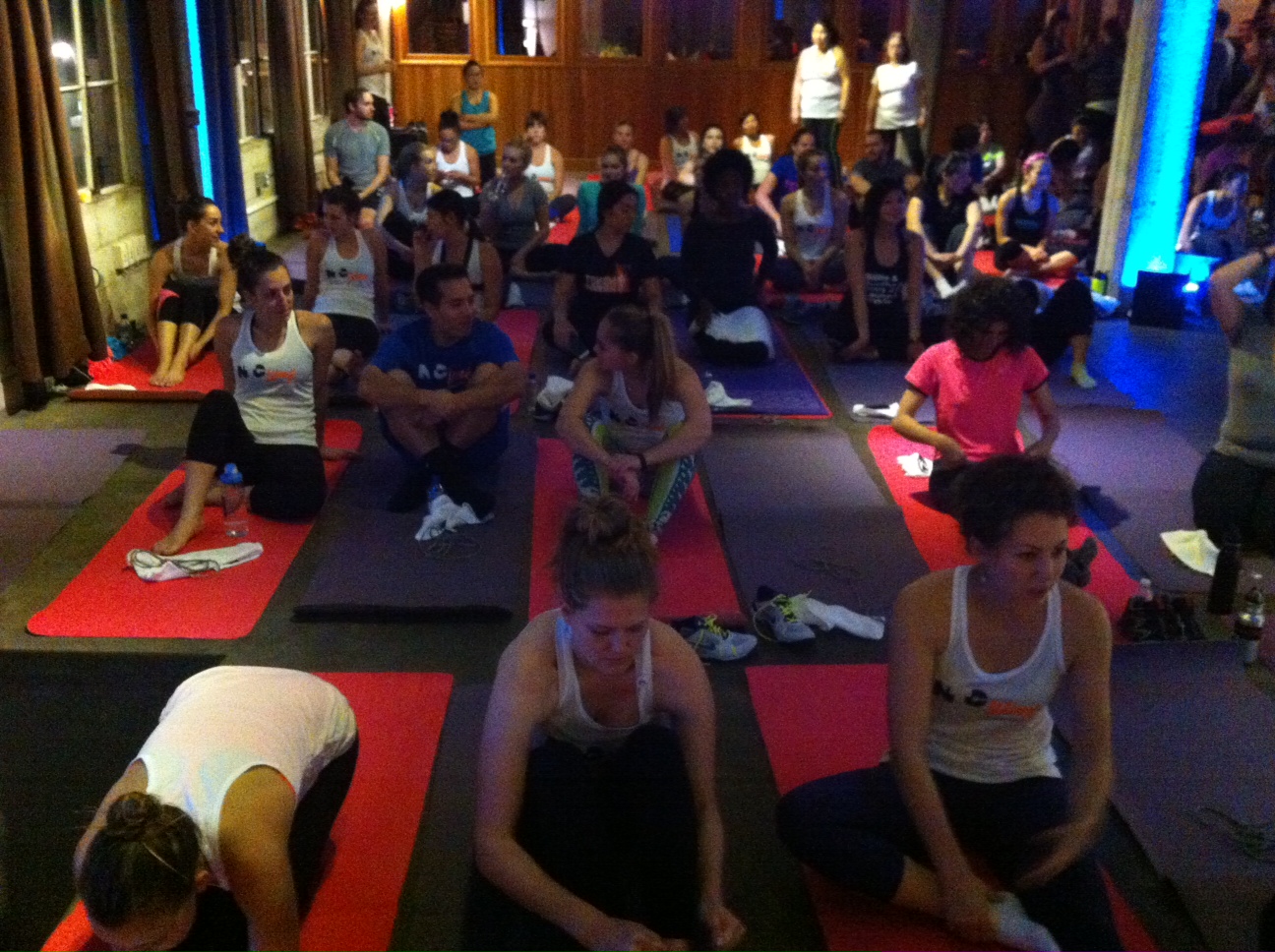
And it was a good thing we got there early because the space filled up quickly. Apparently word got ’round about what a blast everyone had at the previous evening’s kickboxing workout; here in SF, we’re like moths to a flame when it comes to serious sweat sessions.

photo (5)

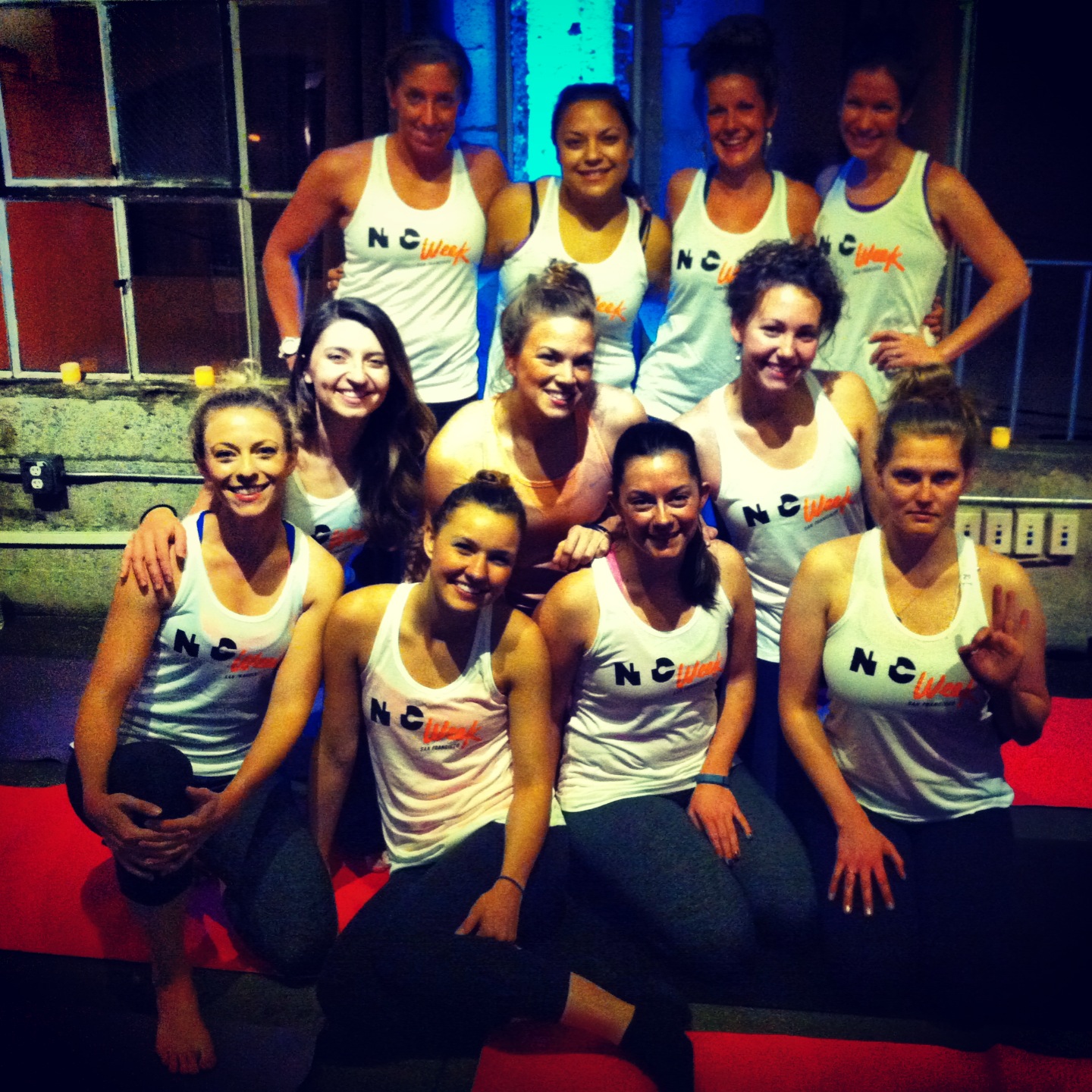
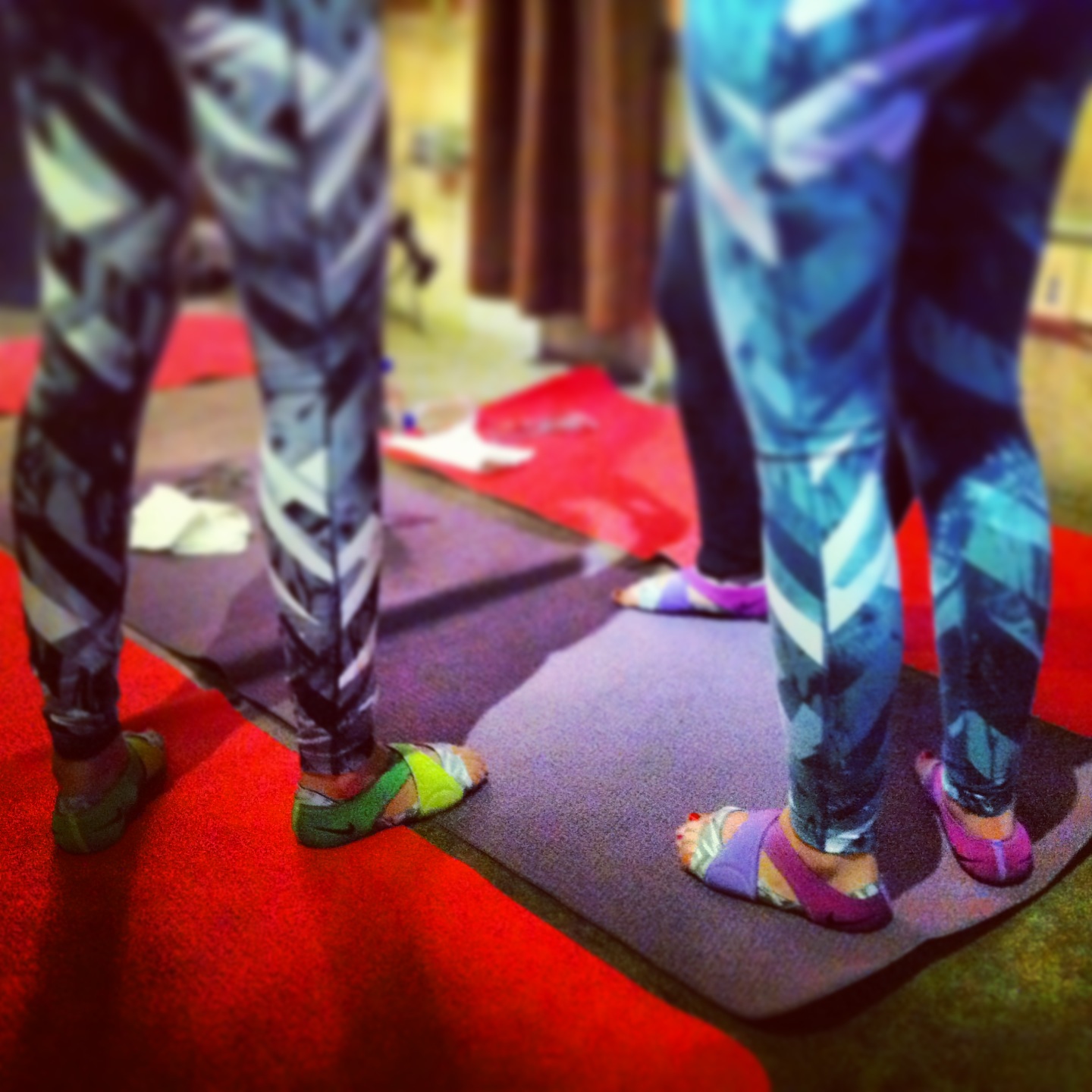
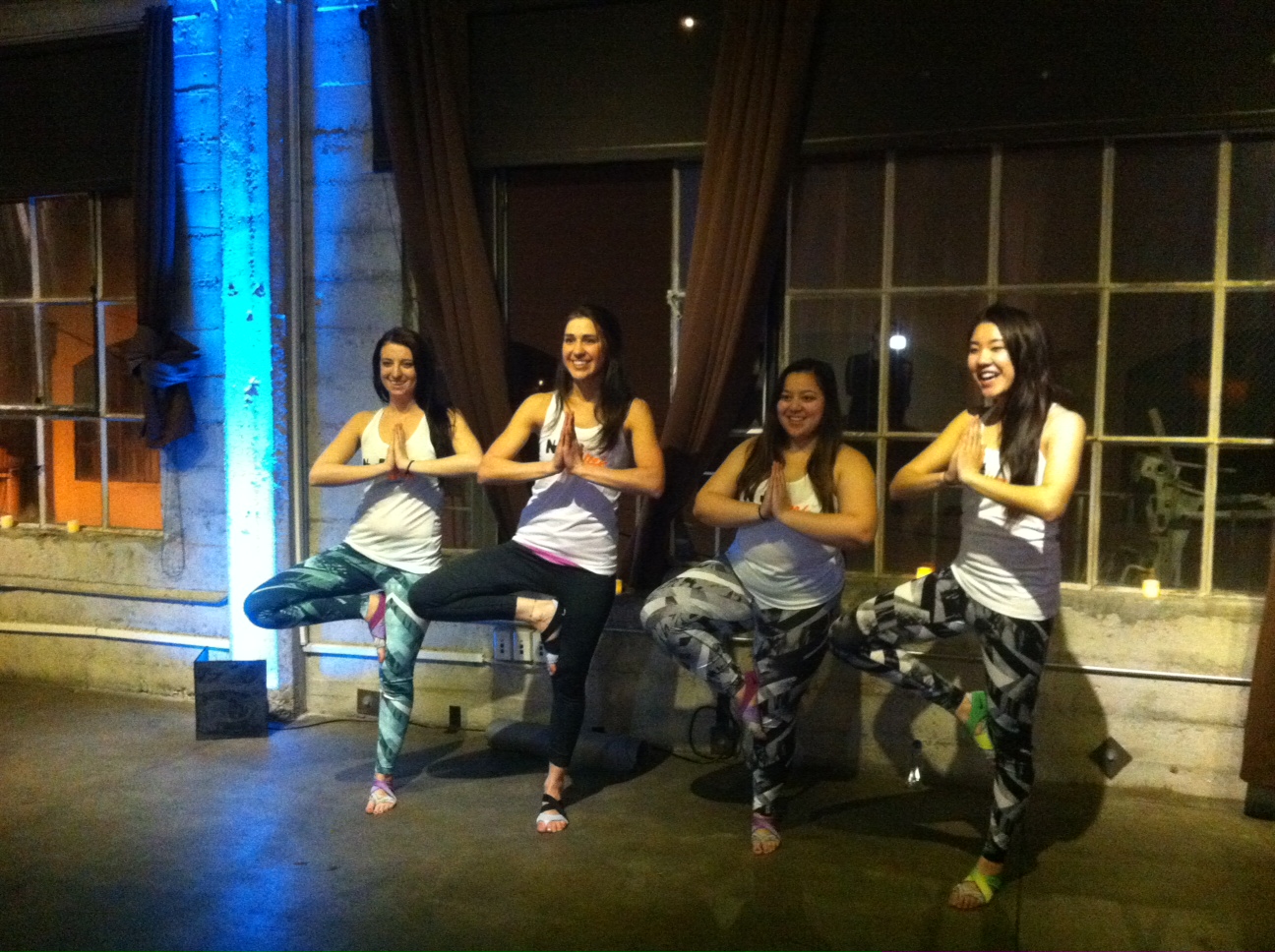
While we got down to business with our vinyasas, the Nike crew snapped shots and filmed the session with GoPro cameras from various angles. A few of the participants also modeled Nike’s yoga gear, so we got to “ooh,” “ahh” and “om” over all the the new fun prints and brightly-colored products in action.

My hands tend to slip more than my feet, so I’m not sure about the shoes/wraps, but I am a sucker for an awesome printed tight. Maybe, just maybe, they’ll get me motivated to hit the mat more often…

photo (4)

After the session wrapped up, we mingled for a bit over snacks and spa water before a good chunk of the group was bussed back to Niketown. If definitely got me interested in the weekly NTC classes, and I’m hoping to hit another event or two — tonight is a barre class, Friday’s a run along the Embarcadero, and Saturday is another NTC workout at Niketown — to round out the week.

Wanna join in on the fun? Check out the NTC Facebook page to see if your area’s participating. If not, there’s always the option of living vicariously through the NTC app — I can’t speak to it yet, since I just downloaded it myself to test, but at first glance it looks like a great resource for some hardcore home workouts, courtesy of Nike’s pro athletes and master trainers.

photo (3)

Have you tried the NTC workouts? If so, what did you think?

Hope you’re having a happy, active week!

OWS in OWS: Overcoming Weenie Syndrome in Open Water Swimming

Aquatic Park Source: Flatstar Design

Aquatic Park, my open-water nemesis (Source: Flatstar Design)

“Courage is being scared to death, but saddling up anyway.” – John Wayne

A few months back, when I signed up for my spring Olympic-distance triathlon, I figured I’d let “Future Jennifer” deal with figuring out all the swimming and biking details (i.e. the parts that confuse, intimidate and occasionally terrify me as a runner). Of course, this included the fact that I not only lacked the endurance and technique to complete the swim distance, but also the ability to do so in open water without having a full-on panic attack…so I knew I’d have my work cut out for me.

Fast forward a few months, and “Present Jennifer” now has the endurance portion covered and the technique in-progress, thanks to some time at the local pool and the patience of Hubby and our swimmer friends. But the open water part has been something I’ve been avoiding. Like the plague.

I eased into the process with the purchase of my first wetsuit, which I wore around the apartment one evening before promptly packing it back up and stashing it in the corner of my closet. Then I read a book on women in triathlon, researched training plans and even extended my swim sessions, but every time Hubby brought up the idea of a dip in the Bay, I’d conveniently come up with any an excuse.

That is, until our local pool closed for repairs, the weather spiked to 70 degrees, and I seemingly ran out of reasons not to go. So before I knew it, we were packed up and headed out for a swim this past Saturday in Aquatic Park.

photo-8

Pre-swim: Trying to channel “heart & courage,” but not so sure about this…

Now, I’ve done a few short swims (i.e. two sprint tris) in the quarry near where we used to live in the East Bay, but there were a few things that were especially concerning to me during this new foray into the unknown, including:

  1. Water temp, which was an ice-cream-headache-inducing 52 degrees
  2. Wet suit, as in I’ve never used one before
  3. Wildlife, meaning I love sea lions, but only from behind the glass at a zoo
  4. Visibility, or complete lack thereof
  5. Water quality…I’ve heard rumors of rashes, conjunctivitis, earaches and more

Nevertheless, I knew I had to saddle up sooner or later. So amid stares and comments from tourists (“I can’t believe there are people swimming in that water; it’s freezing!”), we readied ourselves on the beach, and Hubby gave me one last piece of advice before we set foot into the water: “You know it’s going to be cold, so whatever you do, don’t stop. Just walk in as fast as you can, and dive under.”

As he started toward the water, I found myself fighting the “flight” urge to turn and run off up the beach. But A) I can’t make a very quick getaway in a wet suit, B) I already went through the struggle of tugging it on, and C) I’d never forgive myself for letting fear get the best of me (not to mention, Hubby would never let me live it down). So into the water we went.

Aquatic Park: Can't complain about the scenery! Source: Marathonswimmers.org

Can’t really complain about this scenery, though (Source: Marathonswimmers.org)

My feet, hands and face were cold during the initial plunge, but it wasn’t unbearable. The temperature actually became less of a factor than some of the other items on my list — namely the lack of visibility and (the possibility — aka imminent threat — of) wildlife. After tracking the black line on the bottom of the pool for the past few months, losing all sense of sight in the murky green water really threw me.

But aside from a flock of birds floating on the surface of the water, there were no other signs of wildlife, thank goodness. Although that certainly didn’t stop my imagination from getting the best of me; I half expected to see a sea lion face emerge from the cloudy depths. As a result, my breathing was erratic, shallow and out of control, and I flailed around clumsily after mistaking a large stick for a snake, which Hubby found particularly amusing.

But I did eventually complete the down-and-back loop (1/3 mile) that I set out to do, despite an overwhelming and near-paralyzing level of anxiety. All technique was abandoned as I entered pure survival mode, alternating 10 swim-for-your-life crawl strokes with five breaststrokes in an effort to try to catch my breath (which I never succeeded in doing).

Post-swim: I survived!

Post-swim: Smiling; I survived!

The only small victory of the day was discovering that wet suit swimming, as it turns out, is awesome! I loved the added buoyancy, warmth and compression.

And now that I know I can handle a few of those factors (temperature, wet suit; the jury’s still out on water quality…), I’m hoping my anxiety levels will be a little lower the next time around. The trick will just be figuring out how to calm myself down enough to actually focus on proper breathing and form, which I’m guessing will come with time, repetition and familiarity.

And if all else fails, I may just have to perfect my dog-crawl technique…

Have you battled open-water anxiety? How did you cope?

Fit Fix: Sarah Evans on bouncing back (with a PR/BQ) post-pregnancy

Source: Sarah Evans

Source: Sarah Evans

After wrapping up my own racing season at the end of November, I spent much of the final month of 2013 not only reflecting, recovering and planning, but also (and perhaps more importantly) returning some of the love I felt this year by rooting on fellow runners as they rounded out their respective seasons.

And in the Bay Area, as I’ve come to find out, that usually happens at one particular event: the California International Marathon, a popular race with a flat, fast course that serves as a focal point in many a runner’s calendar.

On that day, aside from me having some major anxiety while tracking friends and cheering them along online, there was much to celebrate: Not only did Stephanie (a new blogger friend) finish her first full marathon in an impressive 4:09, and Pavement Runner (my trusty training partner & all-around amazing dude) rock an 11-minute PR to finish in 3:37, but Page (a fellow Coeur lady) also snagged her own PR — at a blazing 7:22 pace, no less — to finish in 3:12. Congratulations again, guys!

But there was one other success story from CIM that, when spotted on Twitter, stopped me in my tracks:

SE7

Wait….what?! I had to meet this rockstar runner and hear her story.

So thanks to the power of social media, the rest is history. Her name is Sarah Evans, and she’s one of the most down-to-Earth, no-nonsense, inspiring and motivating athletes and (new) mamas you’ll ever meet (oh, and did I mention she’s an Ironman, too?).

Below is our conversation, which I promised her will be continued (when I eventually work up the guts to join her) on the trails…

Kinetic Fix: Congrats on your recent PR/BQ at CIM! You’re just four months out from having a baby; what was your game plan going into the race & to what do you attribute the awesome result?

Sarah Evans: Thank you!  It was a great day, and I’m so proud of my PR and Boston qualifying time! The last four months have been a whirlwind adjusting to life as a new mom.

My game plan for CIM was to push myself, see just how fast I could go and, ultimately, just enjoy being out there. It was important for me to have a goal time, as well, since I am very competitive with myself. Having a specific race to train for after having my baby girl was important to me so that I could still maintain my identity as a runner.

I wasn’t sure how I would feel or what kind of pace I would be able to hold until I started actually training about a month after giving birth. My husband knew how important it was to me to get back to running, so he was very supportive in helping me achieve the balance between new motherhood and having some time to myself, which for me meant tying up my shoes and going for a run. I seemed to feel stronger and stronger as the weeks passed from having my baby girl and almost relieved to run “solo” so I could see how hard I can push myself.

Achieving a PR was not really a priority at first, but as I started training again, my speed work splits and endurance told me that my best time might be within reach. That fueled my long weekend runs on the trails to build my base and helped me turn up the tempo on my short, interval-based workouts on the treadmill. While I would consider the treadmill to be my least favorite method, it was a great way to work out and still keep an eye on my baby. The fact that I was in running shape throughout my pregnancy also gave me a great foundation when it came time to train specifically for the marathon.

KF: You’re definitely no stranger to a tough workout; tell us a bit about your pre-pregnancy training, accomplishments and level of fitness. 

SE: My pre-pregnancy fitness was at an all-time high due to the volume of runs and the type of running I was doing on the trails.  In the recent years, I fell in love with trail running and believe it’s responsible for a lot of my endurance, strength and, ultimately, my success with road races.

In addition to speed work during the week, every Sunday I meet up with a small group to run the Marin wilderness. Discovering more about my abilities as a runner, as well as taking in nature’s beauty each week, refuels my spirit and gives me confidence – but it also gave me my most significant running injury to date, a broken foot before the 2012 Northface Challenge.

Six months after breaking my foot in Muir Woods, I toed the line at Northface and completed my first trail marathon, which gave me a real sense of accomplishment. But that race will always mark a more significant event in my life because I found out I was pregnant the next morning! So I was lucky enough to go right into my pregnancy in marathon shape, which meant I was trained and healthy enough (with the support and consent of my OBGYN) to continue running and training up to a marathon distance.

While I have maintained general fitness since my college track and field days as a sprinter, I have focused on training for endurance events starting in 2007. Over the past six years, I’ve done six marathons, seven half marathons and six triathlons, including Ironman Lake Placid in 2009. My marathon and half-marathon PRs are 3:26:23 and 1:35:30 respectively, and I am a three-time Boston qualifier, running it in 2013.
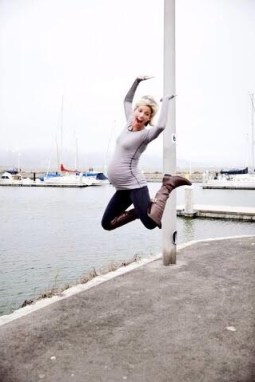
Source: Sarah Evans

Source: Sarah Evans

KF: Wow, finding out you were pregnant the day after your marathon must’ve been an exhilarating few days, to say the least! So, what was your attitude toward working out with baby-on-board?

SE: I was excited to be so fit at the beginning of my pregnancy because I knew that would put me ahead of the curve for being healthy and staying in shape. I’m very much a “no-excuses” kind of girl, so during the first few weeks, even though I felt a bit nauseous, sick and exhausted, I got myself out the door to exercise every day. It actually made me feel much better, once I got halfway through a workout, and gave me more energy afterwards. There were some workouts I had to fight through, but I knew it would do my body good in the end so I embraced the discomfort.

“Hurts so good” is definitely a mantra I embody, but I was, of course, cognizant of my baby’s health and made sure anything I did was approved by my doctor. I also recognized a fact that I believe is universal for all expectant women: Running while pregnant is typically more cumbersome, uncomfortable and induced a bit more soreness than usual. But as long as that discomfort was within the realm of what my doctor and I considered to be safe, then I was determined to continue to run.

KF: And run you did, all throughout your pregnancy, including completing the Boston Marathon. Can you tell us what was it like doing 26.2 with a “passenger?”

SE: I feel fortunate that I had no complications during my pregnancy and was given the green light by my doctor to continue to run. In fact, her main concern was that I would suddenly stop running, which I was told might be more detrimental to my health and pregnancy than anything. I continued to run a lot of trails, which helped build strength and balance and gave me more cushioning for my joints and back than the road and pavement.

Running the Boston Marathon with a baby on board was really a coincidence, as I had qualified and booked the trip before I knew I was expecting. It had always been a dream to run this race, and relaying that desire to my OBGYN was among the first topics of my first appointment. With everyone’s support — including my husband, who initially thought that this might be too much — I set myself a goal of sub four hours (realistic and challenging enough, but allowing for some fun along the course) and finished feeling strong and healthy.

Despite finishing 30 minutes slower than my qualifying time, I felt fortunate. And the day’s tragic events helped keep everything in perspective.
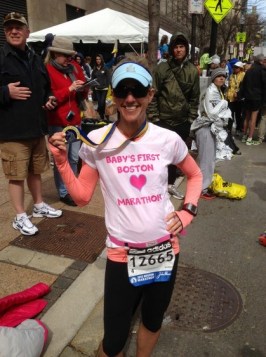
Source: Sarah Evans

Source: Sarah Evans

KF: What surprised you most about running while pregnant?

SE: That I lost my speed quickly! I know it sounds ridiculous, but I thought carrying a few extra pounds wouldn’t slow me so fast, but to be fair it wasn’t just being pregnant that slowed me down. Bouncing back after I broke my foot was not as easy as I thought because I had a fair amount of apprehension starting back running on the trails on a healed foot AND being pregnant at the same time.

So I built up the miles gradually at the new slower pace and found that even warming up took twice as long as before. Easing slowly into a run was new for me, as I was used to taking off quickly, and I had to challenge myself not to turn back after two miles because I wasn’t “feeling it,” knowing that my growing situation meant that I had to be patient to find my running happy place.

There were plenty of times towards the end of my pregnancy when I felt like skipping my runs, but in the back of my mind I had to remind myself that these times running solo would soon be limited. Mostly, I was anticipating the period after birth when I couldn’t really exercise due to having a C-section (my stubborn little girl was breech and couldn’t be flipped). And any running, however slow and uncomfortable, was going to beat being on bed rest for a while after birth!

KF: Can you share some of your favorite tips for moms-to-be who want to follow your lead and keep up with their running?

SE: First and foremost, clear it with your doctor. While a few are still old-school enough to recommend just sitting on the couch and resting, thankfully most will assess your current fitness and exercise level to suggest what effort you can take on.

Next, realize that it might not always feel comfortable but no matter how bad you feel, just lace up your shoes and get out the door – if only for a mile. You may (and most likely will) find yourself running longer than you anticipated and enjoying the fresh air, which can really invigorate you and make you feel better.  The only special “equipment” I got was a bellyband that supposedly helped support my mid section along with providing some back support.

Finally, and especially for first-time moms, remember that you might not have this kind of freedom after baby is born to run and be active. Trust me, as tired as I felt while pregnant, it doesn’t compare to how exhausted being a mother can make me feel. And there is no better excuse to skip a run than to cuddle with your sweet baby – thankfully I can make time for both, but it does take its toll. Another huge benefit that you should keep in mind is that keeping fit will prepare your body for labor, help speed things along, give you the energy you will need, and ultimately make it easier to bounce back.

KF: Did you do anything else to stay in shape throughout your pregnancy?

SE: Throughout my pregnancy I tried to change as little as possible about my routine and exercise habits, though I did avoid outdoor cycling on the road, as well as skiing and winter sports (doctor’s recommendation). What I found was that I could still do my usual variation of cross-training activities, but just at a lower level of exertion.

I did a lot of strength training to keep some muscle tone, and spinning was one of the best exercises to relieve the pressure on my joints. It gave me some time off of my feet, and I think it’s one of the best ways to keep in cardio shape during pregnancy if running gets to be too much. I also did more power and vinyasa flow yoga classes, which helped me relax, feel one with my body, and stretch out my sore ligaments.

During my maternity leave (two weeks prior to birth), I also took advantage of the extra time by pampering myself, which meant spending some additional time working out! 🙂 I was lucky enough to get in one last run and yoga workout the morning the day my water broke and my baby girl arrived, so I held on to the end!
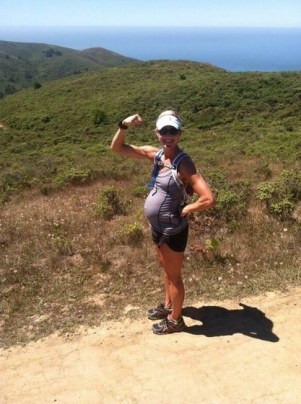
Source: Sarah Evans

Source: Sarah Evans

KF: Sounds like it! And then you were able to get back on the trainer and go running a few weeks after your C-section; how was the transition back to your usual activity levels?

SE: Having a C-section was not my plan, as I really wanted to have a drug-free, “natural” birth, but my little one was stubborn and turned breech so I was relegated to a C-section. It did slow down my recovery and my return to running, but what felt like an eternity only ended up being a limited timeframe.

My OBGYN gave me the green light to start exercising 18 days after I had my baby girl, and the first thing I did was 40 minutes on my bike trainer that very afternoon! I eased in carefully the next day by walking uphill on the treadmill for 30 minutes and the following day by doing intervals of slow jogging and walking uphill on the treadmill. I did these kind of workouts for the next 10 days, and exactly 4 weeks after having my baby girl I went for my first run outside: a lovely, solo six miles, and it felt amazing! I couldn’t have been happier (if a bit sore) to be running again – especially without the extra weight on my frame!

I think I bounced back so quickly because of my mental drive and strength – it didn’t hurt that I also went into my pregnancy in top shape. I was resolved, as much as I could, to stay in running shape and continue to run up to the day I gave birth. I really pushed hard to get back to running as soon as possible, and I was also lucky to have no complications other than my unplanned surgical procedure. The support of my family and husband, who knew how important it was for me to get a little piece of myself back after giving birth, also aided in my quick turn around and recovery.

KF: Now that you’re a few months out, how do you think having a baby has changed your running, currently?

SE: Honestly, I feel like having a baby has made me a stronger runner. I have a quickness in my step that wasn’t there before (maybe it’s getting home faster to hold her!), but I also think it comes from the extra weight load I’m not carrying and an increased mental toughness from going through pregnancy and birth.

While it’s nice to be able to head out the door for a run, I’ve learned that efficient and quality runs are now much more important since I don’t have all the time in the world to be out and away from my family. When I’m struggling on a run now, I think about how I felt right after giving birth, hobbling to get to the kitchen or feeling sore after a 20-minute walk. The fact that I’m now able to exercise again encourages me to pick up the pace and not take for granted how quickly I bounced back.

I think that if I could handle the pain of pregnancy and birth but still love and enjoy every minute of it, then I can handle the physicality of the last miles of an intense running effort. Many athletes understand the odd enjoyment with the pain of a marathon, racing, or pushing yourself on a run, but to experience the parallels between exercise and pregnancy is particularly rewarding.

KF: With baby girl in the picture, how have you adjusted/will you adjust your routine going forward?

SE: My routine has definitely changed! I can’t wake up on the weekends and head out the door whenever I’m feeling up for a run or come home from work early and go for a 5pm yoga class.

Now I wake-up earlier, especially during the weekdays before my husband leaves for work, if I want to get in a solo run outside. Otherwise, I know I will be running on the treadmill (it’s a blessing and a curse to have the option of a treadmill in my home). Most recently I got a BOB Ironman running stroller, which is a good option to get out on a slower run with my daughter, but race-specific training is best done without my adorable companion.

I do have my standing day, Sunday mornings, when I trail run with my group. My husband knows how much I enjoy getting out on the trails, so we make Sunday my “free mama” day! For me, being able to run and have some solo time makes for a better, happier and saner person and mom at home. I think it’s important to have a set day and time every week that’s just for you, no matter what you feel like doing with it!

Another big adjustment is working out from home a lot more. I’ve had a long maternity leave and worked from my home office a lot before I went out, so I get in my workouts whenever I can in my little fitness area (which is set up in our garage). That relieves any stress of getting out the door and preparing baby for a gym daycare. Working out at home has really given me the best way to stay in shape and get it in when I can!
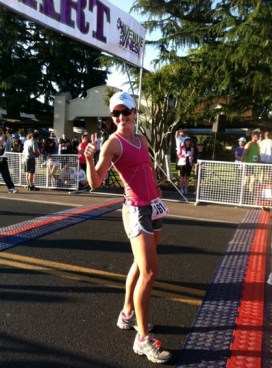
Source: Sarah Evans

Source: Sarah Evans

KF: Speaking of — can you share your favorite exercises for toning up and getting your core strength back post-baby?

SE: Getting my core strength back was probably the toughest part of recovering from baby. I didn’t start any specific core workouts until about six weeks out from giving birth, and when I did I started with planks — both regular and side planks. I also added in leg throws, v-ups, planks with a twist under and roll-ups. Then I added in a P90X ab workout (a quick 15 minutes of intense abs; perfect to do on a yoga mat in your living room when baby is rolling around on her playmat!).

I’ve recently added in some cross-fit type work (specifically called IronStrength that I found on RunnersWorld) that incorporates so many mixes of activities that you don’t realize work on your core. All of this is done at home in my living room on a yoga mat with little equipment needed, and it’s something you can do while your baby is awake and incorporate them into the routine.

I do a lot more core work and abs now than I did before pregnancy because I feel that area was the most difficult to tone while pregnant, and it didn’t quite bounce back like everything else. I also need the extra stability in my back to carry around baby, car seat and lug everything around. So I would say planks and incorporating a short 15-minute ab workout 2-3 times a week would be a good combo to building that core strength back!

KF: Great advice! Finally, do you have any other best practices you can share with new moms who are finding it a struggle to get fit again?

SE: Schedule it into your day! Like anything else — a meeting, a doctor’s appointment or lunch with a friend — try to schedule your workout. On the other hand, you have to be very flexible, too, so be willing to fit it in when you can.

I have recently canceled my gym membership and am solely working out at home between naps, feedings, etc. I have a mix of free weights, a treadmill, bike on a trainer, yoga mats, exercise ball, Pilates ring and bench all set up along with some of my favorite workout DVDs and a few online yoga sessions that I follow.

Many times I’ve had to end a workout early to get her up from a nap or change a diaper, and I just pick up the workout later in the day. So I piece together my workouts…or if all else fails, I go for a long walk.

I also try to wake up early a few times a week before she awakes if I want to run outside solo or fit in a worry-free workout before my husband leaves for work. This is obviously much more realistic once baby is sleeping through the night, which I am thankful to say is now happening!

Another thing I suggest is to get on the floor with your baby while they play and roll around. You can do abs, a little yoga session or stretch. I get my baby girl involved with my workouts, holding her or carrying her while lunging or doing squats, or laying her on my legs while we do crunches or lifting heels to the sky. And right after she was born (and before I could be too active), we went for a lot of walks! A more recent “bonding” exercise is running with her in the BOB stroller, which has been an additional challenge to my running strength!

Make your baby and your health a priority, and schedule in time for yourself – for me, that time is almost always spent on a run or a workout, which helps me maintain my old identity as a runner, but also embrace my new role as a mom!

Thanks to Sarah for taking the time to chat! And you can find her here on Twitter, if you’d like to follow along on her adventures in training, racing — and motherhood.