Don’t throw in the towel: 5 tips for sticking to New Year’s resolutions

Source: Paula Bronstein/Getty Images

Source: Paula Bronstein/Getty Images

We all know that making New Year’s resolutions is easy. Keeping them for the next 360-odd days? That’s the tricky part.

But you’re not alone in the annual struggle – by now, almost one-third of Americans will have already cheated on their resolutions, according to a study conducted last year by research and consulting firm YouGov.

The silver living, though, is that there are a few simple strategies to make those resolutions stickier – and help preserve your sanity in the process:

1. Keep your eyes on the prize. We’ve all heard the expression, “Out of sight, out of mind.” Well, the same applies to resolutions; whether it’s a gym class calendar taped to the fridge to remind you to hit up the weekly spin class or a mantra stuck to the bathroom mirror to cue positive self-talk for the day, put it out there – front and center.

2. Eat it like an elephant. How, you ask? One bite at a time! A large, long-term goal is great, but by breaking it into smaller pieces you get to enjoy the satisfaction of achieving each of the smaller goals. And a series of incremental accomplishments will keep you on track and make you feel good, whether or not you actually go on to accomplish your ultimate goal.

3. Aim for a 30-day stretch. It takes about a month to form or change a habit, if you’re focused and consistent with it. This is just a ballpark number and can vary from person to person and habit to habit, but starting with a 30-day challenge is often just the jump-start needed to form your desired routine.

4. “Don’t let the perfect be the enemy of the good.” Heed these wise words from French philosopher Voltaire, and instead of pushing yourself to an unattainable “perfect,” accept that “good” really is enough. Forget the all-or-nothing mentality; aim for 80 percent, and avoid that inevitable cycle of self-loathing when you need a day off from the gym or indulge in dessert at dinner.

5. Think like Pavlov. We all know that following through on a resolution can take some perseverance, but a little positive conditioning can go a long way. Buy some new workout gear for the gym, plan a mini trip to keep stress levels low, or even splurge on a fancy piece of kitchen equipment to encourage more dining in. Whatever it is, celebrate your successes – and ensure future ones – by treating yourself to something that’s fun and in support of your resolution.

What helps you stick to your New Year’s resolutions? 

Resolution rehab: Strategies for a healthier 2014

Source: Dreamstime

Source: Dreamstime

You’ve said it before, and you’ll say it again, “THIS will be the year I finally get in shape/lose some weight/run that race/go to the gym/eat better/etc.” But right about now, many of us find ourselves in the same predicament: creating excuses for the past and making more vague promises for the future.

But it’s not to late to get back on track and break the resolution-relapse cycle in 2014. Challenge yourself to make this year different; keep these guidelines in mind, and you’ll be well on your way to conquering those goals for the New Year:

– Change your mindset. “Resolution” has become a four letter word. Few people keep them, and most forget about them come February. So instead of feeling destined for failure, think about resolutions in terms of slow, sustainable lifestyle changes rather than cold-turkey cutoffs.

– Make it measurable. Saying that you want to “lose weight” in 2014 won’t cut it; you’ve got to define the goal and give yourself deadlines to keep things on track. For example: “I will lose one pound every two weeks for the next six months,” or “I will do three cardio sessions and two strength training sessions per week.”

– Be realistic. If you know something hasn’t worked on the past, it’s time to try a new approach instead of hitting your head against the wall over and over again each year. Positioning yourself for success means starting with do-able changes and building from there, versus choosing a grandiose goal that you know is long shot.

– Don’t expect perfection. It’s important to avoid an all-or-nothing mentality because slip-ups are inevitable. So instead of allowing a setback to completely derail you from your goal, accept it as a learning experience and move on. In the wise words of my grandfather, “Tomorrow is another day.” So don’t let today’s mistakes impede tomorrow’s successes.

– Pace yourself. Remember that the tortoise’s wisdom always rings true: Slow and steady wins the race. Rather than going full bore for a week only to end up exhausted and worn out (or worse – injured), think of your goals in terms of its longevity.

– Hold yourself accountable. Even the most committed people have peaks and valleys in enthusiasm, so use a log to track your progress and ensure you’re continually making strides towards your bigger objective. See yourself slipping? Readjust, step up your effort and get back on track before you veer too far off course.

– Don’t go it alone. Whether you thrive on the support or competitive spirit of the buddy system, there’s no doubt that having a partner in crime packs a punch towards tackling those goals. So find a like-minded friend and keep each other honest – while still managing to make the experience a fun one.

– Celebrate successes. You’re working hard, so be sure to reap the rewards along the way in order to stay inspired. Lost some weight? Buy a new shirt to show off for date night. Adopted healthy eating habits? Allow yourself one “cheat treat” a week to give yourself something to look forward to. Made it to every gym appointment this week? Schedule a massage to soothe those tired muscles. After all, you’ve earned it!

How will you make sure your resolutions stick this year?

Fit Fix: Interview with real-life X-Man, Tony Horton

Source: Beachbody

Source: Beachbody

It’s a generally-accepted rule that most sequels pale in comparison to the originals, but Tony Horton‘s P90X program has bucked the trend of workout one-hit wonders. His philosophy is simple, yet struck a chord with millions: Avoid boredom, plateau and injury – the three things that can cause people to lose their exercise mojo.

After selling more than 4.5 million copies of the original, Horton released a second installment, P90X2, last year to rave reviews. I can personally attest to the program’s results-oriented approach, having knocked nearly a minute off my mile run time after completing the 90-day circuit (read more about it herehere and here). So it’s no surprise that recent release of P90X3 has people buzzing again.

It’s also no secret that I’m a big fan of Beachbody when it comes to getting in shape in the comfort of your living room. So I thought it only fitting to revisit a conversation I had with Horton about the success of the series, his “laws” for health and fitness, as well as how he stays fitter and healthier than men half his age…

Kinetic Fix: What’s your current workout & nutrition regimen? 

Tony Horton: I’m getting away from the linear, traditional training programs of the past. If you’ve done P90X2, you’re familiar with PAP, which is pretty cutting-edge when it comes to athletic and multi-plane training – jumping, turning and twisting like an athlete would on the court. And in terms of nutrition, I’ve changed a bit and have gotten into eating fish and chicken again in order to maintain size and strength as I moved into my 50s. I always try to have at least one massive salad a day, and another big shift has been cutting out sugar, which has been tough because I’m kind of a sugar addict.

KF: We’re coming up on resolution time; how do you get motivated when you’re just not in the mood to work out?

TH: For me, that’s like asking, ‘How to you stay motivated to breathe, eat or sleep?’ Although it’s a task I choose instead of one that helps me survive, I know that if I do it, I’m a better man for it. My health and my immunity improve, and I’m less vulnerable to aches and pains. It’s a universal fact that if you move and eat right, you’re better for it. When you exercise, you slow the aging clock, and when you don’t you speed it up.

KF: Can you share your favorite piece of advice when it comes to staying in shape?

TH: Your goal should be to get fit and stay that way for the rest of your life; it shouldn’t be an up and down pattern where you keep gaining and losing. I have 11 laws of health and fitness, but there are five that rise to the top, which are variety, consistency, intensity, purpose and planning.

Variety means doing what you’re good at – and what you’re not. Consistency means working out five to seven days a week. Intensity means to stop doing it the same way; showing up is 90 percent of it, but the other 10 percent is paying attention and being willing to improve. Purpose means having something so powerful driving you that there’s no question you’re going to miss a workout. And planning and accountability mean figuring out what you’re doing – and when – and fitting that into your schedule. It becomes automatic at that point, like breathing and sleeping.

KF: What do you tell people who may feel too intimated to attempt the P90X DVDs?

TH: When people hear P90X, sometimes they assume that it means 90-minute workouts. There’s an extreme aspect, if you want it, but almost every single move has a modification. This is what gets you through the P90X series. It’s a slow, patient process over time, but you just have to show up and do it. Instead of giving it to you, you have to earn it – but once you earn it, it’s yours and no one can take it away.

KF: Finally, any advice for P90X and P90X2 grads who are hoping to tackle P90X3?

TH: I like to say that it isn’t harder, but it’s different – but it’s harder because it’s different. To graduate from one to the other requires the knowledge that you kind of have to start over because it takes a fit, healthy body and trains it like an athlete. It’s indoor training for the outside world.

Thanks again to Tony for taking the time to chat! Click here for my original interview with him, and visit Beachbody.com for more information or to order P90X3. 

Fave Fix: DDCC women’s activewear

Source: DDCC

Source: DDCC

With the world sports apparel industry expected to exceed $126 billion by 2015 (source: Global Industry Analysts), it’s no surprise that new companies are flooding the market while established brands add “active” categories to their lines to try to grab a piece of the yoga-pants pie (I’m looking at you, Forever21, Victoria’s Secret and Anthropologie).

But while workout clothing companies are seemingly a dime a dozen these days, there is still the occasional new kid on the block that’s worth a second look — especially when they come highly-recommended from your former high school running teammate who is now a professional triathlete (thanks for the heads up, Terra Castro!).

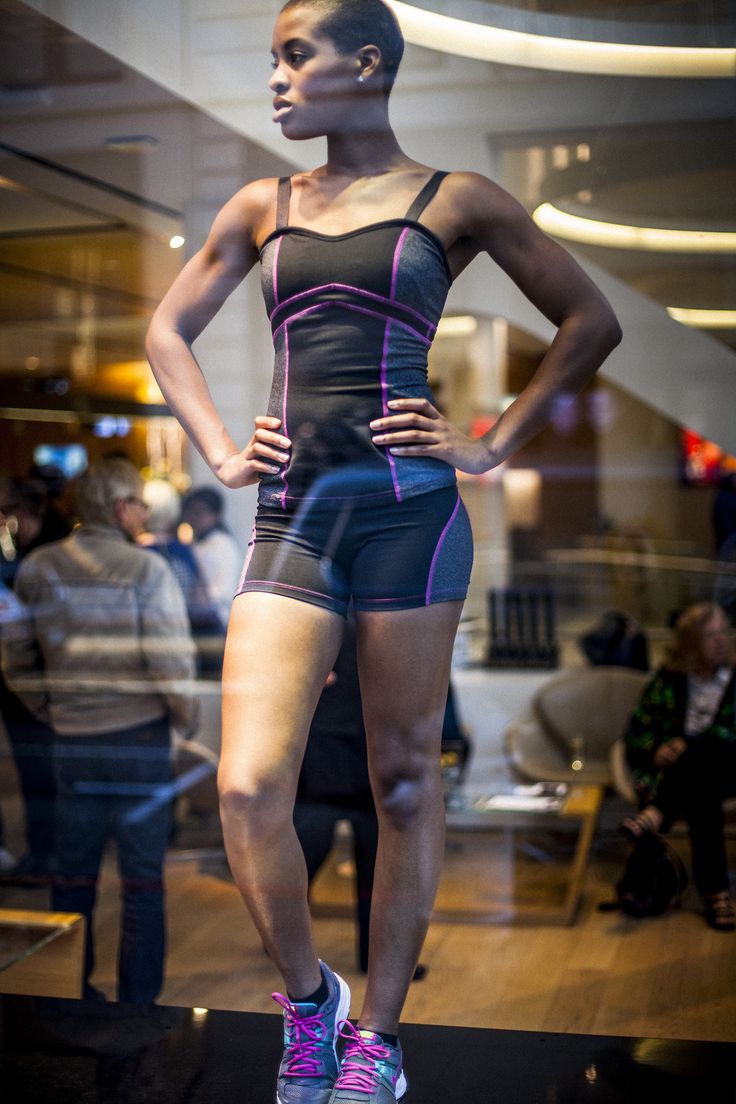
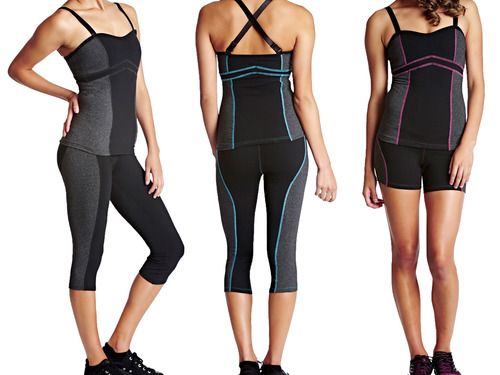
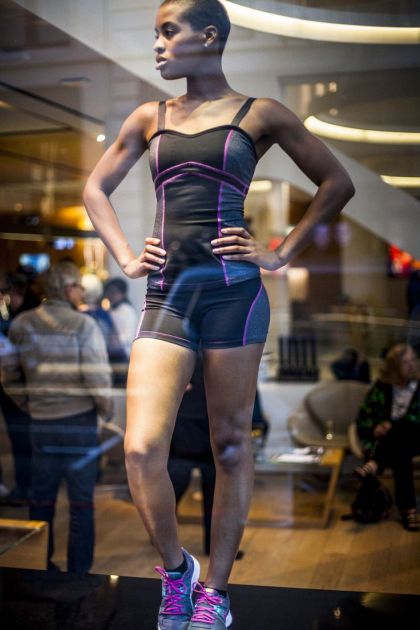
So without further ado, let me introduce you to DDCC, a women’s activewear line designed by Diana Mitchell and manufactured in the heart of my neck of the woods, San Francisco. DDCC’s chic and functional lifestyle/workout apparel is engineered for a sleek, flattering fit — for adventurers and athletes of all sorts.

I sat down with Diana to get the lowdown on her line, along with details on the Kickstarter campaign she’s running for her Spring 2014 collection:
Source: DDCC

Source: Julie Englemann and Kelly Pullio photography

KineticFix: DDCC stands for “Dirty Diana’s Clean Clothes;” is there a story behind the name?

Diana Mitchell: Of course! A nickname I had growing up that I couldn’t stand was “Dirty Diana,” so I decided to own it, and Dirty Diana’s Clean Clothes was born. I’ve since grown to love it; it reminds me to not take things too seriously and to have fun in life. I strongly believe that all of the best things in life — hiking, camping, eating ice cream — are the ones where you end up a little dirty, and having beautiful clothing to support that lifestyle is my goal.
Source: DDCC

Source: Julie Englemann and Kelly Pullio photography

KF: What was the inspiration for starting your own line of activewear?

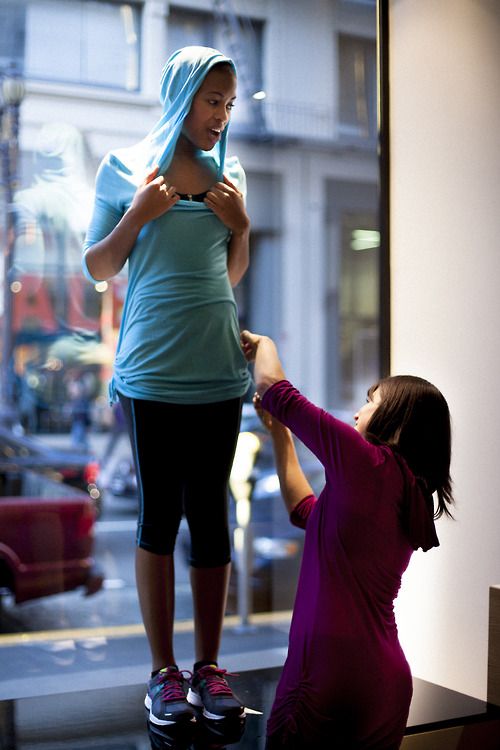
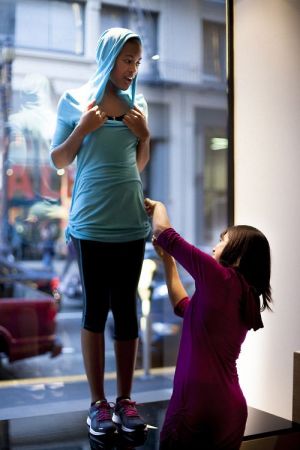
DM: I launched DDCC with three women’s hoodies. San Francisco is a big hoodie town, and I thought I was making clothing for every day wear. I started to see my friends and customers using the hoodies for running, however, and was constantly asked if I was making activewear. Around this time I not only got a new roommate who was training to become a yoga instructor, but I also started a part-time job at a cycling apparel company. Suddenly I was surrounded by active people, which inspired me to start my path towards fitness. After leaving that job I decided to make clothing that would support this new lifestyle and inspire other women to work out, as well.

KF: Tell us about the mission behind DDCC.

DM: A lot of activewear companies have mantras like “Nourish, envision, believe, etc…” We see these words over pictures of perfect women who only have time for running and doing juice cleanses, all by themselves with headphones on. DDCC offers a more realistic and balanced approach to fitness. It aspires to promote an active lifestyle through fostering a sense of friendship and community. My fitness routine started because I had friends who invited me to run, bike and do yoga. I am happier and healthier, and now I invite other friends to work out. I want to show women that exercise doesn’t have to be a boring task with unattainable goals. Incorporating exercise into our social lives enables us to find the time and energy to practice fitness and self care.

KF: Can you walk us through your idea — from conception to completion of the line?

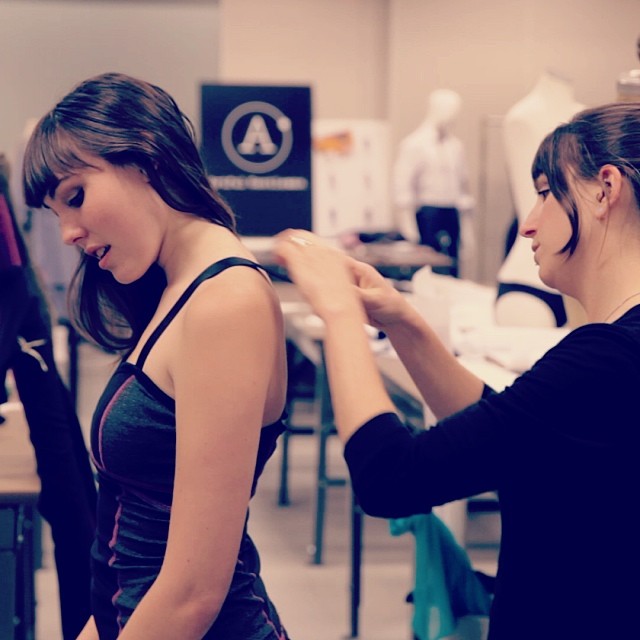
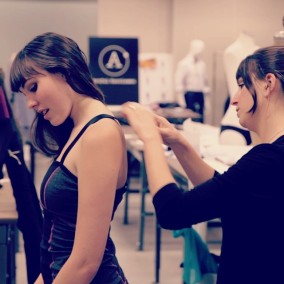
DM: I started developing the line in February, when I began my residency in the Fashion Incubator San Francisco (FiSF). I wanted to create a full line that allowed women to incorporate activewear into layered outfits that would go from brunch, to yoga, to the store, to the beach, etc. The line started with 15 pieces, which the mentors at the FiSF helped me refine into an 11-piece collection. I knew I wanted the line to be sleek and fitted, and to reflect a more sophisticated, San Francisco aesthetic. The charcoal and black color blocking came about because I wanted something that was neutral and could be worn with many different outfits, but was more interesting than plain black. The tops, cover-ups and outerwear pieces not featured on the Kickstarter all merchandise with the active collection to take you from one activity to the next.
Source: DDCC

Source: DDCC

KF: How is DDCC different/better than other brands?

DM: DDCC stands apart in its aesthetic, fit and quality. It’s sleek and fun, without being boring black or bright neon. As a designer and patternmaker who struggles with her own body issues, I engineer each garment to fit and flatter real women’s bodies. Waistbands are anti-muffin top and smooth out love handles so you feel confident in the tanks. Lines are uplifting and slimming, and subtle details like the satin straps and bra zipper make it fashionable and functional. By manufacturing in San Francisco I am deeply involved in the production process, ensuring a higher quality and standard of activewear.

KF: Why did you decide to take to Kickstarter to raise funds for the project?

DM: Since the mission of the brand is to foster friendship and community, it seems only natural to launch through a crowd-funding campaign. Kickstarter has allowed me to tell my story to the world and to find like-minded people from all over. I have supporters from England, Germany and Singapore who would have otherwise never known about DDCC. It’s amazing to see the community come together to support the brand and the mission.

KF: How has the feedback been on your collection thus far?

DM: It has been overwhelmingly positive. Women are so excited to have apparel that is fitted, functional and super-cute! I’ve also had boyfriends and husbands buy the line for their ladies, either because they want to treat them to quality activewear, or because they’re excited to see them work out in something attractive. The two most popular [items on Kickstarter] have been the V-Capri and the Fly Girl, which is the V-Tank/V-Capri combo. I have had positive response for the pants from the plus sized community, too, and have been asked to design a sports bra that is friendlier for the busty ladies. I’ve also been asked if I’m thinking of designing any men’s activewear. These are all ideas I am taking into consideration as I start designing my next line.

KF: Speaking of Fall 2014, what can we expect?

DM: I’ve had a lot of taller women ask me for a full legging, so that is definitely in the works! I’m working with some beautiful new colors (think purple), and am experimenting with some looser tanks and cover-ups. I’ve also been working with a 100-percent-milled-in-California Tencel, which is a luxurious and resilient fabric made from eucalyptus trees. It has the wicking properties of polyester and the breathability of cotton. I am in love with it!
Source: DDCC

Source: DDCC

KF: Switching gears — there’s been a lot of buzz about ‘thigh gap’ and the effect that body shape has on the wear and tear of activewear. What’s your stance/philosophy on the subject?

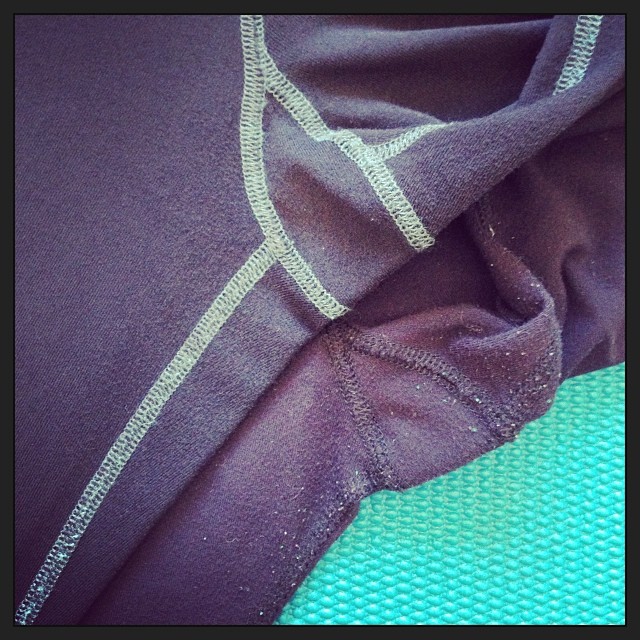
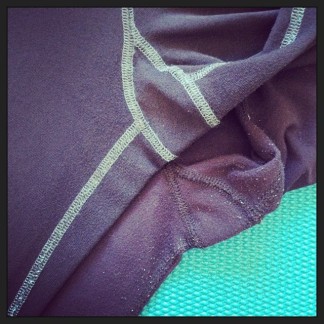
DM: I go back and forth. While yoga pants are never going to be as durable as jeans, I think if you’re paying $100 a pop you should expect a lot more! I recently took a picture of my V-Capri next to a competitor’s brand after running in both. I do not have thigh gap. The competitor’s brand showed significant pilling in the inner thigh region, while the V-Capri looked good as new.

As it turns out, both fabrics are supplex, and both come from the same company. The difference is that the competitor’s brand is “brushed,” which literally means the surface is brushed to give it a softer feel. Think of sweatshirt fleece, which is French terry that has been brushed on one side. The brushing creates a “yummy” feel, giving the product more hanger appeal, but it also degrades the quality of the fibers and leads to pilling. For my collection, I chose the unbrushed supplex, because it feels just as good on, but lasts a lot longer.

People expect a lot from their yoga pants — they want them to feel as soft as cotton, wick sweat away from their body, make their butt look fantastic, and last a long time. Even a great pair of jeans, which will probably undergo a lesser beating than a pair of yoga pants, has its lifetime. So I would say we should be realistic when we buy our activewear. If you can’t afford to replace your yoga pants every few months, make better choices, and buy from brands that you know build products that last.

KF: Agreed! So where do you DDCC going from here?

DM: My goal is for DDCC continue to grow, to become a staple in the activewear industry and to work towards a sustainable model using organic and eco-friendly materials. I would love to continue this idea of motivating others towards fitness though sponsoring races and other active events. Most of all, I hope to eventually pay back everyone who has helped get me to this point, and to give back to the community by providing jobs in the USA.

Want to help Diana make her Spring 2014 line a reality? Click here to make a pledge via Kickstarter! 

Source: DDCC

Source: DDCC

SweatGuru takes the ‘work’ out of finding a workout

Working out just got easier!

Well…you’ll still feel the burn, but at least you won’t break a sweat trying to find local fitness classes, thanks to a new start-up officially hitting the scene today in San Francisco, New York and Los Angeles.

SGhome

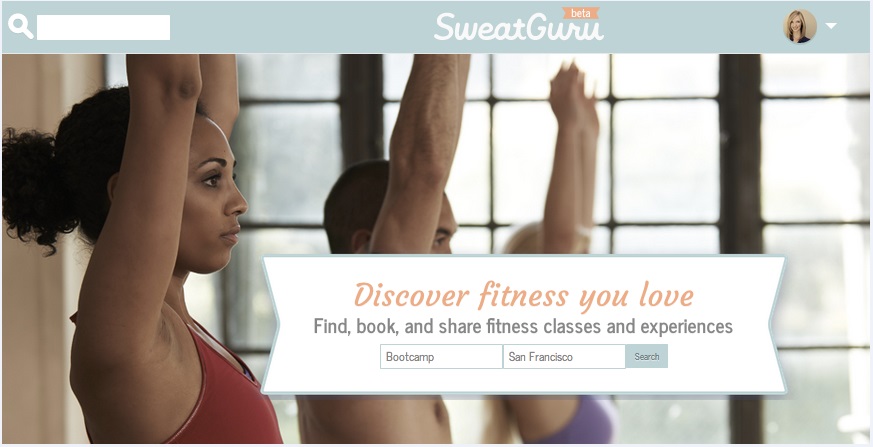
SweatGuru is a marketplace that connects consumers with fitness classes, facilitating discovery, booking and social sharing all in one, seamless online experience. The company also offers small and mid-size fitness businesses a free way to market classes online and an easy, affordable solution to manage their business.

“SweatGuru was born out of the need for a better way to manage my growing bootcamp business, take reservations and stay in touch with clients,” said Jamie Walker, SweatGuru co-founder and CEO. “As a fitness consumer, I also wanted an easy way to discover, reserve and pay for classes in my neighborhood.”

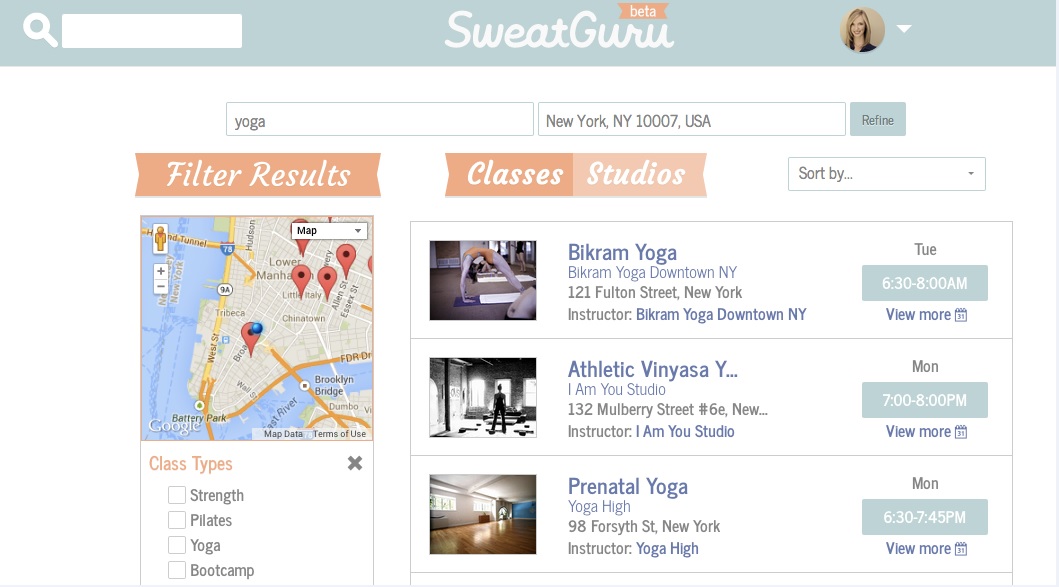
Here’s how it works: First, browse for classes nearby using the search box, view classes recommended for you, or search by class type. You can also filter by price, location and type, as well as follow instructors of trainers in your area. When you sign up for a class, you can log in using your Facebook, Twitter, LinkedIn, or Google accounts and keep track of your purchase history and upcoming classes. Then, simply reserve and pay with a couple of clicks.

SGsearch

Fitness professionals can create a free a business profile and list classes on SweatGuru.com. Small or mid-sized businesses also have the option of upgrading to a paid account (monthly fees start at $19) for a simple, out-of-the-box way to manage instructor schedules, take client reservations and collect payments online.

“SweatGuru is built by fitness pros for fitness pros,” said Walker. “We will start by growing our network in San Francisco, New York and Los Angeles, and look forward to expanding to other markets soon.”

The SweatGuru team. Don't let the goofy faces fool you; these folks are serious about fitness!

The SweatGuru team. Don’t let the goofy faces fool you; these folks are serious about fitness!

For more information and to scope out local fitness class schedules, visit SweatGuru.com.

I just ran 26.2 miles…now what?!

1394468_610296182347262_477887480_n (2)

If you read my race recap, you know that as soon as I crossed the finish line of my recent marathon, I actually told Hubby I never wanted to do it again. Ever.

But he called my bluff: “Ha. I give it two weeks, and you’ll be planning your next race.” 

As much as we joke (and he was right, by the way), it got me thinking about the inevitable post-event letdown.

You see, the marathon’s not over once you cross the finish line. Whether you ultimately rock it or it rocked you, there’s a lot of buildup to that big day. Those months of preparation become all-consuming and include hundreds of miles, a roller-coaster of emotions and a hell of a lot of commitment.

So how do you fight boredom, stay sane and find a sense of purpose once the intensity of training has ceased? It’s actually quite simple, when you think in terms of planning for it with as much care as you plan for everything that precedes the race…

Women on Road laying down1

1. Replenish your body. Now’s the time to re-stock what you’ve depleted during months of hard training and a grueling race. Not only will it help move the recovery process along, but rewarding yourself with a favorite treat can also help lift the spirits (just don’t make a habit of it).

2. Kick up your feet. Although it feels counter-intuitive to avoid the very thing that helps you release stress and anxiety (working out), it’s important to let your body rest and recover because it sets the stage for your next round of training.

3. Set a new goal. Think both short- and long-term here. Start by assessing your race performance, then set a master goal, along with incremental goals to help get you there. Maybe one marathon was enough, so you choose a new distance and focus on training toward that. Perhaps you’re hungry to PR in your next marathon, so you focus on building speed and endurance to create a stronger base. Or if this marathon was a stepping stone to a longer race (ultras, triathlon), you can use it as a learning experience to inform your training going forward.

4. Ease back in slowly. Hit it too hard too soon, and you may end up setting yourself back with illness or injury. The general rule of thumb is to take an easy day for each mile you run in a race, so now is the perfect time to pick up a non-impact cross-training activity that will help strengthen your running down the road.

5. Listen to your body. Again, it can be tough to shift gears after months of putting pedal to the metal toward a singular focus, but make a concerted effort to quiet your brain and allow your body to lead the way. Did you notice any weak links during the race? Are you feeling lingering aches and pains in particular spots afterward? Now’s the time to address imbalances so you can “train up” those weaknesses for the next time you toe the start line.

So where am I at this point? Well, I’m happy it’s done, but sad that it’s over.

I’m thrilled with how my marathon went, although there are some things I might tweak next time around. Yes, I said “next time.” And no, I’m not signing up for one in the immediate future…but I’d be lying if I said I haven’t thought about giving that elusive sub-four goal another shot at some point.

For now, though, my main goal is to focus on increasing my speed so I can shoot for PRs at other distances — the half marathon and 10K, in particular. In terms of smaller goals in the interim, I crave the consistency of a regular training schedule, so I’ll be putting together a mix of speed-focused workouts, along with complimentary cross-training.

And, after allowing my body to properly bounce back, I’ll hopefully be ready to hit it hard in the next training cycle.

How do you beat the post-race blues? 

Knotty by nature? Roll your way to fewer running injuries

Photo credit: FitSugar

Photo credit: FitSugar

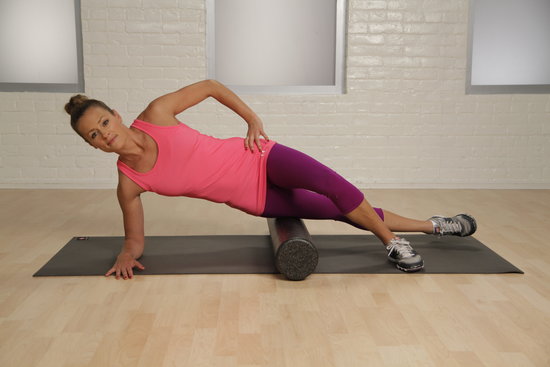
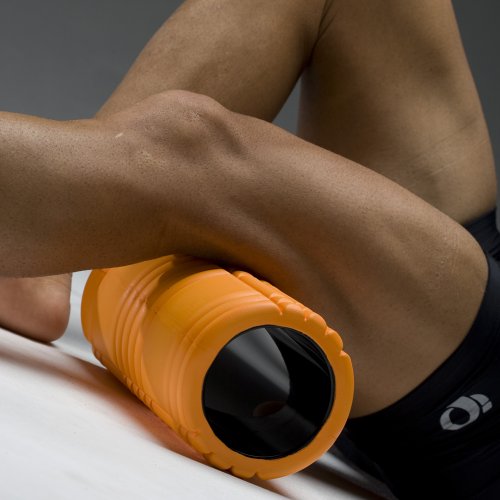
Whether you’re a casual jogger or competitive racer, you’ve likely dealt with aches and pains. Inevitable, yes. But debilitating? Not if you take an active role in preventing injury and promoting recovery with every runner’s best friend: the foam roller.

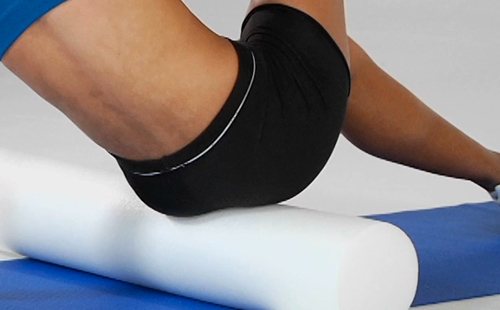
Athletes use rollers to perform self-myofascial release (SMR), which helps to relax soft tissues, promote circulation and ultimately stretch out tight muscles and connective tendons that are most prone to injury.

Photo credit: Runner's World

Photo credit: Runner’s World

Why’s this important? Well, an out-of-whack body (due to injury, poor posture, over-training, little-to-no stretching, etc.) has poor range of motion which, over time, can morph into a larger, chronic issue.

SMR allows athletes to address underlying problems before they get out of hand (i.e. beyond repair).

Think of your roller as the next best thing to a personal physical therapist kneading out knots, plus it’s a lot cheaper and can be done in the privacy of your home.

Photo credit: Trigger Point Performance

Photo credit: Trigger Point Performance

Rollers range from simple foam ($12 here on Amazon.com) to sophisticated grids for a more targeted massage ($40 here from Trigger Point Performance Therapy).

Type aside, the key to success lies in regular use – not only to help work out kinks and stretch, but also for improved core strength, balance and spinal mobility.

Focus on trouble spots – for runners, those are calves, shins, hamstrings, quadriceps, IT (iliotibial) band, piriformis and back muscles – and keep the following tips in mind (and if you’re looking for more guidance, I’ll share specific exercises in a follow-up post):

  • Prepare yourself – expect some discomfort, and when you hit a tender spot, hold for 60-90 seconds
  • Be patient – it’s taken days, months or maybe even years for your muscles to tighten up; don’t expect them to loosen immediately
  • Go slow – rocking back and forth quickly may feel good, but settle in to really hit deep tissues
  • Commit the time – you can safely perform myofascial release every day; do it as often as possible to re-train muscle memory
  • Stay flexible – add stretching to your routine to gain even more mobility in problem areas
  • Use common sense  – any pain that does not improve should be evaluated by a physical therapist or physician

Bringing Sexy Back: Core exercises for runners

Photo credit: Jupiterimages/Brand X Pictures/Getty Images

Photo credit: Jupiter Images/Brand X Pictures/Getty Images

More than half of all runners are injured in any given year, and almost 90 percent will experience some type of running-related injury in their lifetime.

With those odds, it’s pretty tough to avoid getting hurt sooner or later, but you can decrease your chances by being proactive about injury prevention. This means addressing anatomical imbalances (through things like stretching and strength training) before they become symptomatic (i.e. injuries).

Photo credit: WalkJogRun.net

Photo credit: WalkJogRun.net

I learned this firsthand after experiencing some pain in my lower back after long runs. It took a skilled massage therapist to notice that, while I do regular full-body strength training, I have some work to do in that particular area.

You see, we’re only as strong as our weakest link. And while runners focus most of our time on building heart and leg strength, we’re remiss to dismiss the core.

Not only is a strong midsection essential for more stable, efficient and powerful running (this article from Bodybuilding.com explains it well), but it’s also an effective insurance policy against future injury.

Runner’s World does an excellent job of illustrating how your core supports various movements in this piece, but I also wanted to share a few moves that I’ll be adding to my weekly workouts to help build stronger lower back muscles…not just for my long runs, but for the long run.

Lower-Back Builder #1: Superman

Works: Back extensors, which run on either side of the spine, as well as the glutes

  1. Lie face-down on the floor with your arms and legs extended and neck in a neutral position (i.e. eyes on the floor).
  2. Keeping limbs straight, simultaneously lift your arms and legs until they are several inches off the floor.
  3. Hold for two to five seconds and lower back down to complete one.
  4. Do three sets of 12 reps.

Lower-Back Builder #2: Donkey Kicks

Works: Glutes and lower back

  1. On all fours (with your wrists under your shoulders and knees under your hips), extend your right leg up and back, toward the ceiling.
  2. Continue lifting and lowering your leg to its starting position, keeping your butt and legs engaged.
  3. Do 20-30 reps on each side.

Lower-Back Builder #3: Dead Lifts

Works: Everything from lower back (erector spinae), gluteus maximus and hamstrings to quadriceps and other stabilizing muscles

  1. You’ll need a barbell for this one! Stand with feet shoulder-width apart and balls of feet under bar.
  2. Squat (thighs should be parallel to floor; legs at a 90-degree angle) and grasp the bar with your hands slightly more than shoulder width apart, outside of your legs.
  3. Look forward, tighten abs and slowly straighten your legs, which will allow you to lift the bar – straight up vertically, close to your body.
  4. Come to a standing position with upright posture and shoulders pulled back. Allow the bar to hang in front of your hips; do not try to lift it any higher.
  5. Keeping your back straight, return the bar to the starting position in a controlled manner. Push your butt out and back, as if you are going to sit down in a chair, and keep your head up.
  6. Do two sets of 12.

Bonus Move! The Clam

Works: Gluteus medius (the culprit in chronic, recurring conditions such as Runner’s Knee, Iliotibial Band Friction Syndrome, Achilles issues and low back pain, to name a few!)

  1. Lying on your side, bend your knees so that your legs form a 90-degree angle in front of you, hips in line with shoulders.
  2. Keeping the top leg bent, slowly lift your knee to the ceiling while keeping your feet together and bottom leg stable.
  3. Do two sets of 20 reps on each side.

Disclaimer: Although I am a former ACE-certified personal trainer, you should consult a physician before starting any exercise program or diet plan. If you choose to do any of the workouts featured on this website, you do so at your own risk.

Set sail this summer to reap mind and body benefits

sailing_to_the_sunrise

While many of us consider sailing more of a hobby than a sport (that is, unless, you’re an America’s Cup contender!), its health benefits warrant a second look at this activity as an ideal way to supplement your fitness regimen while maintaining a sense of adventure this summer.

Being out on the water has a profound effect on both mind and body, and below are just a few of the potential positive side effects should you venture on your own voyage this season.

Muscle Strength & Endurance

Many sailing movements require great arm strength (constantly pulling and hoisting the sails in order to direct the boat or yacht), which helps to strengthen muscles of the back, shoulders and thighs.

Cardiovascular Fitness

Did you know that oxygen uptake during sailing can be even greater than when you play tennis or baseball? The more intense the activity, the better, which also reduces your risk of obesity, hypertension and heart disease.

Sense of Well-Being

Salty sea air is supposedly charged with ions that aid in oxygen absorption, which can help balance your levels of serotonin, a chemical produced by the body that is associated with mood.

Stress Reduction

The rhythmic movement of the boat combined with the sounds of lapping water and wind in the sails can influence brainwave patterns, providing a soothing environment that promotes a sense of relaxation.

Balance & Agility

Maneuver quickly around a rocking boat, and you’ll soon discover that a solid set of reflexes, center of balance and hand-eye coordination are a necessity, especially when tacking and gibing.

Focus & Concentration

With a singular goal of staying safe (i.e. not sinking) the crew’s ability to focus increases exponentially, which is an especially important skill for today’s chronic multi-taskers to maintain.

Communication Skills

Both verbal and non-verbal communication is critical to the captain and crew being able to act as a cohesive unit to navigate, tack, or otherwise manipulate the boat through various scenarios.

Collaborative Environment

Finally, sailing fosters great cooperation and teamwork because each person on board has the potential to make an important contribution toward keeping the vessel afloat and running smoothly in the correct direction.

“Learning to sail is just the beginning,” according to the American Sailing Association, the leading authority on sailing instruction and sailing schools in the U.S. (check out their list of sailing schools, by state, for a location near you).

The organization’s certified professionals are capable of teaching all levels of abilities, so there’s no excuse not to set sail – safely and with confidence – this summer!

Body after baby: Real moms weigh in on what worked

Photo credit: HappyBabyWorkout.com

Photo credit: HappyBabyWorkout.com

Regardless of how quickly you initially bounce back after having a baby (thanks, in part, to breastfeeding and other post-delivery hormonal shifts that boost metabolism), there’s usually an inevitable plateau of ‘won’t-budge’ pounds with which you’ll have to contend.

But let’s get one thing straight: We’re promoting being healthy, feeling good about yourself and instilling good habits, rather than perpetuating some unattainable, unrealistic standard here.

I recently provided a few tips on the topic, but as many moms know, there are no hard and fast rules when it comes to reclaiming your pre-baby body. So why not ask the experts themselves?

Here are a few strategies for success that helped these fit-minded moms get back in the saddle.

Lindsey, mother of two, in Oregon:

First, I ate a balanced breakfast to ward off the temptation to mindlessly graze on my children’s goldfish. Second, just get moving! I did Stroller Strides, and the incorporation of intervals, cardio and resistance training all while sweating it out with other moms was awesome. Finally, don’t feel guilty for cutting a chunk out of your busy and hectic day to focus on your own health and happiness.

Aleksandra, mother of one, in Michigan: 

Initially after I had my son, I allowed myself the time to adjust to a new role and didn’t worry about my body or weight. Once I had a good handle on my new life, I began meal planning to take the stress out of what to eat. It keeps me eating well even when I can’t squeeze a workout in, and it got me back to my pre-pregnancy weight fast. Our bodies can do amazing things with the right fuel!

Katie, mother of two, in Oregon:

I have two tips for getting your pre-baby body back: First, eat well and exercise (if possible) during your pregnancy. Swimming is a great cardiovascular work-out for later stages of pregnancy because it’s low-impact. Second, nursing has many health benefits for mom and baby, AND it burns a ton of calories!

Danielle, mother of two, in Hong Kong:

Having No. 2 and keeping up with both of them cuts down on your meals and keeps you on the run!

Crystal, mother of two, in Oregon:

With my first, I went on walk/jogs just about every day; the key is to have a good stroller. The second time around, we joined a gym, and I do barre and swim. In all honesty, though, the weight came off because my boys loved to nurse. Sucked it right out of me!

Claire, mother of three, in North Carolina:

Find something you love and make time to do it! Yoga is such an integral part of my life, and it’s providing so much benefit, I always make the time to practice. I can honestly say that beyond the way it’s transformed my body, yoga has helped me to become a better parent, spouse and friend. Whether an early morning class or late evening, I make it fit with my crazy family and work schedule. Hey, who couldn’t benefit from a little ‘namaste’ in their lives?!

Hilary, mother of one, in California:

If you’re a mom who exercises intensely and is used to mega-calorie-burning workouts, breastfeeding doesn’t compare. It does burn calories, so it’s a nice little addition, especially when you’re slowly getting back into shape. But, exercise and diet should still be considered important and necessary if a mother wants her “pre-baby” body to return.

Megan, mother of three, in Oregon:

I have two things that keep me on track: One, I always eat a protein-packed breakfast. I try to fuel myself before the kids get up or else I’m rushed and frazzled and don’t take the time to be intentional about food. And two, I play with the kids! We have dance parties, run around outside playing games, take tons of power walks and are just a really active family.

Cara, mother of one, in California:

The hardest thing about squeezing in exercise time post-baby is…the baby! You can’t just throw on your shoes and head out for a run on a whim anymore. I find it helpful to plan ahead and commit to specific fitness activities, whether it’s a stroller power walk with other moms or a mommy & baby yoga class. Having other new moms to do activities with is also great because you motivate each other to follow through with fitness dates, you can bond over your new life, and no one judges when your baby has a meltdown! Another tip is to look for classes that you can bring the baby to, such as yoga, pilates and Stroller Strides. It’s fun bonding time with your little one, and there’s no childcare excuse!

Hilary, mother of one, in Massachusetts:

I started Pure Barre around six months because I couldn’t do anything high impact while nursing. I joined a Baby Boot Camp class, too. My husband actually gave me the sessions as a Mother’s Day gift, and it was GREAT!

Melissa, mother of two, in Oregon: 

Find a girlfriend and work out together. It keeps me accountable, and you get your girl time in, too. There is no way that I would wake up at 5:30 to go for a run if I didn’t have a girlfriend waiting to meet me!

Kelly, mother of three, in Michigan:

First and foremost, be patient. I use the same rule-of-thumb as I do for breakups: Getting over it can (and should) take at least 1.5 times the amount of time it took to get into it. Everyone’s different, and it takes time, so eat clean and keep working on it little by little, and you’ll get to where you want to be. I do think it’s important to note that even if you’re dedicated to your body, mental health and happiness are much more important than looking like you didn’t have a baby – especially when you’ve just brought a person into the world, and double especially when you are on your third or fourth month of not sleeping through a single night!

Liza, mother of three, in Oregon:

I take it slow and start out with some hilly walks around the area, and gradually work back into some runs. I love the workouts on TV On Demand, too! It’s easy because it’s in your house, and you can pause it if you need to change a dirty diaper 🙂

Thanks to all the lovely moms who contributed their two cents!