Four quick workouts to fight treadmill fatigue

Photo credit: TriathlonMagazine.com

Photo credit: TriathlonMagazine.com

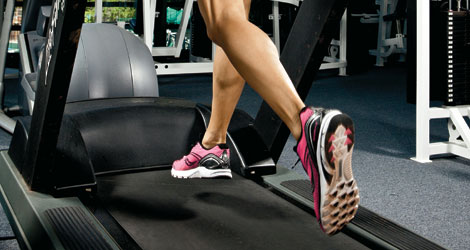
If the heat, humidity and scorching summer sun are making it tough to keep your cool when exercising outdoors, there’s no shame in taking it into the gym (just ask @RunEMZ!).

But don’t waste a workout; rather than running on autopilot, try tackling a new challenge with one of these 30-minute treadmill routines:

1. Take a hike. 

If you can’t hit the trails, mimic it indoors with a workout that combines brisk walking with various inclines to target your quads and butt.

Try this: 

  • Walk at 3.5 miles per hour on a flat belt (zero incline).
  • After the first minute, increase the incline by one percent every minute until it reaches five percent, and stay there for five minutes.
  • Next, lower and raise the belt by five percent every two minutes until you’ve been exercising for 20 minutes.
  • Spend the last 10 minutes repeating the first segment in reverse (starting at five percent incline for five minutes, gradually decreasing the incline by one percent for each of the last five minutes).

2. Roll with it. 

Once you’ve mastered walking at a small slant, it’s time to kick it up a notch and pretend you’re jogging on the rolling hills of San Francisco. Play with the speed, incline and duration to create a program that fits your needs, continually testing your limits to see greater gains in endurance.

Try this:

  • Start slowly at five miles per hour and a one percent incline for the first three minutes.
  • Bump up the speed to 6.5 mph for the next three minutes, but keep the incline the same.
  • Then, slow down to 5.5 mph, raising the incline to three percent.
  • Continue in three-minute intervals, pushing for higher speeds and slopes when your initial levels start to feel easy.

3. Play with speed. 

If sprinting in place for 30 minutes sounds like torture, try a few fun tricks to keep your mind occupied while you rack up the mileage. For example, if you’re watching a 30-minute TV program, try sprinting (80 percent of your all-out effort) during the commercials. Or if music is your motivation, make a special playlist and pick up the pace for every other song.

Try this: 

  • Take a deck of cards and get creative by assigning a speed or incline by suit, color or number.
  • Shuffle, and keep them in an envelope on the treadmill’s control panel.
  • Every two or three minutes, draw a new card and do what the card says, which adds a nice element of surprise.

4. Tone your total body. 

A circuit workout is good for both calorie burning and short attention spans. Sure, it requires some coordination hopping on and off the treadmill to perform a series of exercises in between sprints, but there’s nothing like knocking out your cardio and strength training workouts at the same time.

Try this: 

  • Warm up on the treadmill for five minutes at a light jog.
  • Hop off, and do 15 push-ups and 15 lunges.
  • Get back on the treadmill, jogging for one minute, sprinting for 30 seconds. Repeat this interval pattern three times.
  • Hop off and do 15 bicep curls and 15 tricep dips. Repeat the treadmill segment.
  • Get back off, hold a plank for one minute, and then do 15 shoulder presses. Repeat the treadmill segment.
  • For your final strength segment, do 15 squats and 15 dumbbell rows.
  • Hop on the treadmill one last time for a few minutes to cool down.

“Mix it Up” lower-body treadmill workout

I used to skimp on lower body strength training because legs get enough of a workout during weekly runs, right?

Wrong.

It’s a common misconception that strength training for the lower body is not necessary for people who do a great deal of cardiovascular exercise. But simply moving your lower body is VERY different than strengthening the muscles there.

Regular lower-body exercise not only increases bone strength, improves balance and stamina and decreases injuries to knees and hips, but it also helps slow the physical weakness that is part of the aging process and maintains balance, stamina and confidence.

I learned this the hard way during my last round of marathon training, so this time I’m not taking any chances. Here’s a fun four-miler that incorporates bouts of leg exercises between five-minute run segments on the treadmill:

LowerBodyTreadmillWorkout

For even more of a challenge, feel free to play with the incline. Aim to maintain at least a one percent grade throughout the workout to help prevent shinsplints, but if that’s too easy, adjust it up a few percentage points for a great way to increase the intensity of your workout without having to increase speed or impact on your body.

Simple tips for keeping your cool during summer workouts

Photo credit: Blisstree

Photo credit: Blisstree

Although we wait most of the year in anticipation for them, the dog days of summer can wreak havoc on workouts.

Between heat, humidity and poor air quality, suddenly even the simplest of activities can feel twice as difficult.

But don’t let zapped energy derail your exercise regimen; instead, try these tips for successfully tackling summer sweat sessions.

Mind the time. Early morning and late evening are generally the coolest stretches of the day, so rearrange your schedule to squeeze in a workout without getting beaten down by the midday sun.

Wear proper clothing. Look for lightweight and breathable clothing that wicks sweat, and opt for lighter colors, which help reflect heat better than darker ones.

Hydrate all day. Staying consistently hydrated (four to eight ounces of water every 15 to 20 minutes) helps prevent heat-induced symptoms such as dizziness, stomach cramps and headaches.

Shield skin from the sun. Sunburn is a surefire way to make any workout miserable, so wear a hat and be sure to slather on sunscreen that’s SPF 15 or higher 30 minutes before you head outside.

Allow time to acclimate. It can take anywhere from 10 to 14 days to adjust to a new climate, so as the mercury starts rising, exercise for shorter durations and at lower intensities.

Switch to summer-friendly workouts. Activities such as beach volleyball, kayaking, swimming and hiking torch calories without burning up your body and can be done in the water or the shade.

Rest early and often. You body works harder than usual in the heat, so don’t be afraid to take frequent water and walk breaks to allow it to regulate and recover.

Cool your core body temp. Take a cold shower before and after you work out, and douse your head with a squirt or two from your water bottle when you need to chill out mid-workout.

Take it indoors. When it’s just too hot to do anything outside, take advantage of your air-conditioned gym, pop in a workout video in the comfort of your basement or, when all else fails, do laps at the mall for some good people watching while getting your heart pumping.

Use common sense. Finally, know when to call it quits and stop immediately if you experience muscle cramps, nausea, vomiting, weakness, headache, dizziness and/or confusion, any of which can be cause for concern.

Six smart post-workout snacks

Photo credit: TheBetterMom.com

Photo credit: TheBetterMom.com

Breakfast may be the most important meal of the day, but did you know that your post-workout snack comes in a close second?

Topping off the tank after vigorous exercise is vital to helping your body repair muscle tissue and replenish glycogen levels.

The size of the meal depends on your calorie needs and the duration and intensity of your workout, but it should contain a mix of both protein and carbohydrates.

Studies have shown that this combo not only helps rebuild muscle, but it also reduces cortisol, a stress hormone that wears on your body during strenuous activity.

Here are six of my favorite snacks to help refuel after a particularly tough workout:

1. Protein shakes. 

Experiment with protein powders, fruits and veggies, ice and milk or juice in a blender for one of the most refreshing and satisfying recovery drinks. Or when I don’t have the time (or energy) to be creative, my go-to is Shakeology. Sure, it’s a little pricey at around $4 a pop, but it contains a proprietary blend of digestive enzymes, prebiotics, antioxidants, phytonutrients, adaptogens and all sorts of other rare ingredients from around the world.

2. Yogurt with berries. 

Skip the super-sugary fruit-on-the-bottom varieties, and indulge instead in plain or vanilla flavors (try Greek varieties, such as Oikos or Chobani) with fresh fruit. Not only is this a portable and palatable snack, but low-fat yogurt also has nearly 15 grams of protein. A handy tip? Use frozen berries, which are less expensive and will help keep your yogurt perfectly chilled in your gym bag.

3. Peanut butter. 

However you spoon it or spread it, one tablespoon of this nutty goodness contains only about 100 calories and seven grams of healthy unsaturated fat. ‘Nuff said.

4. Breadless sandwich. 

If you’re not in the mood for a full meal, eat a plate full of fillings! Make easy roll-ups by spreading flavored cream cheese (my favorites are the savory ones from Philly) on lean deli meat before rolling it up for a high-protein, grab-and-go snack. Serve with a side of sliced fruit for extra energy-boosting carbs.

5. Eggs. 

Yes, they’re an incredible, amazingly-versatile and highly-edible post-workout snack that’s low in cost and high in nutritional value. At a mere 68 calories a pop (with 6.3 grams of protein), eggs also contain zinc and vitamin B12 to boost metabolism, immunity and cell production. EatingWell offers a list of 12 healthy, easy egg recipes here.

6. Low-fat chocolate milk. 

Got milk? Try it after your next workout for more effective recovery. A study in the Journal of the American College of Nutrition named it as an ideal post-workout beverage for building muscle. Compared to plain milk, water and sports drinks, it has twice the protein and carbohydrates, an added bonus of calcium. So wear that milk mustache proudly!

For best results, aim to eat within 30 to 60 minutes of your workout, when muscles are most receptive. During this window, there’s an uptick in enzyme activity that makes the body more efficient at storing glucose for energy and rejuvenating fatigued muscles.

Body after baby: Real moms weigh in on what worked

Photo credit: HappyBabyWorkout.com

Photo credit: HappyBabyWorkout.com

Regardless of how quickly you initially bounce back after having a baby (thanks, in part, to breastfeeding and other post-delivery hormonal shifts that boost metabolism), there’s usually an inevitable plateau of ‘won’t-budge’ pounds with which you’ll have to contend.

But let’s get one thing straight: We’re promoting being healthy, feeling good about yourself and instilling good habits, rather than perpetuating some unattainable, unrealistic standard here.

I recently provided a few tips on the topic, but as many moms know, there are no hard and fast rules when it comes to reclaiming your pre-baby body. So why not ask the experts themselves?

Here are a few strategies for success that helped these fit-minded moms get back in the saddle.

Lindsey, mother of two, in Oregon:

First, I ate a balanced breakfast to ward off the temptation to mindlessly graze on my children’s goldfish. Second, just get moving! I did Stroller Strides, and the incorporation of intervals, cardio and resistance training all while sweating it out with other moms was awesome. Finally, don’t feel guilty for cutting a chunk out of your busy and hectic day to focus on your own health and happiness.

Aleksandra, mother of one, in Michigan: 

Initially after I had my son, I allowed myself the time to adjust to a new role and didn’t worry about my body or weight. Once I had a good handle on my new life, I began meal planning to take the stress out of what to eat. It keeps me eating well even when I can’t squeeze a workout in, and it got me back to my pre-pregnancy weight fast. Our bodies can do amazing things with the right fuel!

Katie, mother of two, in Oregon:

I have two tips for getting your pre-baby body back: First, eat well and exercise (if possible) during your pregnancy. Swimming is a great cardiovascular work-out for later stages of pregnancy because it’s low-impact. Second, nursing has many health benefits for mom and baby, AND it burns a ton of calories!

Danielle, mother of two, in Hong Kong:

Having No. 2 and keeping up with both of them cuts down on your meals and keeps you on the run!

Crystal, mother of two, in Oregon:

With my first, I went on walk/jogs just about every day; the key is to have a good stroller. The second time around, we joined a gym, and I do barre and swim. In all honesty, though, the weight came off because my boys loved to nurse. Sucked it right out of me!

Claire, mother of three, in North Carolina:

Find something you love and make time to do it! Yoga is such an integral part of my life, and it’s providing so much benefit, I always make the time to practice. I can honestly say that beyond the way it’s transformed my body, yoga has helped me to become a better parent, spouse and friend. Whether an early morning class or late evening, I make it fit with my crazy family and work schedule. Hey, who couldn’t benefit from a little ‘namaste’ in their lives?!

Hilary, mother of one, in California:

If you’re a mom who exercises intensely and is used to mega-calorie-burning workouts, breastfeeding doesn’t compare. It does burn calories, so it’s a nice little addition, especially when you’re slowly getting back into shape. But, exercise and diet should still be considered important and necessary if a mother wants her “pre-baby” body to return.

Megan, mother of three, in Oregon:

I have two things that keep me on track: One, I always eat a protein-packed breakfast. I try to fuel myself before the kids get up or else I’m rushed and frazzled and don’t take the time to be intentional about food. And two, I play with the kids! We have dance parties, run around outside playing games, take tons of power walks and are just a really active family.

Cara, mother of one, in California:

The hardest thing about squeezing in exercise time post-baby is…the baby! You can’t just throw on your shoes and head out for a run on a whim anymore. I find it helpful to plan ahead and commit to specific fitness activities, whether it’s a stroller power walk with other moms or a mommy & baby yoga class. Having other new moms to do activities with is also great because you motivate each other to follow through with fitness dates, you can bond over your new life, and no one judges when your baby has a meltdown! Another tip is to look for classes that you can bring the baby to, such as yoga, pilates and Stroller Strides. It’s fun bonding time with your little one, and there’s no childcare excuse!

Hilary, mother of one, in Massachusetts:

I started Pure Barre around six months because I couldn’t do anything high impact while nursing. I joined a Baby Boot Camp class, too. My husband actually gave me the sessions as a Mother’s Day gift, and it was GREAT!

Melissa, mother of two, in Oregon: 

Find a girlfriend and work out together. It keeps me accountable, and you get your girl time in, too. There is no way that I would wake up at 5:30 to go for a run if I didn’t have a girlfriend waiting to meet me!

Kelly, mother of three, in Michigan:

First and foremost, be patient. I use the same rule-of-thumb as I do for breakups: Getting over it can (and should) take at least 1.5 times the amount of time it took to get into it. Everyone’s different, and it takes time, so eat clean and keep working on it little by little, and you’ll get to where you want to be. I do think it’s important to note that even if you’re dedicated to your body, mental health and happiness are much more important than looking like you didn’t have a baby – especially when you’ve just brought a person into the world, and double especially when you are on your third or fourth month of not sleeping through a single night!

Liza, mother of three, in Oregon:

I take it slow and start out with some hilly walks around the area, and gradually work back into some runs. I love the workouts on TV On Demand, too! It’s easy because it’s in your house, and you can pause it if you need to change a dirty diaper 🙂

Thanks to all the lovely moms who contributed their two cents!

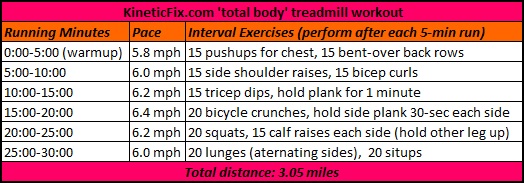
30-minute(ish) total body treadmill workout

While I can’t promise the entertainment level (or cool factor) of this ‘dancing treadmill guy,’ I do have a workout that’ll help make your next trip to the gym a lot more efficient.

It’s a cardio-strength hybrid where you’ll be hopping off the treadmill every five minutes to complete a few moves, so find a spot where you can easily maneuver back and forth without losing your machine between sets.

Before you know it, you’ll have three miles and a total body strength training session under your belt.

Now, that’s something Treadmill Guy can get behind.

KineticFixTotalBodyTreadmillWorkout

Three stability ball moves for a stronger core

Ballast_ACEfitnessdotorg

Photo credit: ACEfitness.org

“Hard core” is more than just a workout mantra; it’s a way of life for those who not only want a better beach body, but who also want to prevent injury, enhance balance and increase stability during all sorts of activities.

Whether you’re swinging a golf club or sweeping the floor, the necessary motions either originate in your core, or move through it; so it’s important to spend some time on this oft-overlooked area.

But if you’re dreading the thought of thousands of crunches, there’s another option for strengthening abs and back: Enter the stability ball, which first burst on the fitness scene in the 1960’s with regular use by the physical therapy industry.

A versatile and budget-friendly tool, the inflatable orb then went mainstream in the late 1980’s and has been used regularly since to improve balance and posture while targeting key muscle groups.

Use it at the gym or buy one for your home, and try these three beginner-friendly moves from American Council on Exercise (ACE):

Supine trunk curl

  1. Start with the top of the ball beneath the center of the back.
  2. Press the lower back into the ball and tighten the abdominals as you curl the rib cage toward the pelvis.
  3. Slowly return to the starting position and then repeat.

Supine oblique curl

  1. Start with the top of the ball beneath the center of the back, then stagger feet and rotate hips to one side.
  2. Anchor the lower hip to the ball and move the rib cage at a diagonal direction toward the legs (for example, right elbow to left inner thigh).
  3. Making sure neck and pelvis are stable, contract and repeat.

Forward transverse roll

  1. Kneel on the floor and place your forearms on the ball, making sure your hips and arms form a 90-degree angle.
  2. From this starting position, roll the ball forward as you extend your arms and legs simultaneously.
  3. Contract your abdominals to help support your lower back, which should not be strained.
  4. Roll as far forward as possible without compressing the spine, drooping shoulders, or rounding the torso.
  5. Return to starting position and then repeat.

If you’ve got a few sizes from which to choose, ACE suggests the following guidelines for finding the ideal diameter to suit your frame:

  • Under 4’6”: 30 cm ball (12 inches)
  • 4’6”–5’0”: 45 cm ball (18 inches)
  • 5’1”–5’7”: 55 cm ball (22 inches)
  • 5’8”–6’2”: 65 cm ball (26 inches)
  • Over 6’2”: 75 cm ball (30 inches)

Ready to add more moves to your stability ball repertoire? Check out these 20 super-effective stability exercises from Greatist.

Beat the heat: Gear for surviving summer workouts

Summer-workout-thriveportlanddotcom

Photo credit: ThrivePortland.com

I have a love/hate relationship with summer workouts.

Love? Longer days, runs at dusk with the smell of fresh-cut grass and dressing without fear of the wind chill factor.

Hate? Sunburns, jogging at a snail’s pace under the beating sun, dehydration, heat cramps and humidity.

Luckily, some of those things can be avoided by taking a few simple precautions (aka getting my butt out of bed earlier and slathering myself head-to-toe with sunscreen).

The others? Well, there’s no better excuse to get some fun, new gear to keep you from suffering through some strenuous outdoor activities in the summertime.

Here are a few of my recent favorites!

Dress to Impress

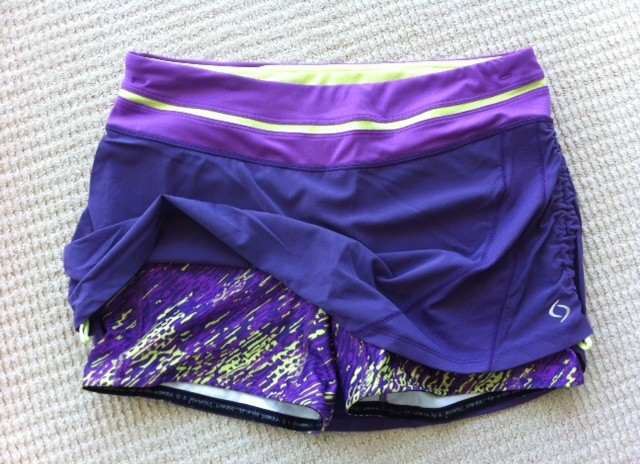
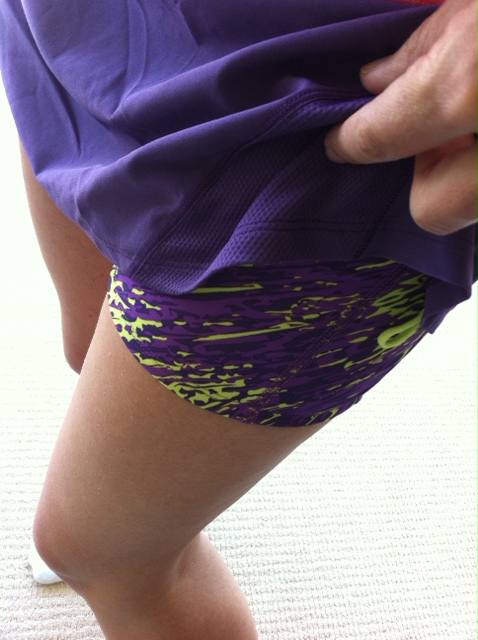
I love a good pair of yoga pants as much as the next gal, but sometimes summer just calls for bare legs. Keep your cool (without losing your dignity in some of those, ahem, ‘barely-there’ shorts) with Moving Comfort’s Sprint Tech Skort ($56), which comes complete with motivational quotes inside the lining to really get you going.

MCskirt

Peek-a-boo! Love the fun colors

MCskirt2

Go with the Flow

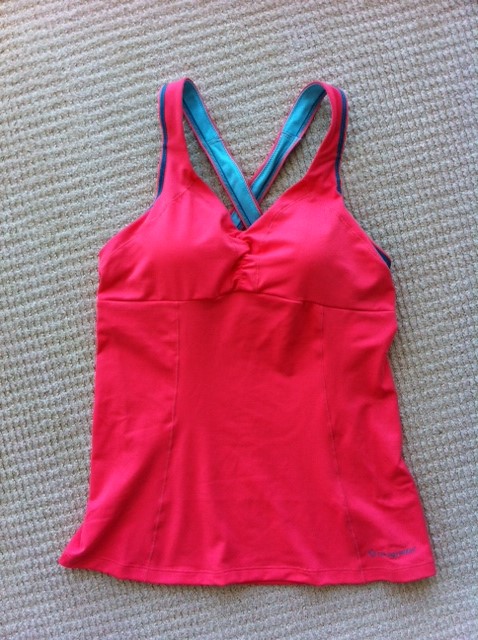
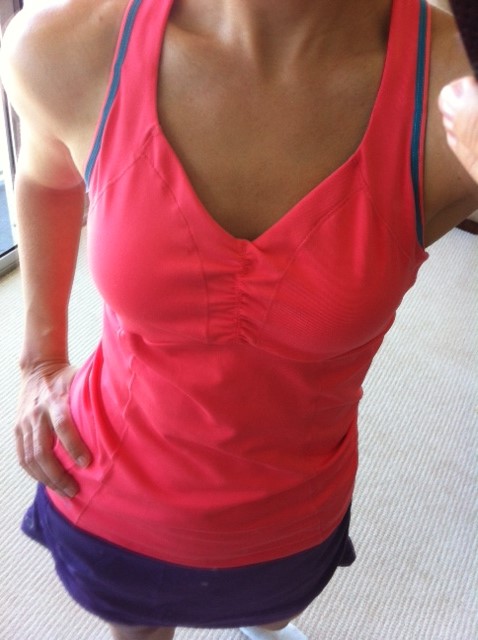
For up top, I’m a big fan of their Flow Crossback Tank ($58). As comfortable as it is cute, Moving Comfort really knocked it out of the park with this one. From the fun pop of color to the feminine ruching at the bust, this tank is not only done well design-wise, but it also has a built-in bra for support during both low- and high-impact activities.

MCtank

MCtank2


Keep a Cool Head

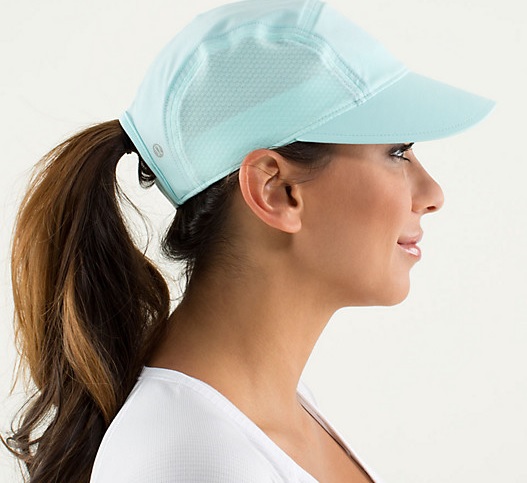
When I want to get out and feel the burn (the good kind) while going pseudo-incognito, I grab my trusty Lululemon Run Hat ($32). The lightweight, moisture-wicking and adjustable cap makes it easy to shield your eyes from the sun and keep hair from going haywire.

Photo credit: Lululemon.com

Photo credit: Lululemon.com

Hydrate, Hands-free

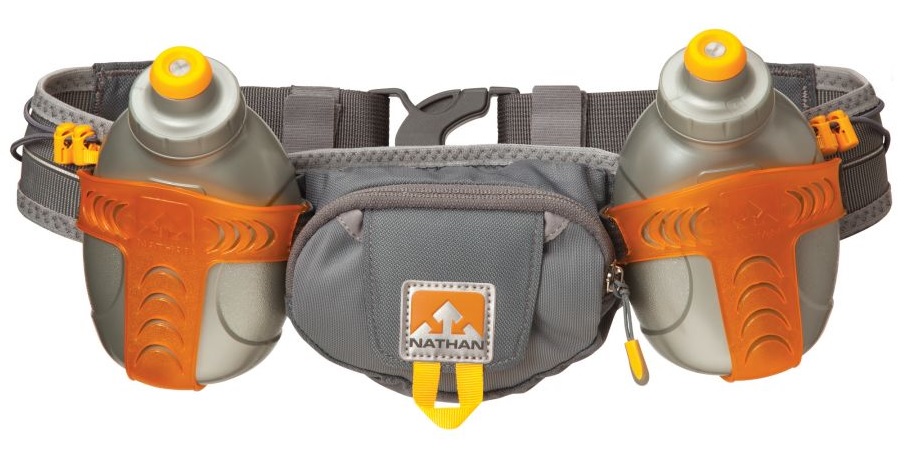
Between hydration, energy gels, keys, cash, phone, music and whatever else you need, packing for a long run can spiral out of control quickly. Contain the madness with a Nathan Hydration Belt ($45). Equipped with easy-squeeze flasks, these belts offer lightweight storage, a chafe-free ride, and easy one-handed access to hydration and other running essentials.

NathanBelt

Photo credit: NathanSports.com

Keep Your Balance

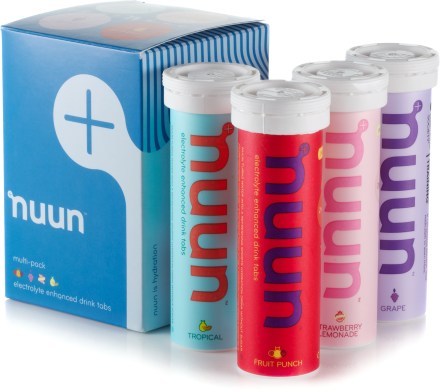
Finally, smart sports hydration takes more than just H2O. Keep from knocking your system too far out of whack by consistently sipping an electrolyte replacement, such as Nuun Active Hydration Tablets ($24 for a four-pack), which contain a quick-absorbing mix of salts and sugars that can alleviate cramps and help muscles function, communicate and burn energy efficiently. Stay cool out there!

nuun

Photo credit: REI.com

Thanks to the folks at Moving Comfort for providing samples for review; all opinions are my own. 

Dare to go bare: 6 tips for embracing barefoot running

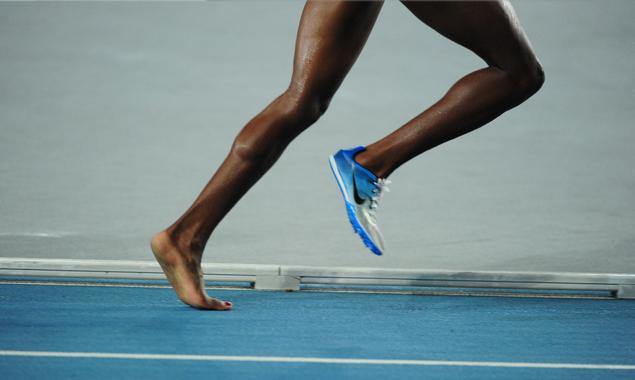
Would you dare to go bare on your next run?  Photo credit: Shape.com

Would you dare to go bare on your next run?
Photo credit: Shape.com

Runners all over the world have bucked the traditional cushioning and orthotics of athletic shoes in favor of taking it all off – their feet, that is.

Inspired in part by Christopher McDougall’s book “Born to Run,” which chronicles the Tarahumara Indians’ ability to run long distances injury-free without shoes, the barefoot trend is gaining in popularity yet remains widely-debated.

Chris McDougall demonstrates his barefoot technique Photo credit: ChrisMcDougall.com

Medical minds are divided and the jury’s still out in the running community, but thanks to the endorsement of a few top athletes who swear by going bare, many weekend warriors are wondering whether or not they should join in on the ‘bare boom.’

But while the allure of improved running form, fewer impact injuries and better balance makes trying barefoot running seem like a no-brainer, there are a few potential challenges to consider, such as hygiene issues, overuse injuries and protection from sharp objects and extreme climates.

As with any new athletic endeavor, the best approach is always to keep an open mind, take it slow and see what works for you. Every runner’s body mechanics are as unique as their respective fingerprints, which means there’s no telling how your body will react and which combination of benefits and/or drawbacks you’ll experience.

So if you decide to go bare, do so with these tips in mind:

  1. Consider your environment. Where and when you run barefoot is very important, so be sure to protect feet properly in extremes and take precautions that correspond to the area in which you’re running – whether it’s urban, suburban or rural.
  2. Aim for variety. Training on hard, rough surfaces toughens feet and teaches you to run lightly to minimize impact, while soft surfaces are a welcome respite during the transition. Get creative and widen your repertoire of surfaces, including beaches (hard and soft sand), sports fields, running tracks, parks (pavement and grass), trails and sidewalks.
  3. Ease in with a minimalist shoe. If you’re not ready to completely lose your shoes (like me), try minimalist footwear that gives the feeling of a bare foot with the benefit of some light support and protection. 
  4. Allow time to transition. As tough as all runners like to think they are, everyone making the shift to barefoot will need to be patient as the body adjusts to this new activity. Avoid too much too soon; opt for short bursts of barefoot during or at the end of your current routine, which will decrease the chances of short-term injury.
  5. Gradually increase time and distance. Barefoot doesn’t translate to “injury-free,” so it’s important to build a solid foundation on which you re-work your running style. Switch from barefoot intervals during workouts to entire runs with your feet in the buff, working up to as many days running ‘footloose and sneaker-free’ as you are comfortable.
  6. Above all, use common sense. Barefoot running is not for everyone, so listen to your body and stop if you’re noticing more drawbacks than benefits. Avoid barefoot running if you have had serious injuries such bone fractures, bone disorders such as arthritis or conditions such as diabetes, which may limit the ability to feel foot pain.

And one final word of caution: Don’t forget to consult your physician before starting any new exercise regimen.

Otherwise, what have you got to lose? Well, besides your shoes 🙂

Paddle your way to a beach body this summer

Photo credit: Marco Garcia for The New York Times

The couple that paddles together…
Photo credit: Marco Garcia for The New York Times

If you’re concerned about summer’s heat causing a slump in your fitness routine, there’s a workout that will have you getting fit while having fun under the sun: Stand-Up Paddleboarding, or “SUP” for short.

There’s a reason it’s the fastest-growing water sport in the world, poised to overtake kayaking and canoeing: It’s so much fun, it’s borderline addictive.

After debuting in Hawaii nearly a decade ago, paddleboarding spread quickly up and down both coasts here on the mainland before landing as a summertime staple in the lakes of the Midwest, as well.

And although it’s roots are in surfing, the sport is known as a more beginner-friendly way for people of all ages and abilities to ease into getting comfortable on a board in water.

It’s also an awesome workout – one that not only engages major arm, leg and core muscles, but also tests your balance and activates secondary stabilizing muscles for a full-body challenge.

Average calorie burn ranges from 500-1,000 calories per hour, which is another reason for the recent explosion in popularity of this super-efficient, low-impact, joint-friendly activity.

Paddleboarding instructor Cody White  Photo credit: MensFitness.com

An action shot of paddleboarding instructor Cody White
Photo credit: MensFitness.com

Undoubtedly, the paddleboarding craze has also been propelled by a host of celebrity devotees who have been photographed trying their hand at it in various destinations round the world (Owen Wilson, Jennifer Aniston, Matt Damon, Rihanna, Kate Hudson and Cindy Crawford, to name a few).

According to experts, it takes about an hour to learn the basics, so whether you’re testing the waters on vacation or venturing to a local body of water to give it a shot, the odds are good that you’ll be up and paddling like a pro in no time.

Interested in learning more? REI provides a terrific overview of stand-up paddleboarding basics here, including necessary gear and techniques for getting started, along with instructional videos and helpful FAQ’s for beginners poised to take their maiden paddle voyage this season.