How I work out…of a workout funk

photo

Fitness has always been a part of my life. Initially, yes, I had to force myself to find the enjoyment in it, but as I got into better shape it became a habit, which has now evolved into a full-blown lifestyle.

Most days, it’s not even a question; breaking a sweat is like scratching an itch. Hubby even jokes that I’m like a border collie and need to get out my extra energy with a good run.

Throw in a race with a training schedule, and I’m in my happy place with A) a game plan, B) a goal, and C) the satisfaction of being able to check something off the list each day.

But once in a while the pendulum slows, and it’s tough to maintain my usual momentum…whether it’s a case of the post-race let-downs, a schedule lull, workout burnout, life throwing a temporary curve ball — or  a combo of all of the above.

Like now, where I’m still processing my HITS Napa race and loosely training for my 50K at the end of the month, all while Hubby and I are preparing to mark some milestones and life changes together in the next few months.

Needless to say, the resolve with which I approached triathlon training has waned. So what to do when your usual outlet(s) for release become potential source(s) of stress?

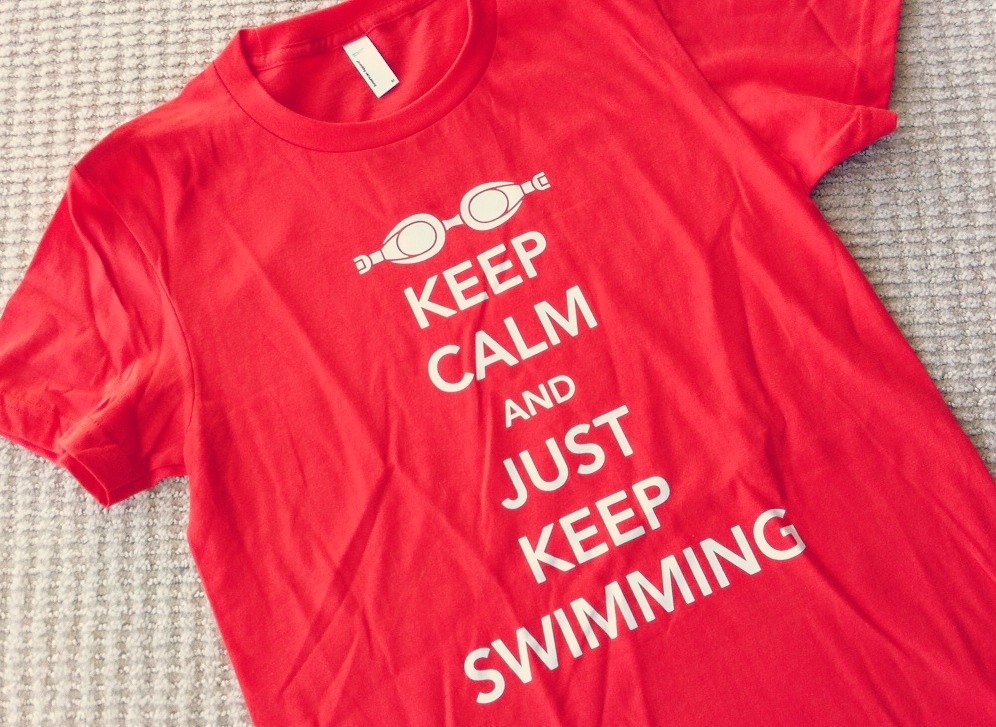
calm

Yup, my new mantra came via mail recently from one of my best friends who wanted to give me a boost (thank you, Marisa!). And little did she know, it led to my return to the pool last week.

I knew I needed to get back on the proverbial horse after my race went poorly, but I’d been feeling cautious, tentative and — honestly — a bit deflated with regards to the water.

So for the first time in a little over a month, I took the plunge. My body wasn’t feeling it. My mind wasn’t into it. So I tricked both by taking a different approach.

Instead of a workout, I went “naked” (sans tech devices) to just try to enjoy splashing around for 1500 yards. Right away I could tell I’ve lost some fitness, but about 1000 yards in, I started to feel a glimmer of that mojo I’ve been missing.

No, I’m not signing up for that bucket-list half ironman anytime soon (I’ve got a lot of work to do first), but it did get me thinking about staying present, finding enjoyment in the process and celebrating incremental victories instead of focusing solely on the pursuit of a singular goal.

So, in the meantime? Just like the shirt says, I’m going to keep calm, put one stroke, pedal and foot in front of the other…and embrace the journey.

How do you bounce back from a tough race or work out of a workout funk?

Effective Exercise: The right way to warm up and cool down

200069246-001

When you’re pressed for time, it’s easy to think that skipping a warm-up, cool-down and stretch might be the most efficient way to work out, right?

Big mistake. As counter-intuitive as it may sound, taking some time to allow your body to ease in and out of things — even if it means shortening the actual workout — will actually help you reach your goals faster.

How? It’s simple, really: Focusing on flexibility can lower your risk for injury, so you’ll be able to keep a more consistent workout schedule, thus obtaining better results in the long run.

I’ve talked before about several other benefits to warming up and cooling down, but here are some specifics to consider before your next sweat session.

Ideal Workout Sequence: 

  1. Warm-up: 5-10 minutes of low-intensity cardio to get blood pumping
  2. Light stretching: Mix gentle and dynamic moves to prime body for performance
  3. Intense Exercise: Attack the workout confidently now that you’re loose and limber!
  4. Deep stretching: Take advantage of warm muscles, which are more pliable
  5. Cool-down: 5-10 more minutes of low-intensity cardio to bring heart rate down

How to Warm Up:

Gradually increase intensity. If you’re going to run, for example, progress from a fast walk to a jog to a run. For biking, start in a low gear and allow legs to spin out before adding elements of speed and resistance. And if you’re lifting, try a series of light weights before progressing to several sets at your goal weight.

Wake up your brain. Get your mind and body in sync for workouts or sports that require hand-eye coordination or fancy footwork. Add some balance and agility drills to activate your reflexes, which will help you respond and react better during peak activity.

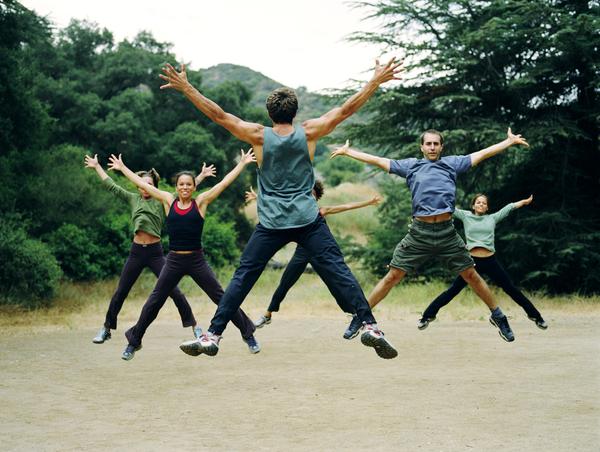
Include dynamic movements. After your body is warmed up and you’ve done a few static stretches, move onto dynamic stretching, which takes your body through its full range of motion and should include things like arm and legs swings, torso twists, jumping jacks or fast running.

How to Cool Down:

Gradually decrease intensity. Reverse the progression, whether it’s slowing from a run to a jog to a walk, allowing legs to spin out at a slower speed on low resistance or doing a few sets of easier exercises with lbs in the weight room.

Think loose, long and lean. It’s time to reward muscles for a job well done by allowing them to relax into some deep stretches that speed circulation to joints and tissues, remove unwanted waste products and reduce soreness and stiffness.

Refuel and replenish. Within an hour (really, the sooner the better), drink up and eat up. Use water to rehydrate, and aim for a snack with a carb/protein ratio of 4:1 for maximum benefit when it comes to repairing muscles and restoring energy levels.

Do you bookend your workouts with a warm-up and cool-down for better results? 

Fave Fix: My must-have gear for trail running

50KGear

If there’s one thing I’ve learned from the past few months on the trails, it’s that running off the roads is a whole different beast than running on ’em. Aside from the obvious terrain and elevation challenges, it requires a new approach — from gear to strategy to fueling — to get from Point A to Point B, especially when we’re talking ultra-distances.

Because of that, I wanted to share an inside look at how I’m planning for my first ultra marathon — the Canyon Meadow 50K — at the end of the month. See below for what I’ll be wearing, eating, drinking and using to help me recover when all is said and done…and (fingers-crossed) run 🙂

Feet First: The Brooks Cascadia 8 came highly recommended from several trail runner friends due to its traction and responsiveness, plus it was my favorite of all the brands and styles I tested at San Francisco Running Company. I like to buy my running shoes a half size up to allow for feet to swell, and I may add a Superfeet orthotic insole for a little extra support.

– Keeping Cool (& Chafe-Free): I love a trucker-type hat with breathable mesh and a wide brim to block the sun. And under my technical, sweat-wicking t-shirt, I’ll be wearing a Coeur Sports Checkmate Sports Bra, which has anti-chafe seams that are perfect for long race days. On the bottom, I’ll pair the Lululemon Groovy Run Short with CEP Progressive+ Calf Sleeves to promote circulation and protect lower legs, plus Balega Blister-Resist Trail Socks to try to keep my feet from getting too torn up.

Accessories & Extras: Because I’ll be in and out of the sun, I’m slathering on Banana Boat Sport sunscreen and wearing Tifosi sunglasses, which adjust automatically when exposed to UV rays. Electronics-wise, I’m taking my Jaybird Bluebuds bluetooth headphones and am hoping for an early birthday present (hint hint, Hubby) — the Garmin Forerunner 910XT — to help me track mileage and stay on pace. I’ll also use the easy-on, easy-off Fuel Belt Race Number Belt and apply ample amounts of TriSlide to avoid hot spots.
50KJenny

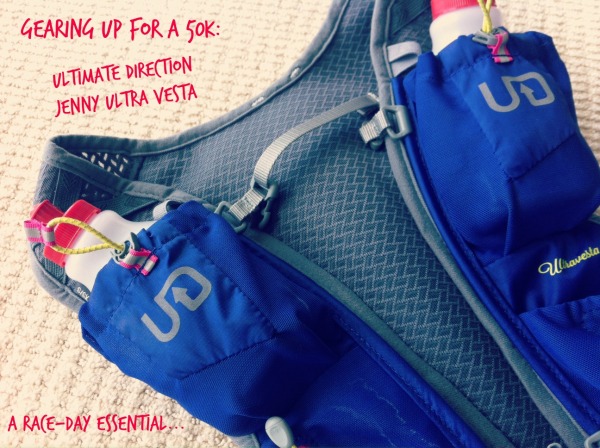
One of the most essential items on the trails, though? A good hydration pack, which not only allows you to carry and consume water between aid stations, but also makes it easier to have other essentials — such as fuel, extra clothing, first aid items, etc. — at your fingertips throughout the race.

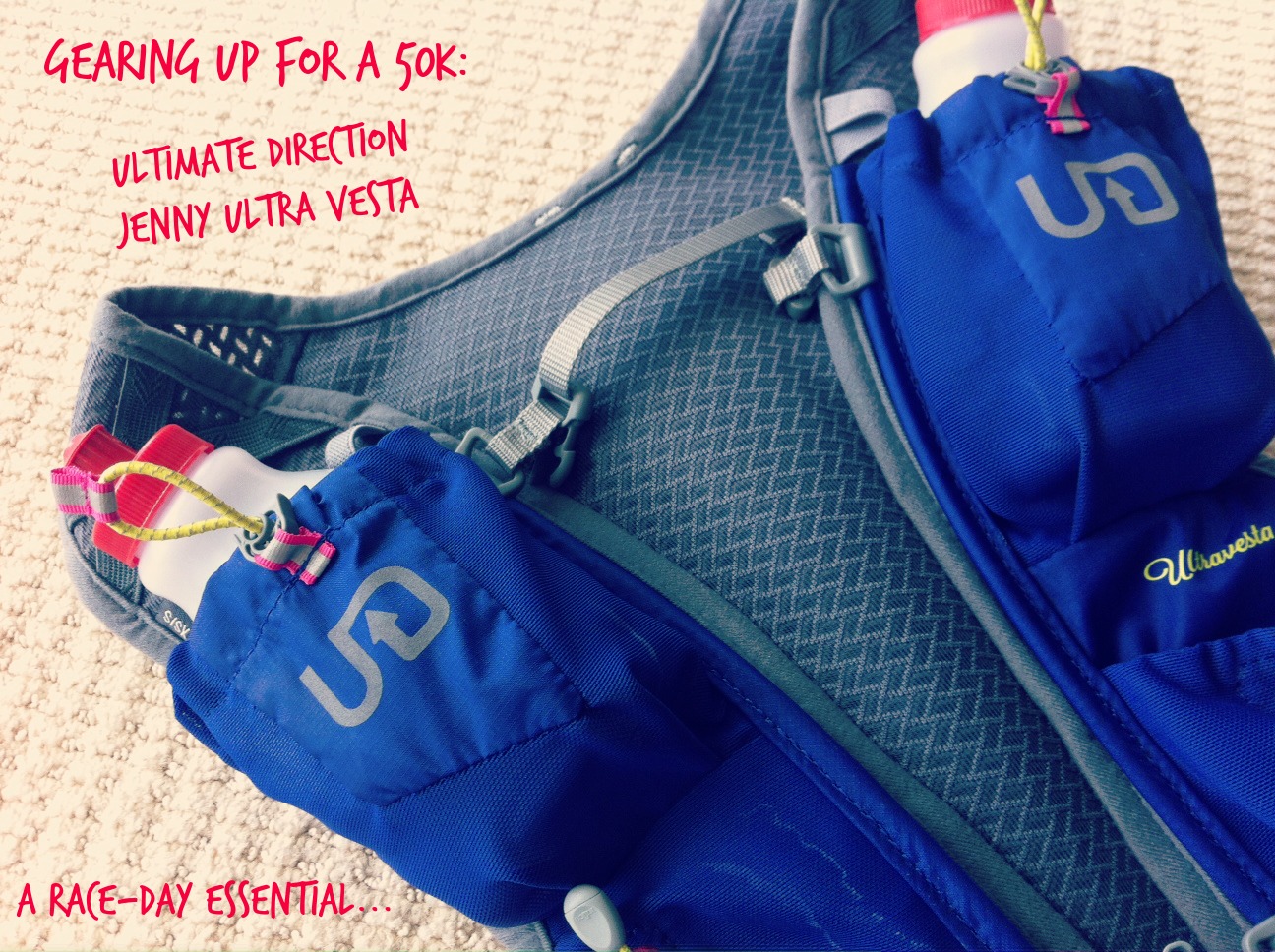
Focus on fit and function; you want something that’s comfortable, compact and efficient so you have everything you need without extra bulk. My favorite is the 2013 Trail Runner Magazine Gear of the Year Award-winning Ultimate Direction Jenny Women’s Ultra Vesta, which is made specifically for women with an adjustable fit.

50KJenny2

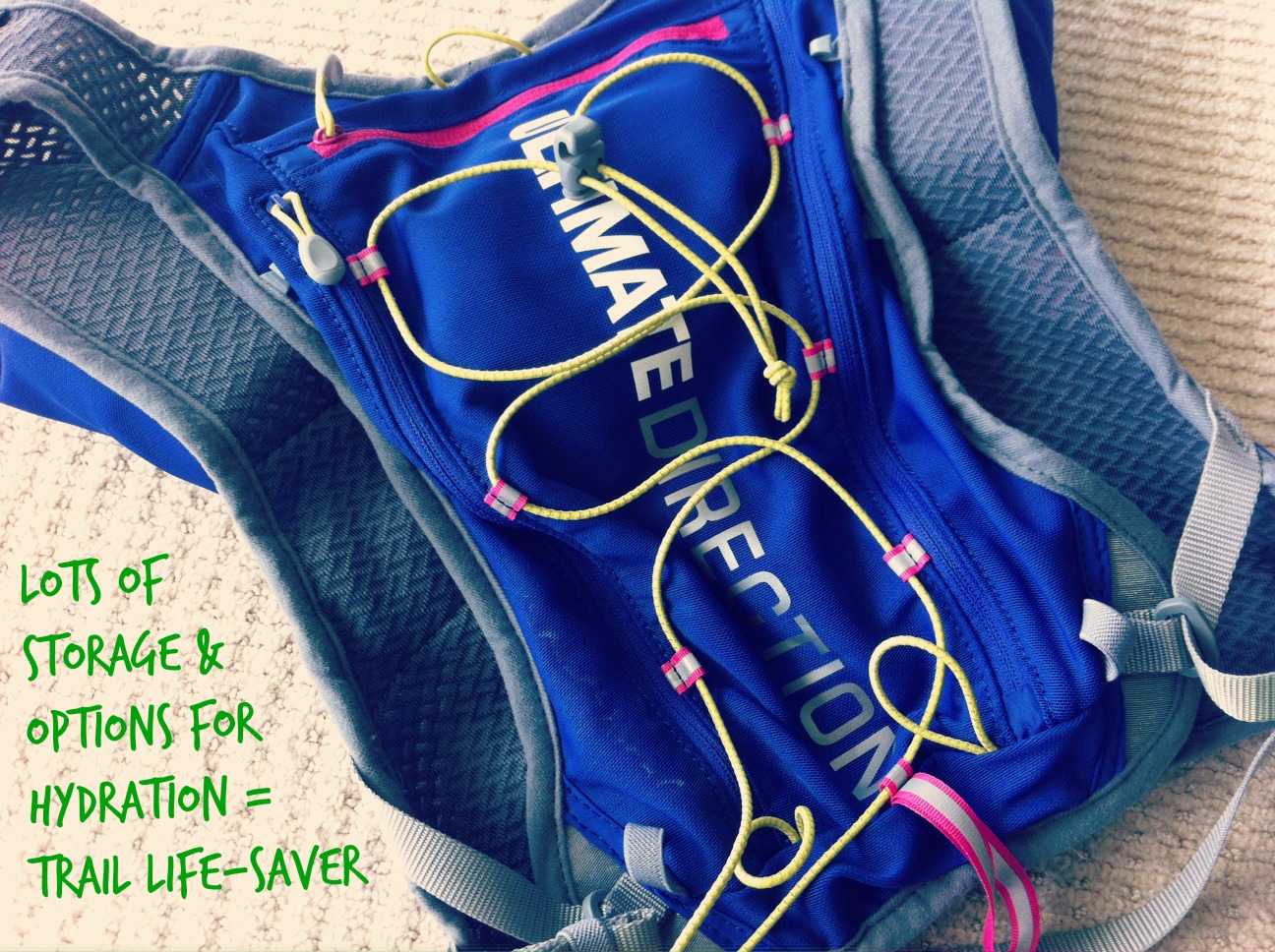
No more water bladder slapping against your back here; the Ultra Vesta’s front strap-mounted holsters offer quick, immediate access to twin 10-ounce water bottles, which are concave against the body and positioned higher on the chest to keep from bouncing against…well, you know.

Besides all the pockets for my cell phone, gels, keys, etc. there’s also a main rear compartment that will accommodate a 70 oz. reservoir (sold separately) for longer treks. And, believe it or not, there’s even an ice axe loop, two trekking pole loops, plus reflective accents for low-light visibility, making this a virtual Swiss Army Knife of packs for all kinds of outings and conditions.

50KFuel

So what am I planning on putting in the pack while running? Well, hopefully not too much…I’m aiming for that delicate balance of being prepared between aid stations (which are usually very well-stocked) and not over-packing, which will fatigue me more quickly.

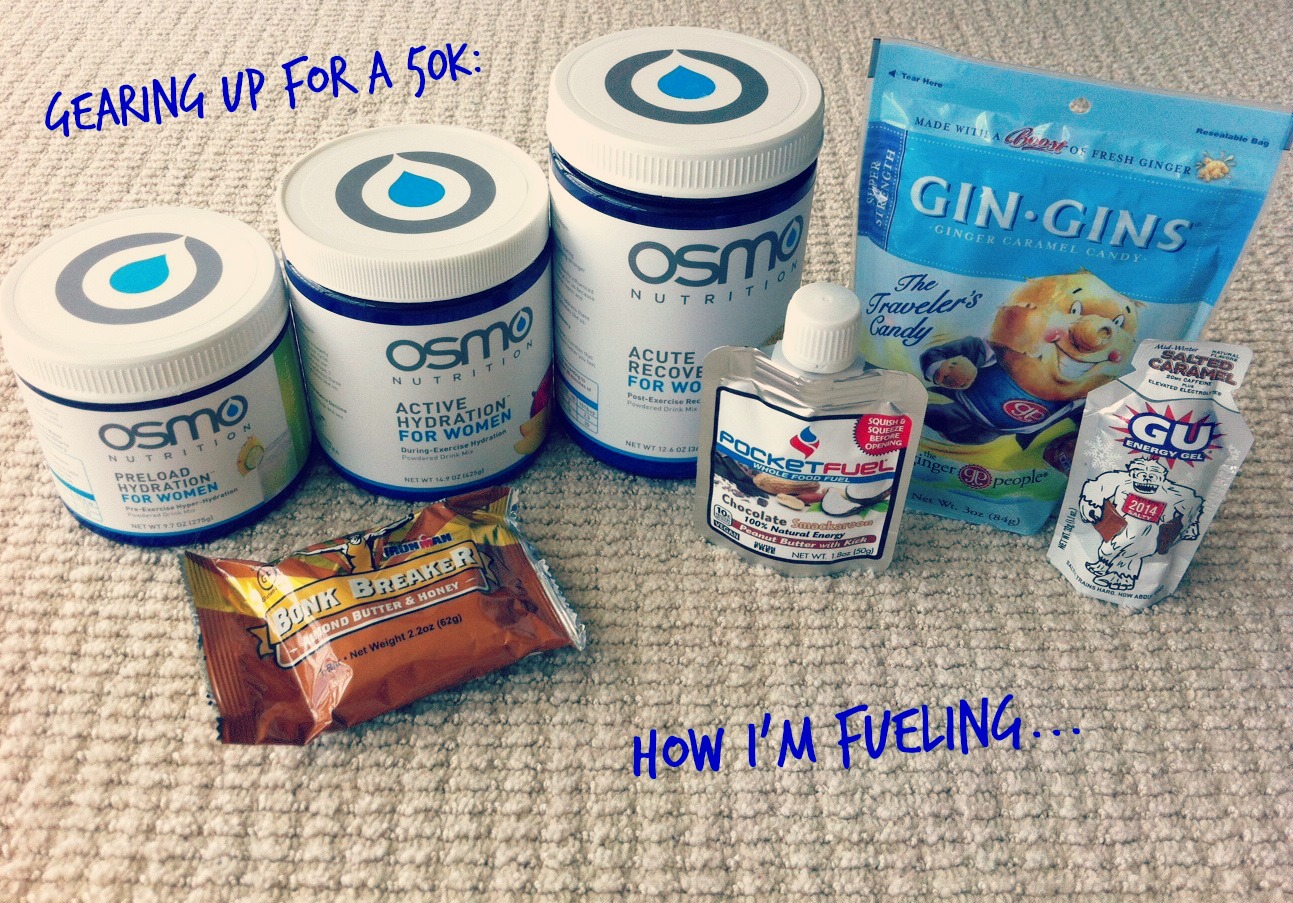
Ward Off Hanger: What’s been working well in training runs is a mixture of PocketFuel for sustained energy, Salted Caramel Gu Energy Gel for a quick hit of sugar and Bonk Breaker energy bars for something more “food”-like. And, of course, Gin Gins Candies from The Ginger People and good ‘ole TUMS to help keep my stomach settled.

Quench Thirst: I’ll fill my water bottles with Osmo Nutrition Active Hydration for the first leg, and I’m aiming to drink every 10 minutes or so throughout the day. Ideally, I’ll refill the bottles at each aid station, most likely with a mix with water and whatever electrolyte drink they’re providing on the course.

50KRecovery

And although the first goal of the day is to cross that finish line in one piece, setting myself up to recover well comes in a close second. The body takes quite a beating over the course of 30-plus miles, so it’s key to remember a few things to aid with muscle repair and regeneration.

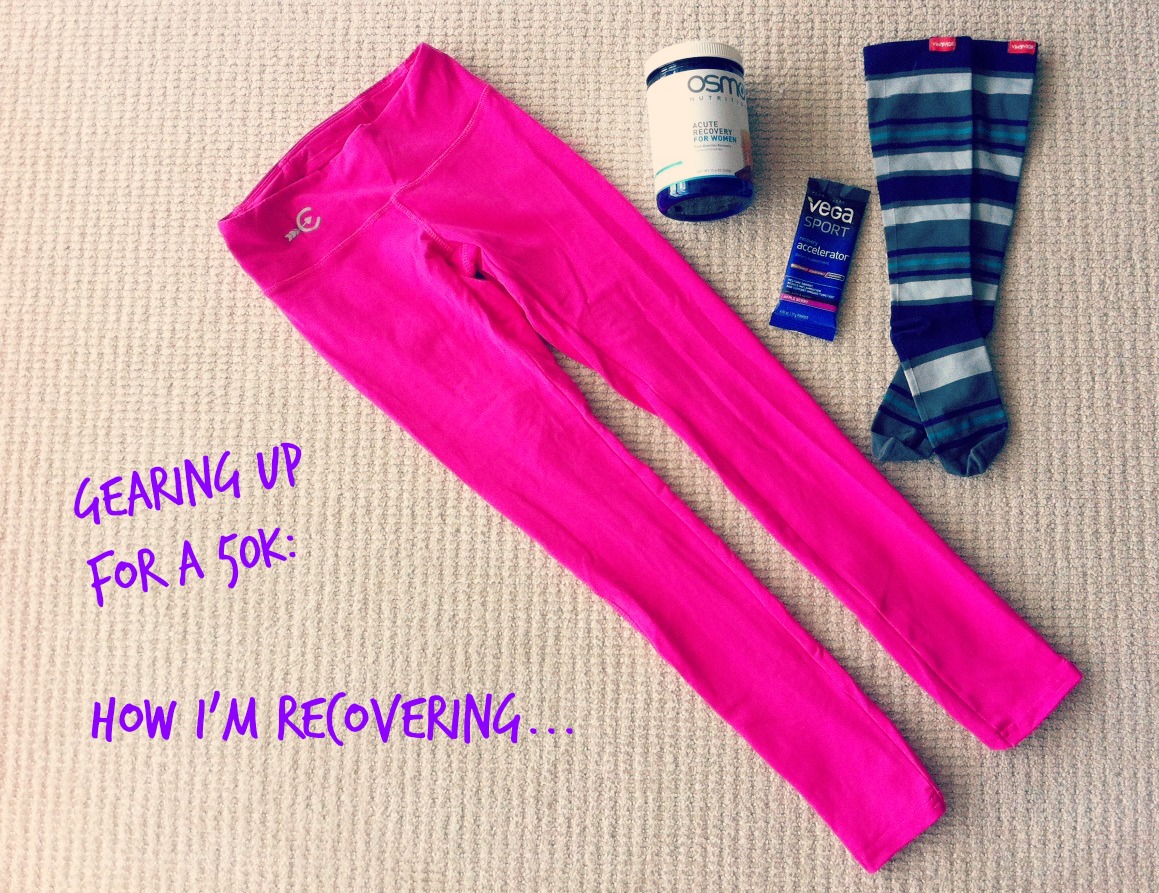
– Refuel and Rebuild: Immediately after finishing (while hitting up the post-race buffet!), I like to mix a packet of Vega Recovery Accelerator in a bottle of water. It’s an all-natural, plant-based recovery drink mix specifically developed to replenish energy and electrolytes, reduce inflammation, muscle and joint pain, support immune system and protein synthesis, and reduce recovery time. Then when I get home, I mix up a recovery smoothie made with Osmo Acute Recovery for Women, a banana, almond milk and ice for an extra boost of nutrition.

Relax and Recover: Finally, one of my favorite post-race treats is a hot shower followed by an afternoon nap in compression gear, which helps reduce swelling and just plain feels good on tired legs. I’ll usually layer Coeur Zipper Tights with Vim & Vigr socks and elevate my legs to start the healing process and make it easier to get out of bed and maneuver around the next day.

What’s your favorite gear to get you through those long trail runs? 

4 Reasons Not to Skip Your Warm-Up and Cool-Down

fi_Proper-Warm-Up-and-Cool-Down-with-Exercise

If you consider “warming-up” and “cooling down” to be the walk back and forth from your car to the gym (guilty!), there’s a good chance you’re missing out on some added health benefits that come from book-ending your workout properly.

Not only does it help you make the most of your current sweat session, but it also helps protect and prepare your body for your next workout. Here are four more reasons to prime your muscles pre- and post-exercise:

1. Decrease perceived exertion. Refer to Newton’s law of inertia (“A body at rest remains at rest, and a body in motion continues to move at a constant velocity unless acted upon by an external force”), and it’s easy to see why a workout feels easier when you’ve taken the time to ease into it versus starting out cold.

2. Work harder, reduce injury risk. A gradual warm-up circulates oxygen-rich blood throughout the body, fueling muscles and safely preparing them to better absorb shock, impact and other demands associated with all types of exercise.

3. Remove waste products. Anaerobic exercise (think intense bursts where you’re out of breath) builds lactic acid in muscles and can cause painful swelling, so cooling down properly can help the body flush toxins and usher in oxygen and other healing nutrients.

4. Burn more calories! Every little bit counts, and stacking an extra 10 minutes of movement to both the beginning and end of your workout means you’re getting more bang…er, burn…for your buck every time you exercise.

Stay tuned for an upcoming post where I’ll be covering some suggestions for simple warm-up and cool-down exercises!

Canyon Meadow Ultramarathon: Ready or not, here I come!

Lake Chabot

“Beware of the company you keep. See that you associate with the right type of people.”         -Dada Vaswani

Here’s the thing about having fit friends: I like to say they’re the best-worst influence — not only do they encourage you to push your limits, but hanging out with them also tends to shift your frame of reference on the crazy scale.

Case in point: Running an ultramarathon (more than 26.2 miles). It was never really on my radar…until I started marathon training with the always-encouraging Pavement Runner and working with ever-amazing Jamie Walker, both of whom have completed many ultras of assorted distances.

Slowly my mindset started changing from, “Who would want to do that?” to “I wonder if I could do that?” to “I think I want to try that!”

Throw in an upcoming 30-something birthday at the end of May, and suddenly signing up for a race of 30-odd miles (50K) that same weekend solidified into a plan.

Oddly enough, Jamie’s said it’s actually easier (in some ways) than a marathon because the approach is completely different; whereas there’s pressure to run the entire 26.2 on the roads, an ultra on the trails is a different beast where pacing is the name of the game.

I got my first taste of it at the Lake Chabot 30K in February, but with this month’s triathlon, I haven’t had as much time to train and/or hit the trails as I’d like. But, regardless, my plan is to stay conservative and to try to finish, injury-free, in about six or seven hours.

Stay tuned for my mini-plan for training in these final weeks leading up to the event, including what I’ll be packing to keep me happy come race day!

Would you ever attempt an ultra? If so, how’d it go? If not, what are your thoughts about where I fall on that crazy scale? 🙂

What’s the deal with running?

bank-800

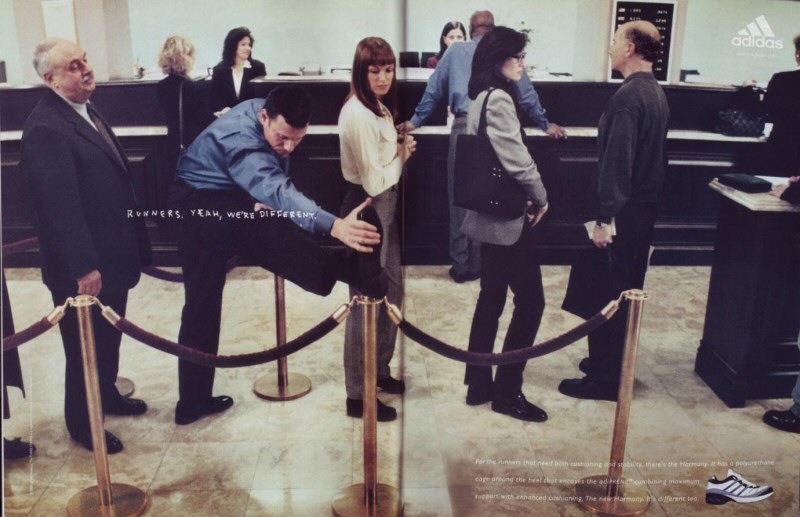
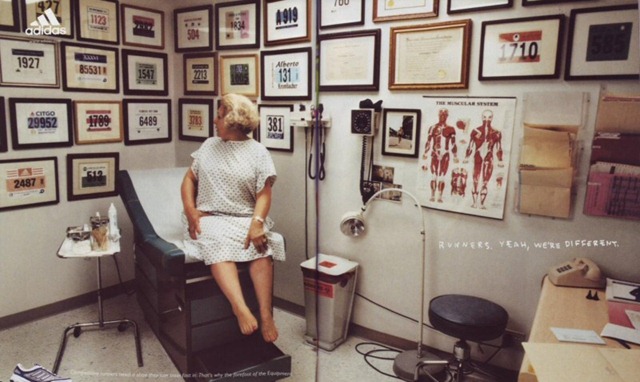
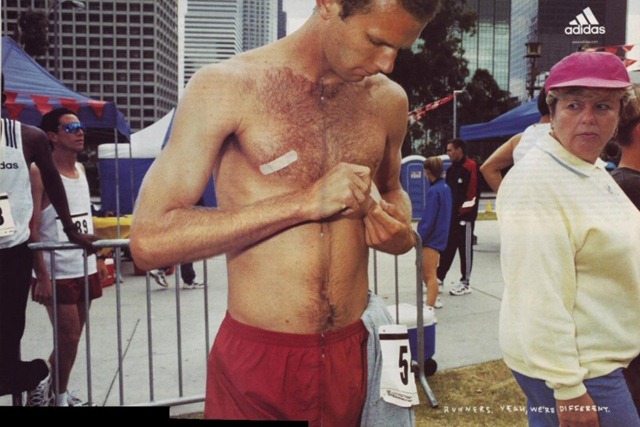
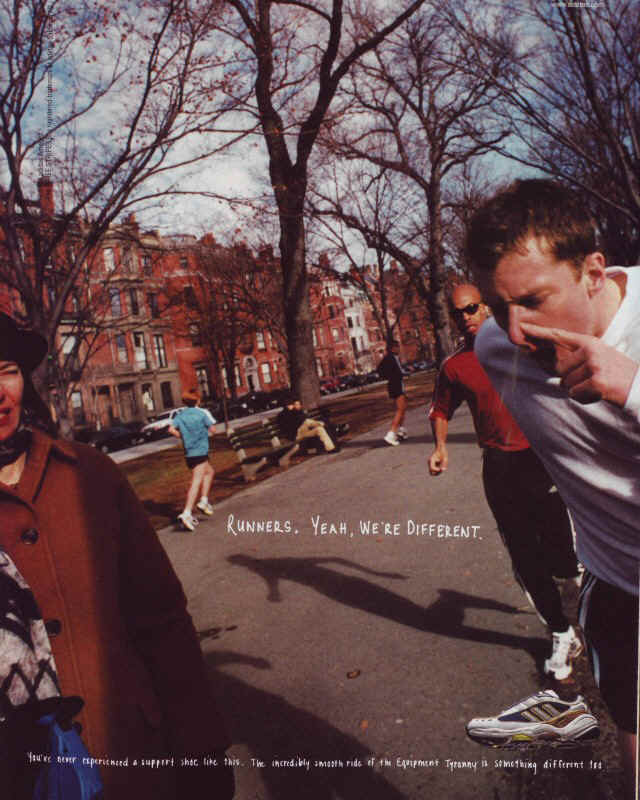
Runners….yeah, we ARE different, as the ads proudly state.

After exploring the quirks of swimming and cycling in honor of my recent triathlon training, I’m turning the mirror on myself and my swift-footed cohorts to examine some of the peculiarities of the third and final discipline, such as…

What’s the deal with the preoccupation with bodily functions?

Here’s a little running math for you: Whether it’s color and frequency of “number one” — or consistency and urgency (!) of “number two,” the telling of too much information goes up exponentially as either A) the number of runners or B) the length of any run increases.

droffice800

What’s the deal with the gross side effects?

I’ve seen plenty of pictures and run across the occasional telltale red dots on male runners’ shirts at longer endurance events, but it wasn’t until my 30K at Lake Chabot this past winter that I came face-to-face with the worst case of bloody nipples I’ve ever seen. My girlfriends and I had to hold back shudders as we watched a gentleman cross the finish line with red literally streaming all the way down to the hem of his shirt.

Another lovely unintended consequence of pounding the pavement? The dreaded black toenail — aka it’s-only-a-matter-of-time-’til-it-falls-off syndrome. I’ve been fortunate up until this point (knock wood), but it’s only a matter of time — or a combination of lengthy descents and ill-fitting shoes — until this happens to most of us.

tape800

What’s the deal with snot rockets and spitting?

Not only does a good run get our competitive juices flowing, but it also gets our bodily fluids going, as well. I envy the runner who can launch perfectly-formed pockets of spittle or blow a spray of snot with sniper-like accuracy. Whenever I’ve attempted to do so, I end up with a face full of spit — or worse.

snot-rocket-800

What’s the deal with race-day rituals and superstitions?

Whether it’s a special pre-race dinner, a lucky piece of clothing, a favorite pair of shoes, a particular way to tie shoelaces — or, like me, putting the left shoe on first — running tends to bring out the quirks, rituals and obsessions in every one of us.

The oddest part? We can tell you what it is, but we often can’t tell you why we do it. Because even we don’t know why; we just know it works.

696f4ebdfdf9ed2b85d2a4859e088c9d

What’s the deal with the fashion faux pas?

I’ll be the first to admit guilt here: Back in my high school track & field days, I was out there in my shorts, sneakers and (cringe) tall athletic socks, which were neither running nor compression socks, but rather the awkward mid-calf length cotton variety.

Other offenders here include shorts that are too short or too long (both bad for obvious reasons), blindingly bright colors (although great for night runs!), socks with barefoot shoes, obscene amounts of gear and other assorted fashion fails.

And don’t even get me started on our shoe collections… As my Twitter friend Peter Esko so eloquently put it: “The correct number of running shoes is n+1 where n is your current number of running shoes. #moreshoesmoremiles”

I couldn’t have said it better myself.

Any other running-related habits that you find humorous?

Fave Fix: My must-have run gear for triathlon training

RunGear

If you’ve read my posts on favorite picks for the swim and bike legs of triathlon training, you know that today’s topic is one that’s near and dear to my heart: the run portion!

While the gear may seem like a no-brainer (just shoes, right?) compared to the other disciplines, this is the one I tend to geek out over…so expect a few more bells and whistles.

Again, I’ve broken it down into ‘essentials’ and ‘extras’ according to what’s been working well for me; I like to think of training days as dress rehearsals for races, so I can work out most of the kinks beforehand.

Run Essentials:

– Shoes: I haven’t found a shoe yet that can top the trusty Asics Gel Kayano. Although I throw other brands into the mix on occasion, I keep coming back to this brand and style. Lesson learned: If you’ve got a good thing going, stick with it!

– Shirt: I sweat. A lot. Like wring-your-clothes-out-after-a-run kinda stuff. So I like shirts like this Nike Dri-FIT Knit Short Sleeve that are light and moisture-wicking. Because there’s nothing worse than the chafage that happens from clingy, wet run clothing.

– Shorts: Another longtime favorite is the Lululemon Groovy Run Short. No, I don’t have the controversial ‘thigh gap’ that this particular brand celebrates…but for some reason the length and fit just work for my body type, so I use ’em anyway.

– Sports Bra: Ladies, if you’re like me and have a bad habit of carrying too much crap in your hands when running (gels, phone, keys, etc.), the Coeur Sports Checkmate Sports Bra might be up your alley. It’s cute, yeah, but it’s also got a handy between-the-boobs pocket where you stash small items.

Run Extras:

– Compression: Whether or not they’re performance-enhancing is debatable, but I love the feel of CEP Progressive+ Calf Sleeves. Like a hug for lower legs, they dampen some of the effects of high-mileage pounding.

– Race Belt: I used the safety-pin method for years before buying a Fuel Belt Race Number Belt. Sure, it’s for easy-on-easy-off of the race number, but I also use it to remind myself to put my chip on my shoe (long story short, I forgot once – never again!). And in longer races, I use a larger Nike waistpack like this one for carrying a few essentials, such as cell, gel, keys and cash.

– Race Socks: Step one: Spray feet with anti-chafing TriSlide. Step two: Pull on a nice thick pair of Drymax Maximum Protection Running Socks to keep feet happy and blister-free. ‘Nuff said.

– Nutrition: Over the years, I’ve tried all sorts of things on the run because I am usually managing some kind of GI issue, but right now I use a combination of Salted Caramel Gu Energy Gel for a quick burst of energy, PocketFuel for sustained energy and Gin Gins Candies from The Ginger People to settle my stomach. When it comes to drinking, I pre-load with Osmo Nutrition and use it mid-run with some Nuun and Ignite Naturals thrown in for good measure. Because I tend to have a tender tummy, I like to rotate products to keep from developing an aversion to any one taste.

– Hydration: My major find most recently? The Ultimate Direction Jenny Women’s Ultra Vesta hydration pack. It’s a lifesaver on long training runs, and a must-have for the trails as I prep for my first ultramarathon in May. Made specifically for women — from the comfy cut to the light weight — you can cram so much in this thing, yet still run comfortably for hours.

– Accessories: Sometimes it takes tunes to get into the zone, so I use my Jaybird Bluebuds bluetooth headphones to run without having to worry about getting tangled in a cord, and many times I’ll run without sunglasses but still want to keep the sun out of my eyes, so I’ll throw on the light-as-air Nike Feather Light Visor for some shade.

– Recovery: Once viewed as a necessary evil, I now look forward to some quality time with The GRID foam roller from Trigger Point Performance Therapy and my M80 roller to roll out the kinks. And another great find? Vim & Vigr Compression Socks for travel to and from races — not only do they come in adorable patterns and designs, but they also help keep legs fresh beforehand and bounce back more quickly after.

– Watch: Notice anything missing here? I used to have Nike+ Sport Watch GPS, which I used religiously…until it died (RIP, old friend). So now I’m searching — and saving up! — for a more swim/bike/run-friendly model. Any suggestions?

Next up…Hubby and I are hitting Napa for the HITS Olympic-distance triathlon tomorrow. Stay tuned to social media for updates, and I’ll be doing a quick recap and full race report next week. Wish us luck!

Fave Fix: My must-have cycle gear for triathlon training

CycleGear

Last week I talked about my favorite swim gear for triathlon training, and now it’s time to move on to the second leg: Cycling!

It’s arguably the most expensive discipline, but that does NOT mean you have to empty your bank account in order to be competitive.

Again, I’ve broken it down into ‘essentials’ and ‘extras’ according to what I personally use, but you can stay as conservative or get as crazy as you’d like!

Cycle Essentials: 

– Bike: Duh. But while the whole ‘two wheels’ part is non-negotiable, the price you pay can vary greatly. I did my first few sprint-distance races on an older Cannondale commuter bike I bought off of Craigslist, for example, before moving up to my current Giant Avail Composite 3 (aka “Winnie”).

– Pedals: I also biked my sprint tris in running shoes (shhh!), but figured it was about time to get serious — and get clipped in — for longer distances. Enter the easy-in, easy-out Shimano Click’r pedals, which are technically more for mountain biking than road, but they still count. It’s all about baby steps!

– Shoes: Since I invested in my bike this season, I decided not to go all out on the footwear. Sure, a fancy carbon-fiber sole is stiffer and gives better transfer of power, but my standard Shimano cycling shoes do the trick just fine for now.

– Helmet: Eventually, I’d also like to upgrade my helmet to make sure my noggin’s better protected from concussions, but right now I have a basic Giro helmet that’s worked well for the past few years.

Cycle Extras: 

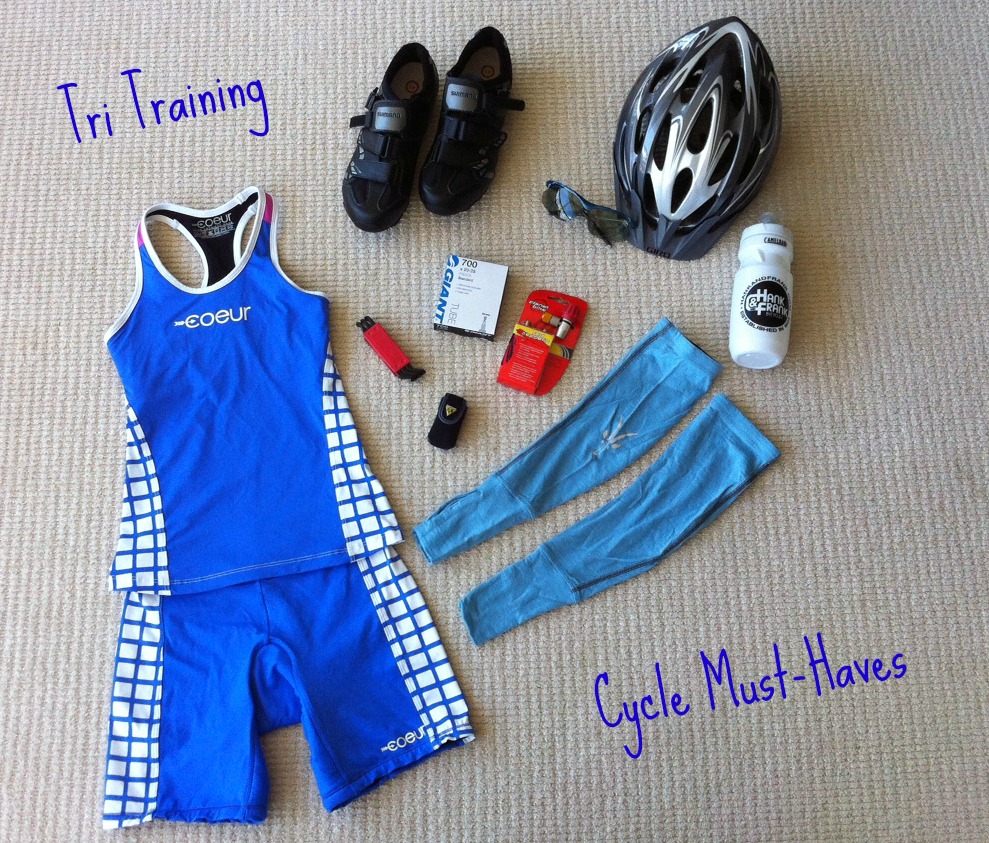
– Tools: While technically not essential to the actual riding part, having some tools to to a quick tire change will definitely help get you back up and running in the event of a flat. I have a spare tube, tire levers, bike-specific multi-tool wrench, CO2 cartridges and an inflator or pump. You can cobble this all together or buy the whole kit ‘n’ kaboodle here.

– Kit: The more I ride, the more I appreciate a really good race kit. Case in point: Coeur Sports’ tri tank and tri shorts, which have a women’s-specific fit, plus other extras like anti-friction seams, antimicrobial fabric, seam-free chamois, plenty of pockets and more…all in super-flattering, fun designs.

– Accessories: This is mostly based on personal preference — and how fancy you want to get — but I have two favorites here: Tifosi eyewear and Ibex arm warmers to keep the sun (and bugs) out of your eyes and to take the edge off when it’s chilly out, respectively.

– Nutrition: I’m still practicing that whole multitasking (eating and drinking while riding) thing on the bike, but what’s been working well during brick workouts is Osmo Active Hydration and Bonk Breaker Energy Bars, so I’m planning on sticking with the same during Sunday’s race, as well.

What are your must-have items for cycling? 

HITS Napa Olympic Triathlon: Week 7 training & Rock ‘n’ Roll SF Half Marathon recap

photo 2 (2)

We’re in the home stretch!

Last week was the final full week of training before Hubby and I tackle the HITS Napa Valley Olympic triathlon this Sunday, April 13. It was also jam-packed with fun — namely the LUNA Chix Summit and the Rock ‘n’ Roll San Francisco Half Marathon.

Here’s how the week shook out, plus a recap of the race.

Week 7 Olympic Distance Training Plan – planned & (actual)

  • Swim 60 min. (40-min. pool swim with speed work)
  • Bike 90 min. / Run 25 min. off the bike (55-min. spin class/25-min. run on treadmill)
  • Swim 60 min. (30-min. run)
  • Track workout (track workout with LUNA Chix team, 2.5 miles total)
  • Rest day (30-min. walk)
  • Long bike, 35-50 miles (20-mile bike ride to Sausalito)
  • Long run, 9-12 miles (13.1-mile RnRSF Half)

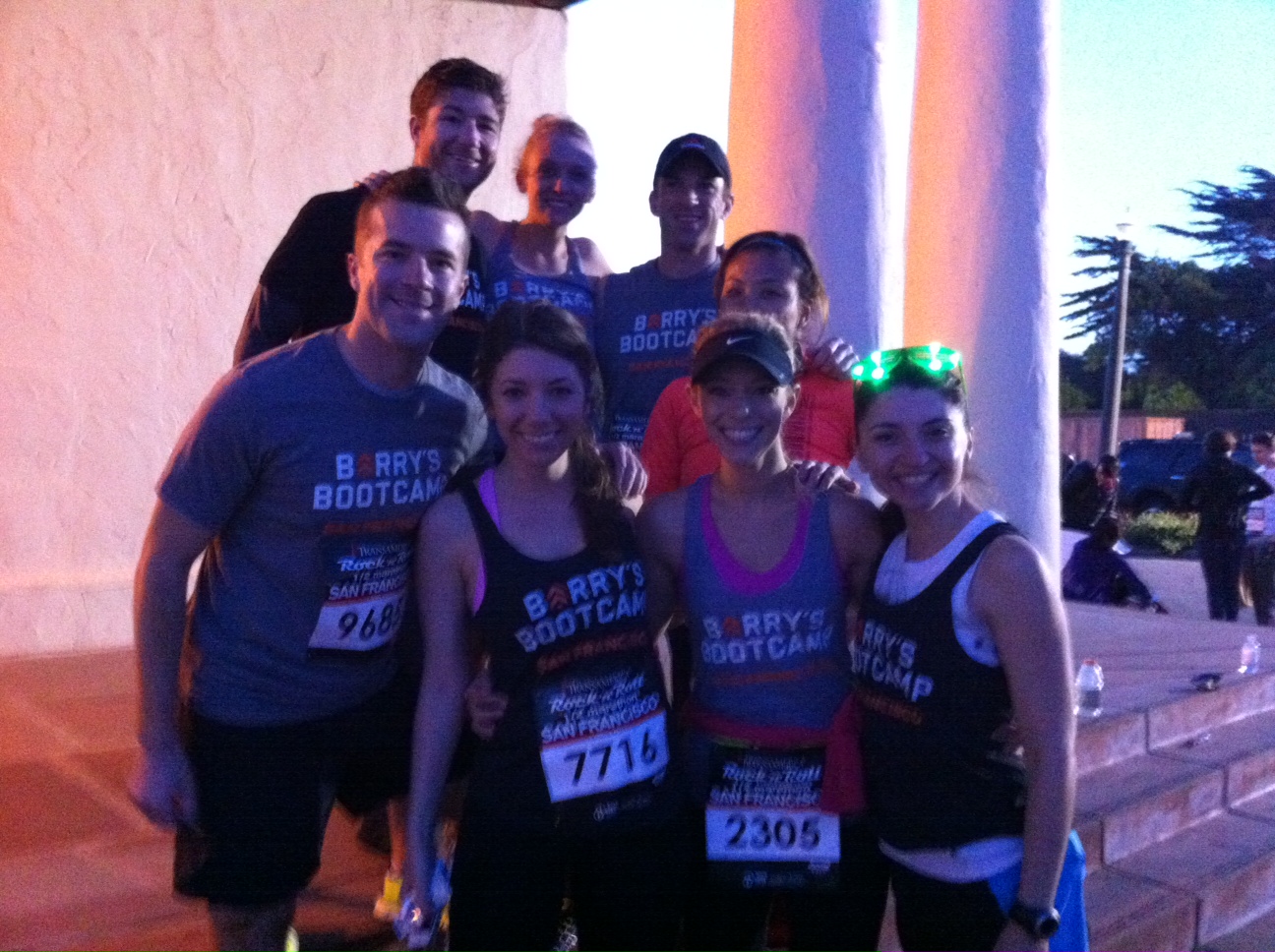
Adam Shane, owner of the Barry’s Bootcamp San Francisco (coming this May!) asked me to help pace him on Sunday since the Rock ‘n’ Roll race would be his first half marathon. It was a point-to-point race, so our crew Uber’ed over in a few different cars and met back up at the Beach Chalet near the race start.

photo 2

It was crowded, but well-organized. Hubby made his way to our assigned corral (two) because he wanted to try to get a PR in his second half marathon, but since I had decided to run this one for fun, I hung back with our group and we made our way into corral four.

photo 3

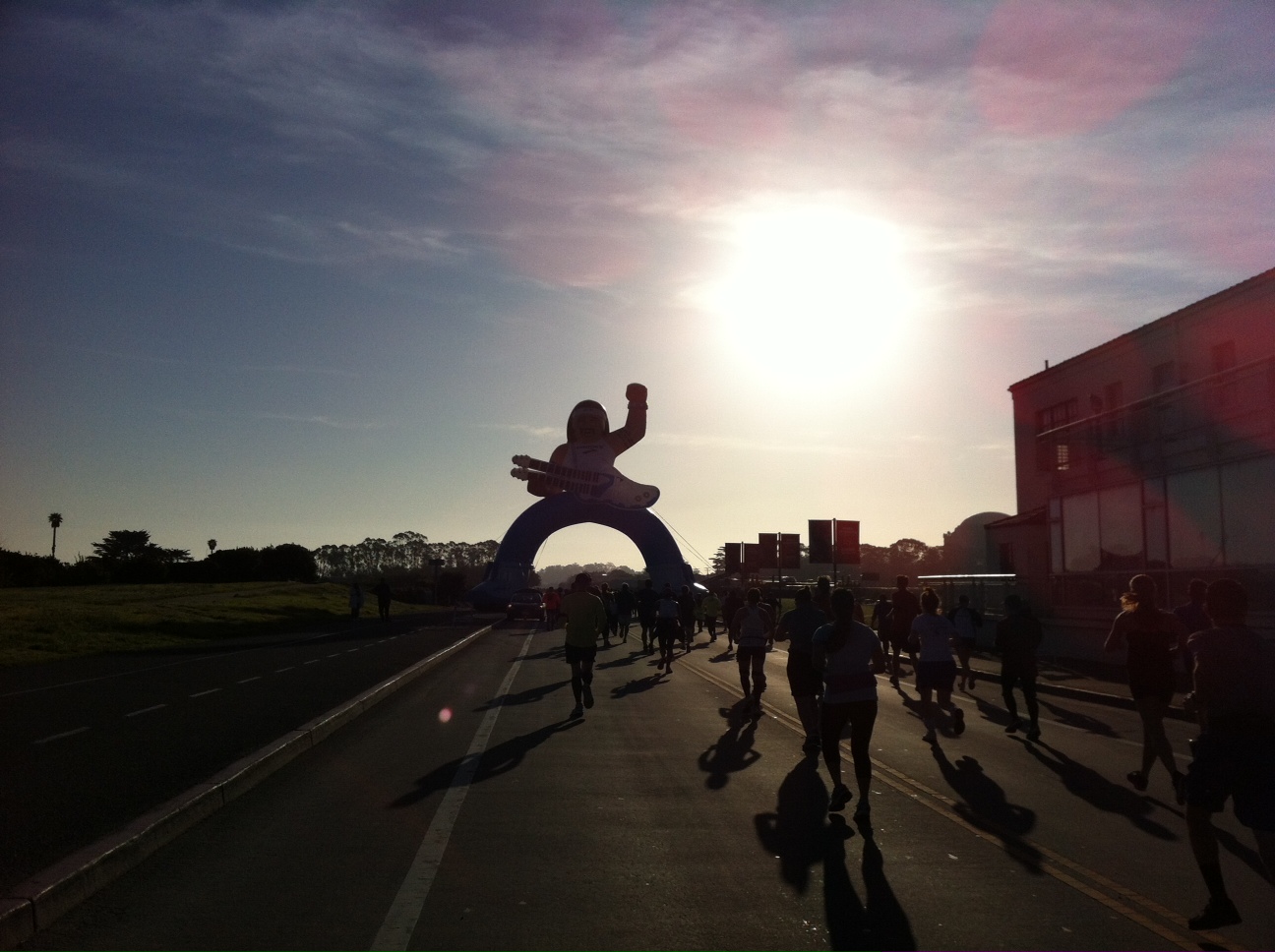
Before we knew it, the gun went off and the corrals were being released one by one. We knew ahead of time that it was a hilly course, so no one was super shocked when, almost immediately, we started winding our way up the streets.

photo 4

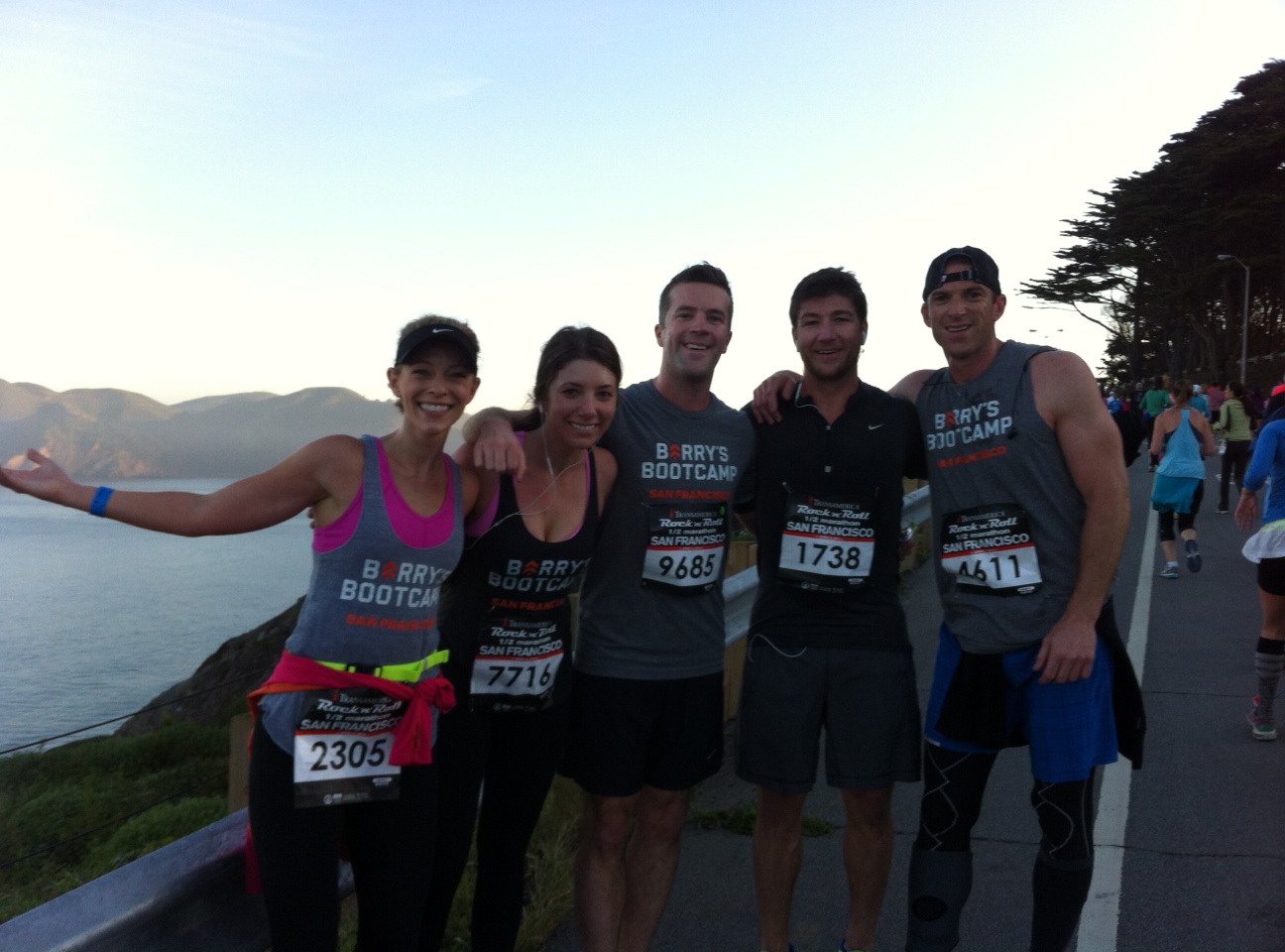
We took it easy, though, and kept a conversational 9:30-10:00 minute mile pace as we enjoyed in the great views (the weather couldn’t have been better — clear and mild with a light breeze) and made our way over toward the Golden Gate Bridge.

photo 1 (1)

I was especially pumped to  run into one of my favorite workout buddies, Pavement Runner. We took the obligatory selfie and chatted for a few minutes as we jogged along with his group. They were a roving party, playing music, taking pictures and starting impromptu dance parties!

photo 5

I knew my job was to get Adam to the finish, though, so I caught back up with the Barry’s crew and checked in to see how he was feeling. Luckily, he was getting a major second wind around mile seven, so he decided to push the pace and go for it for the last six miles.

photo 2 (1)

As you can see, we had a picture-perfect day on the bridge, but it was pretty crowded, so we ended up losing each other in the mix. I figured I’d either catch up with him further along or he’d continue to push for a strong finish, so I put my headphones on and just ran by feel at a comfortable pace.

photo 3 (1)

By the time mile 10 rolled around, the flat portion was over, and it was back to the hills…and they were no joke. Yeah, I’m in decent shape from triathlon training, but I’m learning that it can mean something quite different than being in peak half-marathon-racing shape. My legs and lungs started revolting on the back-to-back inclines.

So now it was just a mental battle — my body was capable, but my mind was second-guessing my fitness level. So I knew it was time to reach into the bag of mental tricks and set a goal on which to focus for the remainder of the race.

I hadn’t been tracking my time closely, but after spotting the clock at mile 11, I had a feeling I could pull off a sub two-hour finish if I maintained my pace and gave a kick at the end. I refocused (and spotted Adam about 100 yards ahead!) before bringing it in for the final push downhill to the finish. Final time 1:59:44.

photo 4 (1)

The best part? Reuniting with everyone at the finish and hearing their race recaps. Adam rocked a sub two-hour finish in his first half, Hubby nabbed a new PR, Vivi ran a strong race, the November Project was out in full force, and Brian (aka Pavement Runner) also stopped by to say hello.

photo 1 (2)

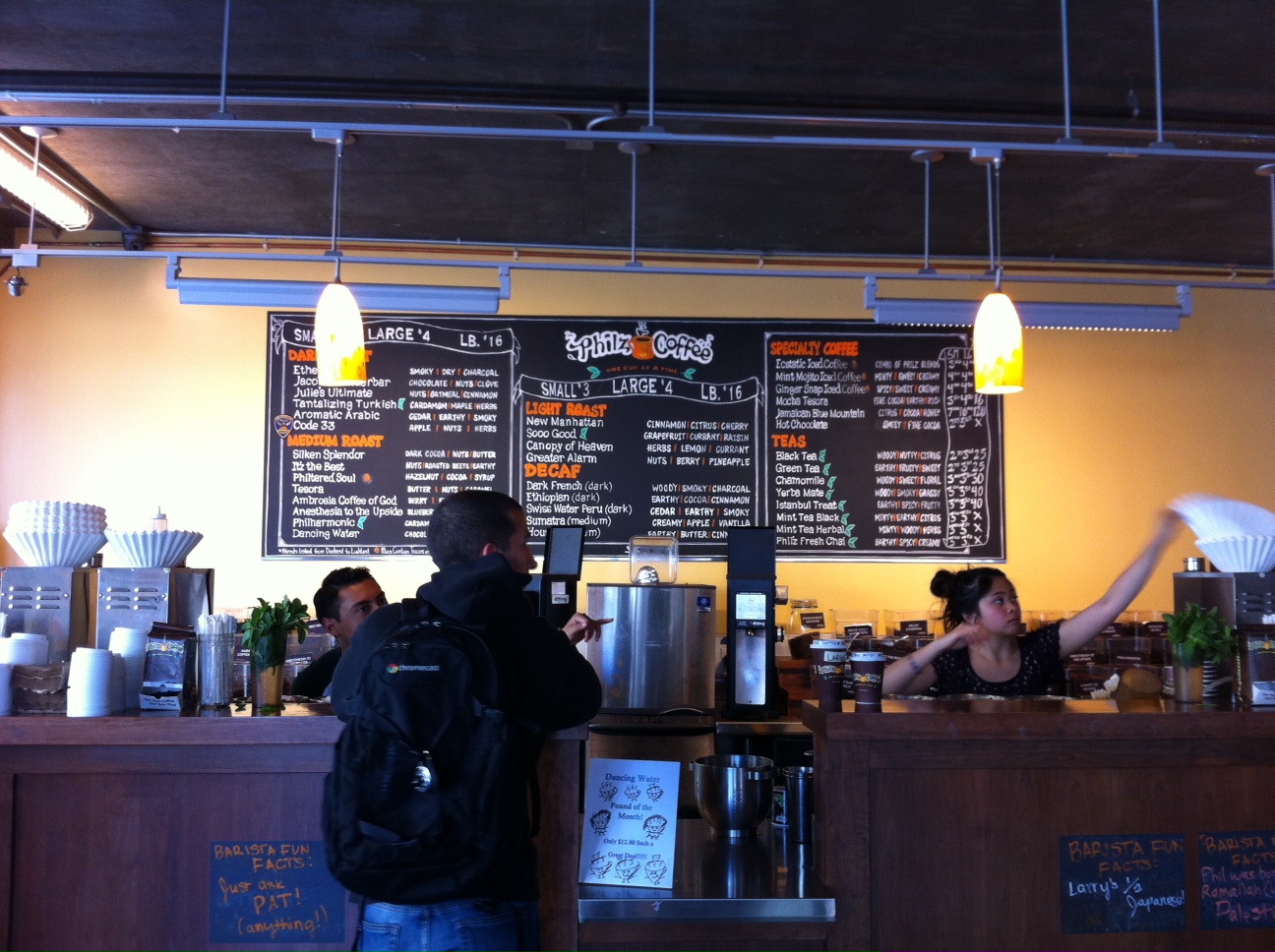
And coming in a close second as the best part of the day might have been the post-race stop Hubby and I made at Philz Coffee…seriously, the Dancing Water roast is nothing short of amazing.

photo 5 (2)

Stay tuned for week eight…and RACE DAY!

A blast from the past at the LUNA Chix Summit

photo 3 (18)

Back in February, I posted an interview with my high-school-teammate-turned-pro-triathlete Terra Castro who, after a successful 16-year career, has since retired and returned to her running roots, now competing as a LUNA Sponsored Athlete and coaching full-time.

She’s always been such a powerful influence with a positive message, that I have no doubt her business, “Be Bold Crew,” which specializes in coaching teenagers using mentorship and accountability, will make a meaningful impact.

But between learning to balance coaching with training for her first open marathon in fall 2014, Castro also takes time to work with Team LUNA Chix, whose mission is to bring women together who are interested in learning new sports, staying active and inspiring others to do the same.

She invited me to this weekend’s summit in Berkeley, Calif. to see firsthand how the local teams train, compete and support each other, while fundraising for LUNA’s non-profit partner, the Breast Cancer Fund.

photo 2 (21)

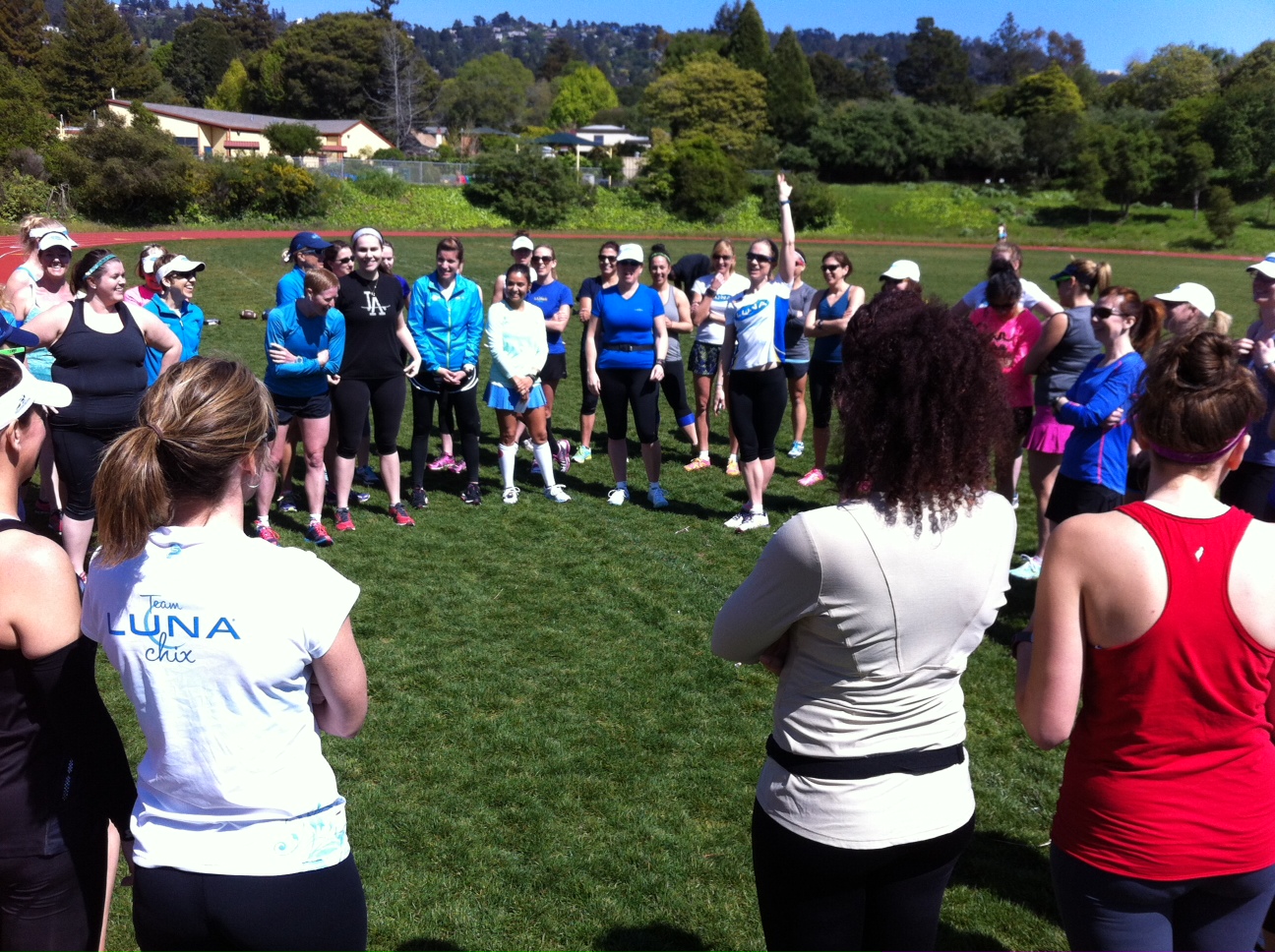
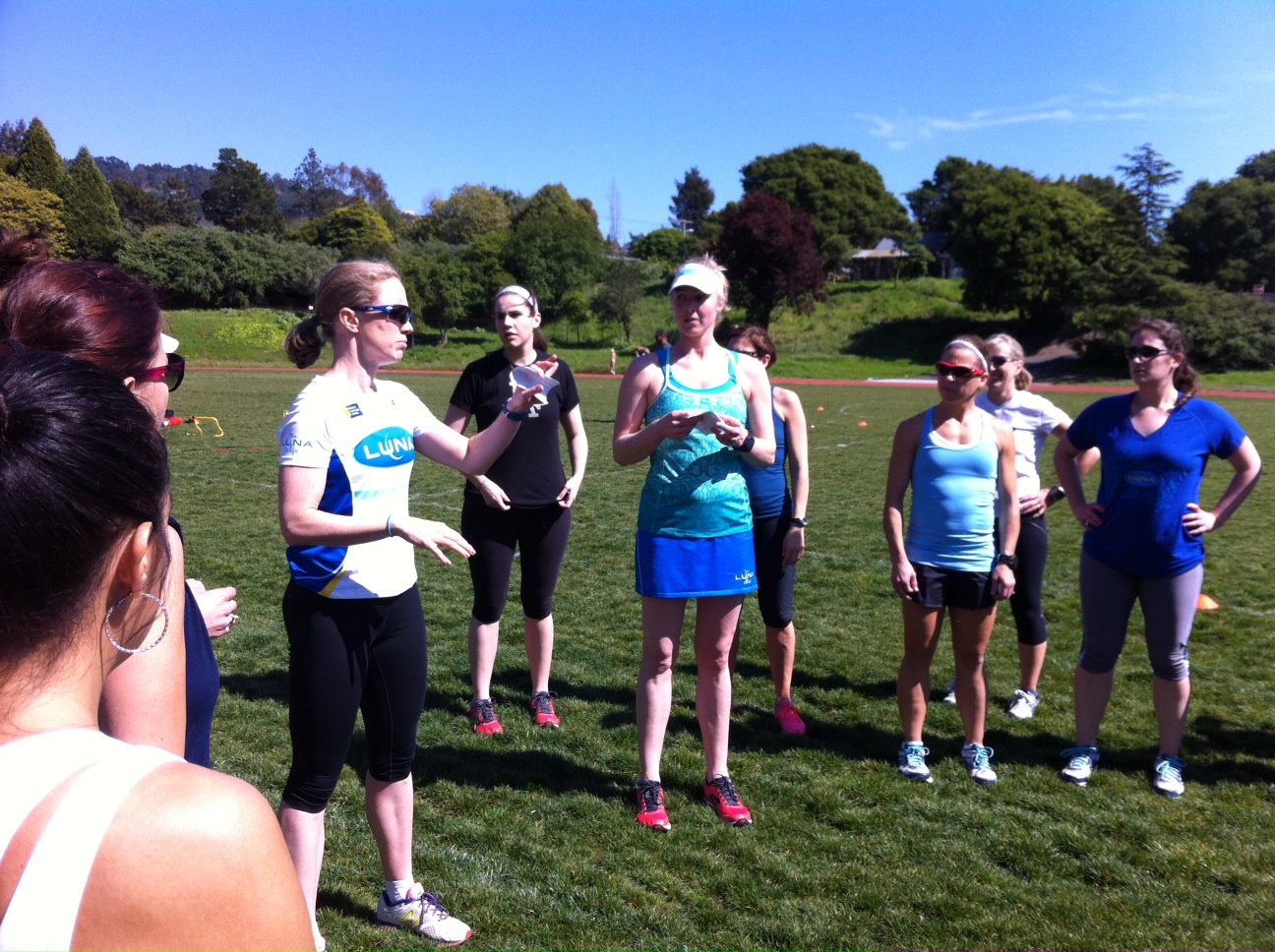
I stopped by for yesterday afternoon’s sessions — first up on agenda was a run clinic in which Castro coached captains on how to lead track workouts for their respective teams. We divided into groups and broke the session into segments with each group in charge of a specific aspect of the workout.

photo 3 (17)

Admittedly, I felt a little nervous walking in as a non-official team member, but that didn’t last for long; the ladies welcomed me with big smiles, kind words and open arms.

I even got some great swim pointers from Julie (from the Boston triathlon team) as we warmed up on the track, and Melanie (from the Austin run team) and I pushed each other during the 800 and 400 repeats. Thanks, guys!

photo 4 (7)

After a quick cool-down and recap, we made our way back to the shuttle — but not before exiting the track through an “encouragement tunnel” of cheers.

Castro summed up the team’s vibe perfectly: “Remember no matter what level of athlete you are to encourage and uplift others. True victory and joy can be found there.”

photo 1 (20)

Next up were breakout sessions to work on sport-specific skills, and I chose bike maintenance. Yep, if you remember my flat tire change adventure on my first long ride, you know that this is an area in which I could definitely pick up a few pointers.

Enter Dusty LaBarr, bike mechanic for the Luna Pro Team, who took us through everything from bike cleaning to tire changing , as well as safety precautions and other helpful pointers. While I may not look forward to my next flat, at least I’ll be much better prepared for it now!

photo 2 (22)

The theme of the weekend? Tell your story. As Castro said, “In sharing you story you can empower, encourage and ignite others to walk boldly within their own story.”

In that vein, we listened to all kinds of amazing, encouraging, inspiring and emotional stories during dinner — from Jeanne Rizzo (president and CEO of the Beast Cancer Fund) to the LUNA Chix Pro Team panel, along with several LUNA sponsored athletes and local team leaders.

It’s quite apparent that this group is a force to be reckoned with — not only are they competitive athletes who do well, but they’re also compassionate teammates who go above and beyond to do good, whether it’s supporting one another, encouraging female athletes of all levels, lending a hand in the community or working to raise awareness and funds to support the Breast Cancer Fund.

photo 5 (8)

The best part, though? Reconnecting with a dear friend.

Terra and I have our own story — we ran track & field and cross country together in Michigan many moons ago — and it was such a treat to get together again.

Needless to say, we had a lot of catching up to do…and I’m excited that we were able to start another chapter together after all these years!

photo 4 (8)

For more information about Team Luna Chix — or to get involved in your local team — check out their site here.