Nike Women’s Marathon SF: Ready or not, here I come!

Last Friday felt like Christmas morning with tens of thousands of us waiting in anticipation for the results of the 2013 Nike Women’s Marathon San Francisco random lottery draw.

Inspired, in part, by the tragic events at this year’s Boston Marathon, I had entered on a whim, thinking it would be cathartic way in which to show my support and solidarity by running for those who cannot.

And then, at 10:34 a.m., I saw this in my inbox:
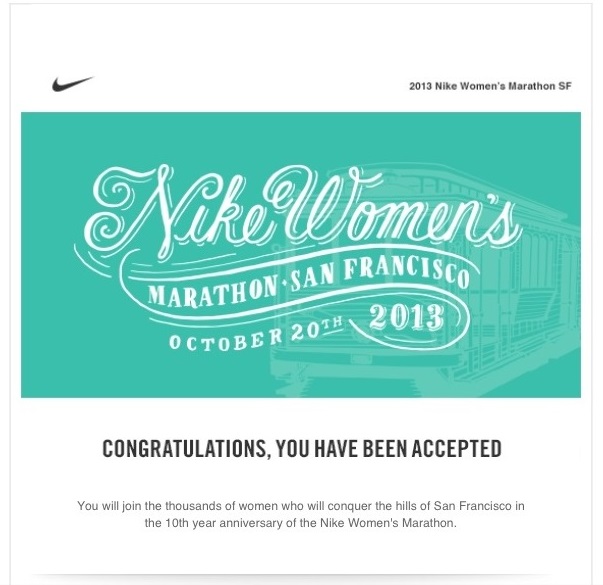
NikeSF3


Gulp.

My initial elation at the thought of being able to cross the finish line was followed quickly by a wave of anxiety: Only if I’m able to get to the starting line this time.

See, my brain loves running…but my body? Well, that can be an entirely different story.

Short distances never posed a problem during my high school track & field and cross country days. But whenever I decide to step up the distance, I seem to get schooled in the darker side of endurance running.

running-injury-300x300

My first (and last) successful attempt at 26.2 miles was the Chicago Marathon in 2002. The goal was just to finish the race, and even with a few unplanned pit stops (thanks to a small bladder, plus a propensity for runner’s trots, ugh), I crossed the line in a respectable 4:27:13.

Fast forward a few years, add in an overzealous attempt for a personal record (PR) and a serious lack of stretching and cross training, and little did I know, I was creating my very own recipe for marathon disaster.

Sure, I came out of the training gate with a bang…but it all ended with a whimper a few weeks before what I hoped would be my second marathon in New York City. What started as a sharp pain in my hip culminated in a visit to the doctor’s office where I was told I could run the race, but in doing so, I’d most likely break my hip.

img

So I took some time off. To heal, yes (both physically and mentally), but also to get back to the drawing board about what it would take to again tackle the 26.2-mile monkey on my back.

Since then, I’ve developed a new-found appreciation for overall wellness, which includes complimentary (read: non-running) forms of fitness, better nutrition and a more balanced approach to training – and living, really.

So my plan this time around? Taking on 26.2…on my terms. 

Training starts this week, so I invite you to follow along over the next four months or so as I embark on my journey back to the starting line.

Stay tuned for my training plan, the low-down on those long runs, experiments with nutrition and gear…and more!


NikeSF2


Beat the heat: Gear for surviving summer workouts

Summer-workout-thriveportlanddotcom

Photo credit: ThrivePortland.com

I have a love/hate relationship with summer workouts.

Love? Longer days, runs at dusk with the smell of fresh-cut grass and dressing without fear of the wind chill factor.

Hate? Sunburns, jogging at a snail’s pace under the beating sun, dehydration, heat cramps and humidity.

Luckily, some of those things can be avoided by taking a few simple precautions (aka getting my butt out of bed earlier and slathering myself head-to-toe with sunscreen).

The others? Well, there’s no better excuse to get some fun, new gear to keep you from suffering through some strenuous outdoor activities in the summertime.

Here are a few of my recent favorites!

Dress to Impress

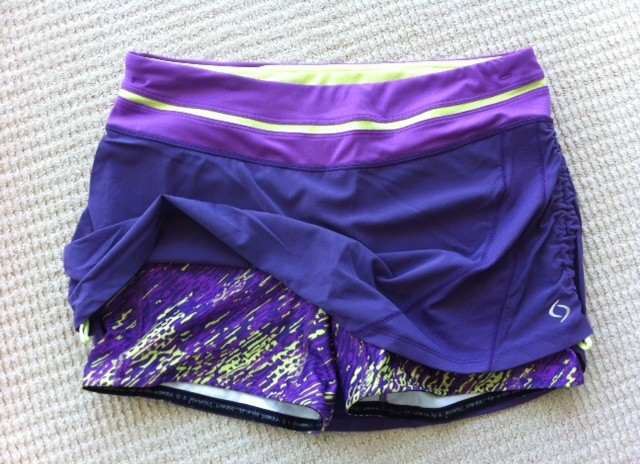
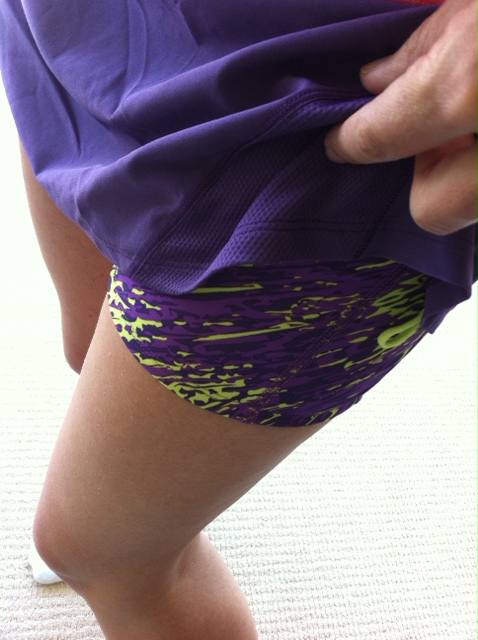
I love a good pair of yoga pants as much as the next gal, but sometimes summer just calls for bare legs. Keep your cool (without losing your dignity in some of those, ahem, ‘barely-there’ shorts) with Moving Comfort’s Sprint Tech Skort ($56), which comes complete with motivational quotes inside the lining to really get you going.

MCskirt

Peek-a-boo! Love the fun colors

MCskirt2

Go with the Flow

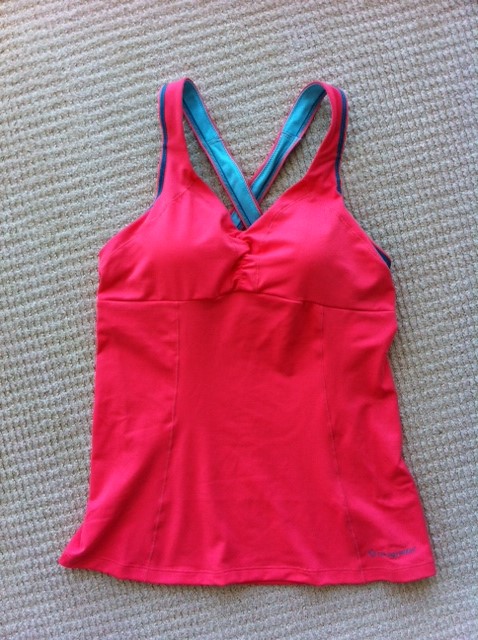
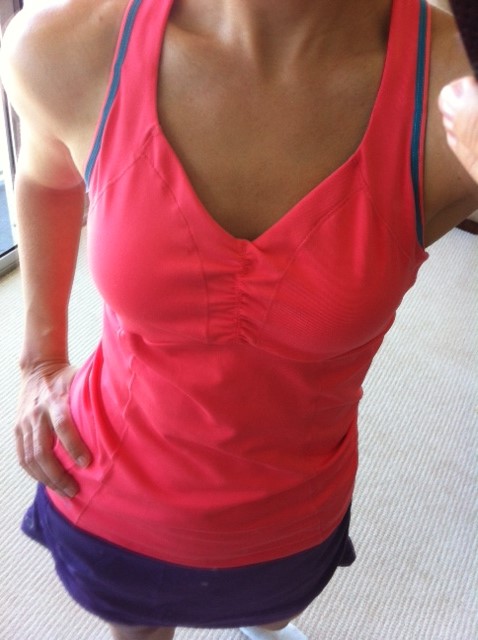
For up top, I’m a big fan of their Flow Crossback Tank ($58). As comfortable as it is cute, Moving Comfort really knocked it out of the park with this one. From the fun pop of color to the feminine ruching at the bust, this tank is not only done well design-wise, but it also has a built-in bra for support during both low- and high-impact activities.

MCtank

MCtank2


Keep a Cool Head

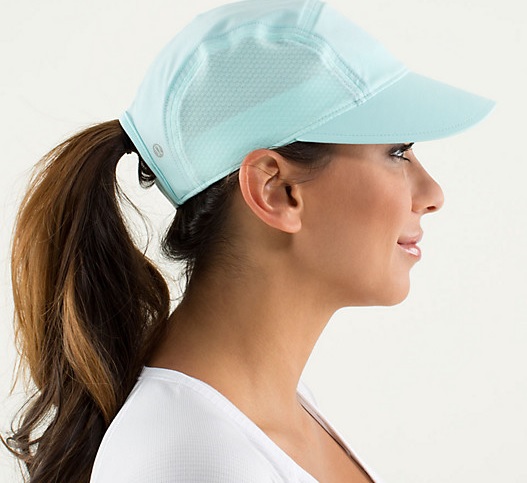
When I want to get out and feel the burn (the good kind) while going pseudo-incognito, I grab my trusty Lululemon Run Hat ($32). The lightweight, moisture-wicking and adjustable cap makes it easy to shield your eyes from the sun and keep hair from going haywire.

Photo credit: Lululemon.com

Photo credit: Lululemon.com

Hydrate, Hands-free

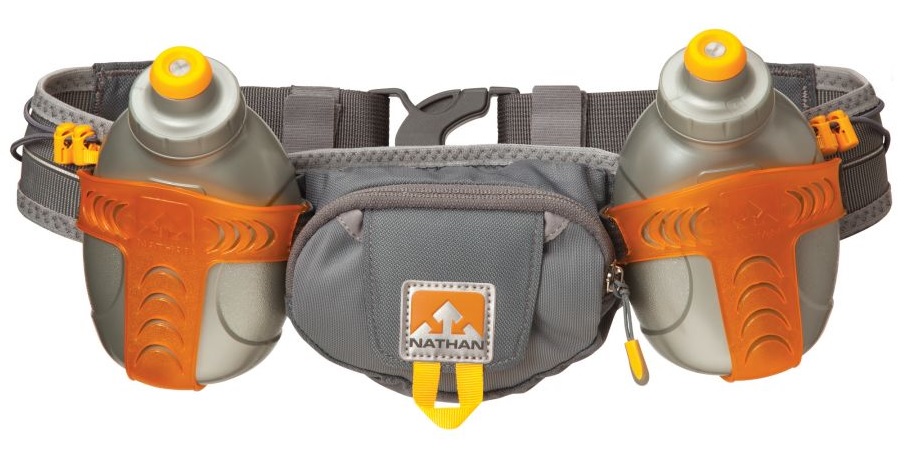
Between hydration, energy gels, keys, cash, phone, music and whatever else you need, packing for a long run can spiral out of control quickly. Contain the madness with a Nathan Hydration Belt ($45). Equipped with easy-squeeze flasks, these belts offer lightweight storage, a chafe-free ride, and easy one-handed access to hydration and other running essentials.

NathanBelt

Photo credit: NathanSports.com

Keep Your Balance

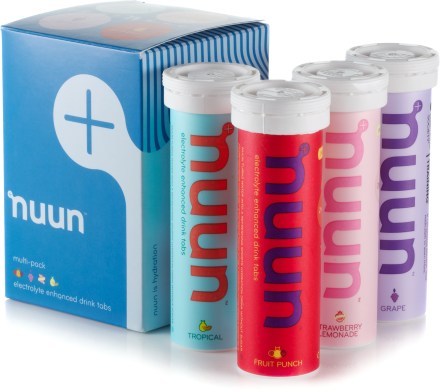
Finally, smart sports hydration takes more than just H2O. Keep from knocking your system too far out of whack by consistently sipping an electrolyte replacement, such as Nuun Active Hydration Tablets ($24 for a four-pack), which contain a quick-absorbing mix of salts and sugars that can alleviate cramps and help muscles function, communicate and burn energy efficiently. Stay cool out there!

nuun

Photo credit: REI.com

Thanks to the folks at Moving Comfort for providing samples for review; all opinions are my own. 

Hills: Your not-so-secret trick to better running this year

Photo courtesy of WeDoRunRun.Blogspot.com

Photo courtesy of WeDoRunRun.Blogspot.com

There’s no denying that runners have a love/hate relationship with hills.

Most begrudgingly regard them as a necessary evil, others plot routes to avoid them altogether, and a small sliver actually step up to embrace the challenge.

I like to think of hills as the “vegetables” of a running regimen: They may not be the most appealing thing on the menu, but respecting and learning to love hills can make you a stronger, fitter and faster runner.

Yes, hills can hurt – both the body and the ego – but as much as they are a runner’s nemesis on the roads, they’re are also one of the ways in which runners can dramatically improve technique. But before you add them into your weekly runs, attacking them with abandon, think differently about approaching hills in order to see maximum results.

Start by following the lead of professional runners who deploy more efficient techniques for tacking hills:

  • First, rather than giving an all-out effort, try metering your exertion on the way up. The goal is not to expend all of your energy on the ascent
  • Next, fight your natural instinct to breathe that sigh of relief at the top and hold back on the descent in an attempt to recover. Instead, let the hill work for you on the downslope, and push yourself to keep pace
  • Finally, think about maintaining an even leg cadence on both sides of the hill, which will help you level out your effort. To accomplish this, you’ll have to vary speed and stride length (which, on the plus side, may just help distract you a bit from the pain).

Developing good form takes practice, so slowly add hills into your training routes and consider devoting one day each week for hill-specific drills.

In addition to evening our your exertion over the hills, be sure to maintain good posture and watch ahead for changes in terrain so you can adapt your speed and stride seamlessly. The last thing you want to do is to expend too much energy switching “gears” mid-hill.

Runners, got any more tips for mastering those mighty inclines? Feel free to share with us!

“Get me across the finish line” half marathon training plan

Note: I had drafted this post before the tragedy at the Boston Marathon, but held off running it because it just didn’t feel right making light of crossing a finish line when so many didn’t get the chance this past Monday. But now that the second bomber has been captured and is in custody, it’s time for the healing to begin. So let’s run…for Boston. 

A friend of mine just signed up for a half marathon this fall. The best part? It’s her first post-baby 13.1-miler, and she’s doing it along with her sister, who will be tackling the distance for the first time. You go, gals!

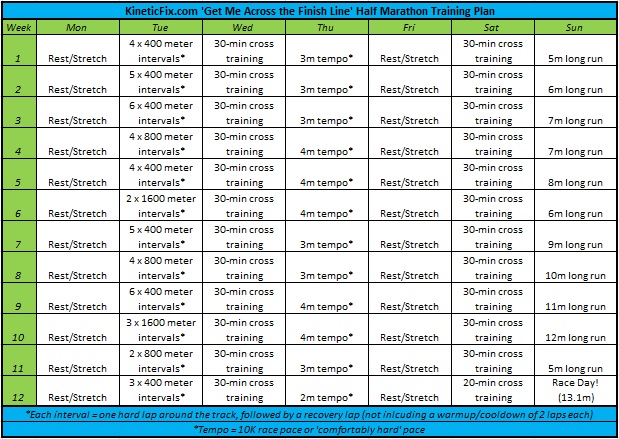
My own sister has also been a willing guinea pig participant in both the Rock n’ Roll Chicago and the Detroit Free Press International half marathons with me, so I thought I’d share our favorite training plan below.

It’s loosely based on Hal Higdon’s training program, but I tweaked it a tad for our individual schedules and fitness levels – i.e. sometimes I’ll take an extra rest day or swap a cross training session (elliptical, bike, rower, stair stepper) in for one of the mid-week runs to help aid in recovery and prevent injury.

Check it out, and let me know what you think (and if you use it for a race, I’d love to hear your results)!

FinishLineHalfMarathonPlan