Recipe: Thai-Style Pork Wraps

IMG_1224

Weeknight meals tend to be a slippery slope in our house: The best laid plans often devolve into snacking — or worse, dining out — unless we inoculate ourselves in advance with simple, quick recipes and easily-accessible ingredients.

This dish is just that — basically a one-pan meal that’s packed with protein and veggies, yet still full of decadent flavor. Make it early in the week, so you can re-purpose leftovers for lunches over rice or with noodles.

Thai-Style Pork Wraps 

(Recipe adapted from Better Homes & Gardens)

Ingredients: 

  • 1 can unsweetened coconut milk
  • 1/2 cup fresh cilantro, washed and chopped
  • 1/2 cup reduced sodium soy sauce
  • 2 limes, one juiced & one cut into slices
  • 2 Tbsp grated ginger
  • 1 Tbsp minced garlic
  • 1 Tbsp lemongrass paste
  • 1 tsp red curry paste
  • 1 lb boneless pork loin, cut into bite-sized pieces
  • 1 Tbsp coconut oil
  • 1 cup sliced fresh green beans
  • 2 cups shredded carrots
  • 1 head Napa cabbage
  • Extra cilantro for garnish

Directions: 

  1. In a large mixing bowl combine the coconut milk, cilantro, soy sauce, lime juice, ginger, garlic, lemongrass and curry paste. Add pork; toss to coat, and set aside.
  2. Heat coconut oil in a very large skillet over medium-high heat. Add meat mixture. Cook for 5 minutes. Add green beans. Cook and stir for another 5 minutes or until crisp-tender and until pork is just slightly pink, stirring occasionally. Add carrots just before serving.
  3. To serve, top cabbage leaves with pork mixture. Garnish with additional cilantro and serve with lime wedges.

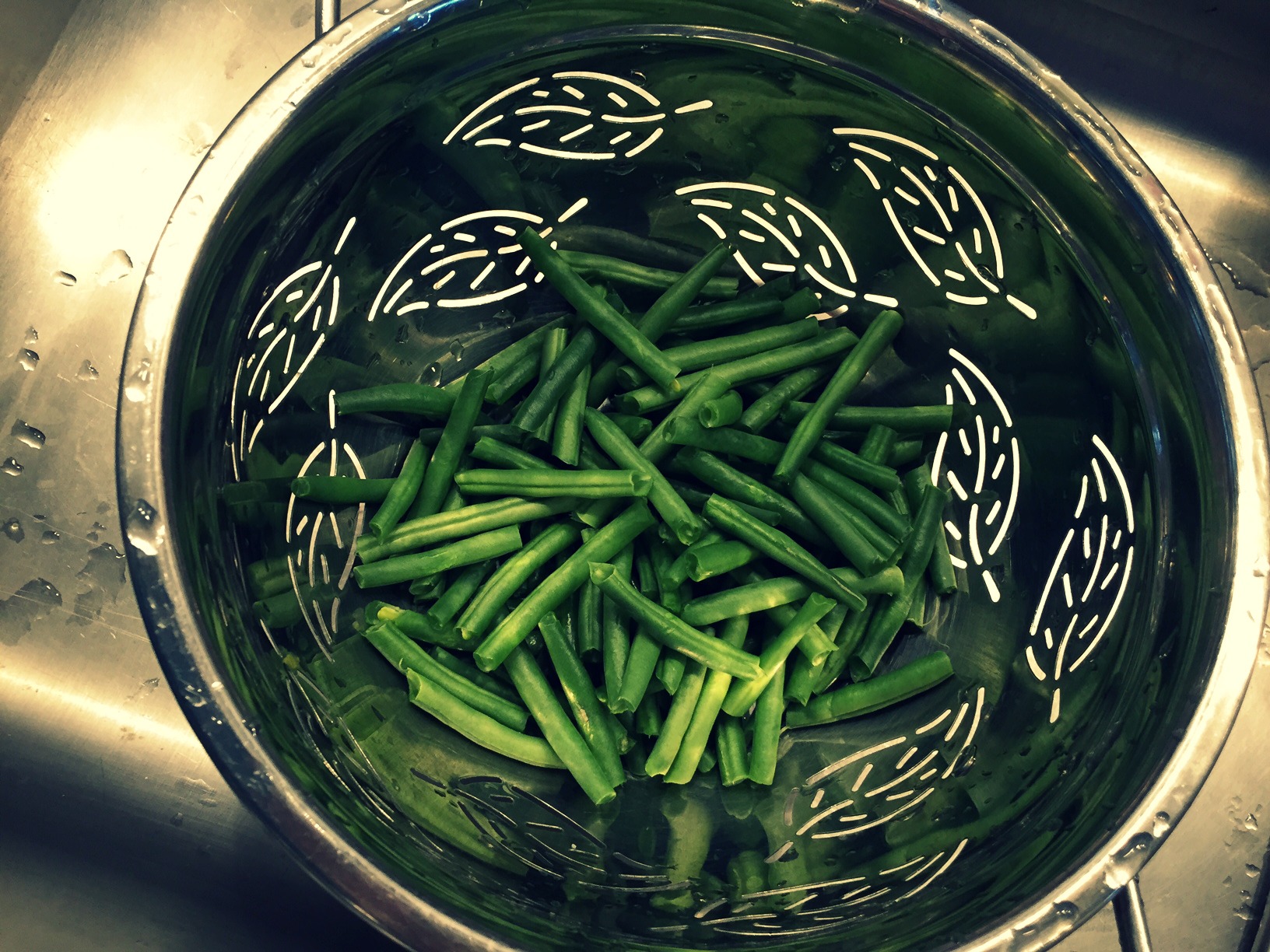
Here’s a look at the process: First, wash & prepare all the vegetables (time-saving tip: I cut some corners on prep time and bought a bag of pre-shredded carrots).

IMG_1219

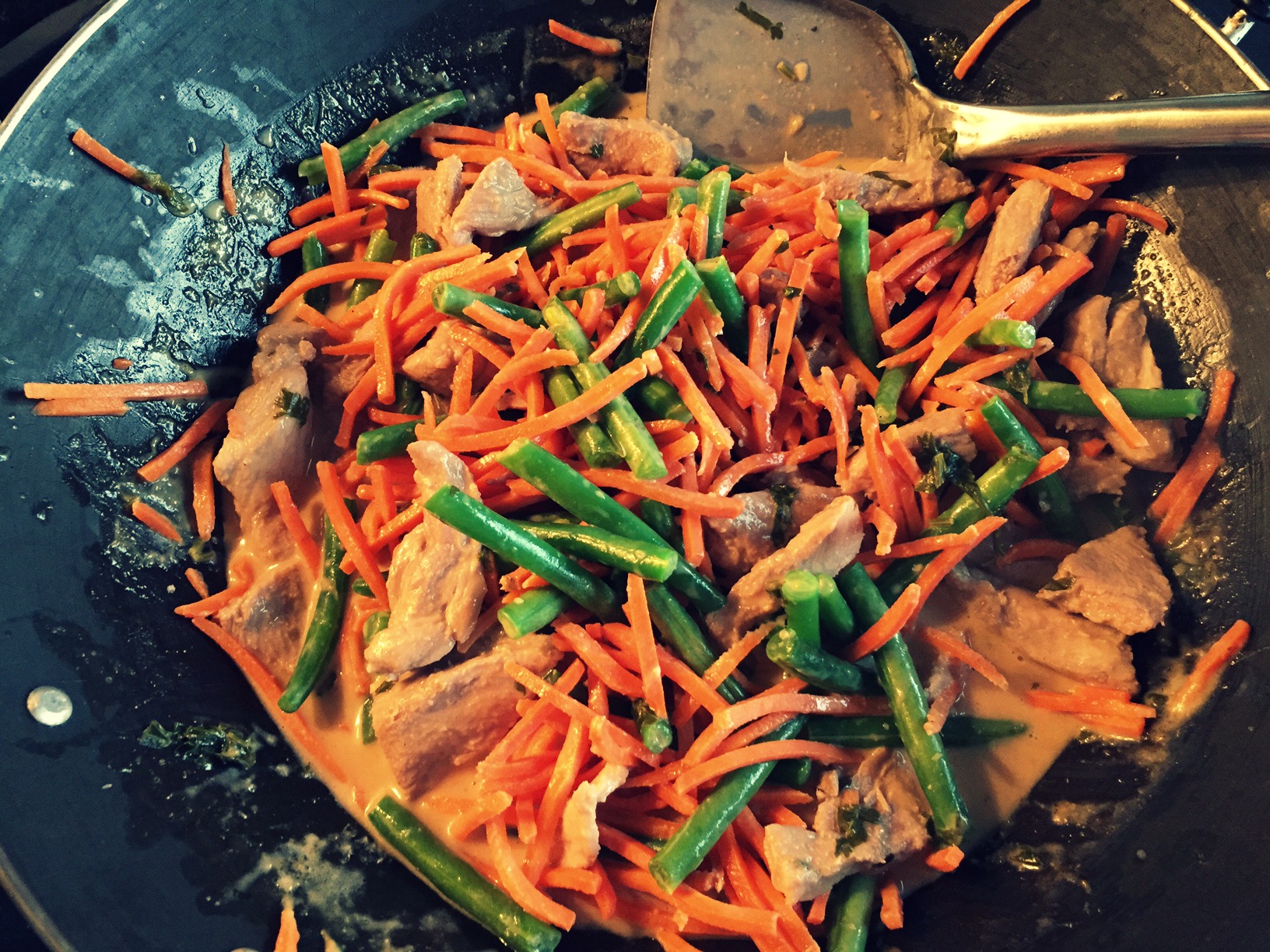
Instead of a skillet, we used our favorite wok from the famous Wok Shop in San Francisco’s Chinatown.

IMG_1223

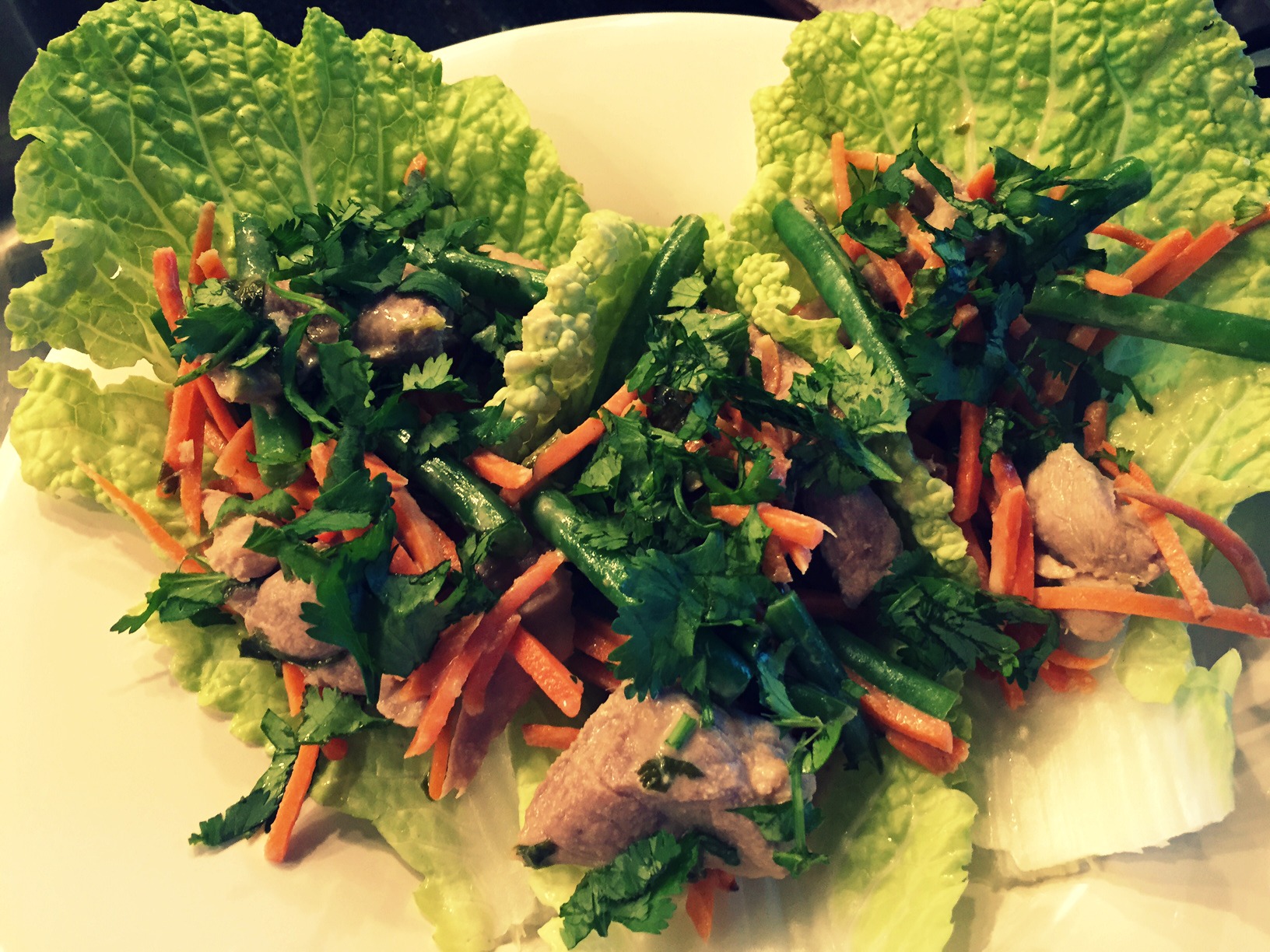
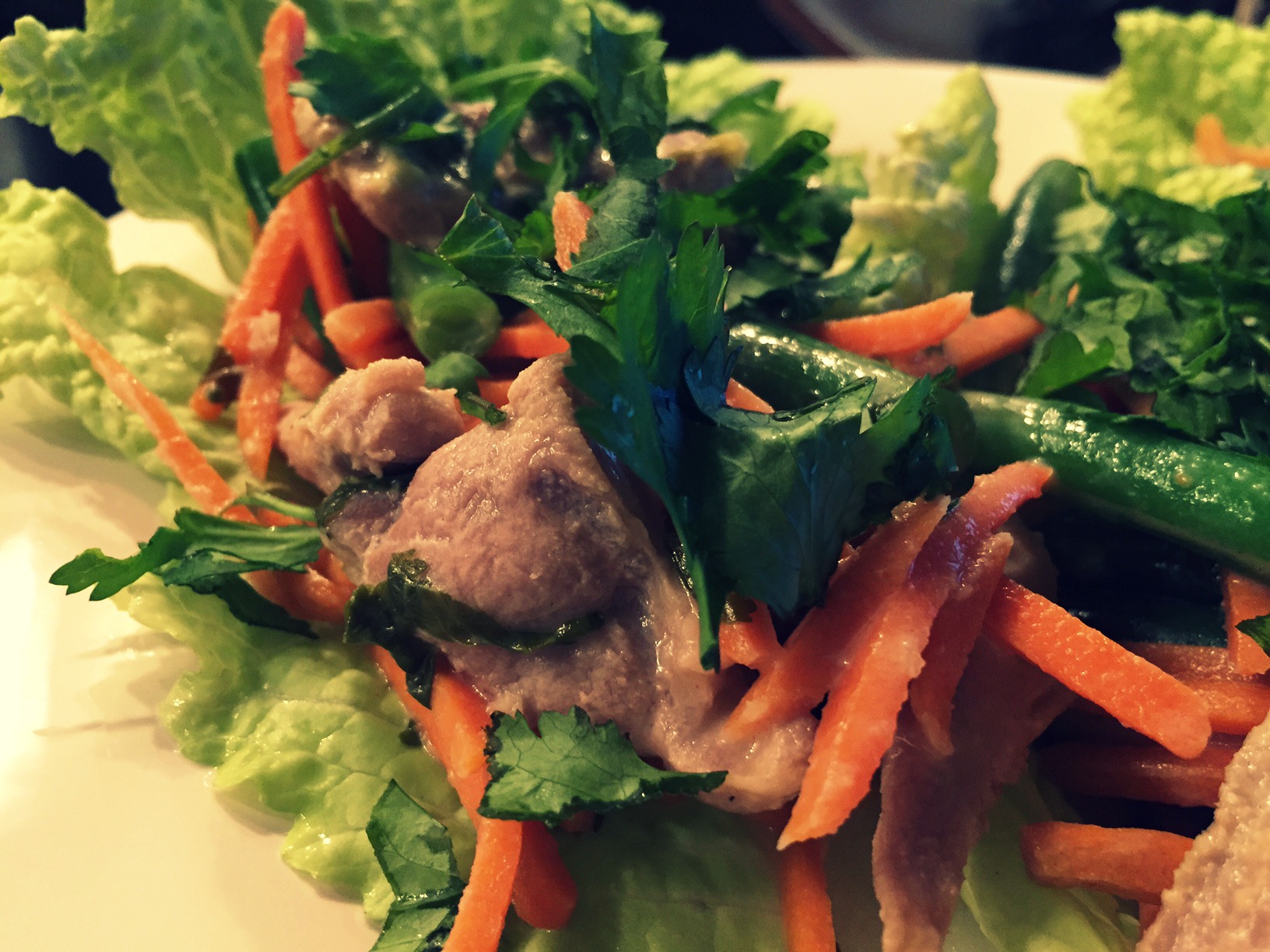
Serve it up, making sure to garnish with a scoop of yummy sauce from the pan, and enjoy!

IMG_1225

How do you ensure your weeknight meals are healthy? 

Recipe: Almond Flour Chicken Fingers

photo 5 (2)

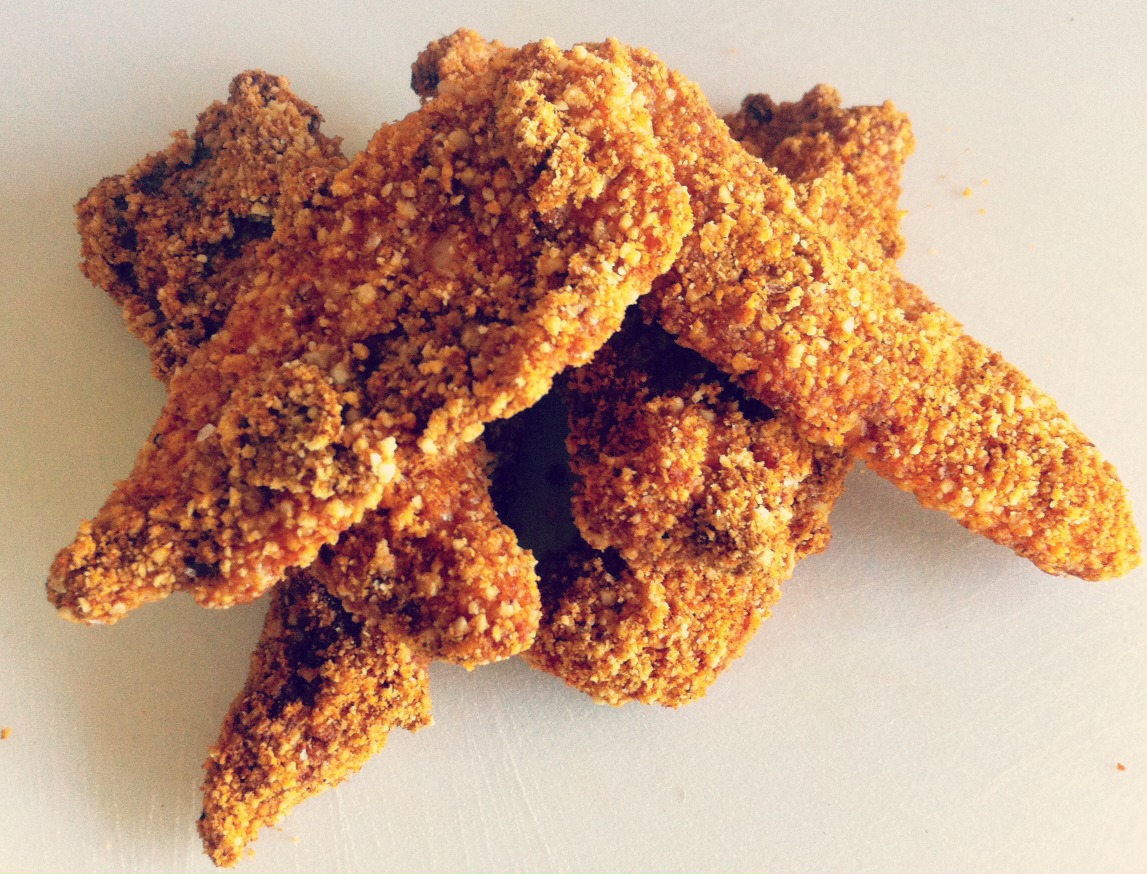
My friend Katie is currently on the Whole 30 program, and as we were swapping healthy recipes the other night, she mentioned this one as a family favorite. While I’m not quite convinced I am able want to follow a strict eating regimen (you’ll have to pry carbs and dairy products out of my cold, dead hands!), I’m always game for anything that can get Hubby and I out of our weekly baked/grilled chicken rut. And this one just so happens to be pretty darn awesome.

Almond Flour Chicken Fingers

(recipe adapted from GenYFoodie)

Ingredients: 

  • 2 packages boneless, skinless chicken tenders
  • 2 cups almond meal
  • 1 tbsp paprika
  • 1 tsp cumin
  • 1 tsp cayenne pepper
  • 1/2 tsp black pepper
  • 1 tsp sea salt
  • 1/2 tsp garlic powder (we didn’t have, so I omitted)
  • 2 eggs

Directions: 

  1. Preheat oven to 375, and line a baking sheet with parchment paper.
  2. In a small bowl, lightly beat eggs, then set aside. In a shallow dish, mix together almond meal, paprika, cumin, cayenne, pepper, salt and garlic.
  3. Dredge each piece of chicken in egg, then roll in dry mixture to coat it completely. Repeat with each piece, arranging them all on baking sheet.
  4. Bake for 25-30 minutes or until golden.
  5. Serve with your favorite dipping sauce or chopped in a salad!

First prep the eggs in one dish, and measure out all the dry ingredients in another.

photo 1 (6)

Here’s what the coating looks like when it’s all mixed and ready for dipping.

photo 2 (5)

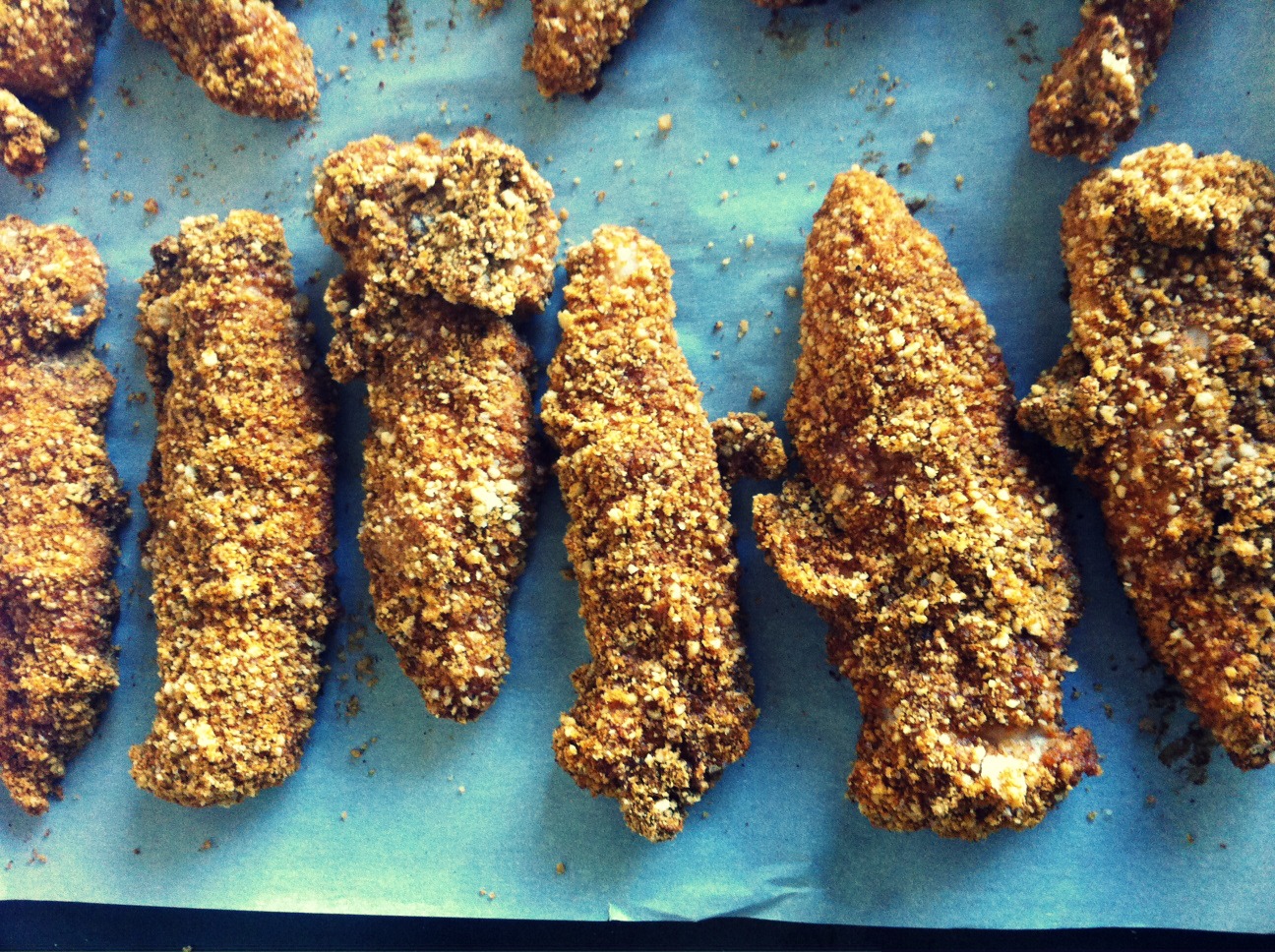
The almond flour helps create a wonderfully-thick breading, which will crisp up in the oven. These are all ready to go in for 25-30 minutes.

photo 3 (4)

And as an added bonus, the fat in the nut coating helps retain moisture for these little strips of goodness.

photo 4 (2)

One final tip: Make a double batch because they’ll disappear quickly!

Q&A with Alex Schmotter, founder of the world’s first alkaline sports drink

Phenoh1

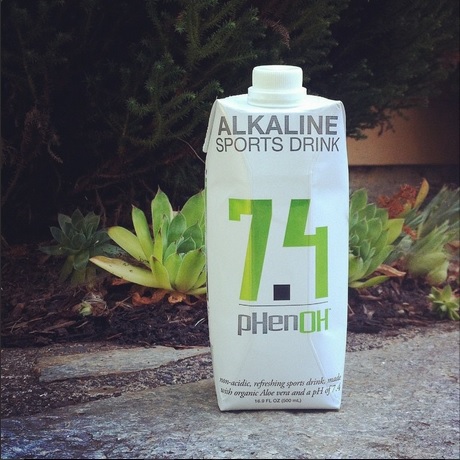
Let’s get one thing straight: Sports drinks today aren’t exactly health food. Sure high sugar content, artificial dyes, preservatives and chemical additives are bad enough, but it’s the acid content (100 times more than coffee!) that can really affect our health (tooth decay) and performance (muscle fatigue).

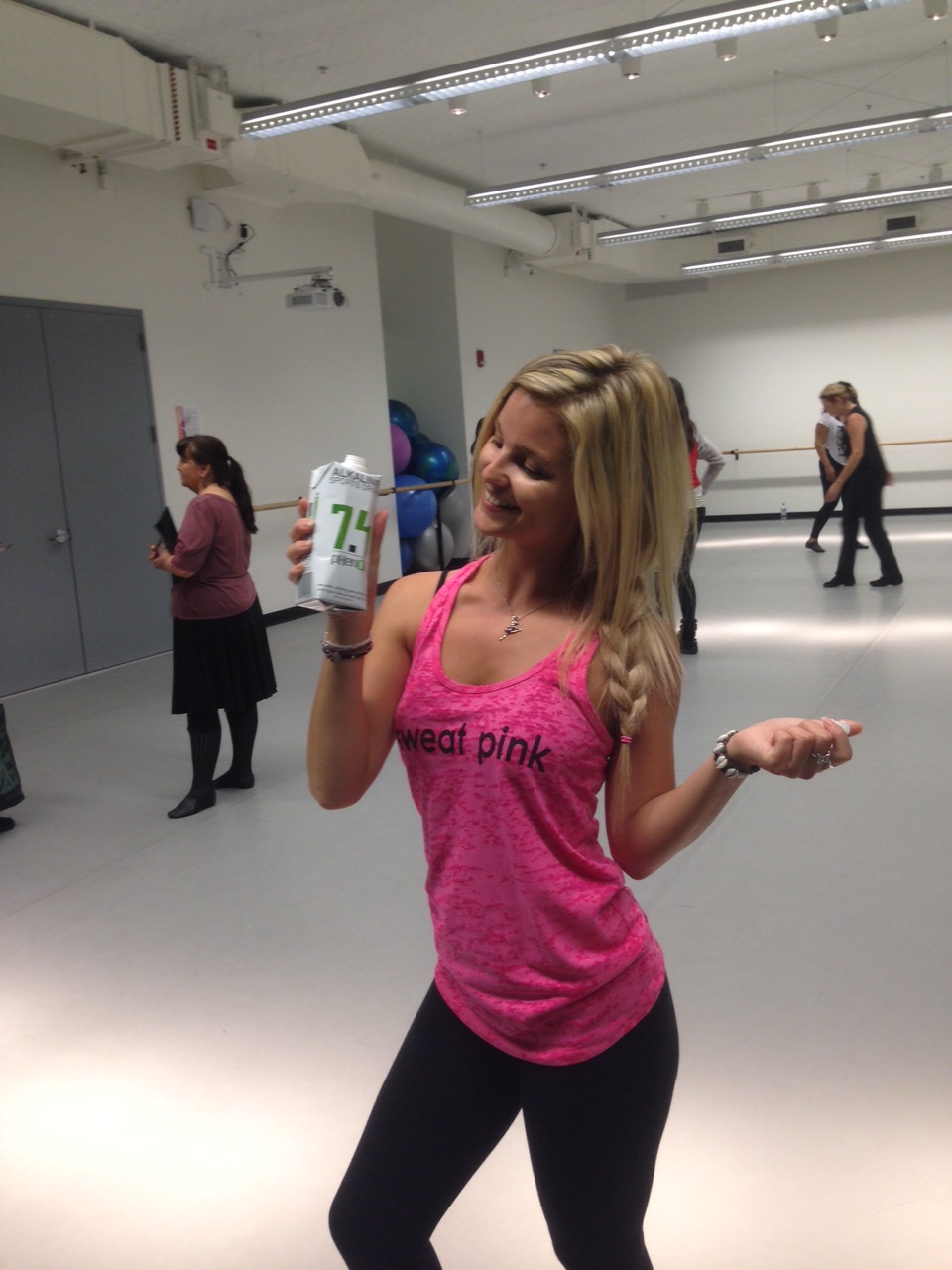
Enter PHenOH 7.4, the first sports drink that helps the body maintain its natural alkalinity, allowing us to perform at our best for longer.

Founder and CEO Alex Schmotter, a lifelong athlete with a passion for health sciences, developed the product after realizing the lack of a healthy alternative to traditional sports drinks. He also happens to be one of Hubby’s dental school buddies, so I thought it’d be fun to sit down and chat about how he balances running a successful business with pursuing his DDS degree!

KineticFix: Welcome, Alex! So, how’d you get the idea for an alkaline sports drink, and why is it so beneficial for athletes? 

AlexS

Alex Schmotter: I was in the process of applying for dental school, so I had teeth on my mind, and at the same time I was brainstorming research topics for my senior research at Cal Poly. Being an athlete with a background in biology and a strong interest in dentistry, I began researching the detrimental oral affects that sports drinks have.

Most people don’t understand that acid is the direct cause of tooth decay, so I decided to conduct my senior research on the topic. And the more I learned about the acidity of sports drinks, the more I discovered that their negative effects aren’t just on teeth, but also on physical performance and overall health.

Sports drinks are about 30,000 time more acidic than blood. This is especially important for athletes because when we exercise we naturally produce acids. Our bodies are amazing machines, and we are very good at getting rid of this acid, but there comes a point that we produce acids faster than we can get rid of them, which can adversely affect performance.

KF: You’re currently in dental school; how does your work with Phenoh 7.4 fit in with that?

AS: Teeth are where this all started. I was out for a bike ride one day in undergrad, and I’m riding along drinking my sports drink thinking about how I’m drinking it. I notice that I put a little bit of this bright blue fluid into my mouth, swish it around for a few seconds, swallow, and then repeat the process. It doesn’t take being a dentist to know that this is terrible for your teeth.

Having such an interest in oral health, I wanted to understand the justification for sports drinks being so acidic. I thought that if the acid is destructive to our teeth, then it must be very good for us in other ways to justify being in sports drinks, but the more research I did the more obvious the problem became.
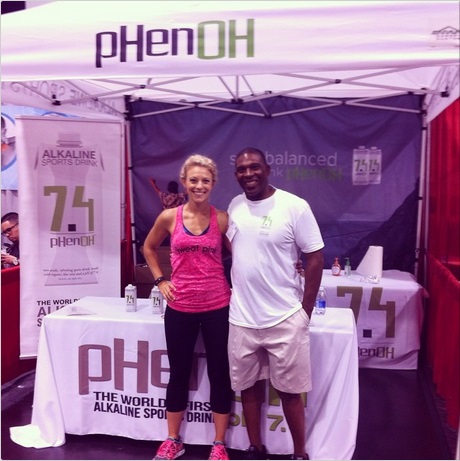
Phenoh2

KF: Describe a typical day; I’m interested in how you balance it all!

AS: Well I don’t do it alone, first of all. I have a great team behind me now, and that’s crucial. I have learned to feed off of the positive support that I have gotten from my family, my friends and some great advisers.

In terms of a typical day, though, I sleep between 4 and 5 hours a night. I usually set an alarm for 6 a.m. I wake up, get ready and head to a coffee shop to work before school. I try to get a few hours of work in before clinic. It’s actually great working this early in the morning because retail store buyers are up early to prepare before the store opens.

Then I go to clinic or class. I work with patients all morning, and during that time I’m really pretty unavailable. This is where it is to important to be able to trust the people you work with.

We get an hour off for lunch, so I usually sprint to the coffee shop around the block and catch up on emails or take a phone meeting. I try to schedule phone meetings for 1-2 p.m. every day, because this is the time of the day that I know I am available and that both the West and East Coasts are within normal business hours.

At 2 p.m. I go back into clinic were I’m with patients again until 5 p.m. After cleaning up, writing notes, calling patients, etc. it is usually 5:30 or 6 p.m., and this is when the work day really starts for me. I would say that Wei-Ken, our company president, and I have most of our company-defining moments after the midnight hour. There’s no such thing as 9 to 5 at a start-up!

Someone told me once that the key to a successful business is “people by day, papers by night.” I agree with this — that during the day it is important to speak with as many people as possible in the restraints of their working hours. And during the ‘off’ hours, I get to express my creativity, make a game plan, develop new products, etc.

KF: It’s been four years in the making; can you tell us a bit about what went into creating your product? 

AS: Ten years ago, a “curious kid” would not have had the resources to do what I did. Today we have access to any information in the world at the tip of our fingers. We have online databases full of unfiltered, scientific literature prepared by masters in their respective fields. I was able to pull information from every discipline of science to get a true understanding of the big picture — thereby giving me the opportunity to develop a solution that “bridges the gaps.”

Phenoh 7.4 is made with just seven natural ingredients, and each one is in there at a very specific concentration for a very specific purpose, based on what the research shows we need for maximal function. We redefined the sports drink on every level, not just the alkalinity. For example, we make our product with organic aloe vera — not only for the essential nutrients that it provides to help us rebuild after stress, for also for its anti-inflammatory effects, ability to reduce post-exercise pain and boost to the immune system.

The real time, however, has not been on the product development, but on building the business. Taking a concept to market with zero business experience is no easy task. I have made many mistakes and will probably make many more. I have, however, developed an incredible network that is proving extremely helpful in spreading word of this new product.
10456026_10202668741533364_4169951290999204976_n

KF: You’re a self-taught businessman, and I’d argue there’s no better MBA than starting your own company! So what are three things you’ve learned in the process? 

AS: As you know, my background is in science — so other than a few lemonade stands as a kid, I came into this with zero business experience. Starting a company as a one-man show, you wear a LOT of hats. I gave myself the google.com crash-course in just about everything, and learned a lot from friends, but if I had to give just three things that I’ve learned, I’d say:

1. If you do not know something, learn it. If you are in a situation where you don’t know something, don’t be afraid to ask. I spent the early days of this thing splitting time between developing the graphics, building a production systems plan, writing my first provisional patent, learning about types of seed round financing, learning about quality control compliance regulations for producing a consumable product, building basic marketing and distribution campaigns…the list goes on.

2. Take on an attitude that if you do not do something, then it will not get done. In business, there is a lot of talk. I still believe that most people genuinely want to help and want to see your vision succeed, but we are all very busy and without an ingrained sense of urgency, people and businesses do not always take action in the way that they say.

For me, this experience was true in situations with friends coming on board to help with the operations and not understanding how much time and effort goes into building a business, all the way to giant corporations promising results and not following through on their agreements. In business, everyone is working on leverage. Be persistent. Stay positive, and push push push.

3. Know who you are. This may be the most challenging initial process of starting a brand. Can you explain it to someone? Will they understand? It doesn’t do a whole lot of good having a “great-freaking-product” if you are the only one who understands it. This should be an exercise performed by every new business entrepreneur.

My suggestion is that you go out and talk about it. Talk about it so much that there is not a single question you don’t have an answer to. Find your brand identity. Think about your brand’s immediate-, short-, and long-term goals, and write them into your business plan. Then don’t lose sight of those ideals!

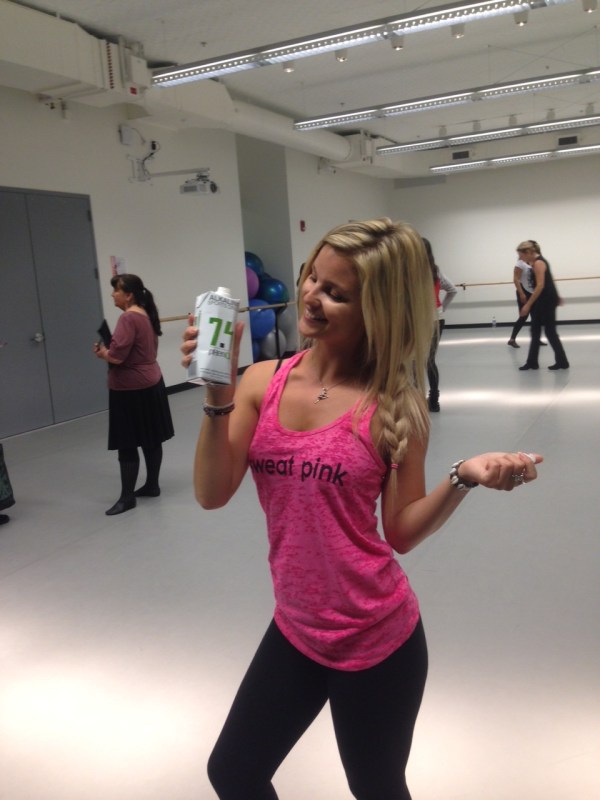
KF: What are your favorite ways in which to stay active — that is, where & when do you drink Phenoh 7.4?

AS: Exercise is a part of my life. I can’t go without exercise, or I just feel off. I’ve always run outside, and throughout college I played team sports (Alex was an All-American collegiate lacrosse player) and went to the gym daily. I still like to go to the gym, but nothing can replace being outside — whether it’s running, biking, hiking, water skiing, snow skiing, etc.

After dental school, I would love to get back into lacrosse and soccer. But for now, you can find me at the Lyon Street staircase or running down Marina Green!
IMG_0355 (1)

KF: Where do you see Phenoh 7.4 5-10 years from now?

AS: Phenoh is a lifestyle brand, and Phenoh 7.4 is our flagship product. The benefits of the concept of Phenoh 7.4 extend to everyone, not just while we are exercising. We want to teach and we want to offer information and healthy products.

We also plan to build philanthropy into our core values. My dad and I have been doing dental philanthropy trips, and last year we did three where we went to Mexico and provided free care for the Huichol Indians. We want to use Phenoh to build similar prevention and care programs around the world.

KF: Finally, what would you say to people who haven’t tried an alkaline drink yet but are open to the idea of trying one?

AS: Don’t be scared! People expect that an alkaline alternative beverage is going to taste like soap, or something awful… Give it a try and see for yourself; it’s very refreshing!

We like to think of ourselves as the Tesla of beverages — at first, consumers were interested in Tesla because it was an electric alternative to internal combustion engines, but now it’s becoming a norm. Phenoh products are the same; while our defining characteristic is the fact that we are alkaline rather than acidic, it is only one of the reasons that we offer a superior product.

It’s also important to note that we aren’t an alkaline water — we are an alkaline flavored beverage, and we are the first of our kind. It’s not just sports drinks that are acidic. If you see something in a bottle, and its not alkaline water, you can assume it’s acidic. This acidity is a serious problem, and that’s why were offering Phenoh as a viable solution.

Intrigued yet? Check out Phenoh 7.4’s website here for more info! 

Recipe: Thrive Energy Cookbook’s Peanut Curry Rice Bowl

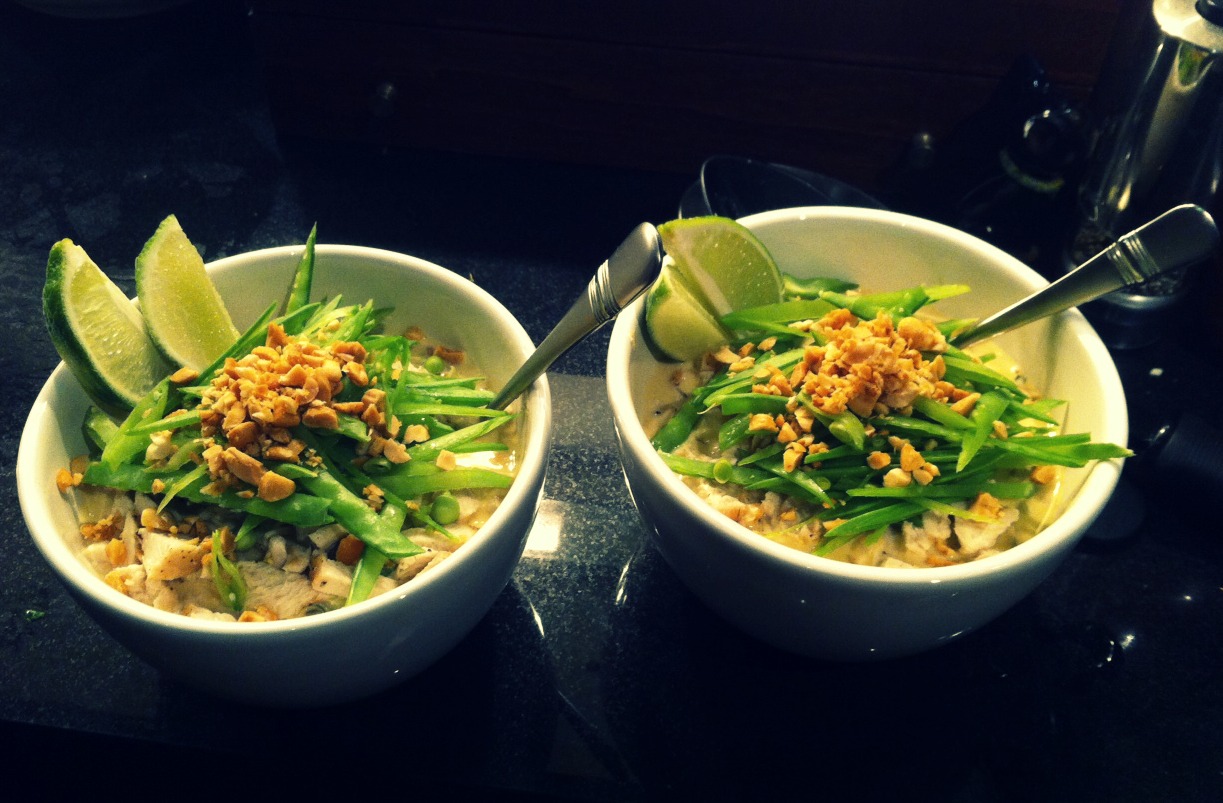
photo 3 (3)

Loaded with veggies, this classically-flavored curry will knock your socks off. Hubby and I made it the other night, and even though it takes a little time to prepare, it’s totally worth it!
Thrive Energy Cookbook’s Peanut Curry Rice Bowl

Ingredients:

  • 1/4 cup virgin coconut oil
  • 2 cups finely-chopped sweet onion (I used red)
  • 1 cup peeled and diced carrots
  • 1 cup diced celery (forgot to get at the store, so didn’t use — oops!)
  • 2 tbsp pounded and thinly-sliced lemongrass
  • 1 tbsp minced garlic
  • 1 tbsp peeled and finely-chopped ginger
  • 2-3 tbsp yellow curry paste (our store didn’t have, so I used red curry paste)
  • 6-8 fresh or frozen lime leaves (again, not at store — so I substituted some lime zest)
  • 1 large sweet red pepper, diced
  • 1 large sweet green pepper, diced
  • 2 cups baby bok choy, chopped
  • 1 1/2 cups drained canned baby corn
  • 1/2 cup smooth natural peanut butter
  • 1 cup vegetable stock (I used chicken broth)
  • 4 cans coconut milk
  • 8-10 fresh Thai basil leaves, torn
  • 1 cup toasted peanuts, chopped
  • 2 tbsp cane sugar (I used 1/2 tsp agave nectar)
  • 1 cup whole grain brown rice, cooked
  • 1 cup bean sprouts (I omitted)
  • 4 small handfuls of pea shoots, for garnish
  • 4 small lime wedges, for garnish
  • Our addition: Chopped chicken (for extra protein!)

Directions: 

  1. In a large pot over medium heat, melt coconut oil. Add onions, carrots, celery, lemongrass, garlic and ginger; cook, stirring frequently for about 5 minutes.
  2. Add curry paste and cook, stirring, until it melts and mixes with vegetables. Add lime leaves, red and green peppers, baby bok choy and corn. Cook for 3-4 minutes.
  3. Add peanut butter and cook, stirring, until melted and mixed in.
  4. Reduce heat to medium, then stir in stock and coconut milk. Add basil, half of peanuts and cane sugar. Bring to gentle simmer, stirring to blend in coconut milk, about 5 minutes (don’t boil or coconut milk may split).
  5. Serve in large bowls over brown rice with bean sprouts layered on top. Garnish with pea shoots, toasted peanuts and lime wedges.

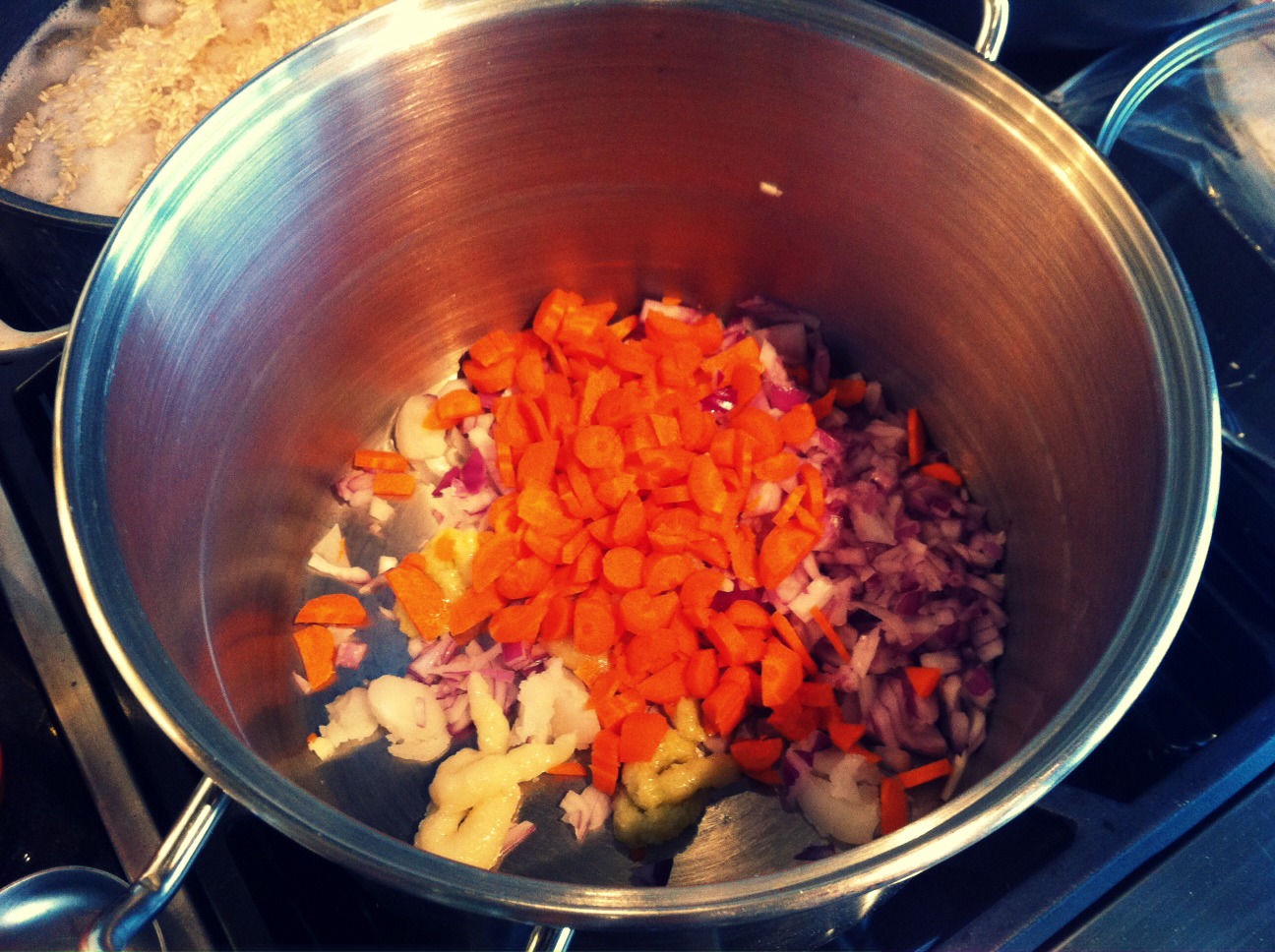
Here’s a look at the process: First, get chopping! Then add the coconut oil and veggies to your pot.

photo 1 (3)

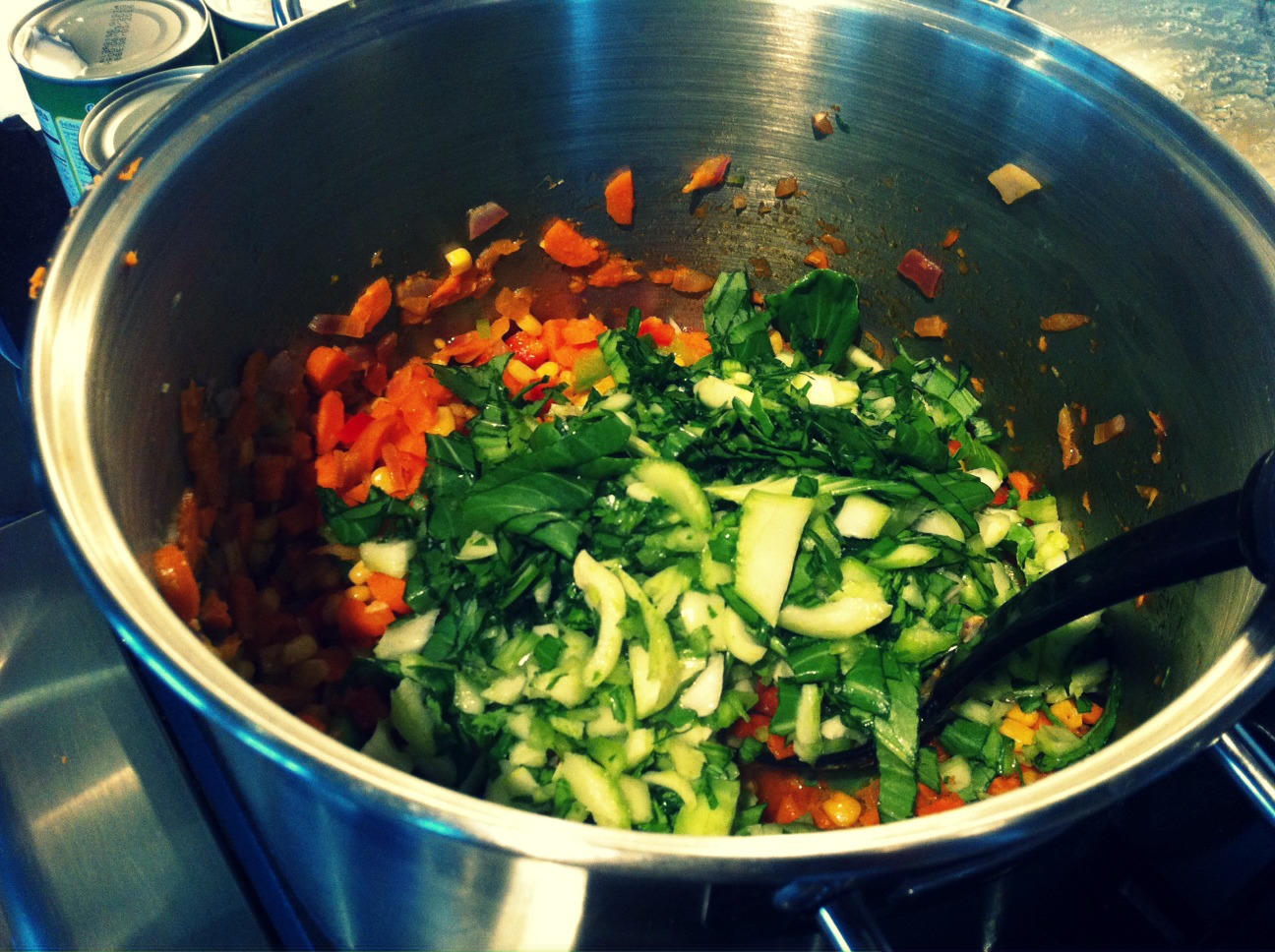
Next comes the curry paste and another round of veggies. This is why it’s such a deliciously, nutrient-dense meal.

photo 2 (3)

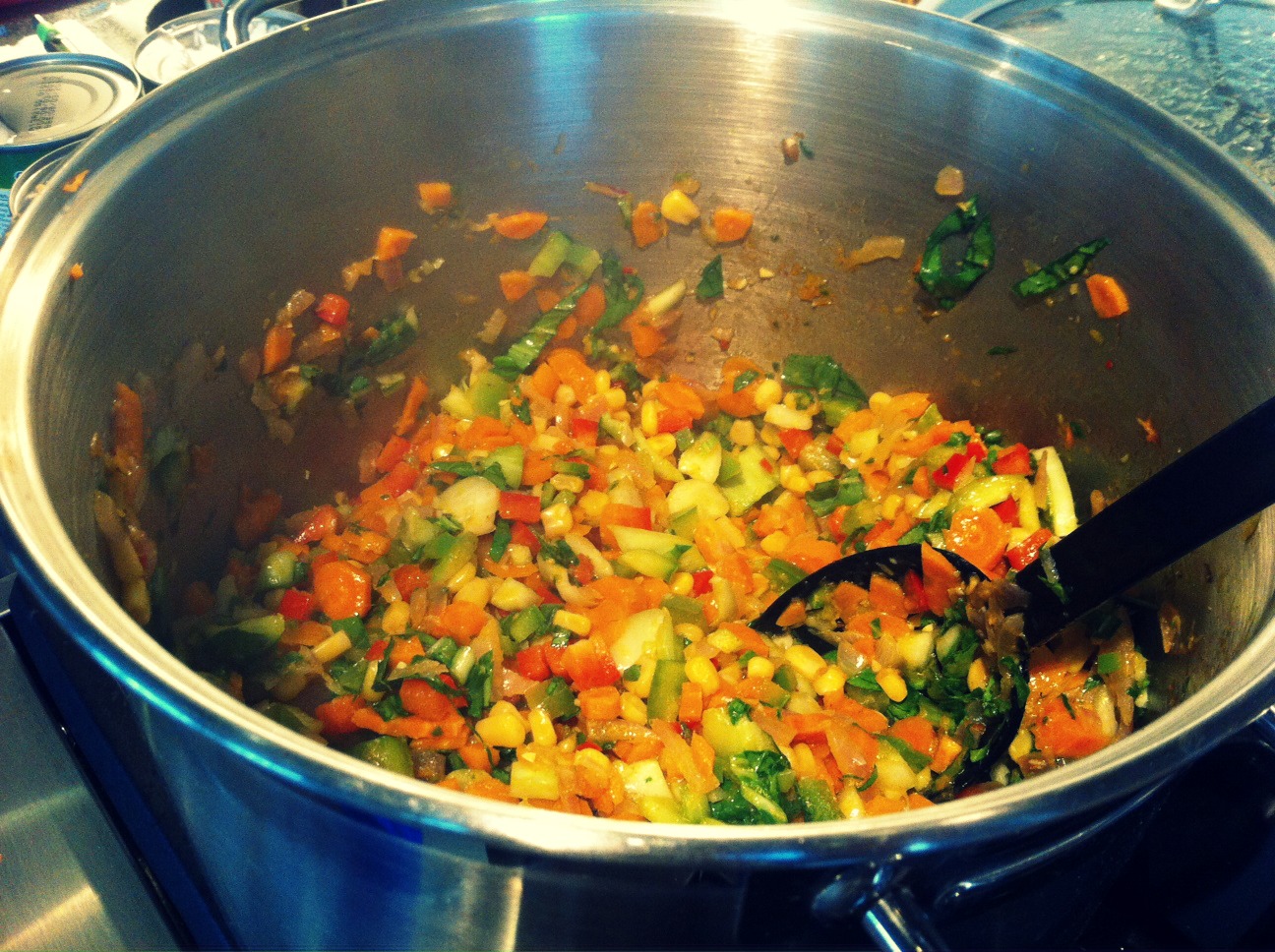
After you add the peanut butter is when the magic starts to happen…

photo 3 (2)

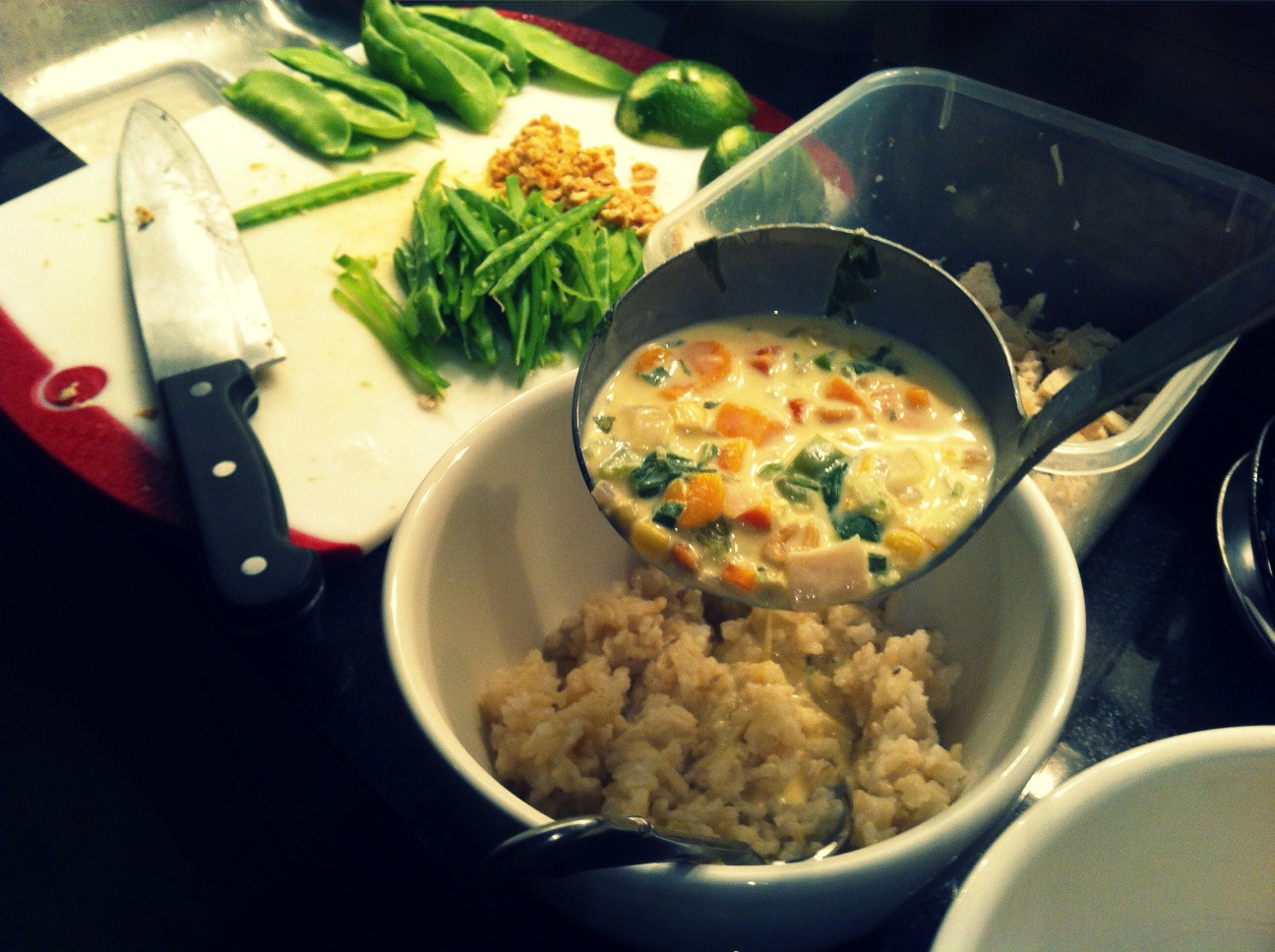
A little coconut milk, and you’ve got yourself a curry!

photo 4 (1)

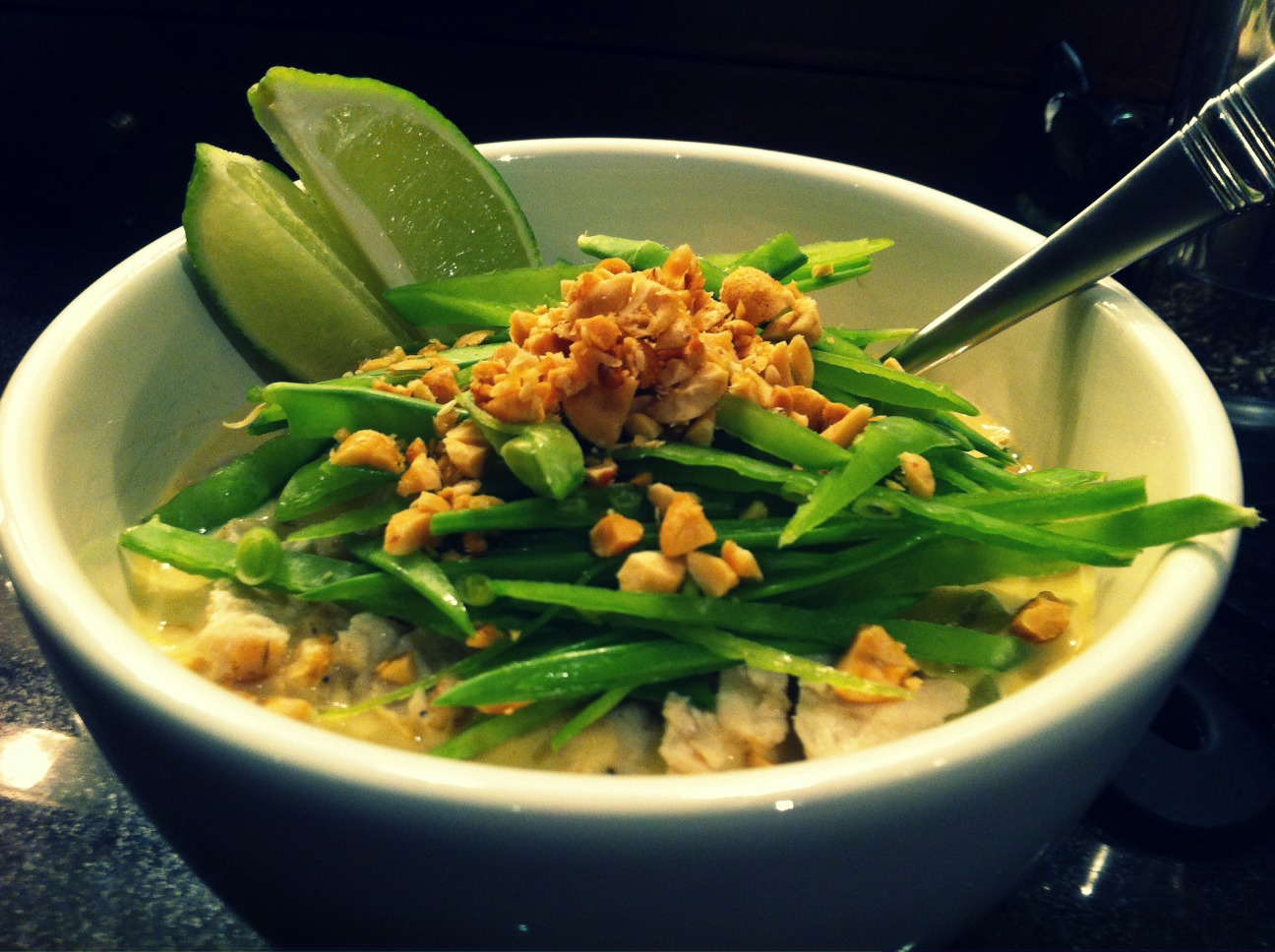
Once the rice is done, you’re ready to plate the meal; we added some chicken for extra protein, too.

photo 1 (4)

Yes, it’s as good as it looks. Especially if you’re already a curry fan, this recipe will not disappoint.

photo 2 (4)

For other awesome plant-based recipes, check out the Thrive Energy Cookbook here

Recipe: Thrive Energy Cookbook’s black bean, sweet corn & mango salsa

photo 4 (1)

While I’m no vegetarian, I do make an effort to incorporate plant-based, nutrient-dense, whole-food recipes into my meal planning.

Why? Well, as much as I love a good steak, I can feel my body processing it for hours on end; sometimes it’s nice to eat stuff that’s less intensive to digest, which means you’ll have more overall energy.

That’s why I was excited about checking out the new Thrive Energy Cookbook from Brendan Brazier (former pro triathlete, ultramarathon champ, creator of Vega). His purpose-driven recipes are intended to fuel performance.

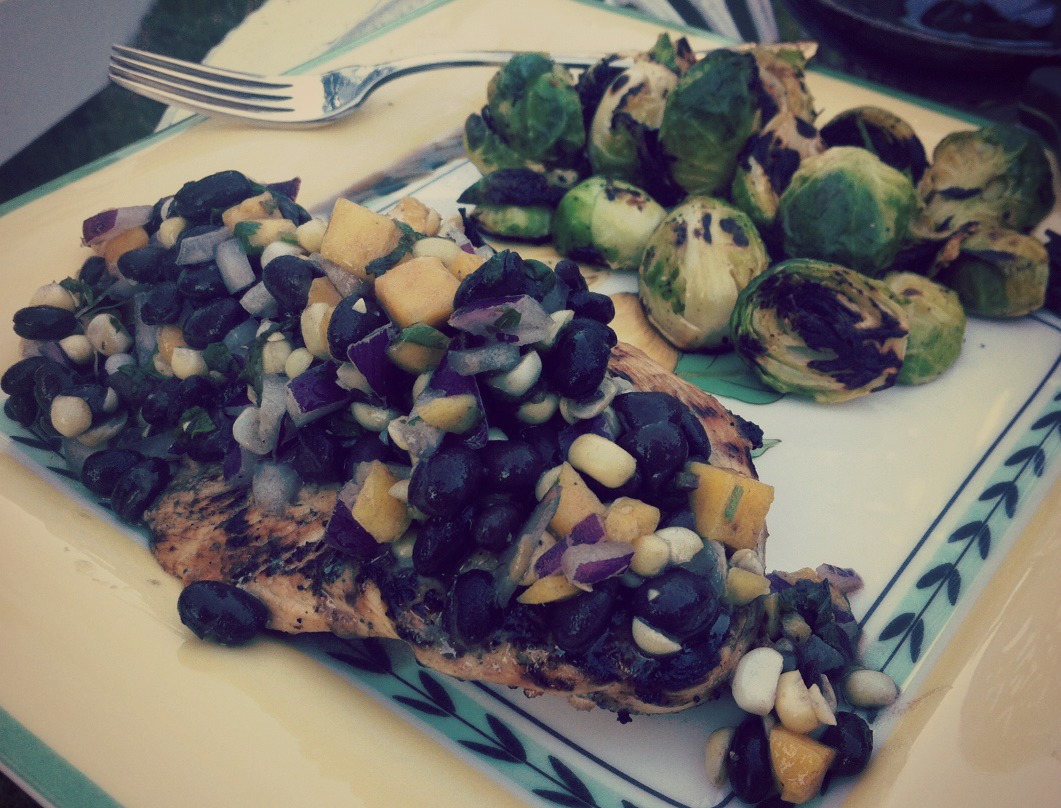
This salsa, for example, is a twist on the southwestern classic. Bursting with flavor — and protein — it’s perfect over veggies, atop a salad or (my favorite) with chicken or fish.

Thrive Energy Cookbook’s Black Bean, Sweet Corn & Mango Salsa

Ingredients:

  • 1 cup (or rinsed canned) black beans
  • 1 cup peeled and diced mango
  • 1 cup fresh sweet corn kernels (from 2 cobs)
  • 1/4 cup finely-diced red onion
  • Handful of fresh cilantro leaves, torn
  • 3-4 fresh mint leaves, thinly sliced
  • 2 tbsp freshly-squeezed lime juice
  • 1 tbsp avocado or hemp oil
  • 1 tsp agave nectar
  • Sea salt and freshly-ground black pepper, to taste

Directions:

  1. In a large bowl, combine all ingredients.
  2. Toss well. Best served immediately.

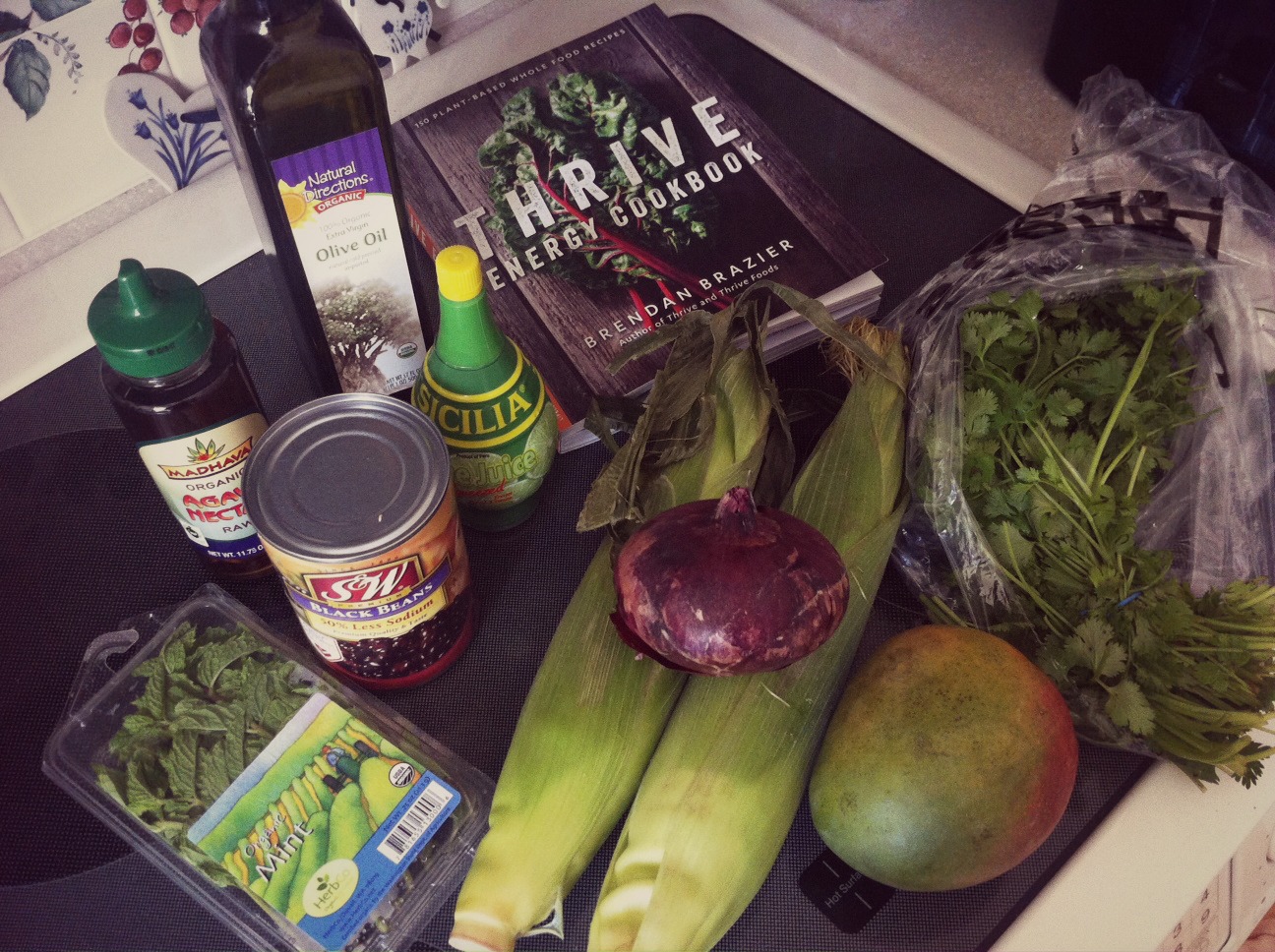
First, gather all the ingredients — note: I substituted olive oil for the avocado/hemp oil, though, and used the whole can of beans.

photo 2 (3)

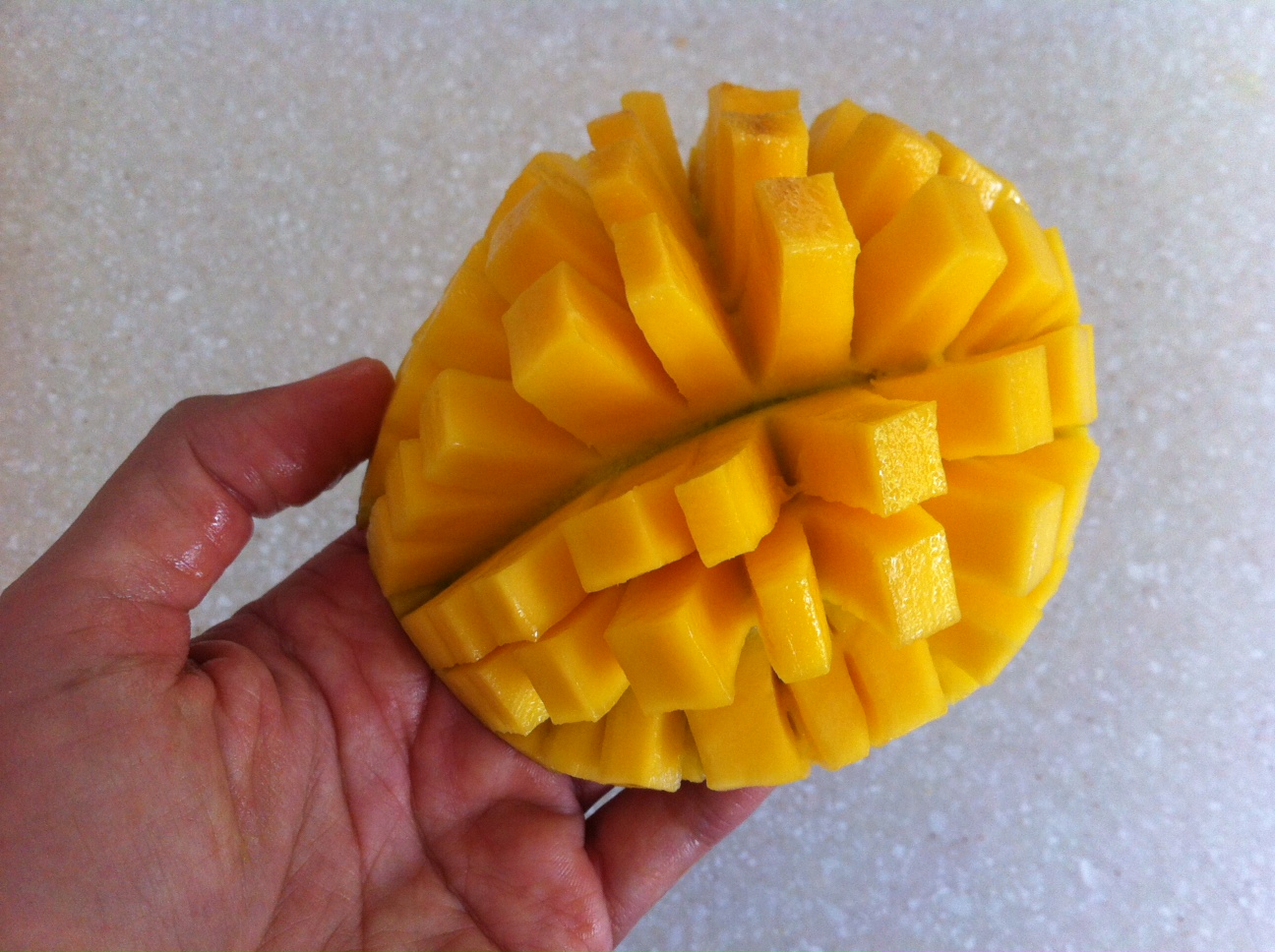
Want a trick for dicing up those tough-to-handle mangos? Slice ’em, score ’em, then flip ’em inside out and scrape out the chunks. Easy!

photo 3 (2)

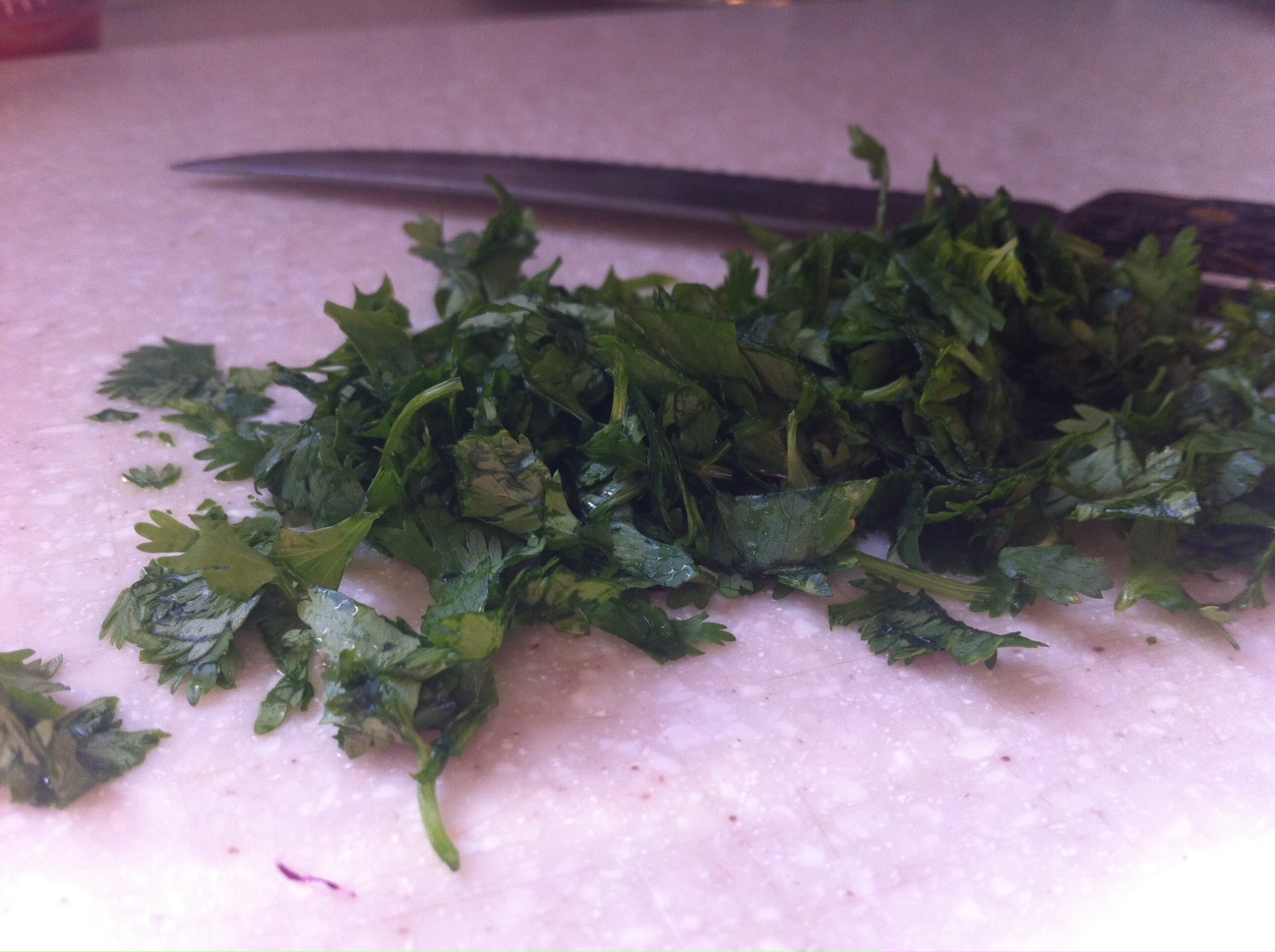
Since Hubby and I are big cilantro fans, I added a bit more than the recipe called for, too.

photo 4 (2)

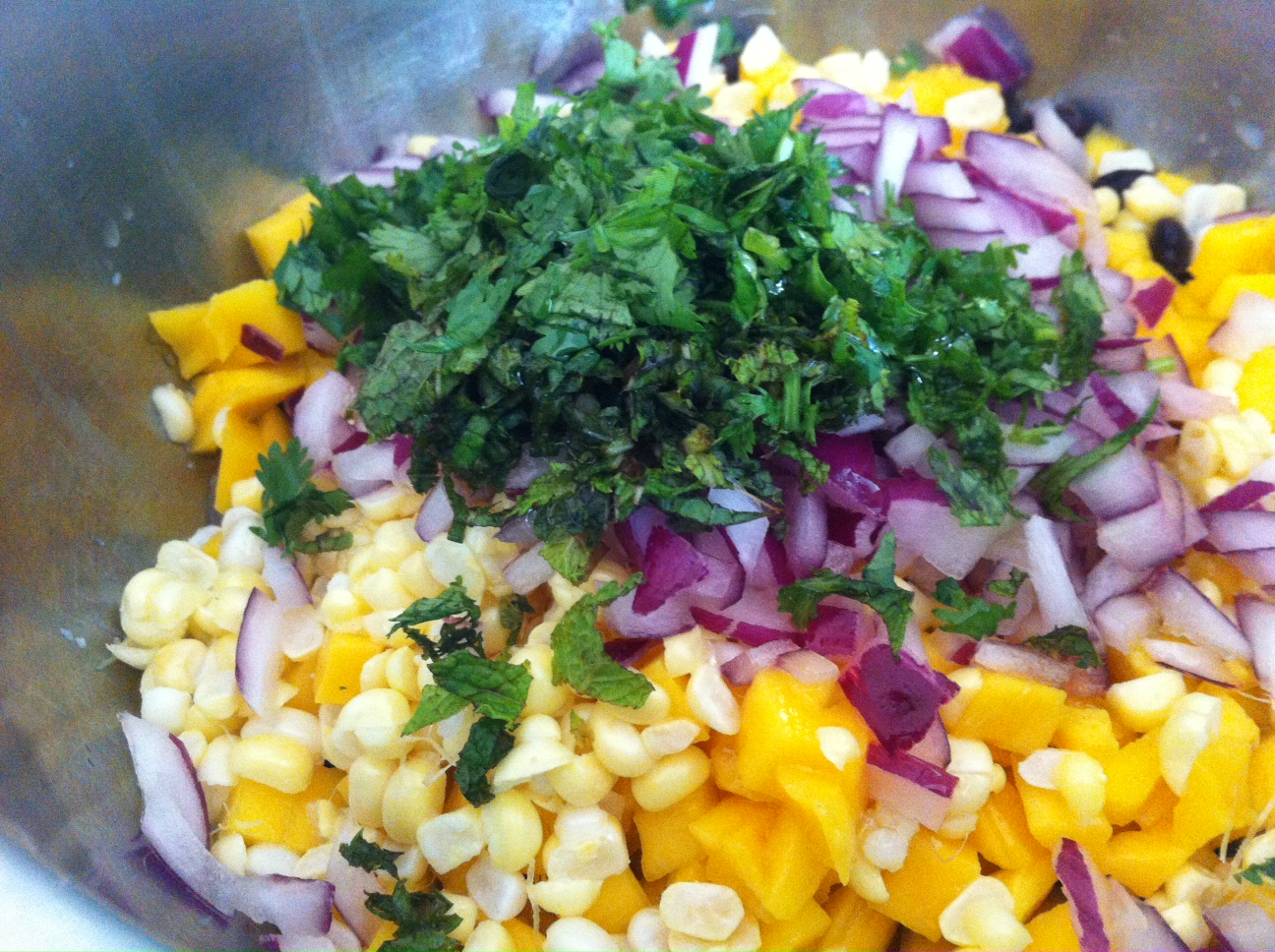
Look at all that awesome color! It’s a perfect pairing for quick meal on hot summer days.

photo 1 (2)

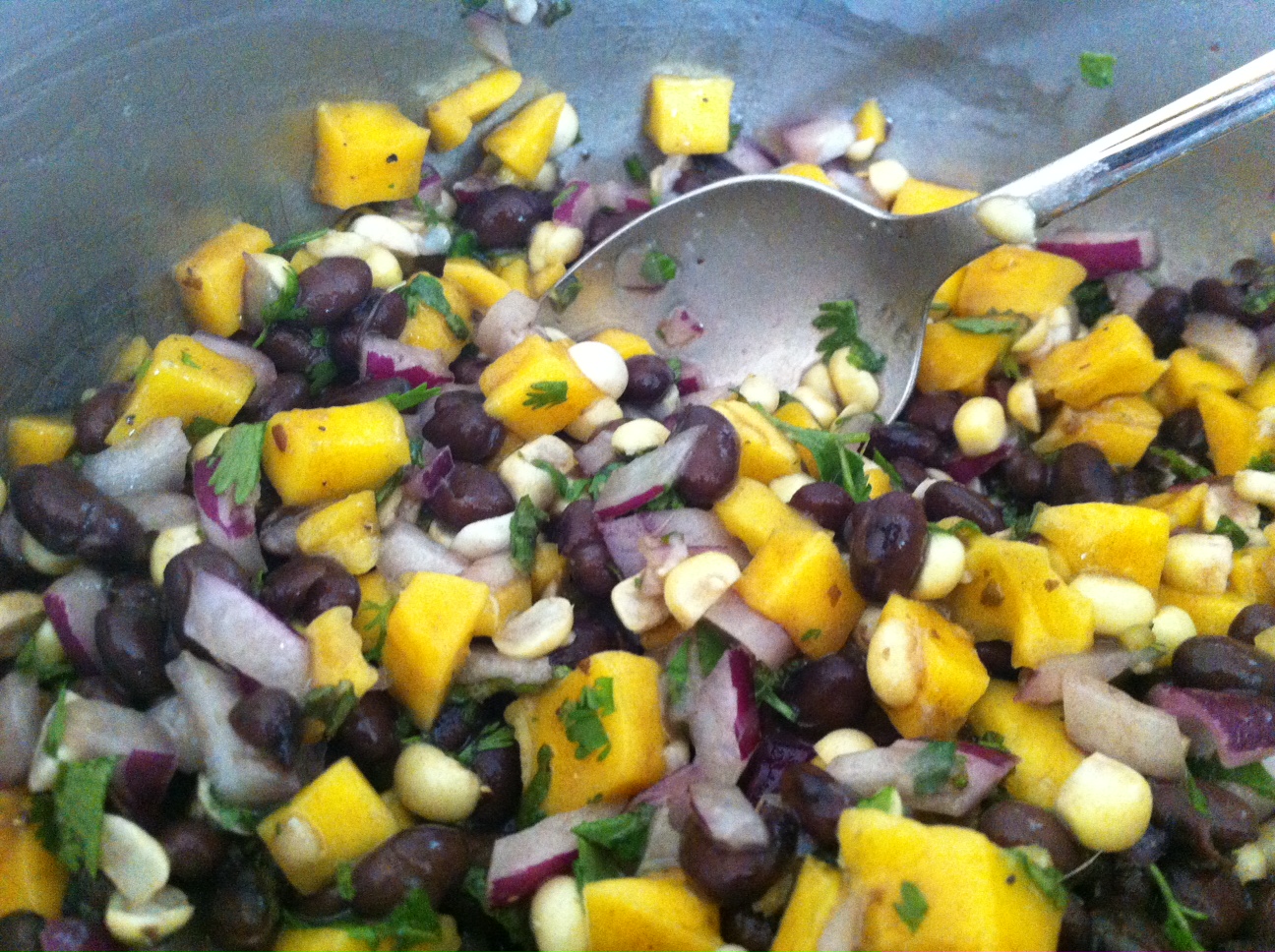
A quick stir, and you’re done — eat alone, with veggies, or spoon over grilled chicken or fish for a heartier, non-vegetarian meal.

photo 2 (2)

I’ll be sharing more recipes as I experiment with the book, but if you’d like to check out other plant-based options in the meantime, visit the Thrive Forward recipe center for more information.

Bitten by a new protein bar ‘bug’

photo 2 (1)

The latest, er, buzz coming out of Austin?

Taking the ‘ick’ out of crickets — that is, eating them.

Yep, you read that correctly. Hopper Foods, a new startup out of Texas, is on a mission via Kickstarter to do away with the stigma of eating bugs…and all kinds of other yummy, protein-packed critters for that matter.

It’s important, they argue, because insects are a sustainable source of high-quality protein, which we need to capitalize on to help feed our growing population and lessen our environmental impact.

9651ad7ad2c512dd6aea7ffb378cce27_large

Now, they’re not saying beef is bad (that’d be sacrilege to this born & bred Midwesterner!), but just that we should think about diversifying our diets.

And their solution comes in the form of an all-natural energy bar made from cricket protein, which they hope will ease us all into the idea of eating bugs for breakfast — or any other time of day, for that matter.

Made of nuts, fruits, seeds, raw honey and cricket flour, the bars pack a serious punch with more than eight grams of protein per serving, low glycemic energy, low fat, low sugar, plenty of calcium and potassium, plus micronutrients and antioxidants.

Hopper3

But the real question, I suppose, is how they taste.

Well, I’ll admit, I didn’t exactly rip open the package as soon as it arrived. But once I got over the initial “fear factor” and took the plunge, I was pleasantly surprised.

According to the company, there are about 20 crickets in each bar. But since they’re pulverized to a powder, there’s no way you’d know. Believe me, I inspected it closely.

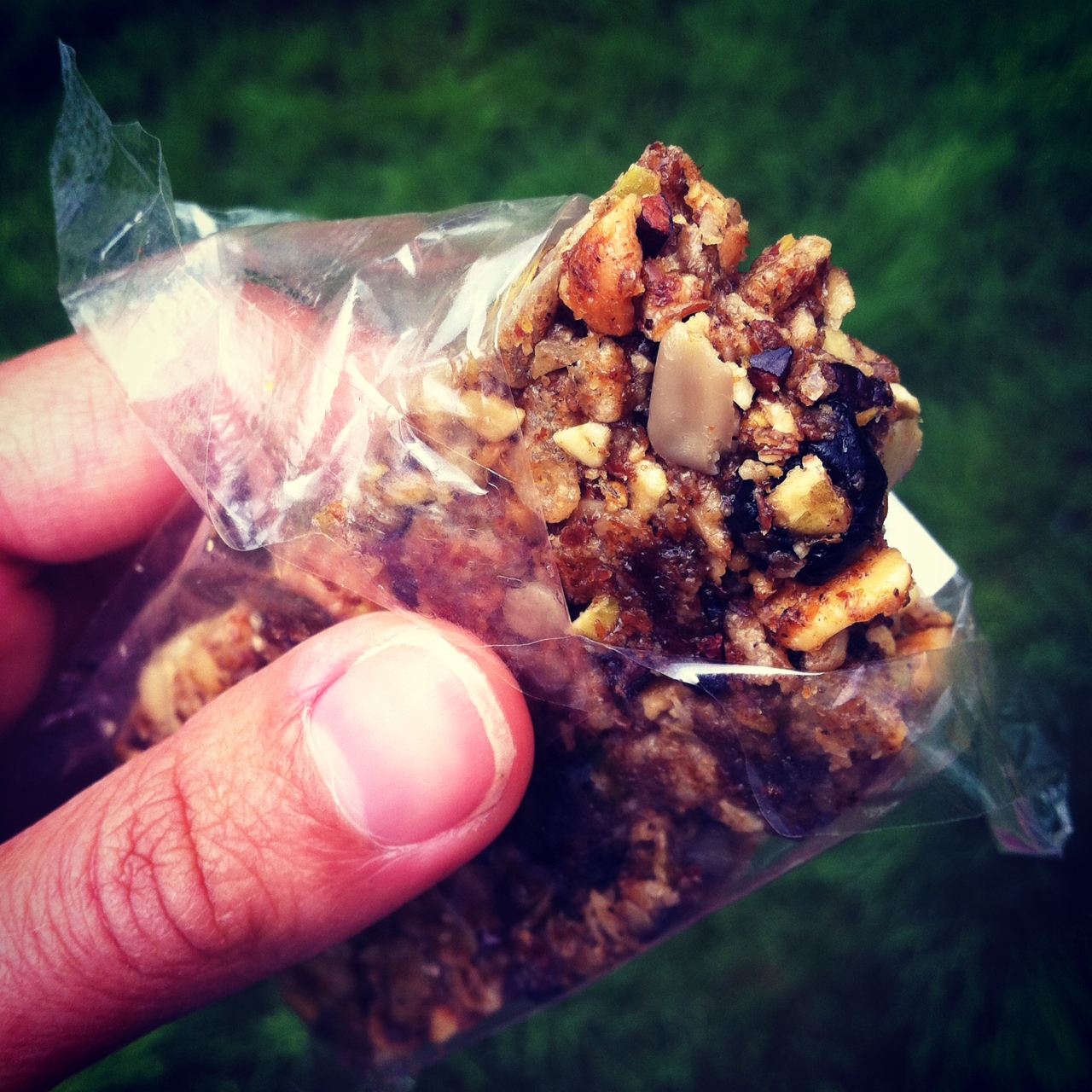
What I did notice was that the bars are chock full of fruits, nuts and seeds, plus they come in some pretty inventive flavors, such as Peanut Butter/Cherry/Cacao, Blueberry/Cranberry/Pistachio and Kale/Seaweed/Ginger/Green Tea.

photo 1 (1)

An all-natural, nutritious, sustainable high-protein snack? Now, that’s just the cricket.

But the real question is…

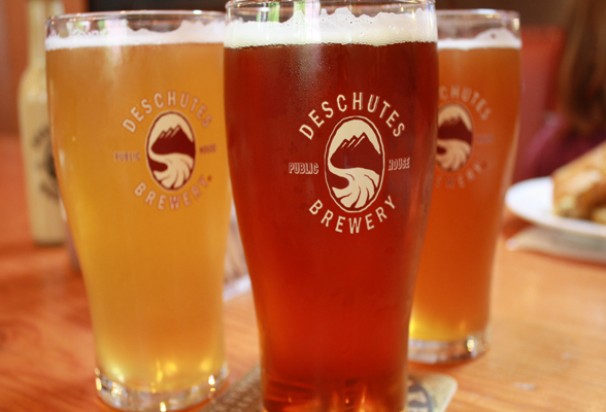
Beer lovers: Five reasons to drink to your health

wpid-toasting-with-beer-mugs-with-sky-in-background_133632

Hubby and I may not officially be Portland residents just yet, but that hasn’t stopped me from looking up a few fun facts about our soon-to-be new town.

Like, for example, did you know that PDX is home to more breweries (50+) than any other city on Earth?

And it just so happens that, according to some more of my “research,” downing a cold one could be the ideal recovery drink for all this marathon training I’m doing.

Yep, long considered an indulgence of the inactive, beer actually offer serious health benefits for athletes.

Not only is it an excellent hydrator (93 percent water), but it also has one of the highest energy contents of any drink, not to mention a bunch of natural antioxidants and vitamins.

But if that’s not reason enough to imbibe (in moderation, of course), you can raise a glass and toast to these five health benefits:

Source: Dayton City Paper

Source: Dayton City Paper

1. Sturdy Skeleton: Beers rich in silicon, such as pale ale, have been linked to the stimulation of bone-building cells. A 2009 study at Tufts University also found that men and women who downed a drink or two daily had higher bone mineral density.

2. Happy heart: Alcohol increases the levels of “good” (HDL) cholesterol and reduces the risk of heart attack and stroke by helping to prevent blood clots and hardening of the arteries. What’s more, Harvard reports show that moderate drinking cuts this risk of cardiovascular disease by as much as 25 to 40 percent.

3. Clean kidneys: A Finnish study found a correlation between beer drinking and a reduction in the risk of developing kidney stones – by as much as 40 percent. Its high water content helps prevent dehydration, plus the hops may limit the leeching of calcium from bones, both of which contribute to stones.

4. Boost brainpower: Moderate drinkers (those who consume one drink per day) may also count a sound mind among the benefits of their regular beer consumption. A 2005 New England Journal of Medicine study showed that, compared to non-drinkers, this group not only lowered their risk of mental decline by as much as 20 percent, but also scored better on mental skills tests.

5. Curtail Cancer: Much like grapes, hops also contain antioxidants, which are substances that protect cells from the damage caused by unstable molecules known as free radicals. Plus, a certain compound found in hops (xanthohumol) is thought to inhibit some of the enzymes that can trigger cancer, and it may even go as far as to help the body break down harmful carcinogens.

Now, if you’ll excuse me, it looks like I have a little more, er, “lifting” to add to my weekly training routine…

Fit Fix: Olympian Natalie Coughlin on training, nutrition and leading a healthy lifestyle

NCoughlin

In a sport measured in mere fractions of a second, 12-time Olympic medalist for USA Swimming Natalie Coughlin knows a little something about how to be efficient with her time.

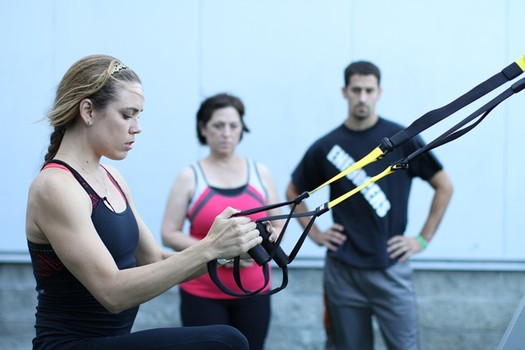
And that’s precisely why she teamed up with TRX Suspension Training after the 2008 Olympic Games, making it a training staple for maintaining her strength and stability despite a hectic schedule and frequent travels.

About a year and a half ago, I had the pleasure of sitting down with her after she led contest winners on a “Train with Natalie” TRX Olympic-level workout, so I thought it’d be fun to revisit some of the highlights from our conversation that day.

Photo courtesy of TRX

Photo courtesy of TRX

KineticFix: Can you share a training tip that’ll help us make workouts more effective?

Natalie Coughlin: An overall take-home would be to work on form. With any exercise that you do, it’s easy for us all to get competitive with one another – you look to the person on your left and you’re like, “Oh, they’re doing eight, I want to do 10.”

But just step outside of that – be competitive with yourself, and go for perfect form. That way, you’re getting the true purpose of the workout, and you’ll get a lot more of the benefit, as well.

KF: You’re 30+ now and in amazing shape; how has your workout routine evolved over the years to help you maintain your level of fitness?

NC: Evolving is important in training. I train at UC Berkeley, so I train with 18-year olds, and what’s appropriate for them at that age is not necessarily appropriate for me now.

Essentially, I’m working out to have the best performance in a race as possible. Something I learned over [the years] was that I was a little overzealous in training – I think I swam a little too much – and my [previous] performances in the Olympic Trials and the Olympics suffered because of it.

Recovery and rest is becoming much more important as I get older, but on the flip side there are some benefits to getting older: I’m much stronger, and I maintain that strength better than before.

But as you age you tend to break down faster, so it’s really important for me to keep my strength and ease back when I swim, focusing more on race relevance.

Photo courtesy of TRX

Photo courtesy of TRX

KF: When you’re not training, what does your workout look like?

NC: It always changes when I’m not in training mode. I’ve been exploring yoga, running, doing my TRX. Over the years, I’ve tried all sorts of different things, though – I’ve done kickboxing classes, Dancing with The Stars after the last Olympics, etc.

I’m always active in some way, shape or form, but that could range from a hike with my dogs to running 10 miles; it changes every day based on my mood. But I am someone who likes to be active and likes to maintain an active lifestyle – mainly because I like to eat!

KF: Do you have any advice you can share for prioritizing and incorporating exercise and healthy eating habits into a busy lifestyle?

NC: It’s really important to prioritize your fitness routine, as well as your diet, because we are all busy, and it’s easy to make poor choices when you’re on the go.

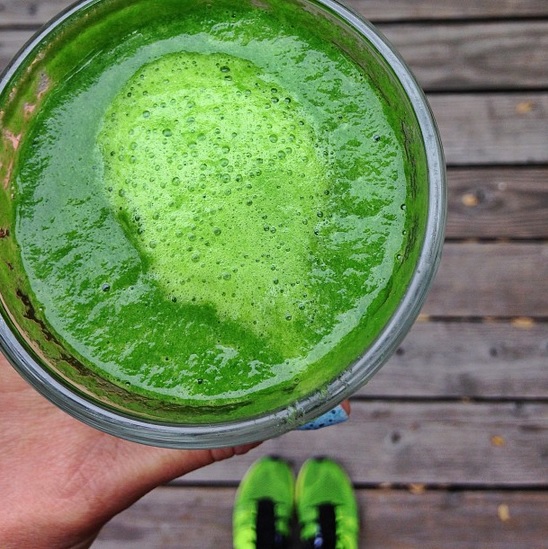
You just need to think ahead; for me, it’s making my green smoothie. I’ll make a big batch and put it in Mason jars and keep it in the fridge. In the morning I can just grab one and put it in my bag with an ice pack, so it’s waiting for me and it’s packed with nutrition.

I’ll also look at my schedule, which changes on a day-to-day basis, and carve out at least a half an hour for something active. Like what I did with [contest winners] Renae and Chad – that was an intense workout, but it was only 30 minutes. We can all find 30 minutes in our day to do that.

Photo courtesy of Natalie Coughlin (Instagram)

Photo courtesy of Natalie Coughlin (Instagram)

KF: You’re known for your backyard garden – can you share some kale recipes?

NC: I grow so much kale it’s ridiculous, mainly because a lot of my yard is shaded, but also because it’s a superfood.

I like to braise it in chicken broth and add hot chili flakes and garlic, which adds so much flavor. I also have it in my green smoothies every day. I’ll put kale, romaine, spinach and celery in with a little bit of fruit to sweeten it up.

I find that if you don’t like that bitter taste, pineapple does a really good job of balancing it with acidity and sweetness. So just get some frozen pineapple and throw it in with coconut water, and it should taste a lot better. But as your palate changes, you could do less fruit and more greens.

KF: With your interest in cooking and gardening, plus experience in fashion and entertainment, do you have any specific post-swim career aspirations?

NC: I have been blessed with wonderful sponsors, such as TRX and O’Neill (Coughlin helped design their O’Neill 365 collection), and I have had a lot of really cool opportunities because of that.

I’m still trying to figure out what my post-swimming career is going to look like, but I’m going to continue to compete for a little longer. I definitely want to write a cookbook at some point, so that’s something in the back of my mind, but right now it’s just about [staying] in shape.

KF: Do you have any lucky charms or superstitions, when it comes to competitions?

NC: I don’t have any superstitions, but I do find myself counting all the time, so when I’m in the pool, I’ll always do eight kicks off of the wall.

And another part of my routine is that I always do a running dive into the pool. It’s just something I’ve done for the past 10 years at Cal. I’m always in the end lane, and I hate getting in the water more than anything, so I just wait for everyone else to get in the water first, and then I run alongside the pool and dive in.

Photo courtesy of TRX

Photo courtesy of TRX

KF: I have to ask – what’s it really feel like to win an Olympic medal?

NC: It’s indescribable. There’s so much pressure going in that there’s a certain sense of relief, in addition to the excitement.

It’s really an emotion that there are no words for, though, and it’s something I’ll never forget.

KF: Switching gears…what are your guilty pleasures?

NC: This definitely does not go along the lines of a healthy diet, but my ultimate guilty pleasure is to be at a Raiders game with a bratwurst with relish and onions and an ice-cold beer. If I do make it out to a baseball game or a football game, that’s my treat.

KF: Any final fitness advice you can share with us?

NC: I believe that it’s important to stay active. You don’t necessarily have to go to the gym or run five miles a day.

Just fit in ways to be active – if you’re at a desk all day, get up and move around; walk around when you’re on the phone, and take the stairs when you can. Little things like that make a big difference.

And if you have 20-30 minutes in your day to get a workout in, try to superset exercises where you work on one muscle group and immediately go into next. Your heart rate will skyrocket, but you’re allowing separate muscle groups to rest in between, so you’re getting the most bang for your buck in a short amount of time.

Photo courtesy of NatalieCoughlin.com

Photo courtesy of NatalieCoughlin.com

Special thanks to Natalie for taking the time to chat!

Follow along on her adventures — athletic and otherwise — via her website. And if you think you can keep up, give her TRX Challenge a shot.

Recipe: Raspberry Mint Rice Balls

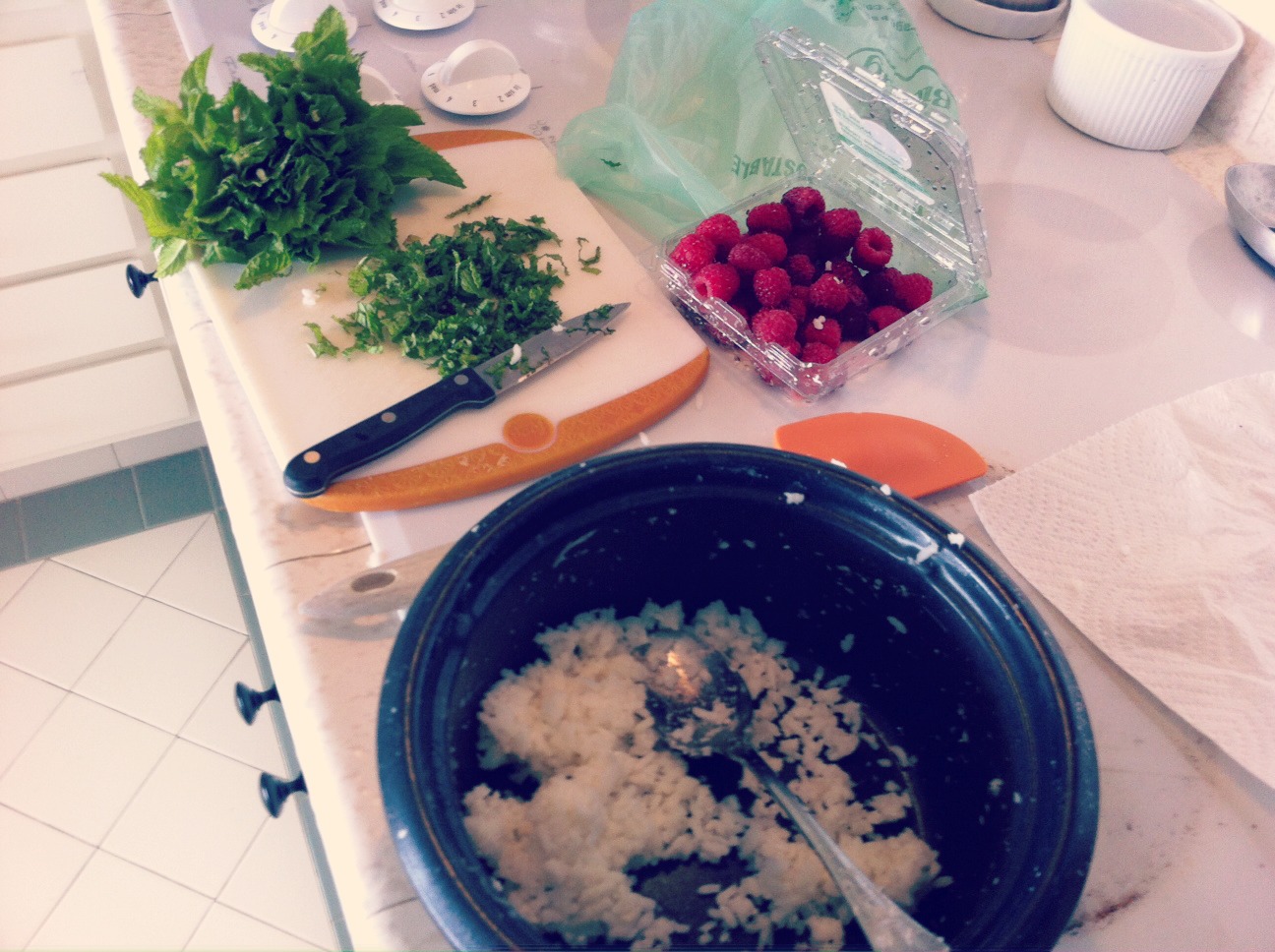
RiceBalls1

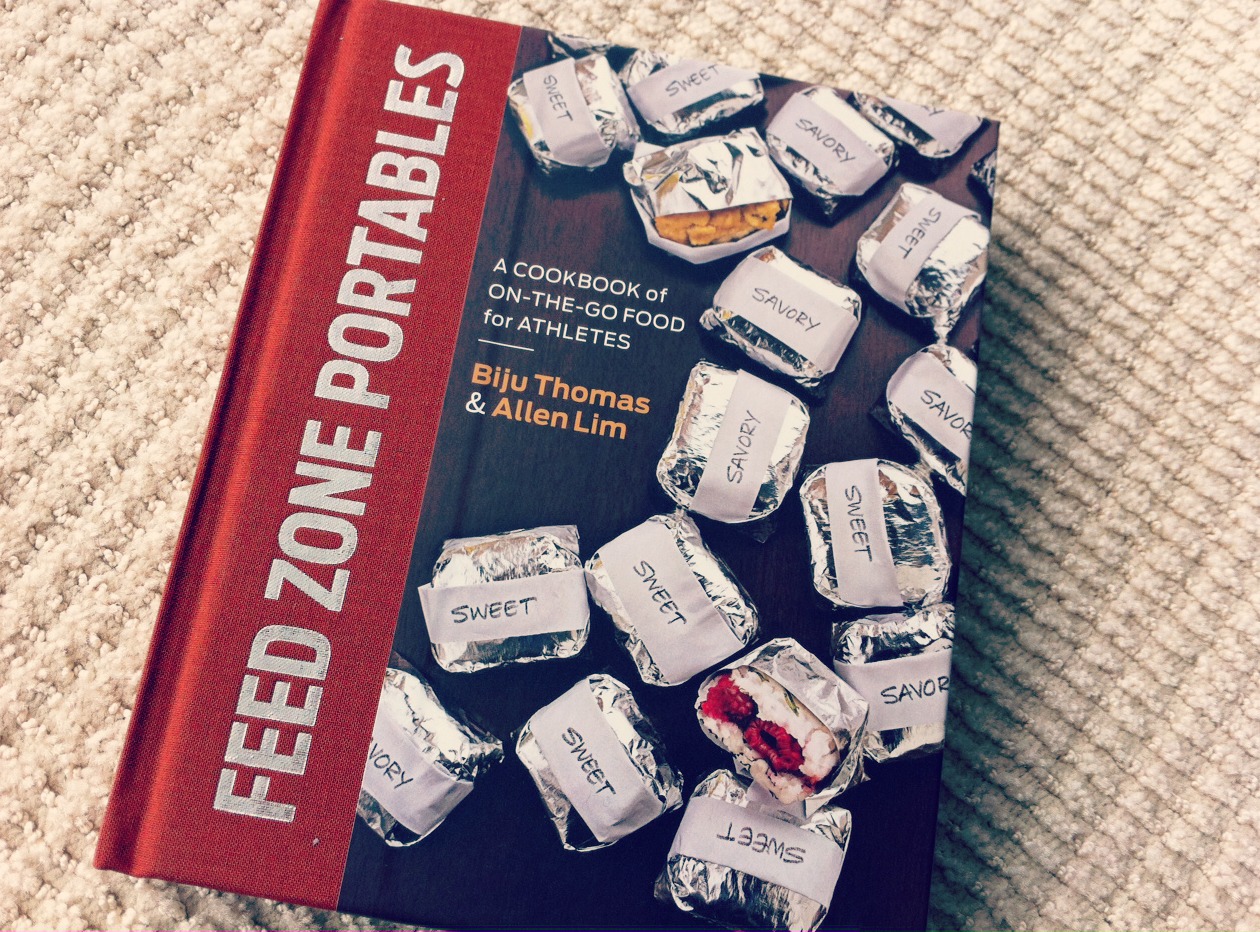
Allow me to introduce you to my new favorite training companion: the Feed Zone Portables cookbook. If you’re weary of processed bars and gels and the same old pasta, there’s a good chance it’ll soon become your BFF (that’s Best Fueling Friend), too.

After my ultra pacer Jamie had success with the rice cakes during her Born to Run 100-miler, I jumped aboard the bandwagon and tweaked one of the recipes for my own race. It worked perfectly — not only is the rice-based treat quickly-digestible, but its mild flavor is also easy on a tender mid-event tummy.

Raspberry Mint Rice Balls (adapted from Feed Zone Portables)

Ingredients:

  • 1 cup uncooked white rice
  • 2 1/4 cups water
  • 1/4 cup brown rice syrup
  • 1-2 tablespoons lemon juice (to taste)
  • 1 pint fresh raspberries
  • 2 tablespoons fresh mint leaves, minced
  • 1/4 cup finely-shredded unsweetened coconut
  • Aluminum foil, cut into small squares
  • Olive oil spray

Directions:

  1. Combine rice, water and a dash of salt in a rice cooker and let cook.
  2. When rice is finished cooking, transfer it to a large bowl and add brown rice syrup, lemon juice and coconut. Mix thoroughly.
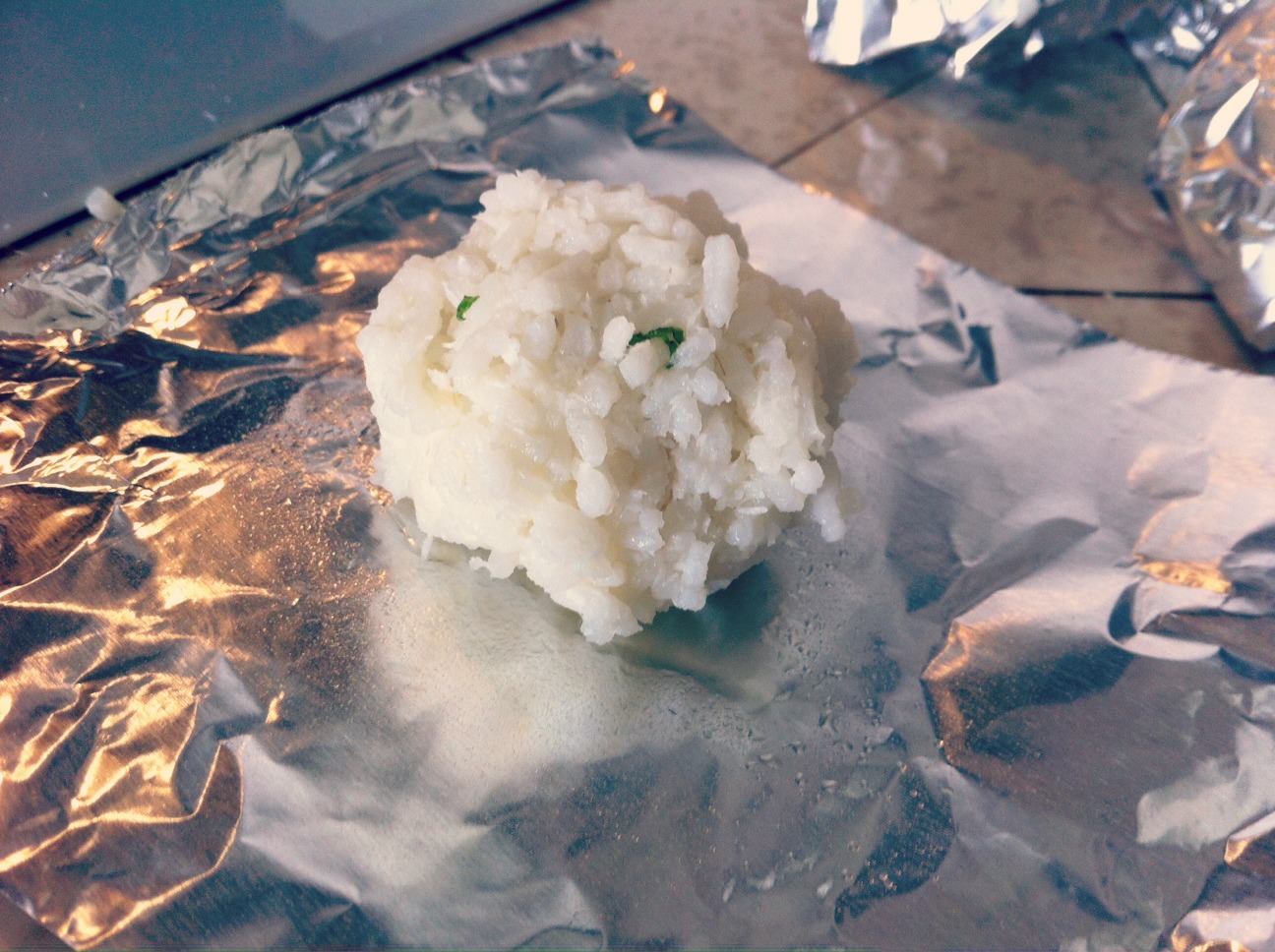
  3. Coat hands in olive oil, and place a spoonful of rice in the palm of one hand. Place a raspberry and a sprinkle of mint on top of rice, and then place another spoonful of rice over that (to encase raspberry and mint in rice). Roll gently between palms to form a ball.
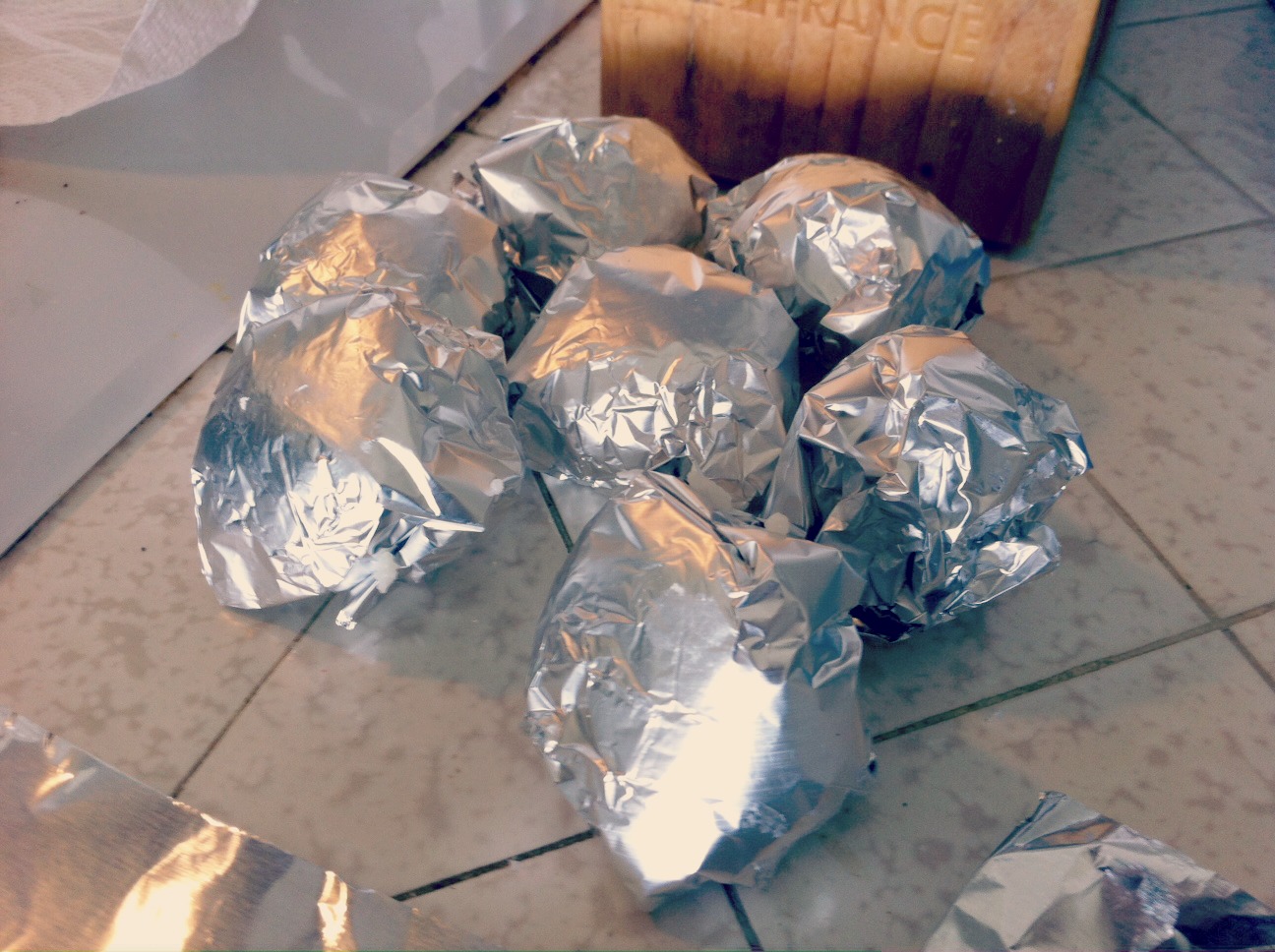
  4. Place ball on foil wrapper (also sprayed with olive oil) and seal tightly. When finished forming and wrapping balls, store them in the refrigerator.

A few tips: First, make sure you prep all the ingredients ahead of time because forming the balls can get messy!

Although the book calls for flat “squares” or “cakes,” Jamie and I found that the balls are quicker to make. Plus, they tend to get squished around in your bento box or hydration pack anyway.

RiceBalls2

Second, I did experience some trouble with the foil wrapper disintegrating during my trail race, which I attribute to the acidity of the lemon juice.

Next time, I may just try leaving it out, or I’ll look for an alternative wrapper (wax?) if I want to keep that nice citrus ‘bite.’

RiceBalls3

The balls held up great, though, despite getting jostled around over the course of six-plus hours in my hydration pack on a hot day.

And the fresh fruity/minty flavor was a welcome change from the heavy nut butters I’m usually consuming, so I’ll definitely be relying on them again.

RiceBalls4

Finally, I try to make them the day or evening before my race. Sure, it’s a little bit of last-minute race prep work, but it ensures that the fruit is at its freshest and that the rice stays nice and sticky for when you want to pop one (or 10) during your race. Bon appétit!

What’s your go-to fuel for training and racing? 

The art (and science) of fueling

jonbottle

If you’re active, there’s a good chance that the topic of food is never far from your mind. But when I’m not dreaming of what I’m going to eat as my post-workout/race treat, I’m thinking of what to consume during the event – i.e. fueling up to go the distance.

Most of us have a general idea of the science here: To prioritize maximum athletic performance, you want to ensure that you’re using your glycogen premium fuel tank as much as possible. But that’s where the art comes in, especially because no two athletes will have the exact same fueling requirements at any given time.

Too much fuel early, and your body will convert the excess carbs into fat. And too little fuel too late results in early fatigue and diminished performance. But how do you know what you need, other than going by feel or estimating expenditure?

That’s where Fuelstrip comes in — to try to take the guesswork out of your fueling game with its “custom sports energy” technology.

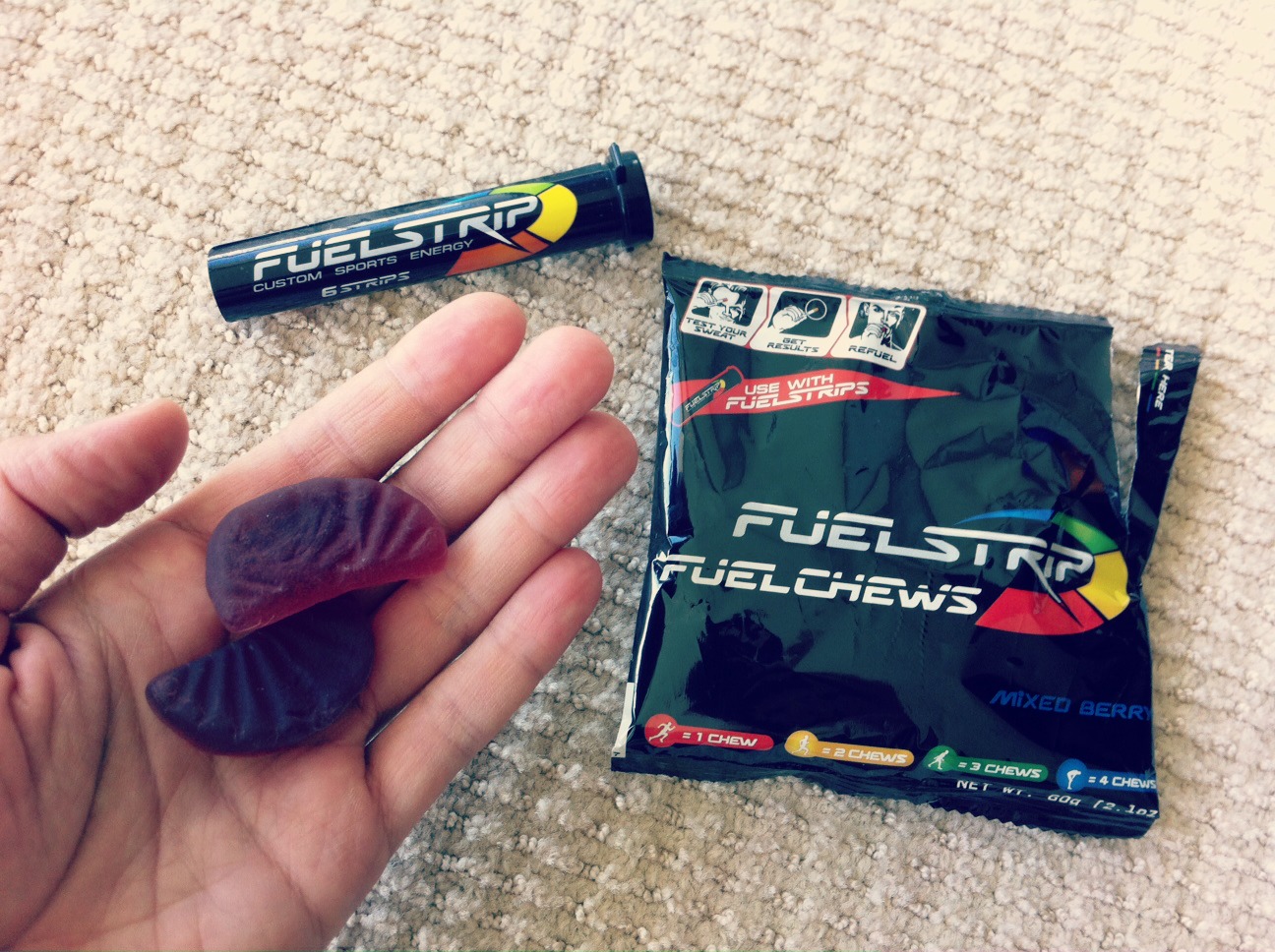
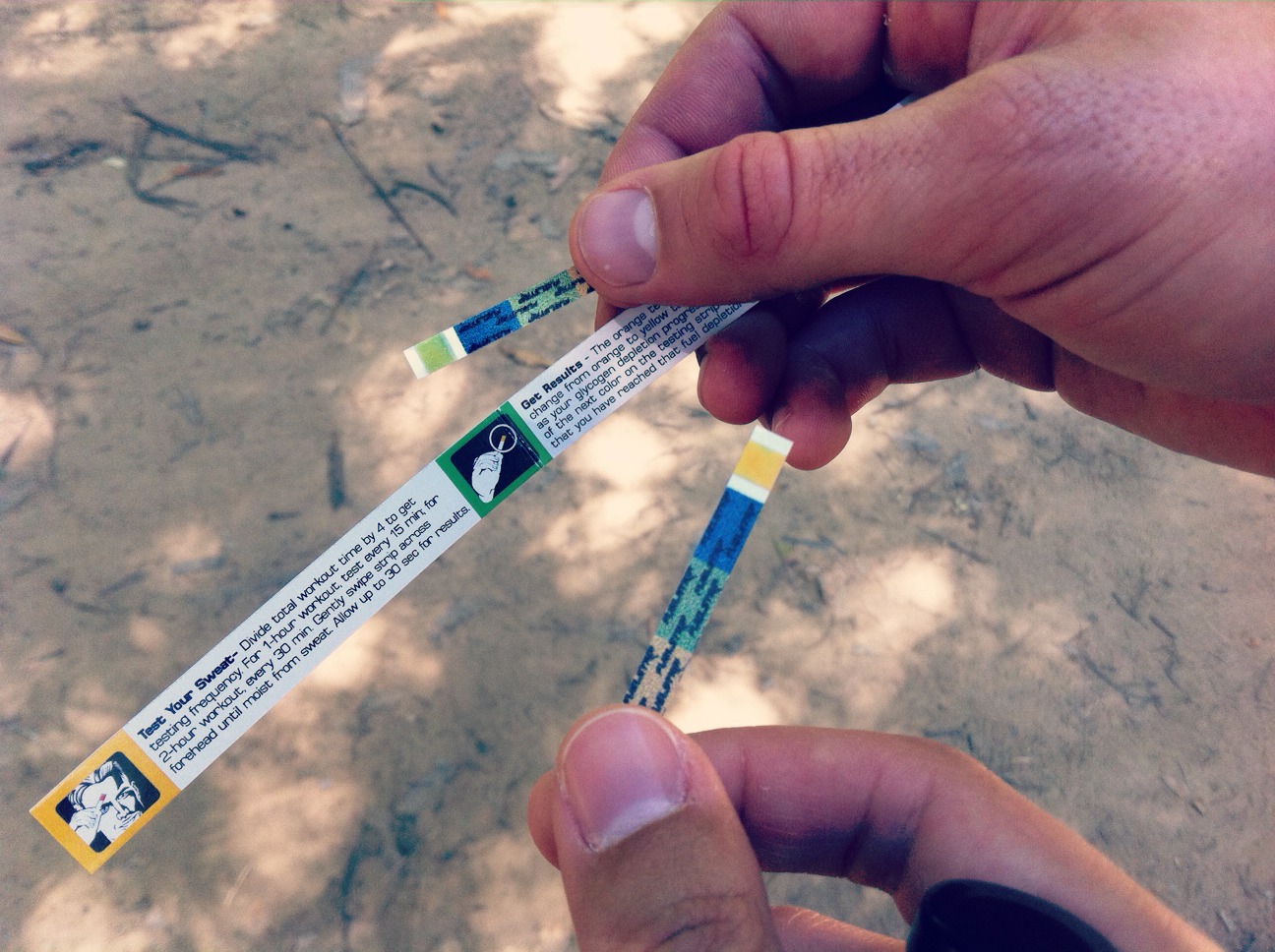
Fuelstrip1

Huh? Stay with me — here’s how it works, in theory:

  1. Test Your Sweat. Swipe a fuelstrip with sweat at regular intervals during a workout.
  2. Get Results. Watch the strip change color to reveal you body’s exact level of depletion.
  3. Refuel. Ward off fatigue by eating the corresponding number of carb- and electrolyte-filled chews.

But in reality? Well, I first tested the strips during a P90X session at home with mixed results. My strips stayed in the orange range, which meant one of two things: Either my glycogen reserve tanks were pretty topped off…or the technology wasn’t working (regardless, the chews are yummy).

So I decided to do a second experiment — this time using Hubby as my co-guinea pig during a recent 13-mile trail run. I did my usual pre-run routine. Hubby? Not so much. He had a smaller-than-usual breakfast and opted not to carry fuel on the run.

About halfway through, we were both feeling pretty beat by the heat (the SF summers have softened us!)…but, as you can see, his lack of fueling was also starting to kick in. Needless to say, he happily accepted the bag of chews as we made our way along.

Fuelstrips2

A few miles later, we checked again — I stayed the same yellow/orange color, but Hubby’s green was a little less vibrant this time around, so we declared the test a success.

Would I use ’em every time I exercise? Probably not. Personally, I’ve got a decent idea of what to eat — and when — for most of my regular workouts. But if you’re starting a new routine or unsure of fueling over longer distances, it’s smart to consider setting a baseline.

For example, as I figure out fueling for longer training rides and trail runs, I’ll be spot-checking with Fuelstrips to make sure I’m eating enough along the way — especially as I’m less able to rely on hunger as an indicator.

Because, unfortunately, there’s no one-size-fits-all solution when it comes to fueling — but getting it right can mean the difference between finishing strong or bonking before you cross the finish line.

LakeChabot

For more information or if you’d like to try Fuelstrips yourself, visit the website here