Detroit Marathon Week 3 training recap


Photo courtesy of ghiandol

Photo courtesy of ghiandol

This week’s theme? Running under the Tuscan sun. 

After gallivanting around Italy last week, we’ve since set up a home base in Tuscany, which has been a convenient location for day trips to Florence, as well as some of the smaller hilltop towns in the region.

Oh, and the food is out of this world…so it’s a good thing Hubby and I have been sticking to our morning run schedule.

DTWweek3

As you can see, we’re slowly building in mileage each week, although it’s all supposed to be at an “easy” pace (9:51-10:34). I say supposed to because I haven’t really been dialing it back much from my usual pace, which hovers comfortably between 8:15-8:45 for runs in this distance range.

I know this approach could come back to bite me later — especially as I move up to six running days per week and those individual runs get longer — but my plan during these early weeks is to simply run by feel and re-evaluate as training progresses.

Next week, we’ll be back in the States — only we’re taking a quick pit-stop before we come back to the West Coast.

Stay tuned as I round out the first month of training…while still on the road!

Detroit Marathon: Week 2 training recap

Photo courtesy of Serena Richardson

Photo courtesy of Serena Richardson

Buongiorno. That’s “good morning” in Italian 🙂

Training for the Detroit Marathon has officially gone international! But fortunately this week was a low-key one in between lots of traveling, “touristing,” eating and relaxing.

DTWweek2

Usually, vacations are a time when I back off from any kind of strict running schedule, but this time Hubby and I are embracing it as a way to get in some early morning sight-seeing before we start our days.

And since one of my favorite ways to see new cities is by foot, we’ve been trying to make an adventure of every run — from the mountainous isle of Ischia to the rolling vineyards of Sicily to the coastal village of Positano.

I’ve also been documenting our exploration, so stay tuned for a full post with pictures when I’m back!

Fino a quando ci incontreremo di nuovo! “Until we meet again”…next week! 

Detroit Marathon: Week 1 training recap

DTWwk1

And cue the weekly shoe selfies again!

Welcome to week one of my training for the Detroit Marathon. As you know, I’m gearing up for race day on October 19 with a new plan: the Hansons Marathon Method.

It’s a so-called “renegade” approach to marathoning, in that the long training runs peak at 16 miles (as opposed to the usual 20-22 milers). Needless to say, as someone who struggles to stay injury-free while pounding the pavement, it piqued my interest.

This first week was a cake-walk compared to what’s coming down the pipeline — six days of running per week, yikes — so I’m enjoying it while it lasts.

DTWweek1

Another component of the program that will come into play later in training? Pacing.

When I run, I’m usually great at maintaining whatever pace feels good on that particular day…but the tricky part here is that now I’ll need to hit a specific one for each workout.

I’m aiming for a 3:50 marathon, so the book recommends the following paces as guidelines for my runs.

DTWpaces

Another wrench that I’m throwing into this training cycle is a bunch of travel and a move with Hubby during the first few weeks (not that I’m complaining…).

The upside is that I can run pretty much anywhere, although the challenge will be maintaining the schedule despite jet lag, time zone changes and what I anticipate will be many wine- and carb-fueled meals in Italy (yeah, yeah, I don’t expect any sympathy).

But there’s nothing like a little constant when your life is in upheaval, so I’m hoping my running will be a source of solace rather than stress…but we shall see, won’t we?

So far, so good…stay tuned for week two, which is the first full week of the program!

Detroit Marathon: My “renegade” training plan

marathon-03

My hometown of Detroit has a reputation for being scrappy, gritty and a little rough around the edges. But I’ll let you in on a little secret: We love it that way.

You see, as my all-time favorite Superbowl commercial reminded us, “It’s the hottest fires that make the hardest steel.” Adversity doesn’t scare Detroiters; it only makes us stronger.

So I chose this race, in particular, to celebrate the city and everything that makes it unique and exciting — from crossing international borders twice and running an “underwater mile” to the scenery on Belle Isle and views of the city from Corktown to Indian Village, just to name a few.

And what better way to prepare than to use a training plan developed out of Hansons Running Shop, a locally-owned, nationally-recognized running institution (and founder of the Hansons-Brooks Distance Project)?

Sure, it may be a bit unconventional. But in a city that’s anything but conventional, I wouldn’t have it any other way.

What It Is

Promising a “PR-busting performance,” the Hansons Marathon Method focuses on lower-mileage long runs that emphasize quality over quantity.

In layman’s terms? While the focal point of other plans is one weekly looong run (up to 20-22 miles), the Hansons philosophy is that no one workout is more important than another.

That translates into six days a week of running — double that of my previous plan — with an equal focus on endurance, speed and strength.

Why I Like It

It’s controversial — specifically the absence of 20-mile (or more) long runs — but according to the reviews, it works.

Credit a little something called the “residual training effect,” which banks on the cumulative impact of workouts. So, for example, a long run that’s “only” 16 miles now includes three workouts’ worth of fatigue in the legs.

Rather than preparing runners to tackle the first 16 miles of a marathon, this plan is geared toward being able to hang tough in those critical last 16 miles.

Will It Work?

We shall see! I’d be lying, though, if I said I wasn’t at least a little nervous about being able to get to the start line uninjured, especially with all the non-stop running. I can’t remember the last time I ran six days a week.

But I’ve got a decent level of overall fitness built, and I think the Hansons Method will help me get to that next level of physical — and mental — stamina.

Plus, there’s another factor in this race that’ll make things even more interesting: heart. I’m so excited to run in, with and for the city I’m proud to call home.

Get ready, Detroit, I’m comin’ for ya.

Training officially starts tomorrow, so check back for my weekly recaps!

Oops, I did it again…

DTW Marathon Registration2

What happens when you reunite with a former-high-school-running-teammate-slash-retired-pro-triathlete who mentions she’s making her competitive marathon debut in our hometown of Detroit?

Not only a great excuse to get back there and cheer her on (from WAY behind…sorry, Terra), but also some inspiration to give that elusive sub-four marathon another go.

But this time I’m setting myself up for success: The race is on my home turf with a more forgiving course, plus I’m using a brand-spanking-new training program that’s a little bit “renegade,” to say the least. But perfectly fitting, considering the venue.

So stay tuned for my Motor City marathon plan…training starts next week!

What goal race(s) are you working toward this season? 

Canyon Meadow Ultramarathon: The plan

LakeChabot1

Holy crap. What did I get myself into?

Right now, my brain keeps going back and forth between two thoughts:

I can’t wait to hit the trails tomorrow and make this happen.

That first step after 26.2 will put me officially at the longest distance I’ve ever run…and then I’ve got five miles — and some decent elevation — to go after that. 

Physically, I haven’t kept as regimented a training plan as I usually do for long-distance races. Quantitatively that concerns me a bit, but qualitatively I’m actually not too worried about it because my focus is on covering the distance — which I’m pretty confident I can do — versus racing the clock.

What I have been doing? Getting time “on my feet,” which means long runs (10-15 miles) every weekend, plus oodles of cross-training during the week to ensure I stay in shape without (literally) running myself into the ground.

But I’ve also been taking some time to tend to some of the non-running aspects of the race which, according to recent Born to Run 100-mile finisher Jamie Walker (yep, 1-0-0, that’s not a typo), are just as critical to getting across that finish line in an ultra.

Namely, this means doing some mental preparation and making a plan for staying on top of fueling and hydration during the race. And having an awesome pacer to help me navigate the day is a huge bonus (THANK YOU, Jamie!).

Jamie gave the Feed Zone Portables rice cakes a glowing review for keeping her tummy happy mid-race, so I’ll be following suit and hoping for the same good results. Plus, I’ve whipped up a batch of Hailey Manning’s famous Salty Balls as a second snack option.

Mentally, I know there will be ups and downs throughout the day…but I’ll be keeping two things in mind: First, I just have to keep moving forward. And second, I get to be out there — no one is forcing me — so I might as well enjoy every moment of it!

Finally, I just finished Chrissie Wellington’s autobiography, A Life Without Limits (sensing a theme about awesome female athletes in this post?), and it’s also inspired me to get out there, push those “limits” and see what I’m capable of doing.

In fact, Wellington sums it up pretty perfectly here:

“To my amazement, at so many stages along the way, the limits that I thought I could see in the distance dissolved as I approached them. They turned out not to be real at all but mere assumptions. And that has been the most exciting revelation of all.”

No better motivation than that as I take to the trails 🙂

Stay tuned for the 50K race report!

Fave Fix: My must-have gear for trail running

50KGear

If there’s one thing I’ve learned from the past few months on the trails, it’s that running off the roads is a whole different beast than running on ’em. Aside from the obvious terrain and elevation challenges, it requires a new approach — from gear to strategy to fueling — to get from Point A to Point B, especially when we’re talking ultra-distances.

Because of that, I wanted to share an inside look at how I’m planning for my first ultra marathon — the Canyon Meadow 50K — at the end of the month. See below for what I’ll be wearing, eating, drinking and using to help me recover when all is said and done…and (fingers-crossed) run 🙂

Feet First: The Brooks Cascadia 8 came highly recommended from several trail runner friends due to its traction and responsiveness, plus it was my favorite of all the brands and styles I tested at San Francisco Running Company. I like to buy my running shoes a half size up to allow for feet to swell, and I may add a Superfeet orthotic insole for a little extra support.

– Keeping Cool (& Chafe-Free): I love a trucker-type hat with breathable mesh and a wide brim to block the sun. And under my technical, sweat-wicking t-shirt, I’ll be wearing a Coeur Sports Checkmate Sports Bra, which has anti-chafe seams that are perfect for long race days. On the bottom, I’ll pair the Lululemon Groovy Run Short with CEP Progressive+ Calf Sleeves to promote circulation and protect lower legs, plus Balega Blister-Resist Trail Socks to try to keep my feet from getting too torn up.

Accessories & Extras: Because I’ll be in and out of the sun, I’m slathering on Banana Boat Sport sunscreen and wearing Tifosi sunglasses, which adjust automatically when exposed to UV rays. Electronics-wise, I’m taking my Jaybird Bluebuds bluetooth headphones and am hoping for an early birthday present (hint hint, Hubby) — the Garmin Forerunner 910XT — to help me track mileage and stay on pace. I’ll also use the easy-on, easy-off Fuel Belt Race Number Belt and apply ample amounts of TriSlide to avoid hot spots.

50KJenny

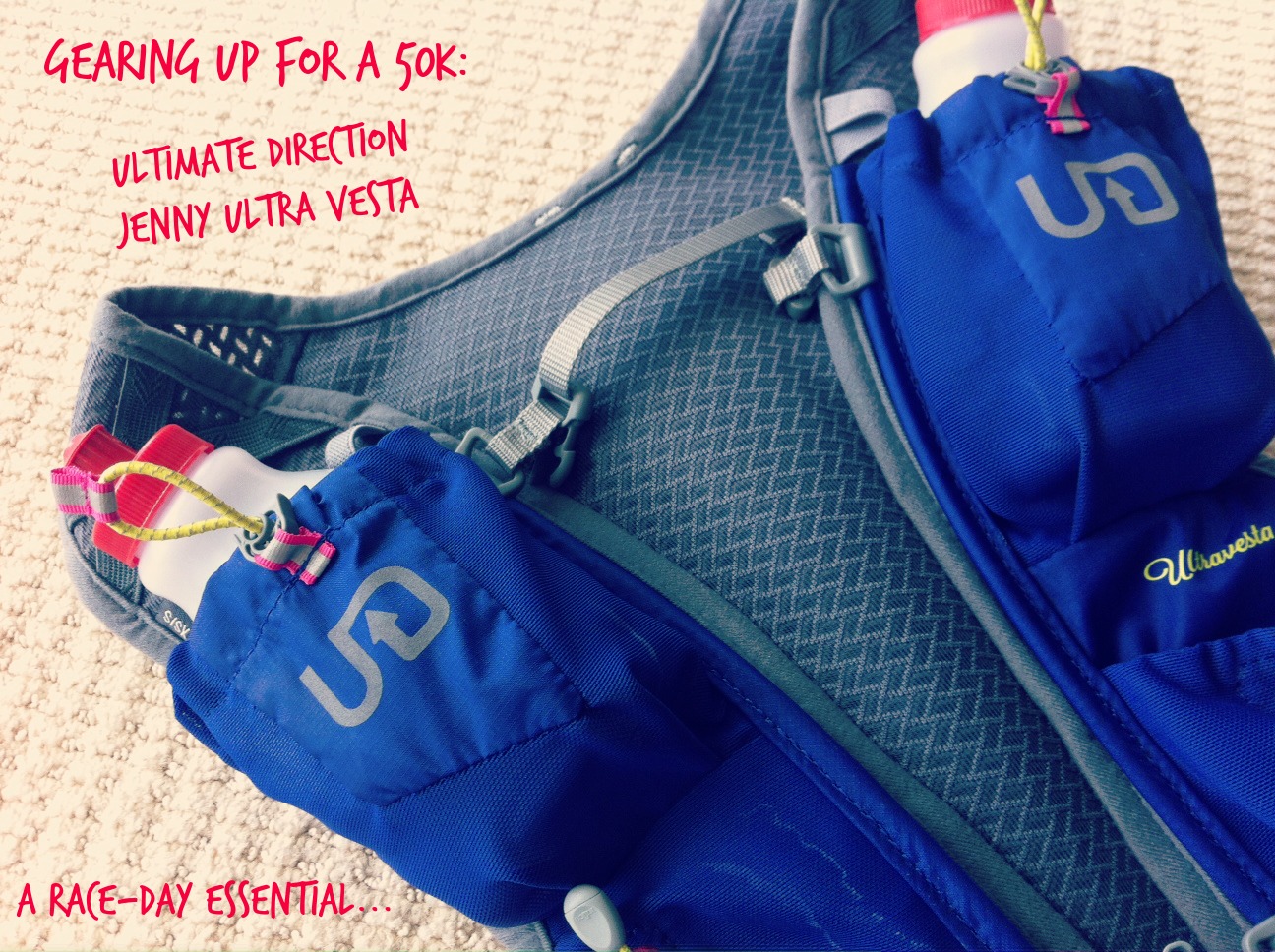
One of the most essential items on the trails, though? A good hydration pack, which not only allows you to carry and consume water between aid stations, but also makes it easier to have other essentials — such as fuel, extra clothing, first aid items, etc. — at your fingertips throughout the race.

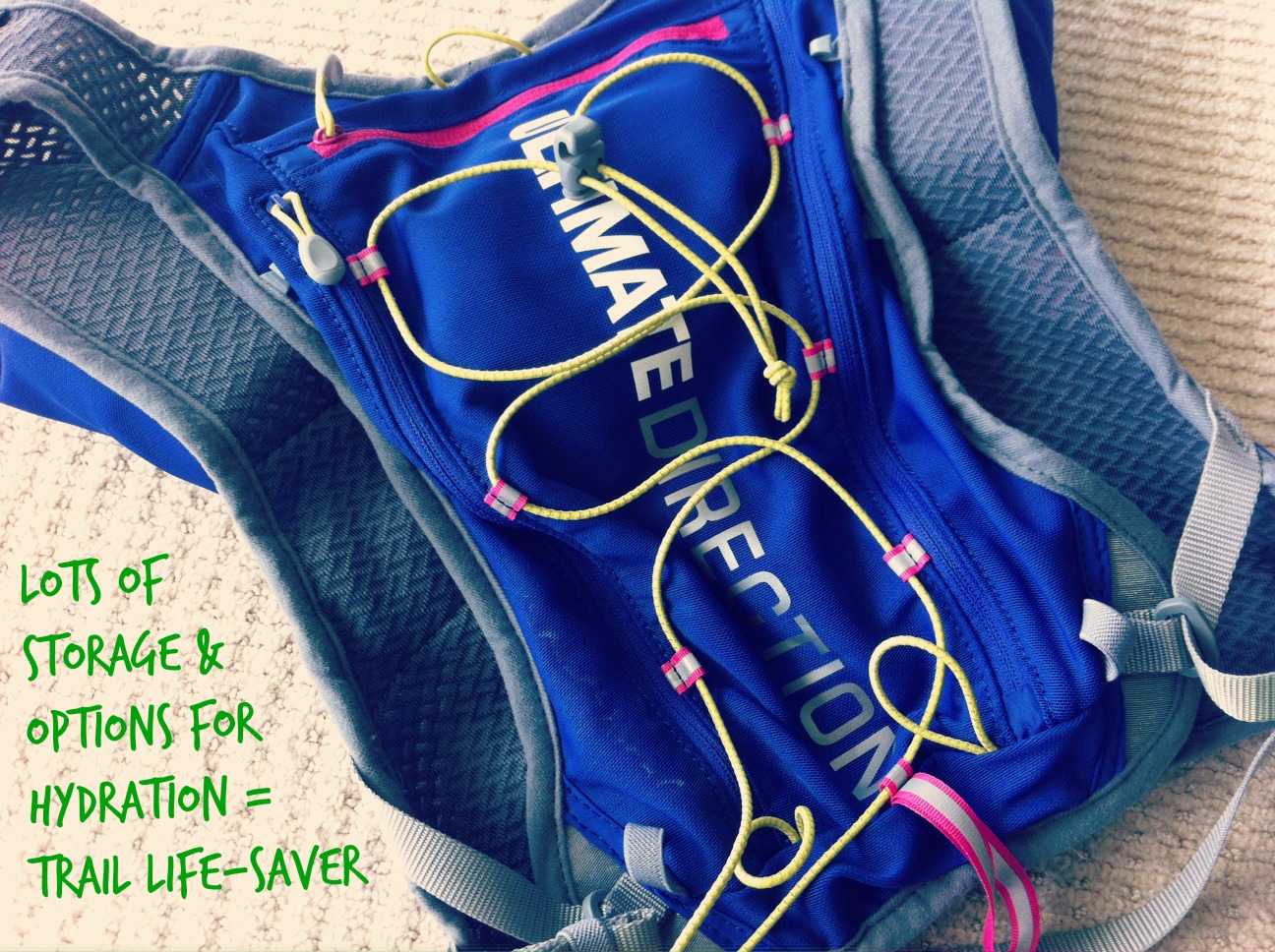
Focus on fit and function; you want something that’s comfortable, compact and efficient so you have everything you need without extra bulk. My favorite is the 2013 Trail Runner Magazine Gear of the Year Award-winning Ultimate Direction Jenny Women’s Ultra Vesta, which is made specifically for women with an adjustable fit.

50KJenny2

No more water bladder slapping against your back here; the Ultra Vesta’s front strap-mounted holsters offer quick, immediate access to twin 10-ounce water bottles, which are concave against the body and positioned higher on the chest to keep from bouncing against…well, you know.

Besides all the pockets for my cell phone, gels, keys, etc. there’s also a main rear compartment that will accommodate a 70 oz. reservoir (sold separately) for longer treks. And, believe it or not, there’s even an ice axe loop, two trekking pole loops, plus reflective accents for low-light visibility, making this a virtual Swiss Army Knife of packs for all kinds of outings and conditions.

50KFuel

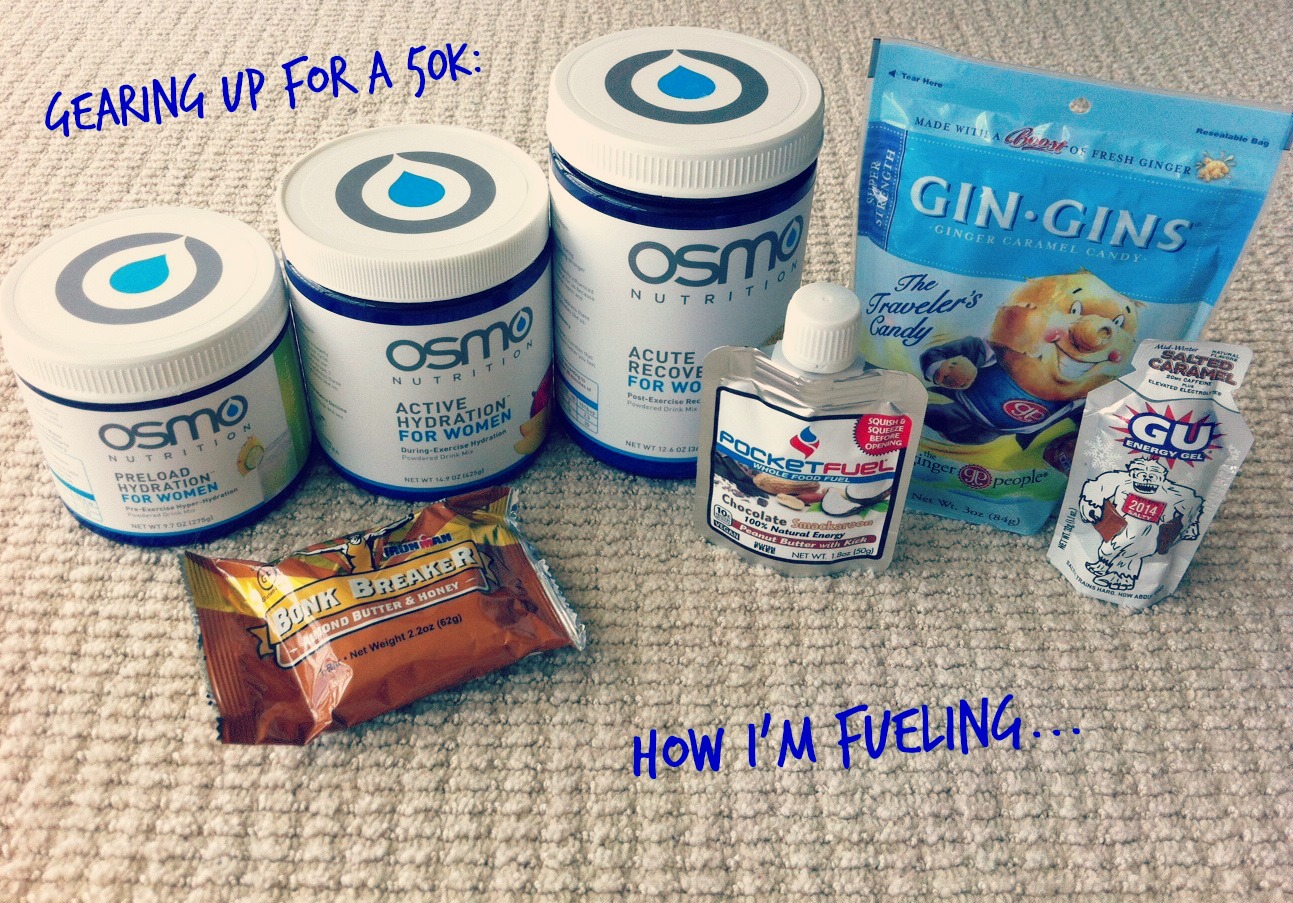
So what am I planning on putting in the pack while running? Well, hopefully not too much…I’m aiming for that delicate balance of being prepared between aid stations (which are usually very well-stocked) and not over-packing, which will fatigue me more quickly.

Ward Off Hanger: What’s been working well in training runs is a mixture of PocketFuel for sustained energy, Salted Caramel Gu Energy Gel for a quick hit of sugar and Bonk Breaker energy bars for something more “food”-like. And, of course, Gin Gins Candies from The Ginger People and good ‘ole TUMS to help keep my stomach settled.

Quench Thirst: I’ll fill my water bottles with Osmo Nutrition Active Hydration for the first leg, and I’m aiming to drink every 10 minutes or so throughout the day. Ideally, I’ll refill the bottles at each aid station, most likely with a mix with water and whatever electrolyte drink they’re providing on the course.

50KRecovery

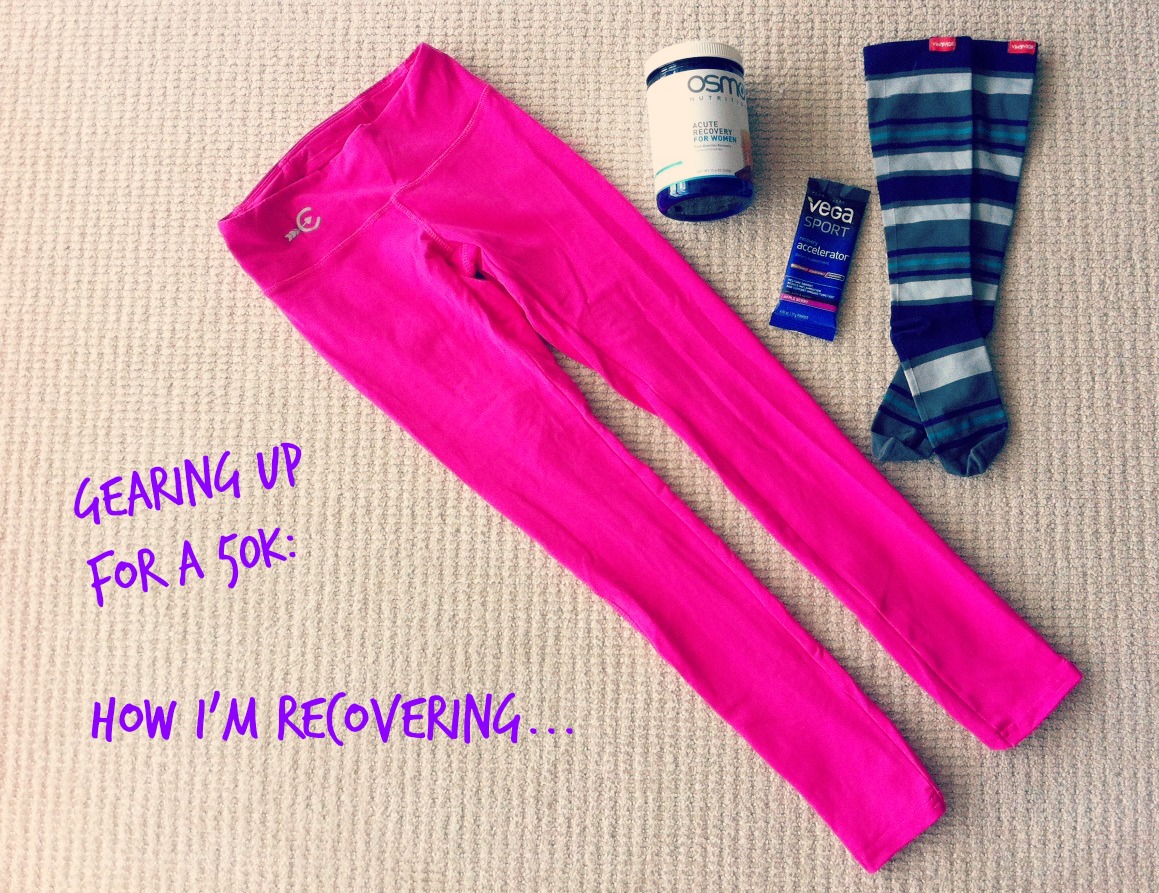
And although the first goal of the day is to cross that finish line in one piece, setting myself up to recover well comes in a close second. The body takes quite a beating over the course of 30-plus miles, so it’s key to remember a few things to aid with muscle repair and regeneration.

– Refuel and Rebuild: Immediately after finishing (while hitting up the post-race buffet!), I like to mix a packet of Vega Recovery Accelerator in a bottle of water. It’s an all-natural, plant-based recovery drink mix specifically developed to replenish energy and electrolytes, reduce inflammation, muscle and joint pain, support immune system and protein synthesis, and reduce recovery time. Then when I get home, I mix up a recovery smoothie made with Osmo Acute Recovery for Women, a banana, almond milk and ice for an extra boost of nutrition.

Relax and Recover: Finally, one of my favorite post-race treats is a hot shower followed by an afternoon nap in compression gear, which helps reduce swelling and just plain feels good on tired legs. I’ll usually layer Coeur Zipper Tights with Vim & Vigr socks and elevate my legs to start the healing process and make it easier to get out of bed and maneuver around the next day.

What’s your favorite gear to get you through those long trail runs? 

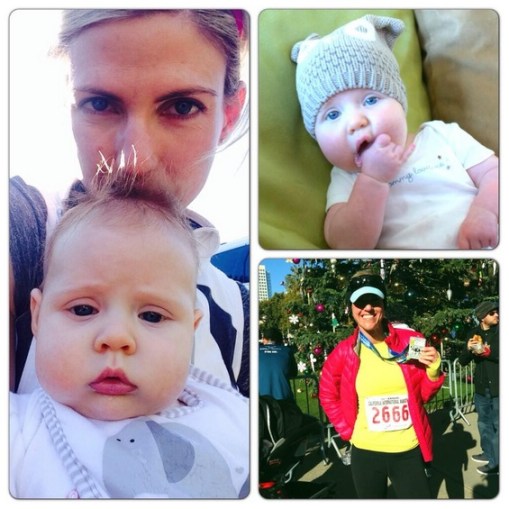
Fit Fix: Sarah Evans on bouncing back (with a PR/BQ) post-pregnancy

Source: Sarah Evans

Source: Sarah Evans

After wrapping up my own racing season at the end of November, I spent much of the final month of 2013 not only reflecting, recovering and planning, but also (and perhaps more importantly) returning some of the love I felt this year by rooting on fellow runners as they rounded out their respective seasons.

And in the Bay Area, as I’ve come to find out, that usually happens at one particular event: the California International Marathon, a popular race with a flat, fast course that serves as a focal point in many a runner’s calendar.

On that day, aside from me having some major anxiety while tracking friends and cheering them along online, there was much to celebrate: Not only did Stephanie (a new blogger friend) finish her first full marathon in an impressive 4:09, and Pavement Runner (my trusty training partner & all-around amazing dude) rock an 11-minute PR to finish in 3:37, but Page (a fellow Coeur lady) also snagged her own PR — at a blazing 7:22 pace, no less — to finish in 3:12. Congratulations again, guys!

But there was one other success story from CIM that, when spotted on Twitter, stopped me in my tracks:

SE7

Wait….what?! I had to meet this rockstar runner and hear her story.

So thanks to the power of social media, the rest is history. Her name is Sarah Evans, and she’s one of the most down-to-Earth, no-nonsense, inspiring and motivating athletes and (new) mamas you’ll ever meet (oh, and did I mention she’s an Ironman, too?).

Below is our conversation, which I promised her will be continued (when I eventually work up the guts to join her) on the trails…

Kinetic Fix: Congrats on your recent PR/BQ at CIM! You’re just four months out from having a baby; what was your game plan going into the race & to what do you attribute the awesome result?

Sarah Evans: Thank you!  It was a great day, and I’m so proud of my PR and Boston qualifying time! The last four months have been a whirlwind adjusting to life as a new mom.

My game plan for CIM was to push myself, see just how fast I could go and, ultimately, just enjoy being out there. It was important for me to have a goal time, as well, since I am very competitive with myself. Having a specific race to train for after having my baby girl was important to me so that I could still maintain my identity as a runner.

I wasn’t sure how I would feel or what kind of pace I would be able to hold until I started actually training about a month after giving birth. My husband knew how important it was to me to get back to running, so he was very supportive in helping me achieve the balance between new motherhood and having some time to myself, which for me meant tying up my shoes and going for a run. I seemed to feel stronger and stronger as the weeks passed from having my baby girl and almost relieved to run “solo” so I could see how hard I can push myself.

Achieving a PR was not really a priority at first, but as I started training again, my speed work splits and endurance told me that my best time might be within reach. That fueled my long weekend runs on the trails to build my base and helped me turn up the tempo on my short, interval-based workouts on the treadmill. While I would consider the treadmill to be my least favorite method, it was a great way to work out and still keep an eye on my baby. The fact that I was in running shape throughout my pregnancy also gave me a great foundation when it came time to train specifically for the marathon.

KF: You’re definitely no stranger to a tough workout; tell us a bit about your pre-pregnancy training, accomplishments and level of fitness. 

SE: My pre-pregnancy fitness was at an all-time high due to the volume of runs and the type of running I was doing on the trails.  In the recent years, I fell in love with trail running and believe it’s responsible for a lot of my endurance, strength and, ultimately, my success with road races.

In addition to speed work during the week, every Sunday I meet up with a small group to run the Marin wilderness. Discovering more about my abilities as a runner, as well as taking in nature’s beauty each week, refuels my spirit and gives me confidence – but it also gave me my most significant running injury to date, a broken foot before the 2012 Northface Challenge.

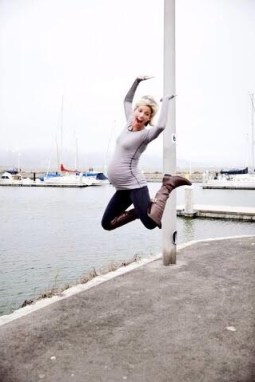
Six months after breaking my foot in Muir Woods, I toed the line at Northface and completed my first trail marathon, which gave me a real sense of accomplishment. But that race will always mark a more significant event in my life because I found out I was pregnant the next morning! So I was lucky enough to go right into my pregnancy in marathon shape, which meant I was trained and healthy enough (with the support and consent of my OBGYN) to continue running and training up to a marathon distance.

While I have maintained general fitness since my college track and field days as a sprinter, I have focused on training for endurance events starting in 2007. Over the past six years, I’ve done six marathons, seven half marathons and six triathlons, including Ironman Lake Placid in 2009. My marathon and half-marathon PRs are 3:26:23 and 1:35:30 respectively, and I am a three-time Boston qualifier, running it in 2013.
Source: Sarah Evans

Source: Sarah Evans

KF: Wow, finding out you were pregnant the day after your marathon must’ve been an exhilarating few days, to say the least! So, what was your attitude toward working out with baby-on-board?

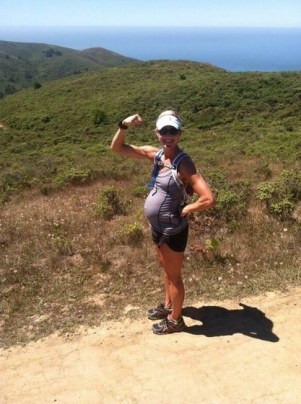
SE: I was excited to be so fit at the beginning of my pregnancy because I knew that would put me ahead of the curve for being healthy and staying in shape. I’m very much a “no-excuses” kind of girl, so during the first few weeks, even though I felt a bit nauseous, sick and exhausted, I got myself out the door to exercise every day. It actually made me feel much better, once I got halfway through a workout, and gave me more energy afterwards. There were some workouts I had to fight through, but I knew it would do my body good in the end so I embraced the discomfort.

“Hurts so good” is definitely a mantra I embody, but I was, of course, cognizant of my baby’s health and made sure anything I did was approved by my doctor. I also recognized a fact that I believe is universal for all expectant women: Running while pregnant is typically more cumbersome, uncomfortable and induced a bit more soreness than usual. But as long as that discomfort was within the realm of what my doctor and I considered to be safe, then I was determined to continue to run.

KF: And run you did, all throughout your pregnancy, including completing the Boston Marathon. Can you tell us what was it like doing 26.2 with a “passenger?”

SE: I feel fortunate that I had no complications during my pregnancy and was given the green light by my doctor to continue to run. In fact, her main concern was that I would suddenly stop running, which I was told might be more detrimental to my health and pregnancy than anything. I continued to run a lot of trails, which helped build strength and balance and gave me more cushioning for my joints and back than the road and pavement.

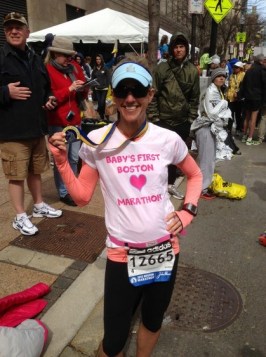
Running the Boston Marathon with a baby on board was really a coincidence, as I had qualified and booked the trip before I knew I was expecting. It had always been a dream to run this race, and relaying that desire to my OBGYN was among the first topics of my first appointment. With everyone’s support — including my husband, who initially thought that this might be too much — I set myself a goal of sub four hours (realistic and challenging enough, but allowing for some fun along the course) and finished feeling strong and healthy.

Despite finishing 30 minutes slower than my qualifying time, I felt fortunate. And the day’s tragic events helped keep everything in perspective.
Source: Sarah Evans

Source: Sarah Evans

KF: What surprised you most about running while pregnant?

SE: That I lost my speed quickly! I know it sounds ridiculous, but I thought carrying a few extra pounds wouldn’t slow me so fast, but to be fair it wasn’t just being pregnant that slowed me down. Bouncing back after I broke my foot was not as easy as I thought because I had a fair amount of apprehension starting back running on the trails on a healed foot AND being pregnant at the same time.

So I built up the miles gradually at the new slower pace and found that even warming up took twice as long as before. Easing slowly into a run was new for me, as I was used to taking off quickly, and I had to challenge myself not to turn back after two miles because I wasn’t “feeling it,” knowing that my growing situation meant that I had to be patient to find my running happy place.

There were plenty of times towards the end of my pregnancy when I felt like skipping my runs, but in the back of my mind I had to remind myself that these times running solo would soon be limited. Mostly, I was anticipating the period after birth when I couldn’t really exercise due to having a C-section (my stubborn little girl was breech and couldn’t be flipped). And any running, however slow and uncomfortable, was going to beat being on bed rest for a while after birth!

KF: Can you share some of your favorite tips for moms-to-be who want to follow your lead and keep up with their running?

SE: First and foremost, clear it with your doctor. While a few are still old-school enough to recommend just sitting on the couch and resting, thankfully most will assess your current fitness and exercise level to suggest what effort you can take on.

Next, realize that it might not always feel comfortable but no matter how bad you feel, just lace up your shoes and get out the door – if only for a mile. You may (and most likely will) find yourself running longer than you anticipated and enjoying the fresh air, which can really invigorate you and make you feel better.  The only special “equipment” I got was a bellyband that supposedly helped support my mid section along with providing some back support.

Finally, and especially for first-time moms, remember that you might not have this kind of freedom after baby is born to run and be active. Trust me, as tired as I felt while pregnant, it doesn’t compare to how exhausted being a mother can make me feel. And there is no better excuse to skip a run than to cuddle with your sweet baby – thankfully I can make time for both, but it does take its toll. Another huge benefit that you should keep in mind is that keeping fit will prepare your body for labor, help speed things along, give you the energy you will need, and ultimately make it easier to bounce back.

KF: Did you do anything else to stay in shape throughout your pregnancy?

SE: Throughout my pregnancy I tried to change as little as possible about my routine and exercise habits, though I did avoid outdoor cycling on the road, as well as skiing and winter sports (doctor’s recommendation). What I found was that I could still do my usual variation of cross-training activities, but just at a lower level of exertion.

I did a lot of strength training to keep some muscle tone, and spinning was one of the best exercises to relieve the pressure on my joints. It gave me some time off of my feet, and I think it’s one of the best ways to keep in cardio shape during pregnancy if running gets to be too much. I also did more power and vinyasa flow yoga classes, which helped me relax, feel one with my body, and stretch out my sore ligaments.

During my maternity leave (two weeks prior to birth), I also took advantage of the extra time by pampering myself, which meant spending some additional time working out! 🙂 I was lucky enough to get in one last run and yoga workout the morning the day my water broke and my baby girl arrived, so I held on to the end!
Source: Sarah Evans

Source: Sarah Evans

KF: Sounds like it! And then you were able to get back on the trainer and go running a few weeks after your C-section; how was the transition back to your usual activity levels?

SE: Having a C-section was not my plan, as I really wanted to have a drug-free, “natural” birth, but my little one was stubborn and turned breech so I was relegated to a C-section. It did slow down my recovery and my return to running, but what felt like an eternity only ended up being a limited timeframe.

My OBGYN gave me the green light to start exercising 18 days after I had my baby girl, and the first thing I did was 40 minutes on my bike trainer that very afternoon! I eased in carefully the next day by walking uphill on the treadmill for 30 minutes and the following day by doing intervals of slow jogging and walking uphill on the treadmill. I did these kind of workouts for the next 10 days, and exactly 4 weeks after having my baby girl I went for my first run outside: a lovely, solo six miles, and it felt amazing! I couldn’t have been happier (if a bit sore) to be running again – especially without the extra weight on my frame!

I think I bounced back so quickly because of my mental drive and strength – it didn’t hurt that I also went into my pregnancy in top shape. I was resolved, as much as I could, to stay in running shape and continue to run up to the day I gave birth. I really pushed hard to get back to running as soon as possible, and I was also lucky to have no complications other than my unplanned surgical procedure. The support of my family and husband, who knew how important it was for me to get a little piece of myself back after giving birth, also aided in my quick turn around and recovery.

KF: Now that you’re a few months out, how do you think having a baby has changed your running, currently?

SE: Honestly, I feel like having a baby has made me a stronger runner. I have a quickness in my step that wasn’t there before (maybe it’s getting home faster to hold her!), but I also think it comes from the extra weight load I’m not carrying and an increased mental toughness from going through pregnancy and birth.

While it’s nice to be able to head out the door for a run, I’ve learned that efficient and quality runs are now much more important since I don’t have all the time in the world to be out and away from my family. When I’m struggling on a run now, I think about how I felt right after giving birth, hobbling to get to the kitchen or feeling sore after a 20-minute walk. The fact that I’m now able to exercise again encourages me to pick up the pace and not take for granted how quickly I bounced back.

I think that if I could handle the pain of pregnancy and birth but still love and enjoy every minute of it, then I can handle the physicality of the last miles of an intense running effort. Many athletes understand the odd enjoyment with the pain of a marathon, racing, or pushing yourself on a run, but to experience the parallels between exercise and pregnancy is particularly rewarding.

KF: With baby girl in the picture, how have you adjusted/will you adjust your routine going forward?

SE: My routine has definitely changed! I can’t wake up on the weekends and head out the door whenever I’m feeling up for a run or come home from work early and go for a 5pm yoga class.

Now I wake-up earlier, especially during the weekdays before my husband leaves for work, if I want to get in a solo run outside. Otherwise, I know I will be running on the treadmill (it’s a blessing and a curse to have the option of a treadmill in my home). Most recently I got a BOB Ironman running stroller, which is a good option to get out on a slower run with my daughter, but race-specific training is best done without my adorable companion.

I do have my standing day, Sunday mornings, when I trail run with my group. My husband knows how much I enjoy getting out on the trails, so we make Sunday my “free mama” day! For me, being able to run and have some solo time makes for a better, happier and saner person and mom at home. I think it’s important to have a set day and time every week that’s just for you, no matter what you feel like doing with it!

Another big adjustment is working out from home a lot more. I’ve had a long maternity leave and worked from my home office a lot before I went out, so I get in my workouts whenever I can in my little fitness area (which is set up in our garage). That relieves any stress of getting out the door and preparing baby for a gym daycare. Working out at home has really given me the best way to stay in shape and get it in when I can!
Source: Sarah Evans

Source: Sarah Evans

KF: Speaking of — can you share your favorite exercises for toning up and getting your core strength back post-baby?

SE: Getting my core strength back was probably the toughest part of recovering from baby. I didn’t start any specific core workouts until about six weeks out from giving birth, and when I did I started with planks — both regular and side planks. I also added in leg throws, v-ups, planks with a twist under and roll-ups. Then I added in a P90X ab workout (a quick 15 minutes of intense abs; perfect to do on a yoga mat in your living room when baby is rolling around on her playmat!).

I’ve recently added in some cross-fit type work (specifically called IronStrength that I found on RunnersWorld) that incorporates so many mixes of activities that you don’t realize work on your core. All of this is done at home in my living room on a yoga mat with little equipment needed, and it’s something you can do while your baby is awake and incorporate them into the routine.

I do a lot more core work and abs now than I did before pregnancy because I feel that area was the most difficult to tone while pregnant, and it didn’t quite bounce back like everything else. I also need the extra stability in my back to carry around baby, car seat and lug everything around. So I would say planks and incorporating a short 15-minute ab workout 2-3 times a week would be a good combo to building that core strength back!

KF: Great advice! Finally, do you have any other best practices you can share with new moms who are finding it a struggle to get fit again?

SE: Schedule it into your day! Like anything else — a meeting, a doctor’s appointment or lunch with a friend — try to schedule your workout. On the other hand, you have to be very flexible, too, so be willing to fit it in when you can.

I have recently canceled my gym membership and am solely working out at home between naps, feedings, etc. I have a mix of free weights, a treadmill, bike on a trainer, yoga mats, exercise ball, Pilates ring and bench all set up along with some of my favorite workout DVDs and a few online yoga sessions that I follow.

Many times I’ve had to end a workout early to get her up from a nap or change a diaper, and I just pick up the workout later in the day. So I piece together my workouts…or if all else fails, I go for a long walk.

I also try to wake up early a few times a week before she awakes if I want to run outside solo or fit in a worry-free workout before my husband leaves for work. This is obviously much more realistic once baby is sleeping through the night, which I am thankful to say is now happening!

Another thing I suggest is to get on the floor with your baby while they play and roll around. You can do abs, a little yoga session or stretch. I get my baby girl involved with my workouts, holding her or carrying her while lunging or doing squats, or laying her on my legs while we do crunches or lifting heels to the sky. And right after she was born (and before I could be too active), we went for a lot of walks! A more recent “bonding” exercise is running with her in the BOB stroller, which has been an additional challenge to my running strength!

Make your baby and your health a priority, and schedule in time for yourself – for me, that time is almost always spent on a run or a workout, which helps me maintain my old identity as a runner, but also embrace my new role as a mom!

Thanks to Sarah for taking the time to chat! And you can find her here on Twitter, if you’d like to follow along on her adventures in training, racing — and motherhood. 

Fave Fix: Opedix CORE-Tec Shorts

Runners are no strangers to the occasional aches and pains, but during my marathon training this fall I found myself struggling with nagging lower back pain on longer runs.

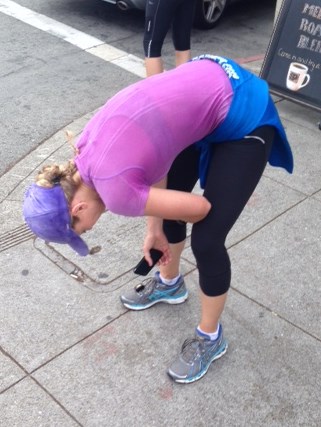
More often than not, I’d have to pull over mid-way through to stretch for some relief. Case in point: This was me about 14 miles into one of my weekend runs (thanks to Hubby for capturing this oh-so-flattering moment).

op11

In comparison, here’s another shot of me about 11 miles into the marathon — with no back pain whatsoever.

So…what gives?

Source: MarathonFoto.com

Source: MarathonFoto.com

Well, in a word: Opedix.

Never heard of ’em? Me neither, until I started doing some research on support gear that would allow me to run longer, stronger.

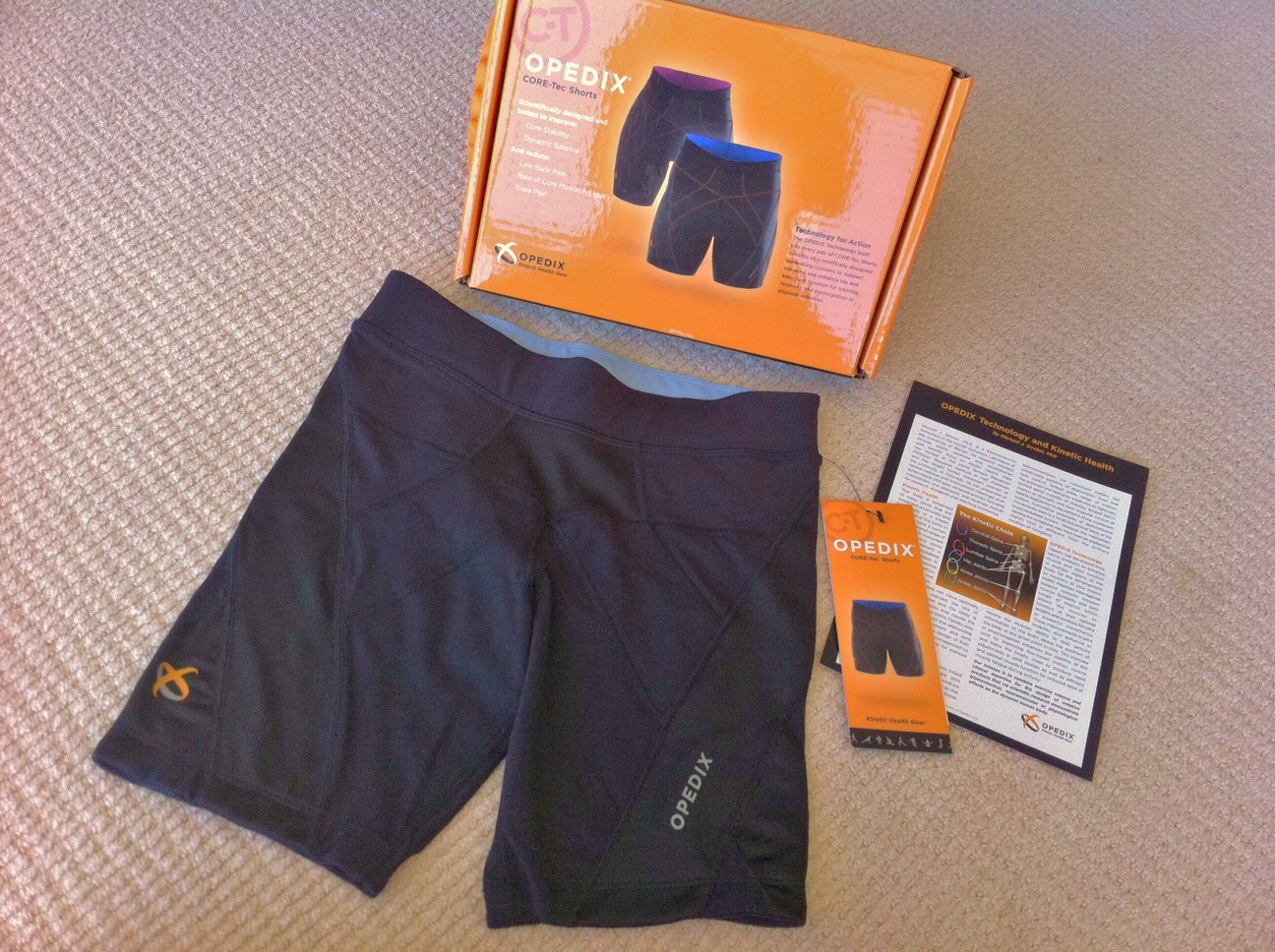
I’m already a big fan of compression socks, and I’ve had success with CW-X tights, but Opedix technology is scientifically designed to aid the recovery of back, leg and knee injuries, which can improve performance for runners, as well as athletes across other disciplines.

The company makes what they call “Kinetic Health” gear to enhance performance, recovery and rehabilitation by improving joint alignment and promoting proper movement.

Bottom line: They make shorts that could possibly let me say “sayonara” to back pain, so I decided to put them to the ultimate test — marathon training.

op1

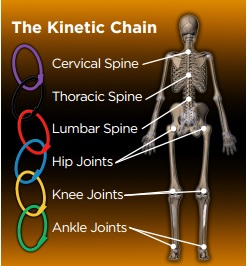
Here’s the lowdown on how they work: Think of the joints in your body as being connected structurally and functionally in a kinetic chain (meaning, it’s dynamic). Most of your joints have a three-dimensional range of motion, and the concurrent motion of these joints produces movement.

op12Since most of us are a little off-kilter in one way or another (due to imbalances, previous injury, etc.), athletic performance is reduced when your body can’t move optimally.

When this happens, your muscles fatigue more quickly and your body is exposed to unnecessary stress that causes the progressive destruction of your joints.

The result? A chain reaction that can range from annoying…to downright nasty.

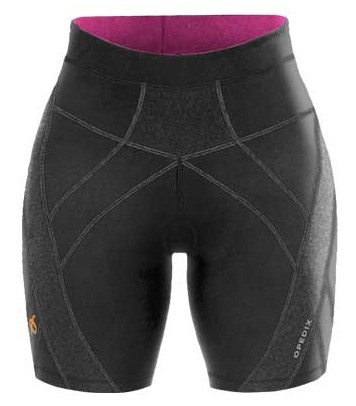
But Opedix’s CORE-Tec Shorts are designed to work like an extra layer of muscle and use a combination of fabric tensions to anatomically direct the body’s inside forces and reconnect the joints to harmoniously function in that kinetic chain.

Source: Opedix

Source: Opedix

We could all use a little extra support (that’s putting it mildly!), and Opedix claims to deliver just that — and in just the right spots.

But do they really work?

Yes; I tested them on several different types of training runs (speed, tempo and long) before using them in my actual race, and they performed beautifully every time.

Full disclosure — they are a bit snug and the waist sits high — but once you get used to the feel of this fit and realize that it’s in the name of function, you all but forget you’ve got ’em on.

The fabric is also breathable, moisture-wicking and anti-stink, which also comes in handy on those mega-long runs and vigorous workouts.

op7

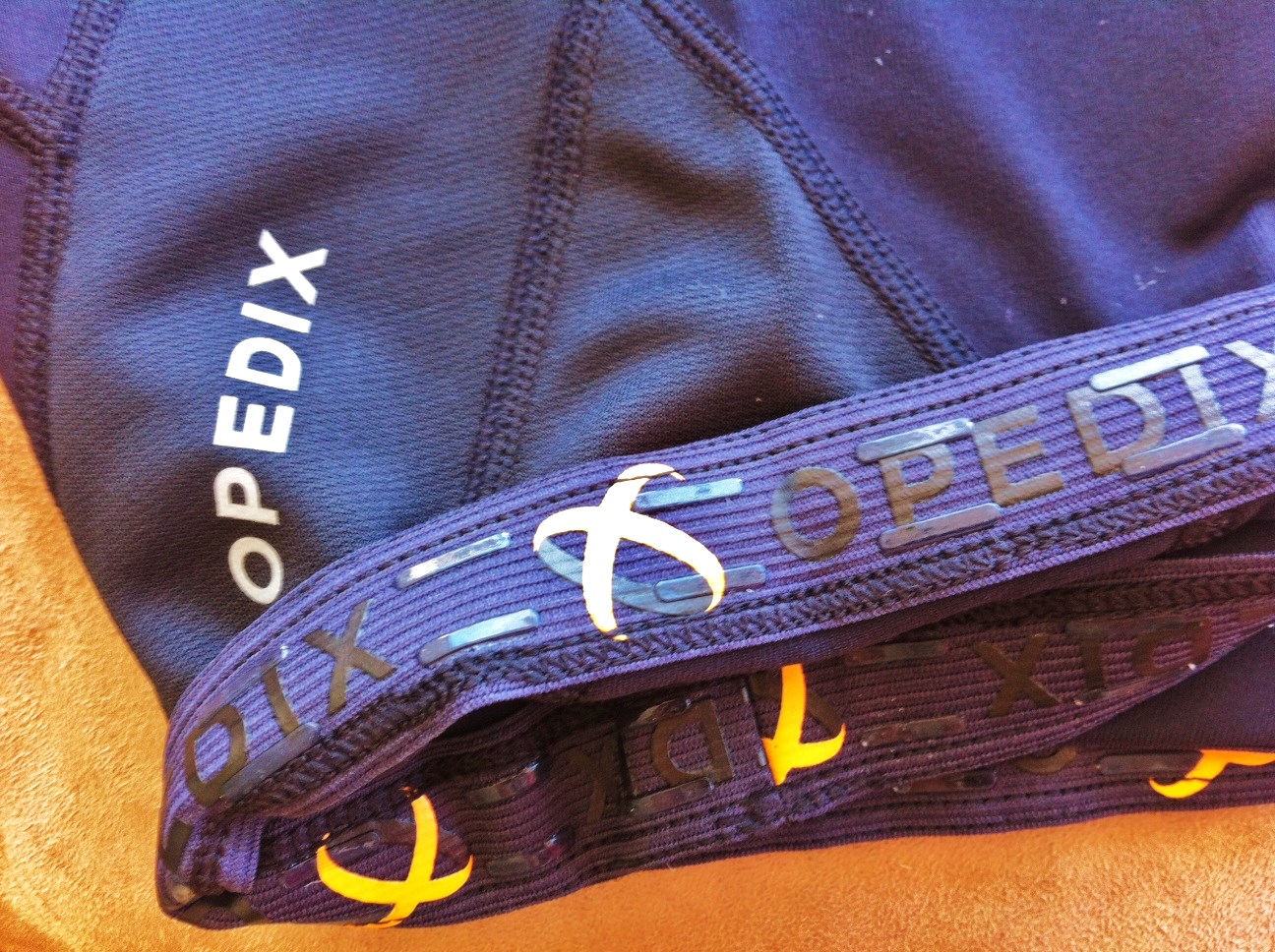
And they’re well-made, too. Not only is the design top-notch (there’s a strategic 29-panel construction with a combination of stretch and non-stretch fabrics), but Opedix also pays special attention to the small details, such as silicon elastic binding at the leg-openings to help keep the shorts properly anchored.

op3

Now, if you’re plagued with poor form or an existing injury, these shorts won’t rid you of either — let’s be realistic — but they can help delay the effects of fatigue, keep you better aligned and give you that extra boost to keep doing what you love with less bodily wear and tear.

Now that’s gear that’s gear that’s good for you for long runs…and in the long run.

op8

Thanks to the folks at Opedix for providing a sample for review; all opinions are my own. 

On marathoning and marriage

Source: Jordan Siemens

Source: Jordan Siemens

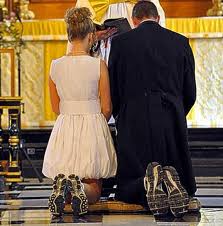
Between all the miles logged in training (i.e. time to think) and the fact that Hubby and I recently celebrated our seven year anniversary, I’ve been noticing some parallels between marathoning and marriage.

If you look at it as a race – not in the competitive sense, but in wanting to have a rewarding and successful journey – many of us get caught up in the ‘start.’ We struggle because ‘we’re young,’ ‘we don’t have any money’ or [insert whatever excuse here]. Truth be told, that’s a sprinter’s take on the subject when what would serve us better is more of a marathoner’s mentality.

See, sprinters know that the start is a critical element because time is of the essence when there’s little ground to cover; there’s no room for error. But marathons, on the other hand, are just the opposite. Even with a rocky start, we have the luxury of time to bounce back and ultimately have a great race.

Source: London Evening Standard

Source: London Evening Standard

Why? Because it’s not the start that’s important; it’s the endurance.

That change in focus can empower partners for ‘the long haul’ when it comes to pushing through conflicts without hitting the proverbial wall and quitting. No, there are no quick fixes to either marathons or marriage (and neither are painless!)…but I think we’d all agree that the potential reward is worth all the effort.

Now, I’m by no means an expert at either marathoning or marriage…but I thought I’d share a few of the nuggets of running wisdom that I believe just may translate into more moments of wedded bliss.

1. Have a goal in mind. 

Just as we choose races to stay motivated, it can help to set milestones for your marriage. Having common goals help both parties to get on the same page, and having something to work toward keeps you moving forward rather that getting stuck in a rut.

2. You get out what you put in.

If we want to get technical here, pretty much anyone who wants to do a marathon could probably cover 26.2 miles, but for the best possible experience, it’s smart to prepare properly. This means putting in the work up front to reap the rewards on the back end. There’s something to be said for a little hard work, dedication and delayed gratification – that means sticking to a training plan and putting some real effort into figuring out what it takes to whip your relationship into shape, as well.

3. Run your own race.

The most critical piece of racing advice is to not start out too quickly. Trying to keep pace with faster runners will only bite you in the behind in the second half of the race when you burn through your energy stores and hit the wall with a thud. The same can be said for marriage; just as every body is different, so is every union, so you’ve got to work toward your own personal best…not someone else’s.

4. Pace yourself.

If you’ve set a goal and trained toward it, it’s important to check in at regular intervals during the race to make sure you’re moving along steadily. The same goes for marriage. It’s not about showing your partner how much you love them in fits and spurts with the occasional grand gesture, but committing to treat each other well year-round because the little things really do add up.

5. Prepare for peaks & valleys.

For as many moments of triumph, there will be the inevitable time in the trenches. If you think you’re immune, you’re only fooling yourself, so it’s best to go in with a realistic approach and an open mind. Knowing that there will be ups and downs in your relationship will allow you to approach both with a good head on your shoulders. That way, you and your partner can ride the highs, work through the lows and realize that it’s all part of the experience – and not indicative of the final outcome.

6. Work through the wall.

It may be inevitable, but it doesn’t have to be fatal. Again, being aware of (and having a healthy respect for) the wall will help inform your plan of attack if/when it rears it’s ugly head. Instead of getting blindsided, throwing your hands up in the air and giving up, you’ll realize that sometimes it just takes a little extra push to work though what feels like hell – and that you may just come out better for it on the other side.

7. Rejoice in the journey.

Finally, in racing and in life, it’s all what you make of it. Having a sense of humor and not taking yourself too seriously (after all, I don’t expect to win a marathon…or a marriage-of-the-year award), helps keep things in perspective. One day, you’ll look back and realize that even though 26.2 miles – or whatever rough patch you may have been going though at the time – felt like it would never end, it was only a small segment in the grand scheme of your life.

What running wisdom do you apply to your relationships?