10 dos and don’ts for running a 24-hour relay race

1622199_743051392386399_1308500740_n

During Monday morning’s post-race recovery run (ouch), I had plenty of time to reflect back on last weekend’s Hood to Coast experience. It may have been my first relay, but it certainly won’t be my last — so I wanted to share some learnings that I’ll be applying again come Ragnar Napa Valley next month (and hopefully HTC again next year!).

KineticFix’s 10 dos and don’ts of running a 24-hour relay race:

The DOs…

…train, at least a little bit. 

Running takes enough motivation as-is, but factor in lack of sleep, back-to-back runs over varied terrain, little rest between legs, irregular fueling, irregular other things and…well, you get the picture regarding what can go awry if you don’t get in some mileage and/or practice a few two-a-day workouts ahead of time.

…plan well in advance. 

Make your list, and check it twice. I even Googled around for a few last-minute ideas based on veteran runners’ suggestions because, hey, you never know when you’ll need an ice pack at 6am for an injured team member or a dose of stomach medicine for someone who’s feeling wonky before their 2am leg. Check the weather, too!

…invest in Ziploc bags. 

Packing individual outfits into gallon-sized bags makes it easier to get dressed in the middle of the night when your brain is out of commission. And be kind to your van-mates by putting post-run outfits into bags, as well. Don’t think you stink? Take a good whiff as you re-open each bag when home, and let me know if you beg to differ!

…lube up. 

You can thank me later on this one. Even after spraying myself from head to toe with liberal amounts of TriSlide, I still have a few hot spots from my dusty leg 21 where the grit started to grind in between my skin and my clothes. Nothing will stop you in your tracks faster than a blister, so when in doubt, protect any and all sensitive skin.

…trust in yourself and your team.

There’s no way to get through this without an incredible amount of teamwork, so look for opportunities to pitch in, whether it’s driving a few legs, helping to navigate, being in charge of van organization or even hooking up your teammates with a place to crash. You’ll be amazed at what your body can do, and what you can achieve together!

The DON’Ts…

…forget to pace yourself.

This goes for everything across the board — from running to fueling to sleep, etc. You probably won’t even feel your first run, but remember that you’ve got two full cycles of the same in 24+ hours, so treat it like a marathon instead of a sprint in order to finish strong.

…expect to stay organized.

Our running joke was, “Have you seen my…?” And this was in two vans of highly-organized women, so you can imagine the sheer mayhem that goes on in vans with lower levels of OCD. Do your best to keep your own stuff corralled into one or two bags, then make team bags of communal items, such as food, first aid and night gear, to help.

…think you can get by on minimal clothing/gear.

There’s a fine line between bringing excessive amounts of crap into an already-crowded van and having to spend the night shivering in your only cold, wet running outfit. Do yourself a favor and pack one full outfit (complete with socks and underwear) for each leg, plus a spare pair of shoes and an outfit for downtime/after the race.

…ignore the importance of recovery. 

Sure, you’re riding high on adrenaline, but there will be peaks and valleys throughout the race, so avoid digging yourself into a hole at all costs. If you want to run well, you’ve got to double-down on the non-running activities: After each leg, re-fuel with protein, stretch out, change into dry clothes and rest up as much as possible.

…leave home without your sense of humor.

Inevitably, you’ll end up in a situation that’s out of your control. And it’ll happen when you’re low on sleep and not firing on all cylinders. If/when that happens, take a deep breath, take a step back and try to laugh about it. Remember: Any race is a success when you can come out of it with sore legs from running — and sore abs from laughing.

A final 'do?' Get to know the Honey Bucket, your best friend/worst nightmare during the race

A final ‘do?’ Get to know the Honey Bucket, your best friend/worst nightmare during the race

What are your relay dos and don’ts?

Race Report: Hood to Coast 2014

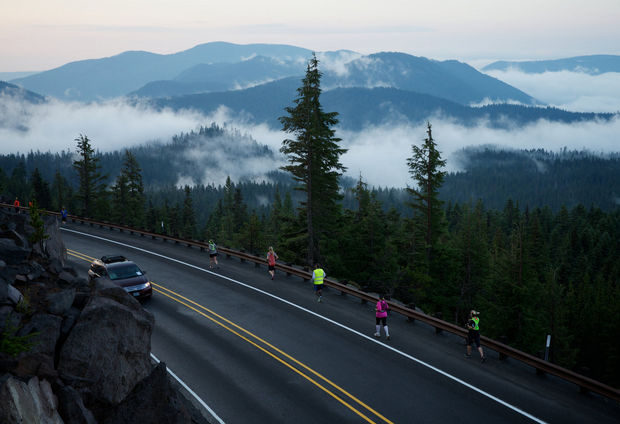
Courtesy of OregonLive.com

Courtesy of OregonLive.com

Two vans +11 runners + 199 miles = One incredibly-delirious adventure

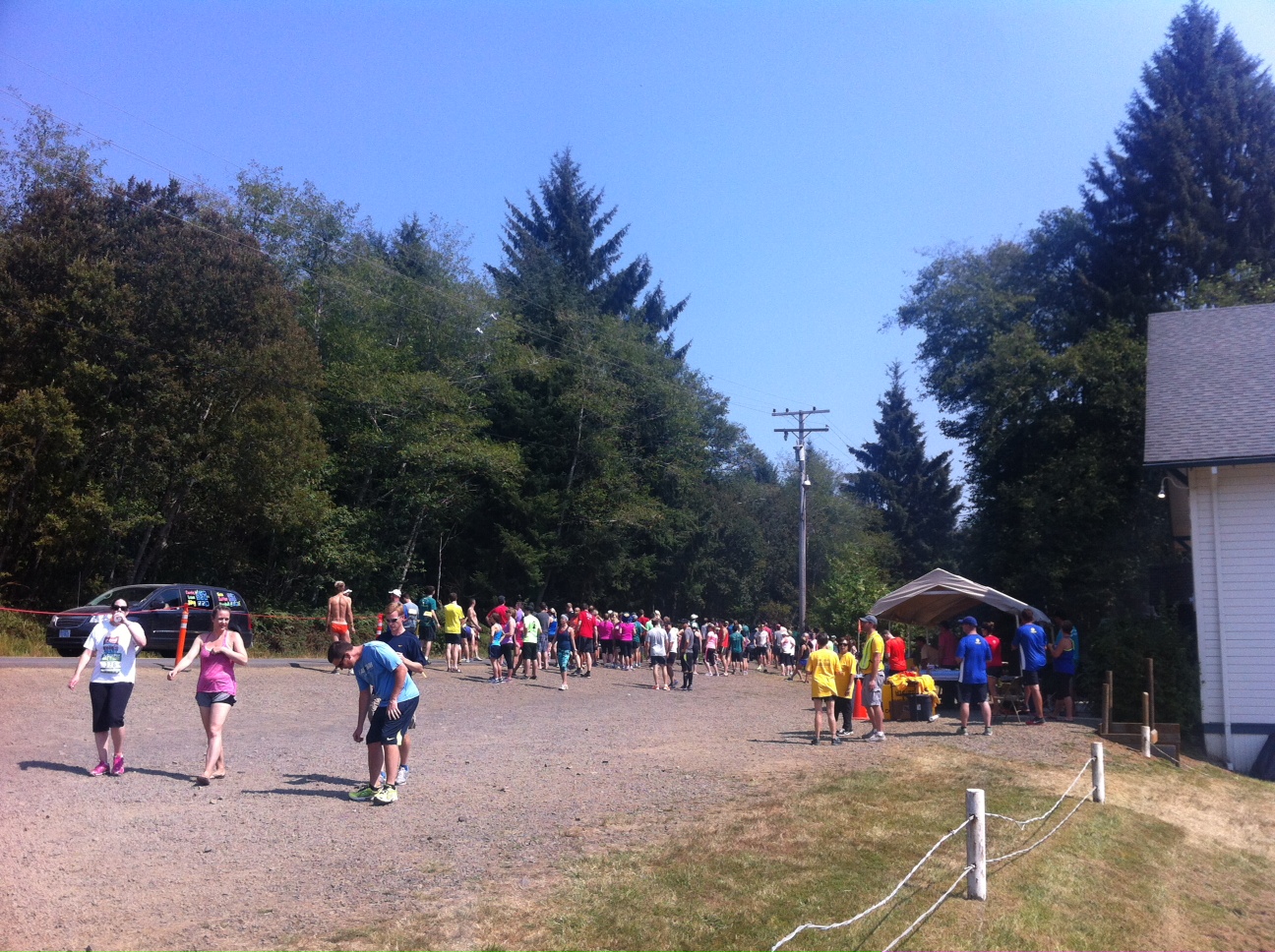
All I can say is that in a race where you run down a mountain and over a coastal range to finish on a beach, the true highs and lows of the event happen inside the vans.

We laughed (a lot; thanks, Janelle!), we cried (Jen got injured during her second leg), we banded together (Mindy pinch hit a long, hot run as a result), we celebrated victories (Katy nailed her night leg along a particularly lonely stretch), we agonized over defeat (a few traffic-jam fails), we got sick (thanks, Paige, for playing nurse), we broke bread (well, PB&Js), we shared beds (less than one hour of zzz’s in a twin for the win), but when all was said and done and run, WE BROUGHT IT.

Final time? 29:27:17 (I think). And here’s a recap of my experience in the 33rd annual Hood to Coast race as part of the kick-ass Team “I’ve Got 99 Problems But the Coast Ain’t One.”

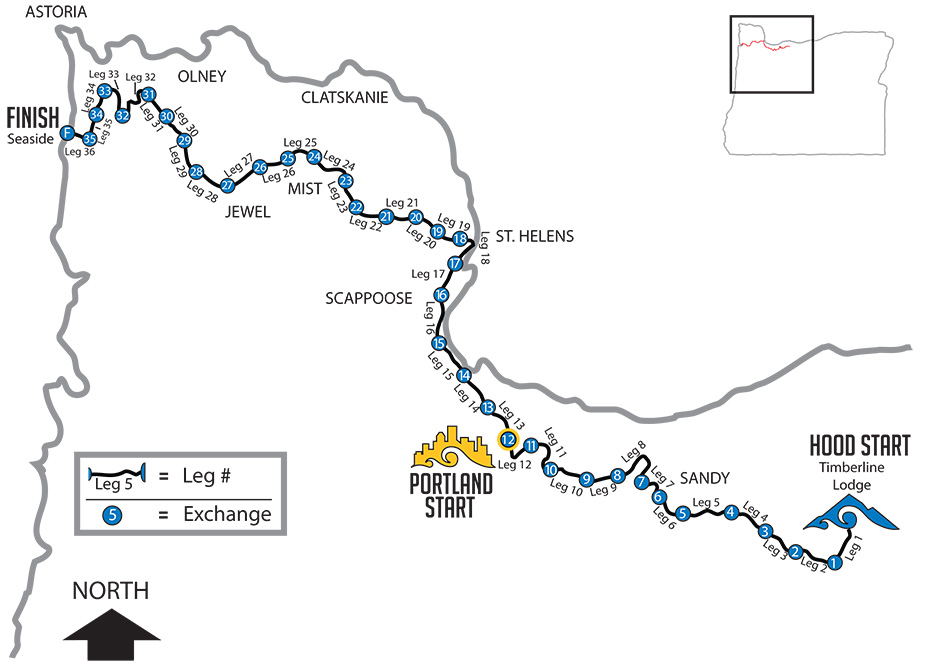
course-map

The Start

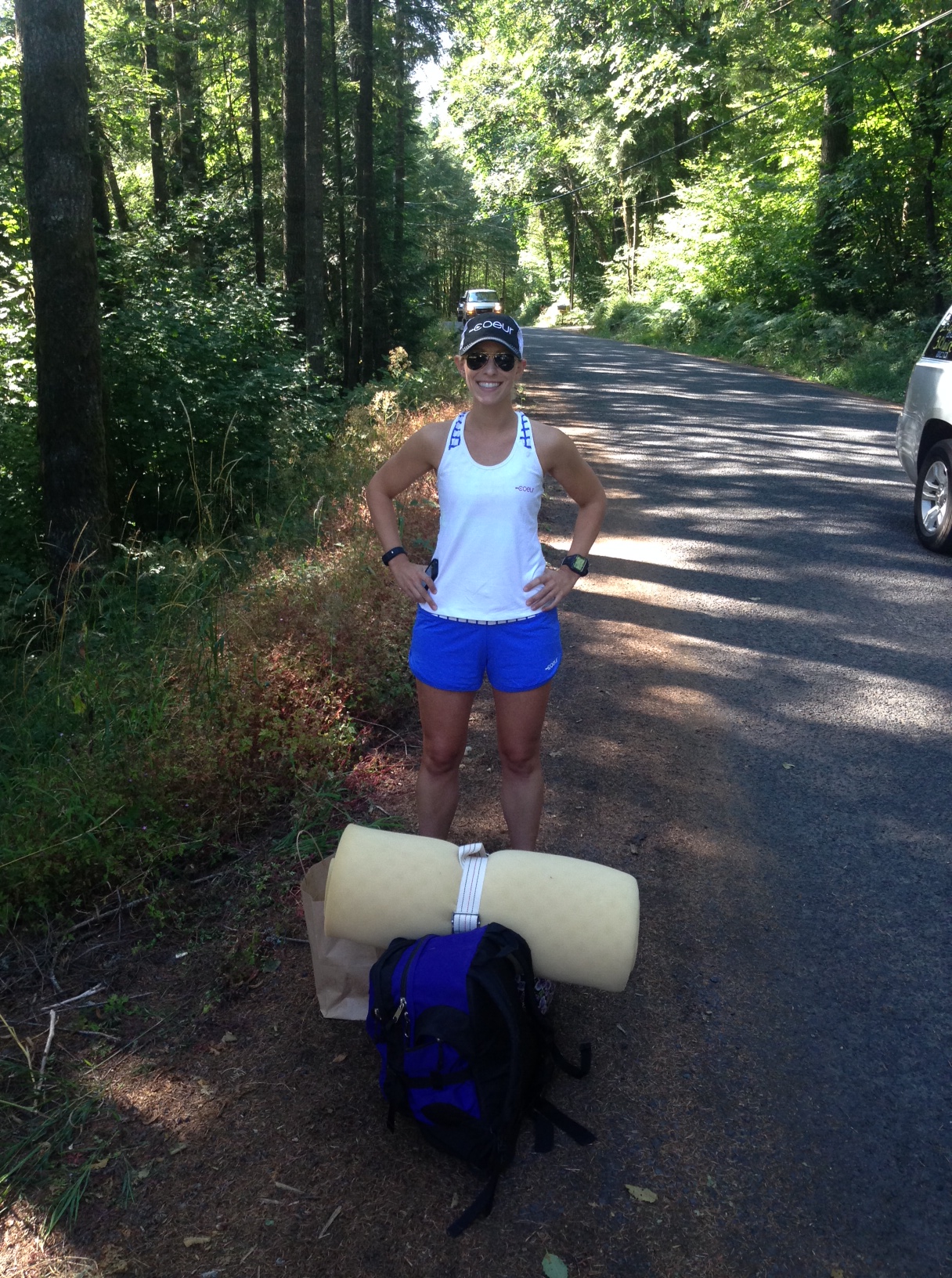
The rest of the team met up on Thursday and trekked out to Mt. Hood for the start, but I had a prior engagement with Hubby, so the plan was to meet up with Van 1 (Michelle, Nikole, Jacquelyn, Karin and Kellie) on Friday afternoon to run leg 6 (the final one in Van 1’s first rotation; they were down a runner so we each would be running four legs instead of the usual three) before meeting up with my van (Van 2) at the first main exchange point to run my other legs (9, 21 and 33). Hubby dropped me off as I waited anxiously for my teammates.

photo (2)

As I stood by the side of the road, I could tell everyone in the race was in great spirits; each van that passed shouted out of their windows, cracking jokes, saying hello and asking if I needed a team. No more than a half hour later I heard screaming and cowbells — yep, our team’s Van 1 — coming down the road. I knew right then and there that we were in for an awesome experience together.

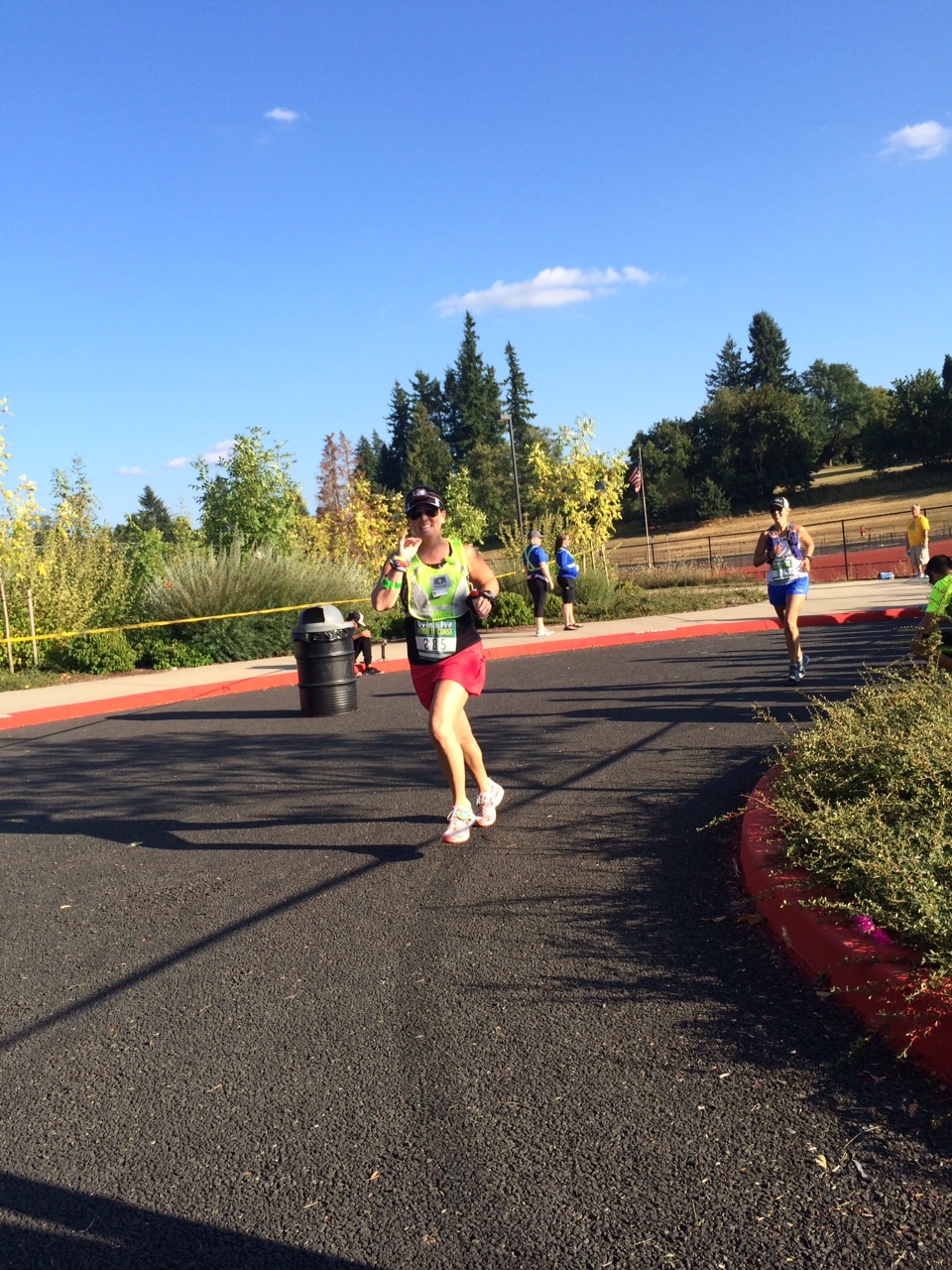
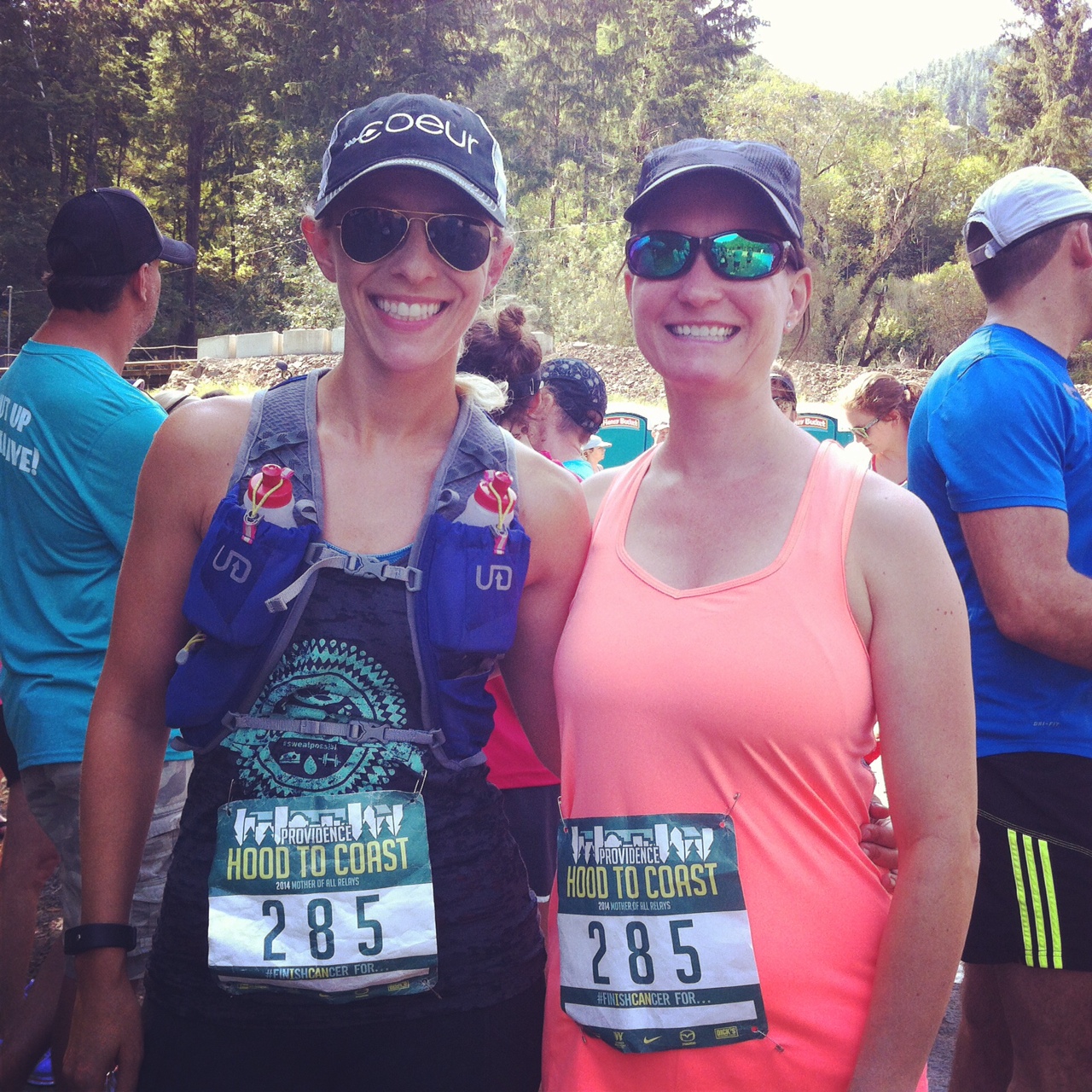
I hopped in, we introduced ourselves, and then it was time to get down to business. They gave me the lowdown on logistics — Jacquelyn (our fearless leader and team captain) would be handing off to me, then I’d run to meet up with everyone at the first major exchange from Van 1 to Van 2 where they’d transfer my gear, Mindy would take off, and I’d head out with Van 2 for our first series of legs. Before I knew it, Jacquelyn came bounding up, we met (officially, in person, for the first time — here’s a shot), and I was off and running…

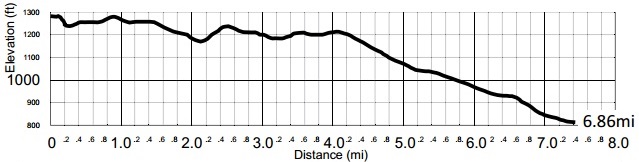
Run #1: Leg 6 

Distance: 6.86/ Difficulty: Hard/ Time: 5:12 pm/ Duration: 56:12/ Pace: 8:11/ Roadkills: 4
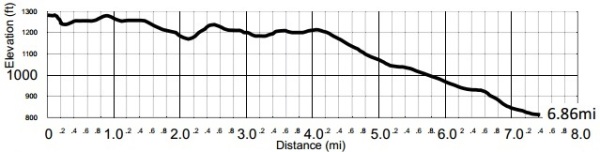
Leg6

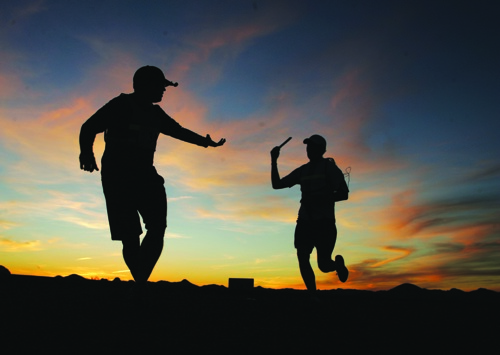
I kept telling myself I’d take it easy and pace myself because we had quite a day…and night…and another day…ahead of us. But that all went out the window the moment Jacquelyn slapped the relay bracelet on my wrist. Pure excitement and race adrenaline took over, and I knew I was in trouble the moment I looked down at my wrist a ways down he road and saw I was running at a 7:20-something pace.
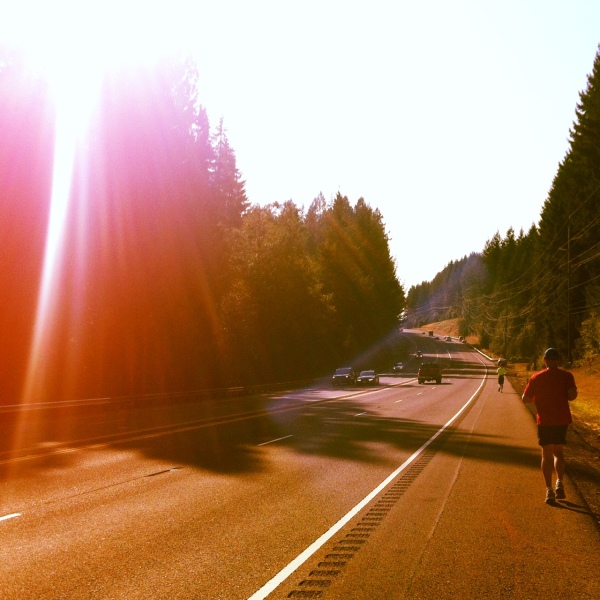
photo 1 (4)

Because it was hot, though, I forced myself to pump the breaks. Although I couldn’t resist speeding up every now and then to pass some people. It’s called a “roadkill,” and the runners on each team keep count throughout the race — partly in jest, partly as an ego boost and mostly to keep you motivated as the event stretches on into the 24+ hour mark. Having your van stop and cheer by the side of the road also helps with that, as you can see!

photo 2 (5)

After running along Highway 26 for some time, I entered the city of Sandy, Ore., and it was just a few more turns through town and onto some side streets before I slapped the bracelet on Mindy’s wrist and she officially kicked things off for Van 2. Here I am, following her out of the exchange area to meet up with the rest of the team and hop into Van 2, my home base for the rest of the race.

photo 1 (5)

Run #2: Leg 9

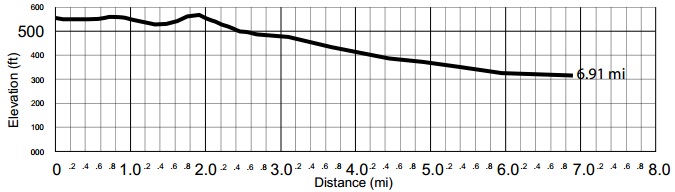
Distance: 6.91 mi/ Difficulty: Moderate/ Time: 7:41 pm/ Duration: 1:02:07/ Pace: 8:52/ Roadkills: 1

Leg9

I had a pretty quick turnaround (two legs) until I started my official Van 2 legs, so in between cheering our runners at exchanges, I used the time to refuel (PB&J and grape G2 hit the spot), recover (stretching and rolling are key before you get back into the van) and change into some dry clothes for my next run (the no. one morale booster on these overnight relays — trust me; you can’t underestimate the power of some clean underwear!).

photo 2 (4)

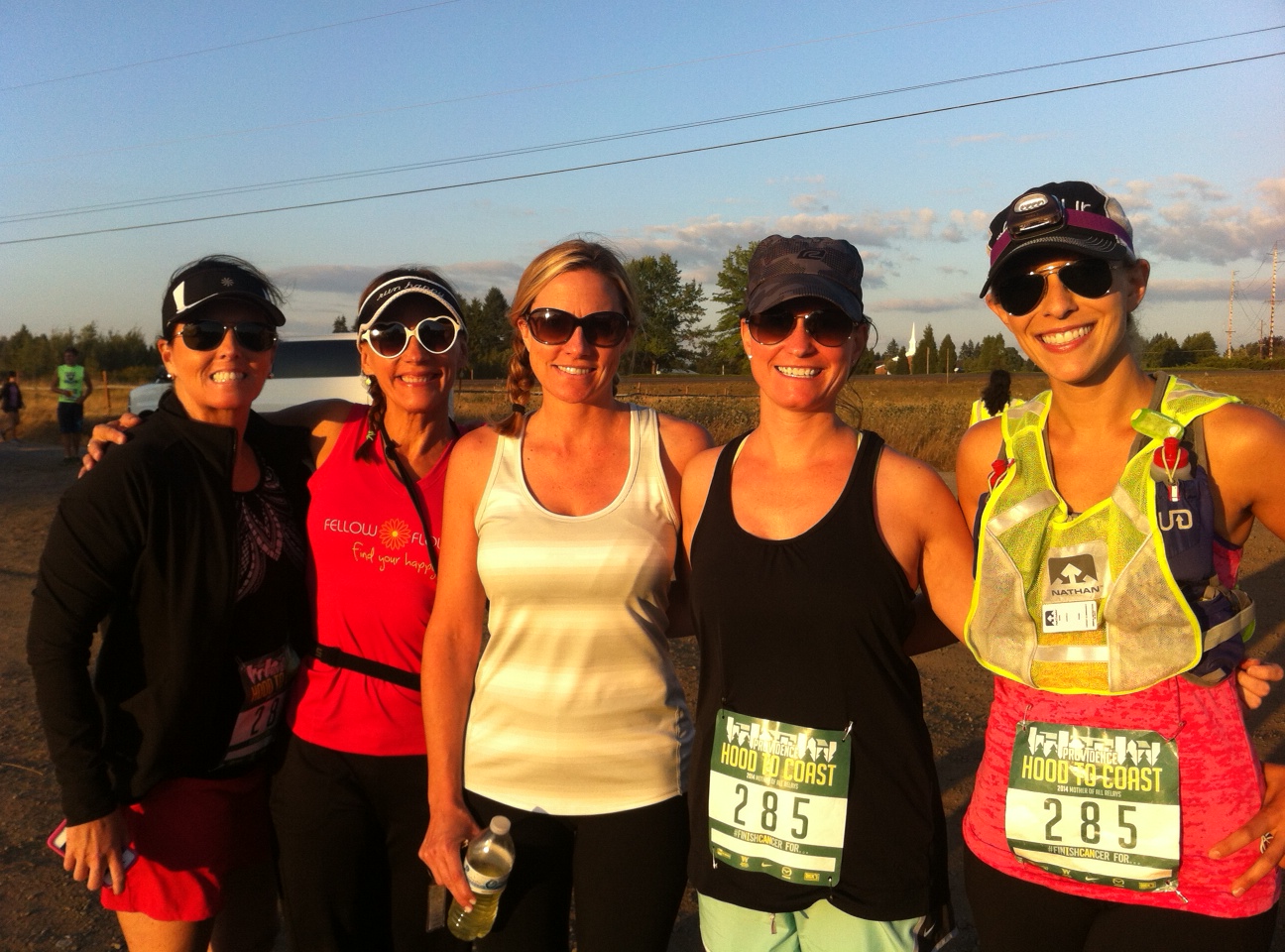
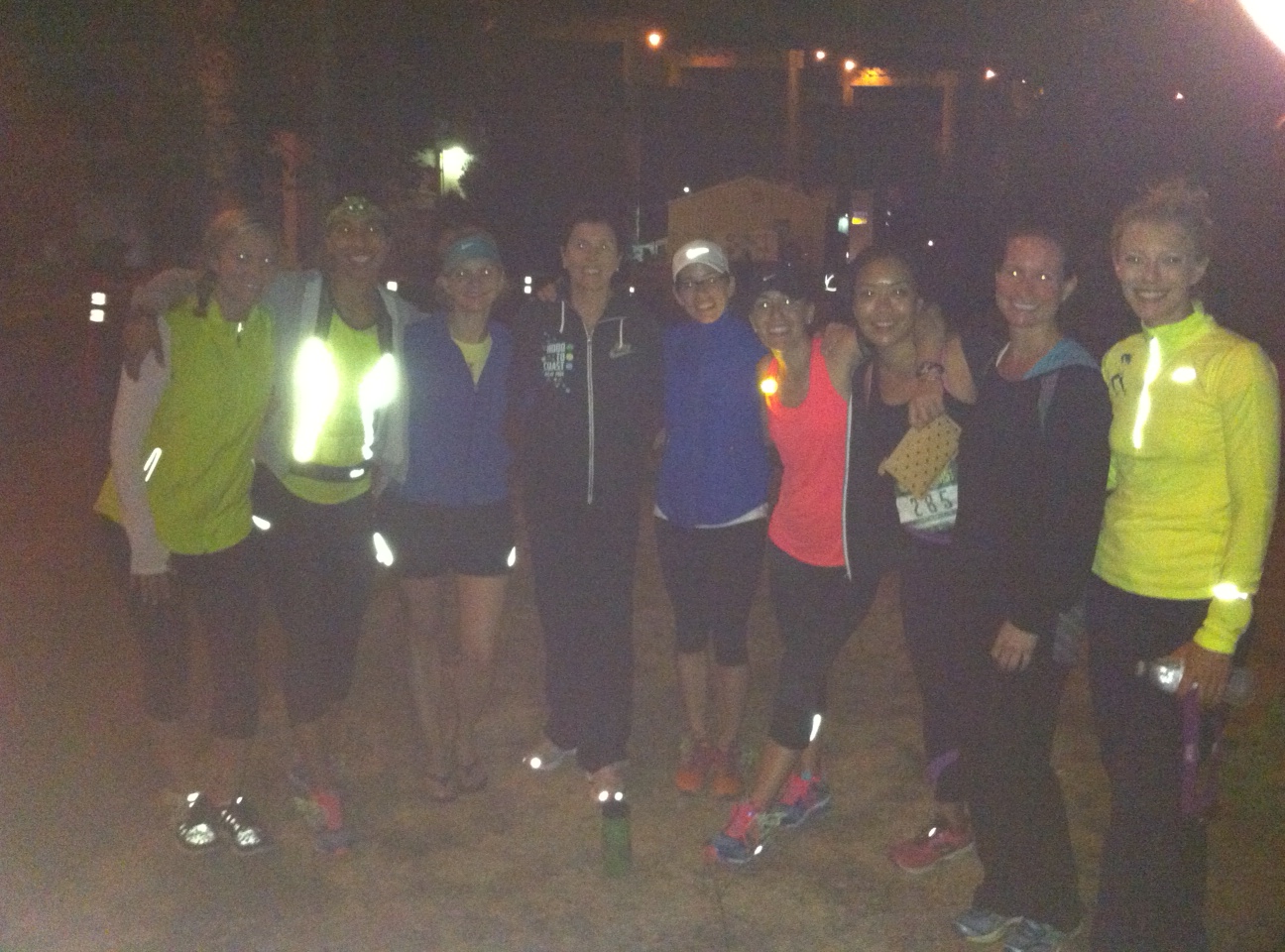
After gearing up in the obligatory headlamp, safety vest and blinking lights (front and back), I queued up with the ladies of Van 2 (above, from left: Mindy, Janelle, Katy and Paige) at the exchange point as we waited for Jen to come in.

photo 4 (3)

She rocked her leg under the heat of the sun, and I took off mine just as the sun was starting to weaken, thank goodness. This particular route took me down the Springwater Corridor, which was peaceful and not very crowded. In fact, I nabbed this shot while attempting to chase three fast men who passed me…and then I was on my own for quite some time as the sun began to set and I settled into the nearly seven-miler on some heavy-feeling legs.

photo 3 (4)

One of my biggest fears (besides the lack of sleep) for the relay was the night run, but thankfully I only had a few miles in the dark — plus, I think there’s a HUGE difference between “8pm-dark” and “2am-dark,” so I was happy it went by quickly. And my reward was to be able to change into another set of dry clothes and cheer on my van as we completed the final stretch into to the city of Portland.

photo 5 (3)

Janelle arrived to the second main exchange around 11 pm, so we handed the reins back to Van 1 and headed over to Jen’s aunt’s house in the city for a quick round of showers and a few minutes to lie down before we had to be off again for our early morning round of runs.

photo 2 (3)

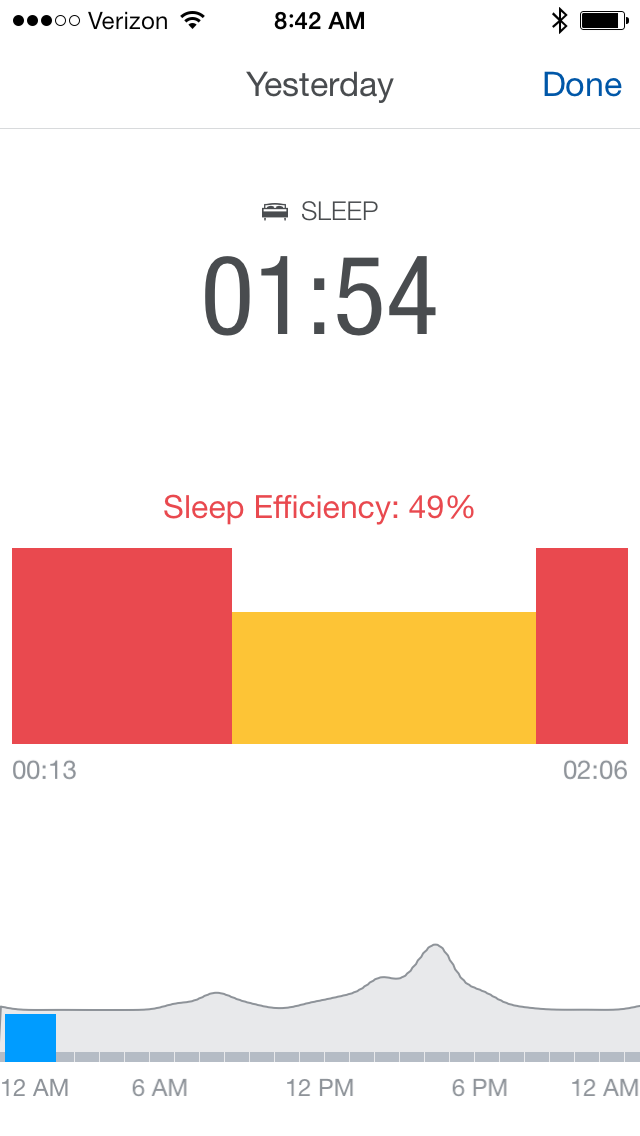
I can’t tell you how wonderful a shower felt, and even though I barely scratched the surface of what I’d call sleep — seriously, according to my Runtastic Orbit, I didn’t even enter REM — being able to stretch out and relax for a few minutes really did wonders for our morale.

photo

My stomach was really “off” at this point; though. Although I wasn’t super hungry after my run, I did force down another PB&J and Gatorade to keep the calories coming into my body. But, of course, just as my head hit the pillow, my stomach decided it was ravenous…so I downed a KIND bar in an attempt to keep it quiet until our 2:10 am alarm.

Run #3: Leg 21

Distance: 5.00 mi/ Difficulty: Moderate/ Time: 6:14 am/ Duration: 44:12/ Pace: 8:49/ Roadkills: 0

Leg21

I awoke at 2:06 am to the sound of my teammates getting dressed and ready to go, so I gathered my things (helpful hint: sleep in the clothing for your next run!) and we packed up the van and were on the road again by 2:30. We anticipated it’d take us about an hour to get to the next exchange, and we also wanted to allow a few extra minutes even though we projected them to finish their section at about 4 am the earliest.

photo 3 (3)

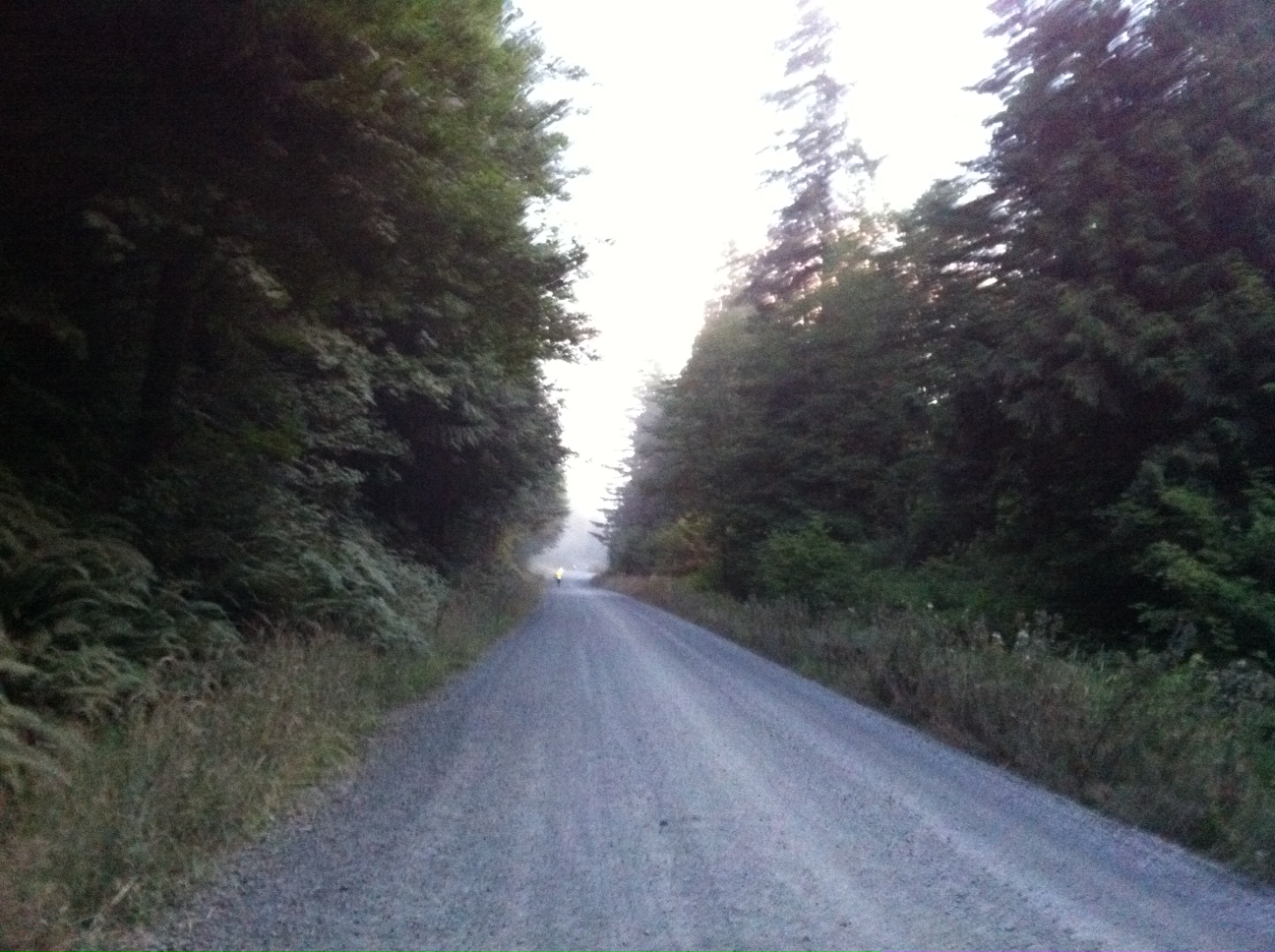
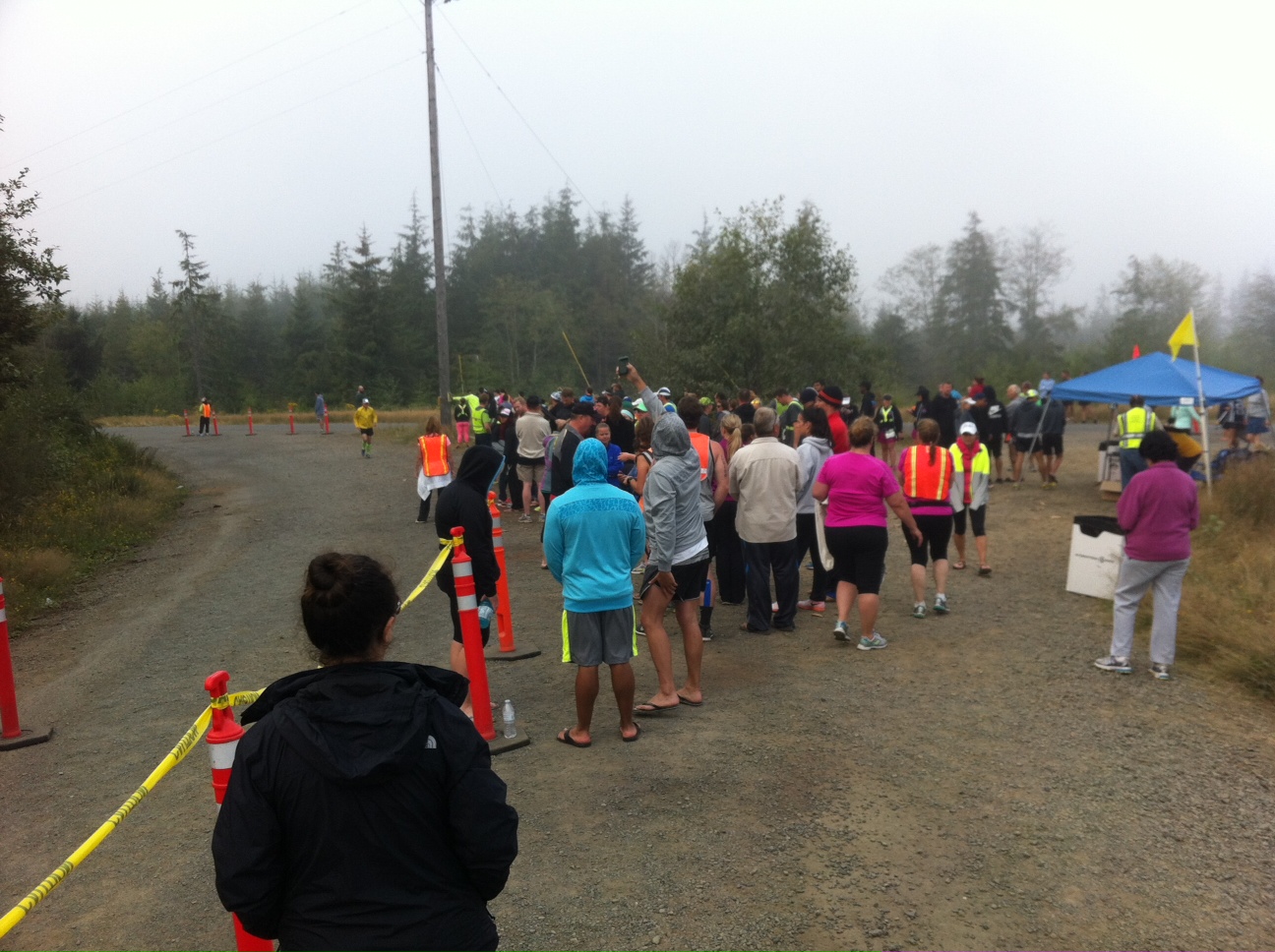
Van 1 was looking strong as we did the hand-off, and I had two runners to cheer on before lining up at my own exchange for my third run of the race, leg 21. Because it was on a pretty desolate (read: quiet and remote) stretch of gravel road, I was crossing my fingers that I’d have some sunlight to help guide me. And, thankfully, the first slivers of light came just as I lined up to get the bracelet from Jen again.
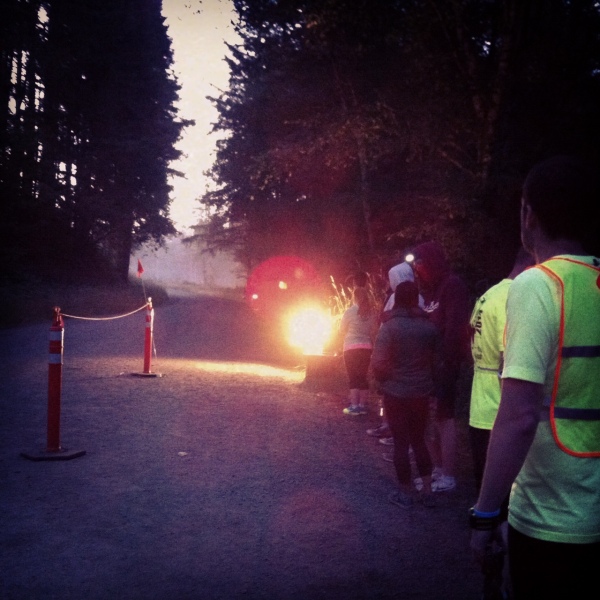
photo 5 (2)

That relief was soon followed by worry, though, as she came limp-running into the exchange, wincing with pain. She had been dealing previously with some foot pain and had landed wrong during her leg. In fact, she heard a pop in her foot and it hurt to put weight in it, so as Paige helped her back to the van, I ran off wondering what shape she’d be in when I returned to the group.
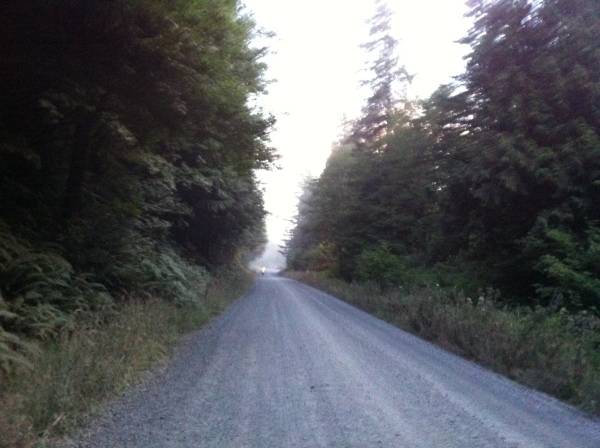
photo 4 (2)

My legs felt ok, although the footing was a little more technical here. Hood to Coast had warned us that this stretch was dusty, too, but I wasn’t quite prepared for the five-mile sandstorm that was leg 21. Every time a van drove by, it would stir up a huge cloud, so by the end I could feel a layer of grit between my teeth, on my lips and all over my body (TMI: I’m still blowing it out of my nose!). Yes, they very aptly named this position the “Eat My Dust” portion of the relay.
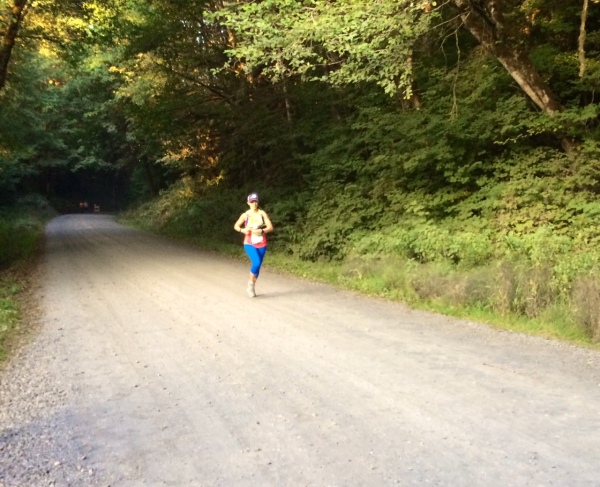
photo 4 (4)

My favorite part of this run, by far, was the very end. After eating dust (literally) and being left in the dust (by a bunch of the elites who whizzed by), my morale was taking a dip. But there was one guy I had my sights on in the last half mile; he had passed me about a mile before, but I managed to stay on his tail.

And as I rounded the final corner, one of the volunteers smiled at me as I thanked her and said, “Go! Roadkill him.” That was just what I needed to give it a final push to the exchange — unfortunately, I didn’t manage to pass him (I just needed another few yards!), but it did make me smile, which makes all the difference at this point in the race.

Run #4: Leg 33

Distance: 7.72 mi/ Difficulty: Hard/ Time: 3:35 pm/ Duration: 1:13:31/ Pace: 9:31/ Roadkills: 1

Leg33

The next few hours of the race were probably the toughest, mentally, because we not only had to battle some heinous traffic, but we also all lost cell reception and our walkie-talkies weren’t working, so we lost touch with the other van and our spirits started wavering.

Suddenly, our well-oiled machine was not running as efficiently, but we powered on — thank goodness for Janelle’s van games! — and finally made contact at leg 32, in which Mindy had to battle some pretty intense heat and hills.

photo 1 (2)

Paige hung out with me at the next exchange, and we watched in amazement as Mindy trucked up her final ascent toward us. Seeing her muster all of her effort for the good of the team inspired me to give it my all, as well, as I started my fourth and final leg of the race.

photo 4 (1)

From the outset, I knew this leg would be the toughest. It was the longest, it was in the heat of the day, it was rated as “hard,” it was my fourth leg and it was to be done on little sleep and whatever fuel my stomach would allow me to consume (although by this point I was feeling much better, thanks to some TUMS and tummy meds). I started off conservatively, but ended up with an early road kill, so I figured I’d use that as my strategy to get me though: Pass as many people as possible.

But as I came upon my second person, she happened to turn to me and say something — I forget exactly what, but it made me laugh, so we chatted for a few minutes as we huffed and puffed up our first hill. I was pacing around 9:30 and feeling like I was already pushing it, so I turned to her and asked if she wanted to keep each other company. Enter Allison, mother of two, Hood to Coast veteran, and my “relay angel” for the day.

As the hills rolled on in the open sun, we pushed each other and strategized quick walk breaks every few miles to hydrate and catch our breaths before setting off and what felt like a much faster clip than it actually was. But, slowly, we ticked off the miles and even had a few laughs in the process, which was a total lifesaver when you’re feeling depleted on all levels.

photo 3 (2)

We finished strong, I handed off my bracelet to Paige and then got in a quick stretch before jumping in the van for one final change of clothes and another round of PB&J and Gatorade as we headed out on our final few legs toward the finish.

The Finish

Paige handed off to Katy, who kicked it into high gear to knock out a quick seven miles before handing of to Janelle for the last leg. By this time, the afternoon heat was a distant memory; it had been replaced by cool clouds and mist as we neared the coast.

photo 1 (1)

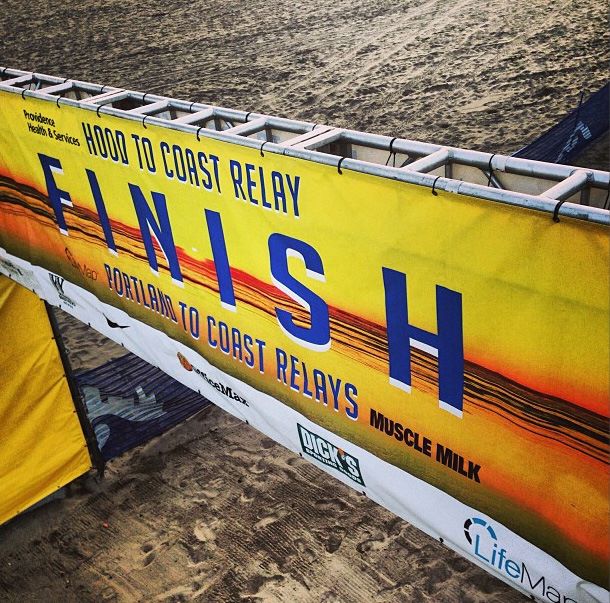
Once Janelle was off and running, the rest of us piled into the van to meet her and the rest of the team at the finish. And I’m not gonna lie — seeing this as we (finally!) drove into Seaside gave us all chills.

photo 2 (1)

By the time we parked and walked over, Janelle had technically finished and the timer had stopped for our team, but Hood to Coast has it organized so the whole team can do a ceremonial crossing of the finish line together. We reconvened in the team holding area, and Hubby snapped this shot of pure joy, relief, elation — and probably a bit of delirium — as we did what we set out to do nearly 30 hours earlier.
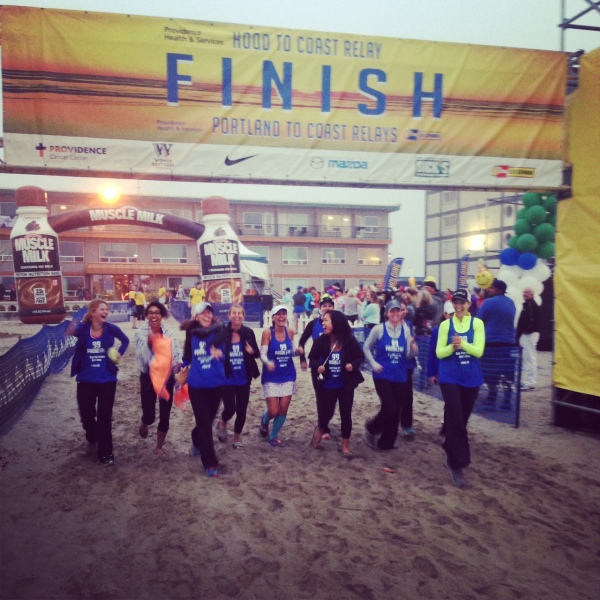
photo 4

The only thing left to do? Party on the beach, of course! We danced our way into the crowd and celebrated with the other finishers who were treated to cold beer, live bands, roaring bonfires and hot food, all topped off with a fireworks display later in the evening.

photo 3 (1)

As our friend Sierra, a Hood to Coast veteran, said to me before the race, “Sure no sleep sucks. But it’s way fun — it’s the worst/best experience, all rolled into one. That’s why I keep doing it every year.”
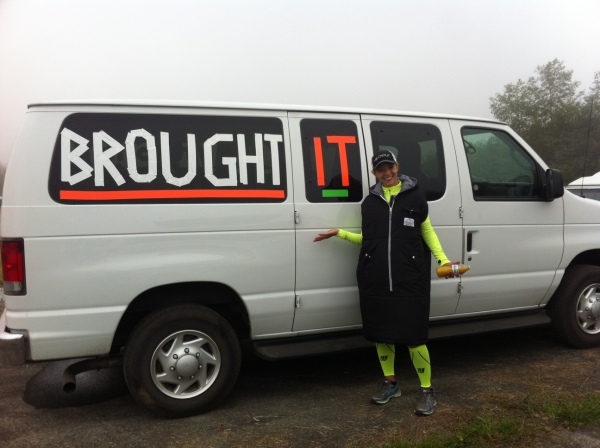
photo 5 (1)

We may have started the race as 10 strangers, but despite sharing claustrophobic corners, operating on minimal sleep and pushing our minds and bodies to the limit, we emerged as a team of 11 friends.

So you can probably guess where I’ll be next year, as well 🙂

HUGE thanks and shout-out to all of my teammates: It was an honor to run with you, and I’m so proud of everyone for pulling together for a strong race. It’s been broughten, and I can’t wait ’til we do it again!

Hood to Coast prep: Packing for an overnight relay

photo (2)

Let the countdown begin! Hood to Coast is coming up this weekend, so I made my list, checked it twice and started prepping early to avoid forgetting any last-minute items.

Because I’m an overnight relay newbie, my due diligence consisted of cross-checking a few different lists to see what people recommend. Here’s a peek at what I’m packing:

  1. Coeur Sports hat for sun protection (day) and warmth (night)
  2. Garmin Forerunner 910XT for tracking mileage during my legs
  3. TriSlide for keeping chafage at bay
  4. Flip flops for letting my feet breathe between legs
  5. A comfy outfit for down-time
  6. CEP compression calf sleeves if I decide I need support
  7. Four different running outfits (we’re down a runner, so I’m doing four legs)
  8. Petzl headlamp for nighttime running
  9. Sunglasses to shield eyes during the day
  10. Bonk Breaker bars to stay fueled
  11. Lacrosse ball to massage out any tight spots
  12. A towel for mopping sweat or drying off post-shower
  13. Lululemon waterproof hoodie, just in case it rains
  14. Bag to transport all my gear
  15. Travel pillow so I can try to catch a few winks
  16. Osmo Active Hydration for Women
  17. S! Caps for electrolytes and salt
  18. Antacid tablets to ward off tummy troubles
  19. Nuun for keeping electrolyte levels in check
  20. Deodorant to help keep me (and the van) from stinking
  21. Sunscreen for during my daytime legs
  22. Backpack to carry additional items
  23. Two pairs of running shoes to swap every leg
  24. Sigvaris performance socks for recovery between legs
  25. Napsack jacket/sleeping bag combo for staying warm while dozing

Not pictured:

  • Waterproof tarp for keeping my sleeping bag dry
  • Knuckle Lights for nighttime running
  • Socks & underwear — five pairs, one for each leg plus a spare set
  • Shower Pill body wipes to help clean up
  • Colgate Wisps disposable toothbrushes to freshen up
  • Misc food to stay fueled — PB&J sandwiches, potato chips, etc.
  • Misc. meds/first aid — Advil, pepto, chapstick, ear plugs, etc.
  • Cell phone and chargers to stay in touch
  • Gallon-sized Ziploc bags to sort outfits and gear

Let’s hope I’m not missing anything! What are your must-have items for overnight relays?

No sleep ’til Seaside…or Calistoga

ragnarrelay

Every runner has a bucket list, whether it’s to cover a certain distance, reach a specific time goal or sample a new kind of event to keep yourself feeling challenged. And while the first two are usually moving targets (read: works-in-progress), the third is actually something you can feel the satisfaction of checking off the list.

That’s precisely why, when I was asked to join two 24-hour relays — one in Oregon and one in California — this summer/fall, I jumped at the chance for both.

Now, my idea of a fun weekend isn’t exactly jumping into a van with strangers, then depriving ourselves of sleep and running without showering three times over so we can cover 200 miles together… But you know what? I’ve heard that it’s a bonding experience, a chance to make new friends and create some pretty cool memories, so it’s something I’ve always wanted to try.

And I guess now I’ll just have twice the tales to tell afterward!

What is Hood to Coast?

The “Mother of all Relays,” Hood to Coast is one of the longest and largest relays in the world with 12,600 runners (1,050 teams of 12) tackling a 200-mile course that runs from Timberline Lodge on the slopes of Mount Hood, the tallest peak in Oregon, through the Portland metropolitan area, and over the Oregon Coast Range to the beach town of Seaside on the Oregon coast.

course-map

Hood to Coast began in 1982 with eight teams and has filled the team cap on the opening day of registration for the last 16 years straight.

There’s even a whole documentary dedicated to the event, the Hood to Coast movie, which covers four unlikely teams on their epic journey to conquer the race. I watched it a few years back, and was instantly hooked; check out the trailer here.

What is Ragnar? 

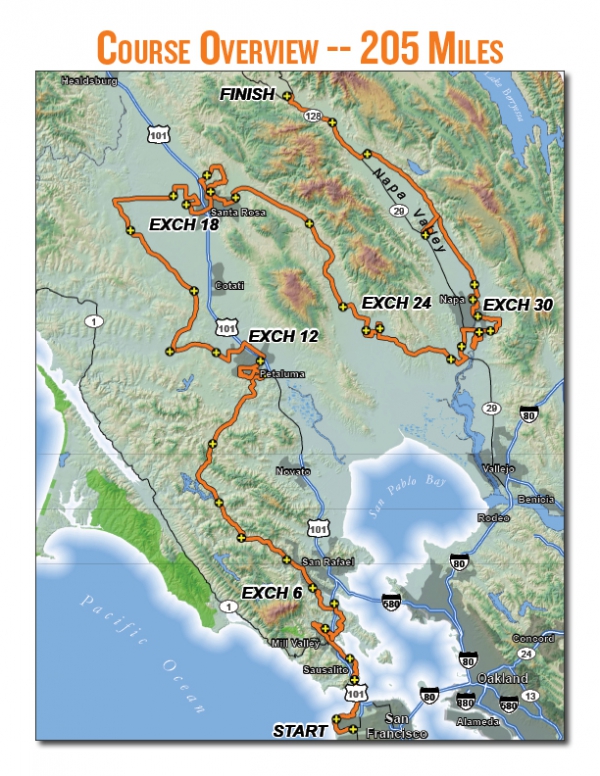
As the Ragnar Relay Series’ official “run now, wine later” race, Ragnar Relay Napa Valley is set in — you guessed it — Northern California’s wine region during harvest season. Teams start from San Francisco and race across the Golden Gate Bridge, then experience the rolling hills and farmland of Petaluma before heading toward the Valley of the Moon.

nevgg5xrmwbmtoao9ad1

Just as with Hood to Coast, teams of 12 are split evenly into two vans. Only one runner hits the road at a time, and each participant runs three times, with each leg ranging between three and eight miles and varying in difficulty. As they say, “Some call it a slumber party without sleep, pillows or deodorant.”

Yep. It’ll be run, drive, eat, sleep (?), repeat for 200+ miles as we trek through my old stomping grounds. Check out the promo video for the event here.

Two 24-hour relays in two months…are you crazy?!

The short answer: Quite possibly. But you already knew that, right?

The long(er) answer: I’d be lying if I said I wasn’t a little anxious about taking the plunge on not one, but two. I mean, I like my sleep, and if given the choice I’d prefer not to stink up a van with five others as we hang out in our filth for a whole day.

But…I’m also eager to switch up my racing routine, which will keep me motivated during this marathon training cycle. And if I’m looking on the bright side of not sleeping for 24+ hours (if there is one), these races will not only allow me to get more experience running on tired legs, but I can also cross two big items off my bucket list.

Although I’ll likely need a nice, long nap at the end.

Hood to Coast is August 22-23, and Ragnar Napa Valley is September 19-20. Stay tuned for race recaps with all the details as I cover almost 400 miles with my respective teams! 

Iron(wo)man Meghan Manion on recovery, racing and relationships

MeghanManion2

Meghan Manion will tell you that her Ironman finish last fall is a testament to what an “average” person can do with with proper training and coaching, but I happen to think it’s more about someone who lives her life putting a little (or a lot) “extra” in the ordinary.

And, clearly, I wasn’t the only one inspired by my interview with her about that 140.6 race experience; it’s been one of the most popular posts, most likely because her positive attitude and outlook are simply infectious.

So I thought it’d be fun to sit down again with Meghan to check in on what she’s been up to since swim-bike-running her way around the Sunshine State.

KineticFix: Thinking back to those first few days (and weeks) post-race, can you walk us through the recovery process after your Ironman?

Meghan Manion: When I woke up the morning after my Ironman, I remember my eyes welling up with tears, just realizing that I had really done it. It all kind of sunk in at that moment.

My next thought was that I was hesitant to move for fear of intense pain! I moved slowly, and quickly realized that I was feeling just fine. No chafing, no soreness, no joint pain at all. I walked normally to the bathroom to brush my teeth. I did not expect that to be the way my morning went!

I’ll attribute the lack of chafing to four generous smearings of Chamois Butt’r throughout the day. The lack of pain….I’m still pondering that. I think the most likely answer is that Team Z just prepared me THAT well for the Ironman.

Photo courtesy of Gabrielle Petersen

Photo courtesy of Gabrielle Petersen

I definitely continued training after the race in all three sports, but at a much lower intensity. My motivation did start to fail as the winter arrived; however, I had signed up for the Goofy Challenge (Saturday half marathon, followed by Sunday full marathon) in Disney World two months after the Ironman to give me something else to work for through the winter.

That helped a little bit, but I definitely could have trained better for the race! In March, I ran the Shamrock Half Marathon in Virginia Beach, feeling not very prepared, but actually ended up with a PR that day!

Ironman does some crazy things to your body; it is incredible how much stronger I feel, even months later.

Photo courtesy of Felipe Wells

Photo courtesy of Felipe Wells

KF: I saw that you just completed another Half Ironman recently, too! What are your other race aspirations this year – triathlon, running, or otherwise?

MM: Yes! I did Ironman Raleigh 70.3 in June. I had raced Raleigh last year as a member of a relay team (I did the bike leg). After that race, I knew that I wanted to do the entire thing this year.

The swim there is fantastic. I had a rough day, including a complete tire blow-out about two miles from the bike finish! I carried my bike the last two miles that day. These things happen!

I’ll also be racing a Rev 3 Williamsburg on June 15. I’m doing the Olympic distance there, and I’m really excited to head back to Williamsburg. I raced the 70.3 last year, and it was my first half distance race.

Even more exciting, I met my fiancé Nate at that race last year, and we are both looking forward to reliving that first meeting. And after Williamsburg, Nate will be focusing on training for his first Ironman in Chattanooga in September, so I will most likely follow him around to whatever races he finds useful in his training.

Photo courtesy of Matt Koirtyohann

Photo courtesy of Matt Koirtyohann

KF: Speaking of…you two just got engaged (congrats!).  Any tips you can share for successfully balancing a relationship with training, racing and other commitments, since he’s a fellow triathlete?

MM: Nate and I were engaged on May 1, and we are planning our wedding on the beach in Florida in November! What an exciting year it has been.

We both love having triathlon as a shared interest, and we will always have it as the thing that brought us together. We aren’t able to train together much, because I cannot keep up with Mr. Speedy Pants. But every once in a while we will run together, or go on a casual ride.

We definitely enjoy racing together, or just being there for each other’s races. I think we motivate each other to get out and get the workouts in, too!

Photo courtesy of Stacie Edington

Photo courtesy of Stacie Edington

Thanks, Meghan, for taking the time to chat. And here’s wishing you just as much success and happiness in the second half of your year! 

Checking in with ultra-momma Sarah Evans

SE1

I first spoke with Sarah Evans earlier this year after seeing that she totally smashed her marathon PR (and qualified for Boston) a mere four months after having a baby.

Inspired and intrigued, I asked if I could pick her brain, and my interview with her continues to be one of the most popular KineticFix posts to this day.

Six-plus months have passed since then, and we have yet to coordinate trail running schedules (one day!), although we do connect every so often over social media to root each other on.

So I figured it was about time for us to catch up on life, running and our shared love for getting lost on the trails…

KineticFix: How has training been going since we last chatted?

Sarah Evans: Training has been fun and one of the things that has remained consistent and steady in my life.

Since the first of the year I’ve ran several races, including a PR (personal record) at the Kaiser Half Marathon in February (1:33:40), a 35k on my (34th!) birthday in March and a fun 5k (tried to break 20 min; not quite there yet!) with my mom in April, culminating in my first Ultra (a 50k) this month!

I’ve continued running, cross training with cycling and have been including a lot more yoga and HIIT (high intensity interval training), boot camp-type workouts to my regimen instead of the boring, slow strength training that I did in the past.

I also decided to resign from my job as a medical device rep at the first of the year to stay home and raise my daughter for the time being. Since then I’ve studied for and passed/received my personal training certification through the National Academy of Sports Medicine, and I’m also going to take classes to become a certified run coach next month through Road Runners Club of America.

So I’m really exploring other opportunities in the sport that I love while still being able to stay close to home with my baby girl.

SE3

KF: Wow, you’ve sure been busy! So can you share your latest tips for maintaining a workout schedule with a increasingly-active baby girl?

SE: With having an ever-changing and super-active baby, running has continued to remain my outlet and my ‘me’ time to get out in the early mornings before the day gets hectic (or exhausting!).

I still maintain my Sunday mornings with my friends on the trails; those are my 3-4 hours that are an unspoken religion to me to get out solo, so my husband is very supportive of that routine. But I’m also finding more time to run with my daughter in the BOB stroller, since she’s becoming much more aware, active and awake for longer periods; it’s a time we can spend together and I can start sharing my love of running with her!

During a typical weekday, I’m awake around 5:30/6am to get in a run or a spin on my bike before my daughter wakes up (at 7am). Twice a week I get until 7:30am to go on a longer run if I want, and my husband gets up with our daughter. It gives me some extra ‘me’ time and my husband gets some of those precious morning minutes that are so sweet with a baby. It’s a great compromise and schedule that we have worked out!

On those mornings, I know I have a chunk of my training done for the day, and then me and my daughter can enjoy the morning together taking a walk, playing in the yard or at the park. Then I will add on small/additional ‘workouts’ throughout the day.

SE7

That’s what I think is important for many busy women and moms to realize: You don’t need a full hour or two a day to work out. Just add it in little by little throughout your day! I keep resistance bands, my yoga mat, foam rollers, some small hand weights, ankle weights and an exercise ball out in our living room all the time (hey it eventually blends in with all the toys!).

While my daughter is laughing at her reflection in front of the mirror, practicing crawling or working on developmental skills with some toys, I can get in 10 minutes of core work, leg and butt exercises, lunges (during which I will hold her for extra weight!), you name it. I also have 10-20 minute ‘bootcamp’ or total-body workouts I’ll do, where each exercise is done for one minute.

It’s easy to stop those workouts, if needed, in the middle and pick them up later in the day. And when my daughter takes a nap, I’ll fit in a 20-minute yoga session in between dishes, laundry, taking a shower and preparing her meals. It is truly the small things you do throughout the day that add up.

SE8

Another way I also stay active with a 10-month old baby is by walking (or many times run!) when I do errands. We jog the mile to the grocery store or run/walk the 1.25 miles to the park, all instead of driving the car. We spend a lot of time outside, so that automatically lends itself to being active, in fresh air and staying fit.

And how I maintain my workout and training schedule is truly planning my weeks in advance. This works especially well when you have a training plan for a race mapped out, then you already know what  will be running weeks/months in advance!

I will put the entire plan into my calendar, marking down what mileage or workout I need to do and on what days. Then when I look at my week on Sunday evening, I already know whether I need to carve out time early in the morning, during a ‘lunch-break’ (for me that may be nap-time) or sometimes later in the evening.

This helps because just as I’ll schedule a lunch, a meeting or an appointment with someone, I also schedule my run (or any workout, spin, strength, core work, etc.) It’s  important to make that meeting with yourself, and this way it’s really difficult for me to miss a run or cross training workout because it’s pre-scheduled into my day!

SE2

KF: All great ideas! Speaking of getting active in the great outdoors, you’ve entered ultra territory, too. Why the step up to longer distances? 

SE: I am competitive, especially with myself, and I’m always looking for the next challenge. I found myself wanting another hurdle to overcome (as if having a baby or my come-back from breaking my foot two years ago wasn’t enough!).

I had recently broken my personal records for the marathon and half-marathon within four and six months, respectively, post-baby — so I thought an Ultra (starting off with a 50K) would be the natural next step. Pair that with my absolute LOVE of the trails, and it seemed like a no-brainer.

There’s a big difference going from road runs with speed to the long, slow pacing of a trail ‘ultra’ distance. It taps into a different part of yourself and your spirit, and it seems to exceed a certain fitness level and delves into mental strength…but I like that new challenge!

I’m hoping that this isn’t my last Ultra. The community that surrounds the trails and ultra-running is very unique, open and friendly, and I love the feeling I get from getting dirty, sometimes lost (I think you can relate!) and being out in nature.

SE4

KF: Oh, yes! I like to say that if there’s a way to get lost, I’ll find it — especially on the trails. What’s next on your list, and can you share your game plan for getting there?

SE: I’m looking forward to kicking it up a notch and getting back into speed work and intervals when I start training for the Chicago Marathon, which I will be running along with my mom for her first marathon! This was also my first marathon in 2008, so I am looking for another personal record and Boston Qualifying time.

I’ll create my own training plan; I enjoy researching and finding new workouts to add to my runs and being my own coach. There’s not the pressure of answering to a coach, but I’m also my own worst critic, so I do a pretty good job at keeping myself in check!

I am also working out the details of registering for the 2015 Boston Marathon (with my last marathon qualifying time) and then trying to get into the Boston to Big Sur Challenge next April where you run back-to-back marathons, six days apart, on opposite coasts of the country. And I’ve always been a big fan of The North Face Endurance Challenge, so that could possibly be another 50k (or dare I say 50 mile!?) opportunity.

SE5

On the exploring and fun side, I have a deep desire to also run Rim to Rim (and maybe Rim!) in the Grand Canyon, so I may be putting together a group for late next Spring.

All of these races really are just a celebration for the running that I do on a daily, weekly basis. I don’t run just to race, the races just seem like a great opportunity to add on challenges to my running, which I still do purely for the freedom, joy and love of it.

I am very excited to share this passion with my daughter and possibly run a race with her one day, as I am doing with MY mom this year! I am also very lucky to be able to spend time at home with my daughter in her first year of life and to start to use my personal training and coaching certifications for my own knowledge and to share with my friends and family who seem to enjoy picking my brain for advice and input in their own active lives.

Now, as I look at my plans for the next year, there seems to be a lot going on. But in the end, it’s done for the fun of it all, to spend time on the trails with my running crew and to celebrate our training with races…not to mention coming home to my husband and daughter and going out for Mexican!

It’s the easy, simple things sometimes 🙂

SE6

Special thanks, Sarah, for taking the time to chat. Can’t wait to follow along on your adventures over the next year — and hopefully hit those trails with you soon!

Recipe: Raspberry Mint Rice Balls

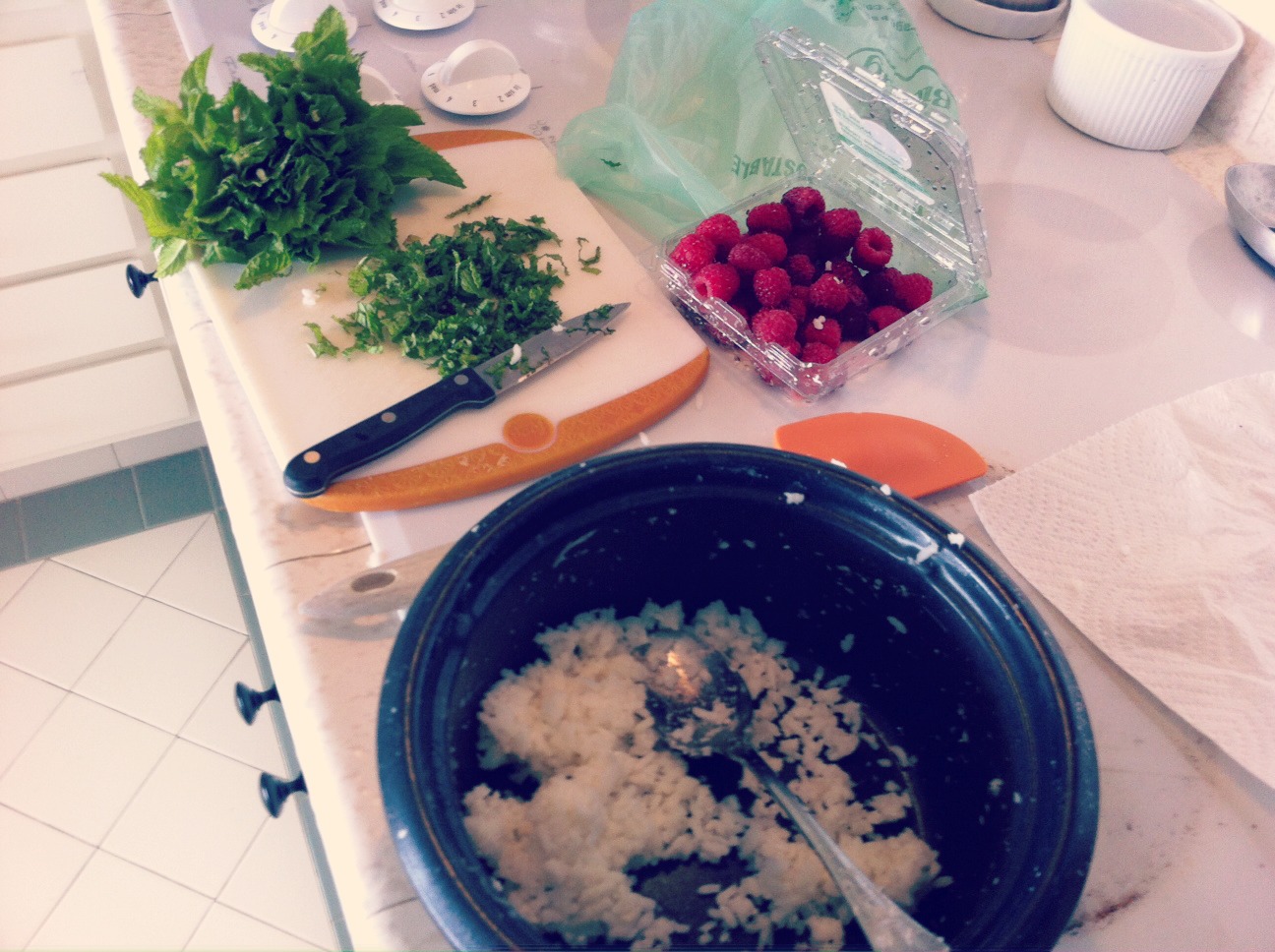
RiceBalls1

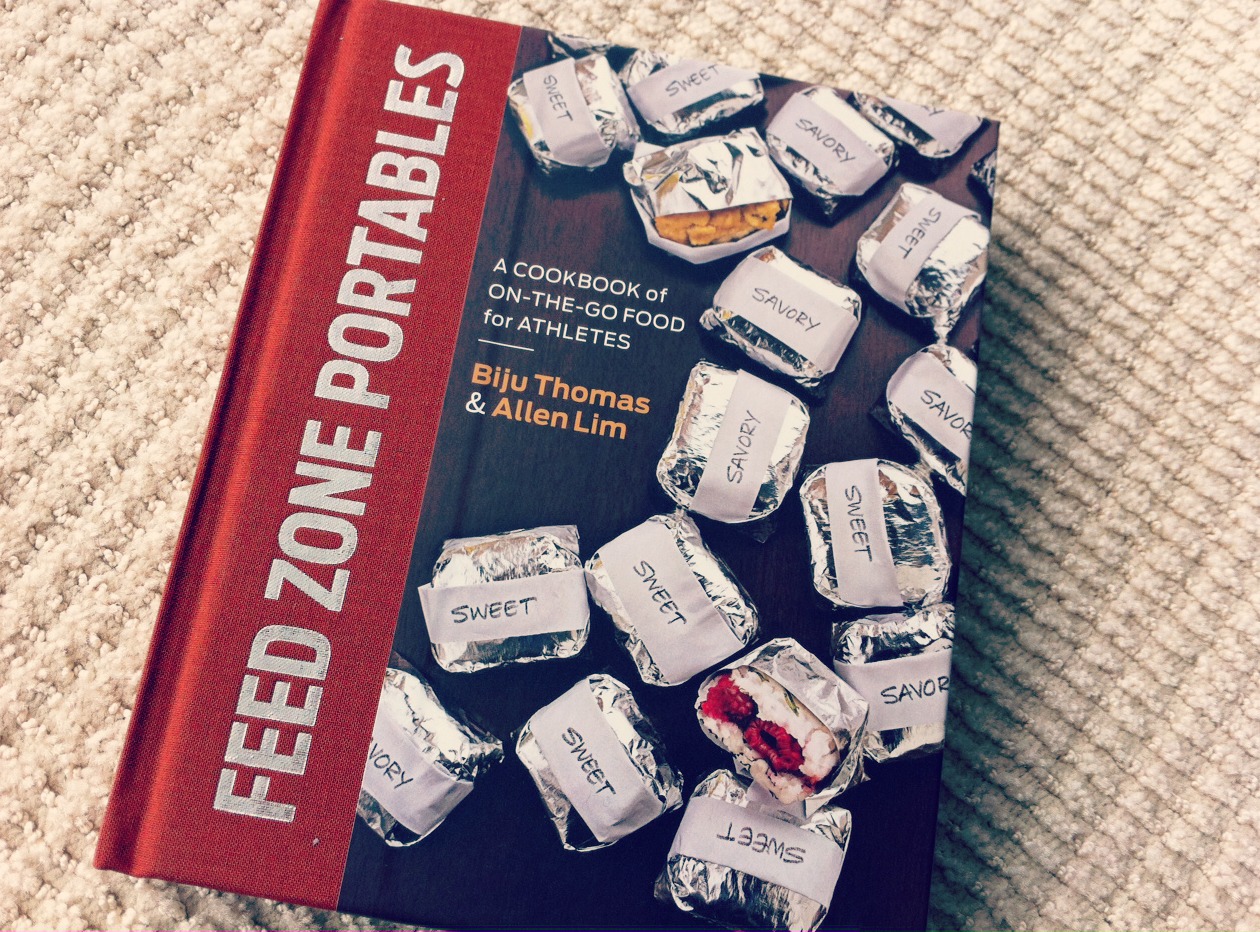
Allow me to introduce you to my new favorite training companion: the Feed Zone Portables cookbook. If you’re weary of processed bars and gels and the same old pasta, there’s a good chance it’ll soon become your BFF (that’s Best Fueling Friend), too.

After my ultra pacer Jamie had success with the rice cakes during her Born to Run 100-miler, I jumped aboard the bandwagon and tweaked one of the recipes for my own race. It worked perfectly — not only is the rice-based treat quickly-digestible, but its mild flavor is also easy on a tender mid-event tummy.

Raspberry Mint Rice Balls (adapted from Feed Zone Portables)

Ingredients:

  • 1 cup uncooked white rice
  • 2 1/4 cups water
  • 1/4 cup brown rice syrup
  • 1-2 tablespoons lemon juice (to taste)
  • 1 pint fresh raspberries
  • 2 tablespoons fresh mint leaves, minced
  • 1/4 cup finely-shredded unsweetened coconut
  • Aluminum foil, cut into small squares
  • Olive oil spray

Directions:

  1. Combine rice, water and a dash of salt in a rice cooker and let cook.
  2. When rice is finished cooking, transfer it to a large bowl and add brown rice syrup, lemon juice and coconut. Mix thoroughly.
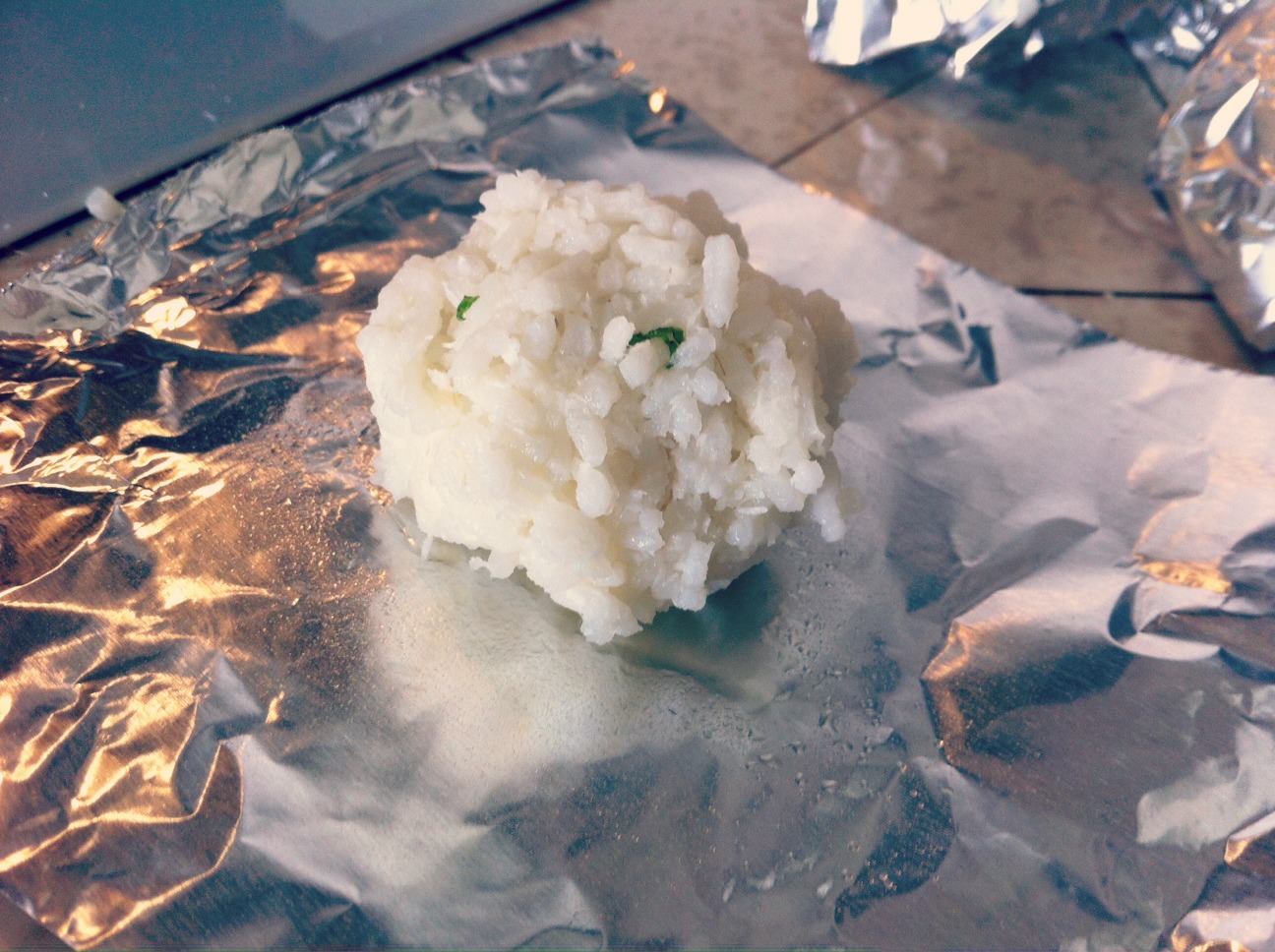
  3. Coat hands in olive oil, and place a spoonful of rice in the palm of one hand. Place a raspberry and a sprinkle of mint on top of rice, and then place another spoonful of rice over that (to encase raspberry and mint in rice). Roll gently between palms to form a ball.
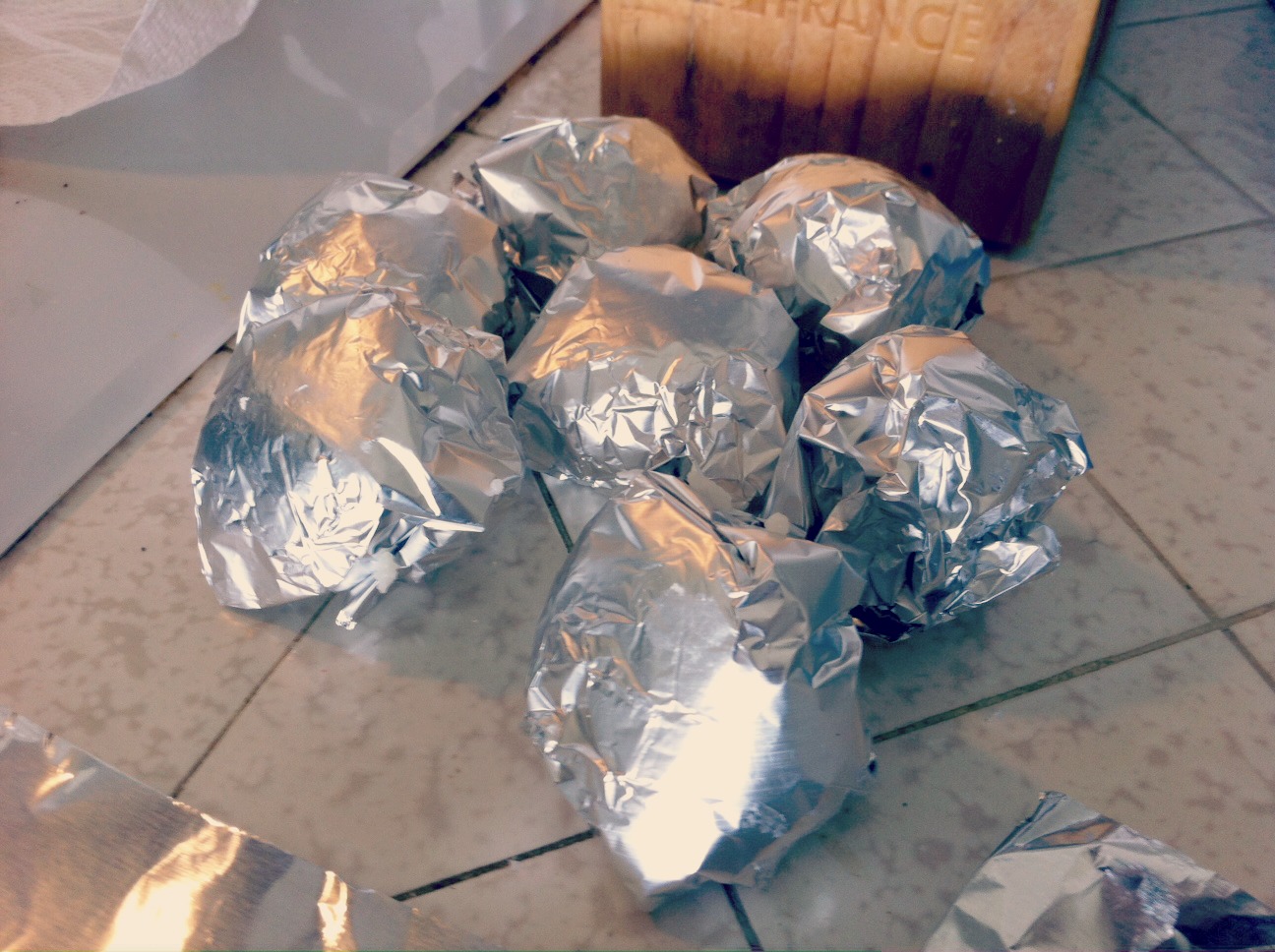
  4. Place ball on foil wrapper (also sprayed with olive oil) and seal tightly. When finished forming and wrapping balls, store them in the refrigerator.

A few tips: First, make sure you prep all the ingredients ahead of time because forming the balls can get messy!

Although the book calls for flat “squares” or “cakes,” Jamie and I found that the balls are quicker to make. Plus, they tend to get squished around in your bento box or hydration pack anyway.

RiceBalls2

Second, I did experience some trouble with the foil wrapper disintegrating during my trail race, which I attribute to the acidity of the lemon juice.

Next time, I may just try leaving it out, or I’ll look for an alternative wrapper (wax?) if I want to keep that nice citrus ‘bite.’

RiceBalls3

The balls held up great, though, despite getting jostled around over the course of six-plus hours in my hydration pack on a hot day.

And the fresh fruity/minty flavor was a welcome change from the heavy nut butters I’m usually consuming, so I’ll definitely be relying on them again.

RiceBalls4

Finally, I try to make them the day or evening before my race. Sure, it’s a little bit of last-minute race prep work, but it ensures that the fruit is at its freshest and that the rice stays nice and sticky for when you want to pop one (or 10) during your race. Bon appétit!

What’s your go-to fuel for training and racing? 

Detroit Marathon: My “renegade” training plan

marathon-03

My hometown of Detroit has a reputation for being scrappy, gritty and a little rough around the edges. But I’ll let you in on a little secret: We love it that way.

You see, as my all-time favorite Superbowl commercial reminded us, “It’s the hottest fires that make the hardest steel.” Adversity doesn’t scare Detroiters; it only makes us stronger.

So I chose this race, in particular, to celebrate the city and everything that makes it unique and exciting — from crossing international borders twice and running an “underwater mile” to the scenery on Belle Isle and views of the city from Corktown to Indian Village, just to name a few.

And what better way to prepare than to use a training plan developed out of Hansons Running Shop, a locally-owned, nationally-recognized running institution (and founder of the Hansons-Brooks Distance Project)?

Sure, it may be a bit unconventional. But in a city that’s anything but conventional, I wouldn’t have it any other way.

What It Is

Promising a “PR-busting performance,” the Hansons Marathon Method focuses on lower-mileage long runs that emphasize quality over quantity.

In layman’s terms? While the focal point of other plans is one weekly looong run (up to 20-22 miles), the Hansons philosophy is that no one workout is more important than another.

That translates into six days a week of running — double that of my previous plan — with an equal focus on endurance, speed and strength.

Why I Like It

It’s controversial — specifically the absence of 20-mile (or more) long runs — but according to the reviews, it works.

Credit a little something called the “residual training effect,” which banks on the cumulative impact of workouts. So, for example, a long run that’s “only” 16 miles now includes three workouts’ worth of fatigue in the legs.

Rather than preparing runners to tackle the first 16 miles of a marathon, this plan is geared toward being able to hang tough in those critical last 16 miles.

Will It Work?

We shall see! I’d be lying, though, if I said I wasn’t at least a little nervous about being able to get to the start line uninjured, especially with all the non-stop running. I can’t remember the last time I ran six days a week.

But I’ve got a decent level of overall fitness built, and I think the Hansons Method will help me get to that next level of physical — and mental — stamina.

Plus, there’s another factor in this race that’ll make things even more interesting: heart. I’m so excited to run in, with and for the city I’m proud to call home.

Get ready, Detroit, I’m comin’ for ya.

Training officially starts tomorrow, so check back for my weekly recaps!

Oops, I did it again…

DTW Marathon Registration2

What happens when you reunite with a former-high-school-running-teammate-slash-retired-pro-triathlete who mentions she’s making her competitive marathon debut in our hometown of Detroit?

Not only a great excuse to get back there and cheer her on (from WAY behind…sorry, Terra), but also some inspiration to give that elusive sub-four marathon another go.

But this time I’m setting myself up for success: The race is on my home turf with a more forgiving course, plus I’m using a brand-spanking-new training program that’s a little bit “renegade,” to say the least. But perfectly fitting, considering the venue.

So stay tuned for my Motor City marathon plan…training starts next week!

What goal race(s) are you working toward this season? 

The art (and science) of fueling

jonbottle

If you’re active, there’s a good chance that the topic of food is never far from your mind. But when I’m not dreaming of what I’m going to eat as my post-workout/race treat, I’m thinking of what to consume during the event – i.e. fueling up to go the distance.

Most of us have a general idea of the science here: To prioritize maximum athletic performance, you want to ensure that you’re using your glycogen premium fuel tank as much as possible. But that’s where the art comes in, especially because no two athletes will have the exact same fueling requirements at any given time.

Too much fuel early, and your body will convert the excess carbs into fat. And too little fuel too late results in early fatigue and diminished performance. But how do you know what you need, other than going by feel or estimating expenditure?

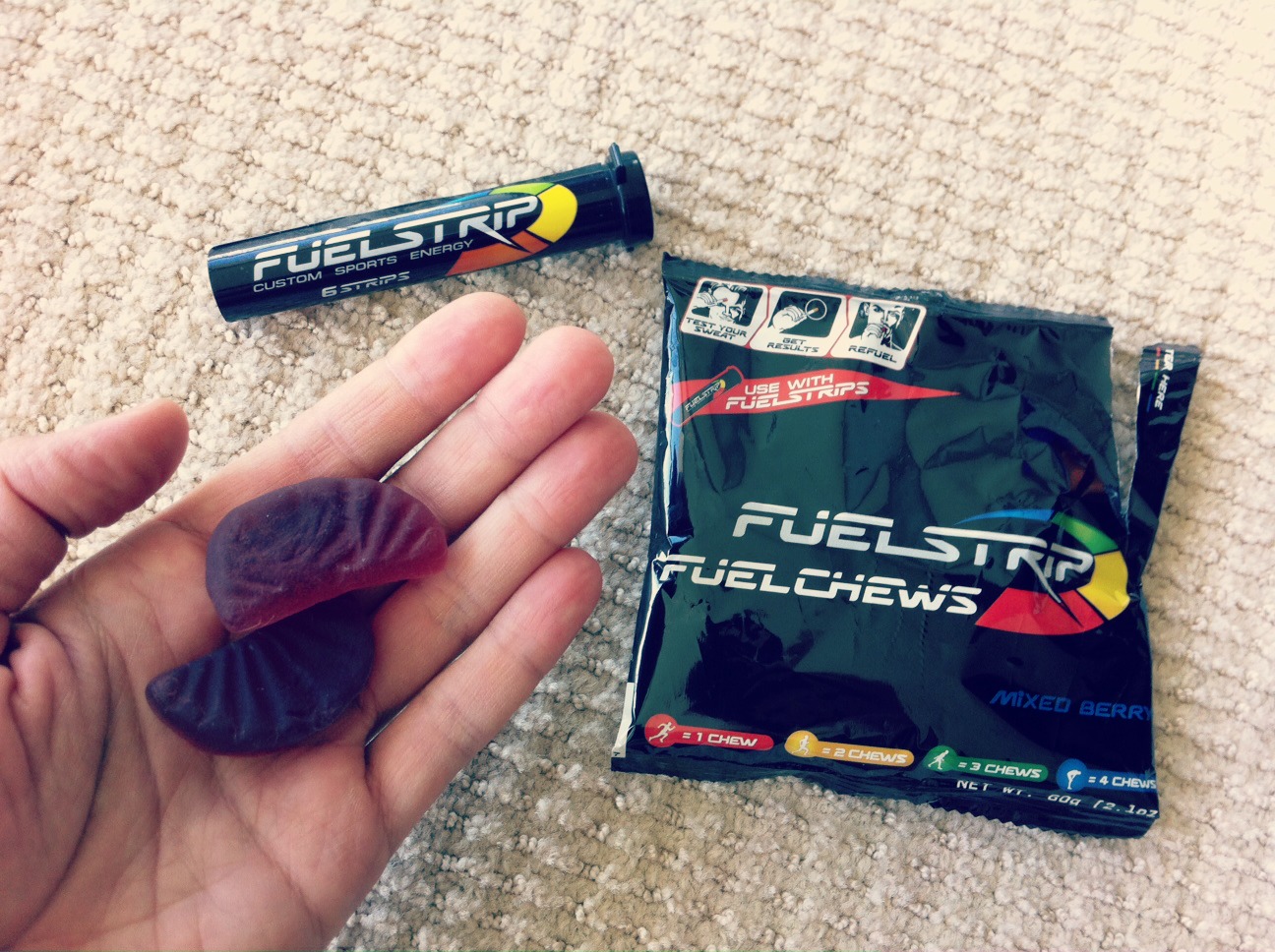
That’s where Fuelstrip comes in — to try to take the guesswork out of your fueling game with its “custom sports energy” technology.

Fuelstrip1

Huh? Stay with me — here’s how it works, in theory:

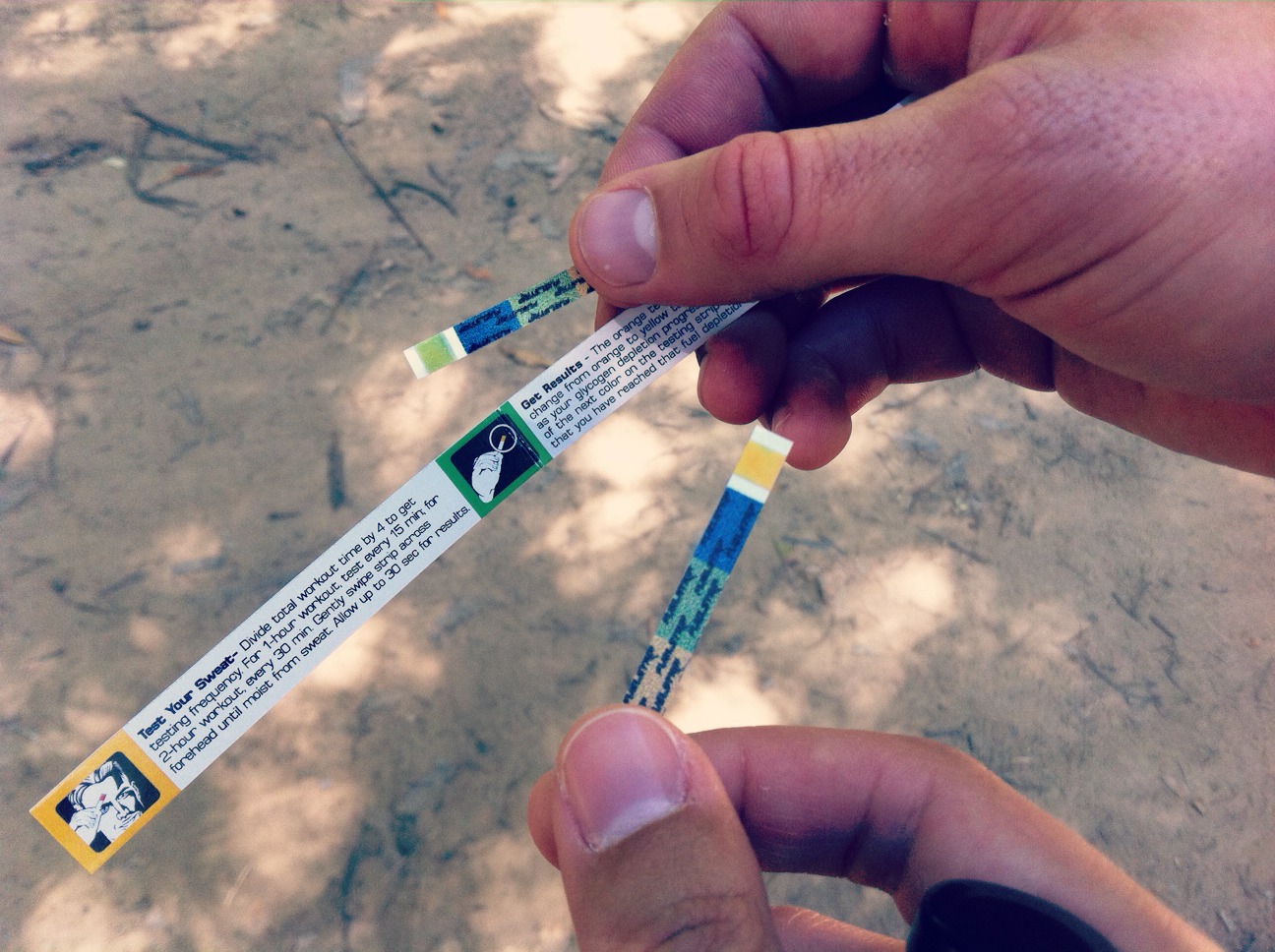
  1. Test Your Sweat. Swipe a fuelstrip with sweat at regular intervals during a workout.
  2. Get Results. Watch the strip change color to reveal you body’s exact level of depletion.
  3. Refuel. Ward off fatigue by eating the corresponding number of carb- and electrolyte-filled chews.

But in reality? Well, I first tested the strips during a P90X session at home with mixed results. My strips stayed in the orange range, which meant one of two things: Either my glycogen reserve tanks were pretty topped off…or the technology wasn’t working (regardless, the chews are yummy).

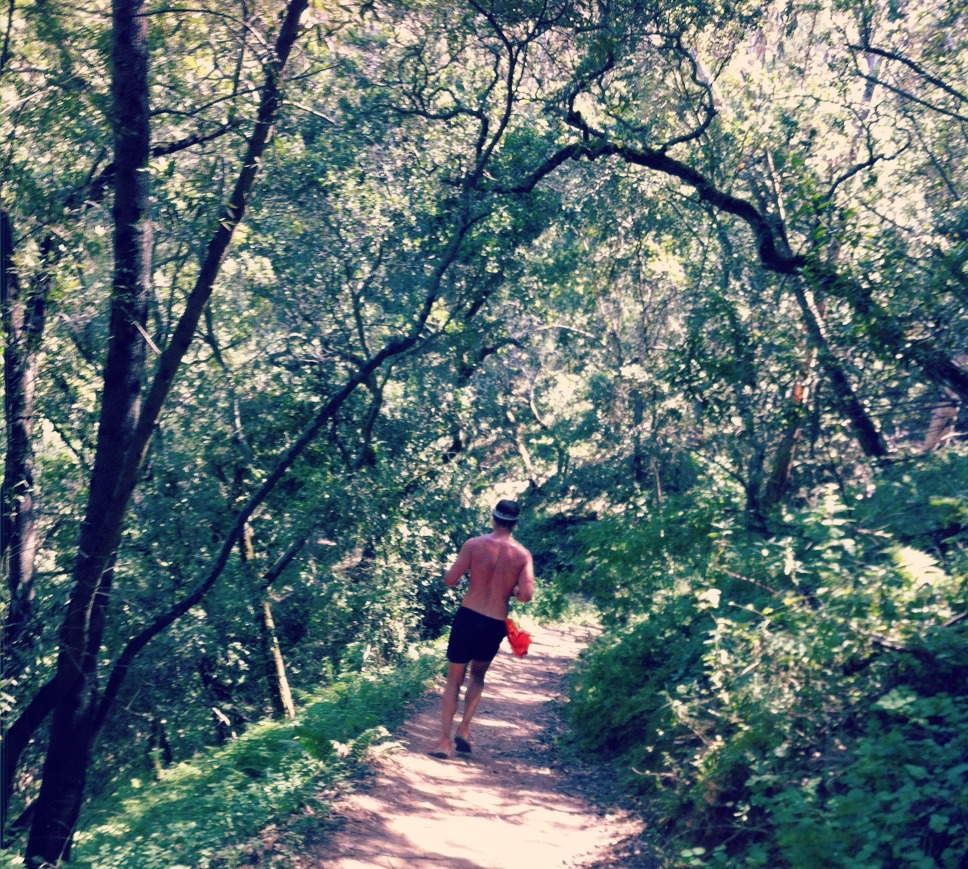
So I decided to do a second experiment — this time using Hubby as my co-guinea pig during a recent 13-mile trail run. I did my usual pre-run routine. Hubby? Not so much. He had a smaller-than-usual breakfast and opted not to carry fuel on the run.

About halfway through, we were both feeling pretty beat by the heat (the SF summers have softened us!)…but, as you can see, his lack of fueling was also starting to kick in. Needless to say, he happily accepted the bag of chews as we made our way along.

Fuelstrips2

A few miles later, we checked again — I stayed the same yellow/orange color, but Hubby’s green was a little less vibrant this time around, so we declared the test a success.

Would I use ’em every time I exercise? Probably not. Personally, I’ve got a decent idea of what to eat — and when — for most of my regular workouts. But if you’re starting a new routine or unsure of fueling over longer distances, it’s smart to consider setting a baseline.

For example, as I figure out fueling for longer training rides and trail runs, I’ll be spot-checking with Fuelstrips to make sure I’m eating enough along the way — especially as I’m less able to rely on hunger as an indicator.

Because, unfortunately, there’s no one-size-fits-all solution when it comes to fueling — but getting it right can mean the difference between finishing strong or bonking before you cross the finish line.

LakeChabot

For more information or if you’d like to try Fuelstrips yourself, visit the website here