Fit Fix: Dane Rauschenberg on telling the tale of his 202-mile solo relay

Source: SeeDaneRun

Source: SeeDaneRun

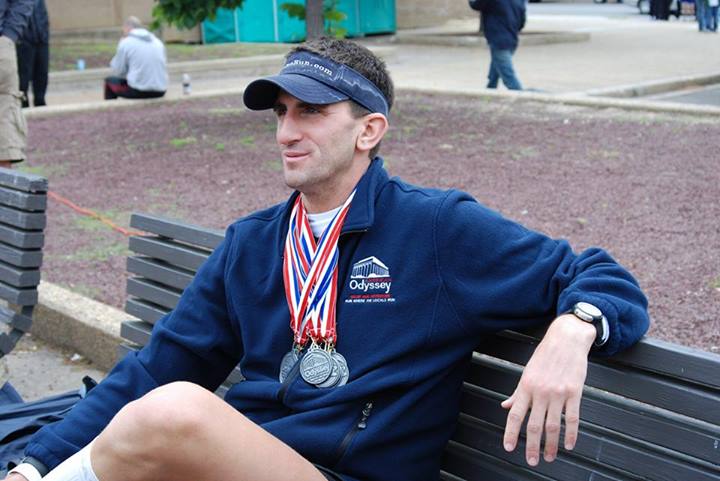
Dane Rauschenberg is already known for running 52 marathons in 52 weekends, but when he announced in 2010 that he would be taking on a solo running of the American Odyssey Relay, it seemed out of the realm of possibility. Normally reserved for teams of 6-12 runners, the 202-mile relay race can take groups of well-rested people up to 36 hours to complete.

Well, Dane not only nailed the task of running from Gettysburg, Pa., to Washington, D.C., but he did it in the astonishing time of a little more than 50 hours. And now he’s taking to Kickstarter to tell the story through a documentary that will take viewers on a roller coaster ride of emotion, physicality and humor.

I sat down with the extreme runner, author and motivational speaker to pick his brain about tackling that monstrous number of miles, as well as how he’s hoping his film will show others that they, too, can chase their own seemingly-impossible dreams.

KineticFix: You started running in law school to keep your weight in check. How’d you make the leap to extreme events/distances?

Dane Rauschenberg: It happened very suddenly. I went from barely running at all to all of a sudden planning on running 52 marathons in a year. Back in 2006 there was hardly anyone doing multiple marathons at max effort in one year, so it seemed outlandish for me to every try it. But to PR in my 42nd week of the year showed I wasn’t just out there to collect medals.

KF: Where’d you get the idea to do the American Odyssey Relay solo?

DR: It was a confluence of multiple events. I worked for a running company that put on races similar to the AOR, and that planted the seed. Then I wanted to see what was possible. I had no real idea how long it would take or how to go about doing it, but I figured out a way.
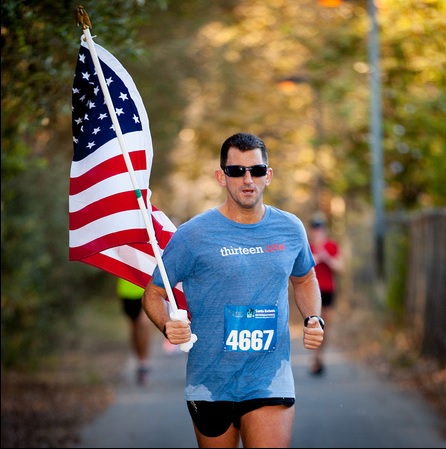
Source: SeeDaneRun

Source: SeeDaneRun

KF: Do you have a favorite moment or memory from the experience?

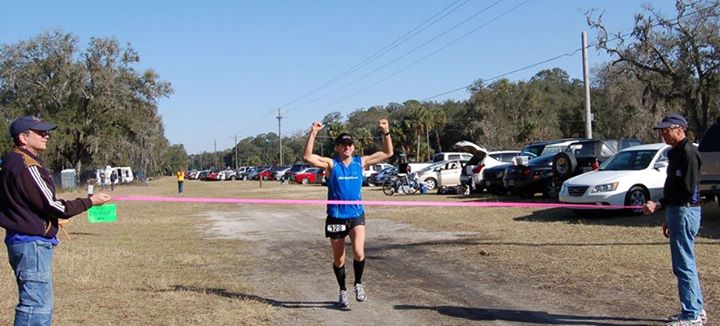
DR: It sounds cliché, but the finish was my favorite memory. Or more accurately, the last few hours. I was running completely alone (my crew had to return vehicles and get to the finish), and it gave me time to reflect on what I was going to achieve.

KF: What’s been tougher during your extreme running feats – the physical strain or the logistics?

DR: Logistics, without a doubt. When I ran 350 miles in one week up the Oregon Coast, it was the running that was the easy (well, easier) part. Stopping virtually every day to speak to people at events or children at schools took a great deal of time, energy and simple coordination of schedules. Throwing such a rigid timeline into running 50 miles a day made it harder than actually running the distance each day.

KF: How do you find the pure motivation to keep moving for 50+ hours?

DR: I don’t see what I do as all that special. I am not being falsely modest; I just think that if I can do something, other people probably can, too. It is just plain and simple: If you set out to do something, barring unforeseen events that can actually harm you long-term, there is no reason not to keep moving forward.

KF: What are your favorite foods to fuel up on during long runs?

DR: I have learned a great deal about fueling over time. I used to swear by pasta and “carb-loading;” now I know that carbs are important, but so are proteins, fats, etc. In fact, in my longest runs I have learned that eating real meals is very important to me. By that I mean, while I supplement with PowerBar products, I know that I need to get real food into my body. I have found that, for me, eating lean beef products has allowed me to get moving again when I thought my runs were over — even in 100-milers where I stop and eat a cheeseburger in the middle of the event.
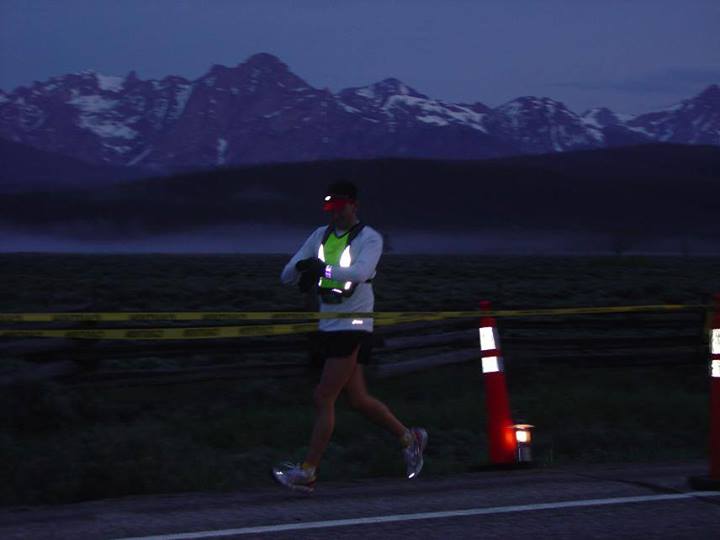
Source: SeeDaneRun

Source: SeeDaneRun

KF: Do you have any recovery tips for being able to bounce back quickly after long runs?

DR: Massage, rest and eating right. There are no tricks. People know what to do, but they don’t want to do it. Plus, apparently, pick the right parents!

KF: How do you prevent and/or manage injury along the way?

DR: We can usually tell what happens when an injury occurs. But when injuries do not occur, it is hard to pinpoint what exactly made them not happen. I bristle at all the running books where experts tell you the “proper” way to eat, train, run, etc. Everyone is so different and how people feel able to give a generalized message in such a specific way is beyond me.

KF: What’s your weekly mileage look like when you’re not training for an extreme endurance event?

DR: I wish I could give a straight answer here. I know I have never once topped 3,000 miles in a year. I have done all of my long-distance running on a diet of high-quality, low(ish) mileage. So, if I had to ballpark it, I would say 50 miles a week is a solid average for me.
Source: SeeDaneRun

Source: SeeDaneRun

KF: What do you hope people will take from the film?

DR: I hope people realize that they can do amazing things. I never say, “You can do whatever you want to do if you just put your mind to it,” as that sets up those who fall short as not “wanting” it enough.  However, we can only find out what we can do by attempting to go beyond what we think is impossible.

KF: Got any tips for people who would like to do a half or a full marathon but don’t think they can handle it?

DR: Absolutely! Look at me. I was a 215-pound rugby player who boxed amateur. My first marathon was a 4:12. I have now run in the 2:40s for a full, and know I can get faster. I hated running. I thought it was punishment, and I wasn’t an out-of-shape guy who hated running; I was an athlete. I have failed constantly. I will continue to fail. But I will get back up and try again. So can anyone.

KF: Finally, what’s up next/what’s left on your ‘extreme bucket list?’

DR: I despise the term “bucket list.” If money were no object, there are few things in this world I wouldn’t want to do. I want to learn how to play an instrument. I would enjoy learning another language (or two) fluently. I hope to learn how to tango someday. That is how I wish to experience life.

With regards to running itself, I have learned that one must know to say “no” to the “what’s next” nagging question. We live in a world of instant gratification and instant accolades. Everyone is “awesome” or “wonderful,” and Facebook and social media allow us to have life envy of others whose lives are probably no better than our own.

We have to set our own agenda. After the past few years of sacrificing my own personal running goals with regards to getting faster in order to try and make a small difference with the little bit of publicity I have garnered, I would simply like to set a new marathon PR. I know I can go faster, and it would be wonderful to show — at age 37 — that I can find some speed again.

So in other words, everything is left on my list. I just hope I don’t run out of time.

Want to help Dean make his film a reality? Click here to make a pledge via Kickstarter! 
Source: SeeDaneRun
Source: SeeDaneRun
Fave Fix: DDCC women’s activewear

Source: DDCC

Source: DDCC

With the world sports apparel industry expected to exceed $126 billion by 2015 (source: Global Industry Analysts), it’s no surprise that new companies are flooding the market while established brands add “active” categories to their lines to try to grab a piece of the yoga-pants pie (I’m looking at you, Forever21, Victoria’s Secret and Anthropologie).

But while workout clothing companies are seemingly a dime a dozen these days, there is still the occasional new kid on the block that’s worth a second look — especially when they come highly-recommended from your former high school running teammate who is now a professional triathlete (thanks for the heads up, Terra Castro!).

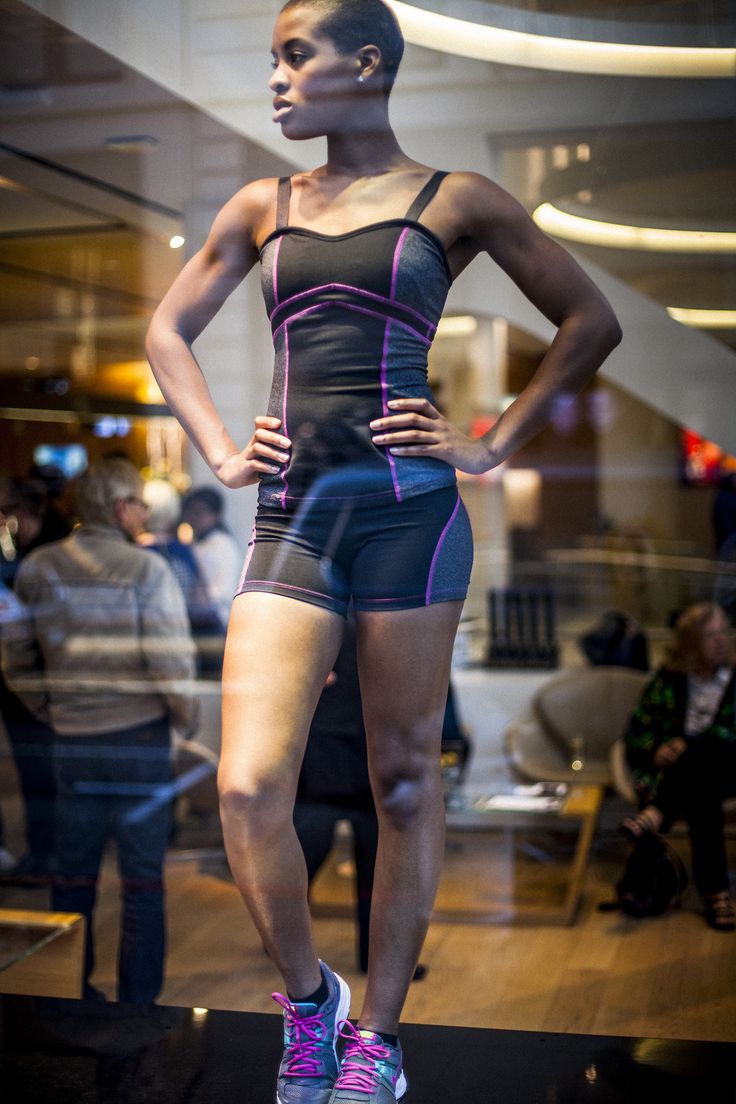
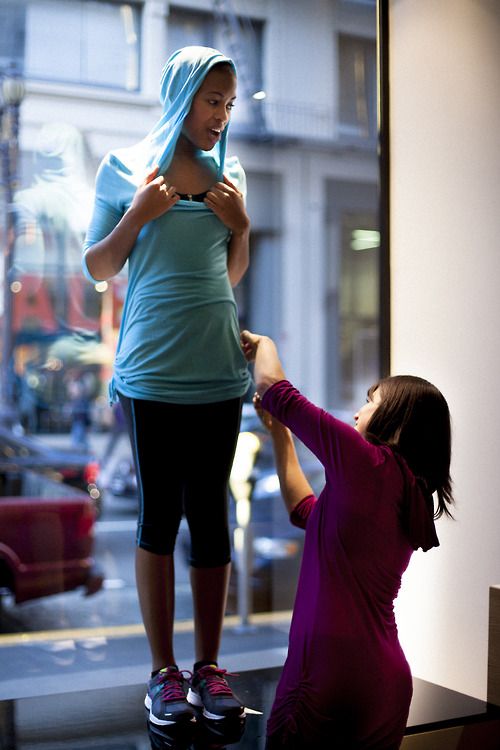
So without further ado, let me introduce you to DDCC, a women’s activewear line designed by Diana Mitchell and manufactured in the heart of my neck of the woods, San Francisco. DDCC’s chic and functional lifestyle/workout apparel is engineered for a sleek, flattering fit — for adventurers and athletes of all sorts.

I sat down with Diana to get the lowdown on her line, along with details on the Kickstarter campaign she’s running for her Spring 2014 collection:

Source: DDCC

Source: Julie Englemann and Kelly Pullio photography

KineticFix: DDCC stands for “Dirty Diana’s Clean Clothes;” is there a story behind the name?

Diana Mitchell: Of course! A nickname I had growing up that I couldn’t stand was “Dirty Diana,” so I decided to own it, and Dirty Diana’s Clean Clothes was born. I’ve since grown to love it; it reminds me to not take things too seriously and to have fun in life. I strongly believe that all of the best things in life — hiking, camping, eating ice cream — are the ones where you end up a little dirty, and having beautiful clothing to support that lifestyle is my goal.

Source: DDCC

Source: Julie Englemann and Kelly Pullio photography

KF: What was the inspiration for starting your own line of activewear?

DM: I launched DDCC with three women’s hoodies. San Francisco is a big hoodie town, and I thought I was making clothing for every day wear. I started to see my friends and customers using the hoodies for running, however, and was constantly asked if I was making activewear. Around this time I not only got a new roommate who was training to become a yoga instructor, but I also started a part-time job at a cycling apparel company. Suddenly I was surrounded by active people, which inspired me to start my path towards fitness. After leaving that job I decided to make clothing that would support this new lifestyle and inspire other women to work out, as well.

KF: Tell us about the mission behind DDCC.

DM: A lot of activewear companies have mantras like “Nourish, envision, believe, etc…” We see these words over pictures of perfect women who only have time for running and doing juice cleanses, all by themselves with headphones on. DDCC offers a more realistic and balanced approach to fitness. It aspires to promote an active lifestyle through fostering a sense of friendship and community. My fitness routine started because I had friends who invited me to run, bike and do yoga. I am happier and healthier, and now I invite other friends to work out. I want to show women that exercise doesn’t have to be a boring task with unattainable goals. Incorporating exercise into our social lives enables us to find the time and energy to practice fitness and self care.

KF: Can you walk us through your idea — from conception to completion of the line?

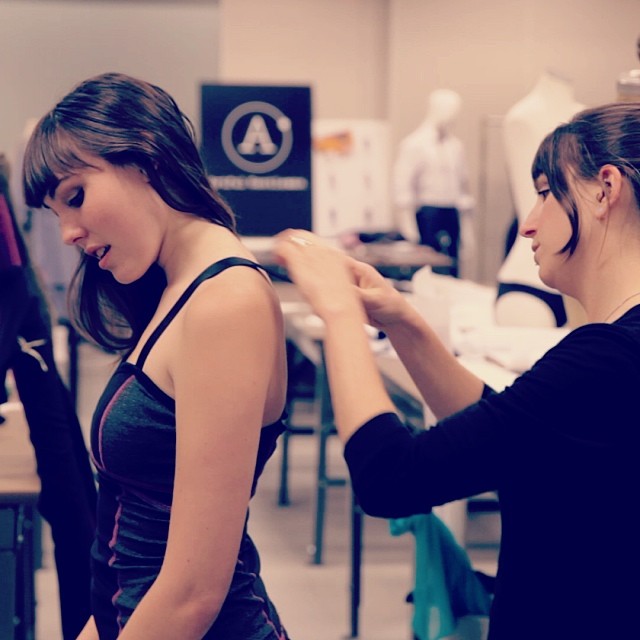
DM: I started developing the line in February, when I began my residency in the Fashion Incubator San Francisco (FiSF). I wanted to create a full line that allowed women to incorporate activewear into layered outfits that would go from brunch, to yoga, to the store, to the beach, etc. The line started with 15 pieces, which the mentors at the FiSF helped me refine into an 11-piece collection. I knew I wanted the line to be sleek and fitted, and to reflect a more sophisticated, San Francisco aesthetic. The charcoal and black color blocking came about because I wanted something that was neutral and could be worn with many different outfits, but was more interesting than plain black. The tops, cover-ups and outerwear pieces not featured on the Kickstarter all merchandise with the active collection to take you from one activity to the next.

Source: DDCC

Source: DDCC

KF: How is DDCC different/better than other brands?

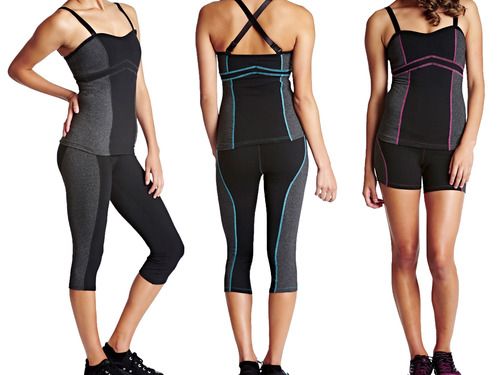
DM: DDCC stands apart in its aesthetic, fit and quality. It’s sleek and fun, without being boring black or bright neon. As a designer and patternmaker who struggles with her own body issues, I engineer each garment to fit and flatter real women’s bodies. Waistbands are anti-muffin top and smooth out love handles so you feel confident in the tanks. Lines are uplifting and slimming, and subtle details like the satin straps and bra zipper make it fashionable and functional. By manufacturing in San Francisco I am deeply involved in the production process, ensuring a higher quality and standard of activewear.

KF: Why did you decide to take to Kickstarter to raise funds for the project?

DM: Since the mission of the brand is to foster friendship and community, it seems only natural to launch through a crowd-funding campaign. Kickstarter has allowed me to tell my story to the world and to find like-minded people from all over. I have supporters from England, Germany and Singapore who would have otherwise never known about DDCC. It’s amazing to see the community come together to support the brand and the mission.

KF: How has the feedback been on your collection thus far?

DM: It has been overwhelmingly positive. Women are so excited to have apparel that is fitted, functional and super-cute! I’ve also had boyfriends and husbands buy the line for their ladies, either because they want to treat them to quality activewear, or because they’re excited to see them work out in something attractive. The two most popular [items on Kickstarter] have been the V-Capri and the Fly Girl, which is the V-Tank/V-Capri combo. I have had positive response for the pants from the plus sized community, too, and have been asked to design a sports bra that is friendlier for the busty ladies. I’ve also been asked if I’m thinking of designing any men’s activewear. These are all ideas I am taking into consideration as I start designing my next line.

KF: Speaking of Fall 2014, what can we expect?

DM: I’ve had a lot of taller women ask me for a full legging, so that is definitely in the works! I’m working with some beautiful new colors (think purple), and am experimenting with some looser tanks and cover-ups. I’ve also been working with a 100-percent-milled-in-California Tencel, which is a luxurious and resilient fabric made from eucalyptus trees. It has the wicking properties of polyester and the breathability of cotton. I am in love with it!

Source: DDCC

Source: DDCC

KF: Switching gears — there’s been a lot of buzz about ‘thigh gap’ and the effect that body shape has on the wear and tear of activewear. What’s your stance/philosophy on the subject?

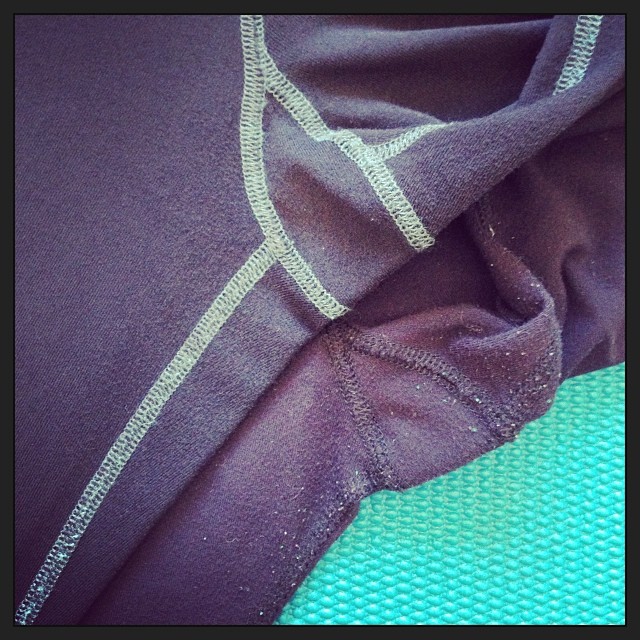
DM: I go back and forth. While yoga pants are never going to be as durable as jeans, I think if you’re paying $100 a pop you should expect a lot more! I recently took a picture of my V-Capri next to a competitor’s brand after running in both. I do not have thigh gap. The competitor’s brand showed significant pilling in the inner thigh region, while the V-Capri looked good as new.

As it turns out, both fabrics are supplex, and both come from the same company. The difference is that the competitor’s brand is “brushed,” which literally means the surface is brushed to give it a softer feel. Think of sweatshirt fleece, which is French terry that has been brushed on one side. The brushing creates a “yummy” feel, giving the product more hanger appeal, but it also degrades the quality of the fibers and leads to pilling. For my collection, I chose the unbrushed supplex, because it feels just as good on, but lasts a lot longer.

People expect a lot from their yoga pants — they want them to feel as soft as cotton, wick sweat away from their body, make their butt look fantastic, and last a long time. Even a great pair of jeans, which will probably undergo a lesser beating than a pair of yoga pants, has its lifetime. So I would say we should be realistic when we buy our activewear. If you can’t afford to replace your yoga pants every few months, make better choices, and buy from brands that you know build products that last.

KF: Agreed! So where do you DDCC going from here?

DM: My goal is for DDCC continue to grow, to become a staple in the activewear industry and to work towards a sustainable model using organic and eco-friendly materials. I would love to continue this idea of motivating others towards fitness though sponsoring races and other active events. Most of all, I hope to eventually pay back everyone who has helped get me to this point, and to give back to the community by providing jobs in the USA.

Want to help Diana make her Spring 2014 line a reality? Click here to make a pledge via Kickstarter! 

Source: DDCC

Source: DDCC

Fit Fix: Meghan Manion on becoming an Ironman triathlete

MM_Ironman6

Sometimes social media can feel invasive and impersonal, but then there are moments where you really appreciate its power to connect us with new friends, keep us in touch with old ones and make the world feel just a little bit smaller.

Case in point: When I saw triathlon training photos start popping up in my Facebook feed from Meghan Manion, sister of my best friend growing up (shout out to Katie) and daughter of my grade school Spanish teacher (hola, Senora Manion!).

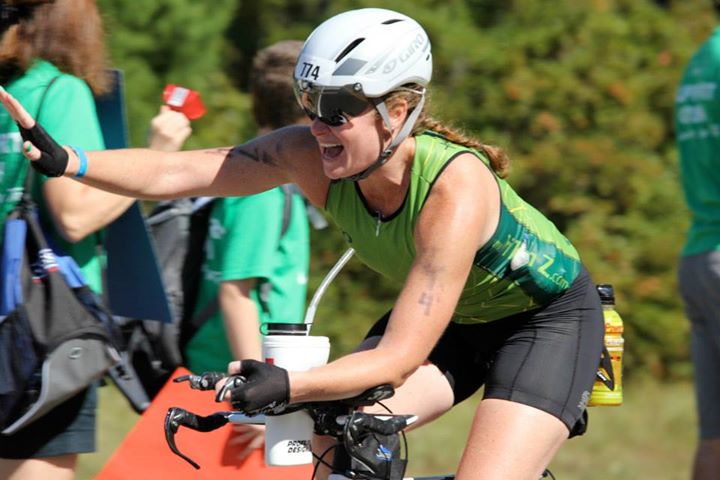
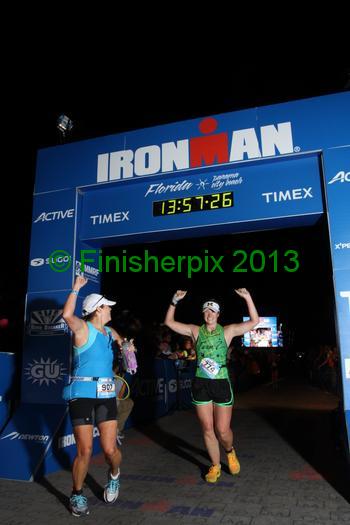
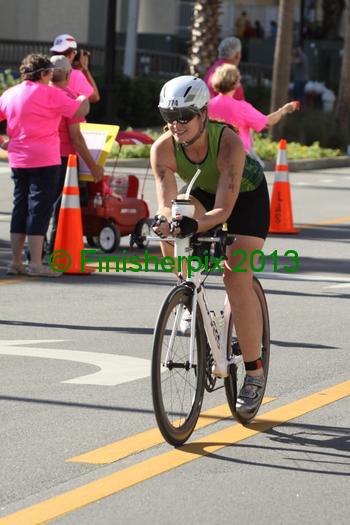
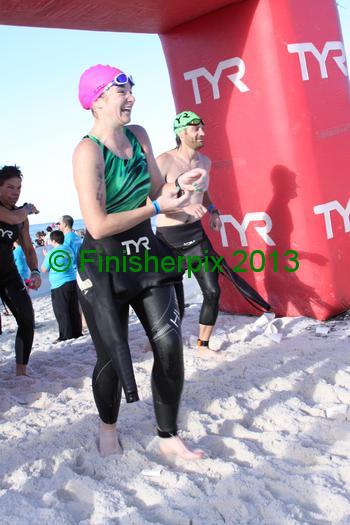
Next thing I knew, she was toeing the start line at the Florida Ironman (that’s a 2.4-mile swim, 112-mile bike and 26.2 mile run, FYI) and I was virtually cheering her on, along with hundreds of her other friends around the country, on race day earlier this month.

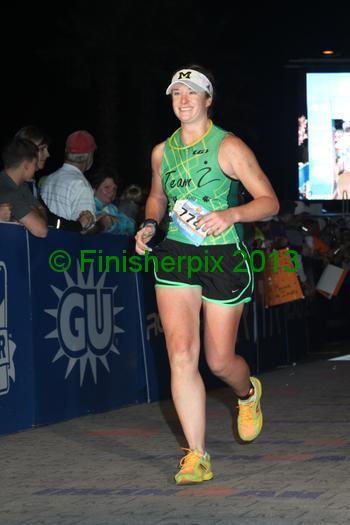
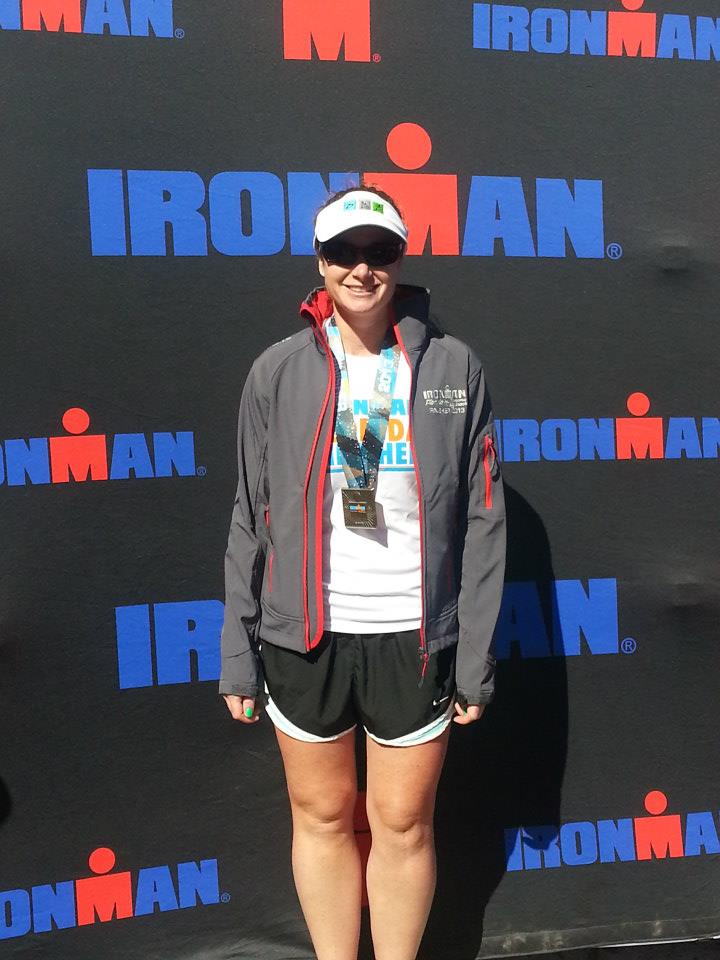
While she claims her story is about what your average person can do with with proper training and coaching, I tend to think she’s anything but average considering the dedication, courage and sheer tenacity needed for success in this sport. Manion crossed the finish line in an impressive 13:57:29, and I caught up with her after the race to get her take on the day, as well as her training leading up to it.

KineticFix: Meghan Manion, you are in Ironman. Congratulations! Can you even put that feeling into words now that you’ve completed the race?

Meghan Manion: I can finally wrap my head around it, but it took a few days. It was a really surreal thing in the days immediately after the race. I had so much fun reliving the day with my friends and family, and that has helped me form some great memories of the day. I feel so happy that my day went as planned, and when I think back to the experience of crossing that finish line, it brings tears to my eyes every time. I really think it was the most incredible day of my life so far.

KF: What’s the first thing you did when you crossed the finish line?

MM_Ironman3MM: When I crossed the finish line, a volunteer caught me immediately and congratulated me. I started crying the happiest tears of joy, and she asked if everything was ok. I told her, that it was amazing, and she hugged me and celebrated with me. The next thing I remember is looking to the left and seeing my boyfriend Nate with identical crocodile tears in his eyes. Next came my mom, pushing Nate out of her way, and she was crying, too. It was such a fantastic moment. My mom handed me the biggest can of bud light that I have ever seen. I had so many friends and family with me there at that moment, and I felt like I was on top of the world.

KF: What’s your favorite memory from race day? 

MM: My favorite memory of the race happened on the bike course at mile 60. I was coming up to a cheer station that my triathlon training team, Team Z, had set up. I noticed a lot of familiar faces along the road, and they were all lined up jumping and screaming. As I rode past, every single one of them mooned me! It was hilarious, and I laughed about it for hours afterwards. They had me distracted and amused for the rest of the race with that one!

KF: What was the toughest moment, and how did you power through it? 

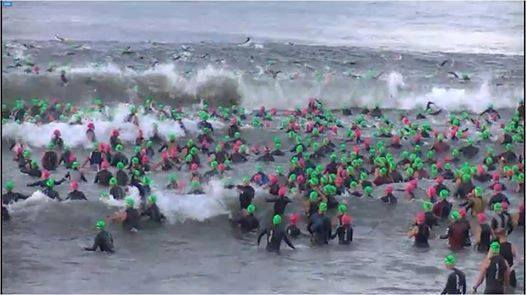
MM_Ironman4MM: The toughest moment, for me, was waiting for the race to start. I fear the swim more than anything in triathlon. I’ve spent a few years learning how to swim, but I still have a long way to go. I’m not the most confident open water swimmer either, and IMFL is an ocean swim. In the days before the race, Nate swam with me each day, and we battled some pretty huge surf. The practice was great for me, and definitely helped me on race day. The funniest part about all of that pre-race nervousness is that I ended up having the swim of my life. I remember stopping at one point and realizing that I was having FUN! That is unheard of for me; I always struggle through swims. I finished the first loop smiling, eager to get back in and do it again. I never would have predicted that, and it set me up for a great day. The lesson here is that you will always doubt your training, but it is important to trust your coaches and trust in the work you have put in leading up to race day.

KF: What do you think was the key factor in your success?

MM: The key factor in my success at IMFL was joining a triathlon training team in the Washington DC area, called Team Z. Besides having amazing coaches, training plans and workouts, Team Z provides a social aspect that cannot be matched. It is so much easier to get up at 4am to go on a seven-hour training ride when you know that 100+ of your friends will be waiting for you, they will ride with you all day, and then your coach will welcome you to the finish with a beer and a burger. We had 40 people compete in IMFL, and hundreds more come down just to cheer us on. It was a race day experience that I feel very lucky to have had. I really recommend looking for local triathlon clubs or training programs when taking on the Ironman. It can make all of the difference.

KF: Anything that surprised you or that you weren’t expecting?

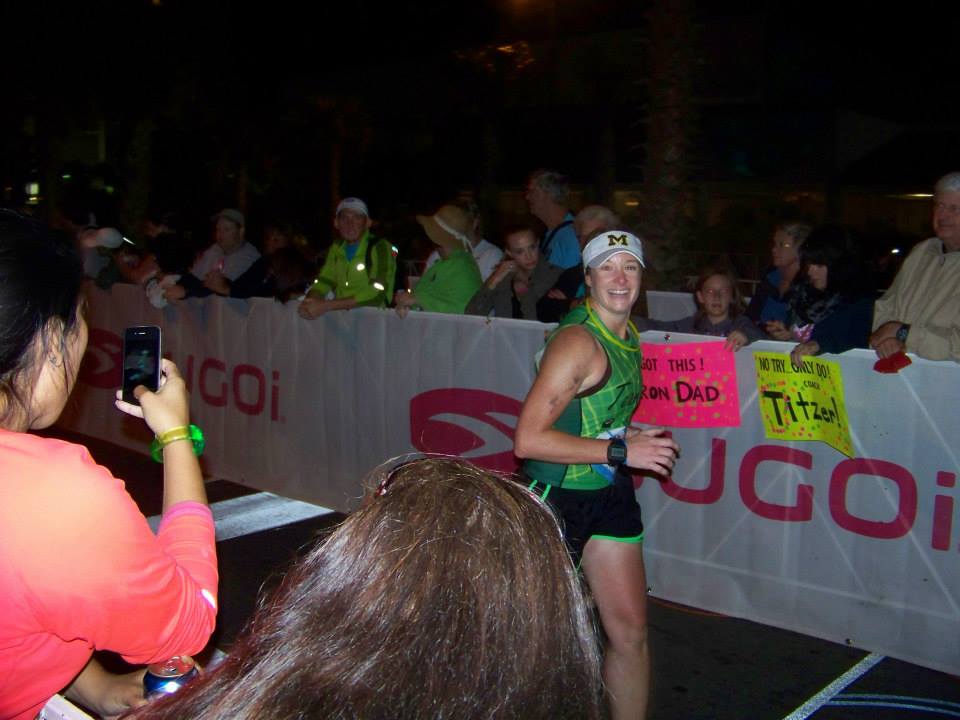
MM_Ironman8MM: Yes! The wonders of hot chicken broth! I had heard from previous Ironmen that there is nothing quite like the broth that Ironman serves on the run after the sun goes down. I did not know the power of this stuff until I decided to give it a try. The sun sets early at IMFL, and I did half of the run in the dark. I was chilly and feeling weak. That salty treat perked me right up at the perfect moment.

KF: Is there anything you’d do differently next time?

MM: I really don’t think I would change a thing! I had such an unbelievable day, and I really have no regrets at all. Well…I guess I could follow the rules better, to be completely honest! I received a drafting penalty early on in the race. It made me laugh more than anything. I had to stop at the next Penalty Tent and serve a four-minute penalty for drafting off of the person in front of me. I guess I’d try to not be a “cheater” next time around!

KF: Your background is mostly in running. So how’d you get into triathlon?

MM_Ironman5MM: I started running marathons in 2006. I never really loved running like some people do, but it was an easy way to burn the calories. Once I was bored with marathons, I bought my first road bike for some cross training. Next thing I knew, I was signed up with Team in Training for my first Olympic Distance Tri in 2010. The rest is history! I really enjoyed the challenge of learning a new skill (swimming) as an adult. I also enjoy the variety of the three events. Plus, riding your bike is just plain fun!

KF: When did you join Team Z & how has that factored into your racing? 

MM: I joined Team Z in October of 2011. Just two years later, they led me to my first Ironman. That is incredible! I feel like I am an unlikely Ironman. I was never the most athletic person growing up. Team Z showed me what a normal person can do with the right training and coaching. It is truly incredible to learn what the human body is capable of with proper training. I have also formed countless friendships through  my team.

KF: Walk us through your decision to take on the Ironman distance. 

MM: I traveled to Panama City Beach in 2012 to watch a great friend from college compete in her first Ironman. Stacie Edington is one of my friends from the water-ski team at the University of Michigan. She was supposed to have her Ironman year in 2011, but fell off of her bike on a training ride that year. She postponed her race for a year while she recovered from a broken leg. I was really inspired by her determination and toughness. She powered through the rehab, and had a fantastic race at IMFL 2012. Watching her was amazing. She encouraged me to sign up, and along with some more pressure from one of my Team Z coaches, (Ryan Pettengill) I just suddenly found myself in the line to sign up. It was a decision that I considered for about 10 minutes before handing over my credit card. I’m thrilled that it happened like it did

KF: Any advice for people looking to get into triathlon?

MM_Ironman2MM: My coach Ed Zerkle has a famous line that I love: “You’ll never know unless you Tri.” That just says it all. Find yourself some good people to help you a long the way, and give it a go. You never know where you will end up after doing that first Sprint tri. You might just surprise yourself.

KF: Any advice for runners, in particular, who want to try it but who are afraid of open water and intimidated by the bike?

MM: Being afraid of open water and/or the bike are problems that every triathlete has faced. They are real fears! The fun comes in conquering them. With determination, you can learn to overcome those fears, and when it happens, you’ll never feel better. Be sure to celebrate along the way as you achieve even small goals. Give yourself some credit for the awesome things you can accomplish!

KF: You’re an accomplished endurance athlete with quite a few races under your belt; got any tips for training hard but keeping injury at bay?

MM: I believe in training just enough, and not over-training. I do just what my coach prescribes, never more (but…yes, sometimes a little less!!). When something flares up, you have to be willing to take a break while it heals. A few missed workouts will not ruin your race, but a chronic injury might. Seek professional help early, and do what you are told!!

KF: I’ve heard that there are two reactions upon completing an Ironman: A) “Never again!”, and B) “When’s the next one?” Which camp are you in & why?

MM_Ironman1MM: I haven’t decided yet! I loved my day so much, and I don’t know if it could ever be the same the second time around. I might be happy to take this experience, continue celebrating it, and be happy with shorter races going forward. I have a feeling that at some point the idea of trying and Ironman again with come up. I’ll have to figure that out then. I know that at a minimum, I will take the next year to let myself recover, and enjoy some shorter distance racing.

KF: What the next goal you’ve set your sights on?

MM: I’m going to Disney World! (For real!) My Ironman inspiration, Stacie, suggested trying the Goofy Challenge in January. We will run a half marathon on Saturday, followed by a full marathon on Sunday all at Disney World. We signed up for the races with a big group of friends, and I am looking forward to the craziness!

KF: Any final words of wisdom that you can pass along to other Ironman hopefuls?

MM_Ironman7MM: One more piece of advice for future Ironmen: We all focus on the physical training. It is so important! But remember that Ironman day is a mental race, too. I was lucky enough to do some pre-race mental prep sessions with accomplished Ironman, Kendra Goffredo. She helped me train my brain for race day, using a variety of strategies, such as visualization. I cannot say enough about the importance of paying attention to this part of the training in addition to your workouts.

Many thanks to Meghan for taking the time to share some wonderful triathlon tips and Ironman memories. And congratulations on your incredible race results; your story will no doubt inspire all of us to ‘tri’ something new!

Say hello to Namatse, goodbye to stinky yoga mats

Source: Namatse

Source: Namatse

Riddle me this, yogis: We wouldn’t dare re-wear clothing we’ve sweated in over and over, but why are we ok doing the equivalent with our yoga mats?

Just like leaving your stinky gym socks crumpled on the floor for weeks on end, storing a rolled up, dirty, sweaty mat can breed mildew, funky smells – or worse, according to this article in The New York Times.

So when my pal Jamie Walker, founder of SweatGuru and FitApproach (also an avid ultramarathoner and yogi), told me about a new company that had come up with a solution, I was intrigued and had to check it out.

Enter Namatse (cute, huh?), the first yoga mat hanging solution. I sat down with company founder and co-creator Neal Margulis to talk about his latest business venture, as well as why we should be showing our mats some more love.

KineticFix: Clever name! Tell us a little more about what Namatse is.

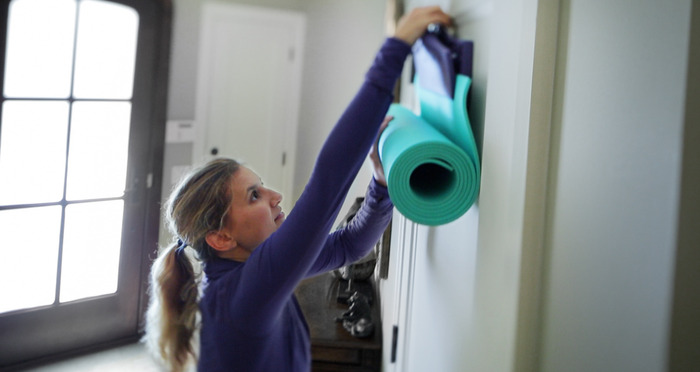
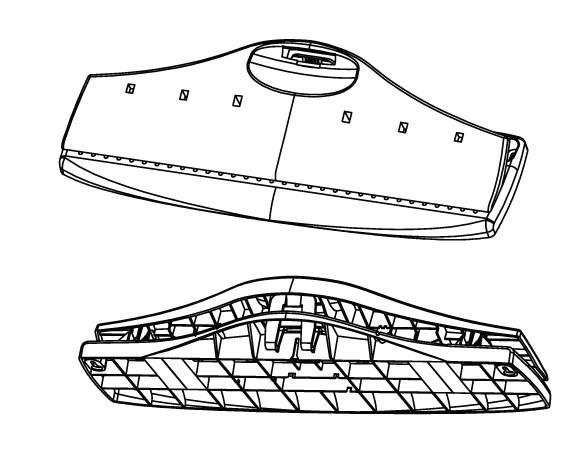
Neal Margulis: Thanks; we’d like to think so! Namatse is our solution for rumpled, still-damp-from-your-last-class yoga mats. Instead of stashing your mat in the closet or trying to hang it over the staircase, we have created a sleek, durable and space-efficient clip that you can hang your mat from, keeping it flat and dry. Whether it be from a wall or in the shower, the Namatse clip makes cleaning, storing and drying your mat as simple as a child’s pose. Namatse reminds us to show our mats some love, saying “namaste” to longer-lasting, fresher-looking yoga mats for our favorite practice.

KF: Your sites says, “Be good to your mat and it will be good to you, too.” Why do we need better mat storage?

NM: Who wants to do yoga on a wrinkled and smelly mat? Yoga is a practice of compassion and gratitude, so why not show that same compassion and thanks to your mat? It’s much easier to stay focused and balanced when the ground beneath you (your mat) is flat and happy.

Namatse2

Source: Namatse

KF: Agreed! So how does it work?

NM: Namatse is super easy to use. There are three ways to hang your Namatse clip:

  1. First, Namatse easily mounts to your wall using the peel-and-stick 3M Command Strips, which are non-marking, extra-durable 100 percent-removable adhesives.
  2. Next, we include a set of screws if you’d like to permanently attach your Namatse clip to a wall.
  3. Finally, we also include a traditional hanger loop that attaches to the clip so the mat can be hung from a closet rod, over a door or even in the shower.

Then all you have to do is prop open the clamp, place your yoga mat how you’d like it to hang, and close the clip with it’s smooth, crafted edges over your mat…and voila! Your mat will appreciate it immediately.

KF: What was your inspiration for it?

NM: Once six year-old Arden [Neal’s son] found out the Yoga poses had animal names like ‘cat’ and ‘cow,’ it wasn’t long before he was making animal sounds and developing his own style of yoga. Having a clean, dry yoga mat accessible became a priority. Unable to find a commercially available solution, we started coming up with ideas, and Namatse was born.

Source: Namatse

Source: Namatse

KF: What was the development process like?

NM: I was very lucky to have the help of my dear friend, Greg Hayes, who has decades of experience turning smart ideas into sleek, highly-functional objects.

Together, we set out to make the ideal clip: one that was not just lightweight and sturdy, but also attractive and easy to use. We used advanced 3D printing to prototype a clip that can hold the heaviest mat made, but that is also easy to operate and doesn’t harm your mat.

The clamp easily props open for simple placement of the mat. The clasps are effective, but have edges that are gentle on your mat. To make sure Namatse fits any yogi’s lifestyle, we created the three options for hanging Namatse: mounted with screws, non-marking, removable adhesives, and a shower hanger. Then we chose high-quality, recyclable ABS plastic to tread lightly on our planet.

KF: And why the campaign through Kickstarter?

NM: We decided to run a Kickstarter campaign to help create awareness for our product, get real market feedback and, of course, help fund it. We’re a small, family business and really want this product to help solve people’s problems.

KF: Have people noticed any additional benefits as a result of using Namatse?

NM: Yes! Your yoga mat becomes a beautiful piece of art in your home that provides a daily reminder of how great your practice makes you feel and provides you an invitation to practice more!

Source: Namatse

Source: Namatse

KF: How long have you been practicing yoga & how’d you get into it?

NM: I’ve been practicing yoga for a little over one year. I started my love for yoga and practiced at the 2012 Wanderlust Festival in North Lake Tahoe.

KF: Got a proudest moment & toughest move you’re still trying to master?

NM: Although I can’t hold it for long, using brute force, I can push up from crow into a handstand. Even after a year of yoga, its still a challenge just to sit up straight.

KF: Any final words on why people should back Namatse?

NM: It’s time to show your mat a little compassion for all that it has given you!

Thanks to Neal for sitting down to chat; for more information and to help make Namatse a reality, visit the Kickstarter page here

What’s your fit fix? Bobsledder Dominic Crucitti on his ‘push’ for Olympics

Source: Dominic Crucitti

Source: Dominic Crucitti

Although they may not see the same levels of pay or pricey endorsements, there is something that bobsledders do share with their footballer counterparts: massive strength and explosive speed.

That’s precisely why the evolution from one sport to another isn’t unprecedented: Former Dallas Cowboy Herschel Walker competed on the 1992 Winter Olympics bobsled team; Thomas White, former walk-on football player at Baylor University, has set his sights on the 2014 Winter Olympics; and Todd Hays, a former college linebacker, is the head coach of the women’s team, to name a few.

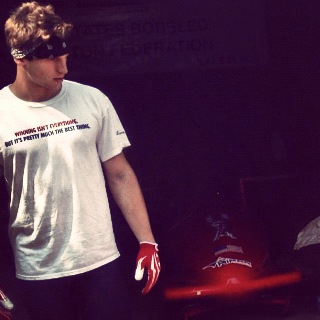
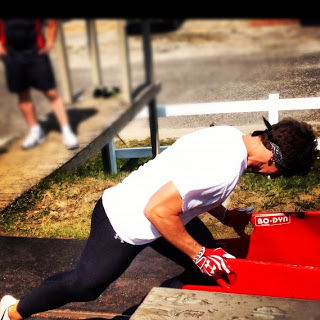
So for Dominic Crucitti, a former college football player himself, the transition to USA Bobsled push athlete has been a natural one. We sat down recently to chat about his Olympic aspirations, training techniques and tips for pushing the limits.

KineticFix: So, how exactly did you get into bobsledding?

Dominic Crucitti: I got involved in the sport after figuring out that you could try out for the US team in 2010. After playing football in college I was searching for a new sport, and bobsled requires similar physical qualities to football. I thought, “What the hell? I’m going to try this.” I emailed a few of the coaches, and I was up in Lake Placid pushing for one of the developmental drivers soon after. I’ve been addicted to the sport ever since.

sledKF: What specific skills are required to be an Olympic-caliber bobsledder?

DC: The guys on the US Bobsled team are incredible athletes. +500lb squats, +350lb cleans and and sub-4.4 second 40-yard dashes are a common occurrence. I don’t think bobsled athletes get enough credit as the combination of size, strength and speed is unmatched in any other sport. All anyone thinks about is the movie Cool Runnings when they think of bobsled!

KF: Where are you with your training, and what goals are you working toward?

DC: My current training is revolving around getting bigger and stronger. My current goals are to squat 500 pounds and put on 3-5 pounds of muscle. I’m about 212 pounds right now, and I’d like to get my body weight to around 215-218. I’m doing minimal sprint work at the moment because my weight room training volume is very high, and you can only train so much!

KF: What’s your training philosophy for accomplishing all of that?

DC: Currently my focus is on pushing the weights on up on my lower body compound lifts (squat and deadlift variations) and strengthening some of my weak spots with accessory movements. I’m doing a lot of work for the hamstrings and lower back.

KF: Walk us through a typical week of workouts when you’re in training.

DC: My training changes pretty frequently throughout the year, I’m constantly reevaluating and changing things to ensure I’m progressing. I think once someone gets to a more advanced level of strength training, it becomes much more individualized and instinctive. If something isn’t working it has to go!

Currently I’m lifting four days a week: two upper-body workouts and two lower-body workouts. One workout will focus on absolute strength (1-3 reps) and the other is more of a traditional “bodybuilding” type day with higher reps on accessory movements. I also sprint at the track twice per week.

Source: Dominic Crucitti

Source: Dominic Crucitti

KF: How does your nutrition come into play?

DC: Nutritionally, I’m eating about +200g of protein a day and +500g carbs a day. I don’t really keep track of dietary fat, but I don’t shy away from high-fat foods. I’m not too strict with the type of foods I eat as long as I’m hitting my macronutrient goals. If you want to train hard and progress, you need to give your body lots of fuel.

KF: Speaking of training, tell us about your job as a strength & conditioning coach.

DC: I actually started working as a personal trainer before I played college football. I started working at a 24hr Fitness. I ended up meeting and working with Adam Shipley, who would later become the strength coach at Santa Barbara City College, at Fueled Sports Performance in Santa Barbara, Calif.

Ever since I met Adam and started training some of his high school athletes for him, I knew this was the career for me. I was lucky enough while I was living in NYC to get a job at Sports Lab NYC and work with some rockstar coaches and a lot of great athletes. I’m currently coaching people in San Francisco at an independent facility called Synergy Fitness Studio.

Source: Dominic Crucitti

Source: Dominic Crucitti

KF: Can you share your top tips for those of us who are interested in gaining speed?

DC: A lot of people and coaches make training for speed very complicated, but in reality anyone can get faster by understanding that sprinting speed is mostly about an individuals power-to-weight ratio. Most of the fastest people also have very high relative strength. The more force you put into the ground, the faster you will move forward!

The top tips I can give would be to increase absolute strength with compound lower body exercises like deadlifts and squats, train the glutes and hamstrings with additional exercises, and increase explosive strength with jumping exercises and/or sprinting. Of course, this advice assumes that the person asking is physically prepared to train in this fashion.

KF: Finally, what’s the question you get asked most by clients, and how do you answer it?

DC: The number one question I get asked, by a large margin, is “How do I get abs/lose body fat?!” My initial advice is very simple: I tell people to 1. Drink lots of water; 2. Build all of your meals around a protein source; 3. Get as strong as you can. Usually that’s all I have to tell my clients, and they get pretty dramatic physique changes just from that.

The next variable is to adjust carbohydrate intake, but this is usually not necessary unless someone wants to get very lean for a vacation, reunion or something very specific. I, of course, could get more complicated than that but I need to constantly remind myself that not everyone is as excited about training and eating protein as I am!

Want to follow along on Dominic’s quest to represent Team USA in Bobsled? Check out his website, DominicCrucitti.com.

Body after baby: Real moms weigh in on what worked

Photo credit: HappyBabyWorkout.com

Photo credit: HappyBabyWorkout.com

Regardless of how quickly you initially bounce back after having a baby (thanks, in part, to breastfeeding and other post-delivery hormonal shifts that boost metabolism), there’s usually an inevitable plateau of ‘won’t-budge’ pounds with which you’ll have to contend.

But let’s get one thing straight: We’re promoting being healthy, feeling good about yourself and instilling good habits, rather than perpetuating some unattainable, unrealistic standard here.

I recently provided a few tips on the topic, but as many moms know, there are no hard and fast rules when it comes to reclaiming your pre-baby body. So why not ask the experts themselves?

Here are a few strategies for success that helped these fit-minded moms get back in the saddle.

Lindsey, mother of two, in Oregon:

First, I ate a balanced breakfast to ward off the temptation to mindlessly graze on my children’s goldfish. Second, just get moving! I did Stroller Strides, and the incorporation of intervals, cardio and resistance training all while sweating it out with other moms was awesome. Finally, don’t feel guilty for cutting a chunk out of your busy and hectic day to focus on your own health and happiness.

Aleksandra, mother of one, in Michigan: 

Initially after I had my son, I allowed myself the time to adjust to a new role and didn’t worry about my body or weight. Once I had a good handle on my new life, I began meal planning to take the stress out of what to eat. It keeps me eating well even when I can’t squeeze a workout in, and it got me back to my pre-pregnancy weight fast. Our bodies can do amazing things with the right fuel!

Katie, mother of two, in Oregon:

I have two tips for getting your pre-baby body back: First, eat well and exercise (if possible) during your pregnancy. Swimming is a great cardiovascular work-out for later stages of pregnancy because it’s low-impact. Second, nursing has many health benefits for mom and baby, AND it burns a ton of calories!

Danielle, mother of two, in Hong Kong:

Having No. 2 and keeping up with both of them cuts down on your meals and keeps you on the run!

Crystal, mother of two, in Oregon:

With my first, I went on walk/jogs just about every day; the key is to have a good stroller. The second time around, we joined a gym, and I do barre and swim. In all honesty, though, the weight came off because my boys loved to nurse. Sucked it right out of me!

Claire, mother of three, in North Carolina:

Find something you love and make time to do it! Yoga is such an integral part of my life, and it’s providing so much benefit, I always make the time to practice. I can honestly say that beyond the way it’s transformed my body, yoga has helped me to become a better parent, spouse and friend. Whether an early morning class or late evening, I make it fit with my crazy family and work schedule. Hey, who couldn’t benefit from a little ‘namaste’ in their lives?!

Hilary, mother of one, in California:

If you’re a mom who exercises intensely and is used to mega-calorie-burning workouts, breastfeeding doesn’t compare. It does burn calories, so it’s a nice little addition, especially when you’re slowly getting back into shape. But, exercise and diet should still be considered important and necessary if a mother wants her “pre-baby” body to return.

Megan, mother of three, in Oregon:

I have two things that keep me on track: One, I always eat a protein-packed breakfast. I try to fuel myself before the kids get up or else I’m rushed and frazzled and don’t take the time to be intentional about food. And two, I play with the kids! We have dance parties, run around outside playing games, take tons of power walks and are just a really active family.

Cara, mother of one, in California:

The hardest thing about squeezing in exercise time post-baby is…the baby! You can’t just throw on your shoes and head out for a run on a whim anymore. I find it helpful to plan ahead and commit to specific fitness activities, whether it’s a stroller power walk with other moms or a mommy & baby yoga class. Having other new moms to do activities with is also great because you motivate each other to follow through with fitness dates, you can bond over your new life, and no one judges when your baby has a meltdown! Another tip is to look for classes that you can bring the baby to, such as yoga, pilates and Stroller Strides. It’s fun bonding time with your little one, and there’s no childcare excuse!

Hilary, mother of one, in Massachusetts:

I started Pure Barre around six months because I couldn’t do anything high impact while nursing. I joined a Baby Boot Camp class, too. My husband actually gave me the sessions as a Mother’s Day gift, and it was GREAT!

Melissa, mother of two, in Oregon: 

Find a girlfriend and work out together. It keeps me accountable, and you get your girl time in, too. There is no way that I would wake up at 5:30 to go for a run if I didn’t have a girlfriend waiting to meet me!

Kelly, mother of three, in Michigan:

First and foremost, be patient. I use the same rule-of-thumb as I do for breakups: Getting over it can (and should) take at least 1.5 times the amount of time it took to get into it. Everyone’s different, and it takes time, so eat clean and keep working on it little by little, and you’ll get to where you want to be. I do think it’s important to note that even if you’re dedicated to your body, mental health and happiness are much more important than looking like you didn’t have a baby – especially when you’ve just brought a person into the world, and double especially when you are on your third or fourth month of not sleeping through a single night!

Liza, mother of three, in Oregon:

I take it slow and start out with some hilly walks around the area, and gradually work back into some runs. I love the workouts on TV On Demand, too! It’s easy because it’s in your house, and you can pause it if you need to change a dirty diaper 🙂

Thanks to all the lovely moms who contributed their two cents!

Will the real carb culprit please stand up? (Part II – and Giveaway!)

donut-carbohydratesInterested in trying the TurboCharged program for yourself? Here’s your chance – we’re giving away one FREE copy of the book! Details at the bottom of the post…

In part one of my interview with health expert and TurboCharged author Tom Griesel, we spoke about the different types of carbohydrates and how the body processes them, along with the best foods to eat to help prevent excess fat storage.

Next up, I wanted to get into the nitty-gritty of his program, which stems from the Griesel’s belief that by learning to work with your body and feeding it the correct type of foods, you can automatically improve the way it functions and looks.

Here we chat more about role of exercise in his healthy lifestyle plan, along with how he can help ‘Turbocharge’ your body’s fat burning abilities to radically improve your body (and mind) in a short period of time.

Photo credit: Superskinnyme.com

Photo credit: Superskinnyme.com

In your book, ‘TurboCharged,’ you talk about helping people make the switch from using sugar to fat as fuel for the body. Can you elaborate on that?

There are two fuels that our bodies will use: sugar or fat (three if we include alcohol). We are also in either a fat-storage or fat-burning mode, depending on what types of food we choose to eat.

By eating a diet more in line with our ancestral or evolutional adaptations, and avoiding a constant stream of concentrated carbohydrates and the subsequent insulin release and fat storage they promote, our bodies become accustomed to using more fat—including our body fat for our energy needs.

Without our diet increasing the hormones that store excess sugar as fat, we are then able to use our own body fat for energy, as well as being better nourished.

Another important point is that most “sugar burners” will convert lean body mass into sugar for energy instead of sourcing their body fat due to an easier conversion process and a preference for sugar. Loss of lean body mass is the main cause of diet failure and recidivism.

Give us a quick overview of a ‘day in the life’ of the program.

First, more water is consumed, particularly first thing in the morning, to ensure adequate hydration needed for normal body processes. Metabolic waste is meant to be eliminated through the kidneys. When the kidneys can’t handle the job due to inadequate hydration, the liver is forced to do the job (definitely not optimal).

The morning is the most important time, because we usually use about a quart of water for normal respiration and metabolic function overnight while we are sleeping.

Water is also not sipped but used in larger quantity to fill the stomach. Doing so has the same effect as various bariatric surgeries. Satiety hormones are released when the stomach is full. Many studies confirm this happens with food, liquid or a combination of the two.

Next, when we are actually hungry, we choose a food that is more in line with our ancestral diets: fruits, leafy greens, non-starchy vegetables, nuts, seeds, legumes, eggs, meats and seafood (all high nutrient per calorie and mostly moisture-rich).

Meals are also very simple with just a few different ingredients and often just one item (mono-meals). This speeds digestion, eliminates common digestive problems, and most importantly, increases fat burning by greatly reducing the release of insulin—the fat storage hormone—which can be triggered by large meals or combinations of foods.

Engaging in low-to-moderate activity as much as possible is encouraged, along with one-minute periods of strength training three to five times each day, stress reduction techniques and a good night’s sleep.

Can you share one of your favorite tips for readers who want to start incorporating healthier habits into their day?  

Thirst and hunger are often confused. This is probably because our natural diet always consisted of very moisture-rich foods that supplied water and nutrition at the same time. Today, many people confuse thirst for hunger and eat when they should be drinking water. Choosing the wrong foods or beverages when this happens only compounds the dehydration problem.

And, finally, as a long-distance runner, I’ve got to ask: How does exercise come into play in your plan?

Exercise is good for us. However, too much exercise is just as bad as too little, particularly if losing excess body fat is the goal. Exercise is a very inefficient way to manage caloric intake and lose excess body fat.

In fact, when a reduced-calorie diet is being implemented, less exercise is better than more and low-intensity activity is better than more strenuous exercise. This is because the combination of reduced calories and strenuous exercise such as aerobics results in the loss of lean body mass due to the inability to source body fat quickly enough to adequately fuel the activity. This is particularly true for sugar burners whose bodies would rather convert protein to sugar rather than using their excess fat.

Light resistance exercise, for about one minute, three to five times per day is sufficient to maintain (and in some cases build) lean body mass while dieting. On a normal calorie intake, when performed regularly with intensity, it is sufficient to build and strengthen without creating excess stress.

All stress, good or bad, results in the release of catabolic (muscle-wasting) hormones and is best avoided. Loss of lean body mass from any cause, including strenuous exercise, triggers primal survival mechanisms that will cause anxiety and feelings of hunger until the lean body mass is returned. When faced with this situation, eating a typical diet will result in most of the weight regained being fat, not muscle.

GIVEAWAY:

One KineticFix reader will have the chance to win his/her very own copy of the book. (Open to U.S. and Canada residents only).

To enter:
1. [Mandatory] Leave a comment below telling me why you want to get TurboCharged on Tom’s program
2. [Optional] Tweet the following, “I want to win a copy of ‘TurboCharged’ from @KineticFix and @TurboChargeDiet wp.me/p3iGmO-cT ”

I will randomly pick a winner on Thursday, June 13. Good luck!

Will the real carb culprit please stand up? (Part I)

Photo credit: Stack.com

Photo credit: Stack.com

In the battle of the bulge, carbs often hold enemy status.

But, as it turns out, to carb or not to carb isn’t the real question when it comes to weight loss; what matters more is the type of carbs you’re consuming.

Why? Well, not all carbs are created equal when it comes to how our bodies process them, say health experts Dian and Tom Griesel, authors of TurboCharged, a lifestyle plan that claims to help people “quickly lose excess body fat and keep it off.”

Are you among the 75% of adults who consume less than three servings of veggies per day?  Photo credit: Turbocharged.us.com

Are you among the 75% of adults who consume less than three servings of veggies per day?
Photo credit: Turbocharged.us.com

The problem is this: All carbs are converted to blood sugar, which is then converted to either glycogen (short-term energy) or body fat (long-term energy).

Eat a steady stream of carbs, and your glycogen tank is always topped off, so your body never dips into its fat stores.

The solution? A diet rich in what the Griesels term ‘diluted’ carbs (fruits, veggies, etc.), which are much more moisture-rich and nutritionally-dense than traditional ‘concentrated’ carbs, which tend to mess with our systems.

To learn more, I sat down with Tom Griesel about this carb conundrum. The first half of our interview is below.

Tell us, why have carbs gotten such a bad rap?

Perhaps because all carbohydrates are traditionally lumped into a single category, or alternatively considered as either simple or complex. However, the fact is that there are simple and complex carbohydrates (starches and sugars) and also concentrated and diluted carbohydrates (grains and fruits/vegetables), and each has a different effect after consumption. Also, foods are rarely eaten by themselves—and combinations of foods, including carbohydrates, have different effects on our digestive and hormonal systems when compared to eating a single food alone.

So is there such a thing as ‘good’ and ‘bad’ carbs?

We believe the biggest differentiator is in concentrated carbohydrates vs. diluted or naturally moisture-rich carbohydrates. Concentrated carbohydrates have a different hormonal effect than naturally moisture-rich and fiber-rich carbohydrates. In addition, processed foods usually contain significant amounts of carbohydrate along with a totally unnatural combination of ingredients.

Why do specific combinations (e.g. sugar/fat) take more of a toll on our bodies?

Sugar/fat combinations or starch/fat combinations are not found in nature. They are a very recent (from an evolutionary standpoint) artificial addition to our diets. We are now eating stuff that was never available prior to the last 50 years or so. This combination has been found to be the most likely to result in fat storage (think potato chips, french fries and donuts).

These combinations are common in almost all popular processed-food products consumed today, and the typical American diet is built around them. Our bodies are just not adapted to process these combinations without problems. We are unwittingly participating in a huge dietary experiment that is obviously turning out badly, based on the rapid rise in almost every chronic ailment known.

Tell us why you attribute the consumption of grain to the rise of obesity, diabetes, heart disease and other significant illnesses.

Some societies have been eating grains for a while (about 10,000 years or so, which is actually very short from an evolutionary perspective), but the time period for most humans has been much less. Grains are what we would classify as concentrated carbohydrates.

Grains also score very low on a nutritional value-per-calorie basis when compared to leafy greens, non-starchy vegetables and fruits that humans evolved eating over hundreds of thousands of years. Grains provide a concentrated form of calories but few nutrients compared to other readily available choices (that we are better adapted to process).

It is important to understand that there is really not much of a difference in the way our bodies process them regardless if they are whole or refined. They are all broken down quickly into sugar. This concentrated form of sugar, even in what would be considered relatively small amounts, will cause a spike in blood sugar levels.

And why is this spike in blood sugar problematic?

High blood sugar levels signal the body to release insulin to stabilize the situation. Most of the excess sugar is converted and stored as body fat, particularly in people who regularly consume a steady supply of carbohydrates throughout the day. Excess concentrated carbohydrate consumption is the cause of metabolic syndrome.

Are there any particular foods we should eliminate from or add to our diet for better overall health?

It is now widely believed that almost everyone has sensitivity to wheat, wheat products and other products containing gluten, which cause gastrointestinal problems even without any diagnosis of celiac disease. Between intestinal damage, causing decreased nutrient absorption and low nutrient content, a grain-based diet leaves many people fat yet malnourished.

The very best choices are moisture-rich, nutrient-dense foods: fruits, leafy greens, non-starchy vegetables, nuts, seeds, some tubers and legumes, eggs, animal proteins/fats, fish and other seafood (meat and fish are over 60 percent moisture content prior to cooking). Avoid processed foods.

Stay tuned for part two of our interview in which Tom discusses the role of exercise in his healthy lifestyle plan, along with how to ‘TurboCharge’ your body’s fat burning abilities… 

Pro wrestler Christopher Daniels on dreaming big, being dashing…and mastering the Best Moonsault Ever

Photo credit: Mr. Lee South

Photo credit: Mr. Lee South

Given the short length of the average professional athlete’s career, Christopher Daniels’ 20 years (and counting) as a pro wrestler is quite an impressive feat.

Leveraging the same stamina and agility he exhibits on the mat, the theater-major-turned-grappler has traveled the world to entertain folks with his in-ring antics over the years.

Not only has Daniels worked for every major professional wrestling organization – including World Wrestling Entertainment (WWE) and World Wrestling Council (WCW) – but he’s also one of the top stars of TNA Impact Wrestling (Thursday nights on Spike TV), as well as regular Pay-Per-View events and both national and international tours.

I sat down with the self-proclaimed “man with the rear that makes the girls cheer” recently to chat about his thoughts on staying in shape, training toward your strengths and – what else? – mastering his most famous move on the mat.

KF: So, tell us – how does one become a professional wrestler?

CD: Well, I grew up in Fayetteville, N.C., where I became a pro wrestling fan at an early age, watching people like Ric Flair, Dusty Rhodes, the Road Warriors and Sting wrestle for Mid Atlantic Championship Wrestling.

But those men seemed a lot larger than I thought I’d ever become, so I didn’t envision becoming a wrestler until a lot later in life.

After I graduated college, I moved to Chicago and did some children’s theater, telling my girlfriend at the time (who is now my wife), “You know, if this acting thing never works out, I could always try to be a pro wrestler,” never actually meaning it.

Little did I know, she found a local professional wrestling school (Windy City Pro Wrestling in Chicago) and made an appointment for me. She says that I came out of that meeting with a look in my eyes that said, “I’m going to do this!”

Because I grew up a fan, I had a frame of reference and finished my initial training in three months. In my third match, I won my first championship, the Windy City Lightweight Championship, and I just stuck with it until this slowly became my career.

You’ve got to be in great shape to take – and give – and beating in the ring. What’s your workout philosophy?

I always had the mentality to train towards my strengths – stamina and agility – rather than try to add size which might hinder my performance. I was under six feet tall, so I knew I’d never be a physically imposing wrestler like Hulk Hogan.

The wrestlers whose work I enjoyed the most, like Shawn Michaels and Sean Waltman, were the ones who were fast and agile, and that’s who I tried to emulate. That meant that, in addition to being as lean as I can be for cosmetic reasons, I also needed to train for performance, which meant making my stamina and flexibility a priority.

Walk us through a typical nutrition & workout routine as you’re preparing for a match.

I do admit that the hardest facet of my fitness routine is eating clean, especially in terms of carbs. I have two kids, so I’ve always got snacks and sweets around and it’s hard to be super-strict, but I do try to keep my protein intake as high as I can to offset whatever carbohydrates I may consume.

When I’m home, I know that my job is to hit the gym at some point during a day, so it’s very rare that I take a day off. I usually try to do a four-day split in a given week – a day each for chest, back, shoulders and arms, plus leg exercises each day in-between sets.

We’ve got to know – what goes through your head when you’re about to step into the ring?

Honestly, at this point it’s very rare that I get nervous before a match. I’m comfortable going to the ring, and I get a rush just as my music starts to play right before I go through the curtain. I’ll try and think of something different to say on the microphone every night, just to stay mentally on my toes.

Your signature move – the Best Moonsault Ever – looks pretty complicated; how’d you master it?

It was a two-part process. First off, the moonsault itself (for non-wrestling fans, basically a back-flip off the top rope landing on your opponent chest-to-chest) I initially saw watching the Great Muta, one of the most famous Japanese wrestlers ever to compete in the US.

It took me a while to get confident enough to try and back-flip without worrying about landing on my head…and even longer to learn how to do it by leading with my head instead of one of my shoulders, which keeps me going straight over instead of leaning to one side or the other.

Then, the unique way I do it, bouncing first on the second rope and leaping straight up to the top rope before executing the moonsault, I learned from a Mexican wrestler who came through Chicago to train with us. After a bit, I decided to put them together, and the rest is history.

TNA Wrestler Daniels performing a Best Moonsault Ever (BME) Photo Credit: Hoard han/Flickr

TNA Wrestler Daniels performing a Best Moonsault Ever (BME)
Photo Credit: Hoard han/Flickr

Can you tell us what your recovery process is like after a match? 

I usually take a day off after a weekend of live events, mostly because I’ll get on the earliest flight available to go home to California, which means I’ll have to wake up sometime between 1:30-3:00 am PST. Typically that day off is enough to recharge so I can get back into my routine the next day. I also do yoga to keep as much stiffness as I can at bay.

Any titles you have your eye on – or new projects on the horizon?

Well, first and foremost, I’m always in the hunt for a championship, primarily the World Tag Team Championships with my partner Kazarian. I’m always looking towards the World Heavyweight Championship, too, and if I ever get a sustained opportunity to chase whoever holds that title at any given time, most assuredly I’ll put my best foot forward.

Additionally, I hope to branch out into acting when my schedule permits, and I’ve got some ideas for stories I hope to one day publish in comic books (one of my favorite hobbies).

Meanwhile, I plan on continuing to be one of the most entertaining men on Impact Wrestling’s roster, as well as the most dashing. I may also try to work on my modesty…but probably not.

To read more and keep up with wrestling’s “Fallen Angel,” check out Christopher’s website here

Pregnancy & exercise: What you need to know about working out for two

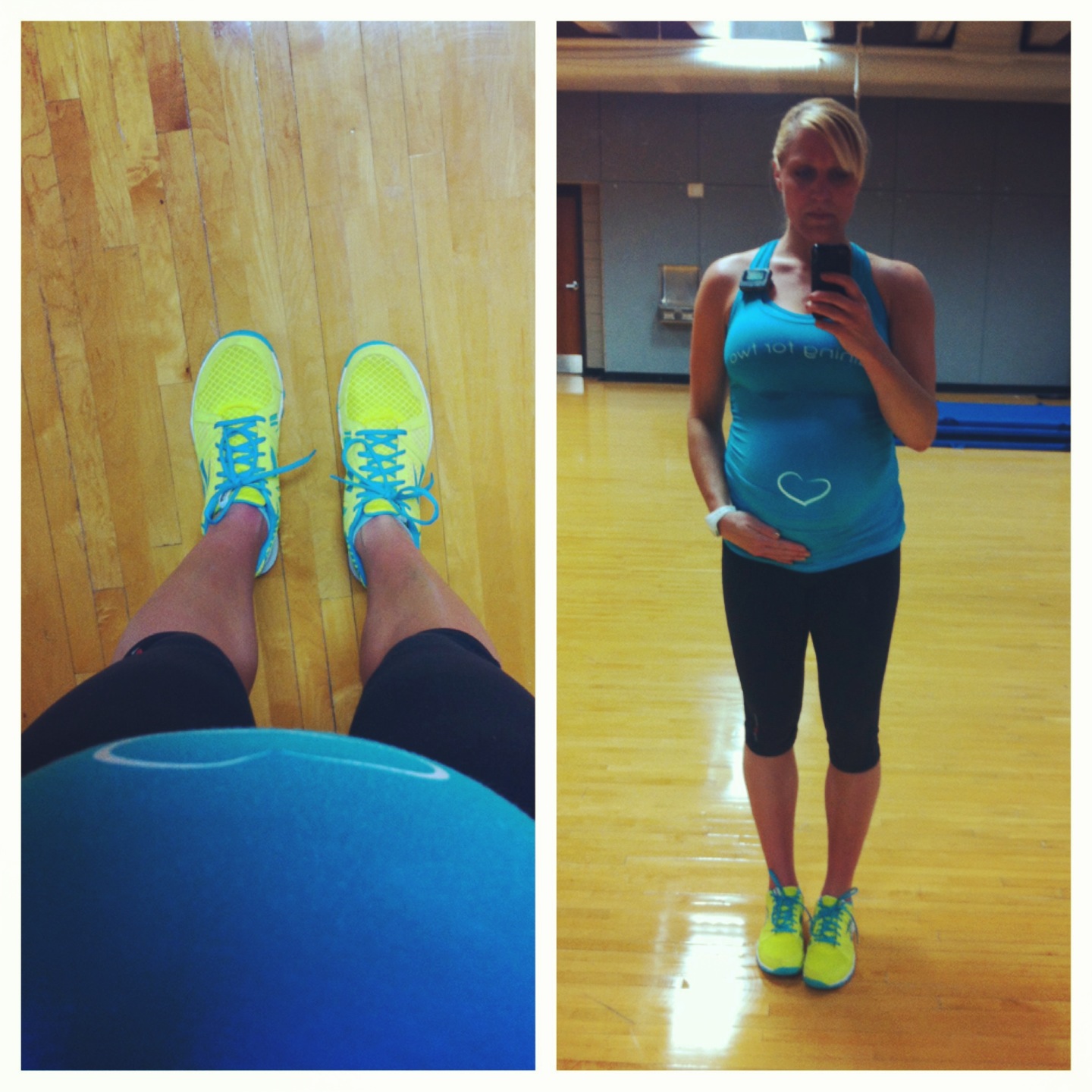
Jess shares a few shots on how she stays active during her pregnancy

Jess shares a few shots now that she’s working out for two!
Credit: Jess Allen/BlondePonytail.com

You can’t read a celebrity magazine nowadays without seeing some kind of commentary on pregnancy and weight gain, whether women are being criticized for being too thin or too heavy.

All this attention on the pregnant figure got me thinking about the changing attitudes toward exercise and pregnancy and how we still have a long way to go in debunking popular myths about staying active while expecting.

To learn more (the topic hits close to home; my sister gave birth March 18), I sat down with blogger Jess Allen of BlondePonytail.com, a personal trainer, group fitness instructor, adjunct exercise science instructor, CrossFit fanatic, coach’s wife and former Stanford softball player (whew!).

Allen is not only in the final few weeks of her pregnancy, but she’s also uniquely qualified to address some of the most common concerns when it comes to working out for two.

Kinetic Fix: How do you think the views toward exercise during pregnancy have changed over the years?

Jess Allen: Thankfully, our society has embraced fitness and pregnancy in recent years. No longer is pregnancy a sentence for sedentary lifestyle. We are seeing women stay active throughout their pregnancy continuing to run, strength train, CrossFit, with modifications, for the duration!

Why is it important for pregnant women to maintain their fitness routine?

While pregnancy isn’t the time to make gains or set PR’s, maintaining one’s strength will help support the impending weight gain that occurs. I think maintaining one’s fitness throughout pregnancy not only promotes an easier delivery (I sure hope this is the case with me!), but women can recover much faster postpartum by staying active.

Walk us through your own experience: Did you amp up your workouts in anticipation of pregnancy, or did you take a wait-and-see approach?

To be honest, this pregnancy was a bit of a surprise! However, I was in the best shape I’ve been in since college, and that has played a huge role in how great I have felt during this entire pregnancy. My energy level and strength have been consistent. As a result, my weight gain has been manageable, and I’m still teaching classes! However, with some workouts, like CrossFit, I have reduced my intensity and expectations.

What’s been the biggest benefit of working out while pregnant?

By practicing a “fit-pregnancy,” I have received many compliments from women telling me how empowering it is to see! That excites me! I want to continue to set a healthy, active example for my future daughter. Staying fit is simply a lifestyle.

Has anything surprised you about exercising with your “new” body?

My lack of mobility! Now that I have a growing belly, I simply don’t have room to bend and move like I used to!

What’s the biggest myth you’d like to dispel about fitness and pregnancy?

The prescribed heart rate (140 bpm) is merely a ball-park figure. Listen to your body. If you can talk and exercise, you are probably fine to keep going. Likewise, be realistic and forgiving; you won’t be able to push yourself like you did pre-pregnancy, so adjust expectations accordingly.

Any favorite exercises for expectant moms that you can share with us?

Even though the mid-section is growing in girth at this time, planks and the many plank variations, help pregnant women support a growing belly, strengthen upper body, and maintain a strong core. Additionally, I love kettle bell swings for a full-body strength move that gets your heart rate up!

Have you made any plans for getting back to your pre-pregnancy level of fitness once Baby Girl arrives this summer?

I have thought a lot about this already! I know I must be adaptable to a new schedule and routine with a baby, but my plan is to utilize the HIIT (high intensity interval training) home workouts I have created in the past and take advantage of my home “gym.” These workouts are efficient but VERY effective, so I don’t need to spend hours working out. Because it will be summer, I anticipate spending time outside, walking my dog and gradually incorporating running and CrossFit back into my routine. Additionally, I plan to breastfeed, so my food choices will revolve around healthy, nutrient-dense foods so my daughter and I both benefit!

Interested in learning more about exercise while expecting? Check out Jess’s blog, Blonde Ponytail, for great workout tips, training advice, nutrition information and more.

And stay tuned for my post-pregnancy interview with Jess…we’ll discuss her workout and weight-loss plans after Baby Girl Allen makes her debut in just a few short weeks!